

Many people make the same mistake at the Grand Canyon, USA. They see it as just one big viewpoint, take a few photos, and leave in less than an hour. That is how this amazing place can end up feeling like a quick stop on the highway. But the Grand Canyon is much more than a single lookout. It has three different rims, a mile-deep network of trails and a river below, tribal land with a glass bridge, and night skies so dark that it is a special spot for stargazing. So instead of asking if it is worth your time, think about which part you want to see, when to visit, and how to avoid the heat, the crowds, and that rushed visit. Let us help you make the most of your Grand Canyon getaway.
Three Rims, One Grand Canyon in USA
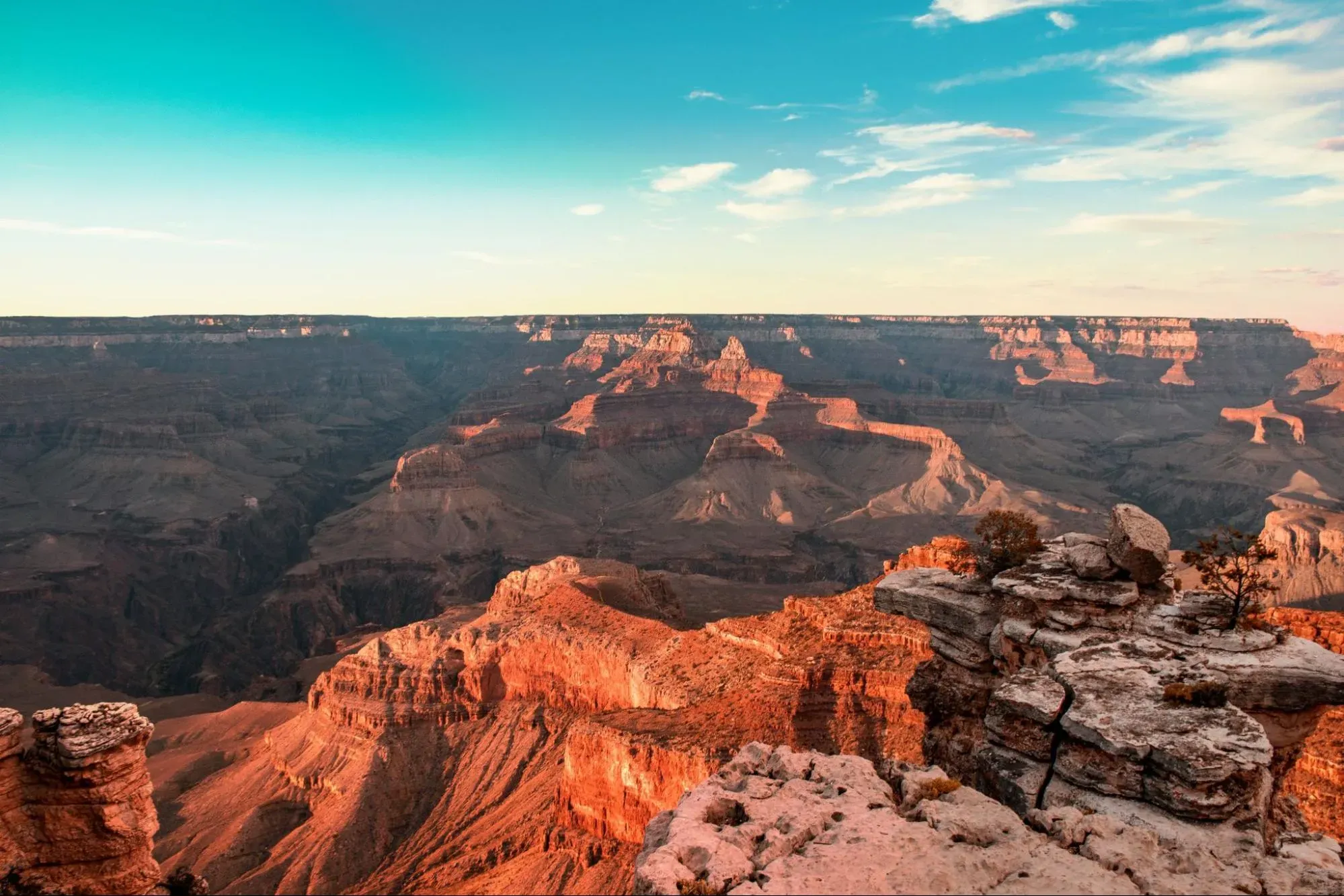
The first thing to know is that there is not just one entrance. The name actually refers to three different rims, each managed by different groups. Choosing the wrong one for your visit is a common mistake. Here is a quick map of Grand Canyon National Park and its neighbour across the canyon.
Rim | Best for | Key draw | Nearest city | Status |
South Rim | First-timers, families, classic views | Village, trails, Desert View | Flagstaff (~1.5 hrs) | Open year-round |
West Rim | A Las Vegas add-on | Grand Canyon Skywalk, Hualapai culture | Las Vegas (~2.5 hrs) | Open (tribal land, not the park) |
North Rim | Solitude, cooler air | Remote forest overlooks | Las Vegas (~4.5 hrs) | Closed after 2025 wildfire |
Here’s a quick fact: when most people talk about the Grand Canyon in Arizona, they usually mean the South Rim. It’s also the easiest area to plan your visit around.
When Is The Best Time To Visit The Grand Canyon?
The best times to visit are spring (late March to May) or autumn (September to November). The South Rim is about 2,100 metres (7,000 feet) high, so it stays cooler than the desert below. However, summer brings big crowds and it gets very hot as soon as you go below the rim.
Season | Rim weather | The catch |
Spring (Mar to May) | Mild days, wildflowers | Fast weather swings, pack layers |
Summer (Jun to Aug) | Warm rim, long daylight | Biggest crowds, dangerous inner-canyon heat, monsoon storms from mid-July |
Autumn (Sep to Nov) | Comfortable, thinner crowds | Nights turn cold quickly |
Winter (Dec to Feb) | Snow on the rim, very quiet | Ice on trails, some closures |
If you are looking for the best time to visit, September is a great choice. The weather is cooler, and the crowds from school holidays have gone.
Tribe Travel Tip: The South Rim sits on a high-desert plateau, so it is not as hot as a typical desert. Even during summer, bring a warm layer for sunrise and sunset at the rim.
Which Grand Canyon Viewpoints Are Worth Your Time?
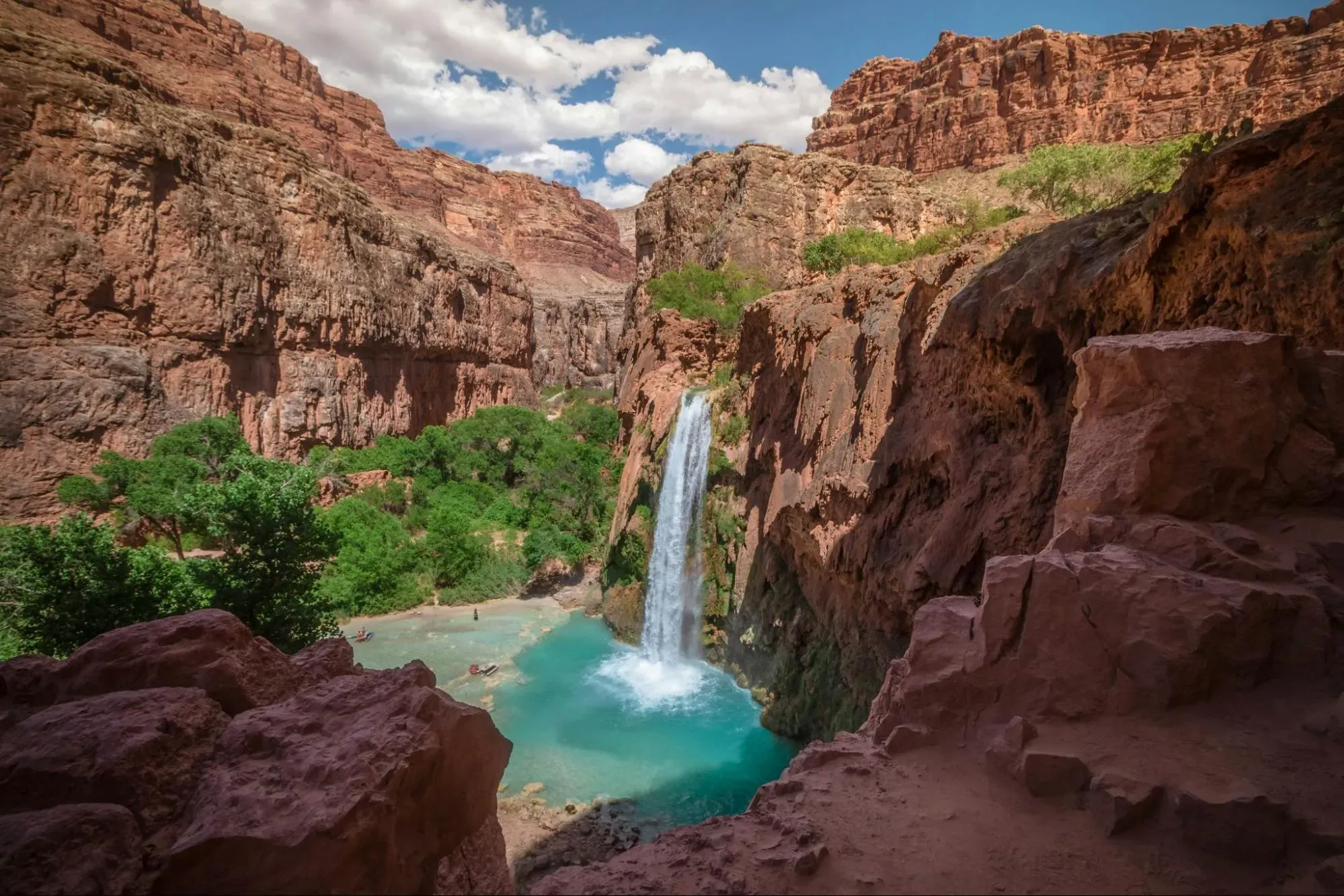
You don’t have to visit every viewpoint. Just a few carefully chosen stops along the South Rim offer amazing, unique views, and you can avoid the crowds at the main parking areas.
- Mather Point: The first big view most people see, right by the main visitor centre.
- Yavapai Point: A wide panorama plus a geology museum with floor-to-ceiling windows.
- Hopi and Mohave Points: The sunset favourites along Hermit Road.
- Desert View: The quieter east end, home to the 1930s Watchtower.
- Yaki Point: A top sunrise spot, reachable only by the free shuttle.
What Can You Do Beyond The Views?
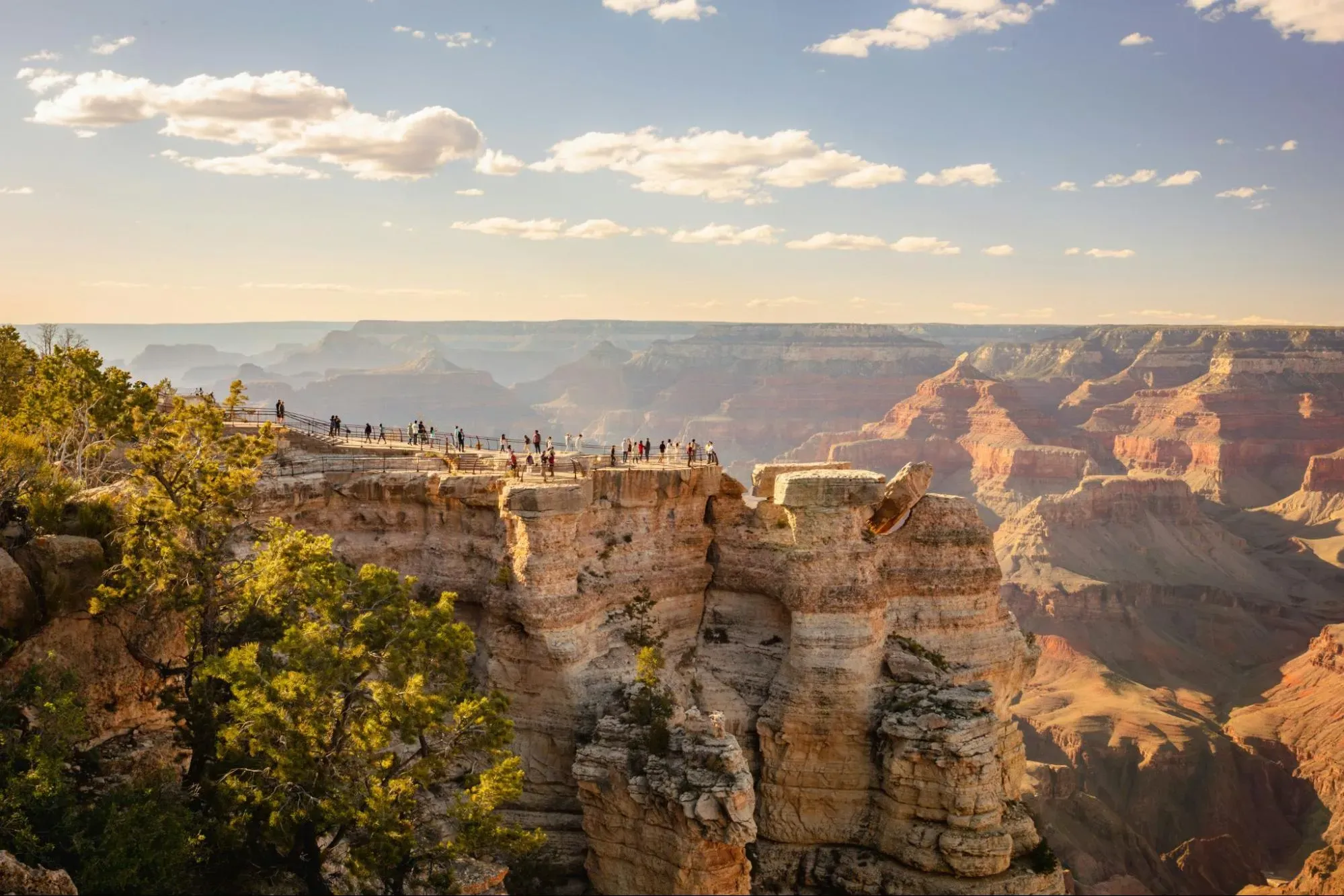
The Grand Canyon truly lives up to its name here. Just standing at the edge is only the beginning. If you go beyond the railing, hike below the rim, or stay after sunset, the canyon has even more to offer.
- Take a walk on the Bright Angel Trail, a well-known path with plenty of shade and water stops during certain seasons.
- For a quick but rewarding hike, head down the South Kaibab Trail to Ooh Aah Point.
- Hop on the Grand Canyon Railway from Williams. This train has been running since 1901 and features live music and a fun, staged train robbery.
- Try rafting the Colorado River at the bottom of the canyon. You can choose from short half-day trips to longer multi-day adventures.
- Climb up the Desert View Watchtower and see tribal artisans showing their crafts.
- Stay out late because the park is a certified International Dark Sky Park, making the stargazing truly amazing.
Is The Grand Canyon Skywalk Worth It?
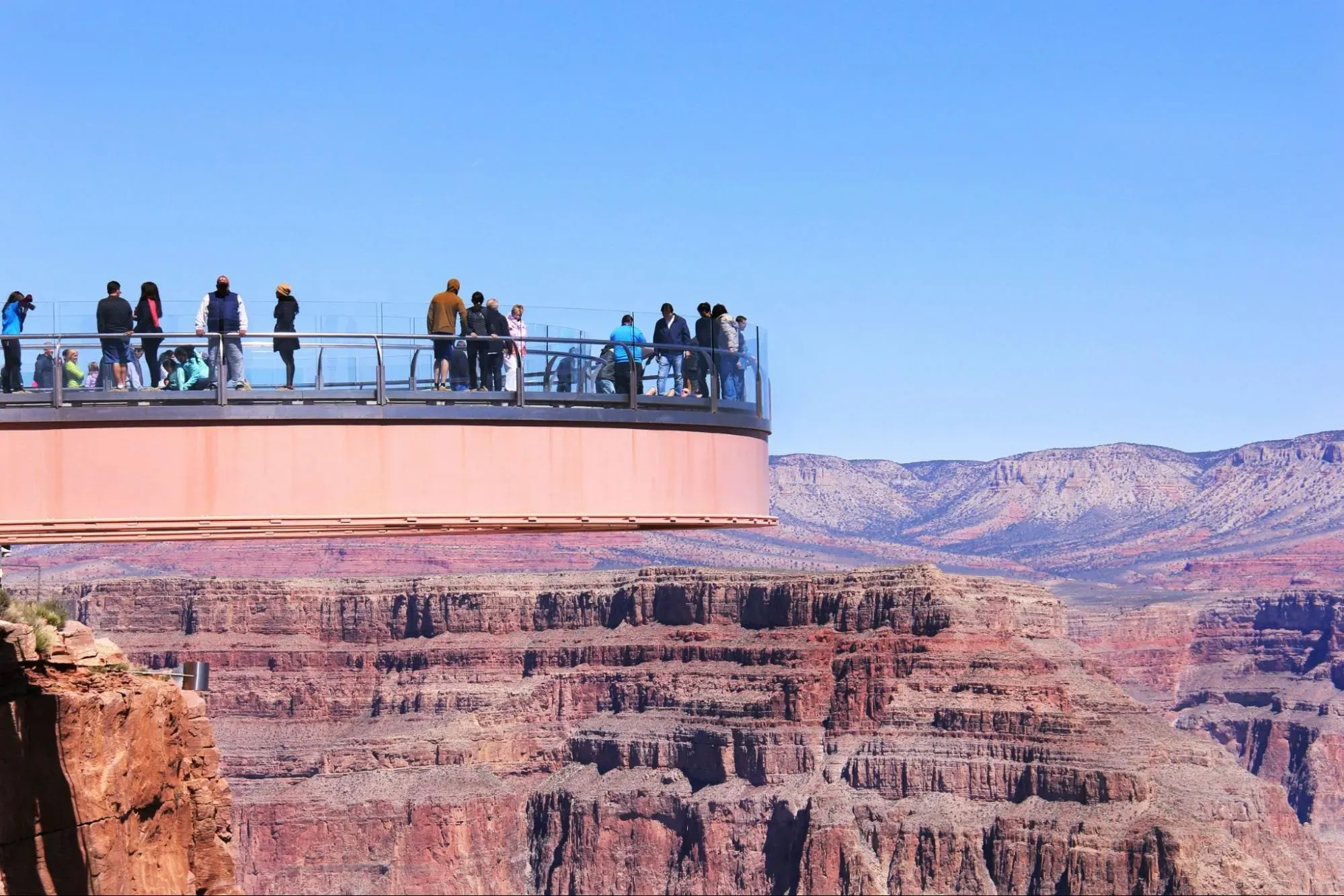
The Grand Canyon Skywalk is a glass bridge shaped like a horseshoe that extends about 21 meters (70 feet) over the edge at Eagle Point, around 1,200 meters (4,000 feet) above the canyon floor. Many visitors are surprised to learn that it is not inside the national park. Instead, it is on Hualapai tribal land at the West Rim, which is closest to Las Vegas. There is no option to buy a ticket just for the Skywalk.
- General Admission (~$67 + tribal tax): Viewpoints and shuttle, but no Skywalk.
- All-Access Pass (~$99 + tax, about $114 all-in): Adds the Skywalk, a zipline and cultural performances.
Tribe Travel Tip: You cannot bring phones or cameras onto the bridge. Lockers are available, and staff photographers will take your pictures.
If you are in Las Vegas and have limited time, the West Rim and Skywalk are a good choice for a day trip. For deeper canyon views, hiking trails, and the river, the South Rim is the better option.
How Do You Get To The Grand Canyon, USA?
The Grand Canyon in Arizona does not have its own major airport, so most visitors either drive or join tours from nearby cities. Be sure to choose the right entry point for the rim you want to visit.
From | To South Rim | To West Rim (Skywalk) |
Las Vegas | ~4.5 to 5 hrs | ~2.5 hrs |
Phoenix | ~3.5 to 4 hrs | ~4.5 hrs |
Flagstaff | ~1.5 hrs | Longer detour |
- You can fly into Las Vegas if you want to visit the Skywalk and West Rim, or choose Phoenix or Flagstaff for the South Rim.
- If you want to avoid driving, take the Grand Canyon Railway. It’s a 64-mile trip from Williams that goes straight into the Village.
- At the South Rim, free shuttles run along the main routes. For most of the year, Hermit Road can only be accessed by shuttle.
What Does A Grand Canyon, USA Visit Actually Cost?
This is an important detail for your holiday. The entry fee for Grand Canyon National Park is charged per vehicle, not per person, and it covers both rims for seven days.
Item | Cost (indicative, 2026) | Notes |
Park entry, private vehicle | $35 | 7 days, both rims |
Entry on foot or bike | $20 per person | Same validity |
Non-US resident fee (16+) | $100 per person | New from 1 Jan 2026, on top of entry |
Grand Canyon Skywalk (All-Access) | ~$114 all-in | Separate, on Hualapai land |
Indian travellers should note the non-resident fee. Starting in January 2026, anyone aged 16 or older who is not a US resident will pay an extra $100 each, unless they have an America the Beautiful annual pass. This pass can save money if you plan to visit several parks on your trip.
These costs only cover what you spend once you arrive. International flights are not included, so when planning your holiday, budget separately for park entry, accommodation, transfers, and activities instead of combining everything into a single total.
Make The Grand Canyon in USA Count
The Grand Canyon gives back what you put into planning your visit. If you only stop for a quick photo, it can feel like a blur. But if you spend a couple of days, pick the right rim, and visit in the right season, it can become the highlight of your holiday. That’s where we come in at Holiday Tribe. As holiday advisors, we create land packages that take care of your stays, transfers, timing, and even the details many people miss, like the new non-resident fee or that the Skywalk is on separate land. If you want a ready-made plan, we have Grand Canyon itineraries you can book right away. If you prefer something tailored to your dates, pace, and must-see spots, our advisors and AI travel planner will help you customise it. Either way, you’ll come home with memories of much more than just the views.