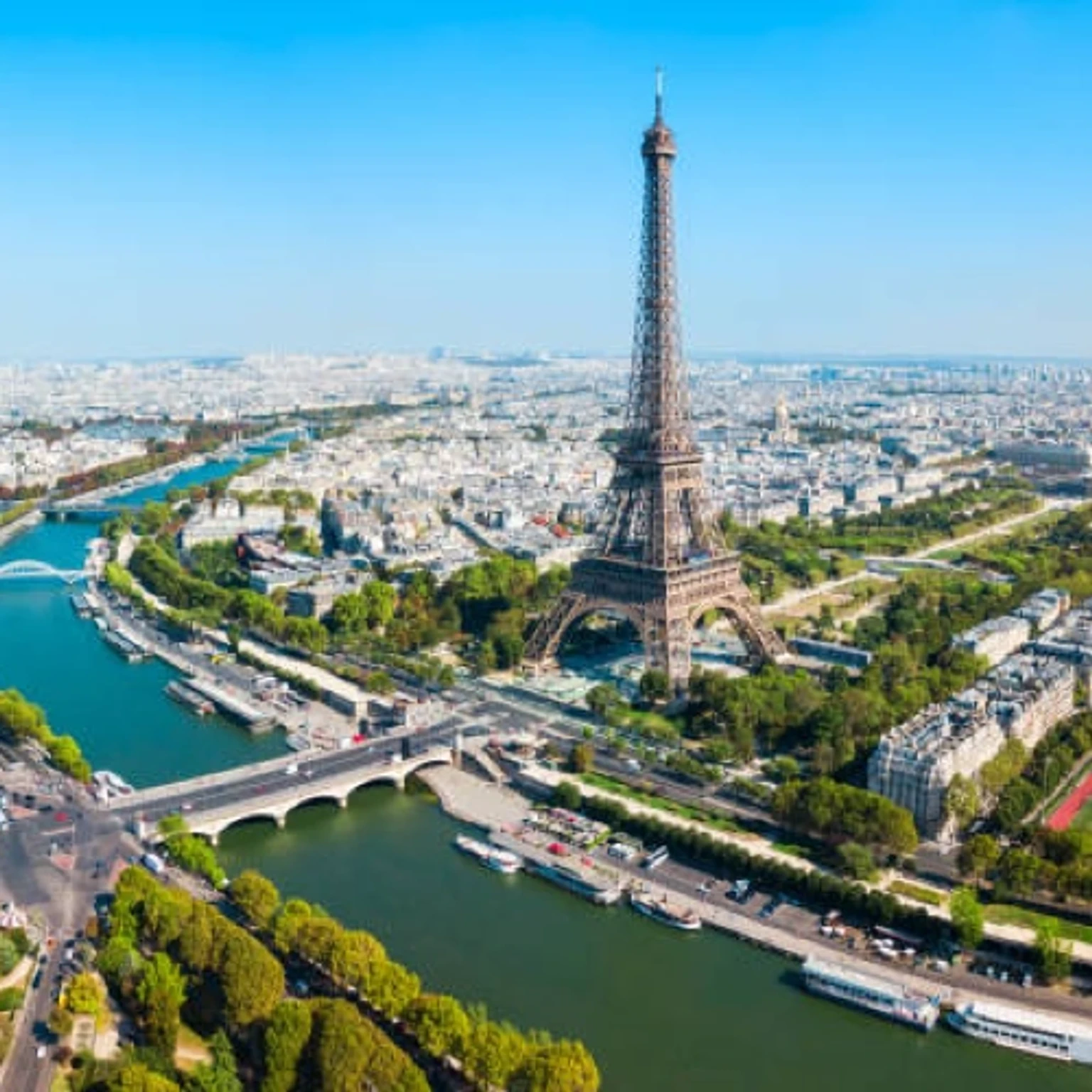


France is a country of extraordinary contrasts: Atlantic surf towns in the west, Alpine peaks in the east, lavender fields in the south, and centuries of cooking tradition everywhere in between. Most visitors head straight for Paris, but the country's true depth reveals itself further south, where Roman ruins, Renaissance alleyways, and the country's most serious food culture all converge in a single city.
Lyon France sits at the meeting point of the Rhône and Saône rivers in southeastern France. It is the country's third-largest city and its self-declared gastronomic capital. This guide covers Vieux Lyon, the Basilica of Notre Dame de Fourvière, Croix Rousse, the festival of lights Lyon France, Lyon France weather, temperature in Lyon France across all four seasons, train connections to Paris and Geneva, and where to find Indian restaurants in Lyon France.
What Makes This City the Third Largest in France?
Lyon city France is the capital of the Auvergne-Rhône-Alpes region, built across two rivers and sitting between two hills. Its UNESCO World Heritage Site covers 427 hectares, listed on 5 December 1998, including Vieux Lyon, Fourvière Hill, Croix Rousse, and much of the Presqu'île peninsula.
The city was founded as the Roman settlement of Lugdunum in 43 BCE. By the 19th century, it was the centre of European silk production, with Croix Rousse Hill as the heartbeat of the industry.
Today, Lyon France is known as the gastronomic capital of France. Traditional bouchon restaurants serve dishes like quenelles, andouillette, and praline tart. The city has more Michelin-starred restaurants than any other French city outside Paris.
Detail | Information |
Population | 519,000 (city); 1.7 million (urban area) |
UNESCO Designation | 5 December 1998 (427 ha) |
Ranking in France | 3rd largest city |
Region | Auvergne-Rhône-Alpes |
Rivers | Rhône and Saône |
What Are the Best Things to See and Do Here?
The best things to do in Lyon France are spread across four distinct neighbourhoods. Each one reflects a different era of the city's history, from Roman ruins to Renaissance alleyways to a working-class silk district.
Here's a quick overview:
- Vieux Lyon and the Traboules
- Basilica of Notre Dame de Fourvière
- Croix Rousse and the Silk District
- Presqu'île and the Museums
Vieux Lyon and the Traboules
Vieux Lyon is the Renaissance quarter on the west bank of the Saône and one of the largest preserved Renaissance districts in Europe.
- The streets are narrow, cobblestoned, and lined with 15th and 16th-century pastel-coloured buildings; the area is listed within Lyon France's UNESCO World Heritage boundary
- Traboules are covered passageways running through apartment blocks; they were built to allow silk workers to move fabric without weather damage; approximately 40 are open to the public in Vieux Lyon; the Lyon Tourist Office (en.visiterlyon.com) publishes a free map of accessible entrances
- Saint-Jean Cathedral (Cathédrale Saint-Jean-Baptiste) anchors the south end of the quarter and is the starting point for the festival of lights Lyon France torchlight procession each December
- Most of Vieux Lyon is pedestrianised and walkable; the funicular at Vieux-Lyon metro station (Line D) connects directly to Fourvière Hill in 4 minutes
Basilica of Notre Dame de Fourvière
The Basilica of Notre Dame de Fourvière stands at the top of Fourvière Hill and is visible from across the city.
- Built between 1872 and 1896; designed by architect Pierre Bossan; constructed in white marble, blue marble, pink granite, and green onyx; the style combines Romanesque, Gothic, and Neo-Byzantine elements
- The Basilica of Notre Dame de Fourvière is dedicated to the Virgin Mary, who is credited with saving Lyon France from the bubonic plague of 1643; the December Festival of Lights commemorates this tradition annually
- Entry to the church, the crypt, and the Jardins du Rosaire (terraced hillside gardens) is free; a seasonal guided roof tour is available for a fee; book at fourviere.org
- The esplanade outside the Basilica of Notre Dame de Fourvière offers one of the most complete views of the city, covering both rivers, the Presqu'île, Croix Rousse Hill, and the Alps on clear days
Croix Rousse and the Silk District
Croix Rousse is Lyon's northern hill, known as "la colline qui travaille" (the working hill) in contrast to Fourvière, "la colline qui prie" (the praying hill).
- 30,000 silk workers (canuts) lived and worked here in the 19th century; the buildings were specifically designed with wider windows and higher ceilings to house large Jacquard looms; these architectural features are still visible today
- The Maison des Canuts on Boulevard des Canuts explains the silk-weaving history with a working loom demonstration; one of the more educational best things to do in Lyon France for those interested in the city's economic past
- Croix Rousse has its own traboule network, built for transporting bolts of silk; the character of the neighbourhood today is bohemian, with street art, independent coffee shops, and the Croix Rousse market (Tuesday to Sunday mornings, Boulevard de la Croix-Rousse)
Presqu'île and the Museums
The Presqu'île is the long peninsula between the Rhône and Saône rivers and the commercial heart of Lyon city France.
- Place Bellecour at the centre of the Presqu'île is one of the largest pedestrian squares in France; it has a well-known equestrian statue of Louis XIV and is also a major installation site during the festival of lights Lyon France
- Key museums: the Musée des Beaux-Arts (in the Palais Saint-Pierre; free on the first Sunday of each month), the Musée des Confluences (natural history and anthropology; located at the southern tip of the Presqu'île in a striking contemporary building), and the Lugdunum Museum near the Basilica of Notre Dame de Fourvière covering Roman Lyon from 43 BCE
- Les Halles de Lyon Paul Bocuse (covered food market; open Tuesday to Sunday; named after the late chef Paul Bocuse) is one of the most practical and authentic best things to do in Lyon France for food-focused visitors; best visited between 8am and 12pm when the stalls are fully active
When Is the Festival of Lights Held in Lyon?
The festival of lights Lyon France (Fête des Lumières) is held annually over 4 days in early December. The event is free to attend and features more than 40 large-scale light installations placed across the city's major public spaces.
The festival of lights Lyon France began on 8 December 1852, when residents lit candles to inaugurate a statue of the Virgin Mary at Fourvière. The tradition has grown into one of the most visited public arts events in Europe.
Key Venue | Type of Installation | Area of City |
Place des Terreaux | Large-scale projected art on the Hôtel de Ville facade | Presqu'île |
Place Bellecour | Central installations; interactive elements | Presqu'île |
Basilica of Notre Dame de Fourvière | Projected imagery on the basilica facade | Fourvière Hill |
Cathédrale Saint-Jean-Baptiste | Torchlight procession start point | Vieux Lyon |
Croix Rousse Hill | Hillside installations and projections | Croix Rousse |
The festival of lights Lyon France in December also coincides with cooler temperatures; wrap up warmly as all installations are outdoors.
What Is the Weather Like Year-Round?
Lyon France weather is continental: warm to hot summers, cold winters, and moderate spring and autumn conditions. Annual rainfall is approximately 820 mm, spread across the year.
Temperature in Lyon France varies significantly by season. The two most comfortable windows for visiting are spring (April to June) and early autumn (September to October).
Month | Avg Max (°C) | Avg Min (°C) | Rainfall (mm) | Best For |
January | 6 | 1 | 60 | Quiet city visits; fewer tourists |
April | 16 | 8 | 65 | Vieux Lyon walks; outdoor markets |
June | 26 | 15 | 65 | Full outdoor season; Les Halles |
July | 32 | 18 | 55 | Peak summer; hottest month |
October | 18 | 9 | 80 | Autumn colour; comfortable temperatures |
December | 6 | 2 | 60 | Festival of Lights; cold outdoors |
Temperature in Lyon France peaks in July (average high 32°C) and is lowest in January (average low 1°C). The Lyon France weather in April and October is the most consistent for those who want to walk the hills of Vieux Lyon and Croix Rousse in comfort.
How Easy Is It to Reach Paris and Geneva?
Lyon France to Paris by train is one of the busiest and most frequent TGV routes in France. Trains depart from Lyon Part-Dieu station (the main station in the city) and arrive at Paris Gare de Lyon in approximately 2 hours. Up to 20 services per day run this route; book in advance at sncf-connect.com, especially for Friday and Sunday departures.
Lyon France to Geneva Switzerland by train takes approximately 1 hour 45 minutes on TGV or TER services from Lyon Part-Dieu. Geneva is 155 km from Lyon France by road, making it equally accessible by car or Flixbus.
Destination | Train Type | Journey Time | Approx. Daily Services |
Paris | TGV | 2 hours | Up to 20 |
Geneva | TGV/TER | 1 hr 45 min | Multiple daily |
The Lyon France to Paris by train and Lyon France to Geneva Switzerland connections make Lyon city France one of the most logical stops on a broader France and Switzerland circuit. Both cities are within day-out range, though an overnight or two-night stay in Lyon is the more rewarding approach.
Where Can You Find Indian Food in the City?
Indian restaurants in Lyon, France, are concentrated primarily in the Guillotière neighbourhood, east of the Rhône on the 7th arrondissement. This district has the highest density of South Asian, subcontinental, and Indian restaurants in Lyon, France.
The main streets to look along for Indian restaurants in Lyon, France:
- Rue Garibaldi
- Rue Richelieu
- Avenue Berthelot
Several of these restaurants offer weekday lunchtime thali menus at accessible price points. The Presqu'île also has a growing number of international dining options, though fewer specifically Indian.
Tribe Travel Tip: For current verified listings and recent reviews, search "restaurants indiens Lyon" on Google Maps before visiting; restaurant availability changes seasonally, and Indian restaurants in Lyon, France, vary in quality across the district.
Final Takeaway
The best things to do in Lyon France spread across its four neighbourhoods, each worth a morning or afternoon in its own right. Lyon France rewards visitors who move past the TGV platform and into its neighbourhoods. Vieux Lyon is the Renaissance heart, Croix Rousse is the silk worker's hill, and the Basilica of Notre Dame de Fourvière keeps watch over all of it from above. The festival of lights Lyon France each December turns the city into something else entirely. Lyon France to Paris by train takes two hours and Lyon France to Geneva Switzerland under two hours, making it a natural anchor in a broader European journey. The temperature in Lyon, France, makes March to May and September to October the most comfortable windows for visiting the hills.
If you are planning a holiday to France or Europe and want the right balance of cities, pacing, and stays, Holiday Tribe's holiday advisors can plan every detail.