

France is one of Europe's most geographically varied countries. Its northern regions are mostly flat and agricultural, its coastlines touch both the Atlantic and the Mediterranean, and its interior holds ancient plateaus and volcanic fields. But the country's elevated terrain surprises many people who associate France primarily with cities and wine.
The mountains in France ring the country on three sides and rise from its very centre. They include some of Western Europe's highest peaks and some of the continent's oldest geological formations. This guide covers all six main mountain ranges in France: The Alps, the Pyrenees, the Massif Central, the Jura Mountains, the Vosges Mountains, and Corsica, with key facts and what each offers.
How Many Mountain Ranges in France Are There?
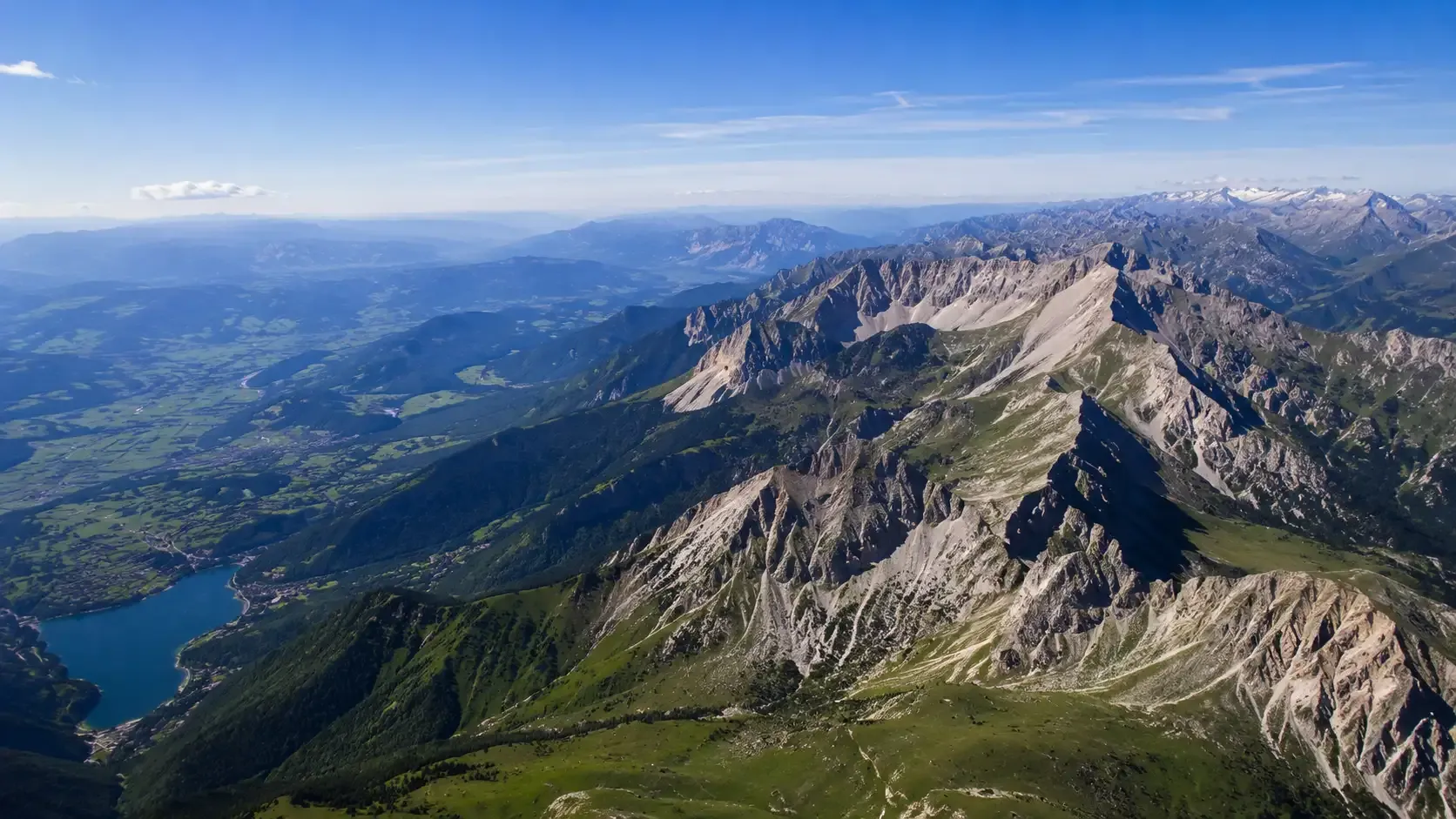
There are six main mountain ranges in France, each in a different region. The Alps and Jura are along the eastern border, while the Pyrenees mark the south. The Massif Central sits in the centre, the Vosges are in the northeast, and Corsica is a Mediterranean island with its own mountains.
The mountains in France vary in age and type. The Alps and Pyrenees are younger and formed by tectonic forces. The Massif Central and Vosges are much older and more worn down. The Jura are in between. Corsica’s mountains were shaped by the same forces as the Alps.
Range | Location | Highest Peak | Height | Key Character |
The Alps | SE France (Swiss/Italian border) | Mont Blanc | 4,808m | Highest peaks; skiing; hiking |
The Pyrenees | S France (Spanish border) | Vignemale (French side) | 3,298m | Ridge, cirques, GR10 trail |
Massif Central | Central France | Puy de Sancy | 1,885m | Volcanic plateau; crater lakes |
Jura Mountains | E France (Swiss border) | Crêt de la Neige | 1,720m | Limestone; forest; wine |
Vosges Mountains | NE France (German border) | Grand Ballon | 1,424m | Rounded summits; forest |
Corsica | Mediterranean island | Monte Cinto | 2,706m | Alpine interior; GR20 trail |
Why Are The Alps France’s Most Famous Mountains?
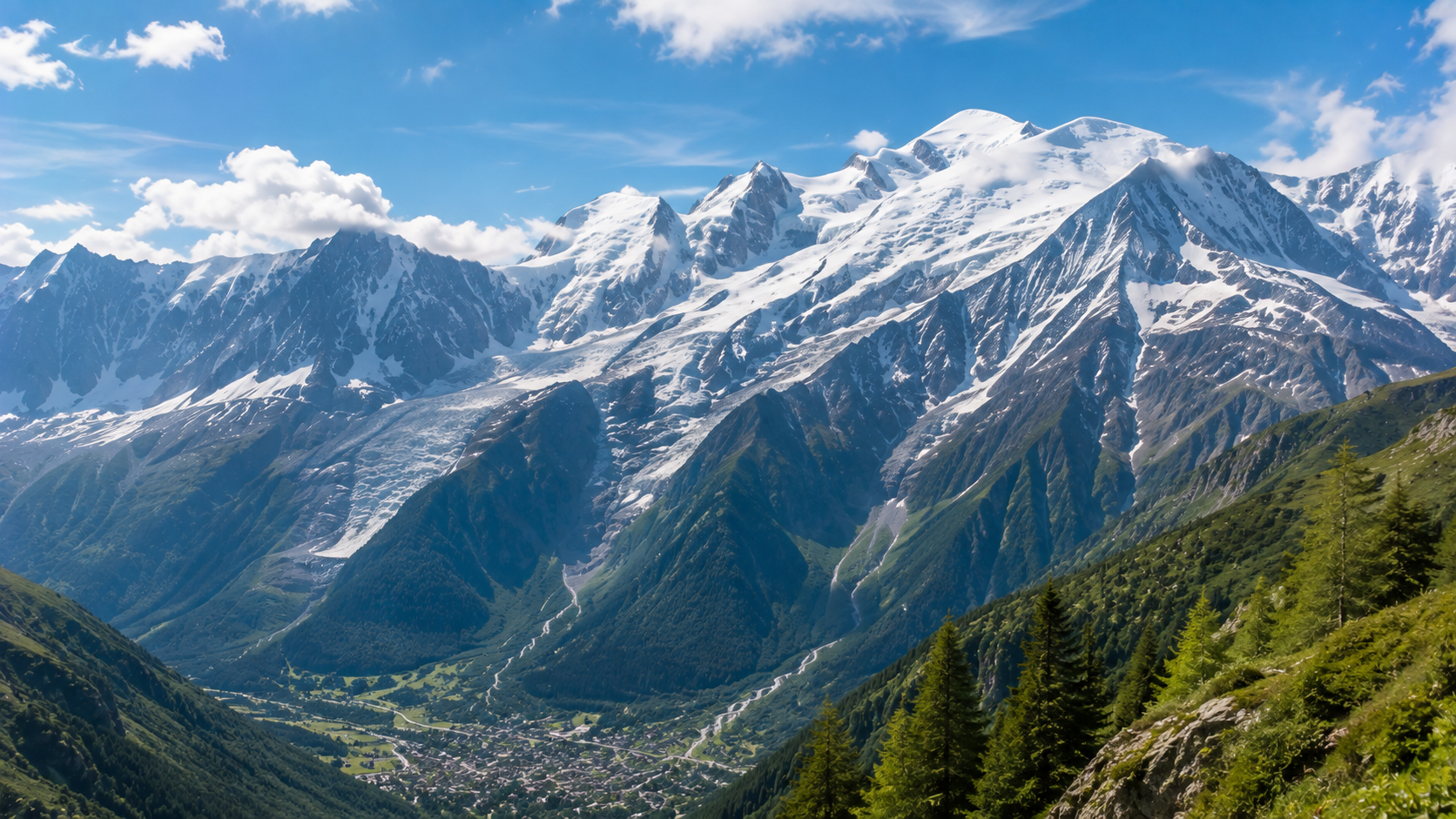
The Alps in France run along the eastern border with Switzerland and Italy. They include Mont Blanc, the highest point in France and in Western Europe outside Russia, at 4,808 metres (15,774 feet). Mont Blanc was first climbed in 1786 and is still a top goal for mountaineers.
The Alps divide into two sections in France:
- Northern Alps: The highest and most rugged; includes Mont Blanc, Chamonix, and Val d'Isère; known for winter skiing, high-altitude hiking, and glaciers; significant snowfall from November to April.
- Southern Alps: These mountains are lower and get about 300 days of sunshine each year. They border Provence, and the landscape changes from alpine peaks to lavender fields as you go lower. The area includes the Écrins and Mercantour national parks.
The Alps are home to France’s most popular ski resorts, such as Chamonix, Val d'Isère, Méribel, and Courchevel. In summer, you can go hiking, paragliding, or take the Aiguille du Midi cable car up to the Mont Blanc area.
Detail | Information |
Highest peak | Mont Blanc, 4,808m |
Countries shared with | Switzerland and Italy |
Northern Alps character | High peaks; heavy snowfall; year-round glaciers |
Southern Alps character | Sunnier; lower; connects to Provence |
What Makes The Pyrenees Different From The Alps?
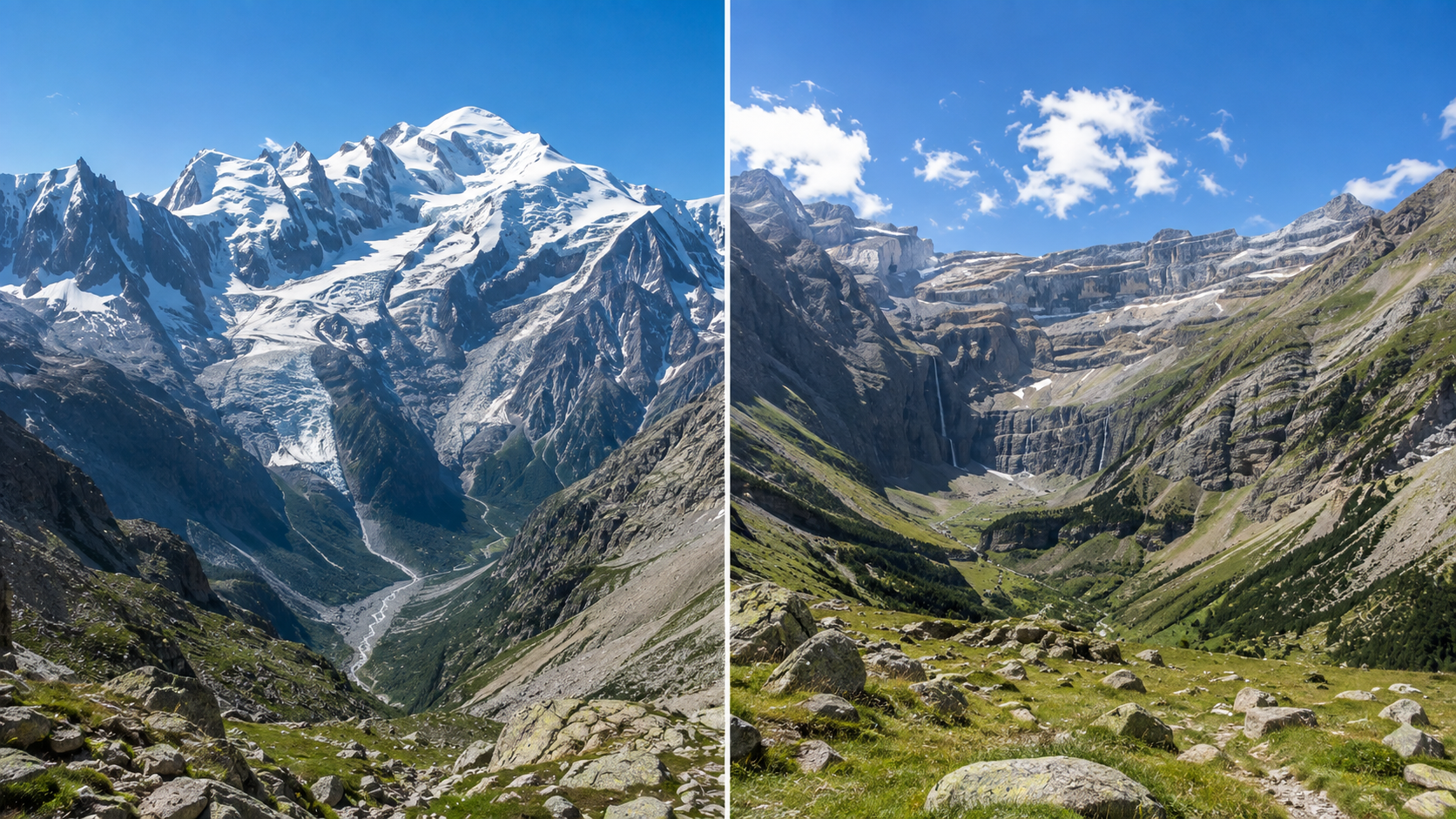
The Pyrenees stretch for 430 km along France’s southern border with Spain, forming a ridge from the Atlantic Ocean to the Mediterranean Sea. The highest peak on the French side of the Pyrenees is Vignemale at 3,298 metres (10,820 feet), while the highest Pyrenean peak is Aneto in Spain at 3,404 metres.
The Pyrenees don’t have many large lakes like the Alps, but they are famous for their cirque valleys, big waterfalls, and steep cliffs. The Cirque de Gavarnie in the Hautes-Pyrénées is a UNESCO World Heritage Site and a popular natural attraction in southern France.
The Pyrenees support skiing at resorts including Cauterets, Font Romeu, and Les Angles. The GR10 long-distance hiking trail runs the full French length of the range from Hendaye on the Atlantic to Banyuls-sur-Mer on the Mediterranean, covering approximately 866 km.
What Makes Massif Central Unique?
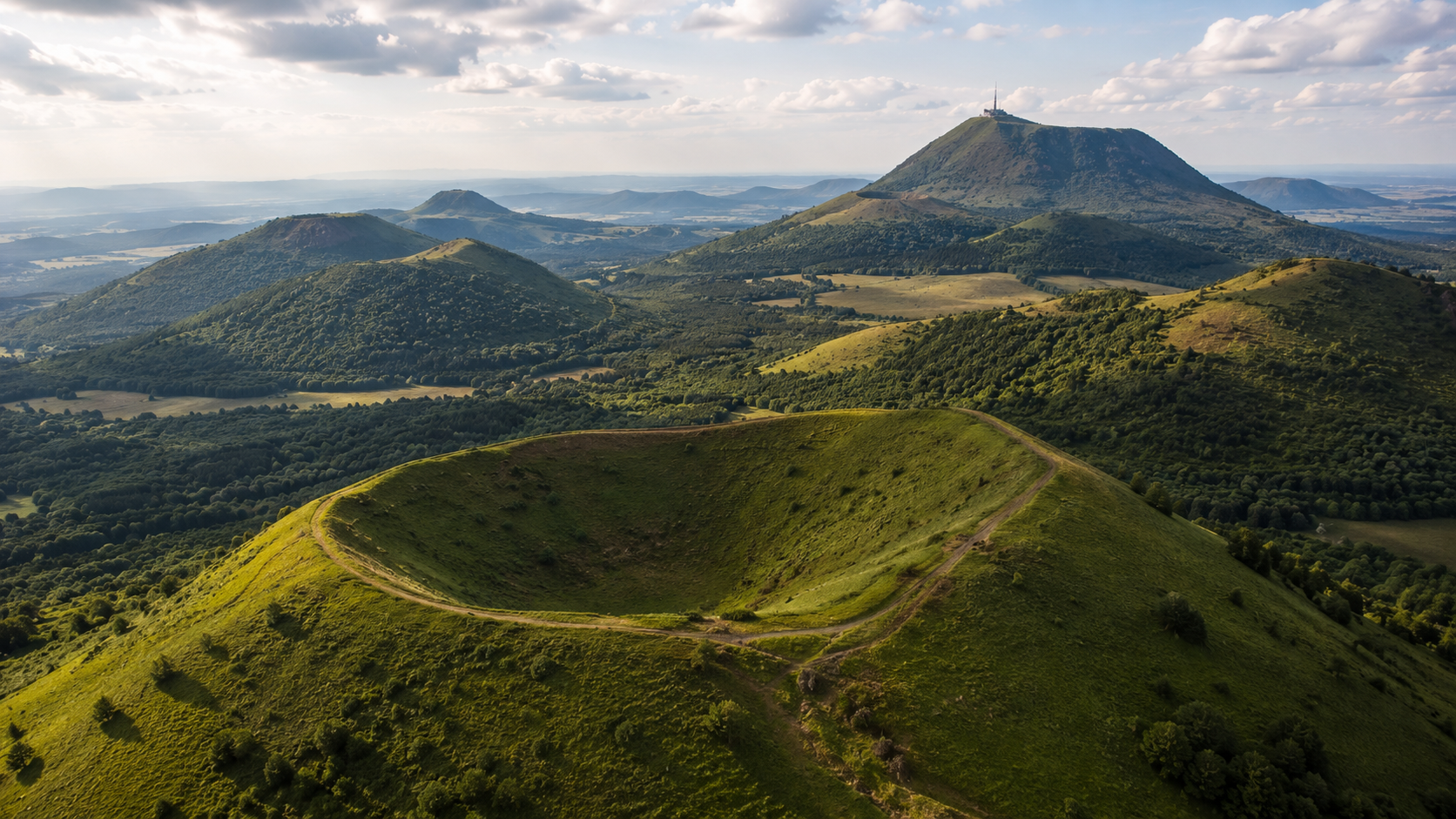
The Massif Central is the largest mountain region in France by area, covering about 15% of the country's land. It lies in the south-central part of the mainland and is one of France's oldest geological regions. The highest peak is Puy de Sancy at 1,885 metres (6,188 feet) in the Auvergne region.
The Massif Central is best defined by its chain of ancient volcanoes: the Chaîne des Puys. This formation of over 80 volcanic cones and craters was inscribed as a UNESCO World Heritage Site in 2018. Dozens of crater lakes sit within the chain.
The Massif Central is a plateau, not a sharp mountain ridge like the Alps or the Pyrenees. It is one of the least visited mountains in France by international travellers, so you’ll find fewer crowds and a quieter atmosphere.
Detail | Information |
Area | 15% of mainland France |
Highest Peak | Puy de Sancy |
Height | 1,885m (6,188 ft) |
Key Feature | Chaîne des Puys (80+ volcanic cones) |
UNESCO Status | Chaîne des Puys, since 2018 |
Major City | Clermont-Ferrand |
The Massif Central is one of the most geologically distinctive of all the mountains in France and the least visited by international travellers
What Can You Expect From the Smaller but Notable Ranges?
Three other mountain ranges in France help shape France’s highland areas. They are much lower than the Alps or the Pyrenees, but each has its own scenery, activities, and culture.
Here's a quick overview:
- Jura Mountains
- Vosges Mountains
- Corsica
Jura Mountains: Forest Trails, Limestone and Local Wine
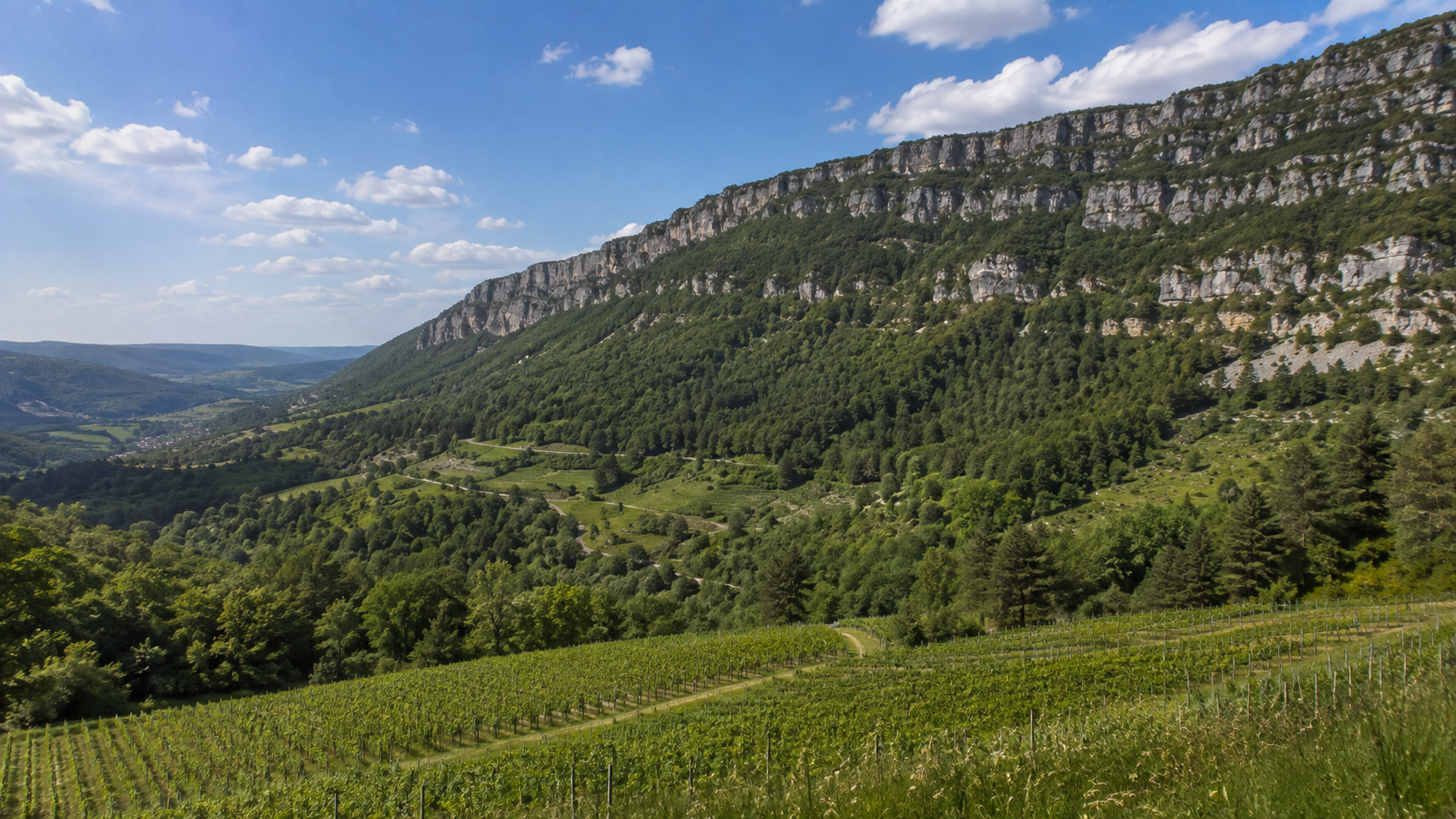
The Jura Mountains run along France's northeastern border with Switzerland; the highest point in the French section is Crêt de la Neige at 1,720 metres (5,640 feet).
- This range is known for its limestone landscapes, forested ridges, and the 310 km Jura ridgeway hiking trail.
- The Jura Mountains are a significant wine region; Jura wines, including vin jaune (a deliberately oxidised style), are produced on the western slopes and are among the most distinctive appellations in France
- Family-friendly ski resorts in the Jura include Métabief, Monts Jura, and Les Rousses. Nordic skiing is especially popular here compared to other mountain ranges in France.
- Approximately 1,600 sq km of the range is protected by the Jura Mountains Regional Natural Park
Vosges Mountains: Rounded Peaks and Forested Slopes
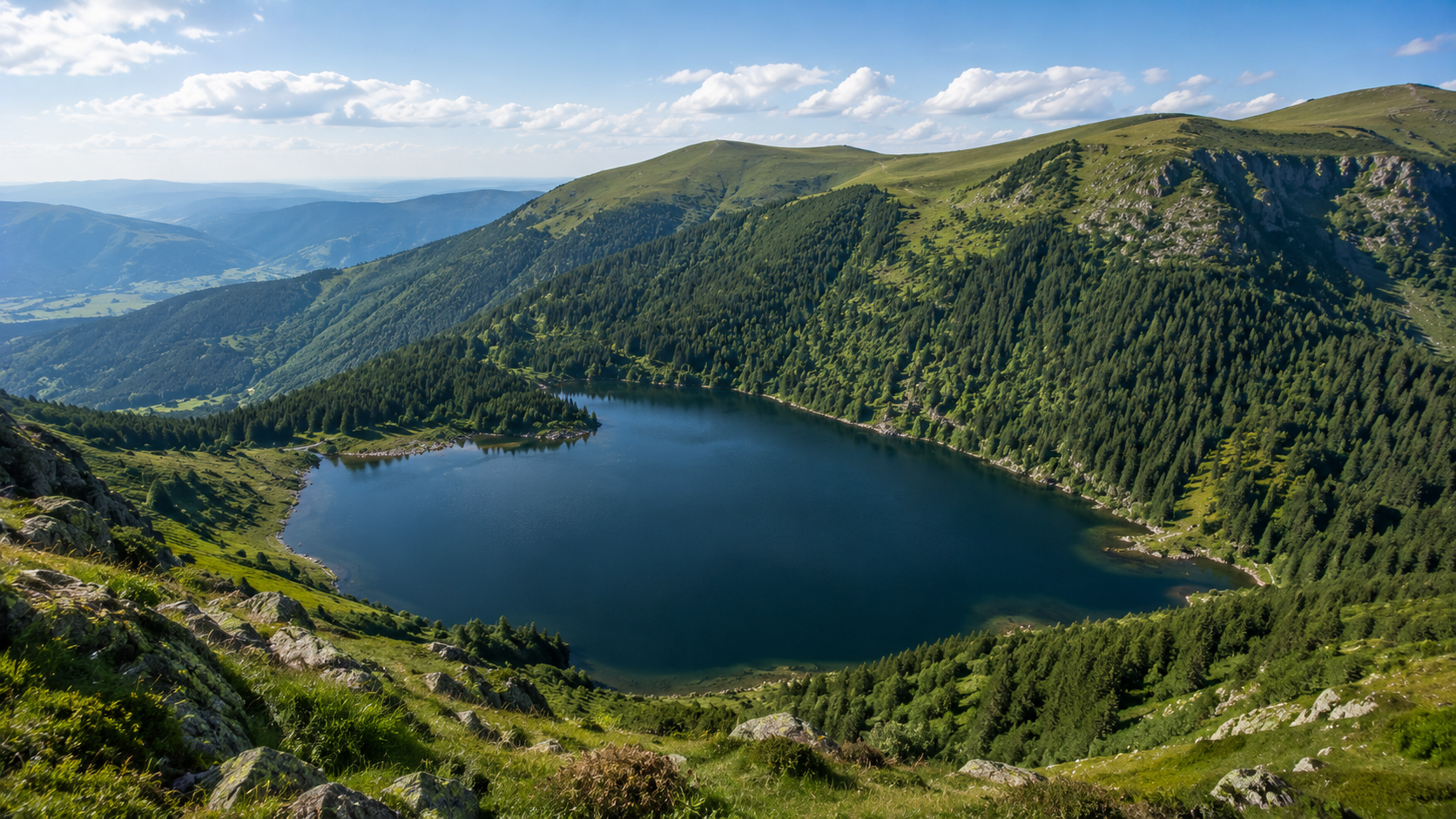
The Vosges Mountains sit in eastern France near the German border; from 1871 to 1918 they marked the actual French-German boundary.
- The highest point is Grand Ballon at 1,424 metres. The summits are rounded, and in French, they are called ballons, which means balloons, instead of sharp peaks.
- About 60% of the Vosges Mountains are covered in forest, and the range stretches across seven départements.
- Activities: hiking, mountain biking, Nordic skiing, thermal spa visits; the towns of Plombières-les-Bains and Contrexéville have active spa traditions
- The Alsatian wine route runs along the eastern lower slopes of the Vosges Mountains; this is one of the most visited wine trails in France
Corsica: High Mountains With a Mediterranean Edge
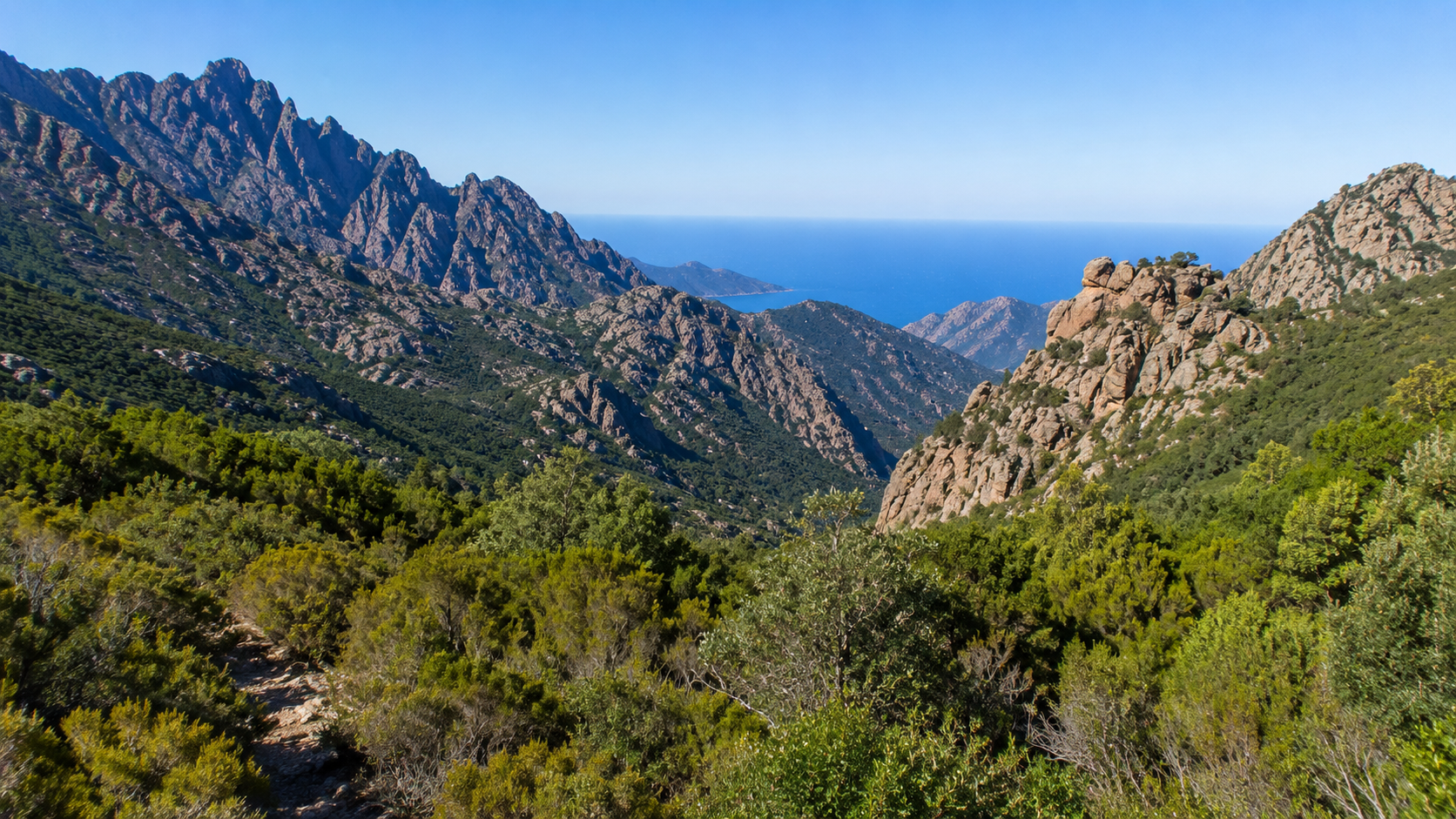
Corsica is the largest island of metropolitan France at 8,722 sq km and has a mountain spine running along its entire length.
- Monte Cinto is the highest peak at 2,706 metres (8,878 feet), and several other summits are over 2,000 metres. This gives Corsica a true alpine feel, which is rare for a Mediterranean island.
- The GR20, a 180 km trail along Corsica's mountain spine from Calenzana in the north to Conca in the south, is considered one of the most challenging long-distance trails in Europe and the signature route among mountains in France for serious hikers
- Corsica’s interior is full of dense forests and maquis, which is wild, aromatic scrubland with plants like lavender, rosemary, and cistus. The scent is so unique that Napoleon is said to have claimed he could recognise Corsica by smell alone, even with his eyes closed.
- In Corsica, you can easily combine mountain activities with trips to beaches and coastal towns. It’s the only place on this list where the coast and the mountains are less than an hour apart.
Which Mountain Ranges in France Are Best for Your Interests?
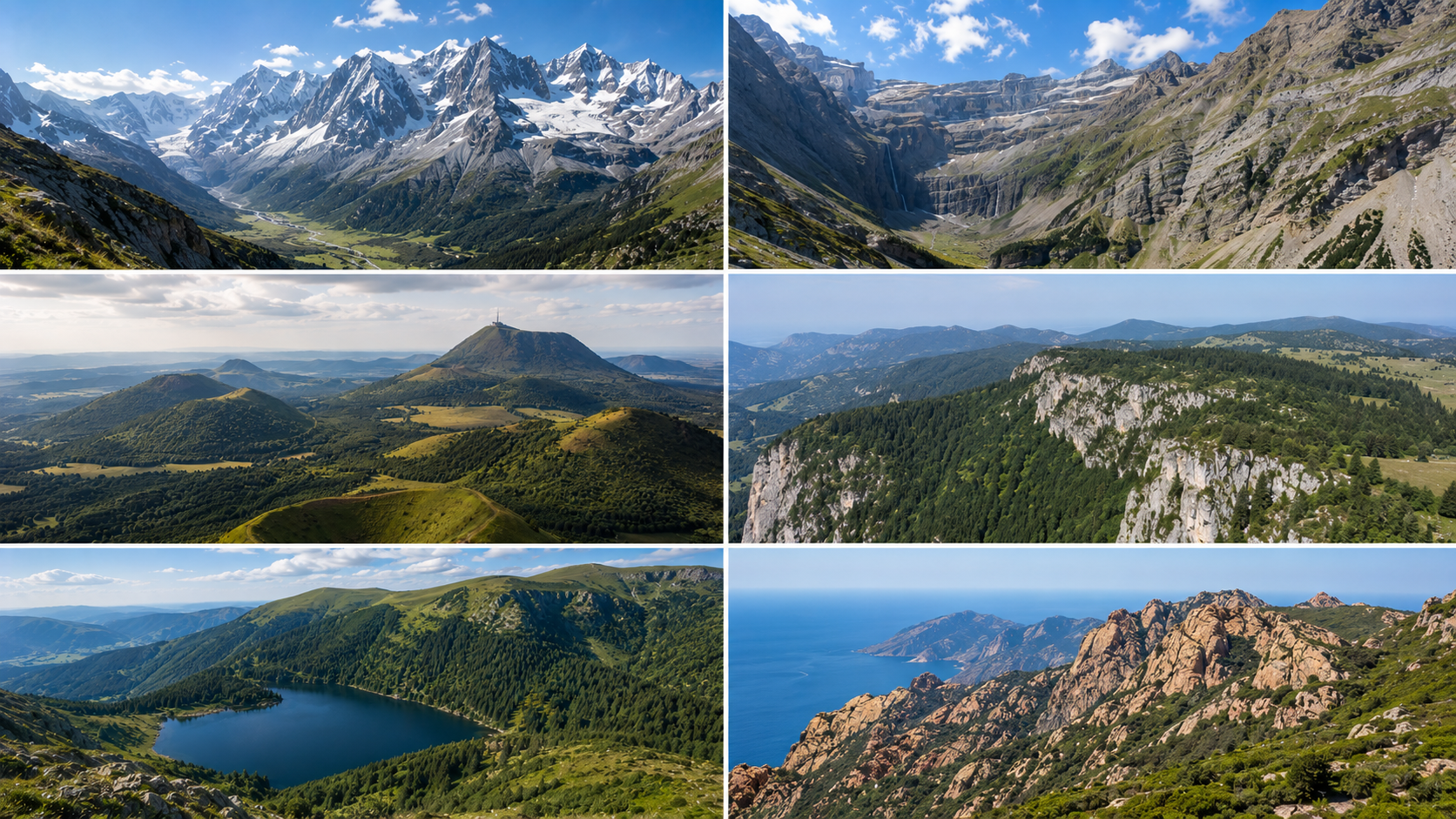
Choosing between the mountains in France depends on what you want: skiing, hiking, wildlife, food, or a mix of these.
- The Alps: Best for skiing (world-class resorts), Mont Blanc access, and high-altitude summer hiking; suitable for all seasons; most internationally recognised of all mountains in France
- The Pyrenees: Best for long-distance hiking (GR10), cirque landscape photography, and a mixed France-Spain cultural experience; noticeably less crowded than the Alps in summer
- Massif Central: Best for volcanic scenery, crater lakes, Auvergne cheese and wine, and low visitor density; good choice for those wanting something outside the typical French mountain circuit
- Jura Mountains: Best for cross-country and family skiing, hiking, Jura wine, and quieter forest landscapes; most efficiently combined with an Alsace or Burgundy itinerary
- Vosges Mountains: Best for forested walking, Alsatian wine route, and thermal wellness; works well as part of a broader northeastern France visit
- Corsica: Best for experienced hikers doing the GR20, and for those wanting alpine terrain combined with Mediterranean coast; the most distinctive combined mountain-and-sea experience
Range | Best For | Season | Access from Paris | Nearest Airport |
The Alps | Skiing, high-altitude hiking | All year | 2.5 hrs (TGV to Grenoble or Chambéry) | Lyon, Geneva |
The Pyrenees | Long hiking, cirques | Jun to Sep | 4.5 hrs (TGV to Toulouse or Pau) | Toulouse, Lourdes |
Massif Central | Volcanic scenery, off-beaten-path | Apr to Oct | 3 hrs (TGV to Clermont-Ferrand) | Clermont-Ferrand |
Jura Mountains | Nordic skiing, wine | Nov to Mar (ski); Jun to Sep (hike) | 2 hrs (TGV to Besançon) | Geneva, Lyon |
Vosges Mountains | Forest walks, wellness | Apr to Oct | 2 hrs (TGV to Strasbourg) | Strasbourg, Basel |
Corsica | GR20 hike, coast + mountains | May to Sep | Flight only | Bastia, Ajaccio |
Final Takeaway
The mountains in France are much more varied than most people expect. The Alps have Western Europe’s highest peak and the busiest ski resorts. The Pyrenees stretch for 430 km along the Spanish border. The Massif Central is known for its volcanoes. The Jura and Vosges Mountains are quieter, forested, and closely tied to local food and wine. Corsica is unique, with alpine mountains on a Mediterranean island. Each of these six ranges shows you a different side of France.
If you’re planning a mountain holiday in France and want help choosing the best region, timing, and itinerary, Holiday Tribe’s advisors can help you plan every detail.