

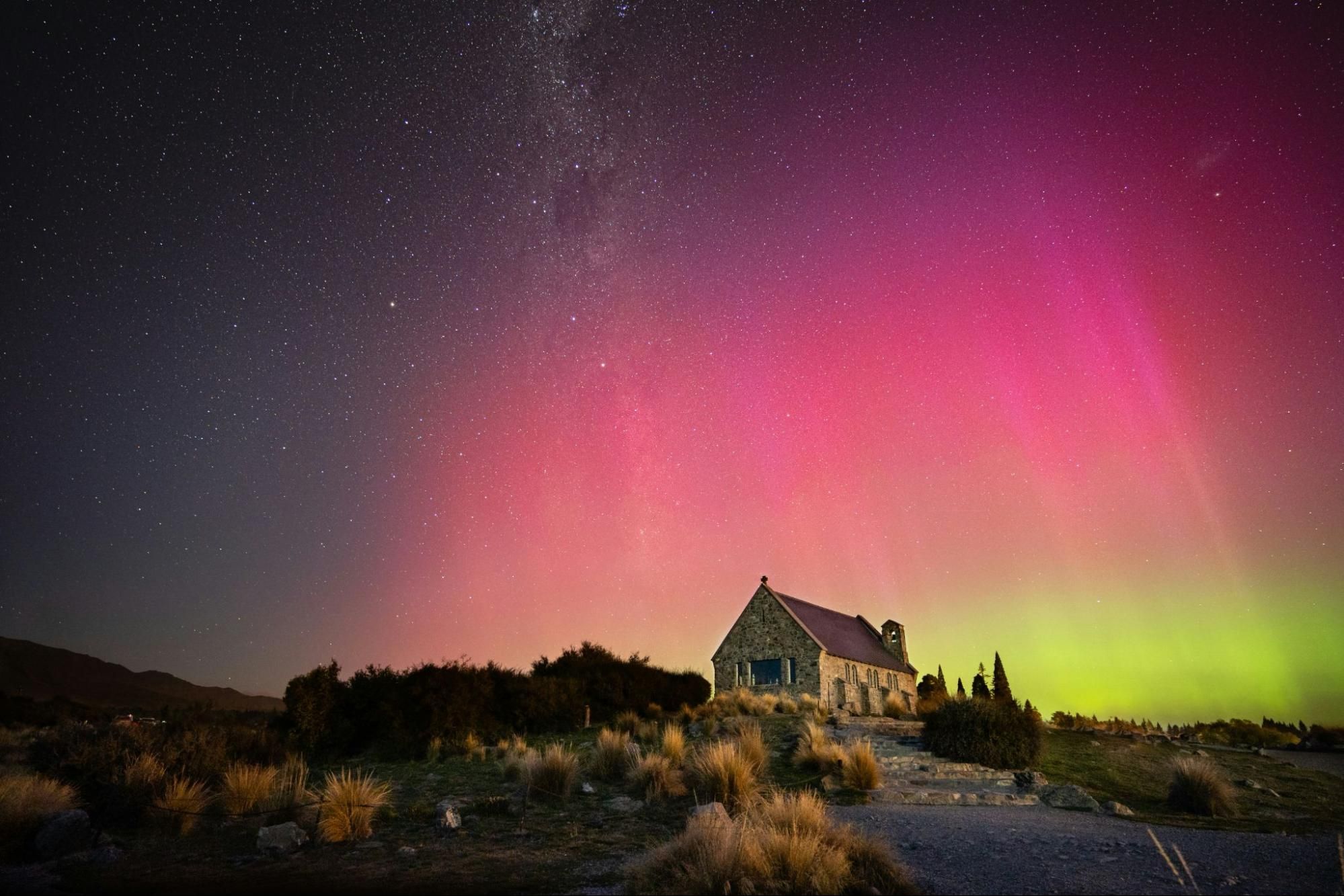
Nothing really prepares you for seeing the aurora in New Zealand. The aurora australis, which is the southern hemisphere's version of the Northern Lights, does more than just light up the sky; it moves. Green turns to pink, pink fades into purple, and the whole display ripples as if someone is shaking a curtain of light above the Southern Ocean. Unlike the Northern Lights, the southern version is less well-known. Fewer people have heard of it, there are smaller crowds, and the places where you watch it are often so remote and quiet that it almost feels like a lucky accident. New Zealand is right in the path of the aurora, with some of the darkest skies in the world and a location that puts you closer to the auroral oval than almost anywhere else you can actually live. This guide will show you the best places to see the aurora in New Zealand, the best times to go, how to track the aurora australis forecast, and what you can realistically expect, so you are not just hoping for clear skies.
Why 2026 Is a Good Year for Aurora New Zealand
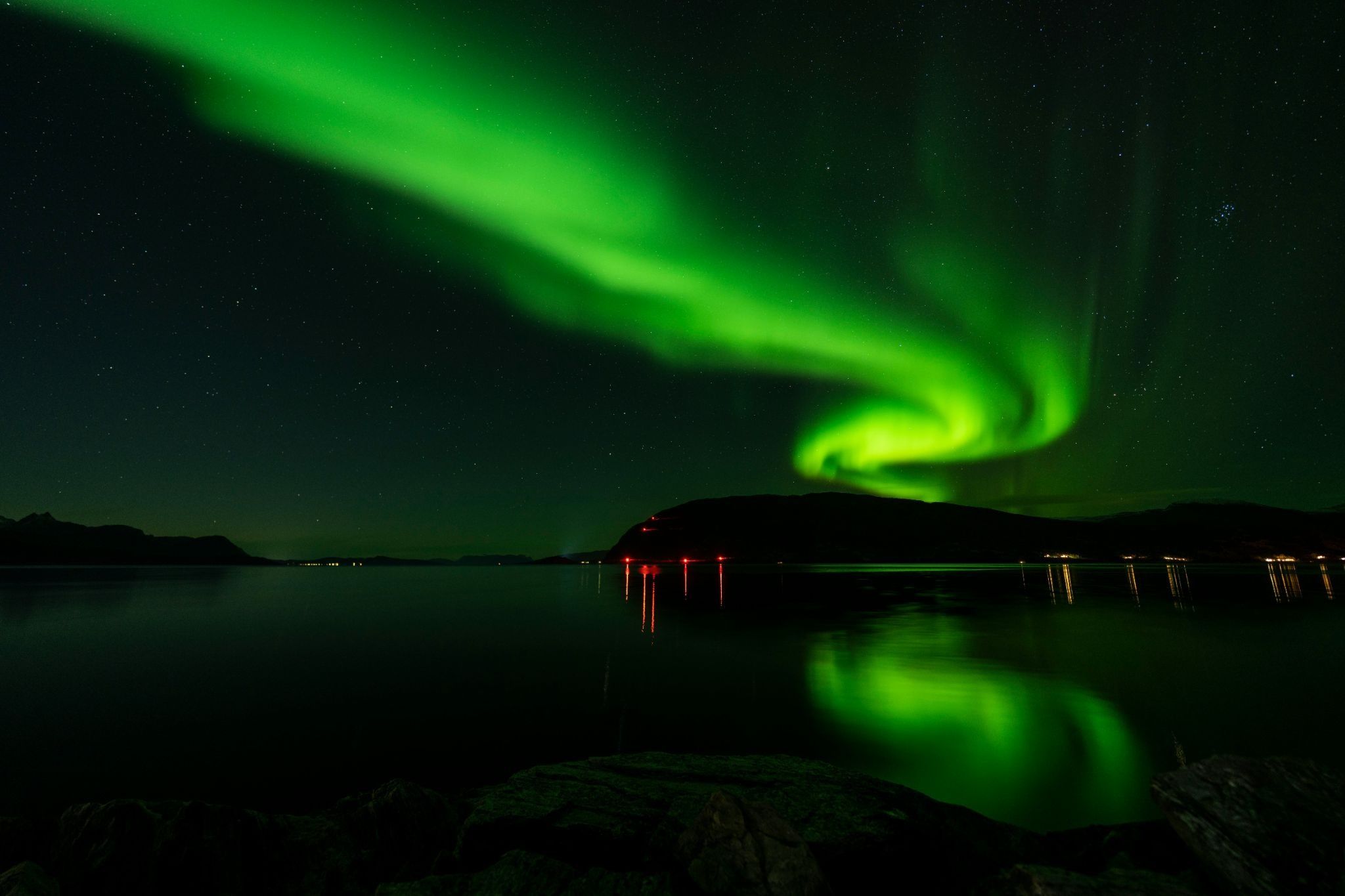
Here’s the short version: we’re currently close to Solar Maximum, which is the peak of the Sun’s 11-year activity cycle.
Solar Cycle 25 reached its peak in 2025 and is still very active in 2026. There are more solar flares, more geomagnetic storms, and aurora displays in New Zealand are reaching further north than usual.
To put it in perspective, during the May 2024 Gannon Storm (Kp 9+), the aurora australis in New Zealand was visible from Auckland. Events like this are happening more often now than they will for another ten years.
So if seeing the aurora has been on your list, 2026 is truly a great time to go. This isn’t marketing, it’s just solar physics.
Can You Actually See Aurora in New Zealand?
Yes, but let’s be honest.
There’s no guarantee you’ll see the aurora in New Zealand. The aurora australis depends on solar weather, which doesn’t follow anyone’s travel plans. But New Zealand has the right location, some of the world’s darkest skies, and enough southern latitude to give you a real chance.
A few honest things to know before you book:
- You’ll have the best chance on the South Island. The further south you go, the lower the Kp threshold you need.
- Cloud cover is the most common reason people miss it, not lack of solar activity
- During moderate events, you’ll see white-green beams with your eyes, while cameras can pick up the pinks and purples.
- Is it possible to see the aurora from the North Island? It’s rare, and usually only happens during extreme Kp 8–9 storms.
Try to keep your plans flexible. Spending two or three extra nights in the right place is the biggest factor that separates those who see the aurora from those who miss it.
Best Places to See Aurora Australis in New Zealand
The farther south you travel, the better your chances of seeing the aurora in New Zealand. Here are the best places to stay.
Stewart Island / Rakiura
This is the southernmost inhabited island in New Zealand and your best chance to see the aurora australis. Located at 47°S, it is an International Dark Sky Sanctuary, and the aurora can be seen here even when Queenstown is dark.
The Māori name Rakiura means "land of the glowing skies." This isn’t just a tourism slogan, it’s true.
- Best viewing spots: Observation Rock, Lee Bay, Moturau Moana
- Kp threshold: 3–4 (lowest in New Zealand)
- Getting there: 1-hour ferry from Bluff or a short flight from Invercargill
The Catlins
This rugged stretch of southeastern coastline has almost no light pollution and offers a clear southern view toward Antarctica. It’s one of the most underrated places to see the aurora australis in New Zealand and is excellent for photography.
Photographers especially love capturing the silhouette of lighthouses, like Nugget Point, against the green and pink aurora lights. These are the shots many people come here to get.
- Best viewing spots: Nugget Point Lighthouse, Waipapa Point Lighthouse
- Kp threshold: 4–5
- Getting there: Self-drive from Invercargill or Dunedin, no public transport here
Lake Tekapo
Lake Tekapo is part of the Aoraki Mackenzie International Dark Sky Reserve, the largest in the Southern Hemisphere. It’s easy to reach and offers truly exceptional night skies.
The Church of the Good Shepherd, with the lake reflecting the aurora behind it, is probably the most photographed aurora scene in New Zealand.
- Best viewing spots: Lake shoreline, Church of the Good Shepherd, Mount John Observatory
- Kp threshold: 5+ for reliable sightings
- Getting there: About 3.5 hours from Christchurch by car, book accommodation well ahead of new moon weekends
Queenstown and Wanaka
These towns are the easiest places to stay if you want to see the aurora in New Zealand. They offer good infrastructure, great food, and beautiful alpine scenery for your nights out. While they aren’t the most sensitive spots, you’ll have good chances when the Kp index is high.
The lone willow tree in Lake Wanaka has quietly become one of the most popular foregrounds for aurora photos in New Zealand.
- Best viewing spots: Bennetts Bluff (Queenstown), Eely Point and Lake Wanaka waterfront (Wanaka)
- Kp threshold: 5+, Wanaka has slightly darker skies and is worth the 45-min drive from Queenstown
- Getting there: Both are well-connected by road; Queenstown has its own airport
Dunedin and Invercargill
Dunedin and Invercargill are underrated and often overlooked, but both are excellent during strong geomagnetic events. Invercargill is further south than Queenstown, and the flat Southland plains offer wide, unobstructed views of the southern horizon that urban Queenstown can’t match.
Dunedin’s Otago Peninsula is a great spot for coastal aurora viewing, especially when storms push the auroral oval northward.
- Best viewing spots: Hoopers Inlet and Sandfly Bay (Dunedin); Oreti Beach and Tiwai Point (Invercargill)
- Kp threshold: 4–5
- Getting there: Both cities have domestic airports; good self-drive access to viewing spots within 30–45 minutes
When to Go: Month-by-Month Breakdown

Month | Aurora Chances | What to Know |
January–February | Low | Nights are too short, not worth planning around |
March | Good | Autumn equinox often boosts geomagnetic activity |
April–May | Building | Nights lengthen; reliable start of season |
June–August | Best | Longest, darkest nights; widest viewing window |
September | Good | Spring equinox; second natural activity spike |
October–December | Fading | Possible but odds drop off significantly |
The equinox effect is something you should know about. In March and September, Earth's magnetic field lets in more solar wind. That is why these months often have more aurora australis sightings in New Zealand, even when it is not the middle of winter.
Tribe Travel Tips
You spend a night in Queenstown, hoping for a Kp spike, but nothing happens. This is a common experience.
Here’s what really helps:
- Stay south, stay longer: Spending 3 to 4 nights on Stewart Island or in The Catlins gives you a buffer in case some nights are cloudy.
- Plan around the new moon: A full moon will wash out faint auroras, so the two weeks around a new moon are your best chance to see them.
- Set an alarm for midnight: The best time to see the aurora is usually between midnight and 3 AM, not just after sunset.
- Dress for it: In June and July, nights in Southland can get well below zero, so wearing thermal layers is a must.
- Face south: The aurora australis shows up on the southern horizon. If you’re not sure which way is south, use your phone’s AR compass to help you find it in the dark.
- Switch off auto mode: Use night mode with a long exposure, or manual shutter control if your phone has that option. Auto mode usually won’t pick up the colours.
Plan Your Aurora in New Zealand With Holiday Tribe
Chasing the aurora in New Zealand takes more than just one night and a bit of luck. Where you go, when you travel, and how easily you can change your plans if the weather shifts are all just as important.
Holiday Tribe creates New Zealand travel packages designed for real aurora experiences. We choose the best southern locations, book places to stay near top viewing spots, and connect you with advisors who know the South Island and can help you adjust your plans as needed.
If you want a set itinerary for the South Island or a custom holiday based on your dates and the aurora season, contact us at holidaytribe.ai. Let us know when you plan to travel, and we will handle the rest.