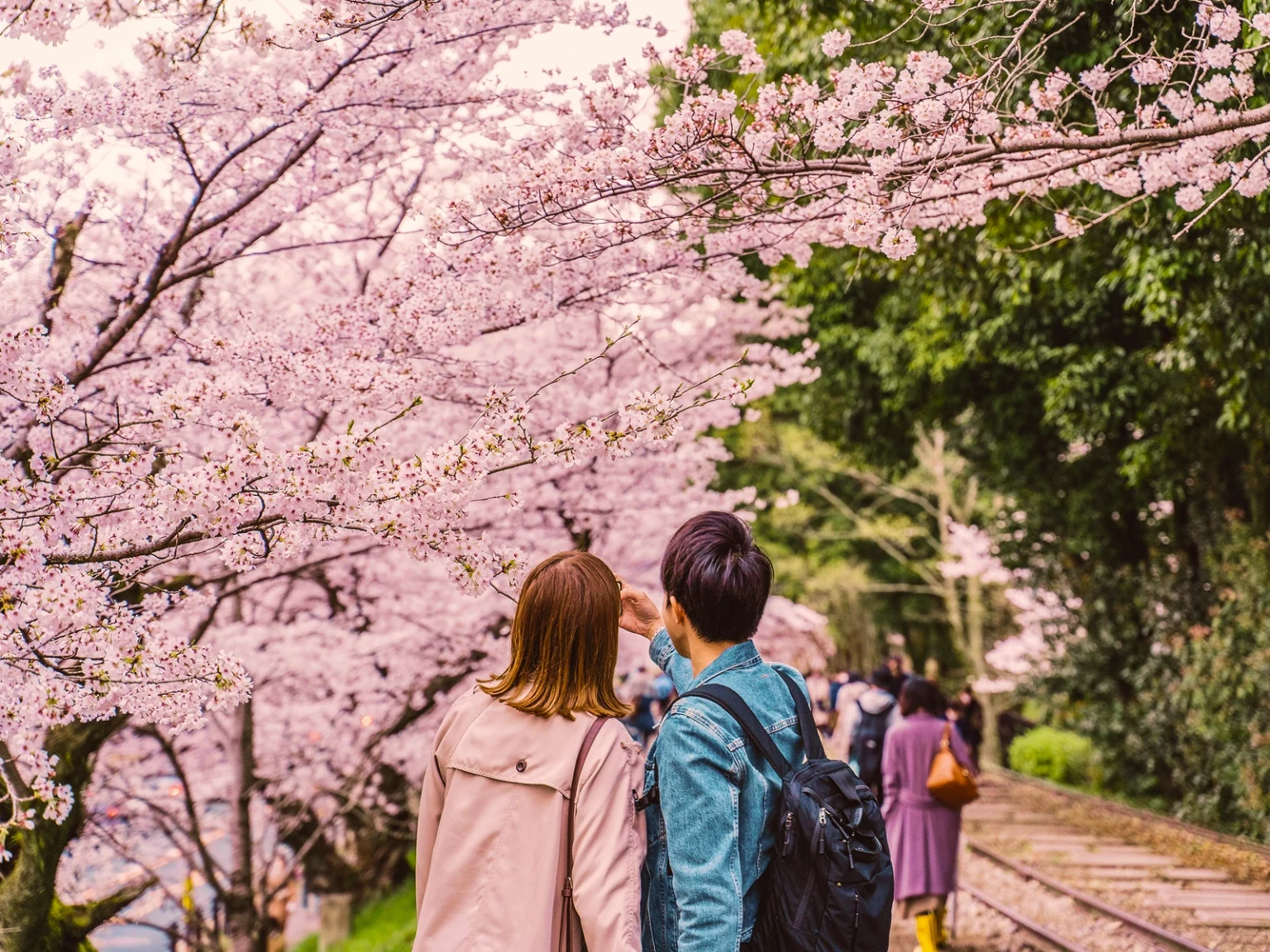


Bangkok has over 400 temples. That number sounds overwhelming until you actually spend a day hopping between them, and then it starts to make complete sense. This city runs on spirituality. It's woven into everyday life here, and the temples aren't just pretty buildings for tourists to photograph. Monks live and study in them. Locals stop in before work to leave offerings. Schoolchildren visit on field trips. The temples are alive in a way that most tourist attractions simply aren't.
If you're planning your holiday this year, knowing which Bangkok Temples to prioritise makes a real difference. A poorly planned temple day leaves you hot, rushed, and vaguely underwhelmed. But a well-planned one is genuinely one of the best days you can have in any city in Southeast Asia.
Here's what you need to know before you go, and which temples are worth your time.
What to Wear?
- Bangkok temples have a dress code, and it's taken seriously. Shoulders and knees must be covered. This applies to both men and women, no exceptions.
- Flip-flops are fine for walking around, but you'll be removing your shoes at every temple entrance, so slip-ons make the day significantly easier.
- Bring a small bag for your shoes, or just leave them at the designated spots outside.
- If you forget and show up in shorts or a sleeveless top, some temples, particularly around the Grand Palace, have sarongs or cover-ups available to borrow or rent. But it's easier to just come dressed correctly from the start.
Tribe tip: Pack a lightweight scarf or thin long-sleeved shirt in your bag. It takes up almost no space and saves you from being turned away at the door or scrambling to find something to borrow.
Famous Temples in Bangkok
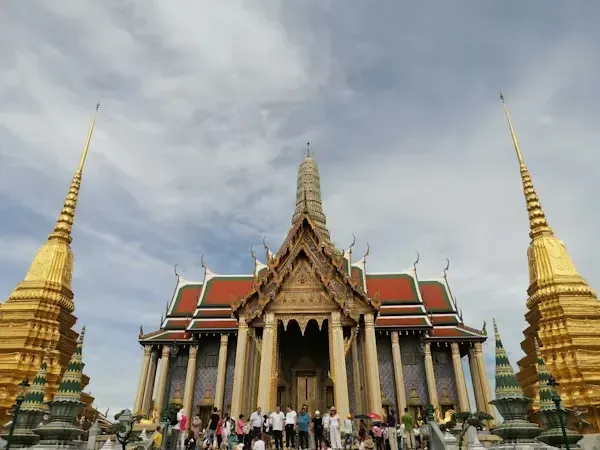
1. Wat Phra Kaew -The One You Can't Skip
 Entry fee: 500 THB (includes Grand Palace grounds)
Opening hours: 8:30 AM – 3:30 PM
Getting there: Chao Phraya Express Boat to Tha Chang Pier, then a short walk
- Wat Phra Kaew sits inside the Grand Palace complex, and it's the most sacred temple in all of Thailand, not just Bangkok.
- The Emerald Buddha housed inside is only 66 centimetres tall, which surprises most people, but its significance in Thai culture is enormous. The king himself changes the statue's seasonal robes three times a year.
- The grounds surrounding the temple are covered in golden chedis, mythological guardian figures, and murals that stretch along the walls depicting scenes from the Ramakien, Thailand's version of the Hindu epic Ramayana. Every surface and corner has something to look at.
Tribe tip: Get there right when it opens at 8:30 AM. The crowds build quickly after 10 AM, and the heat becomes more intense by late morning. An early start gives you the whole place in relative peace.
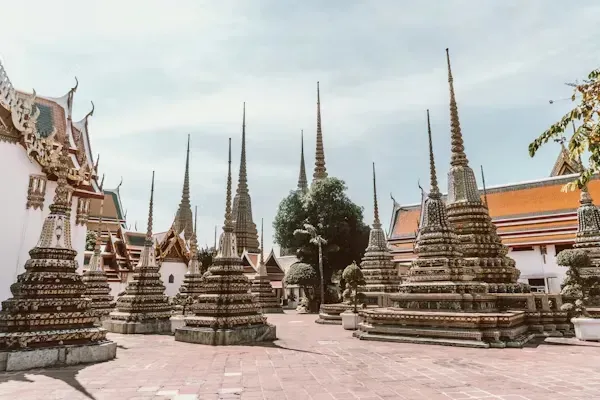
2. Wat Pho-The Reclining Buddha
 Entry fee: 300 THB
Opening hours: 8:00 AM – 7:30 PM
Getting there: Five-minute walk south from the Grand Palace
- Wat Pho is just around the corner from the Grand Palace and is considered Bangkok's oldest and largest temple complex.
- Most people come specifically to see the Reclining Buddha, a gold-plated statue that stretches 46 metres long and 15 metres high.
- Walking alongside it and seeing the sheer scale of it up close is genuinely impressive. The feet alone are covered in 108 mother-of-pearl inlaid panels depicting auspicious symbols.
- Beyond the famous statue, the temple grounds hold over 1,000 Buddha images and a series of galleries with bronze figures that most visitors walk straight past. Worth slowing down for.
- Wat Pho is also where traditional Thai massage was formally established as a practice. There's a massage school on the grounds, and you can book a session right there after your visit.
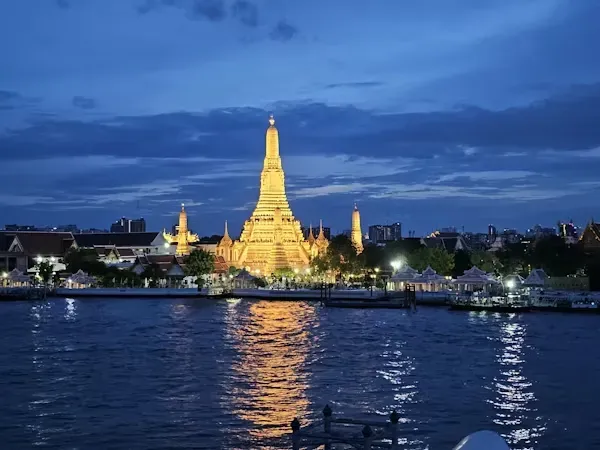
3. Wat Arun - The Temple of Dawn
 Entry fee: 200 THB
Opening hours: 8:00 AM – 6:00 PM
Getting there: Cross-river ferry from Tha Tien Pier, fare is around 4 THB
- Wat Arun is located on the opposite bank of the Chao Phraya River from Wat Pho, and the five-minute ferry crossing to get there is a small experience in itself.
- This Bangkok temple's central spire rises about 80 metres and is covered entirely in fragments of colourful porcelain. Chinese ceramics were used when the temple was built in the early 19th century, and the effect up close is unlike anything else in the city.
- You can climb a steep set of stairs partway up the central prang for a view over the river and back toward the old city. The steps are genuinely steep, almost vertical in places, so take your time and hold the rope.
- The temple is beautiful during the daytime, but sunset is when it earns the most attention. The light hits the porcelain at a particular angle, and the whole structure seems to glow.
Tribe tip: Wat Arun is dramatically lit at night, too. If you're taking an evening river cruise, you'll see it from the water, one of the better views Bangkok offers after dark.
4. Wat Saket-The Golden Mount
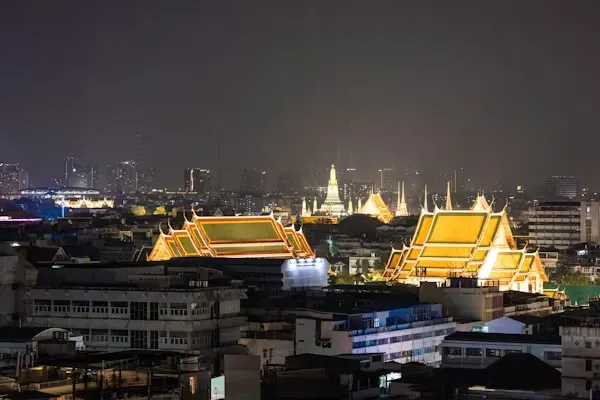 Entry fee: 100 THB
Opening hours: 7:30 AM – 7:00 PM
Getting there: Short walk from Khao San Road, or tuk-tuk from the old city
- Wat Saket is another worth adding Bangkok temple to your itinerary, especially if you want a view without the crowds.
- Situated at the top of an artificial hill, the climb to the top involves about 300 steps winding through trees, bells, and small shrines.
- At the top, a golden chedi houses a relic of the Buddha brought from India. The 360-degree view of Bangkok from up there is one of the better panoramas in the city.
- It's noticeably quieter here than at the Grand Palace or Wat Pho. Locals come to make merit, tie prayer ribbons, and ring the bells that line the path up. It has a genuinely calm, unhurried atmosphere that some of the more famous temples lose during peak hours.
5. Wat Traimit - The Golden Buddha
Entry fee: Free to see the Buddha (small fee for the museum)
Opening hours: 8:00 AM – 5:00 PM
Getting there: Short walk from Hua Lamphong MRT station, at the entrance to Chinatown
- Wat Traimit houses the world's largest solid gold Buddha statue, five and a half tonnes of gold, nearly three metres tall.
- The story behind it is remarkable: the statue was hidden under plaster for centuries, possibly to protect it during times of war or invasion. It was only rediscovered by accident in 1955 when a crane dropped it during a move and the plaster cracked, revealing the gold underneath.
- The temple is nestled right at the edge of Bangkok's Chinatown, so visiting here with a walk through Yaowarat Road makes for a genuinely good half-day.
A Practical Day Plan
If you want to cover the main Bangkok Temples in one day, here's a route that works without rushing:
Start at Wat Phra Kaew and the Grand Palace at 8:30 AM sharp. Spend two hours there. Walk south to Wat Pho, another hour or so, plus time for a massage if you want one. Walk to Tha Tien Pier and take the short ferry across to Wat Arun. Spend an hour there, then ferry back and grab lunch near the river. In the afternoon, head to Wat Saket for the view, then finish the day at Wat Traimit and walk into Chinatown for dinner.
That's a full day, but a comfortable one with no unnecessary rushing.
Plan Your Bangkok Temple Tour With Holiday Tribe
If you'd rather not spend your Bangkok holiday figuring out ferry piers, dress code rules, and temple opening times, Holiday Tribe handles all of it. The Bangkok Temples Tour package covers all the key temples with a local guide who actually knows the history behind what you're looking at, not just the names.
Transport, entry fees, timing, and a few spots most tourists walk straight past; it's all taken care of. You just show up ready to be there.
Get in touch with Holiday Tribe today to book your Bangkok Temple Tour. It's one of those days you'll keep talking about long after you get home.