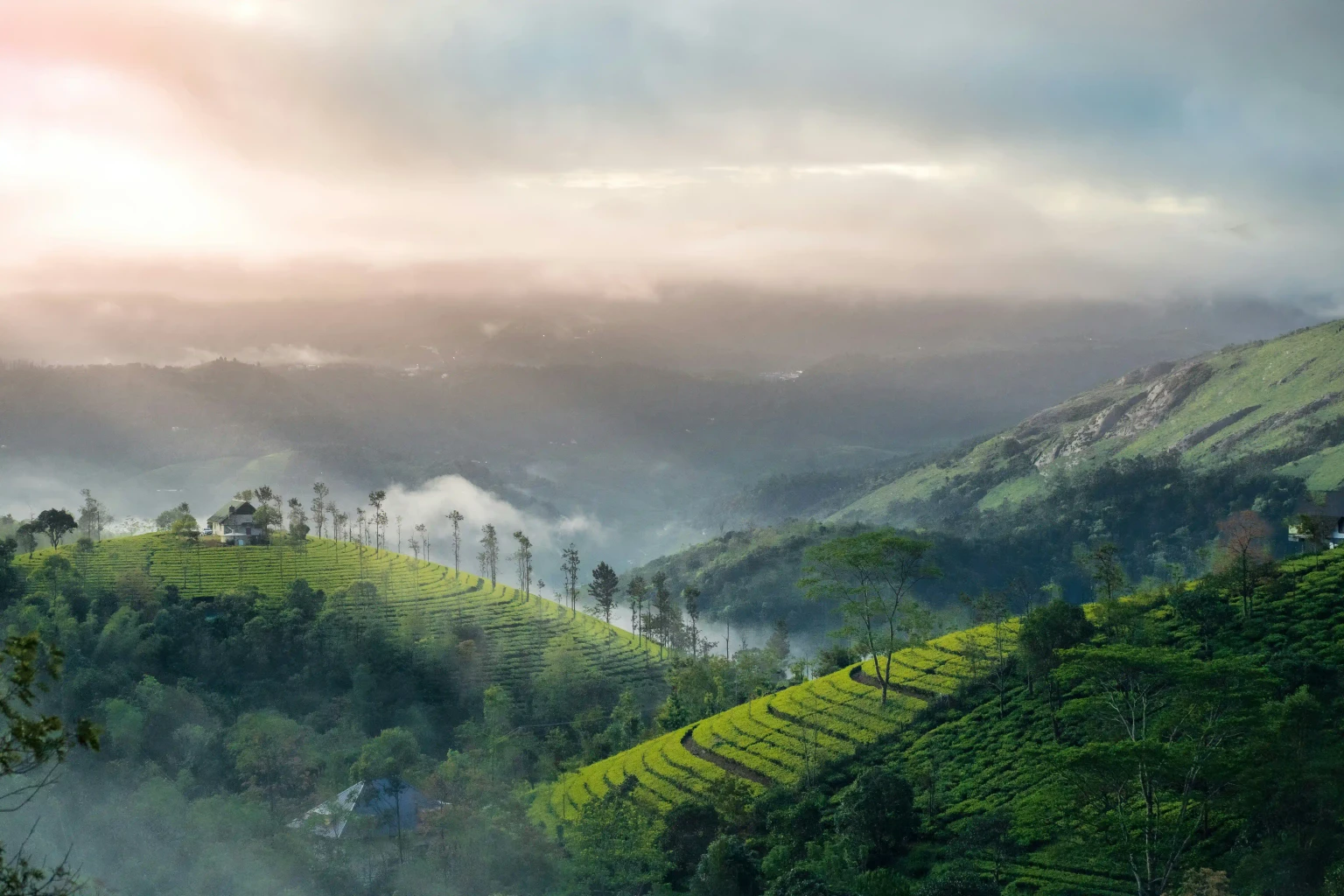


On your first morning in Kerala, someone you don’t know might call you chetta, a shopkeeper might light a small brass lamp for reasons that aren’t clear to you, and your lunch could arrive on a banana leaf. No one will explain these things, because for everyone else, it’s just a normal day.
The real challenge of a Kerala holiday is the gap between what you see and what it means. The famous sights are simple to book and understand, but everyday Kerala culture is all around you, hidden in gestures and habits that are easy to miss or misunderstand. This guide leaves out the postcard version. Instead, we’ll show you the Kerala culture you’ll actually experience on the street, one small custom at a time, until an ordinary morning feels familiar and becomes the highlight of your holiday.
Why Kerala's Everyday Culture Is So Easy to Notice
Kerala is a small, green place where people live close together, and daily life unfolds in public. You can see more in one slow morning here than in a whole week elsewhere. People show their habits openly, whether it’s how they dress, what they eat, or their faith, all side by side.
Another reason is that Kerala’s lifestyle and culture aren’t hidden away in museums. You’ll find them on the street, at the tea stall, and in doorways, making them easy to notice once you know what to look for. Here’s a quick guide to spotting a few of these signs.
What you'll notice | What it quietly tells you |
A man folding his mundu to the knee | Everyday comfort and workwear, not a costume |
A brass lamp lit at dusk | The day has a rhythm marked by light |
Meals served on a banana leaf | Food is fresh, seasonal and shared |
Umbrellas in every bag | Life is shaped by two monsoons |
A temple, church and mosque together | Centuries of living side by side |
The Mundu and Its Famous Half-Fold
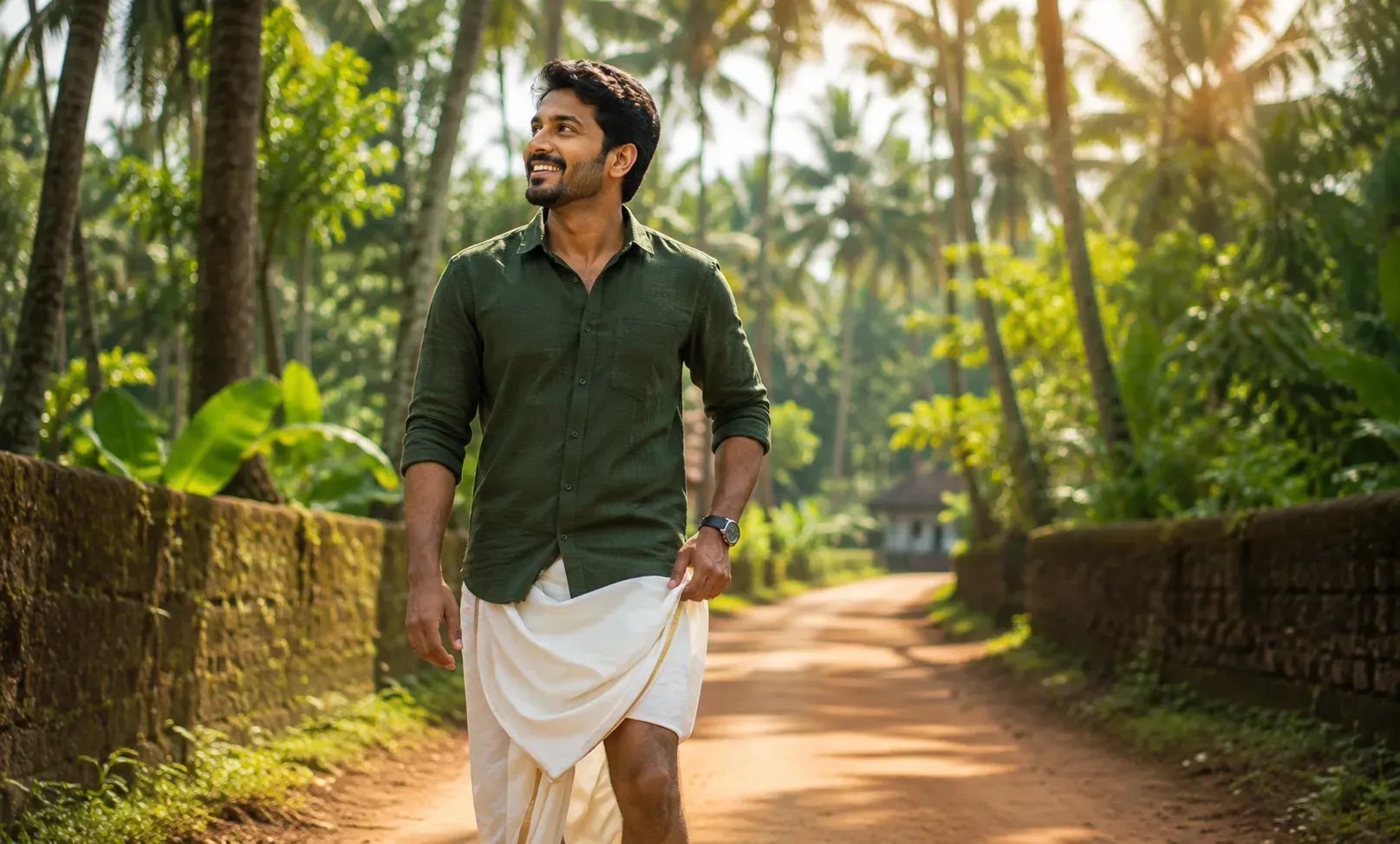
One of the most iconic sights in Kerala is a man wearing a mundu, a simple cloth wrapped around the waist and often folded up to the knee. People fold it up to walk quickly or work, and let it down again as a sign of respect in front of elders or at temples. The gold-bordered version, called kasavu, is worn for special occasions and really highlights Kerala’s traditional style.
- You’ll see white mundus everywhere, many men with them half-folded, gold-edged kasavu on special days, and women wearing the two-piece set-mundu.
- Light cotton is comfortable in the heat, the fold makes it easier to move, and kasavu is worn to mark special occasions.
- Buy an authentic kasavu piece from a handloom cluster like Kuthampully near Thrissur, and remember to dress modestly at temples by covering your shoulders.
How You Become "Chetta" or "Chechi" in a Day
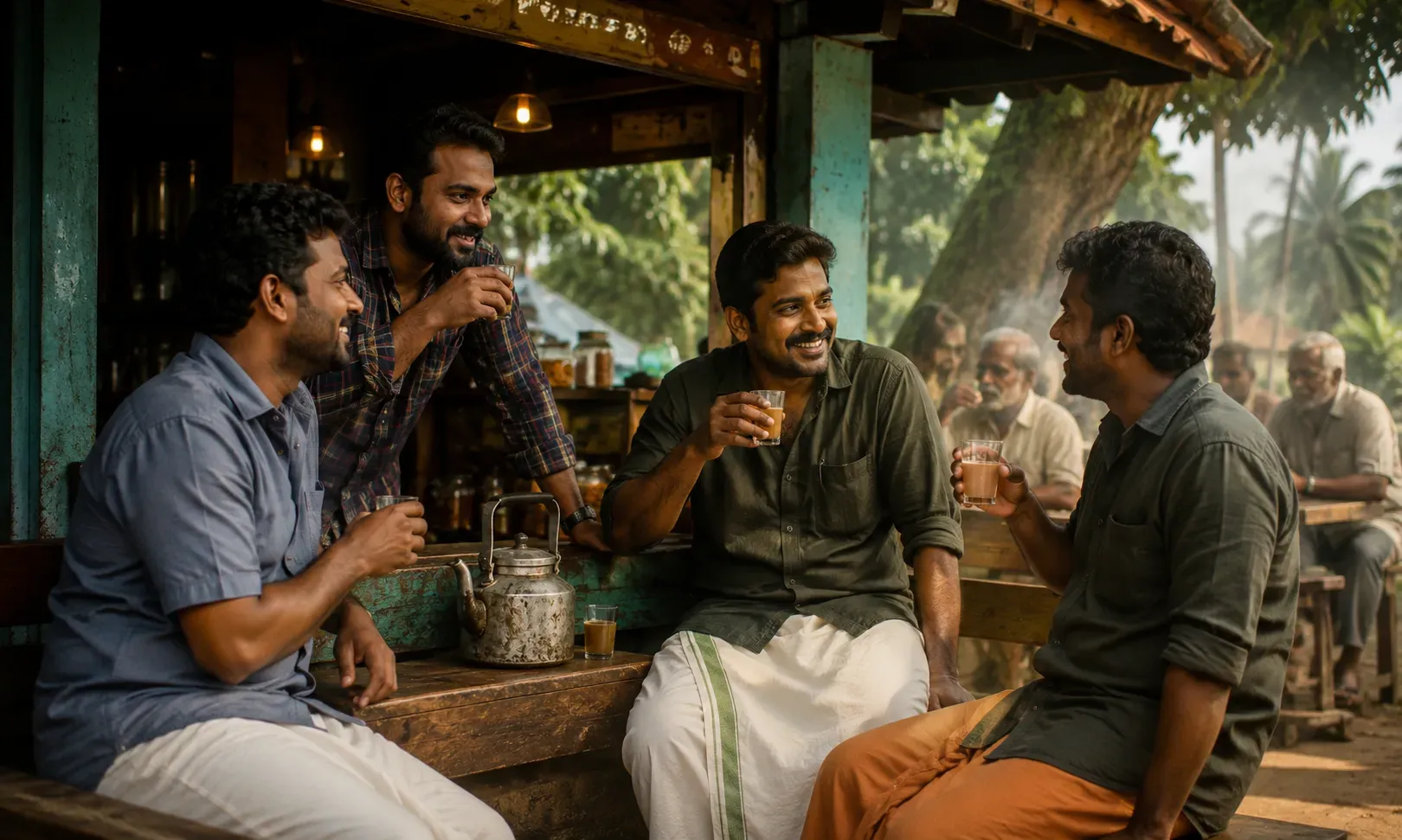
In just a day, strangers might greet you as chetta, which means elder brother, or chechi, elder sister. Before long, you’ll find yourself using these words too. Malayalam is the local language, and interestingly, its English spelling is a palindrome. What often surprises visitors even more is how common it is to see people reading in public. This quiet habit is an important part of Kerala’s culture and tradition.
- People use chetta and chechi as everyday polite terms. You’ll also notice newspapers at tea stalls and small reading rooms tucked along regular streets.
- Kerala is known for its genuine warmth and strong reading culture. The state’s literacy rate is about 96%. Kerala was declared fully literate in 1991 and became India’s first fully digitally literate state in 2025.
- Try using chetta or chechi when you talk to shopkeepers or drivers. You might also want to learn a few words, such as nandi, which means thank you.
A Meal Served on a Banana Leaf
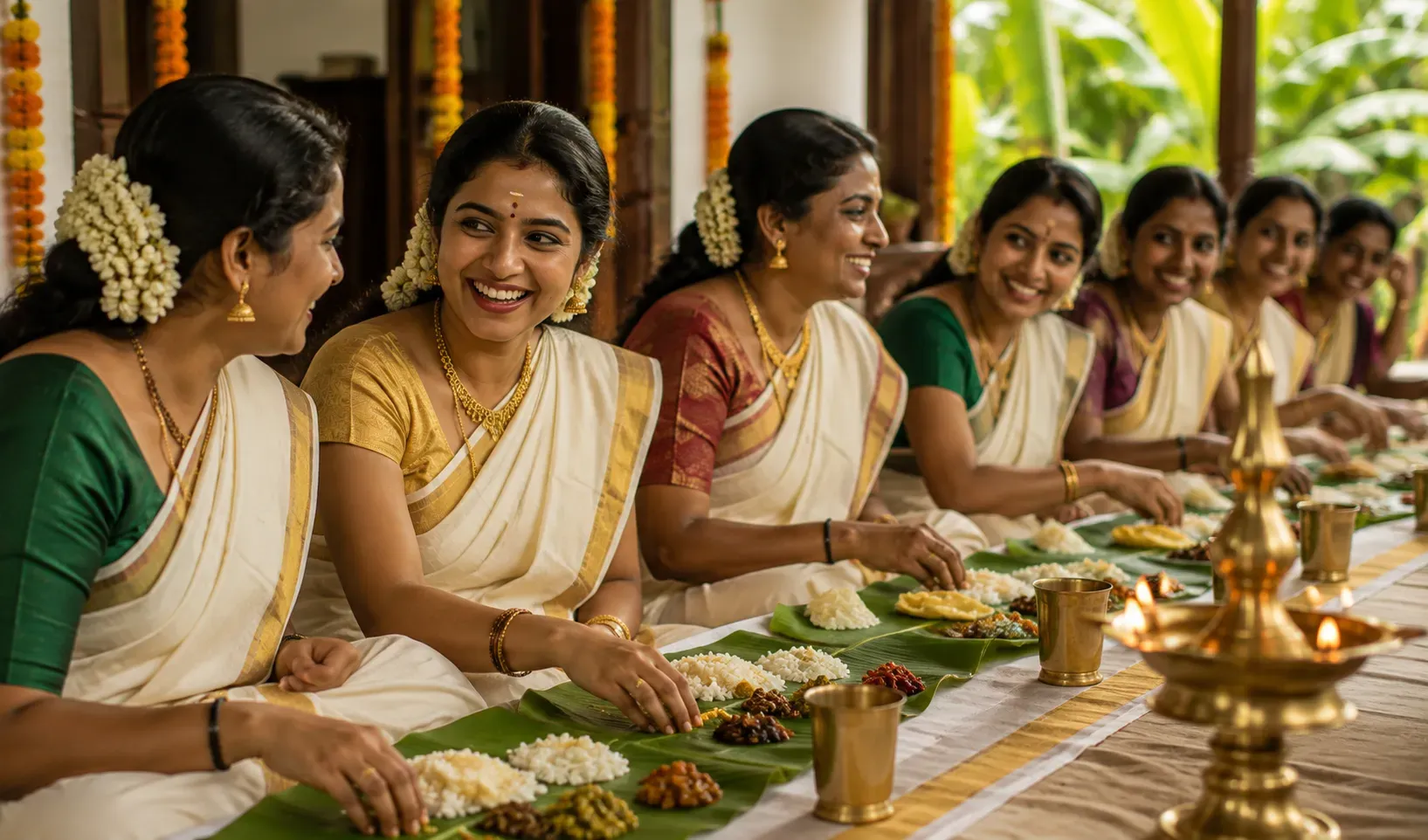
If you walk into a small meals spot at lunchtime, you’ll get rice served on a banana leaf, surrounded by curries, and you’ll eat with your right hand. This is everyday food in Kerala, not something reserved for festivals. Picture rice, fish curry, thoran, pickle, and papadam. Breakfast is a whole different story, with dishes like puttu, appam, and idiyappam.
- There’s the banana leaf, eating with your hand, coconut in almost every dish, and the small tradition of folding your leaf when you’re done.
- Banana leaves are fresh, free, and compostable, while coconut trees grow nearly everywhere.
- Order the meals, eat with your right hand, and when you finish, fold the leaf toward you. Folding it away is believed to mean you weren’t satisfied.
Brass Lamps, Jasmine and the Smell of Coconut Oil
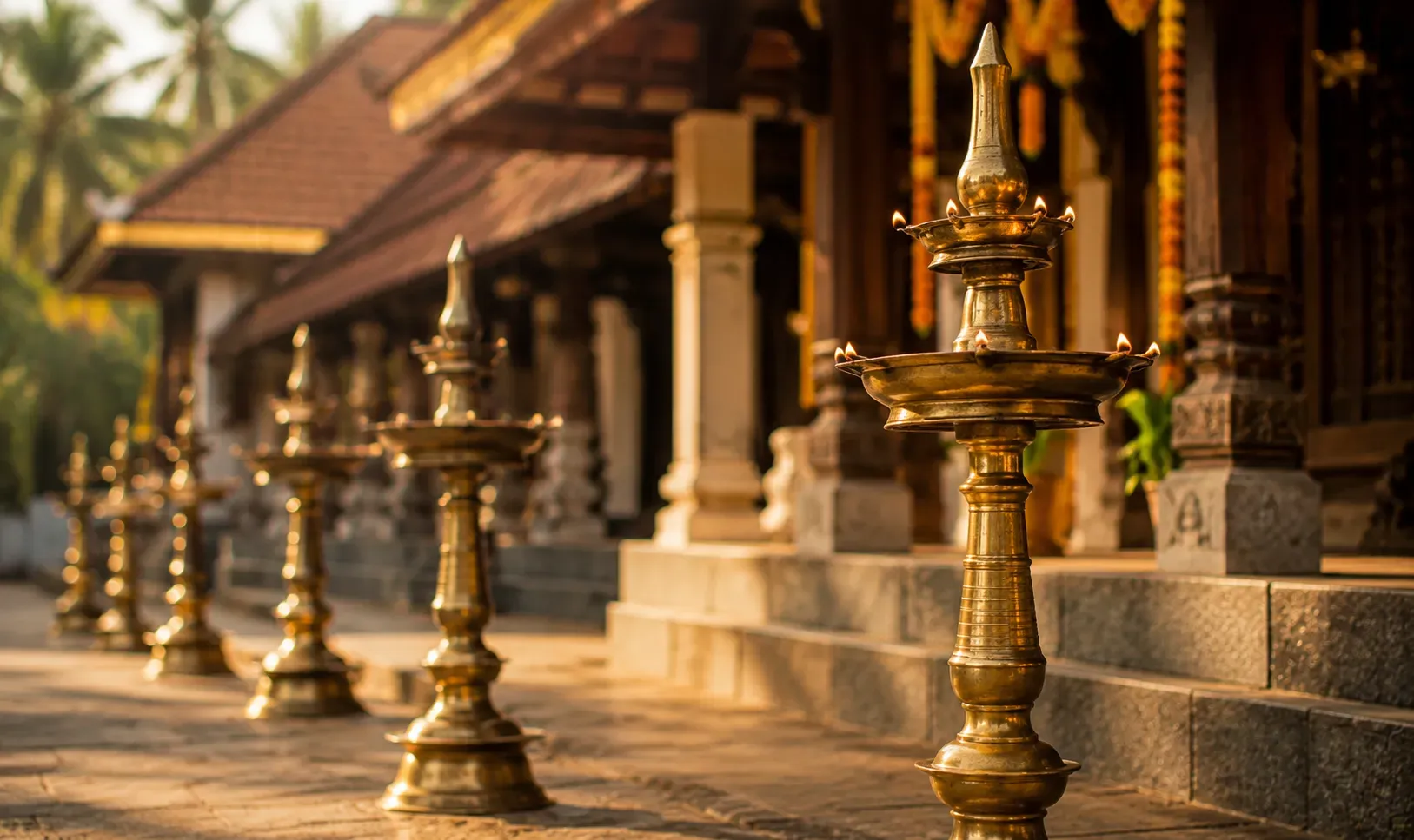
When evening arrives, you’ll notice the nilavilakku, a brass oil lamp, glowing at doorways, shops, and homes, often with a quiet prayer. You’ll also see jasmine flowers in people’s hair and smell coconut oil almost everywhere. These small rituals are at the heart of Kerala’s culture and tradition.
- You’ll spot lamps glowing at dusk, jasmine garlands, and the use of coconut oil in cooking, hair care, and massage.
- The lamp signals the end of the day and is believed to bring good luck. Coconut, meanwhile, is used for almost everything in the state.
- If you’d like to join in, buy fresh jasmine from a market stall for a rupee or two. And if you’re invited into someone’s home, remember to show a bit of respect to the lit lamp.
Why Everyone Seems to Carry an Umbrella
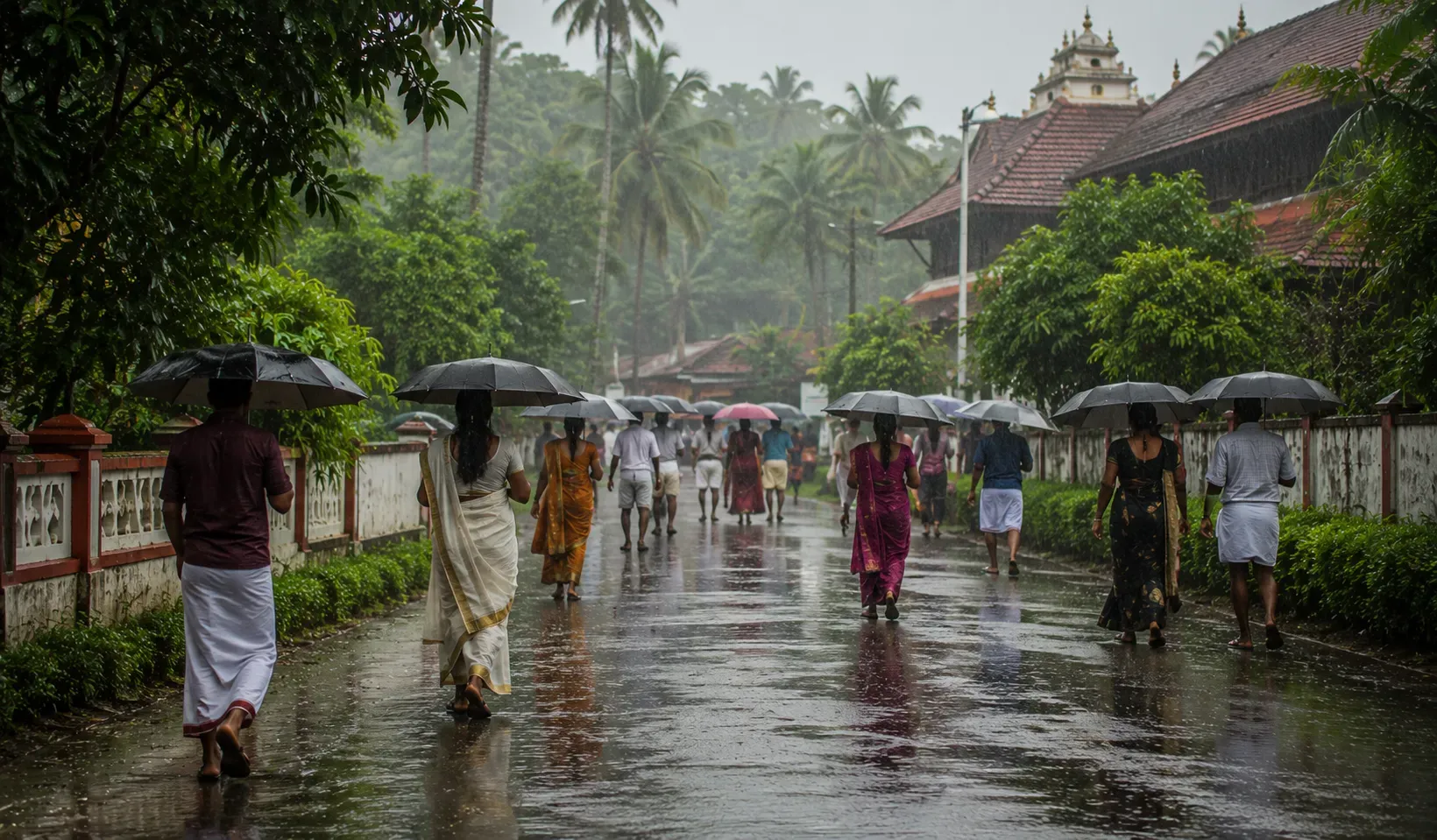
You’ll see umbrellas in every bag, if it’s sunny or raining. Kerala has two monsoon seasons: heavy southwest rains from June and northeast rains in October and November, with bright sun in between. This habit shows how much the weather shapes daily life and Kerala culture.
- You’ll notice people carrying umbrellas all year, shops always selling them, and quick rain showers that pass just as fast as they arrive.
- This happens because Kerala has two rainy seasons and strong tropical sun, so umbrellas are useful all year, not just in one season.
- Here’s a tip: carry a small umbrella, wear shoes that can handle wet streets, and plan relaxed indoor mornings during the peak monsoon.
Walls That Talk: Murals, Flags and Film Fever
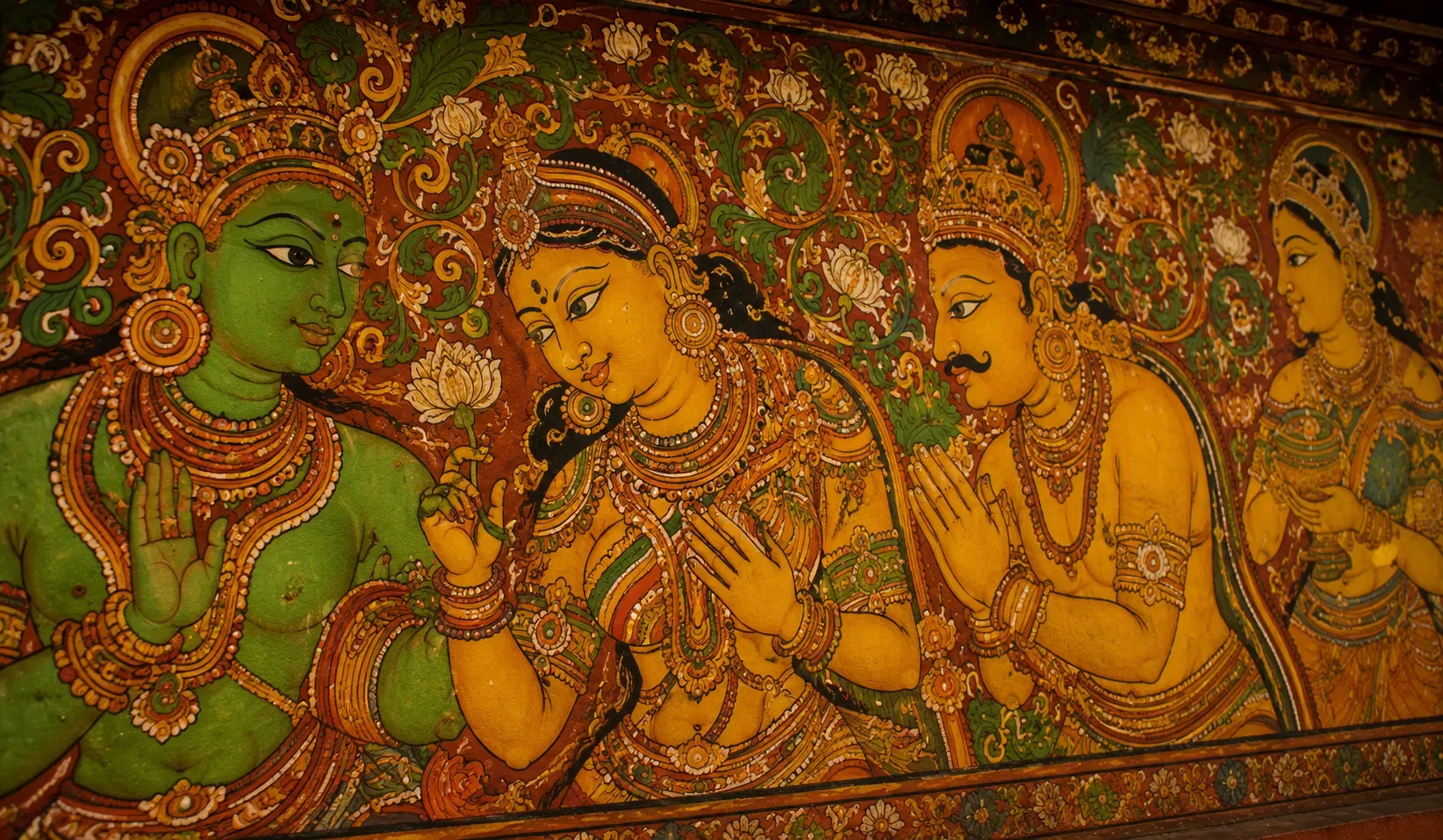
Kerala’s walls are almost never empty. You’ll find hand-painted murals, colourful party flags, and huge film-star cut-outs everywhere. People here love to express their opinions openly. Malayalam cinema is a big part of daily life, and you’ll see Kathakali faces on shop signs and autorickshaws, even if you never see a live performance. This lively, visual spirit is central to Kerala’s art and culture.
- You’ll notice political and film-themed wall art, flags on poles, and images from classical dance used in everyday designs.
- This happens because Kerala has a strong civic life, a proud film industry, and art that is part of daily street life instead of being limited to galleries.
- If you visit, try taking a mural walk in Fort Kochi. You can also watch a short Kathakali or Kalaripayattu demonstration in Kochi to see the skill behind these art forms.
A Temple, a Church and a Mosque on One Street
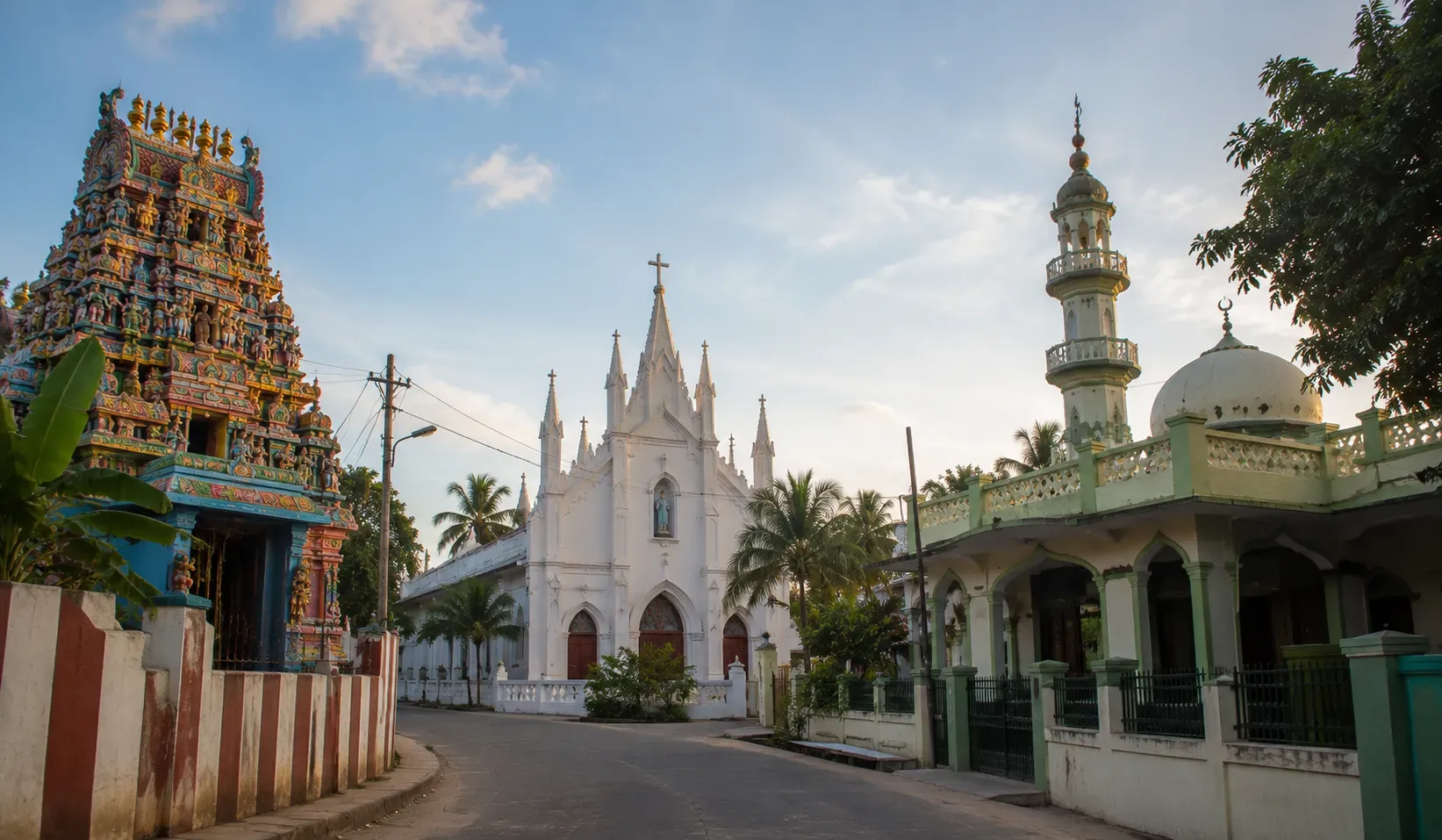
One of the first things you’ll notice is how a temple, a church, and a mosque can all stand on the same street, with bells and calls to prayer blending together. Kerala has one of India’s oldest and most diverse religious histories, and you can see it in everyday life. In Kochi’s Mattancherry, the Paradesi Synagogue from 1568 is the oldest active synagogue in India, hidden away in old Jew Town. This mix of faiths is the true cultural heritage of Kerala.
- You’ll see places of worship next to each other, sacred groves called kaavu on family land, and the 1568 synagogue in Kochi.
- Early sea trade brought Jewish, Christian, and Muslim communities to the coast long ago. They settled here and helped shape the Kerala culture and heritage you see today.
- If you visit, take a morning walk through Mattancherry and Jew Town. Dress modestly and check the opening hours, since the synagogue is closed on some days.
Ayurveda as Daily Life, Not a Holiday Treat
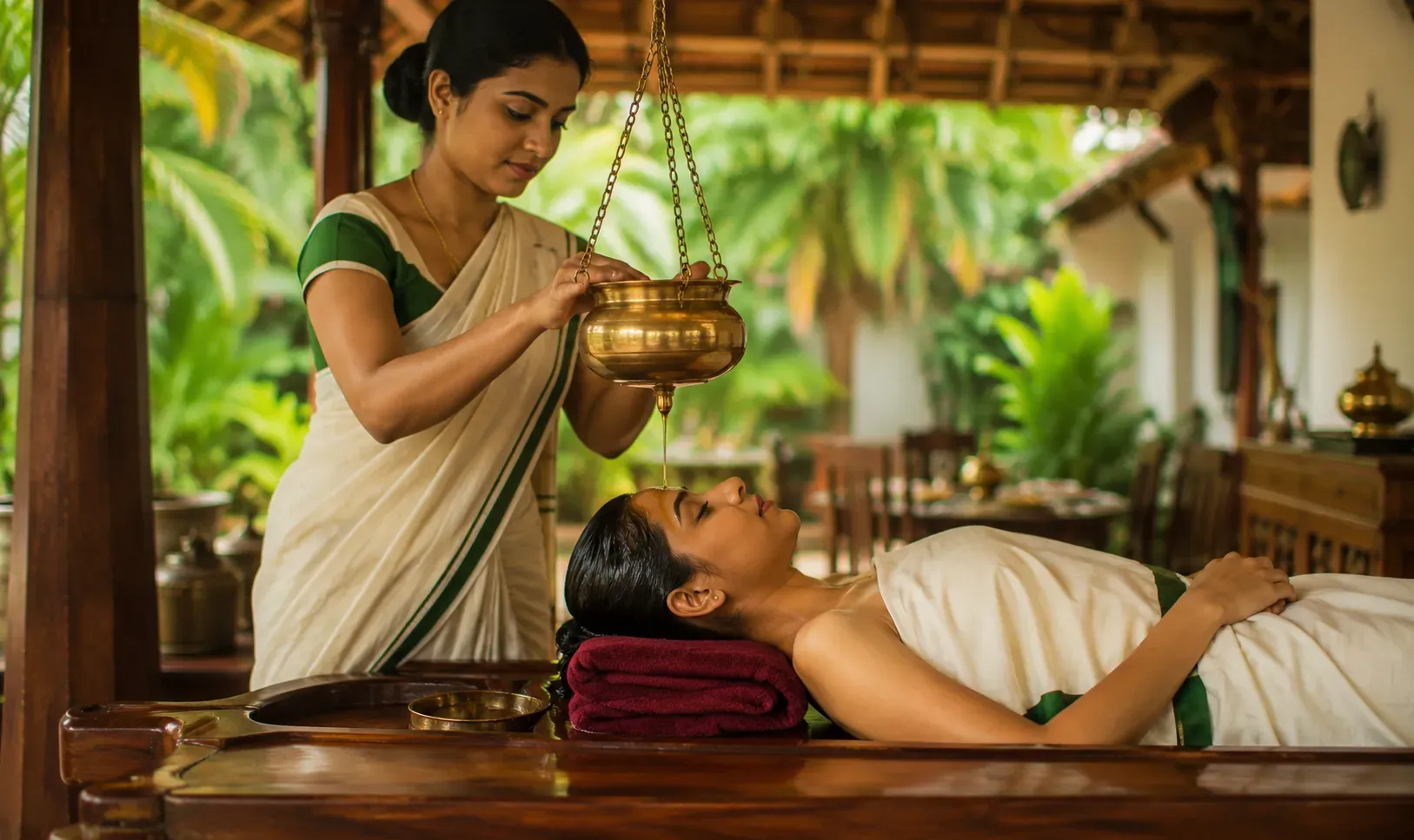
In Kerala, Ayurveda is more than something you find on a spa menu. It’s a seasonal tradition. During the monsoon month of Karkidakam, from 17 July to 16 August in 2026, people often get oil treatments and eat a special herbal porridge called Karkidaka Kanji. Many families also spend this month reading the Ramayana at home. This focus on everyday, seasonal wellness is a real part of Kerala’s culture.
- You’ll notice Ayurveda centres on many street corners, the scent of medicated oils in the air, and a clear focus on treatments during the monsoon season.
- The cool, humid rains are thought to be the best time for the body to absorb oils, rest, and recover.
- If you want a genuine treatment, pick a certified centre where you can get a proper consultation instead of just a walk-in massage. And remember, the monsoon is the traditional time for these therapies.
Ready to See This Side of Kerala for Yourself?
One of the nicest things about Kerala’s culture is how easy it is to find. You’ll see it on a tea-stall bench, in a doorway lit by a lamp, or on the banana leaf in front of you. If you pay a little attention, even an ordinary street can become the highlight of your holiday.
At Holiday Tribe, we see ourselves as holiday advisors, not travel agents. We plan Kerala holidays at your pace. You can pick one of our ready-made holidays if you want everything arranged, or let our experts and AI travel planner create a holiday that matches the Kerala lifestyle and culture you want to experience, whether that’s exploring Kochi’s heritage lanes or relaxing in a quiet backwater village. We plan for all kinds of travellers, so just tell us who’s coming and what interests you, and we’ll handle the rest.