

Booking your holiday to Kerala is simple. But when you look at a menu and see words like puttu, avial, karimeen, and kappa, you might find yourself wondering what they all mean. That bit of confusion is the only thing between you and some of the best food Kerala has to offer.
Here’s how to solve that. This guide will show you how people in Kerala really eat, from big banana leaf feasts to simple breakfasts. We’ll help you know what to order, what each dish tastes like, what goes well together, and where to find them. Soon, you’ll feel comfortable ordering anywhere, whether you’re at a homestay in Kochi or a small counter in Kozhikode. No complicated words, just real Kerala food that’s worth planning a holiday for.
What Makes Kerala Food So Different?
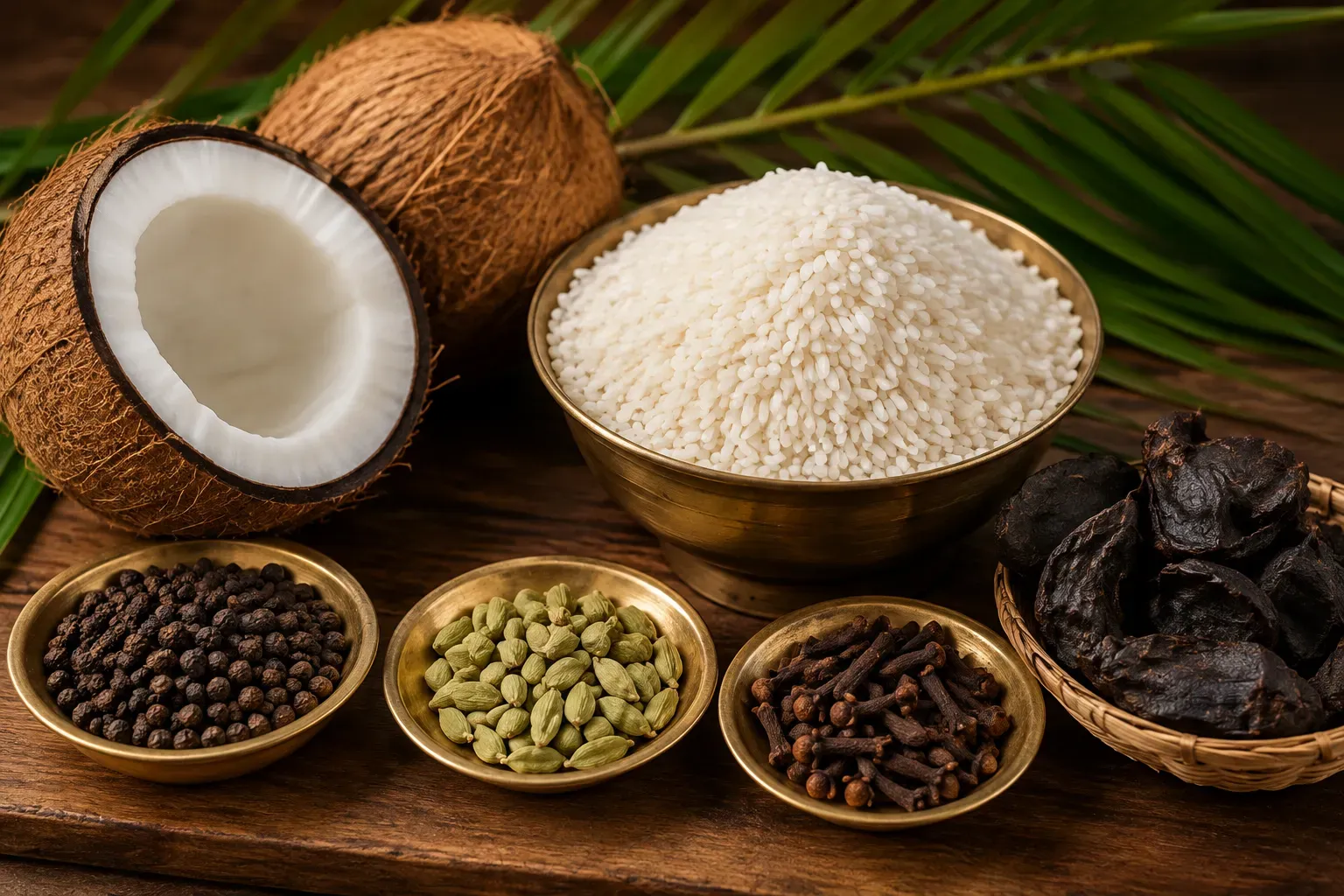
Three main ingredients shape the food here: coconut, rice, and the sea. Coconut appears as oil, milk, and freshly grated flesh, sometimes all in one meal, and it gives many dishes their smooth, mellow flavour.
History is another major influence. This narrow coastal region was once at the centre of the old spice route, and that trade shaped the traditional food of Kerala, from the pepper grown in the hills to the layered biryanis in the north. What truly sets Kerala’s food culture apart is that it is shared by everyone. Hindu, Christian, and Muslim kitchens all contribute their own classic dishes.
Building block | What it does |
Coconut | Oil, milk and grated flesh; the base of most curries |
Rice | The staple, and the source of half the breakfast menu |
Curry leaves and mustard seeds | The tempering that starts nearly every dish |
Kudampuli (Malabar tamarind) | The smoky sourness in fish curry |
Spices (pepper, cardamom, clove) | The Malabar spice heritage in one pot |
How Does Kerala Do Breakfast?
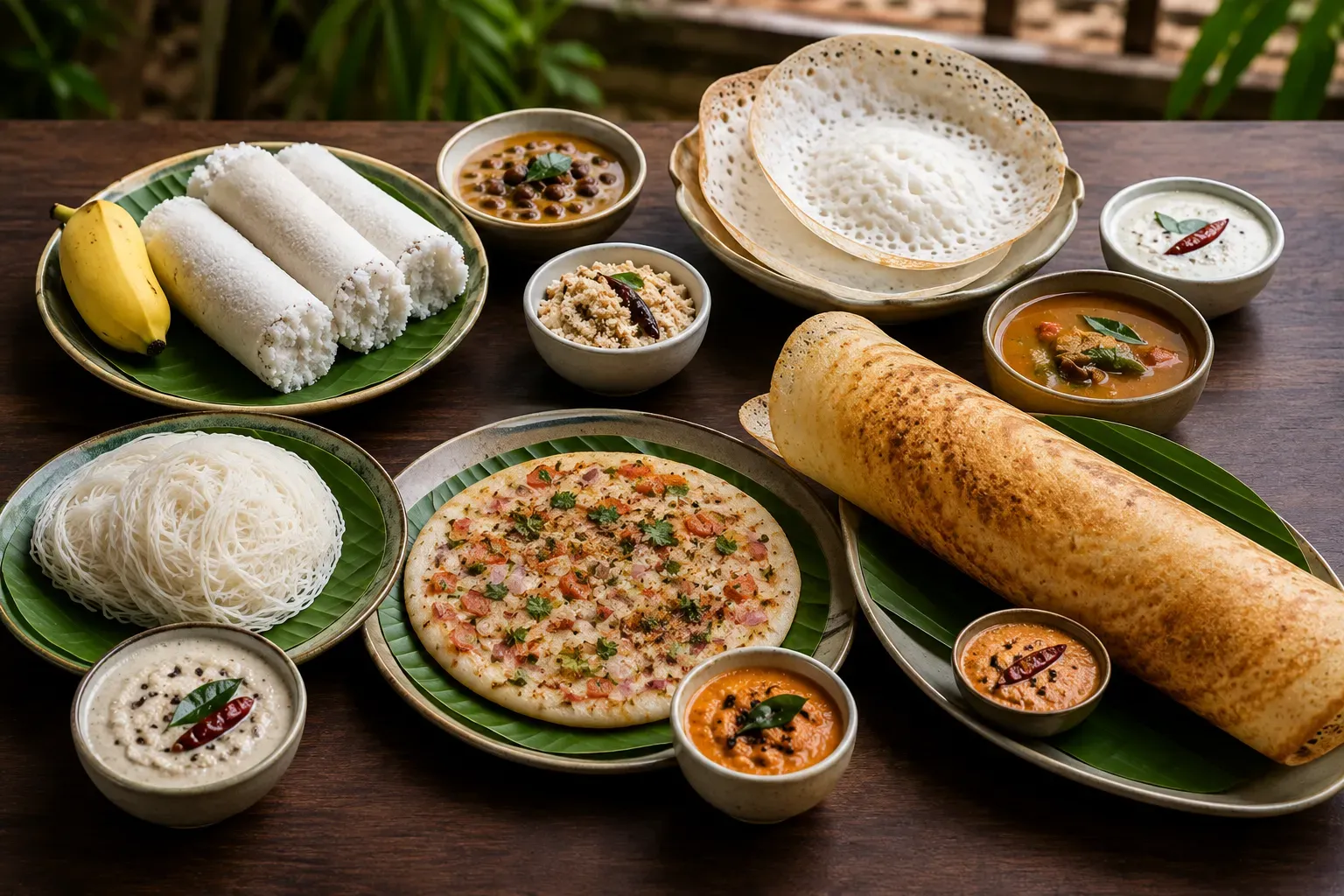
Many first-time visitors fall in love with local cooking in the morning. Breakfast here is a real meal, soft, steamed, and thoughtfully prepared. It is some of the most comforting Kerala food you will taste all day.
Here are some dishes you should know, beginning with the famous puttu and its classic Kerala pairing that locals love.
Dish | What it is | Best paired with |
Puttu | Steamed cylinders of ground rice and coconut | Kadala (black chickpea) curry, or banana and sugar |
Appam | A soft, spongy rice pancake with lacy, crisp edges | Vegetable or chicken stew |
Idiyappam | Steamed rice noodle nests, light as anything | Egg curry or coconut milk |
Dosa and uttapam | Crisp or thick fermented rice pancakes | Sambar and coconut chutney |
Be sure to try puttu with kadala curry at least once. The soft, nutty rice paired with the rich, spiced chickpeas is a simple meal you’ll remember long after your holiday.
What Is a Kerala Sadya, the Banana Leaf Feast?
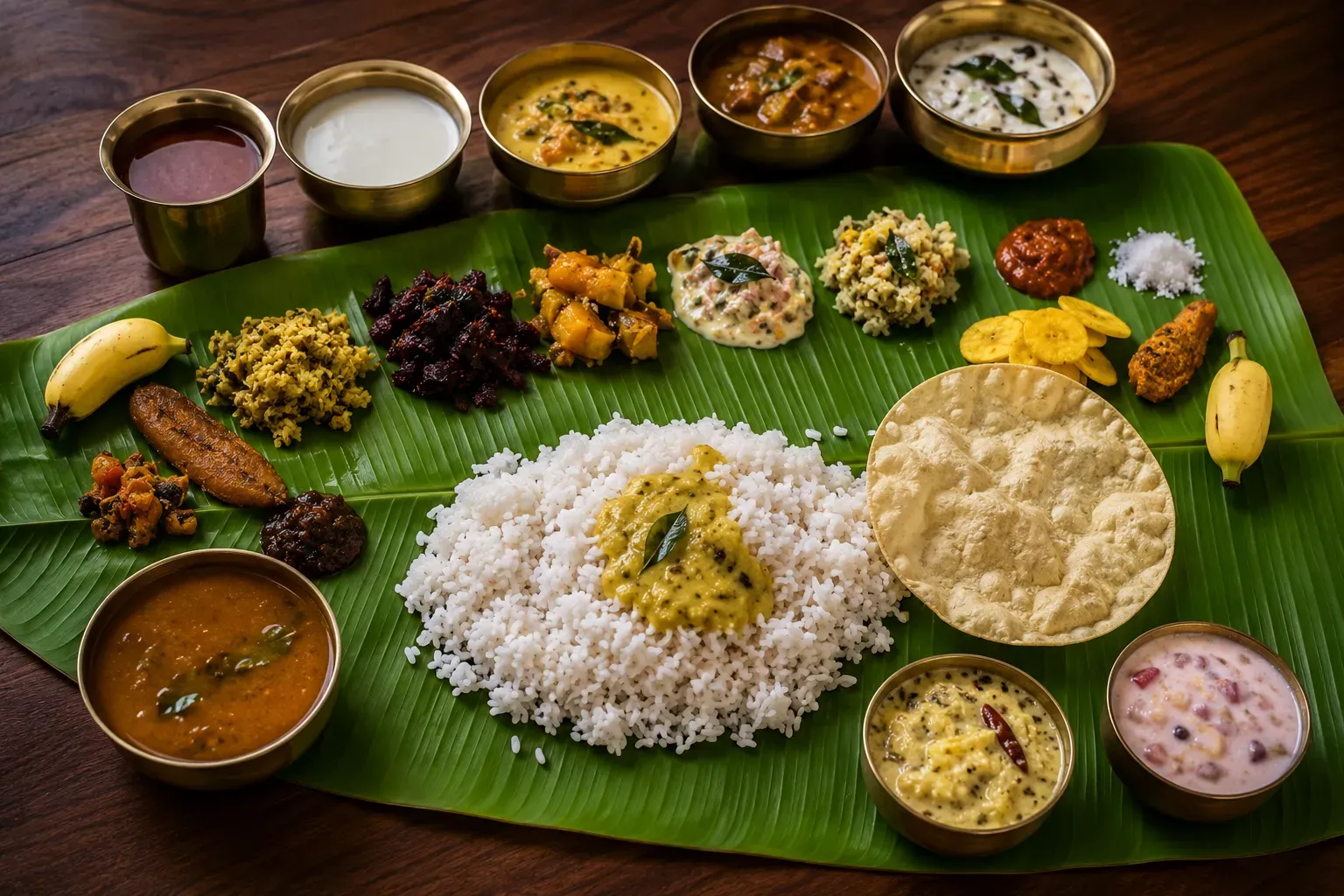
If you try just one thing, let it be this. Sadya is a vegetarian feast served on a fresh banana leaf, and it is Kerala’s special food experience. The full meal can include over twenty dishes, all eaten with your right hand.
Sadya is most popular during Onam, Kerala’s harvest festival, which takes place in the Malayalam month of Chingam, usually from late August to September. There is a set order to the meal, so here’s a quick look at what you’ll find on your leaf.
On the leaf | What it is |
Rice and parippu | Steamed rice with a soft dal and ghee, the base of the meal |
Sambar and rasam | A hearty lentil curry, then a thinner, peppery one |
Avial | Mixed vegetables in coconut and yoghurt |
Thoran | Finely chopped vegetables tossed with grated coconut |
Olan and kalan | Gentle coconut-milk dishes with ash gourd or yam |
Pachadi and pickles | Sweet-sour sides and sharp pickles for contrast |
Payasam | The sweet finish, a warm rice or lentil pudding |
Most visitors forget to pace themselves. Start slow, because the payasam at the end is what really matters, and you’ll want to save space for a second serving.
The Homely Side: Everyday Kerala Food and Staples
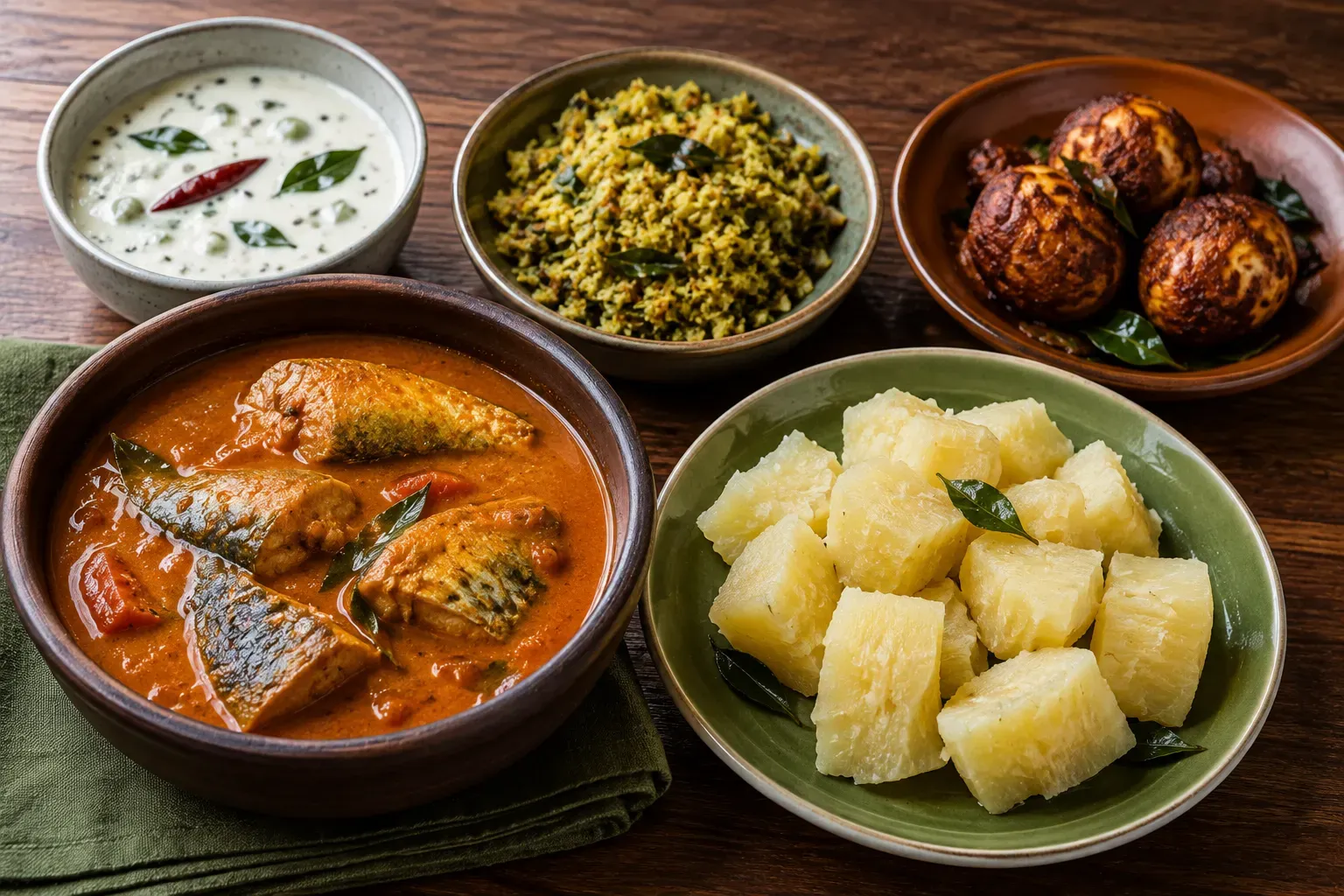
While the big feasts are special, it’s the everyday meals that really show what Kerala is all about. This is the Kerala’s homely food, simple rice and curry, that families enjoy every day.
Rice is the staple food of Kerala, usually the plump, red Matta kind. Most dishes are made to go with it. Here are a few home classics to try:
- Kappa and meen curry: Boiled and mashed tapioca is served with spicy fish curry. This kappa and fish curry combo is true comfort food and a favourite in many Kerala homes.
- Meen curry: Fish is cooked with kudampuli, chilli, and coconut. Every family believes their recipe is the best, and honestly, most of them are.
- Thoran and moru: A dry coconut vegetable stir-fry and a cool, spiced buttermilk curry are the quiet staples of a home-cooked lunch.
- Mutta roast: This is a thick, spiced egg curry with onions, tomatoes, and whole spices, cooked until the gravy clings to the eggs. It’s found in almost every Kerala home and is just as common at breakfast as at lunch, usually served with parotta or appam.
If you have a home-style meal at a homestay in Kochi or Alleppey, you’ll taste the authentic Kerala food that most restaurants can only hint at.
Kerala's Famous Food: The Malabar Heavy Hitters
When you travel to north Kerala, especially the Malabar region, you’ll notice the food is different. Many of the best foods in Kerala come from here, influenced by centuries of Arab trade along the coast near Kozhikode and Thalassery.
Thalassery Biryani
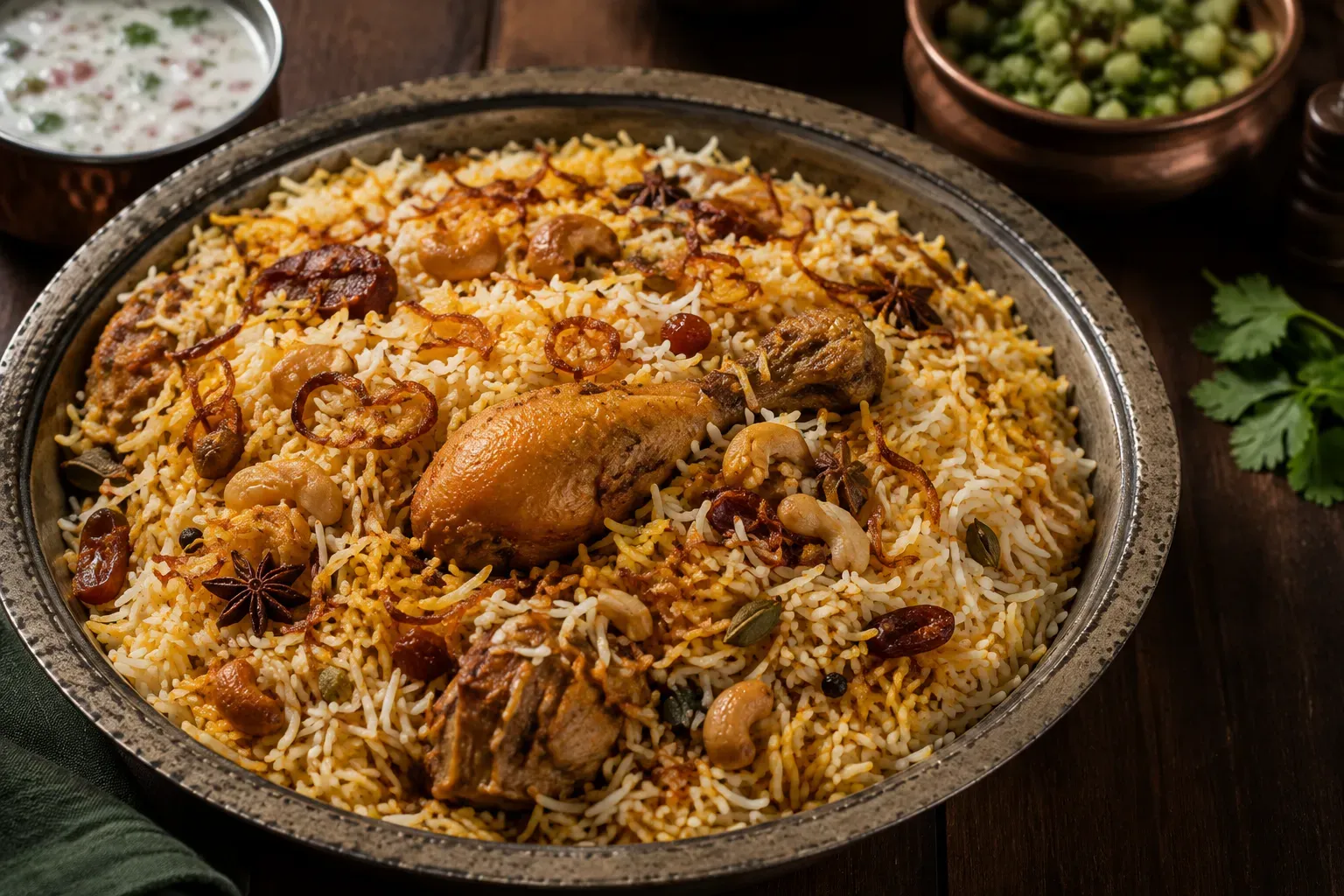
- What it is: This biryani is lighter and more fragrant, made with small-grained Kaima or Jeerakasala rice instead of basmati. It’s layered with meat, fried onions, cashews, and raisins.
- Pairs with: Raita, lime pickle and a simple onion salad.
- Where to try it: Thalassery and Kozhikode, its Malabar home ground.
Malabar Parotta
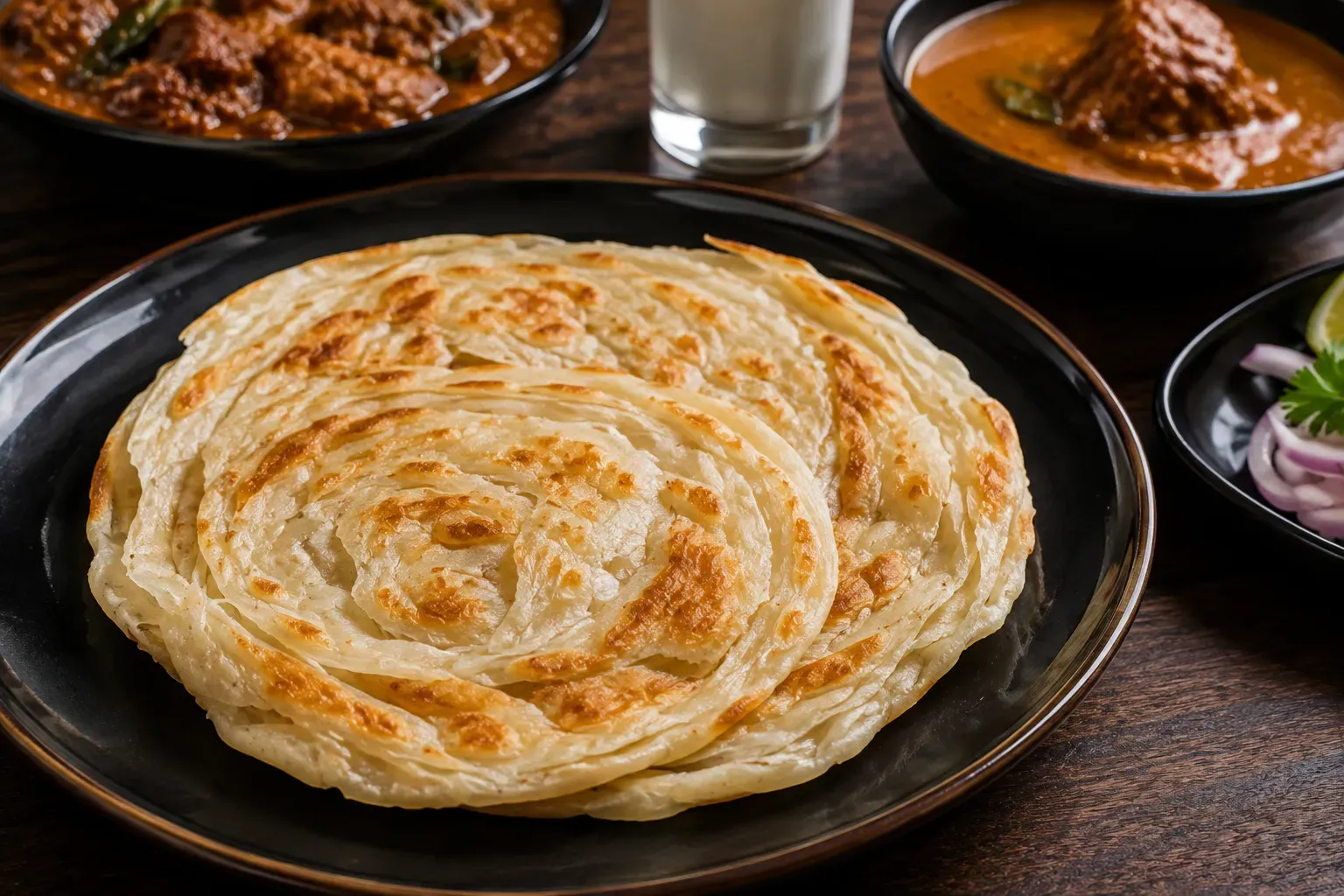
- What it is: This is a flaky, layered flatbread that comes apart easily in soft, tender ribbons.
- Pairs with: Chicken curry or a rich vegetable kurma.
- Where to try it: Roadside eateries statewide, best fresh off the tawa.
Pathiri and Kozhikode Halwa
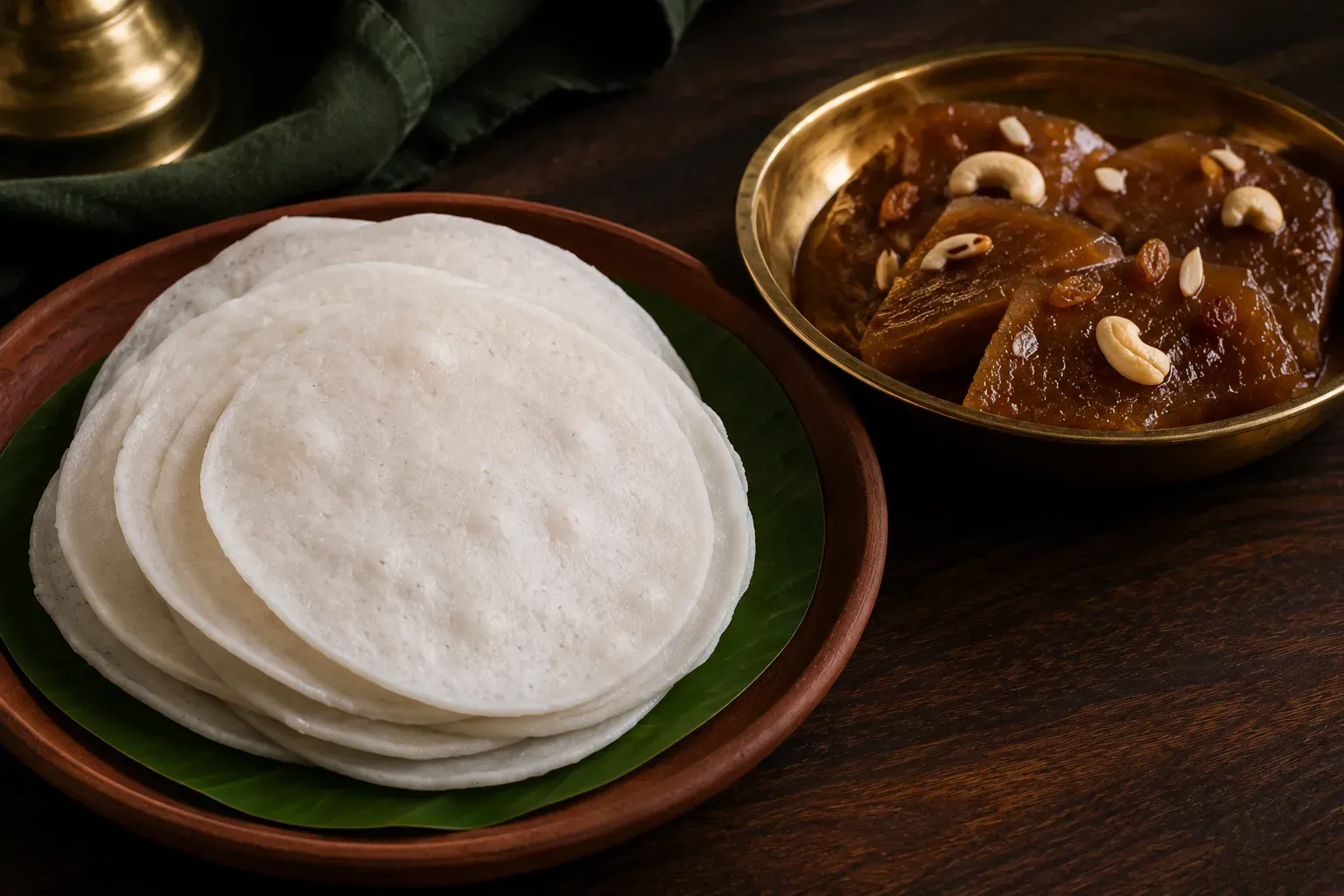
- What it is: Pathiri is a soft rice flatbread served with curries, while Kozhikode halwa is a glossy, ghee-rich sweet so famous it even named a street.
- Pairs with: Pathiri with meat curry; halwa with a strong cup of tea.
- Where to try it: Kozhikode, where halwa is practically a civic pride.
Kerala Street Food and the Snack Culture
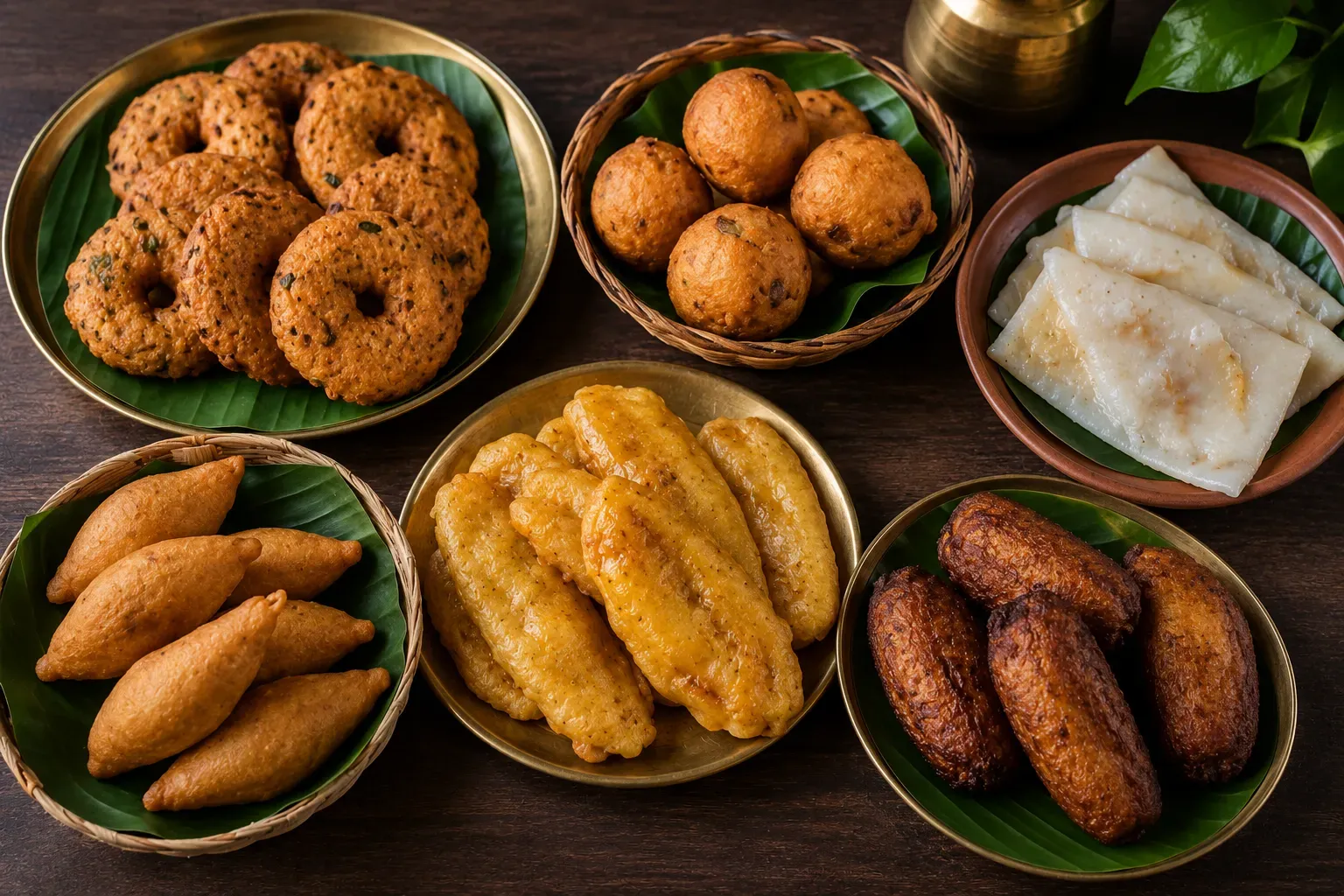
People in Kerala really love their snacks, often enjoying them between lunch and dinner with a glass of strong tea. Kerala street food is tasty, affordable, and found all over, making it the simplest way to explore a town through its flavours.
Kozhikode is known as Kerala’s food hub, and its Mittai Theruvu, or Sweet Meat Street, has drawn snack lovers for generations. Here are some treats to try:
- Pazham pori: These are ripe banana fritters coated in golden batter, and they’re the top choice for tea-time snacks in Kerala.
- Parippu vada and bonda: You’ll find crunchy lentil patties and soft potato fritters, both perfect for dipping.
- Unnakaya and ela ada: There’s a sweet roll made with banana and coconut, and a steamed rice treat wrapped in a banana leaf.
- Sukhiyan: These are sweet dumplings made from green gram, and they disappear quickly from any snack counter.
Try any of these snacks with chaya, the local milky tea poured from up high, and you’ll have a truly satisfying snack break.
Something Sweet: Payasam and the Rest
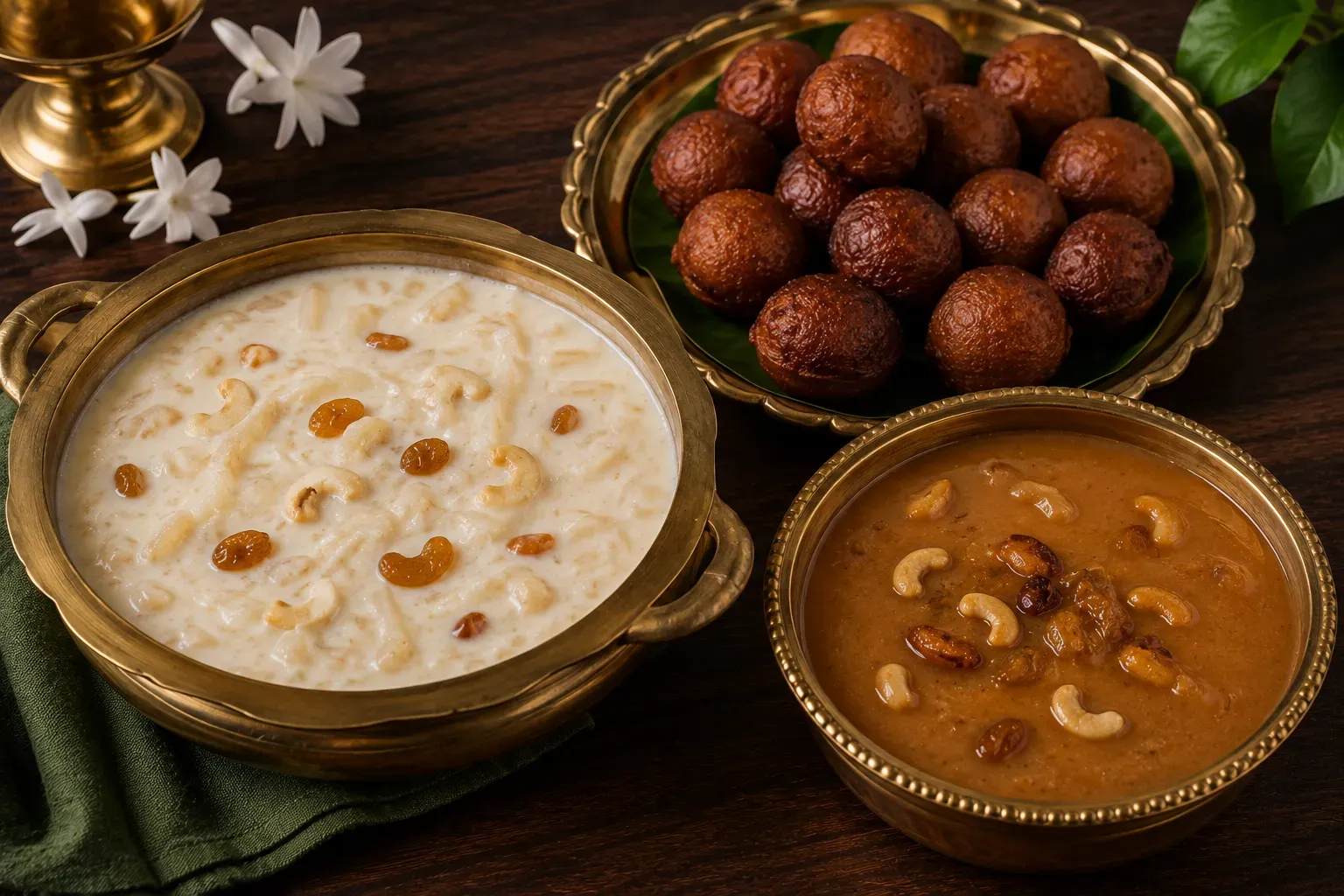
Kerala may not be as famous for sweets as northern India, but its love for desserts is strong. The highlight is payasam, a warm pudding served at the end of almost every celebration and to finish a sadya meal.
- Palada payasam: This version is made with rice ada, milk, and sugar. It has a silky texture and a pale colour.
- Ada pradhaman: This is a darker and richer payasam, made with jaggery and coconut milk.
- Unniyappam: These are small fried sweets made from rice and banana. They are crisp on the outside and soft inside.
These Kerala food items can turn an ordinary meal into something special, so be sure to save some room for them.
When and Where to Eat Your Way Around Kerala
The time of year shapes what’s on your plate. If you visit during Onam in late August or September, you can enjoy sadya feasts all over Kerala. October to March is the best time for travel, while the monsoon season is perfect for hot fritters and relaxing with Ayurveda treatments.
What you eat depends on where you travel, so here’s a quick guide to Kerala’s most popular foods by region.
Region | Known for | Must-try |
North Kerala (Kozhikode, Thalassery) | The Malabar food hub | Thalassery biryani, halwa, pazham pori |
Central Kerala (Kochi) | Homestays and seafood | Appam and stew, prawn curry |
The backwaters (Alleppey, Kumarakom) | Freshwater fish | Karimeen pollichathu, grilled in banana leaf |
South Kerala (Thiruvananthapuram, Kollam) | Feast and coast | Sadya, red fish curry |
Karimeen pollichathu is reason enough to spend a lazy afternoon on a houseboat in the backwaters. The pearl spot fish is spiced, wrapped in a banana leaf, and grilled until the leaf gives off an amazing aroma.
Ready to Taste Kerala Food Yourself?
It's one thing to read about Kerala food, but sitting on a houseboat with a banana leaf meal or tearing into a fresh parotta at a Kozhikode eatery is something else entirely. Planning this kind of holiday is easier than you might think.
At Holiday Tribe, we see ourselves as holiday advisors, not just travel agents. We create Kerala holidays based on how you like to travel and eat. You can pick one of our ready-made Kerala holidays if you want your route, homestays, and food stops all planned out. Or, let our experts and AI travel planner design a holiday just for you, focusing on the flavours you love, from Malabar in the north to the backwaters in the south. We plan for every kind of traveller, so just tell us what you like, and we’ll take care of the rest.