


Uttarakhand’s mountainous landscape means you do not have to miss out on a wildlife experience while exploring the state. Here, you’ll find Jim Corbett National Park, a famous wildlife destination with a history dating back to 1936. Located in the foothills of the Himalayas in Uttarakhand’s Nainital district, the park is known for its rich variety of flora and fauna.
What makes a visit here exciting is the unpredictability of the jungle, you never know what animal will emerge unexpectedly. But this park resonates with a serene environment, which is hard to define in words. The tranquil environment of its forests, chirping birds fluttering around you and filling the air with their natural rhythm, while verdant trees let their leaves sway in the chilly breeze, will etch themselves into your memories and remind you of this place for years to come.
So, do not think of Jim Corbett National Park Uttarakhand as just another animal sanctuary. It offers a combination of wildlife, nature and memorable jungle experiences that can make your trip truly worthwhile. In this guide, you’ll learn everything you need to know before visiting.
Why This Park Isn't Just Another Wildlife Reserve?
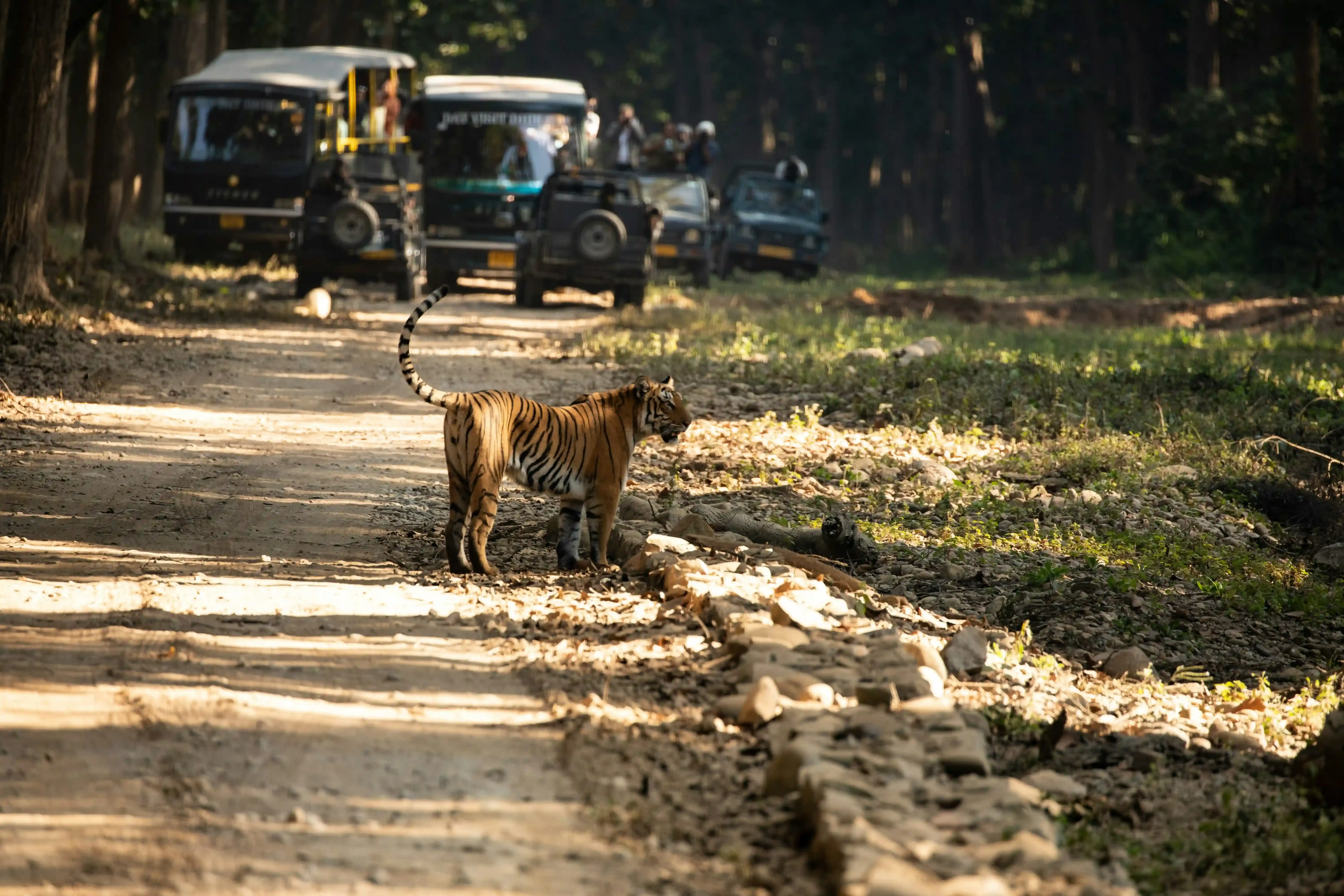 Everyone knows at least one person who's "done Corbett." Weekend from Delhi, one safari, a few deer sightings, back by Monday. That version barely scratches the surface of what Jim Corbett National Park Uttarakhand actually is.
This is India's first national park. Established in 1936, originally called Hailey National Park, later renamed after the hunter-turned-conservationist Edward James Corbett. The man literally helped draw the park's boundaries, then spent years convincing the British government to protect it. In 1973, Indira Gandhi launched Project Tiger right here, making Jim Corbett National Park Uttarakhand the birthplace of India's most important wildlife conservation programme.
The park sits in the foothills of the Himalayas in Nainital district. It covers 520 sq km of core area and 1,318 sq km of total reserve. The terrain shifts between dense sal forests, open grasslands called chaurs, river valleys and ridgelines. That variety is exactly why the wildlife density here is what it is.
Things to Know Before Your Jim Corbett National Park Tour
Before you pack, you need to understand how safaris actually work here. Jim Corbett National Park Uttarakhand isn't a single-gate, single-route park. It's divided into multiple zones, each with its own entry gate, terrain, seasonal access and booking rules.
Safari Zones Worth Knowing About
Zone | Best For | Open Period | Access |
Dhikala | Core wildlife, grasslands, highest sightings | Nov to June | Overnight stay required |
Bijrani | Day safari, good tiger density | Oct to June | Day visitors allowed |
Jhirna | Year-round access, leopards, sloth bears | All year | Day visitors allowed |
Dhela | Backup when others are full, solid tiger record | All year (weather dependent) | Day visitors allowed |
Durgadevi | Birding, river trails, quieter safaris | Oct to June | Day visitors allowed |
Dhikala is the flagship zone. It's the largest, the deepest inside the park, and consistently has the highest wildlife concentration. But you can't do a day visit here by jeep. You need an overnight booking at the Dhikala Forest Rest House. Day visitors can only enter Dhikala by canter safari (a shared 16-seater bus).
Bijrani is the most popular zone for a Jim Corbett National Park tour by day. Open grasslands and sal forest give you decent visibility, and it's closest to Ramnagar town. If you're visiting during monsoon (July to September), Jhirna and Sitabani are your only options. Everything else shuts down.
What Is Jim Corbett National Park Ticket and Safari Costs?
The Jim Corbett National Park ticket price depends on your nationality, the safari type, and the zone. Here's a simplified breakdown for 2026:
- Jeep safari (Indian nationals): Approximately ₹6,500 to ₹9,500 per gypsy (seats up to 6 people)
- Jeep safari (foreign nationals): Approximately ₹12,000 per gypsy (seats up to 4 people)
- Canter safari (Dhikala): ₹1,800 to ₹3,000 per person
- Guide fee: Extra, paid at the gate
- Duration: Each safari shift runs approximately 3 to 4 hours
Splitting a jeep between 4 to 6 people brings the per-person cost to roughly ₹1,200 to ₹1,600 for Indians. That's genuinely affordable for what you get.
How to Book Your Safari?
This is where most people get stuck. Jim Corbett National Park Uttarakhand has limited permits per zone per day, and popular zones like Bijrani and Dhikala sell out weeks ahead.
- Official portal: corbettonline.uk.gov.in
- Advance booking window: 45 days for Indian nationals, 90 days for foreign nationals
- ID requirement: Government-issued photo ID mandatory for every visitor
- Cancellation: Non-refundable once booked
Tribe Travel Tip: Book morning safaris. Animal activity peaks in the first two hours after dawn
Jim Corbett National Park Animals You Can Actually Spot
Let's set expectations honestly. Jim Corbett National Park animals include over 50 mammal species, 580+ bird species, and a healthy population of reptiles. But sightings depend entirely on the zone, the season, and your patience.
What you're likely to see:
- Chital (spotted deer): Almost guaranteed, they're everywhere
- Sambar deer: Common, especially near water
- Asiatic elephants: Herds of 1,100+ roam the reserve. Summer sightings are frequent
- Langur and rhesus macaques: Along every forest road
- Peacocks, kingfishers, Indian pittas: Strong birding across all zones
What you might see with patience:
- Bengal tiger: 260+ recorded in the 2022 census, the highest density of any single reserve in India. Dhikala and Bijrani have the best odds, especially March to June when tigers move toward water
- Leopard: More common than most visitors think, especially in Jhirna
- Sloth bear: Jhirna zone, more active during monsoon edges
- Gharial and mugger crocodile: Along the Ramganga River banks
What you almost certainly won't see:
- Himalayan black bear: Sticks to higher elevations, extremely shy
- Indian pangolin: Nocturnal, rarely seen even by researchers
Nobody can promise tiger sightings. Anyone who does is selling something. But with two or three safaris across the right zones in the right season, your chances in Jim Corbett National Park Uttarakhand are as strong as anywhere in India.
When Is the Best Time to Visit Jim Corbett National Park?
The season you choose decides what kind of holiday you'll have. Here's the honest version:
Season | Months | Temperature | Wildlife | Notes |
Winter | Nov to Feb | 5 to 25°C | All zones open, comfortable safaris, migratory birds | Best overall window |
Summer | Mar to June | 25 to 40°C | Best tiger sightings near water sources | Hot afternoons, carry water |
Monsoon | July to Oct | Heavy rain | Most zones shut, only Jhirna and Dhela open | Not recommended for first-timers |
- For tiger spotting: March to June is your window. The heat drives animals to rivers and waterholes, and reduced foliage improves visibility
- For families and first-timers: November to February. Comfortable weather, all zones open, better accommodation availability
- For birders: November to March, when migratory species arrive
- Avoid: July to September unless you specifically want Jhirna zone in the rain
Travel Tips for Your Corbett Holiday
- Book safaris 30 to 45 days ahead. Popular zones fill up fast, especially on weekends and holidays
- Stay in or near Ramnagar. It's the gateway town, 5 to 15 minutes from most entry gates
- Carry neutral-coloured clothing. Bright colours and perfume can disturb wildlife. Khaki, olive and brown work best
- Morning safaris over afternoon. Animal activity peaks between 6am and 9am. Afternoon safaris in summer can get uncomfortably hot
- Don't skip the Corbett Museum in Ramnagar. It's Jim Corbett's childhood home, now a small museum with his personal belongings and photographs. Entry is just ₹100
- Delhi to Ramnagar is roughly 260 km. Plan for 5 to 6 hours by road, or take the overnight Ranikhet Express from Delhi
Your Corbett Holiday Starts Here
Jim Corbett National Park Uttarakhand isn't something you squeeze into a long weekend and tick off. Two nights gives you four safari shifts, which is enough to feel the rhythm of the forest. Three nights lets you explore two zones comfortably.
Holiday Tribe builds structured Jim Corbett National Park tour packages that include accommodation near the reserve, safari bookings across the best available zones, transfers from Ramnagar, and a pace that makes sense for families, couples or first-time wildlife travellers. If you'd rather build around your own dates, group size and zone preferences, our holiday advisors will put together a customised plan. No flights included unless you ask for them.
The forest has been here since 1936. It's not going anywhere. But safari permits are limited every single day, and in peak season, they're gone before most people start planning. Start early.