


Srinagar is the summer capital of Jammu and Kashmir, famous for Dal Lake, snowy mountains, houseboats, gardens, and the Zabarwan Range. The city’s landscape shows centuries of art and architecture, especially in the terraced gardens from the Mughal era.
Mughal Garden Srinagar showcases this heritage with its terraces, water channels, fountains, pavilions, and views of the mountains and Dal Lake. The most famous gardens are Shalimar Bagh, Nishat Bagh, and Chashme Shahi. Pari Mahal is another historic garden close by.
This guide explains the history, timings, entry fees, distances, main features, and practical tips for visiting the Mughal Gardens in Kashmir.
What Makes Mughal Garden Srinagar Kashmir Special?
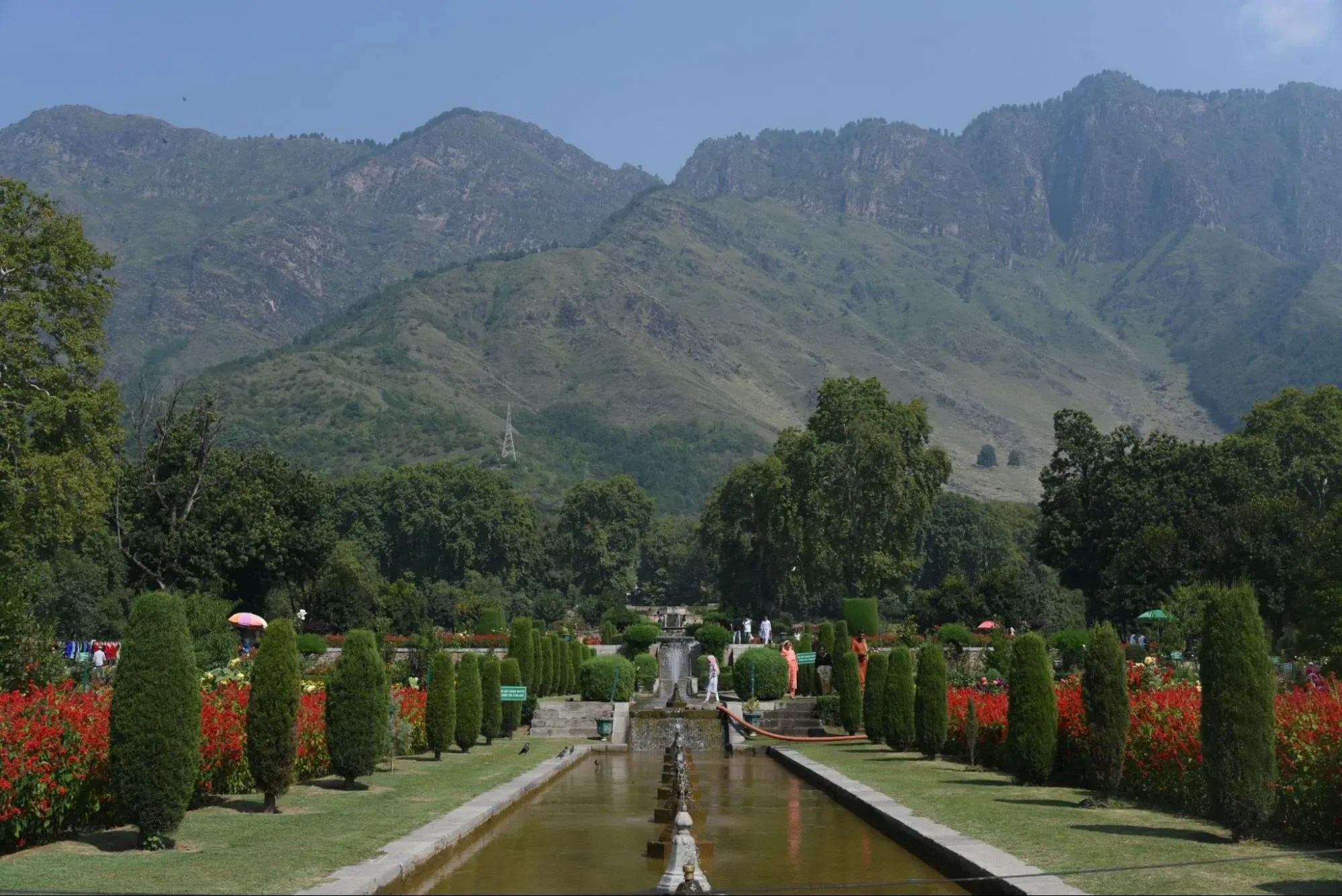
Mughal Garden Srinagar refers to a group of terraced, walled gardens built by Mughal emperors in the 1600s. Each garden follows the Persian chahar bagh style, with central water channels, fountains, terraced lawns, pavilions, flower beds, and old chinar trees.
Water is the main feature in each Mughal Garden Kashmir site, not just decoration. Streams from the Zabarwan Range naturally feed the water channels.
Garden Name | Built By | Year | Area | Meaning of Name |
Shalimar Bagh | Emperor Jahangir | 1619 | 31 acres (12.4 ha) | Abode of Love (Sanskrit) |
Nishat Bagh | Asif Khan | 1633 | 47 acres (19 ha) | Garden of Joy/Delight |
Chashme Shahi | Ali Mardan Khan | 1632 | 1 acre (0.4 ha) | Royal Spring |
Pari Mahal | Dara Shikoh | 1650 | approx. 1 acre (0.4 ha) | Palace of Fairies |
Tribe Travel Tip: Two other Mughal gardens, Achabal Bagh and Verinag, are in Anantnag district, about 60-80 km from Srinagar, and are often included in longer Kashmir itineraries.
What Does Mughal Gardens in Kashmir History Tell Us?
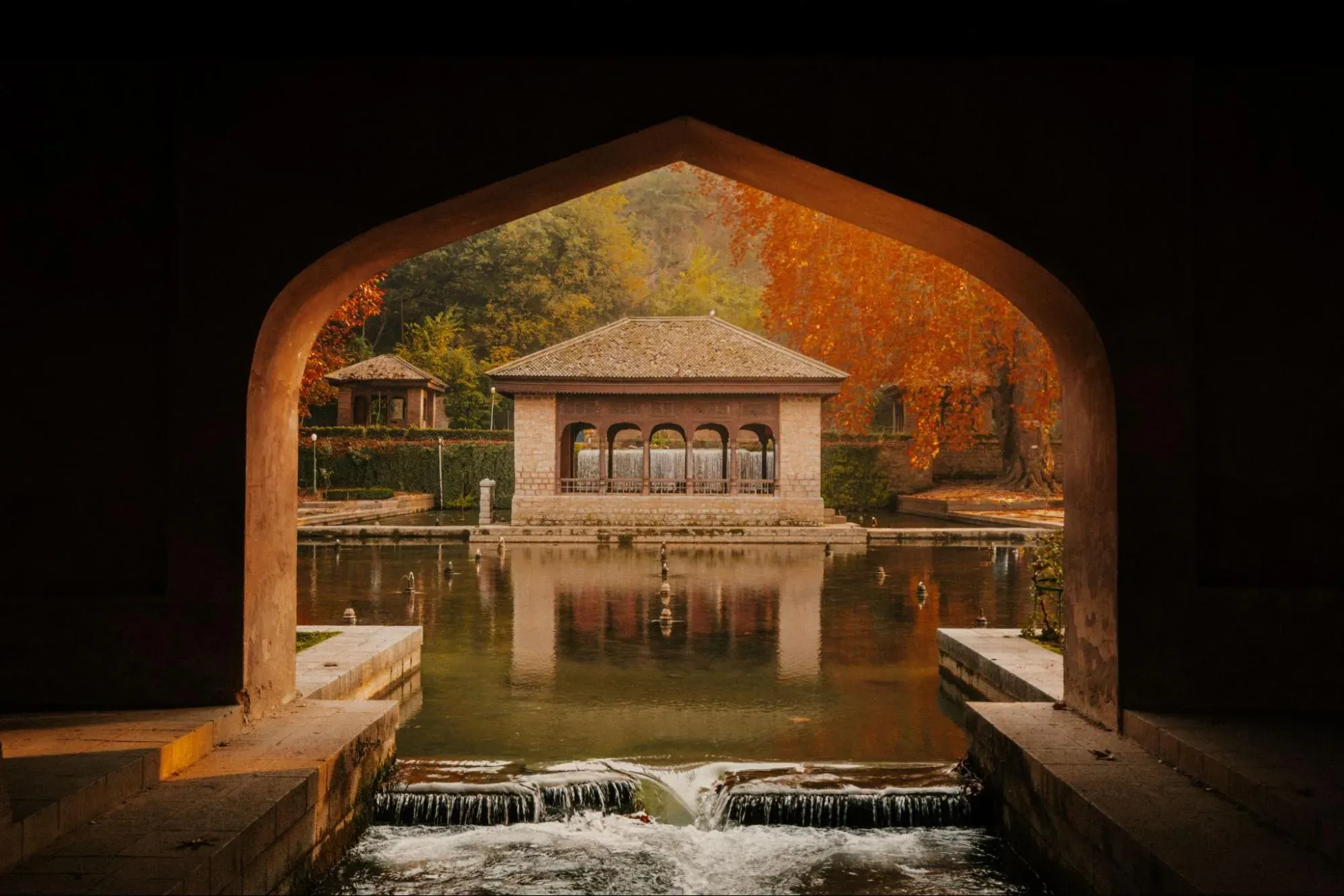
The Mughal Gardens in Kashmir history were shaped mainly by Jahangir (1605-1627) and Shah Jahan (1628-1658). Their love for Kashmir’s scenery inspired them to create these gardens.
Jahangir visited Kashmir over 13 times and saw the valley as his own paradise. He had Shalimar Bagh built in 1619 for Empress Nur Jahan, starting the tradition of royal gardens along Dal Lake. Shah Jahan continued this, with his governor Ali Mardan Khan building Chashme Shahi in 1632 and Asif Khan (Nur Jahan’s brother) building Nishat Bagh in 1633.
The gardens combine Persian, Islamic, and Hindu architectural styles. Their water channels were meant to look like rivers flowing through paradise. Even today, streams from the Zabarwan Range supply water to the fountains and channels in every Mughal Garden Kashmir site.
Year | Garden | Builder | Key Feature |
1619 | Shalimar Bagh | Emperor Jahangir | Three terraces; chini khanas behind waterfalls |
1620 | Achabal Bagh | Nur Jahan | Large spring-fed garden |
1620 | Verinag | Jahangir | Octagonal spring garden |
1632 | Chashme Shahi | Ali Mardan Khan | Natural medicinal spring |
1633 | Nishat Bagh | Asif Khan | 12 terraces; widest Dal Lake views |
The Mughal Garden Srinagar circuit represents one of the most concentrated examples of imperial garden design in South Asia, and Mughal Gardens in Kashmir history spans over 30 years of continuous Mughal-era creation.
Which Gardens Are Part of the Mughal Garden Kashmir Legacy?
The three most popular Mughal Garden Srinagar Kashmir sites are all on the same eastern shoreline road and can be visited in one morning. Pari Mahal, set higher on the Zabarwan hillside, is another nearby historic garden site worth adding to your itinerary.
Here’s a quick overview:
- Shalimar Bagh Kashmir
- Nishat Bagh Kashmir
- Chashme Shahi Kashmir
- Pari Mahal, Kashmir
Shalimar Bagh, Kashmir: Jahangir's Garden by Dal Lake
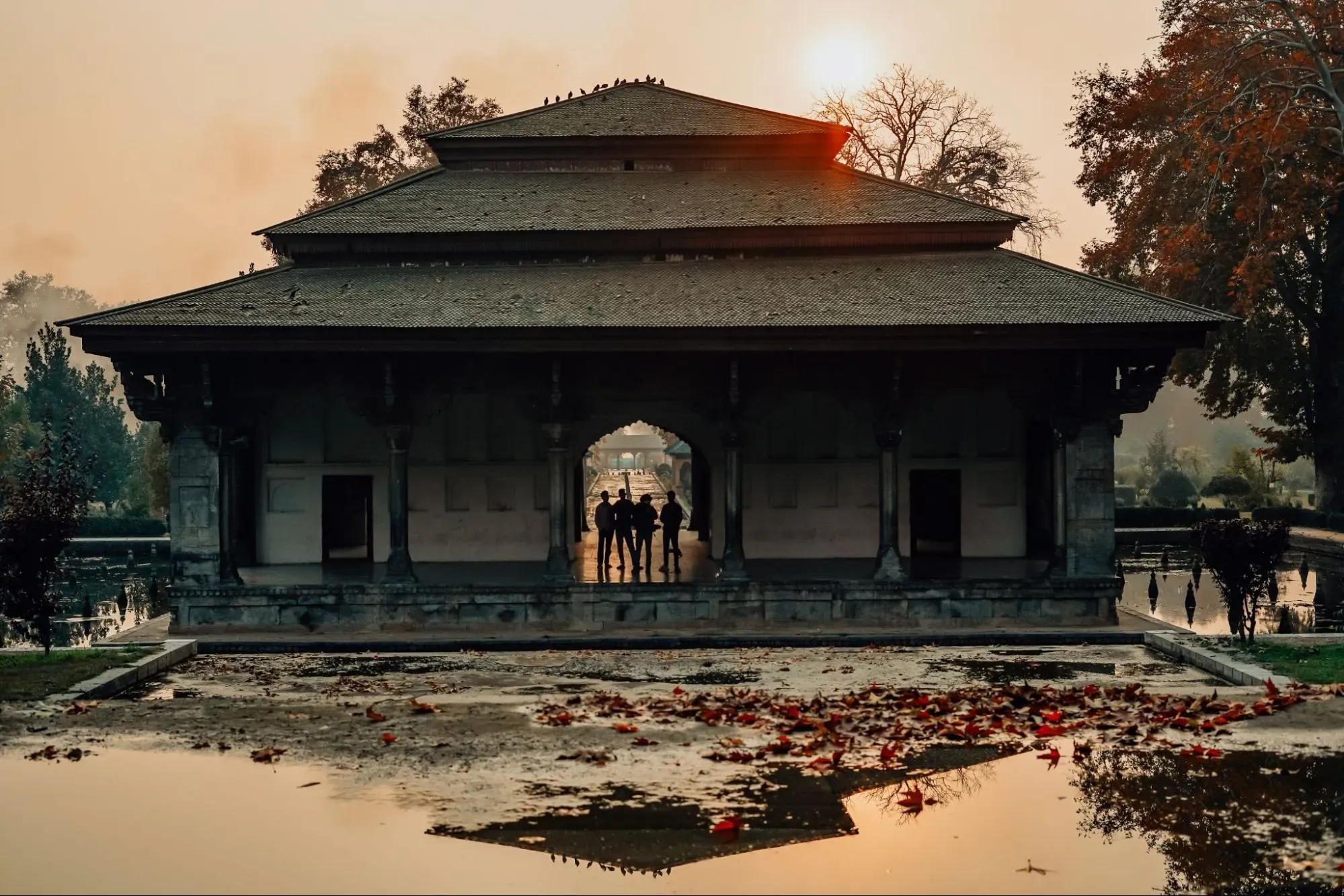
Emperor Jahangir built Shalimar Bagh, Kashmir, in 1619 for his wife, Nur Jahan; it is the largest site in the Mughal Garden Srinagar circuit, covering 31 acres.
- The name "Shalimar" is a Sanskrit word meaning "Abode of Love"; it is also called the "Crown of Srinagar"
- Three terraces: Diwan-i-Aam (public audience hall), Diwan-i-Khas (royal court), and the zenana (private royal ladies' section)
- Key features: chini khanas (arched niches with waterfalls), ancient chinar trees lining the main axis, polished stone-lined central channel, and pavilions at each terrace level
Nishat Bagh, Kashmir: Twelve Terraces Overlooking Dal Lake
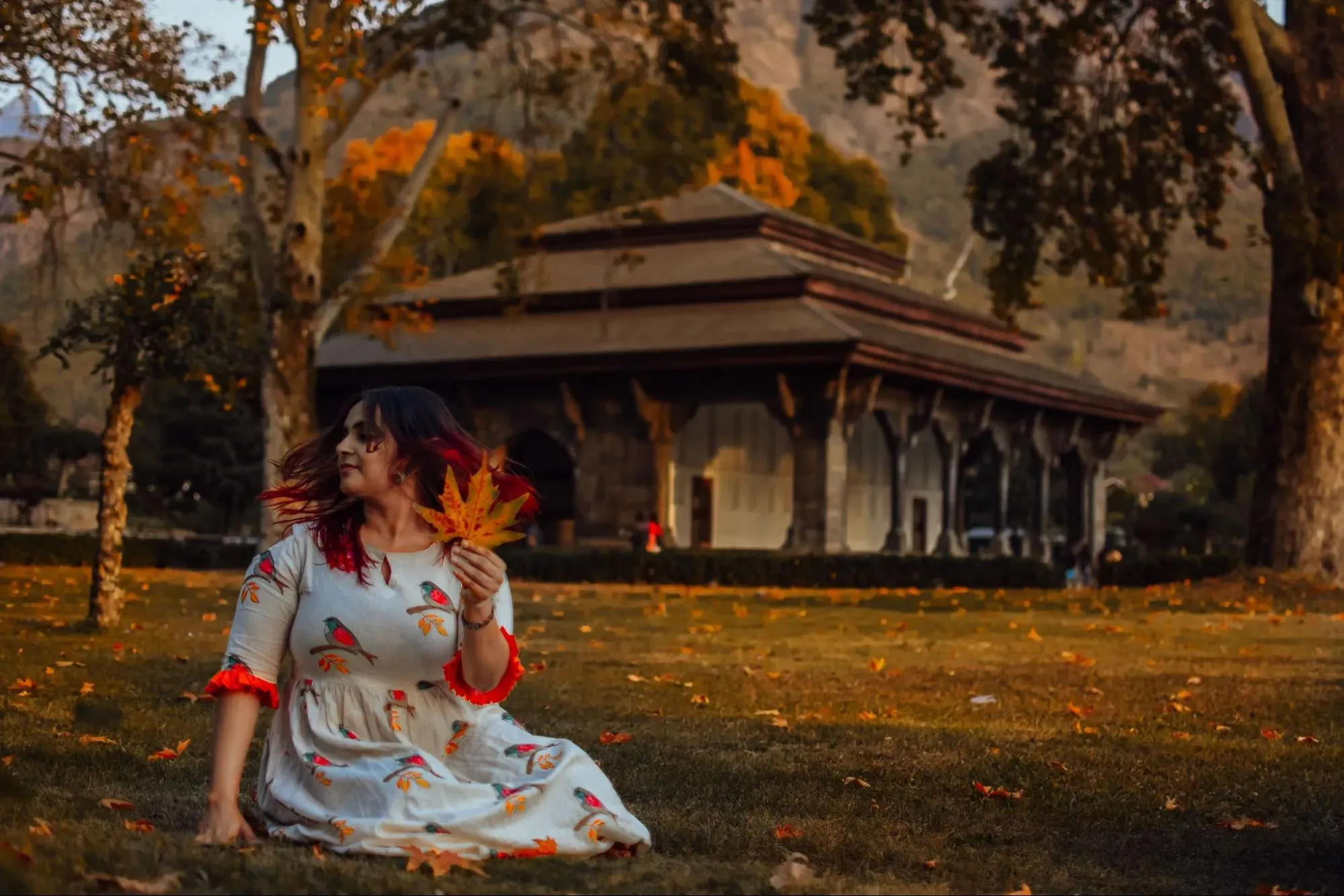
Nishat Bagh, Kashmir, was built in 1633 by Asif Khan, Nur Jahan's elder brother; it is the second-largest Mughal garden in Srinagar, with twelve terraces across 19 hectares (47 acres).
- The name means "Garden of Joy" or "Garden of Delight"
- Twelve terraces, each associated with a sign of the Zodiac; the widest terrace count of any garden on the shoreline
- Sits between the Zabarwan Hills and Dal Lake; provides the broadest panoramic view of any garden in the Mughal Garden Srinagar Kashmir circuit
Chashme Shahi, Kashmir: Srinagar's Garden of Natural Springs
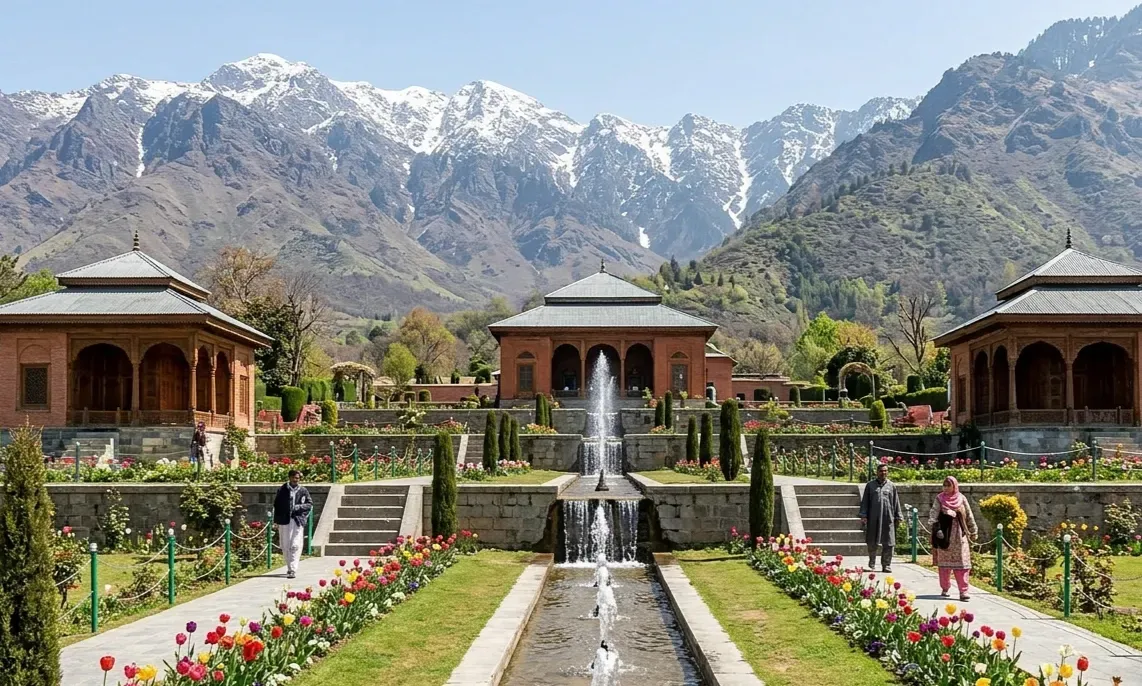
Chashme Shahi Kashmir (also called "Royal Spring") was built in 1632 by Ali Mardan Khan, governor of Emperor Shah Jahan; it is the smallest but closest Mughal Garden in Srinagar to the city.
- Built around a natural freshwater spring traditionally considered medicinal; spring water flows through the terraced garden via channels
- Sits high on the hillside above the other two gardens; provides broad views toward Dal Lake
- Fewer terraces but a more intimate layout; suited for a shorter visit of 30 to 45 minutes
Pari Mahal, Kashmir: Seven Terraces Above Srinagar
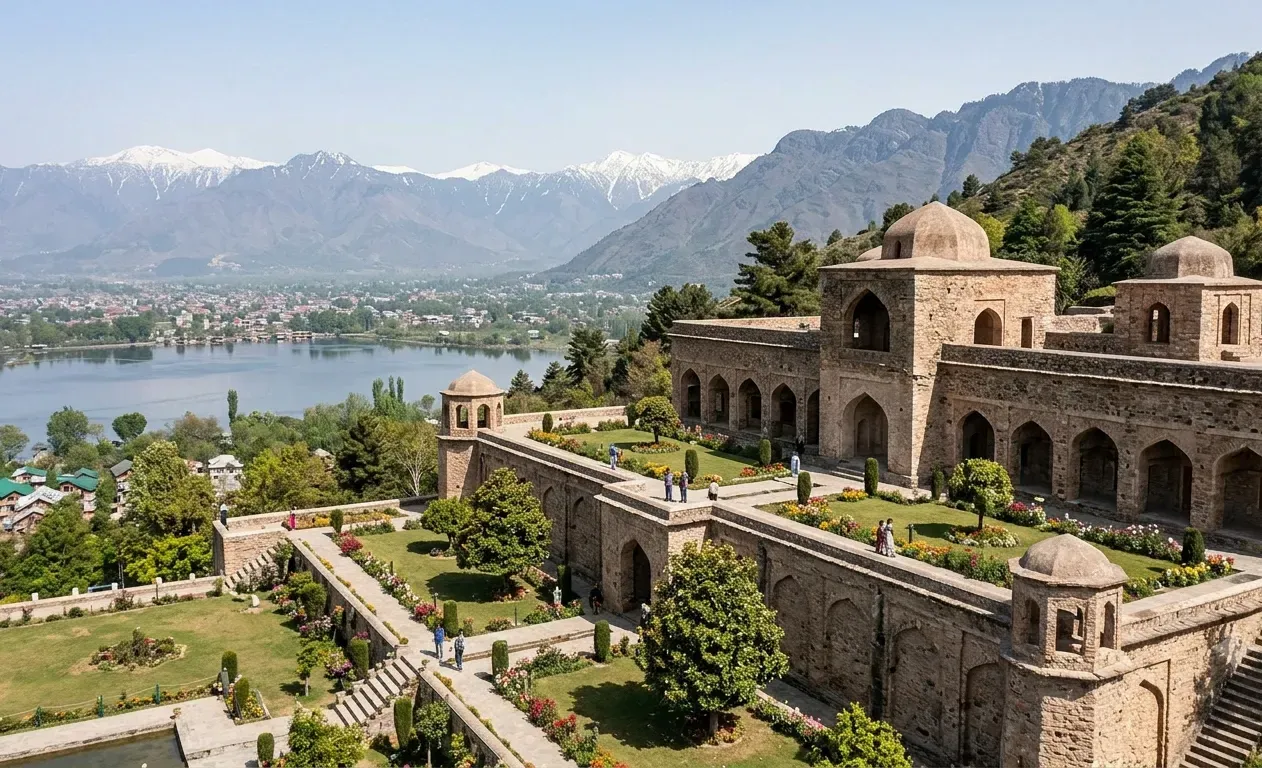
Pari Mahal, also known as the "Palace of Fairies," was built around 1650 by Dara Shikoh, the eldest son of Emperor Shah Jahan. Unlike the three main gardens along the Dal Lake shoreline, it sits higher on the Zabarwan hillside and offers a different perspective over Srinagar.
- Arranged across seven terraces descending the hillside
- Overlooks Dal Lake, Srinagar and the surrounding Kashmir Valley
- Combines terraced garden design with the remains of a historic palace and observatory complex
What Are the Mughal Garden Srinagar Timings and Entry Fee?
Mughal Garden Srinagar timings for all three main gardens are 9:00 AM to 7:00 PM. In winter, they may close earlier depending on daylight, so check at the gate on the day you visit.
Each Mughal Garden in Srinagar charges a separate entry fee; there is no combined ticket for all three.
Garden | Open Time | Close Time | Indian Entry Fee | Foreign Entry Fee |
Shalimar Bagh Kashmir | 9:00 AM | 7:00 PM | Rs. 24 to Rs. 40 per adult | Rs. 300-600 (approx; verify at gate) |
Nishat Bagh Kashmir | 9:00 AM | 7:00 PM | Rs. 24 to Rs. 40 per adult | Rs. 300-600 (approx; verify at gate) |
Chashme Shahi Kashmir | 9:00 AM | 7:00 PM | Rs. 24 to Rs. 40 per adult | Rs. 300-600 (approx; verify at gate) |
Tribe Travel Tip: The J&K Tourism Department sets entry fees and revises them periodically. The entry fees in the table above are approximate; confirm current rates at the gate on arrival or at the official J&K Tourism website.
Notes on Mughal Garden Srinagar entry fee:
- Children below a certain age are typically free or pay a nominal fee; confirm at the gate
- Mughal Garden Srinagar timings may vary slightly in peak season; the J&K Tourism Department publishes current seasonal hours
- Photography is generally permitted inside all gardens at no additional charge
What Is the Srinagar to Mughal Garden Distance?
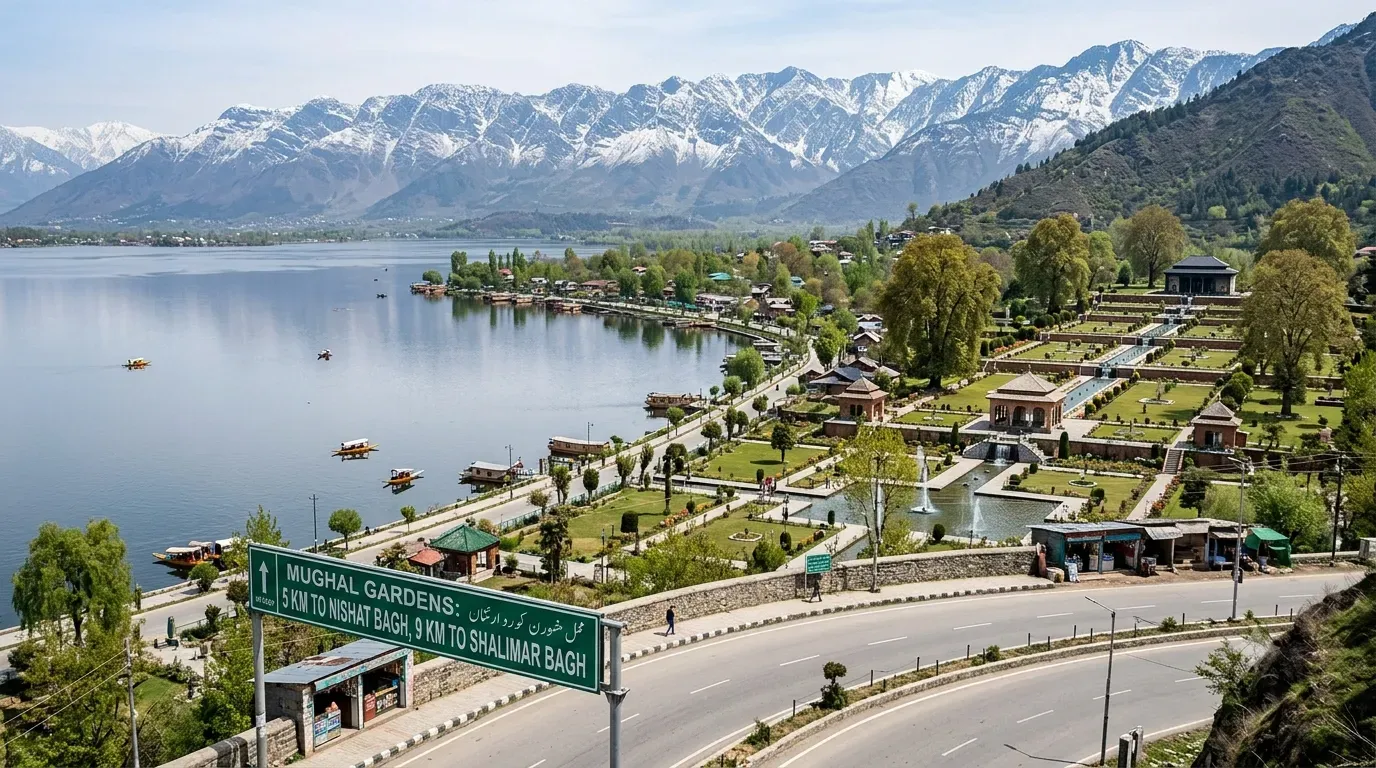
The Srinagar to Mughal Garden distance differs by garden; all three are on the eastern shoreline road (Nagin to Nishat Road) along Dal Lake, making a sequential visit practical in one journey.
Garden | Distance from Srinagar (Lal Chowk) | Drive Time | Notes |
Chashme Shahi | 4 to 5 km | 10 to 15 min | Nearest garden; start or end your circuit here |
Nishat Bagh | 11 km | 20 to 25 min | Mid-point of the road circuit |
Shalimar Bagh | 15 km | 30 to 35 min | Furthest garden; most visitors start here first |
The easiest way to cover the Srinagar to Mughal Garden distance and visit all three gardens is to hire a private taxi for half a day. Start with the furthest, Shalimar Bagh, and finish at Chashme Shahi, which is closest to Srinagar.
- Auto-rickshaws and shared taxis run along the Dal Lake shoreline road and are the better option for reaching each Mughal Garden Srinagar site without a private vehicle
- Shikara from Boulevard Road ghat: A water-access alternative to reach Nishat Bagh; the garden is accessible from the lake side, and the shikara ride adds approximately 30 to 45 minutes to the journey
- The Srinagar to Mughal Garden distance to all three combined covers approximately 15 km one-way from the city; most taxi drivers are familiar with the circuit
What Should You Know Before Visiting Mughal Garden Srinagar?
- Best season: Visit in spring (March to April) for tulips and blossoms, summer (June to August) for lush greenery, or autumn (October) to see the chinar trees turn orange and red. Each season offers a unique view at every Mughal Garden Srinagar site.
- Best time of day: Get to Shalimar Bagh before 10:00 AM. The morning light is great for photos, and you’ll avoid the midday crowds.
- Footwear: Wear comfortable closed shoes, as the gardens have stone steps and uneven paths.
- Combine with Dal Lake: Since the Mughal Garden Srinagar Kashmir circuit and Dal Lake are on the same side of the city, you can visit both in one morning for the best use of your time.
- What to carry: Bring water, sunscreen for summer, a light jacket for spring and autumn mornings, and cash for the Mughal Garden Srinagar entry fees at each gate.
Final Takeaway
Mughal Garden Srinagar brings together over four centuries of Mughal landscape design from emperors who spent their summers in the Kashmir Valley. The main gardens, Shalimar Bagh, Nishat Bagh, and Chashme Shahi, can all be visited in half a day. They are open from 9:00 AM to 7:00 PM, and each has its own entry fee. No matter the season, the Mughal Garden Kashmir circuit is a reliable half-day experience in Srinagar.
If you’re planning a holiday to Kashmir and want a custom itinerary focused on the gardens, a Dal Lake houseboat stay, and visiting the valley, Holiday Tribe’s advisors can help plan every detail.