


Kashmir is famous for its alpine meadows, pine forests, lakes, rivers, and historic sites. Places like Srinagar, Anantnag, Kulgam, Gulmarg, and Pahalgam each show a different side of the region, from houseboats and mountain passes to old temples and waterfalls. This variety is what makes Kashmir Tourism appealing to both new and returning visitors. While many people visit only Srinagar, there’s much more to see in the valley.
This guide covers Dal Lake, Kashmir, Aharbal Waterfalls, Martand Sun Temple, Sinthan Top, seasonal planning, and essential visitor information.
What Makes Kashmir Tourism Different Beyond Srinagar?
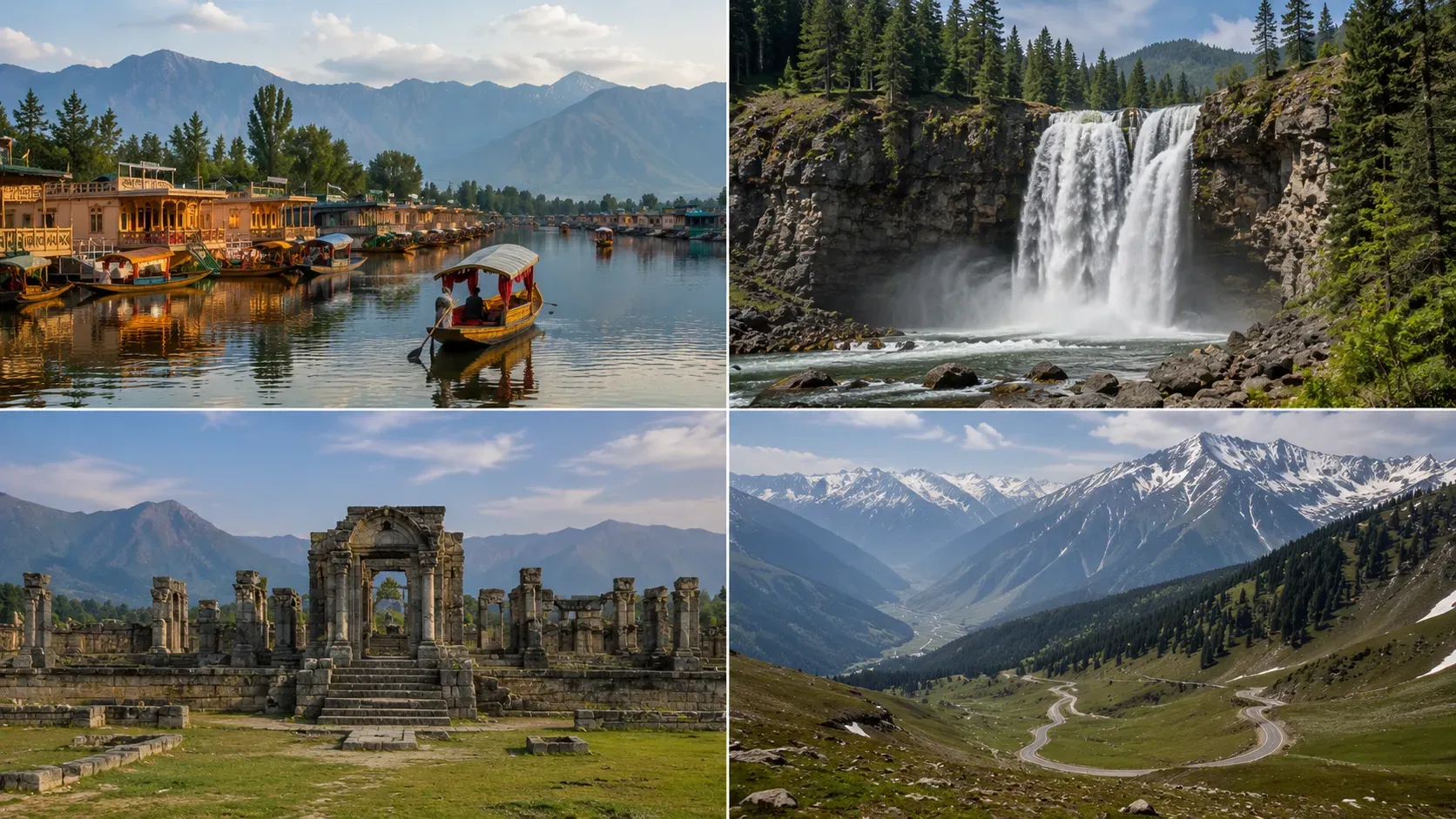
Kashmir Tourism offers more variety than just the Srinagar-Gulmarg-Pahalgam route. In the south, Anantnag and Kulgam districts have heritage ruins and waterfall valleys that are easy to reach but see fewer visitors.
Zone | Key Districts | Signature Destination | Best Season |
Northern Kashmir | Baramulla, Bandipora | Gulmarg, Gurez Valley | May to October; Dec to Mar for skiing |
Central Srinagar | Srinagar | Dal Lake, Mughal Gardens, Old City | April to October |
South Kashmir | Anantnag, Kulgam | Martand Sun Temple, Aharbal Waterfalls, Pahalgam | May to October |
High-Altitude Passes | Anantnag periphery | Sinthan Top | May to October only |
Srinagar is still the main hub, and most visitors arrive through Sheikh ul-Alam International Airport. You can reach all the places in this guide by car from Srinagar, either as day outs or short overnight stays. Things to do in Kashmir here include city sights, heritage spots, nature, and mountain adventures.
Which Are the Best Places to Visit in Kashmir?
The best places to visit in Kashmir list below includes both popular and less-visited destinations. Each section covers key facts, how to get there, and what to expect.
Here’s a quick overview:
- Dal Lake Kashmir
- Aharbal Waterfalls
- Martand Sun Temple
- Sinthan Top
Dal Lake Kashmir
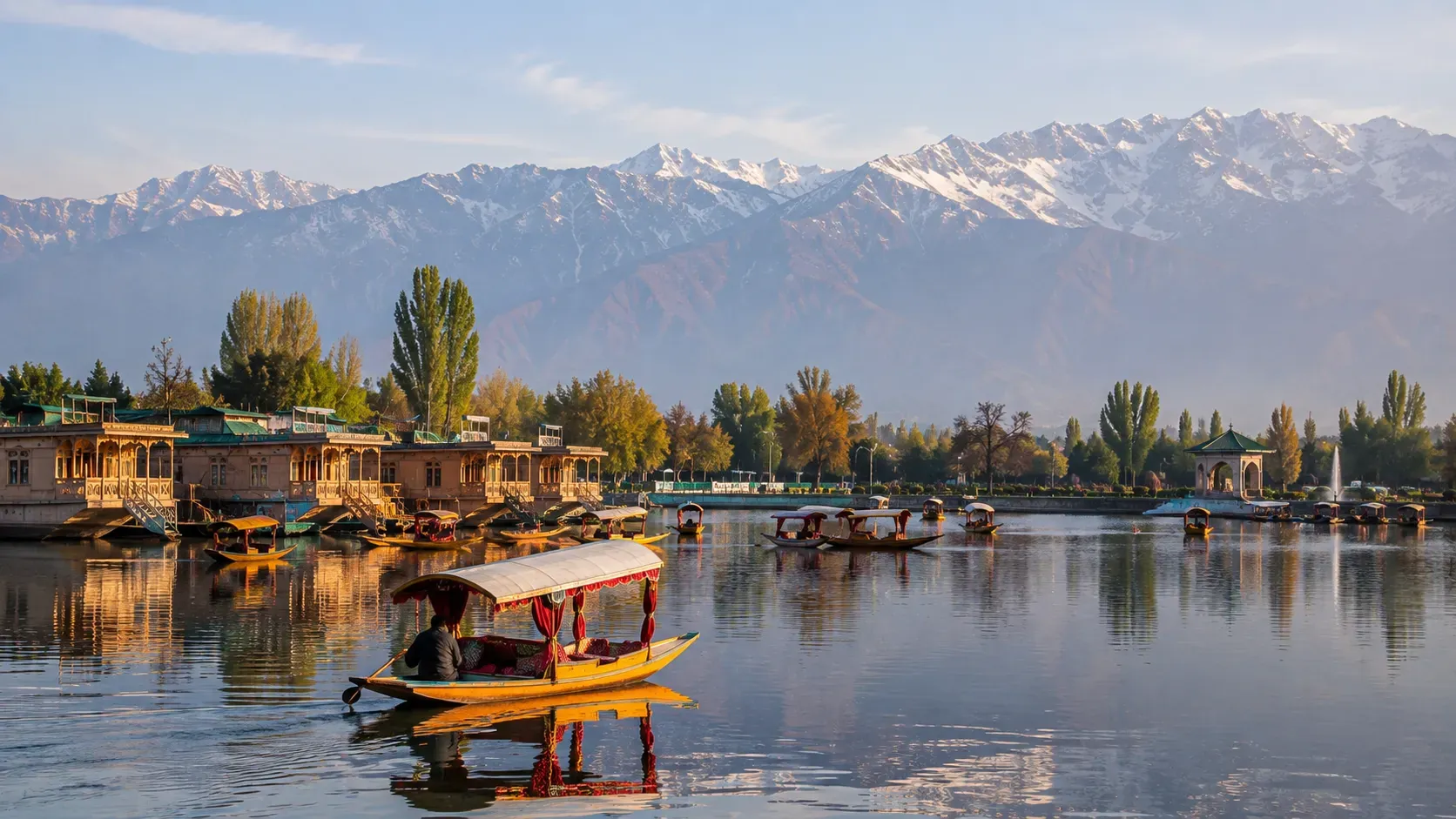
Dal Lake in Kashmir covers 18 square kilometres and sits in the heart of Srinagar. It’s the most famous spot in Kashmir Tourism.
Detail | Information |
Size | 18 sq km |
Activities | Shikara rides, houseboat stays, floating markets, Mughal Gardens circuit |
Best Timing | Year-round; mornings and evenings for rides |
Houseboat Booking | Houseboat Owners Association of Kashmir |
Nigeen vs Dal | Nigeen Lake is quieter, cleaner, fewer boats; connected to Dal by waterway |
Key experiences on and around Dal Lake Kashmir:
- Shikara ride: Year-round from the Boulevard Road ghat; 30-minute circuit to 5-hour full lake loop; the floating vegetable market operates daily from early morning
- Houseboat stay: Classified by the J&K Government into Luxury, Deluxe (A), and A/B/C categories; includes sit-out deck, meals, and a dedicated shikara for ghat transfers
- Mughal Gardens: Three separate ASI-managed gardens on the hillside above the lake: Shalimar Bagh (built 1619 by Jahangir), Nishat Bagh (1633, twelve terraces, the largest), and Chashme Shahi (1632, built around a natural spring)
- Nigeen Lake option: Quieter houseboat stays; significantly fewer boats; higher bird activity; slightly less convenient to the main city but more private
Aharbal Waterfalls
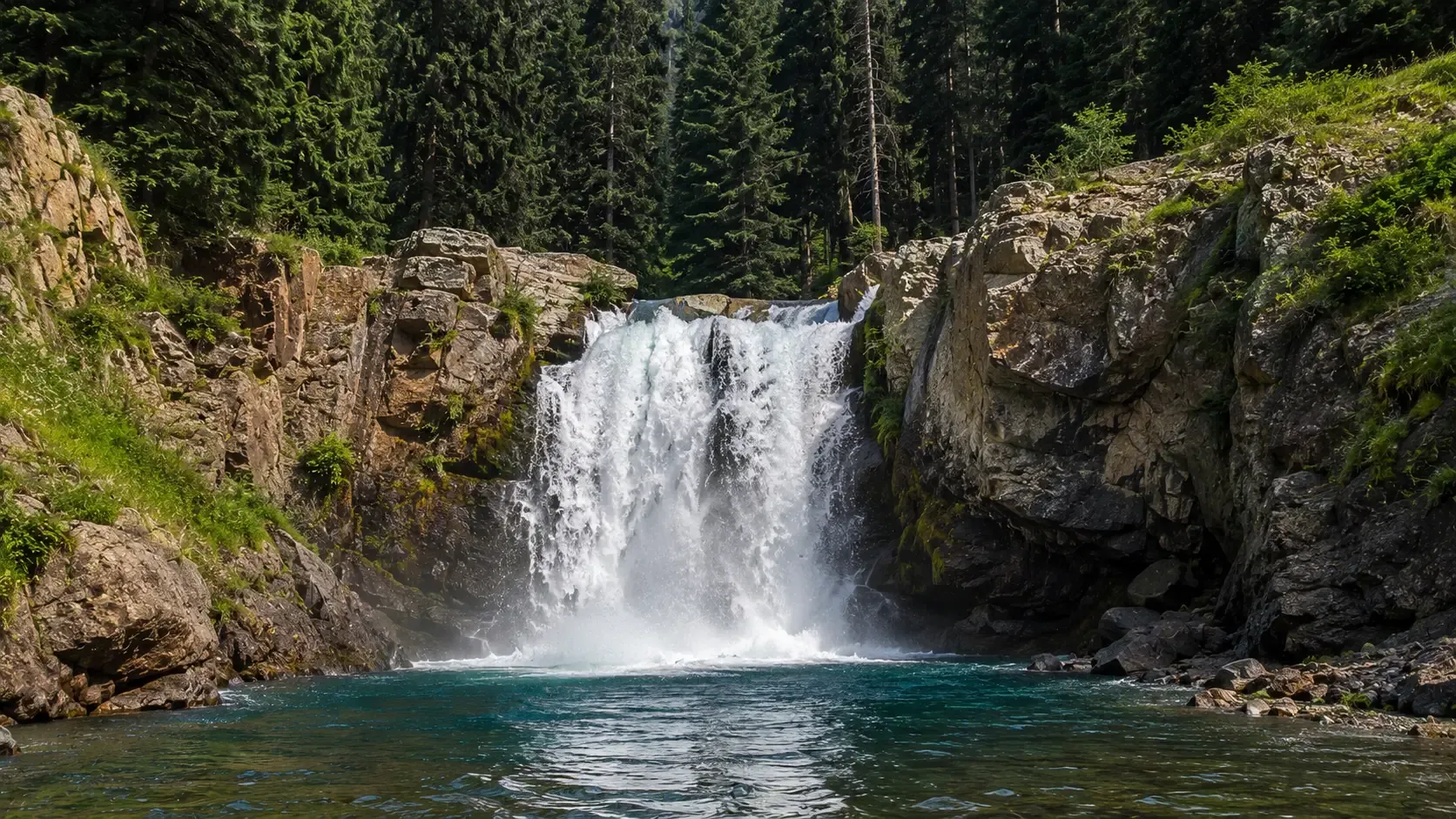
Aharbal Waterfalls are a top Kashmir Tourism spot in the southern valley, located in Kulgam district about 65 to 75 kilometres from Srinagar.
Detail | Information |
Height | 25 metres |
Elevation | 2,266 metres |
River | Veshu River (tributary of Jhelum) |
Distance from Srinagar | 65 to 75 km via Anantnag-Shopian road |
Best Season | May to October |
JKTDC accommodation | Rest house available near the waterfall; book via JKTDC official website |
What to know about Aharbal Waterfalls:
- The waterfall drops 25 metres and is surrounded by pine and fir forests of the Pir Panjal range; it is locally called the "Niagara Falls of Kashmir"
- The approach walk from the entry point takes 15 to 20 minutes on a clear, maintained path; the descent to the full viewing area is moderate in gradient
- Water volume is highest from May to August when snowmelt from the Pir Panjal feeds the Veshu River at full capacity; this is the most visually impactful time to visit
- The JKTDC rest house near the Aharbal Waterfalls allows an overnight stay; book through the official website of J&K Tourism Development Corporation before visiting, as walk-in availability is limited
- A Kashmiri meal restaurant operated by JKTDC is also available near the site
Martand Sun Temple
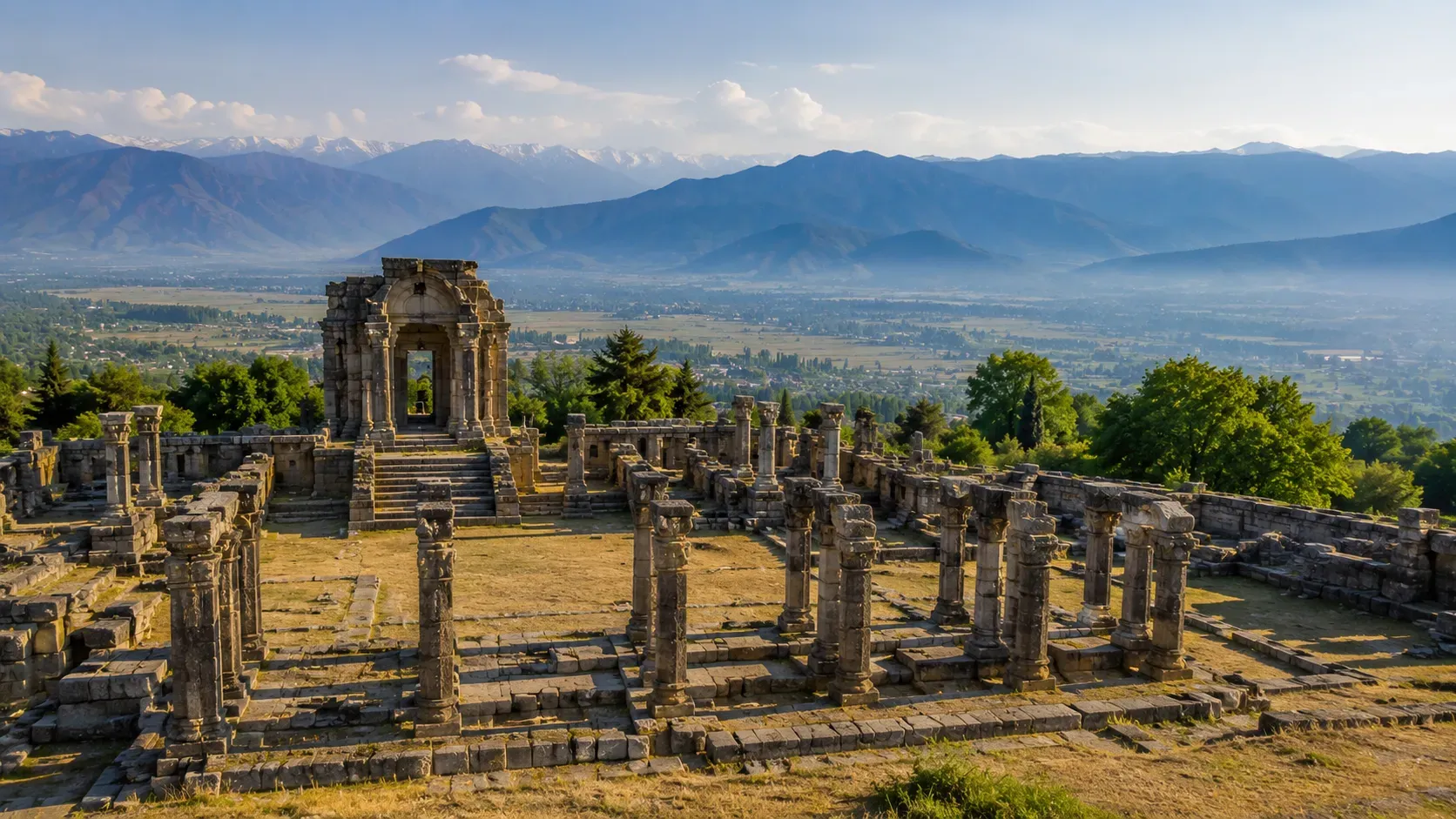
The Martand Sun Temple is a Hindu temple complex from the 8th century, set on a plateau above Mattan village in Anantnag district, about 60 to 70 kilometres from Srinagar.
Detail | Information |
Built by | King Lalitaditya Muktapida, Karkota Dynasty |
Period | 725 to 756 CE |
Dedicated to | Surya (Sun God); Martand is a Sanskrit name for the Sun |
ASI status | Protected national monument; restoration active in 2026 |
Distance from Srinagar | 60 to 70 km |
Distance from Anantnag | 8 to 9 km |
Entry fee | None |
Best combined with | Kokernag springs (15 km), Achabal gardens (12 km) |
What to know about the Martand Sun Temple:
- The complex was originally surrounded by 84 smaller shrines; the central peristyle court is surrounded by 84 smaller shrines; the architectural style blends Gandharan, Gupta, Greek, and Syrian-Byzantine influences
- The Martand Sun Temple predates the more famous Konark Sun Temple in Odisha by approximately 500 years; it is the largest peristyle structure in Kashmir
- ASI has been conducting active restoration supervision from 2026 onward; the plateau setting and panoramic valley views make this one of the most rewarding Kashmir Tourism heritage stops in the south
- No facilities on-site: carry your own water and food; no ticket counter; open sunrise to sunset; combine with a full-day South Kashmir loop for the best use of travel time
Sinthan Top
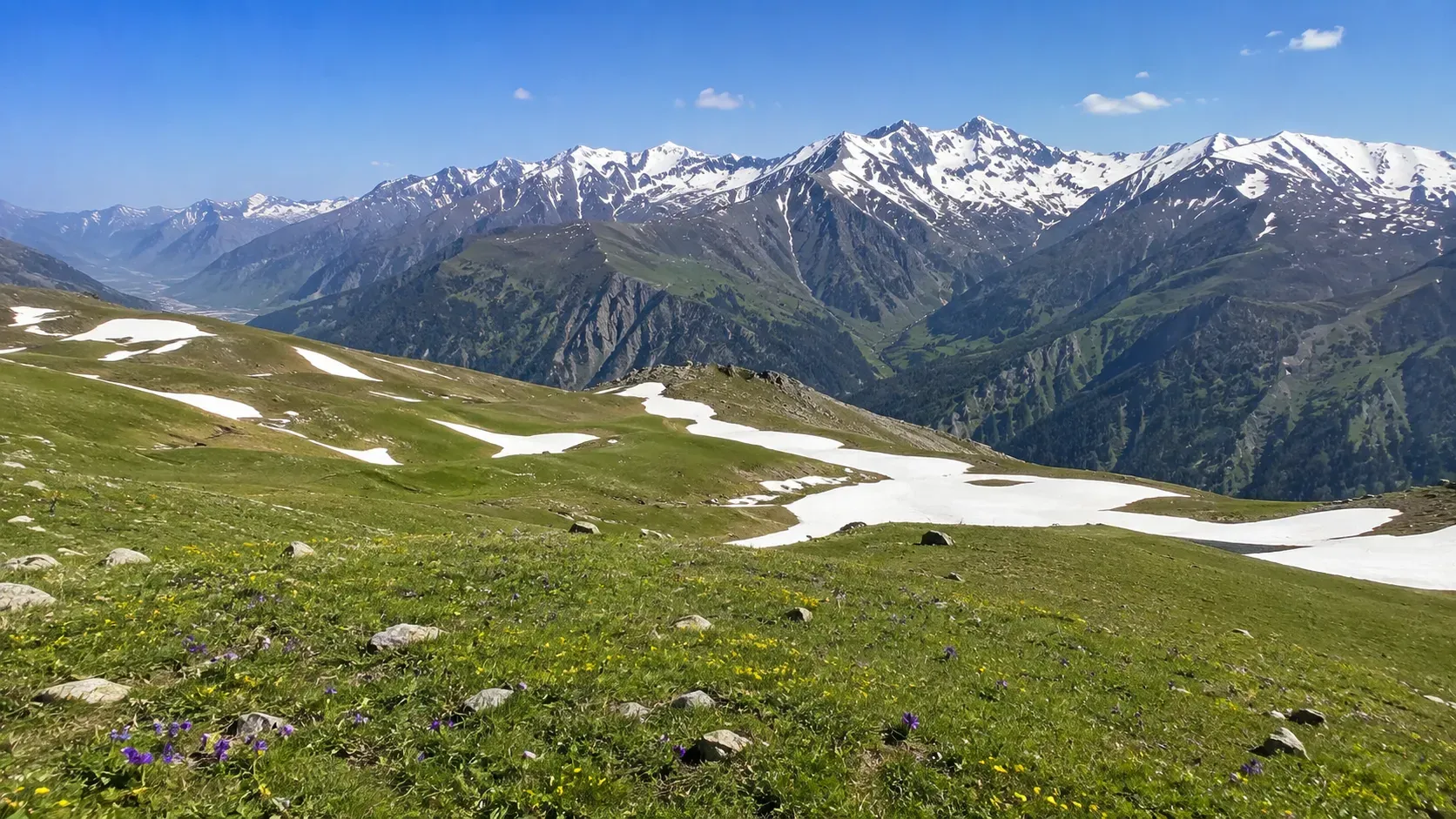
Sinthan Top is a mountain pass about 3,784 meters (12,414 feet) high in the Pir Panjal range. You can reach it from the Kashmir Valley by taking the Srinagar-Anantnag-Kokernag-Daksum road.
Detail | Information |
Altitude | 3,784 metres (12,414 feet) confirmed per kishtwar.nic.in |
Distance from Srinagar | 130 to 135 km |
Route | Srinagar - Anantnag (55 km) - Kokernag (15 km) - Daksum (23 km) - Sinthan Top (42 km) |
Drive time | 5 to 6 hours from Srinagar |
Best season | May to October |
Vehicle required | SUV or 4x4; sedan not suitable |
Entry fee | None |
Mobile network | Absent at the summit |
What to know about Sinthan Top:
- The pass provides 360-degree panoramic views of the surrounding Himalayan ranges; snow remains at the summit throughout the accessible season; in July, the surrounding meadows have wildflowers
- The road is single-lane in sections with sharp hairpin bends; an experienced mountain driver is essential; travel in daylight only and inform your accommodation before departure
- Sinthan Top is listed as a tourist destination on the official JKTDC website; it is best combined with Kokernag (one of Asia's largest trout farms, operated by J&K Fisheries Department) and Daksum forest on the same route
- The pass is fully closed from November to April due to heavy snowfall on the approach road; confirm current road status at the official J&K Tourism website before planning a visit in early May or late October
Kashmir Tourism to the south Kashmir destinations (Aharbal, Martand, Sinthan Top) works best as a 2-day Anantnag-based extension from Srinagar rather than rushed short getaways.
What Are the Best Things to Do in Kashmir?
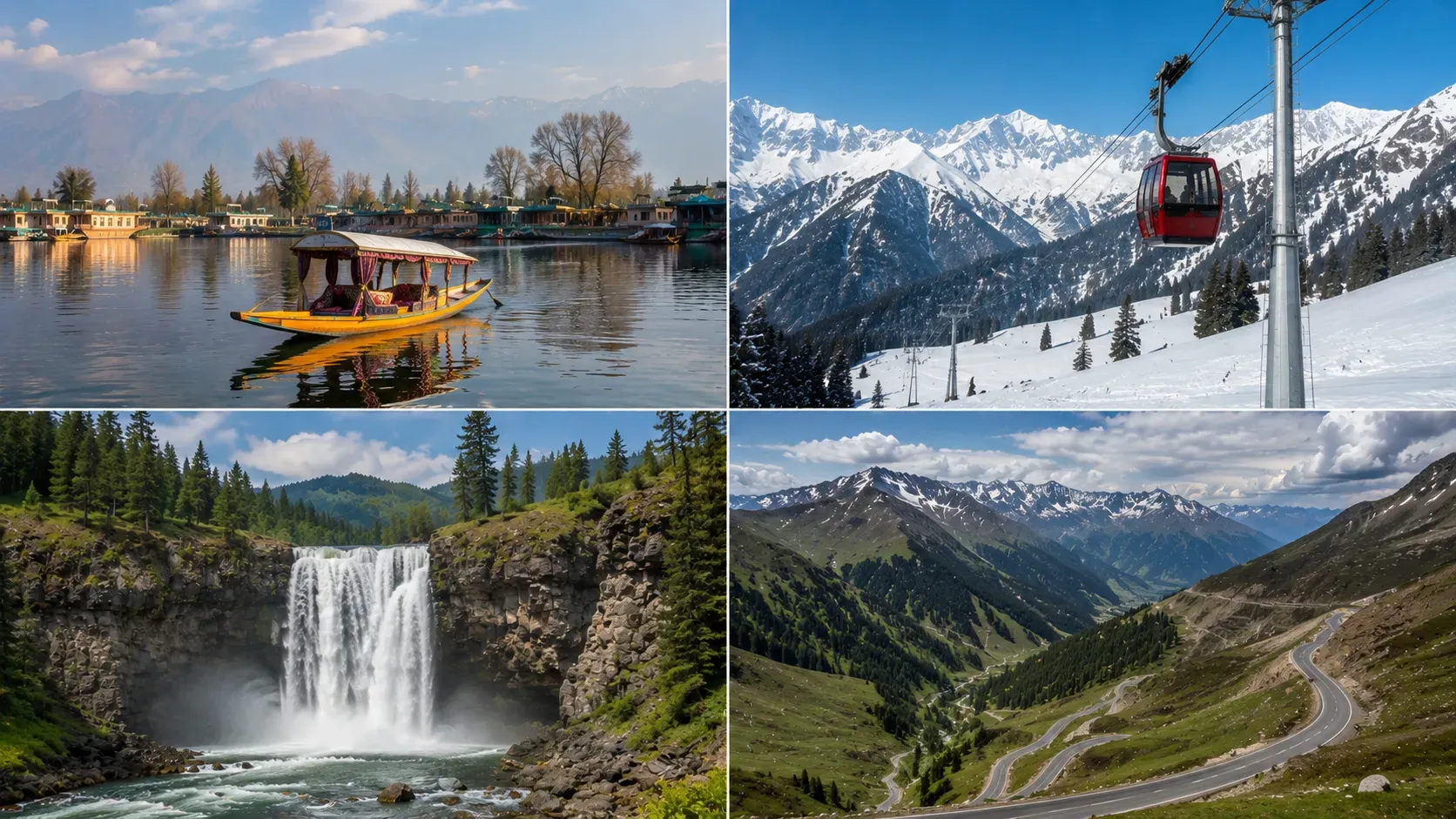
The things to do in Kashmir offer a wide range of activities, from Shikara rides and heritage walks to mountain passes and white-water rafting.
Activity | Location | Duration | Best Season | Booking Required? |
Shikara ride | Dal Lake Kashmir | 30 min to 5 hours | Year-round | At the ghat; no advance booking |
Houseboat stay | Dal Lake / Nigeen Lake | 1 to multiple nights | May to October | Book via JKTDC or Houseboat Association |
Gondola Ride (Phase 1) | Gulmarg | 1 hour | Year-round | At counter; no advance booking |
Gondola Ride (Phase 2) | Gulmarg (Apharwat, 3,979m) | Additional 30 min | Seasonal | At counter; arrive early (by 8am in peak season) |
Aharbal Waterfalls walk | Kulgam | Half-day | May to October | JKTDC rest house needs pre-booking |
Martand Sun Temple visit | Anantnag | Half-day | Year-round | None |
Sinthan Top mountain drive | Anantnag-Kishtwar border | Full day | May to October | None (SUV required) |
Lidder River rafting | Pahalgam | Half-day | July to September | Book through Pahalgam Hotel Association |
Mughal Gardens circuit | Srinagar | Half-day | April to October | Small entry fee at each garden |
Some things to do in Kashmir require extra planning, like the Phase 2 Gondola Ride at Gulmarg (no advance booking, so arrive early), staying at the Aharbal Waterfalls rest house (book ahead), and driving to Sinthan Top (hire an SUV and check the weather).
When Is the Best Time to Visit Kashmir for Snowfall?
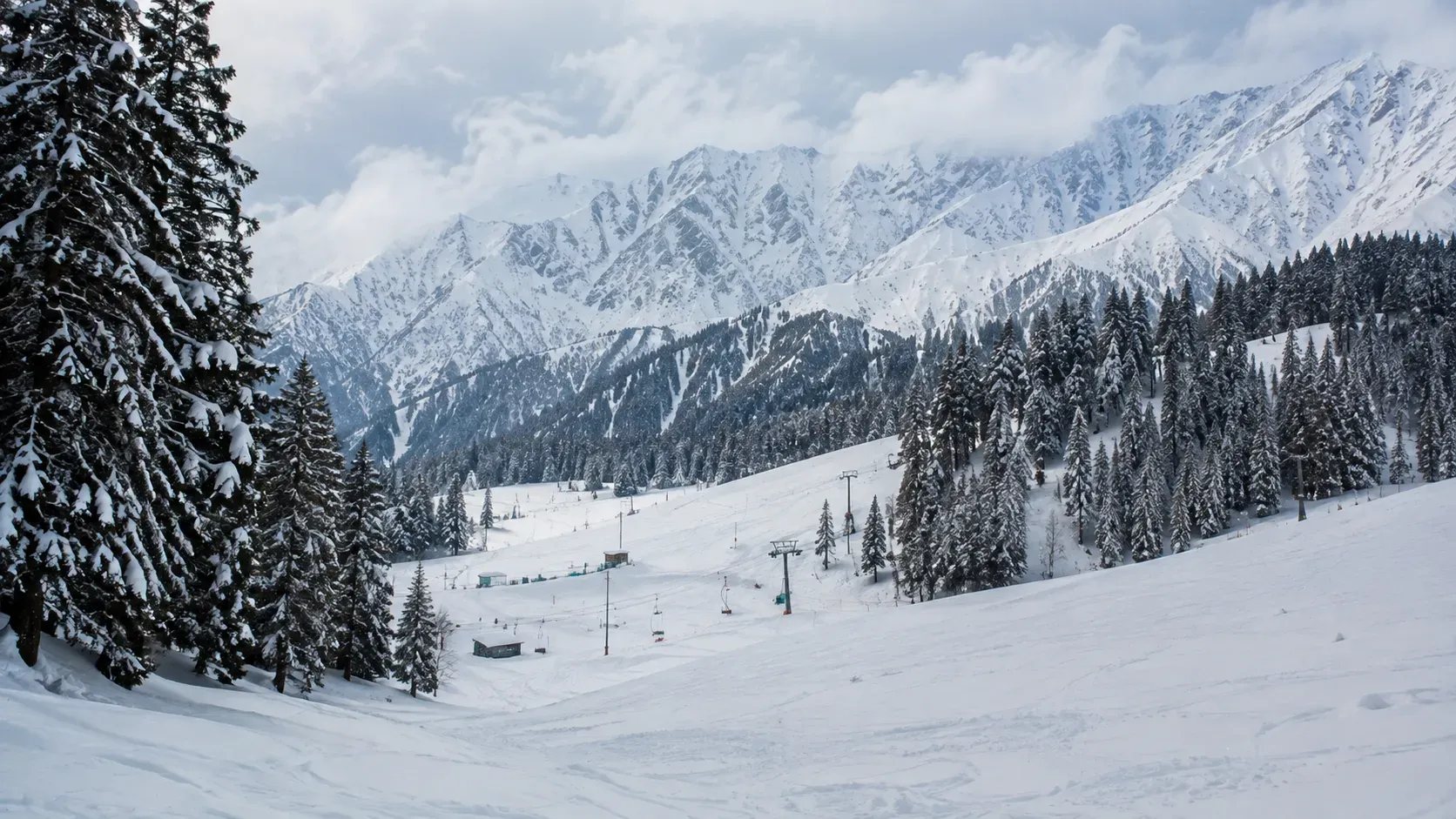
The best time to visit Kashmir for snowfall is December to February. During these months, Kashmir Tourism focuses on winter activities. Srinagar gets light to moderate snow, the hills turn white, and Gulmarg sees the most snow, usually 8 to 12 feet by January.
Month | Srinagar Snow | Gulmarg Snow | Road Conditions | Key Activities |
November | Nil to light | 2 to 3 feet | Normal | Gulmarg pre-season; South Kashmir season closed |
December | 2 to 6 inches | 3 to 5 feet | 4x4 for Gulmarg road | Early skiing; Srinagar snowfall |
January | 4 to 12 inches | 8 to 12 feet | 4x4 required; check daily | Peak skiing; powder snow at Gulmarg |
February | 4 to 10 inches | 6 to 10 feet | 4x4 required | Peak skiing; fewer crowds than January |
March | Patchy | 2 to 5 feet | Clearing; monitor | Late season skiing; Sinthan Top still closed |
By zone for the best time to visit Kashmir for snowfall:
- Srinagar and Dal Lake Kashmir: December to February; the lake partially freezes in extreme cold; houseboats operate year-round with heating
- Gulmarg: November to March; January and February are the most reliable; peak snow depth arrives in late January; Phase 2 gondola operates on clear days
- Pahalgam: December to February; Chandanwari and Betaab Valley are snow-covered; 4x4 vehicle required
- Sinthan Top: Fully closed November to April; the pass is inaccessible during the best time to visit Kashmir for snowfall window; plan a May to October visit separately
What Should You Know Before Visiting the Kashmir Valley?
Planning for Kashmir Tourism in advance helps you avoid common travel issues.
- Flights: Daily direct flights connect Delhi, Mumbai, and Bengaluru to Srinagar's Sheikh ul-Alam International Airport; book 4 to 6 weeks ahead for the tulip season (mid-March to mid-April) and peak summer (June to August)
- South Kashmir car hire: For Aharbal Waterfalls, Martand Sun Temple, and Sinthan Top, hire a private car with an experienced driver in Srinagar; public transport to these sites is limited or non-existent
- JKTDC pre-bookings: The Aharbal rest house must be booked through the official website before visiting; walk-in availability is not guaranteed
- Sinthan Top vehicle: An SUV or 4x4 is mandatory; sedans are not suitable for the Daksum-to-pass section; confirm road status at J&K Tourism official portal before travelling in May or October
- Best places to visit in Kashmir in South Kashmir work best as a 2-day loop from Srinagar via Anantnag; combining Martand, Kokernag, and the Aharbal approach on consecutive days is the most efficient use of time
Final Takeaway
Kashmir Tourism offers more than most travel plans cover. Dal Lake and the Mughal Gardens are Srinagar's highlights. Aharbal Waterfalls and Martand Sun Temple bring nature and history from the south. Sinthan Top offers easy access to high-mountain views. You can enjoy Kashmir's highlights, from Shikara rides to skiing and river rafting. For snowfall, visit in January or February. For everything else, May to October is the best time.
If you want to plan a holiday to Kashmir that covers the valley in the right order and season, Holiday Tribe’s holiday advisors can help plan every detail.