


Most Mughal gardens in Srinagar sit beside the lake. Pari Mahal Srinagar sits above it, on a slope of the Zabarwan Range where the air is cooler and the crowds thin out. The terraces climb the hillside one above the other, each framed by stone arches that are old enough to have carried four centuries of Kashmir's weather. Dal Lake stretches below. The city spreads beyond it. And most visitors, once they reach the upper levels, stay longer than they planned to.
This guide covers the history behind Pari Mahal Kashmir, what you actually see inside, the timings, entry fee, how to reach, the best time to visit and what to combine it with on the same day.
Key Takeaways
Key Information | Quick Answer |
Full name | Pari Mahal (Palace of Fairies) |
Location | Zabarwan Range, above Chashme Shahi, Srinagar |
Built by | Prince Dara Shikoh, eldest son of Shah Jahan |
Built in | Around 1650 AD |
Structure | Seven-terraced garden, Islamic architecture |
Entry fee | INR 25 for Indians, INR 100 for foreign nationals (verify at gate) |
Timings | 9am to 7pm (summer), 9am to 5pm (winter) |
Time needed | 1 to 2 hours |
Nearest landmark | Chashme Shahi Garden (approximately 1 km) |
What Is Pari Mahal and Why Is It Called the Palace of Fairies?
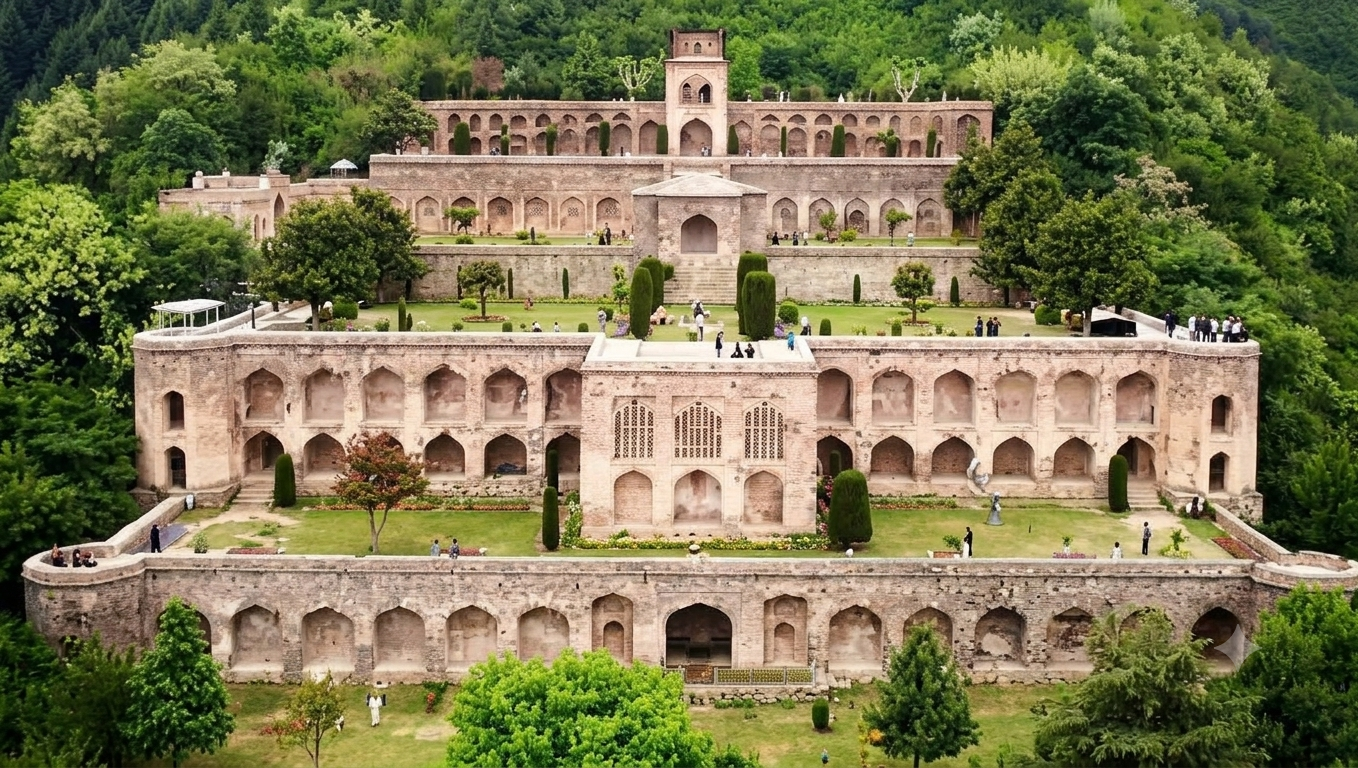 "Pari Mahal" translates directly to "Palace of Fairies" in Kashmiri and Urdu. The name comes from the elevated, almost hidden setting on the Zabarwan hillside, where mist and cloud sometimes sit below the terraces rather than above them.
What makes it different from Srinagar's other Mughal gardens:
- It is a smaller terraced garden than Srinagar's major Mughal gardens
- It is built on a slope rather than flat ground, climbing seven terraces up the hillside
- It was not designed as a pleasure garden. It was a library, observatory and Sufi learning centre
- The architecture is Islamic rather than the typical Mughal garden layout you see at Nishat or Shalimar
- The setting above Chashme Shahi means the views of Dal Lake from the upper terraces are wider and higher than from any other garden in the city.
Who Built Pari Mahal and What Is Its History?
The Pari Mahal was built by Prince Dara Shikoh, the eldest son of Mughal Emperor Shah Jahan, around 1650 AD.
The story in short:
Period | What Happened |
Pre-Mughal era | A Buddhist monastery stood on this site on the Zabarwan slope |
Around 1650 AD | Pari Mahal was established in the mid-1600s on the site where ruins of a Buddhist monastery existed |
Mid-1600s | Used as an observatory, a school of astrology and a Sufi learning centre under his teacher Mullah Shah Badakhshi |
1659 | Dara Shikoh lost the war of succession to his brother Aurangzeb and was executed. The site fell out of royal use |
Post-Mughal period | The structure declined over centuries |
After 1947 | The Archaeological Survey of India took over maintenance and restoration |
Present | Maintained as a heritage garden and open to visitors year-round |
Why Dara Shikoh built it here:
- The elevated position gave clear views of the sky for astronomical observation
- The isolated location suited Sufi study and retreat away from the court
The Pari Mahal history is unusual among Srinagar's gardens because it was built for learning and contemplation, not for leisure or entertainment. That purpose shaped its architecture and is still visible in the layout today.
What Can You See Inside Pari Mahal?
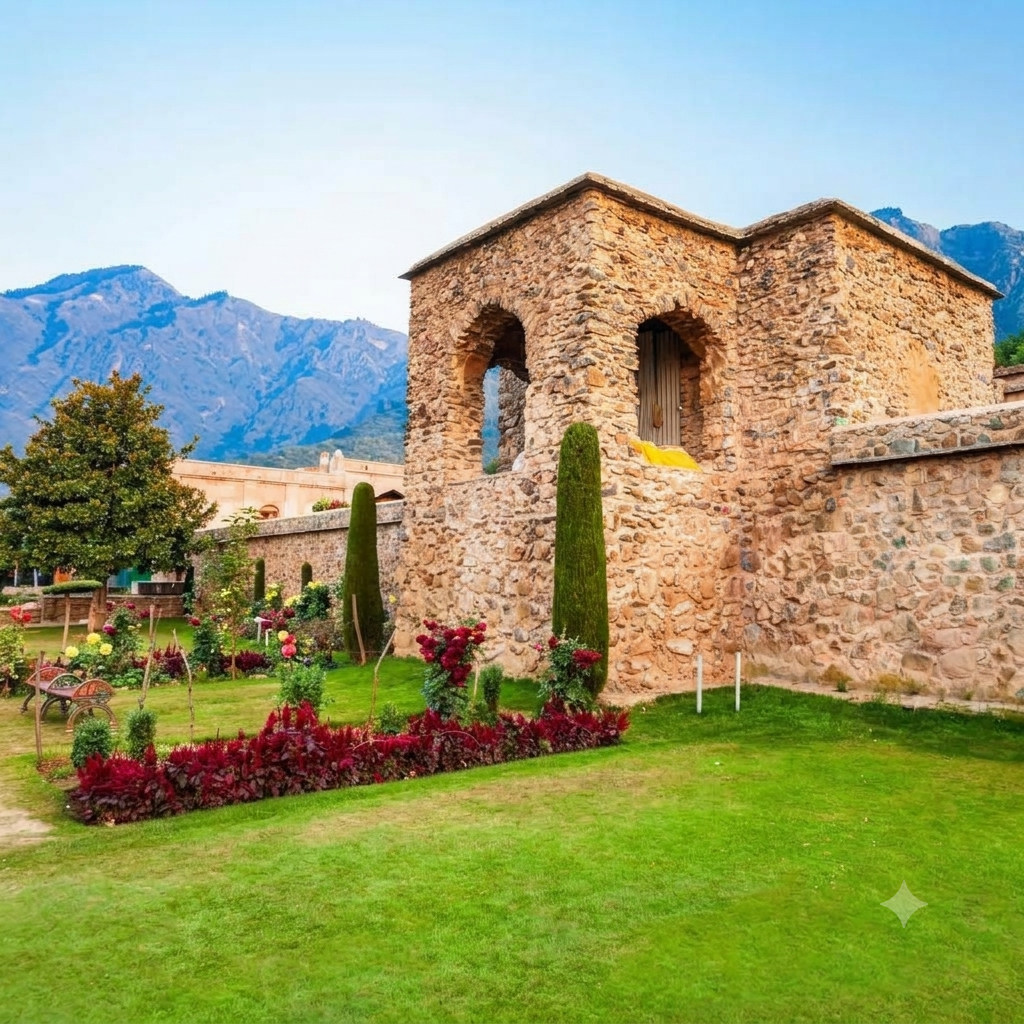 Walking inside Pari Mahal means climbing through seven terraces, each one higher than the last, with the views improving as you go up.
Terrace by terrace:
- Lower terraces (1 to 3): Stone retaining walls, arched openings, and the remains of water channels that once carried spring water downhill through the gardens
- Middle terraces (4 to 5): Wider garden beds, clearer arched structures. The 21 arches on the outer wall are arranged in a descending series and are one of the most recognisable features of the site
- Upper terraces (6 to 7): The highest points. The sixth level originally had a domed pavilion with a fountain. The seventh terrace gives the widest panoramic view of Dal Lake, Srinagar city and the surrounding mountains
The water system:
- Gravity-fed from the Chashme Shahi spring below
- Water was supplied to the garden through channels and an underground pipeline
- The engineering was advanced for its time and is one of the more interesting details to notice as you climb
The views from the top:
Direction | What You See |
South and west | Dal Lake stretching across the valley floor |
Below | Srinagar city, the Royal Springs Golf Course directly beneath |
East | The Zabarwan Range rising behind the garden |
North | The wider Kashmir Valley toward the mountains |
Tribe Travel Tip: The upper terraces catch the sunset light directly. Arriving by 4.30pm to 5pm in summer gives you the best conditions for photographs and the quietest stretch before closing.
What Are the Pari Mahal Srinagar Timings and Entry Fee?
The Pari Mahal timings vary slightly between sources and can shift seasonally. Here is the most current information, though it is always worth confirming at the gate.
Detail | Information |
Summer timings (April to October) | 9am to 7pm |
Winter timings (November to March) | 9am to 5pm |
Closed | Some sources report Friday closures. Verify before visiting |
Entry fee (Indian adults) | INR 25 (some sources list INR 10 to 30, confirm at counter) |
Entry fee (foreign nationals) | INR 100 (verify at counter) |
Children | Reduced rate, typically INR 5 to 10 |
Camera charges | May apply separately |
Time needed | 1 to 2 hours |
How Do You Reach Pari Mahal Srinagar?
The garden sits on the Zabarwan slope above Chashme Shahi. There is no public bus to the gate, so a taxi, hired car, or auto is the most practical way to get there.
Starting Point | Distance | Drive Time |
Lal Chowk (Srinagar city centre) | 10 to 12km | 25 to 35 minutes |
Dal Lake (Boulevard Road) | 8 to 10km | 20 to 30 minutes |
Chashme Shahi Garden | 1 to 2km | 5 to 10 minutes (uphill) |
Srinagar Airport (SXR) | 24 km | 45 to 60 minutes |
Nishat Bagh | 5 to 6km | 15 to 20 minutes |
Getting there:
- By taxi or hired car: The simplest option. Tell the driver Pari Mahal, and they will know the route. The final stretch is uphill and narrow but manageable
- From Chashme Shahi: If you are already visiting Chashme Shahi, Pari Mahal Kashmir is just 1 to 2km further up the same road. You can walk (steep but short) or drive
- By auto-rickshaw: Available from the city. Less comfortable on the uphill stretch but works
Tribe Travel Tip: Combine Pari Mahal Srinagar with Chashme Shahi on the same afternoon. The two are barely 1km apart, and visiting both takes about 2.5 to 3 hours total. Start at Chashme Shahi (lower, flatter) and work uphill to Pari Mahal for the sunset view.
When Is the Best Time to Visit Pari Mahal?
You can figure out the best time to plan your Pari Mahal visit by looking at the table below and choosing the period that matches your preferred experience.
Season | Months | What to Expect | Best For |
Spring | March to May | Mild, gardens greening, wildflowers on the hillside | Photography, comfortable walking |
Summer | June to August | Warm days, longest opening hours, busiest | Families, longest daylight |
Autumn | September to November | Cooler air, golden light, fewer visitors | Photography, quieter visits |
Winter | December to February | Cold, possible snow on the Zabarwan, shorter hours | Snow views, very few visitors. Verify seasonal access |
Best time of day: Late afternoon, between 4 PM and 6 PM. The light becomes softer, the crowds are thinner, and the view of Dal Lake from the upper terraces looks beautiful as the sun begins to set.
A note on "Pari Mahal Jammu": Pari Mahal is in Srinagar, not in Jammu city. Both sit within the union territory of Jammu and Kashmir, which is why the name sometimes appears alongside "Jammu" in searches. The garden is exclusively in Srinagar, on the Zabarwan Range above Dal Lake.
What Else Can You Visit Near Pari Mahal?
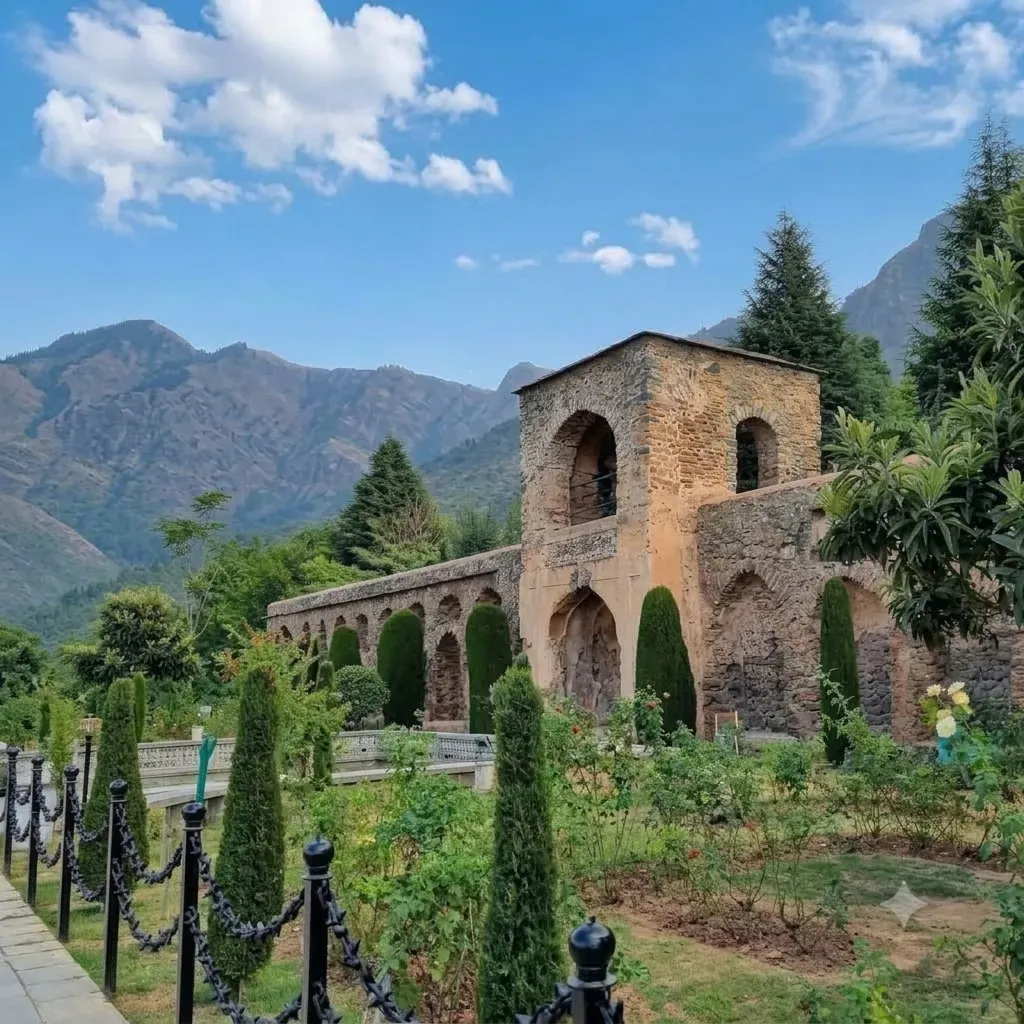 Six nearby attractions that can easily be added to your Pari Mahal visit, all within a short drive.
Chashme Shahi Garden
A smaller Mughal garden built around a natural spring whose water is still drinkable. It is compact enough to explore in around 30 to 45 minutes.
Timings: 9 AM to 7 PM in summer, 9 AM to 5 PM in winter.
Nishat Bagh
Known as the “Garden of Joy,” Nishat Bagh is larger than Chashme Shahi and has twelve terraces descending towards Dal Lake. It is also one of the most visited Mughal gardens in Srinagar.
Timings: 9 AM to 7 PM in summer, 9 AM to 5 PM in winter.
Shalimar Bagh
The largest and most formal of Srinagar’s Mughal gardens, built by Emperor Jahangir. Its three main terraces, central canal and old chinar trees make it a worthwhile stop.
Timings: 9 AM to 7 PM in summer, 9 AM to 5 PM in winter.
Dal Lake Shikara Ride
A shikara ride on Dal Lake lets you see the floating market, houseboats and reflections of the Zabarwan Range from the water. Early morning and late afternoon are especially pleasant times for the ride.
Timings: Available throughout the day, best in the early morning or late afternoon.
Shankaracharya Temple
A hilltop Hindu temple dedicated to Lord Shiva, standing around 1,000 feet above Srinagar. From the top, you get a different view of the city and Dal Lake than the one seen from Pari Mahal.
Timings: 7 AM to 8 PM daily. ( Cars are not allowed after 5 pm)
Indira Gandhi Memorial Tulip Garden
Known as Asia’s largest tulip garden, this seasonal attraction opens during the spring bloom, usually from late March to mid-April. It is worth adding when your visit matches the flowering season.
Timings: 9 AM to 7 PM during the bloom season.
Attraction | Distance from Pari Mahal | Visit Time |
Chashme Shahi | 1 to 2km | 30 to 45 min |
Nishat Bagh | 5 to 6km | 1 to 1.5 hours |
Shalimar Bagh | 8 to 9km | 1 to 1.5 hours |
Dal Lake (shikara point) | 8 to 10km | 1 to 2 hours |
Shankaracharya Temple | 6 to 7km | 1 to 1.5 hours |
Tulip Garden | 3 to 4 km | 1 to 1.5 hours (spring only) |
Conclusion
Pari Mahal Srinagar is one of those places that stays with you not because it is large or famous but because it is quiet, elevated and built with a purpose that most Mughal gardens were not. The terraces, the arches, the water channels and the view across Dal Lake from the upper levels are worth the short drive from the city. At Holiday Tribe, we build Pari Mahal and Srinagar's Mughal gardens into structured Kashmir holiday packages with stays, transfers and sightseeing covered. Our holiday advisors can also customise the itinerary around your dates, pace and the places you want to include.