

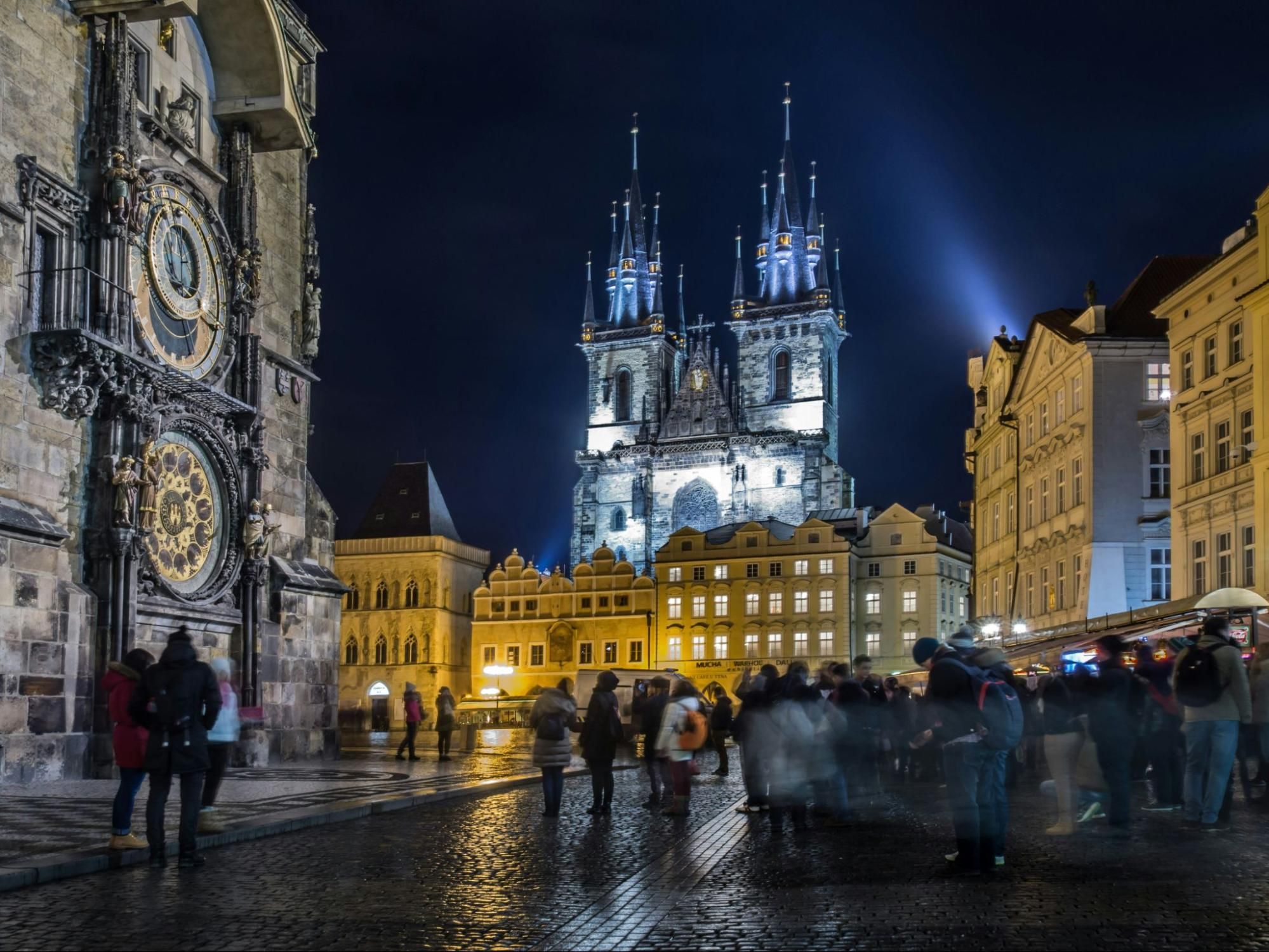
Crowds gather in Old Town Square before every hour, phones raised, and the show is over in about a minute. Many people walk away unsure what they just saw. The Prague Astronomical Clock is more than a procession of figures. Its dials track the Sun, the Moon, and four ways of counting hours, and its statues carry medieval warnings about vanity, greed and death. This guide explains how it works, what each part means and how to fit it into a Prague trip.
Key Takeaways
Key Information | Quick Answer |
Location | Old Town Square, Prague |
Hourly Show | One-minute show |
Clock Dials | Astronomical dial and calendar |
History | Dates to 1410 |
Tower Height | 69.5 metres |
Entry Fee | Square: Free; tower: Paid |
Show Timings | 9 AM to 11 PM, hourly |
Visit Duration | 15 minutes to 1 hour |
Nearby Attractions | Charles Bridge, Old Town Square, Týn Church |
What Happens During the Prague Astronomical Clock's Hourly Show?
 Death, the skeleton on the right, pulls a bell cord and the bell tolls.
- Two small windows above the dial open.
- The Twelve Apostles pass the windows one by one.
- Other figures beside the dial move too. The Turk shakes his head, and the miser shakes his purse.
- The golden rooster crows, the windows close, and the clock strikes the hour.
Tribe Travel Tip: The sequence lasts about a minute. Therefore, arriving early helps you find a clear view.
How to Read the Prague Astronomical Clock
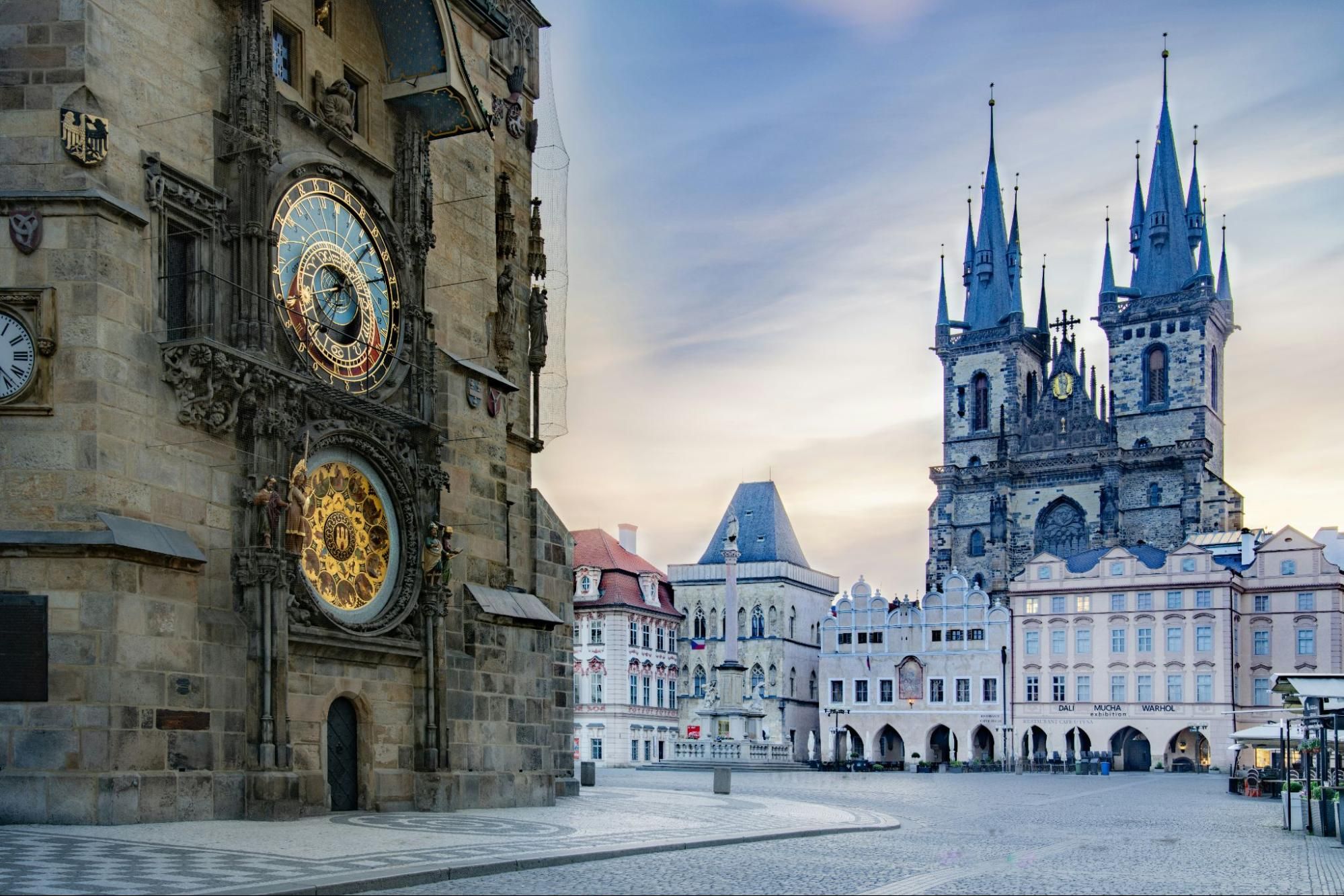
This astronomical clock has two main dials. The upper one tracks the sky and several kinds of time. The lower one is a calendar.
1. Understanding the Upper Astronomical Dial
- Sun: A golden disc on a hand. Its position shows the time and where the Sun sits in the sky.
- Moon: A ball, half silver and half dark, that rotates to show the Moon's phase.
- Zodiac ring: An off-centre ring that turns once per sidereal day, about 23 hours 56 minutes. The Sun's place against it shows its zodiac position.
- Coloured areas and curved lines: Blue is the daytime sky, red is dawn and dusk, and black is night. The curved gold lines mark unequal hours.
2. What Are the Four Time Systems?
Time system | What it tells you |
Central European time (historically Old German time) | Ordinary 24-hour time, read from the golden Roman numerals on the outer edge of the blue circle |
Old Czech time | Hours counted from sunset, shown in Gothic numerals on the outer ring |
Babylonian time | Daylight split into 12 unequal hours between sunrise and sunset |
Sidereal (star) time | Time measured against the stars. A sidereal day is just under four minutes shorter than 24 hours |
Several systems appear because medieval daily life followed sunset and daylight, while astronomers needed star time.
3. What Does the Lower Calendar Dial Show?
- Calendar Dial: Shows the months and zodiac signs.
- Date Pointer: Points to the current date and moves at midnight.
- Artwork: Painted by Josef Mánes between 1865 and 1866.
- Original Dial: The original artwork is kept at the Prague City Museum, and a copy is displayed on the clock tower.
What Do the Figures Around the Clock Represent?
 Death: The skeleton with an hourglass, a reminder that time runs out.
- Vanity: A figure admiring himself in a mirror.
- Greed or Miserliness: A figure with a purse. Older accounts attach an antisemitic stereotype to it, and most current guides simply say greed.
- Lust: The Turk, who holds a lute. Guides read him as earthly pleasure, though some see a foreign threat.
- Twelve Apostles: The only figures that parade, appearing at the windows each hour.
- Other figures: The Philosopher, Astronomer, Chronicler, and an angel usually named Archangel Michael. They are fixed statues, and sources disagree on their meaning.
What Is the History of the Prague Astronomical Clock?
- 1410: Clockmaker Mikuláš of Kadaň built the clock's mechanism, and astronomer Jan Šindel is credited with its astronomical design.
- Around 1490: The calendar dial and Gothic sculptures were added, with work linked to clockmaker Jan Růže, known as Hanuš.
- The Hanuš Legend: A popular story claims that Master Hanuš was blinded to stop him from building another clock. However, there is no evidence to support this, and he worked on the clock about 80 years after its creation.
- 1945: A fire during the Prague Uprising damaged the clock and destroyed its wooden sculptures.
- 1948: The clock resumed working with new statues of the Twelve Apostles carved by Vojtěch Sucharda.
- 2018: Major reconstruction work took place, and the clock resumed operation on 28 September.
- Its Age: It is often called the world's oldest working astronomical clock, though Radio Prague describes it as the third oldest operating clock.
Is the Old Town Hall Tower Worth Visiting?
Experience | What to Know |
Watching from Old Town Square | Free. You see the exterior and the show, but the apostles look small from below |
Visiting the tower | A gallery at 42 m with views over the Old Town rooftops, by stairs or lift |
Historical interiors | The chapel, state rooms and underground are visited on guided tours. The chapel gives a close look at the apostles |
The tower suits city-view and Old Town Hall history fans. If you only want the show, the square is enough.
How Much Does It Cost to Go Up the Prague Astronomical Clock?
You can enjoy the clock's hourly show from Old Town Square without buying a ticket. A visit to the Old Town Hall Tower is worth considering if you want panoramic views of Prague and a closer look at the historic building.
- Standard Admission: 350 CZK for adults.
- Reduced Admission: 280 CZK for visitors aged 16 to 26.
- Online Ticket: Covers access to the tower only.
- Lift Access: Costs extra, reported at around 100 CZK.
How to Plan Your Visit to the Prague Astronomical Clock
- Show timings: On the hour from 9 am to 11 pm, per the official Prague site. Older listings say 8 am, so check prague.eu for your date.
- Arrival: Reach the square about 10 minutes early. This helps but does not guarantee a view.
- Crowds: Midday and summer afternoons tend to be busiest.
- Best viewing position: Stand in front of the tower's south face, a few steps back, so the windows and rooster are both visible.
- Visit duration: About 15 minutes for the show and photos, plus roughly an hour for the tower.
- Accessibility: Confirm lift access on the official Old Town Hall page.
What Can You Visit Near the Prague Astronomical Clock?
- Old Town Square: Gothic, Renaissance and Baroque buildings surround the clock.
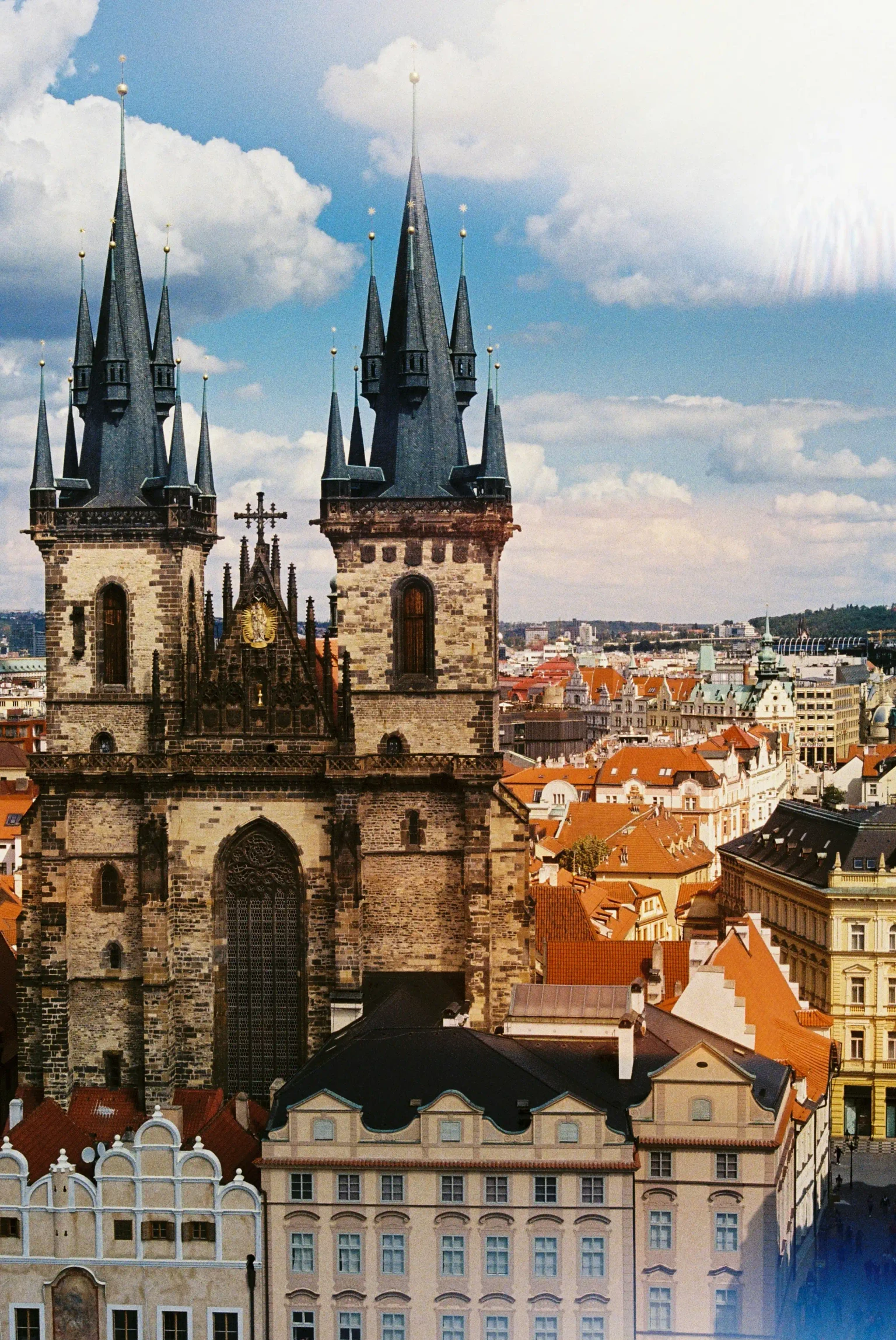
- Church of Our Lady before Týn: Its twin Gothic spires rise on the opposite side of the square.
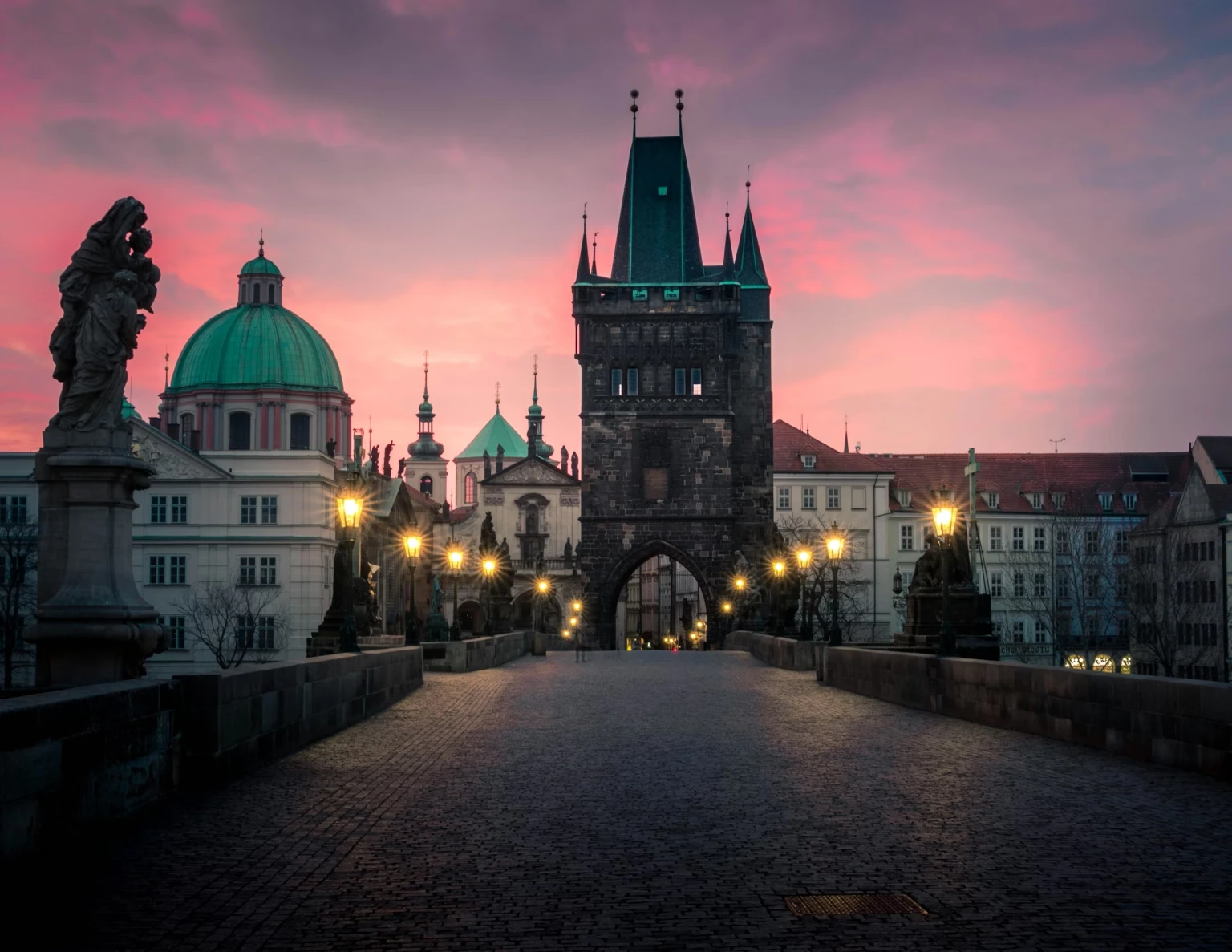
- Charles Bridge: About a 10- to 15-minute walk west through the Old Town lanes, with statues and river views.
Conclusion
Visiting this clock becomes meaningful when you understand its symbols and their hidden meanings. The above shared guide helps you decode exactly those patterns alongside offering useful travel tips. Watching the hourly show from Old Town Square is free. You need a paid ticket to access the tower and its panoramic views. If you are planning a Prague holiday that pairs the clock with nearby historic sights, Holiday Tribe can help you build the itinerary.