


Srinagar sits in the centre of the Kashmir Valley, with the Himalayas all around and Dal Lake nearby. Mughal emperors spent their summers here, and the gardens they built are among the most beautifully designed in South Asia.
The most significant is Shalimar Bagh, Srinagar, the largest Mughal garden in the Kashmir Valley. Built in 1619 by Emperor Jahangir for his wife Empress Nur Jahan, it enlarged an existing garden into a royal summer court. Known as the "Crown of Srinagar," it is one of the most visited Srinagar Garden destinations in India.
This guide covers the garden's history, terraced layout, key features, best seasons, how to get there, and hotels near Shalimar Bagh, Srinagar.
What Makes Shalimar Bagh a Historic Srinagar Garden?
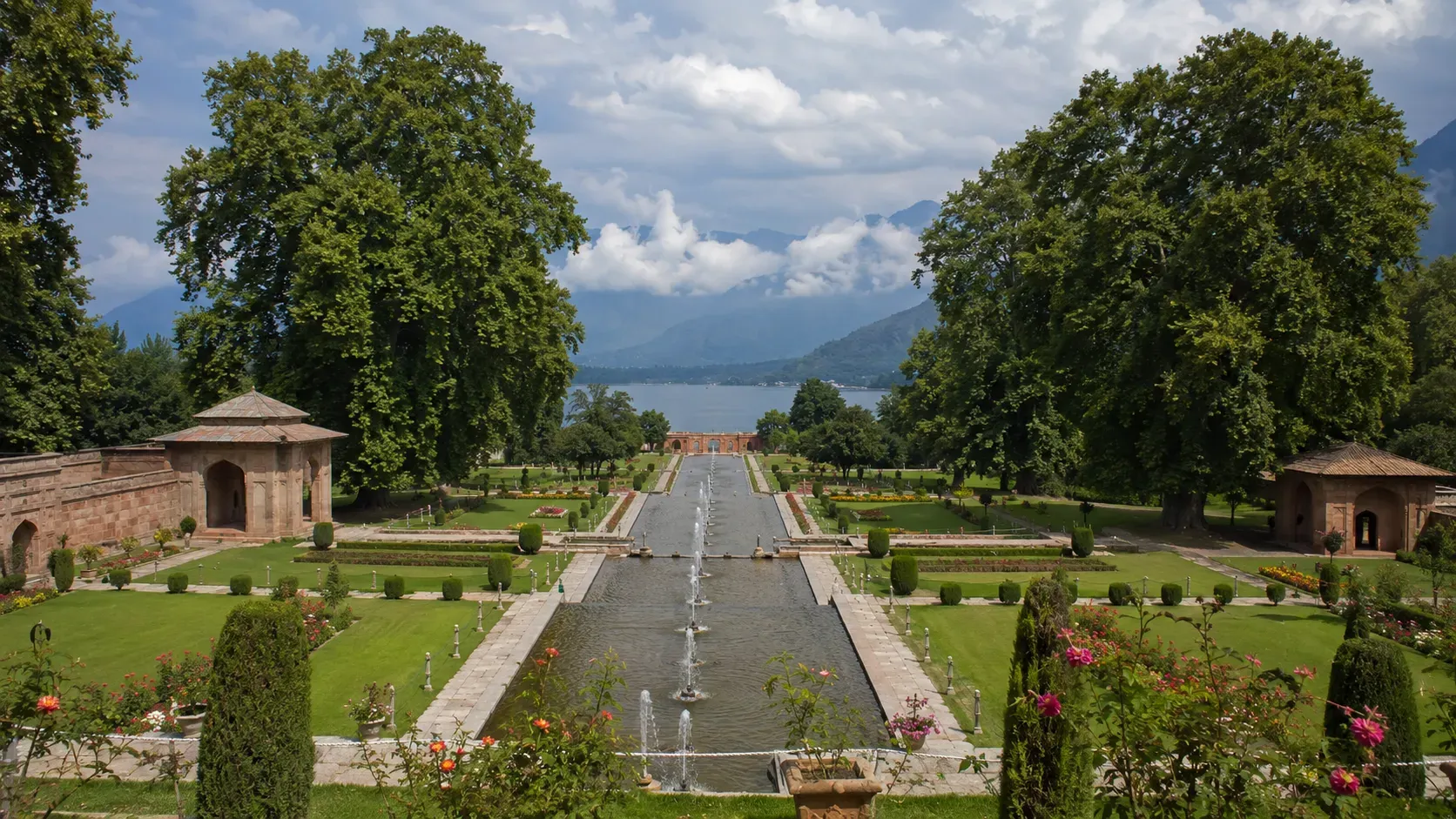
Mughal Emperor Jahangir built Shalimar Bagh in 1619 AD on the northeastern shore of Dal Lake in Srinagar. The name 'Shalimar' is traditionally said to mean 'Abode of Love’, and the garden was created as a personal gift for Empress Nur Jahan. Its original name was Farah Baksh, meaning "the Delightful."
In 1630, Emperor Shah Jahan extended the garden through Zafar Khan, his Governor of Kashmir, who renamed it Faiz Baksh. Jahangir and Nur Jahan visited Kashmir at least 13 times during their reign, using Shalimar Bagh in Srinagar as their royal summer residence and open-air court.
At 31 acres (12.4 hectares), it is the largest of Srinagar's three main Mughal gardens, alongside Nishat Bagh and Chashme Shahi. Today, the Jammu and Kashmir Tourism Department owns and operates it; it is listed on UNESCO's Tentative World Heritage List and accessible through the official website of District Srinagar.
Detail | Information |
Built | 1619 AD |
Built by | Emperor Jahangir |
Built for | Empress Nur Jahan |
Extended | 1630 AD (Shah Jahan, via Zafar Khan) |
Area | 31 acres / 12.4 hectares |
Location | Northeastern shore of Dal Lake, Srinagar |
Owner | Jammu and Kashmir Tourism Department |
Historic names | Farah Baksh, Faiz Baksh, Shalimar Garden Kashmir |
What Can You See Inside Shalimar Bagh?
Official sources describe Shalimar Bagh's terraced layout differently. The current Incredible India website describes four terraced levels, while the District Srinagar government website describes three terraces based on their principal functions. UNESCO's Tentative List uses a more detailed historical division and describes five main terraces.
This guide follows the three principal functional sections described by District Srinagar: the Diwan-e-Aam, Diwan-e-Khas and Zenana Garden.
Terrace overview:
- Diwan-e-Aam: Public audience area
- Diwan-e-Khas: Private audience area for nobles and court guests
- Zenana Garden: Upper private section of the royal garden
Diwan-e-Aam: The Garden’s Public Court
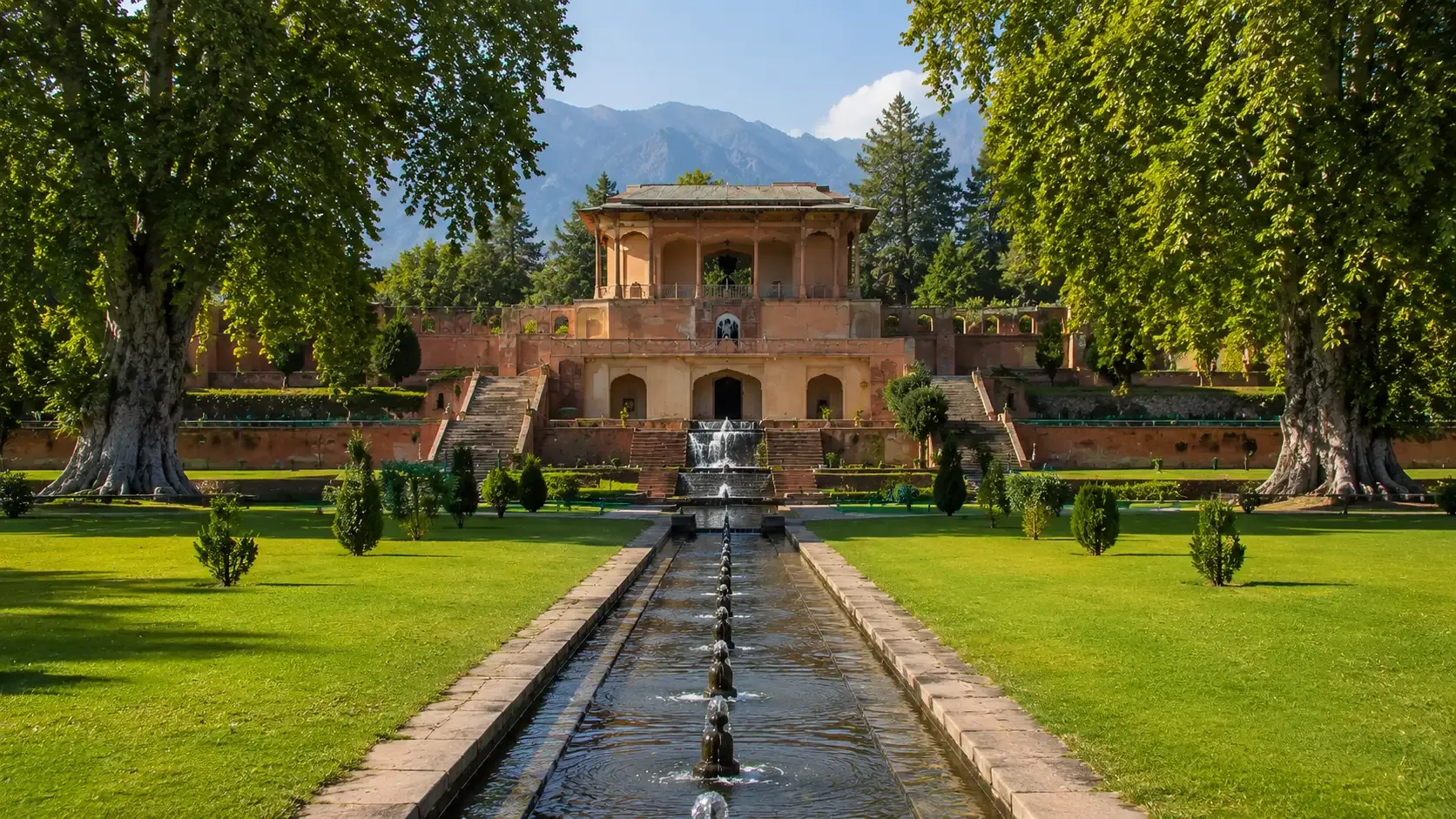
- The first terrace of Shalimar Bagh Srinagar is called the Diwan-e-Aam, meaning "public audience hall"
- This is where Emperor Jahangir held open court and received petitions from the public. The terrace is wide and unenclosed, bordered by rows of Chinar trees and aligned fountains.
- The central Shah Nahar water channel runs through the three principal terraces, forming the main axis of the Srinagar garden.
Diwan-e-Khas: Where Royal Guests Gathered
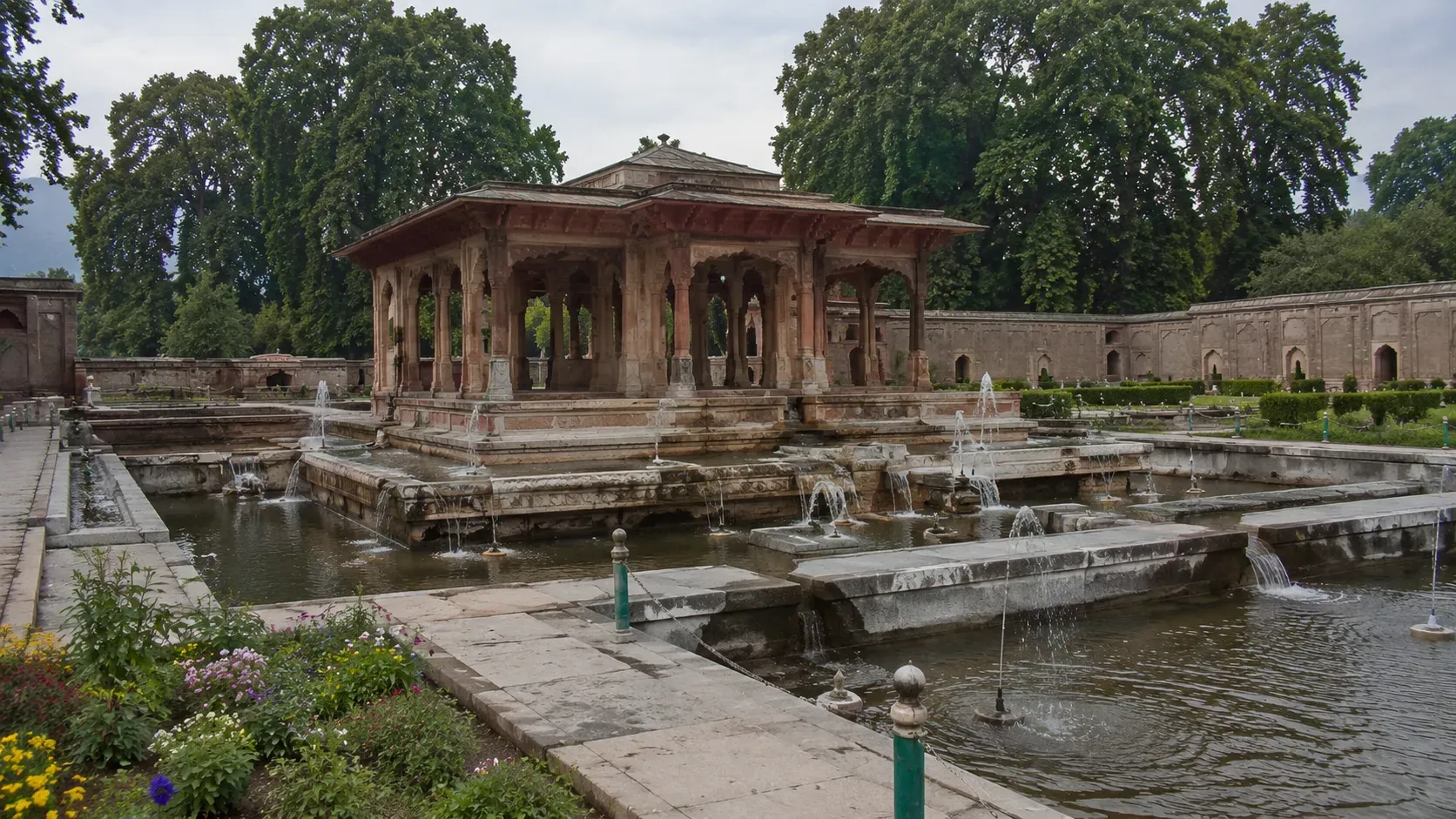
- The second terrace was reserved for private gatherings, noblemen, and specially invited guests; access was restricted during the Mughal period
- The Chini Khanas, or arched niches behind the waterfalls, are one of the garden's distinctive features; originally fitted with oil lamps so that firelight reflected through the falling water at night; today they hold flower arrangements
- This terrace gives the most complete sense of Shalimar Bagh as a functioning royal court space
Zenana Garden: The Private Royal Enclosure
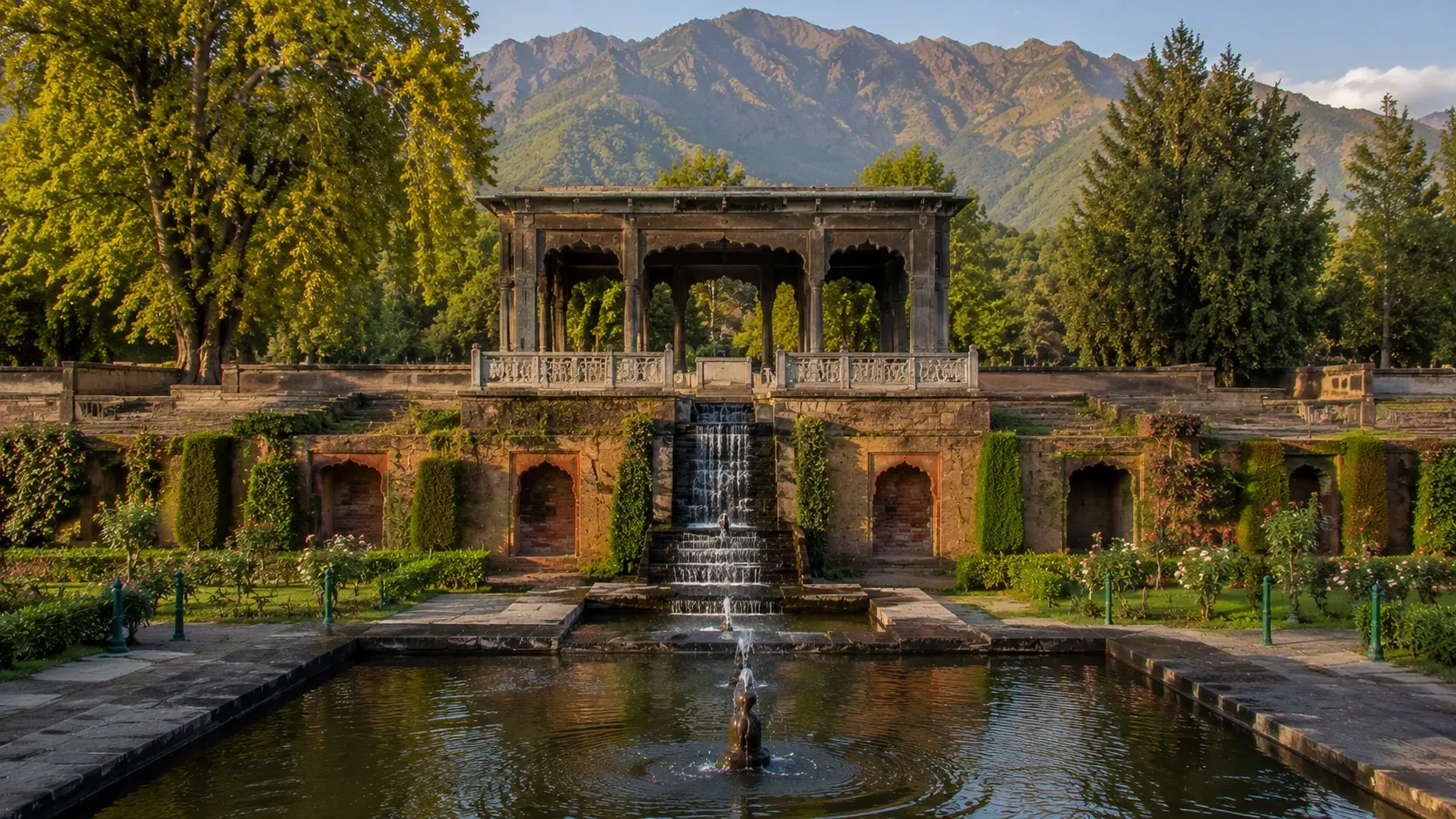
- The third and uppermost terrace of Shalimar Garden, Kashmir, is the Zenana Garden, built exclusively for the royal women of the Mughal household
- At the entrance to the Zenana are two small pavilions or guard rooms built in the Kashmiri style. The upper section also contains the Black Pavilion, a fountain pool, cascading water and Chini Khanas.
- The black marble pavilion, built around 1630 during Shah Jahan's reign, stands in the Zenana garden. Its Persian inscription reads, "If there is a paradise on earth, it is here, it is here, it is here.
- Ancient Chinar trees on this level are believed to date to Jahangir's original garden; their canopy and the combination of all three terraces make this the most complete example of Mughal Srinagar Garden architecture in the Kashmir Valley
- Also known as Bagh-e Farah Baksh, the most private and serene level of the entire Shalimar Garden, Kashmir
When Is the Best Time to Visit Shalimar Garden Kashmir?
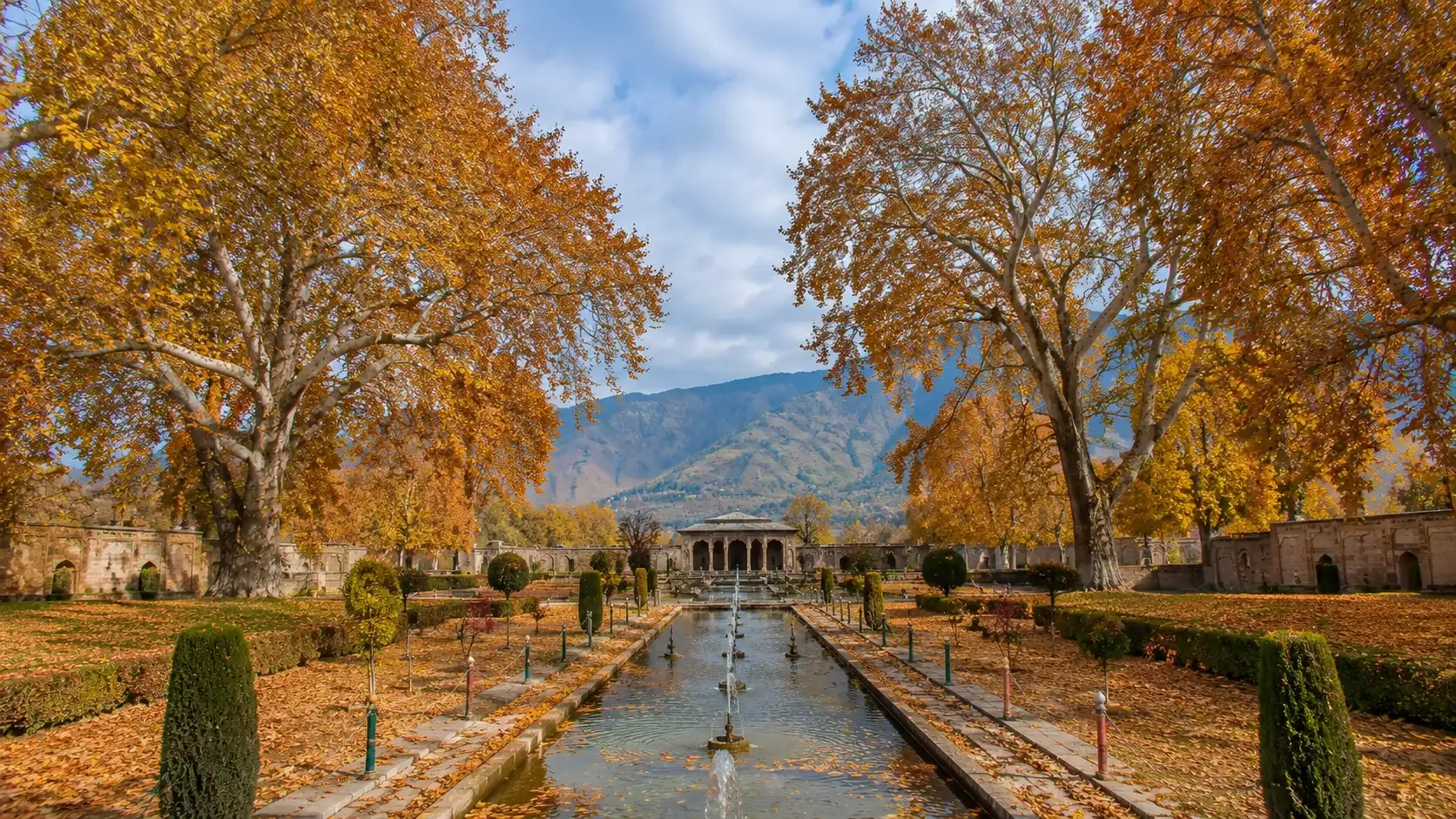
Shalimar Bagh Srinagar is open year-round, but the experience changes considerably across seasons. The garden's character shifts from blooming colour in spring to fiery Chinar canopies in autumn.
Spring (March to May) is the peak season for flowers: tulips, irises, and roses come into full bloom, and the garden carries the strongest colour display of the year. Summer (June to August) keeps the garden fully green and lush; this is when the ITDC Sound and Light Show runs in the evenings (May to October). Autumn (September to October) turns the Chinar trees a deep red and amber, widely considered the most photogenic period for Shalimar Garden, Kashmir. Winter (November to February) is quiet; the flowers are dormant, but the garden is peaceful and almost completely uncrowded.
Season | Garden State | Timings | Best Experience |
Spring (Mar to May) | Tulips, irises, roses in bloom | 9 AM to 7 PM | Colour display; flowers at peak |
Summer (Jun to Aug) | Fully green; lush canopy | 9 AM to 7 PM | Evening Sound and Light Show |
Autumn (Sep to Oct) | Chinar trees turn red and amber | 9 AM to 7 PM | Most photogenic season |
Winter (Nov to Feb) | Flowers dormant; quiet | 10 AM to 5 PM | Peaceful; very few visitors |
Entry fee: Rs. 20 per adult | Sound and Light Show: May to October (ITDC)
What Is the Srinagar to Shalimar Bagh Distance?
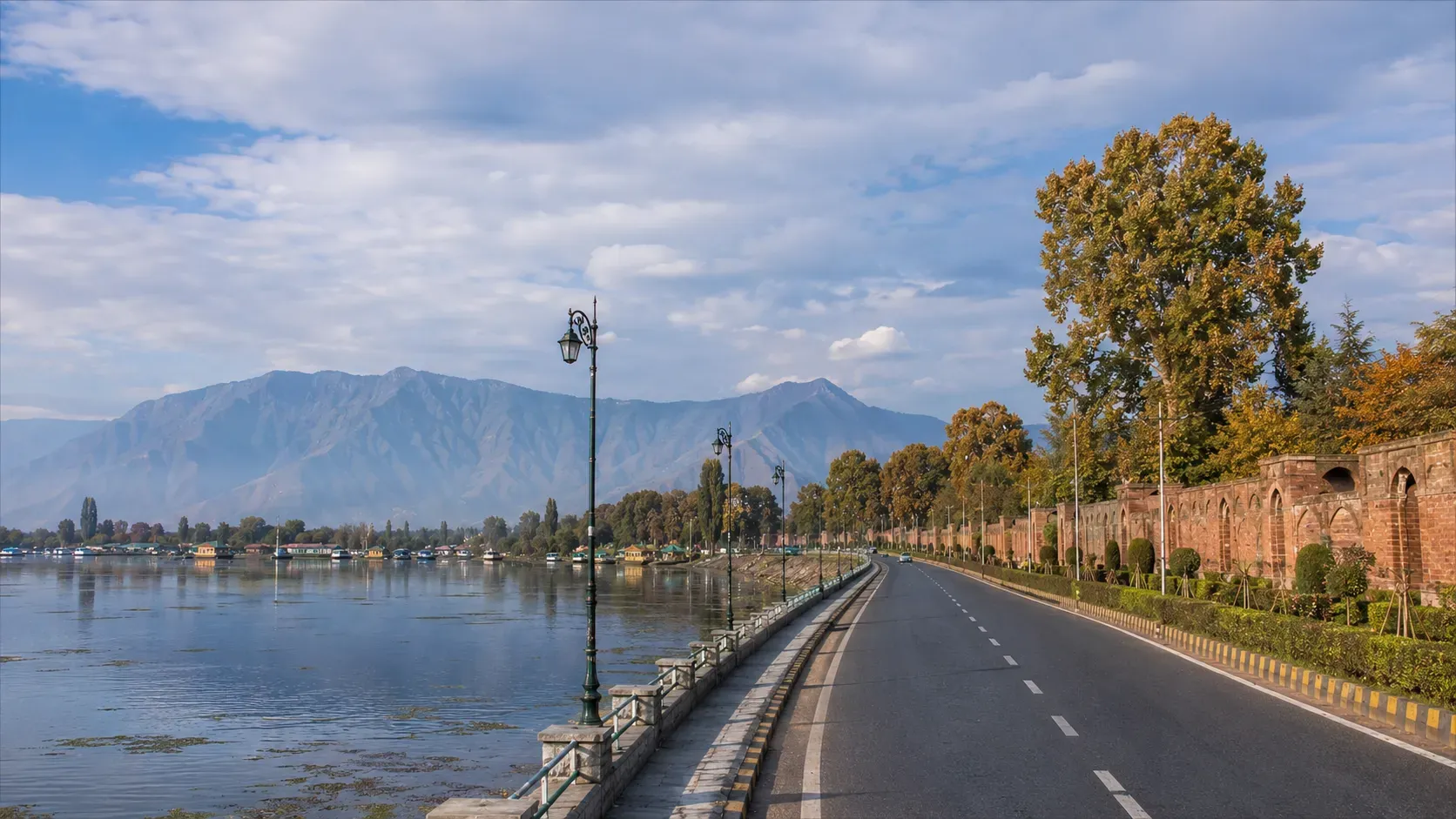
The Srinagar to Shalimar Bagh distance from Lal Chowk (the main city centre) is approximately 13 to 15 km. The drive follows Foreshore Road along the northeastern shore of Dal Lake and takes around 25 to 30 minutes by car. There is no direct public bus service to the garden gate. Taxis and autorickshaws are the standard options from the city.
The Botanical Garden to Shalimar Bagh distance from Harwan Botanical Garden (further northeast on the same road) is about 3 to 4 km, making it easy to combine both in a single morning circuit. Nishat Bagh sits 3 km southwest of Shalimar Bagh, Srinagar. The full three-garden Foreshore Road circuit (Chashme Shahi, Nishat Bagh, Shalimar Bagh, Srinagar) is one of the most practical ways to see Srinagar gardens’ complete garden heritage in one day.
Starting Point | Distance to Shalimar Bagh | Travel Time | Notes |
Lal Chowk (city centre) | 13-15 km | 25-30 min | Foreshore Road; taxi or auto |
Nishat Bagh | 3 km | 8-10 min | Same Foreshore Road |
Harwan Botanical Garden | 3-4 km | 10-12 min | Northeast on the same road |
Srinagar Airport | 18 km | 35-40 min | Via city centre or Ring Road |
Dal Lake Houseboats | 10-15 min | By auto/taxi | Dependent on mooring location |
The Botanical Garden to Shalimar Bagh leg works well as a late morning addition after an early visit to the garden, giving you a connected half-day along the lake shore without backtracking. The Botanical Garden to Shalimar Bagh leg along the northeastern shore makes a practical half-day circuit in any season.
Which Hotels Near Shalimar Bagh Srinagar Can You Consider?
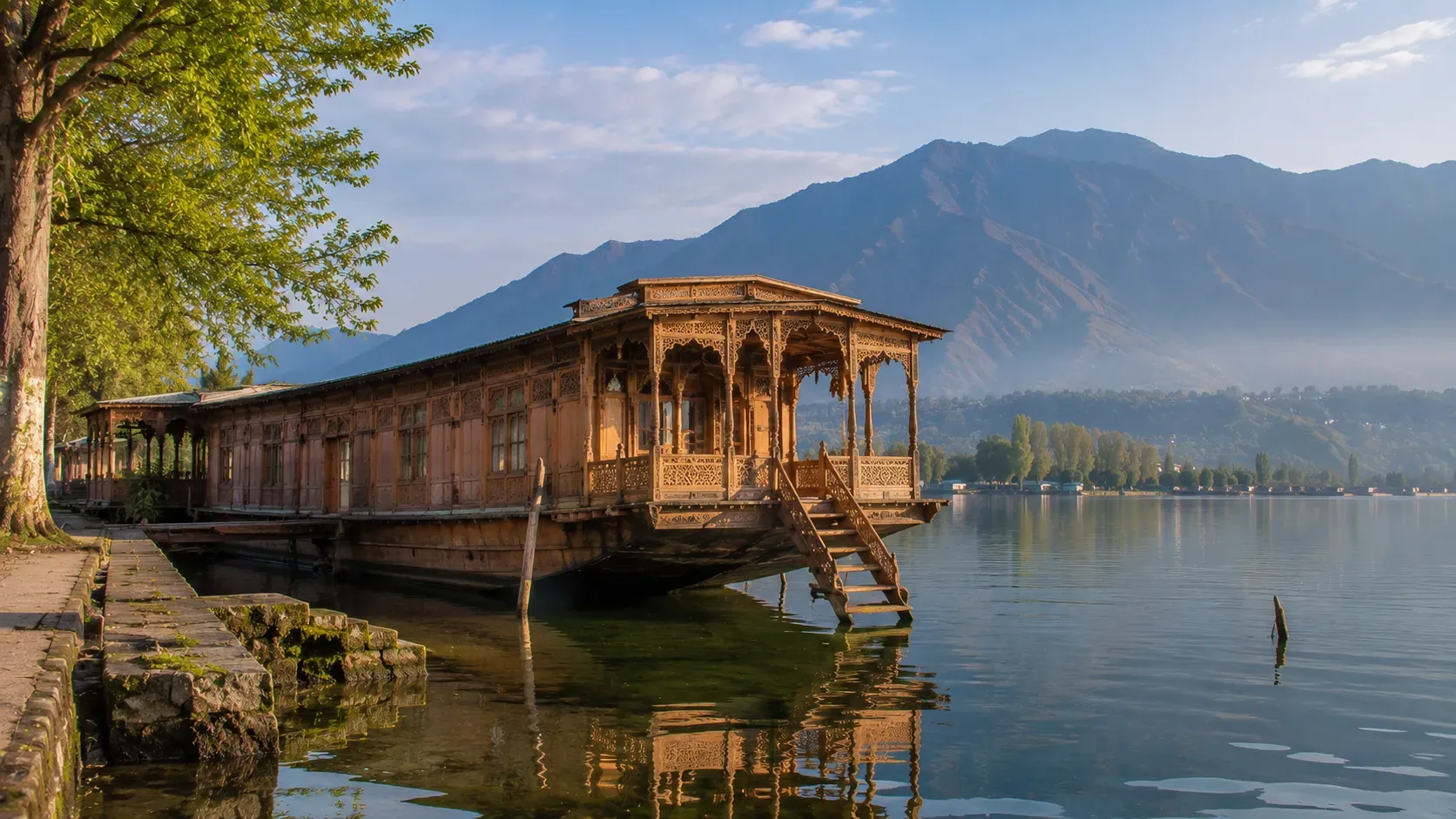
Hotels near Shalimar Bagh, Srinagar, fall into two practical zones: Dal Lake houseboats on the northeastern shore and conventional hotels along Foreshore Road between Nishat Bagh and the garden.
Dal Lake houseboats are the most distinctive and requested stay near the garden. From a mooring on the northeastern shore, Shalimar Bagh is reachable in under 15 minutes by auto or taxi. Houseboats range from standard JKTDC-classified options to privately operated luxury vessels, bookable through the official J&K Tourism website.
Foreshore Road hotels in the Nishat-Naseem Bagh zone sit 5 to 7 km from the garden and offer Dal Lake views with easy road access to all three Mughal gardens. These are the most practical conventional hotel options for anyone prioritising hotels near Shalimar Bagh, Srinagar, with indoor facilities.
Zone | Distance to Garden | Type of Stay | Best For |
Dal Lake Houseboats (NE Shore) | Under 15 min | JKTDC-classified to luxury private | Most distinctive; lake experience |
Nishat-Naseem Bagh Zone | 5-7 km | Mid-range and premium hotels | Dal Lake views; road access to all 3 gardens |
Srinagar City Centre | 13-15 km | Full-service hotels, all categories | Maximum city connectivity |
When booking hotels near Shalimar Bagh Srinagar on Dal Lake, confirm listings through JKTDC-listed operators on the official J&K Tourism website to ensure classification and quality are verified.
Final Takeaway
Shalimar Bagh Srinagar is a 400-year-old Mughal garden built as an act of love on the shore of Dal Lake. The three terraces, ancient Chinar trees, Chini Khanas, and the central Shah Nahar channel make it the most complete Srinagar Garden heritage site in the Kashmir Valley. The Srinagar to Shalimar Bagh distance is 13 to 15 km from the city centre. Spring and autumn are the best seasons. Hotels near Shalimar Bagh Srinagar on Foreshore Road or Dal Lake houseboats are the most practical and atmospheric bases for a visit.
Planning a holiday to Kashmir? Holiday Tribe can build a customised itinerary around Shalimar Bagh and the rest of the valley.