


Kashmir is known for its snow-covered mountains, green valleys, alpine meadows and clear mountain lakes. The landscape changes with altitude, creating everything from pine-covered slopes around Pahalgam to high-altitude lakes beneath the Greater Himalayas.
For travellers who want to experience these landscapes on foot, a Kashmir trek offers routes ranging from shorter walks to demanding multi-day trails. Popular options include the Kashmir Great Lakes Trek, Tarsar Marsar Trek and Naranag-Gangabal Trek, while the Amarnath Trek combines mountain scenery with a significant pilgrimage.
This guide covers the major trekking routes in Kashmir, including their duration, altitude, difficulty, starting points, seasonal considerations and planning requirements, helping you choose a route that suits your experience and schedule.
What Makes Trekking in Kashmir Special for Hikers?
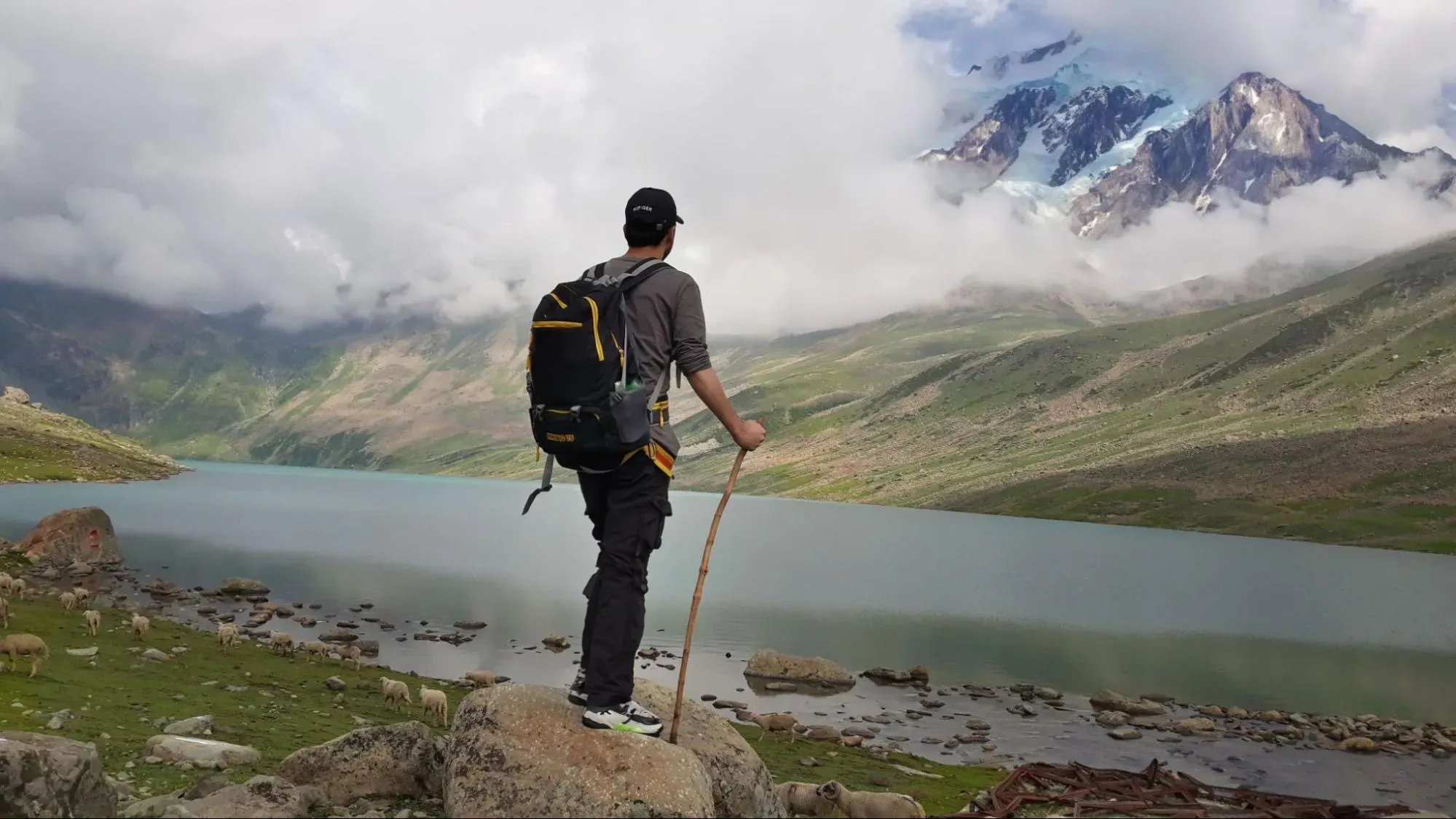
Trekking in Kashmir covers three distinct landscapes in a single region: the upper valley with its glacial lake basins at 11,000 to 13,800 feet, the Pir Panjal range with its forested and meadow routes, and the remote border valleys near the Line of Control. No other trek region in India puts these three landscape types within a single two-hour drive of one airport.
Every Kashmir Alpine trek route requires a registered guide and a permit from the J&K Forest Department or Wildlife Department. Your trekking operator typically handles this, but always confirm before departure; permits can be denied at short notice based on local conditions.
You need to be fit enough to cover 10 to 12 km per day with a loaded pack. The Kashmir trek season runs from mid-June to mid-September.
Trek Name | Duration | Max Altitude | Difficulty | Starting Point |
Kashmir Great Lakes Trek | 7 to 8 days | 13,750 ft (4,190m) | Moderate to Challenging | Sonamarg |
Tarsar Marsar Trek | 6 days | 13,200 ft (4,023m) | Moderate | Aru Valley, Pahalgam |
Tulian Lake Trek | 3 to 4 days | 11,719 ft (3,570m) | Easy to Moderate | Pahalgam |
Naranag-Gangabal Trek | 3 to 4 days | 11,486 ft (3,501m) | Moderate | Naranag |
Amarnath Trek | 4 to 5 days (Pahalgam route) | 12,756 ft (3,888m) | Moderate to Strenuous | Pahalgam or Baltal |
Gurez Valley Trek | 6 days | 12,795 ft (3,900m) | Moderate | Dawar, Gurez |
Strawberry Valley Trek | 2 to 3 days | Below 3,000m | Easy | Pahalgam |
Which Kashmir Lake Trek Should You Choose?
The Kashmir Lake trek network is the main reason most trekkers come to the valley. The routes below each connect a different chain of alpine lakes at altitudes between 11,000 and 13,800 feet. Each one is distinct in its difficulty, lake count, and character.
At a glance:
- Kashmir Great Lakes Trek: Seven Lakes, Seven Days
- Tarsar Marsar Trek: The Twin Lake Circuit
- Tulian Lake Trek: Pahalgam's High Point
- Naranag-Gangabal Trek: The Harmukh Base Walk
Kashmir Great Lakes Trek: Seven Lakes, Seven Days
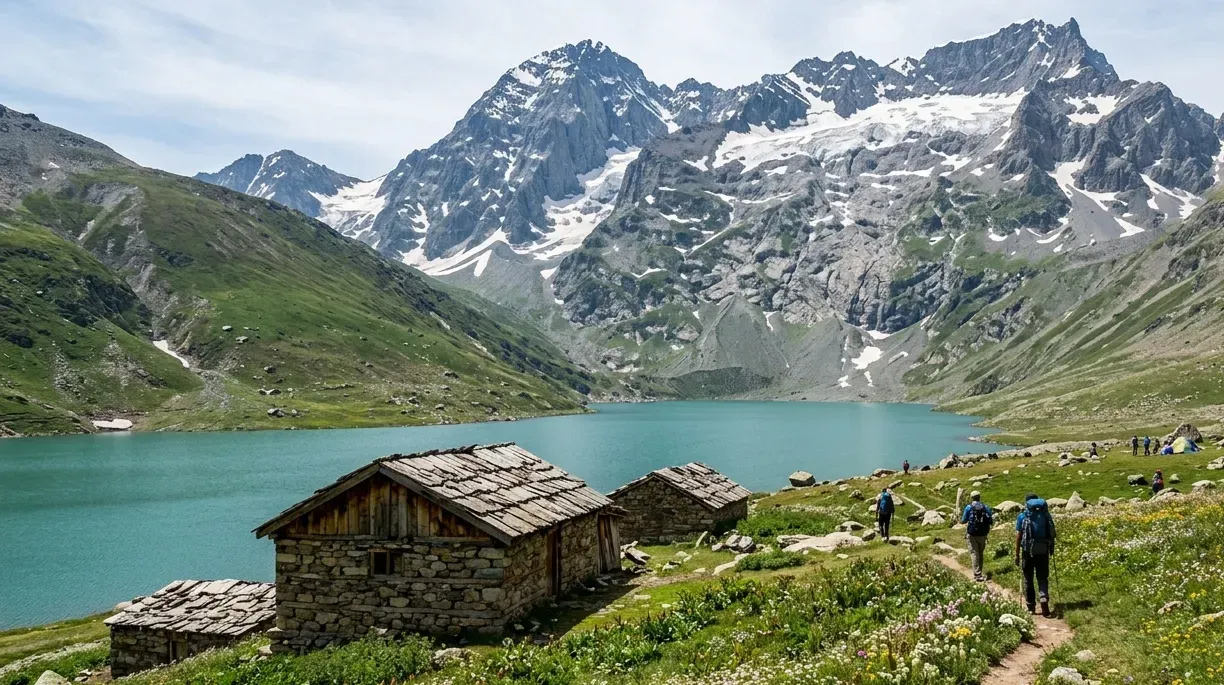
The Kashmir Great Lakes Trek is widely considered the most spectacular multi-day trekking route in India.
- Route: Sonamarg to Naranag; approximately 65 to 75 km across seven days
- Three high passes: Nichnai (13,500 ft), Gadsar (13,750 ft), and Zajibal; Gadsar Pass is the highest point on the circuit
- Lakes: Vishansar, Krishansar, Gadsar, Satsar (a cluster of smaller connected lakes), Gangabal, Nundkol, and Narang Nag; seven lake basins across the circuit
- Gangabal Lake: The final lake on the route sits at 3,501 metres beneath Harmukh Peak (5,142m) in a glacial cirque; many experienced trekkers cite this campsite as the finest in the Indian Himalayan circuit
- Difficulty: Moderate to challenging; the long daily distances (13 to 15 km per day with altitude) make fitness essential
- Season: June to September; mid-July to August is peak bloom for the alpine meadows
- Permits: Required; handled by your registered operator; lead time is 3 to 4 weeks for peak season.
The Kashmir Great Lakes Trek is the benchmark Kashmir trek against which all others in the valley are measured.
Tarsar Marsar Trek: The Twin Lake Circuit
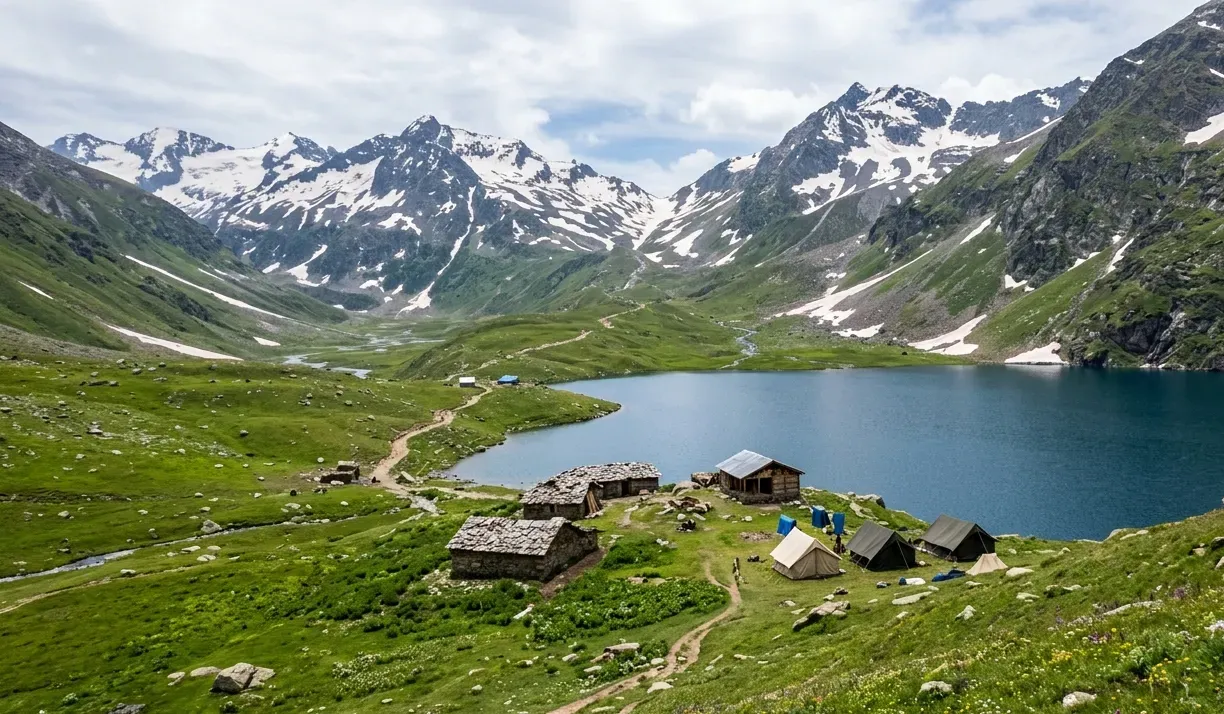
The Tarsar Marsar Trek starts at Aru Valley near Pahalgam and is often called the "younger sibling" of the Great Lakes circuit.
- Route: Aru Valley to the twin lakes and back; approximately 48 km over 6 days
- Lakes: Tarsar (approximately 12,000 ft, deep blue and surrounded by green meadows) and Marsar (darker, more remote, backed by permanent snowfields)
- Pass: Sundersar Pass crossing between the two lakes; offers 360-degree Himalayan views
- Difficulty: Moderate; this Kashmir trek is shorter and less sustained than the Great Lakes circuit but the high passes and altitude are comparable
- Best for: Trekkers doing their first high-altitude Kashmir Alpine trek in the valley; the starting point at Aru Valley is also easier to reach than Sonamarg
- Season: June to September; July and August for the best meadow conditions
Tulian Lake Trek: Pahalgam's High Point
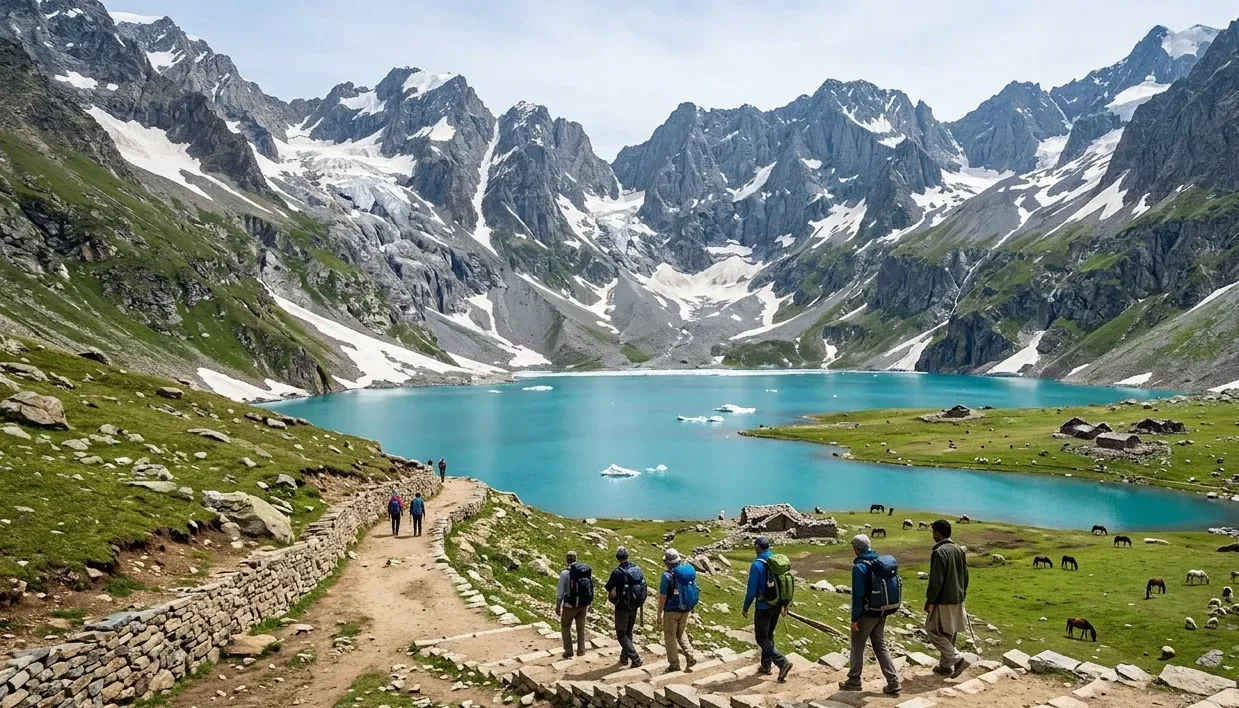
The Tulian Lake Trek is the most accessible of the main Kashmir trek lake routes.
- Route: Pahalgam to Tulian Lake; approximately 34 km over 3 to 4 days
- Altitude: Tulian Lake sits at 3,570 metres (11,719 ft) in a high cirque with snow-streaked cliffs on three sides
- Character: One of the highest and most visually open lakes in the Pahalgam circuit; the cirque setting gives an amphitheatre feel from the lakeside
- Difficulty: Easy to moderate; family groups and first-time high-altitude walkers complete this route regularly
- Best for: Those new to trekking in Kashmir who want lake scenery without a 7-day commitment; a strong introduction to Kashmir Alpine trek conditions
- Guide required: Yes; arrange through a registered Pahalgam operator
Naranag-Gangabal Trek: The Harmukh Base Walk
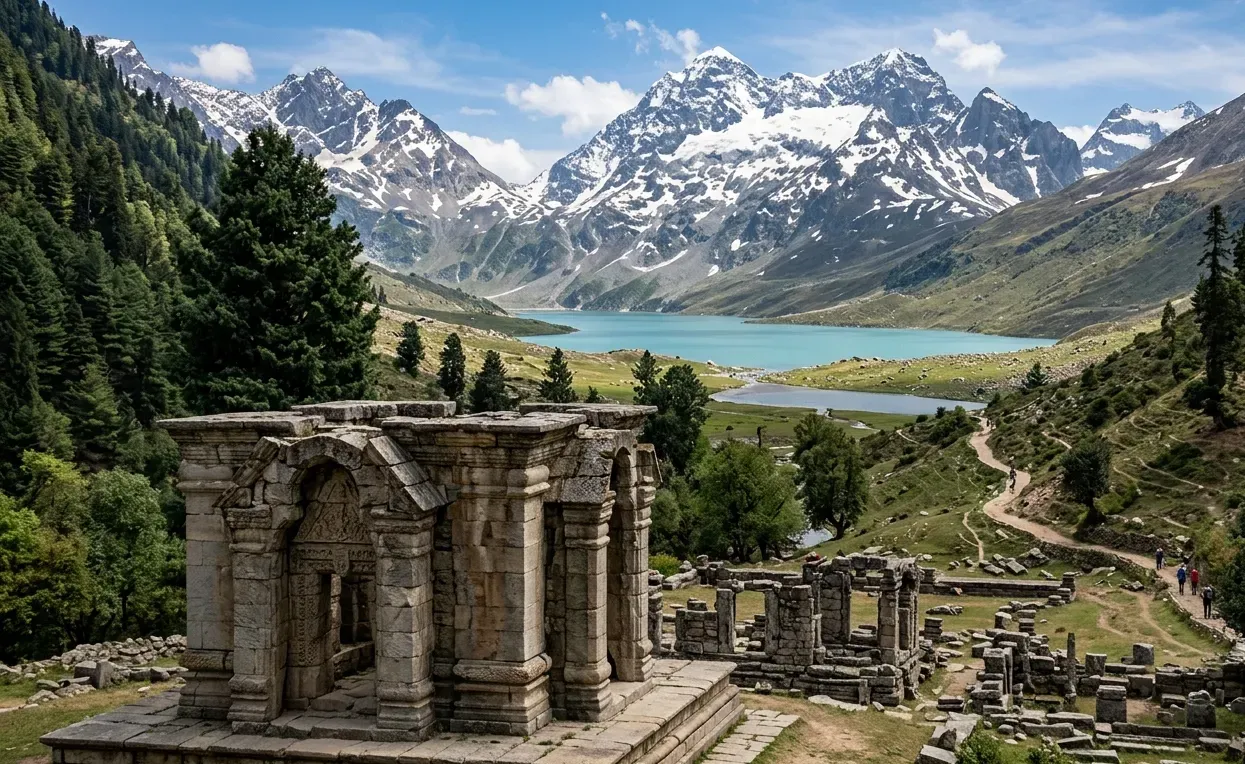
The Naranag-Gangabal Trek connects the Naranag ancient temple ruins to Gangabal Lake and Nundkol Lake.
- Route: Naranag to Gangabal Lake and Nundkol Lake; approximately 34 km over 3 to 4 days
- Altitude: Gangabal Lake at 3,501 metres (11,486 ft) beneath Harmukh Peak; Nundkol Lake adjacent to the east
- Character: The quietest Kashmir trek in the main lake circuit; same lake quality as the Great Lakes route but with far fewer trekking groups on the trail
- Starting point: Naranag; the ancient Hindu temple ruins at the trailhead date to the 8th century and are worth time before the ascent begins
- Difficulty: Moderate; a strong standalone route or the final segment of the Great Lakes circuit in the Sonamarg-to-Naranag direction
- This Kashmir Lake trek route is the best option for those who specifically want Gangabal Lake without the full 7 to 8-day commitment of the main circuit.
What Should You Know About the Amarnath Trek?
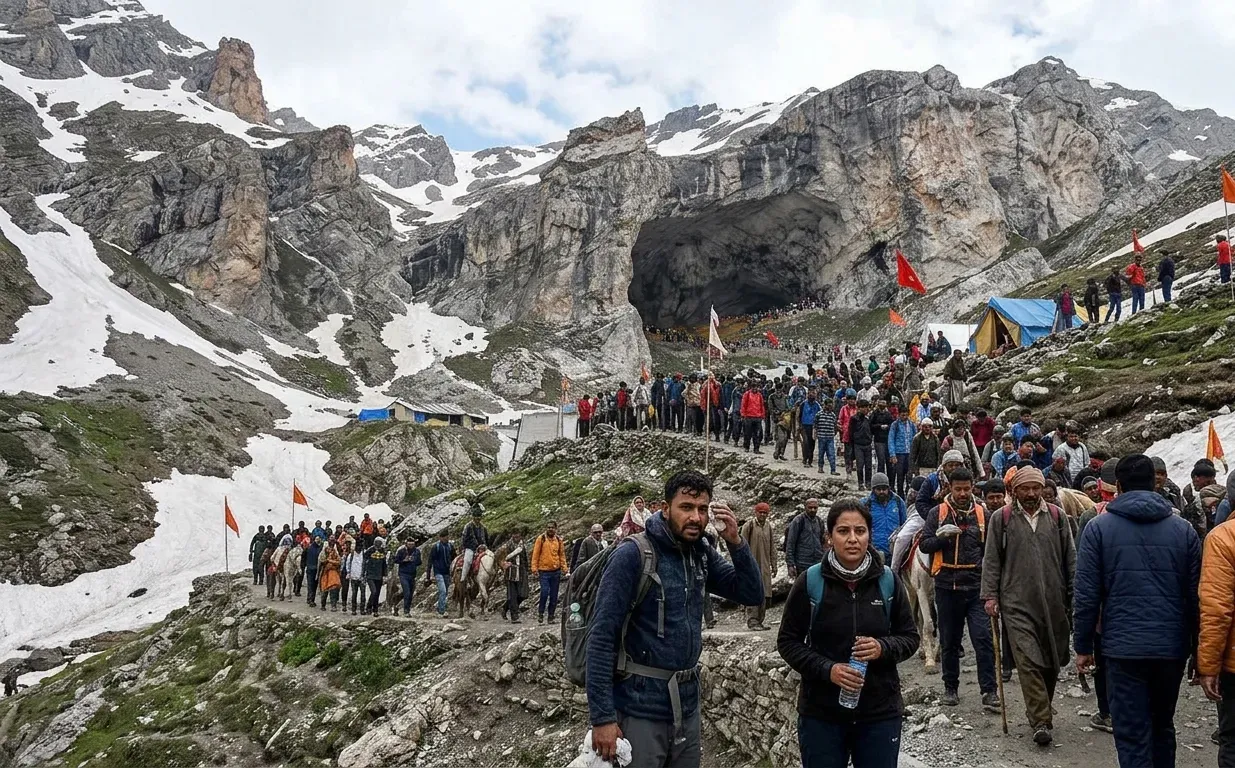
The Amarnath Trek is a sacred Hindu pilgrimage to the Amarnath Cave at 3,888 metres (12,756 feet) in the Kashmir Himalayas. The cave contains a natural ice Shiva Lingam that forms and dissolves with the lunar cycle.
The Amarnath Trek season is set annually by the Shri Amarnathji Shrine Board (SASB); dates are announced each year and registration is mandatory through the official website. A medical certificate is required; age eligibility conditions are set annually by the Shrine Board, confirm current requirements at the official Shrine Board website before registering.
Two routes:
- Pahalgam route (traditional): Approximately 36 to 45 km over 4 to 5 days; passes through Chandanwari, Sheshnag, and Panchtarni before reaching the cave; the longer and more widely used approach
- Baltal route: 14 km; possible in a single long day; significantly steeper than the Pahalgam route; most suitable for experienced trekkers and pilgrims with limited days
Detail | Pahalgam Route | Baltal Route |
Distance | 36 to 45 km | 14 km |
Duration | 4 to 5 days | 1 day (strenuous) |
Cave Altitude | 3,888m | 3,888m |
Difficulty | Moderate | Moderate to Strenuous |
The Amarnath Trek is open only to registered pilgrims during the official Yatra window. Kashmir trek access to the cave outside the Yatra period is not permitted by the Shrine Board.
Which Gurez Valley Trek and Other Routes Can You Try?
Beyond the main marketed circuits, two Kashmir trek routes reward those willing to go further from the standard tourist path.
At a glance:
- Gurez Valley Trek: Kashmir Near the Line of Control
- Strawberry Valley Trek: The Softer Side of Pahalgam
Gurez Valley Trek: Kashmir Near the Line of Control
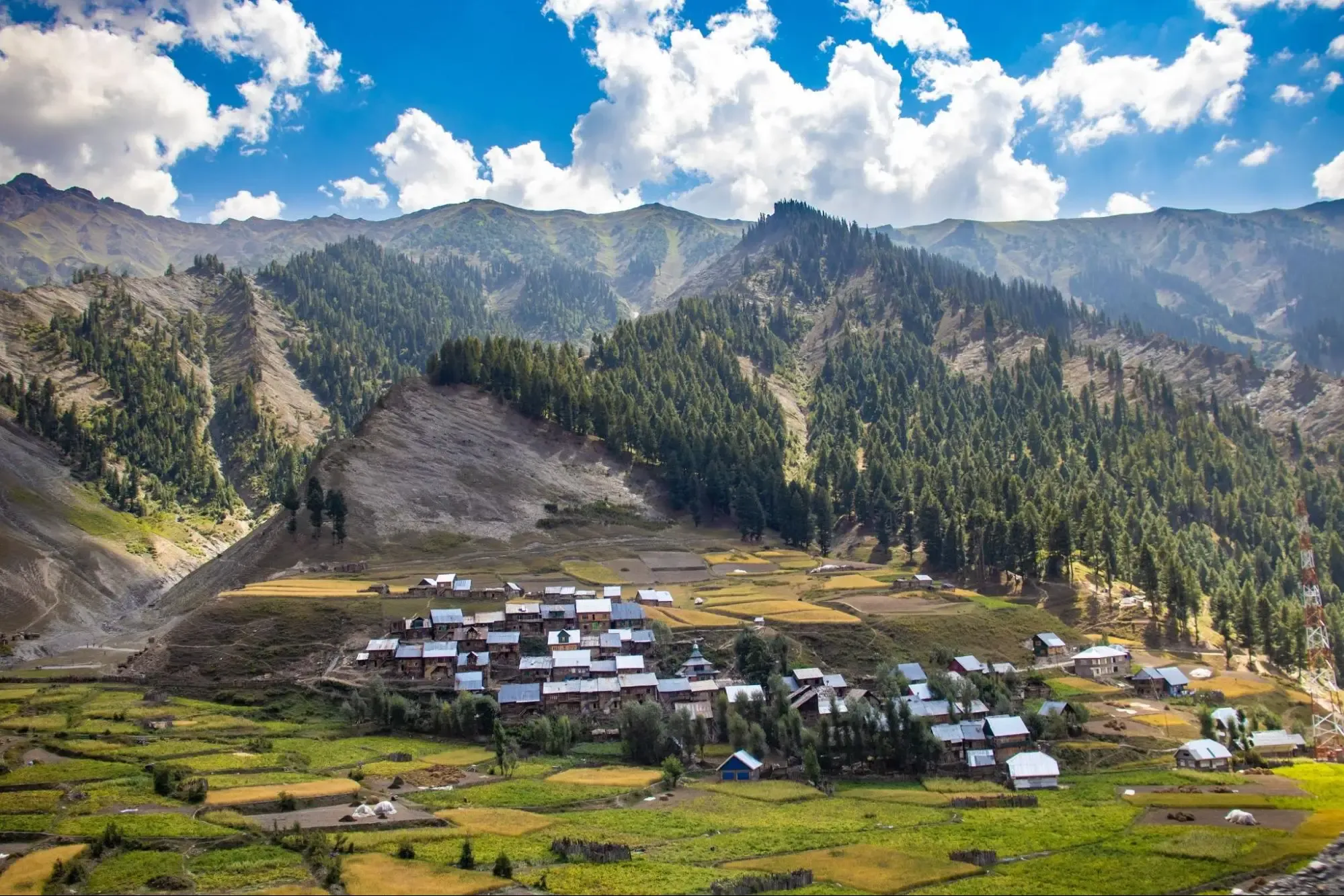
The Gurez Valley Trek is the most remote trekking experience available through trekking in Kashmir.
- Route: Dawar village along the Kishanganga River through the Gurez Valley; approximately 48 km over 6 days; maximum altitude approximately 3,900 metres
- Permit: An Inner Line Permit is mandatory; obtained from the Bandipora District Commissioner's office; cannot be arranged at the trailhead; book through a Srinagar-registered operator who handles logistics
- Character: Views of Habba Khatoon Peak; Kishanganga riverside walking; limited tourism infrastructure; this Kashmir trek has almost no other groups on the trail at any point in the season
- Difficulty: Moderate; the terrain is not technically difficult but the remoteness and permit requirement add planning complexity
- Season: June to September; the valley closes from October
Strawberry Valley Trek: The Softer Side of Pahalgam
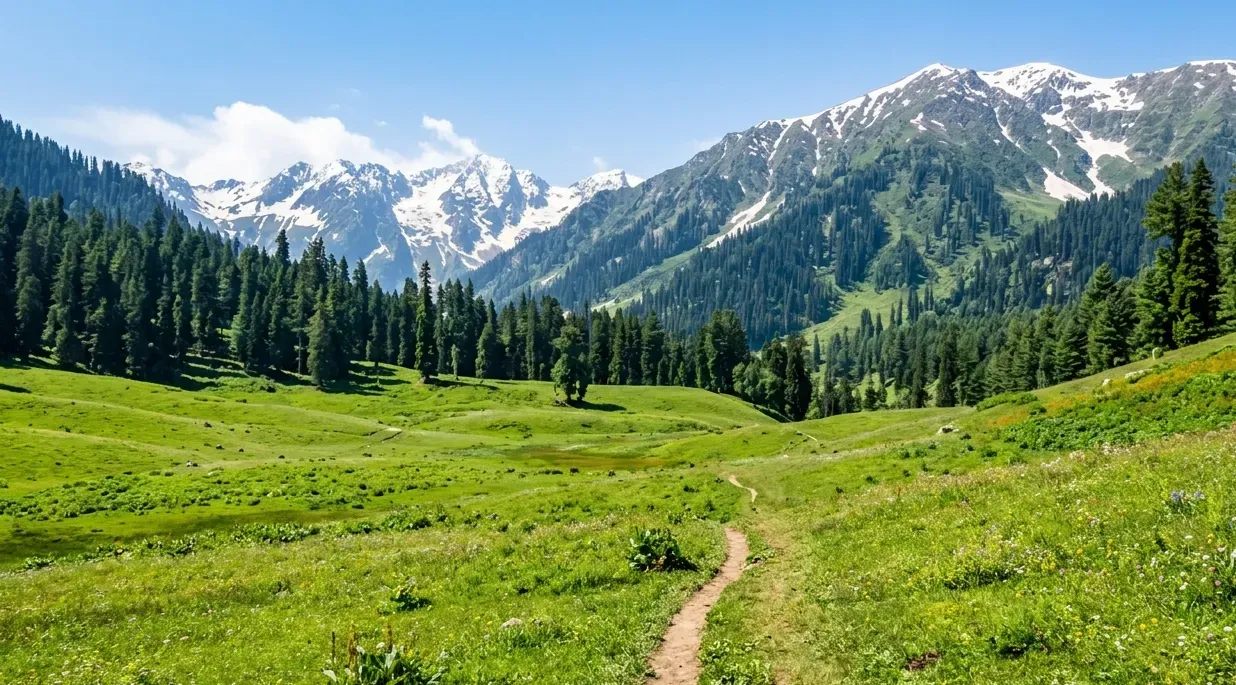
The Strawberry Valley Trek is the most approachable Kashmir trek in this guide.
- Route: Pahalgam area; passes through strawberry fields, pine forest, and pastoral meadows in the Lidder valley drainage; duration 2 to 3 days; altitude stays well below 3,000 metres
- Character: Forest walking, riverside sections, and high green meadows without any high-altitude pass crossings; a genuine Kashmir Alpine trek experience without the altitude demands
- Best for: Families, senior trekkers, or those combining a walk with a Pahalgam hotel stay; the most approachable option for anyone new to the idea of trekking in Kashmir
- Guide required: Yes; arrange locally in Pahalgam
How Should You Plan for Trekking in Kashmir?
The trekking in Kashmir season opens mid-June and closes by mid-September. Peak conditions are July and August when all high passes are clear of snow and all lakes are accessible. The Kashmir Great Lakes Trek and the broader Kashmir lake trek network fill fastest during this window; book 6 to 8 weeks ahead for July and August departures.
All multi-day Kashmir trek routes require a permit:
- Standard forest and alpine treks: Permits from the J&K Forest Department or Wildlife Department; your operator handles this; always confirm before departure
- Amarnath Trek: Registration through the official Shrine Board website; medical certificate required; separate from all other trail permits
- Gurez Valley Trek: Inner Line Permit from Bandipora DC office; operator assistance essential
Task | When to Do It | Who Handles It | Notes |
Book trekking operator | 6 to 8 weeks before July-August | You | Certified operator required for all routes |
Confirm trek permits | 3 to 4 weeks before | Operator | Always confirm; can be revoked |
Amarnath Trek registration | As soon as dates announced | You | Medical certificate required |
Gurez Valley ILP | 3 to 4 weeks before | Operator + you | Cannot arrange at trailhead |
Fitness preparation | 4 to 6 weeks before | You | 10 to 12 km daily walks with load |
Final Takeaway
Kashmir offers trekking routes for different interests, from alpine lakes and mountain passes to forested valleys and pilgrimage trails. The Kashmir Great Lakes Trek and Tarsar Marsar Trek are suited to longer high-altitude routes, while the Tulian Lake Trek and Naranag-Gangabal Trek offer shorter options around Pahalgam and Naranag. The Amarnath Trek follows a separate pilgrimage process, while the Gurez Valley Trek brings a different landscape and setting. Before setting out on a Kashmir trek, check current route conditions, permissions and seasonal access.
For help planning your route, stays and travel arrangements, Holiday Tribe can create a customised Kashmir holiday around your trekking plans.