

Sri Lanka is a small island off the southern tip of India with a recorded history stretching back over two thousand years. It sits at the meeting point of Buddhist and Hindu civilisations, shaped over centuries by kingdoms, pilgrimage routes, and coastal trade. The result is a landscape where ancient temples, sacred rivers, and hilltop shrines are woven into everyday life rather than set apart as monuments.
Sri Lanka’s temples span two living traditions, Buddhism and Hinduism, from the hill country of Kandy to the northern city of Jaffna and the clifftops of Trincomalee. This guide covers seven famous temples in Sri Lanka, with entry details, visiting tips, dress codes, and the best times to go.
What Makes Sri Lanka Temples Worth Visiting?
Sri Lanka has both Buddhist and Hindu temples, sometimes found in the same city or along the same pilgrimage route. The best temples in Sri Lanka are more than historic monuments.
You will find a Buddha temple in Sri Lanka across the cultural heartland of the central and north-central provinces, and a Hindu temple in Sri Lanka in Jaffna, Trincomalee, and the hill country. This guide covers the most significant Sri Lankan temples from both traditions.
Temple | Location | Religion | Entry Fee | Best Time to Visit |
Kandy Temple of the Tooth | Kandy | Buddhist | LKR 1,500 (SAARC) / LKR 2,000 (others) | July to August |
Dambulla Cave Temple | Central Province | Buddhist | LKR 1,500 | Year-round |
Gangaramaya Temple | Colombo | Buddhist | Free | February / May |
Nallur Kandaswamy Temple | Jaffna | Hindu | Free | August |
Koneswaram Temple | Trincomalee | Hindu | Free | Year-round |
Seetha Amman Temple | Nuwara Eliya | Hindu | Free | Year-round |
Kataragama Temple | Southern Province | Multi-faith | Free | July |
Which Buddhist Temples in Sri Lanka Should You Visit?
1. Kandy Temple of the Tooth (Sri Dalada Maligawa)
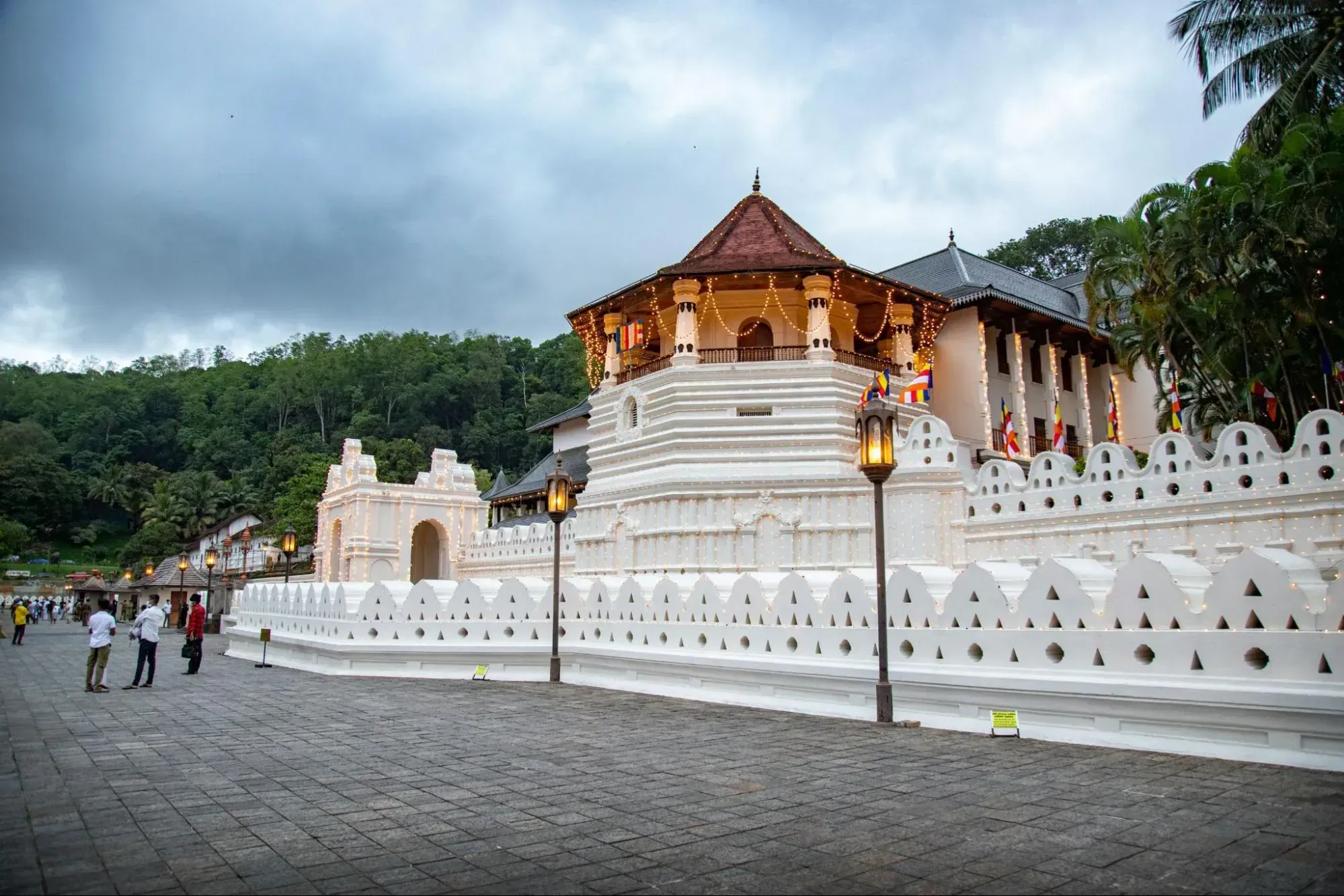
The Kandy Temple of the Tooth is the most sacred Buddhist site in Sri Lanka. Officially called Sri Dalada Maligawa, it houses the tooth relic of Lord Buddha, brought to the island in the 4th century CE. This Maligawa, a Sri Lankan landmark, is part of a UNESCO World Heritage Site and is known for its Kandyan architecture and gold-plated roof canopy above the inner shrine.
- Location: Sri Dalada Veediya, Kandy
- Entry fee: LKR 1,500 for SAARC visitors (including Indian nationals). Visitors from other countries pay LKR 2,000. Check the official Sri Dalada Maligawa website before visiting, as fees are periodically revised.
- Puja timings: 5:30 AM, 9:30 AM, and 6:30 PM daily
- Best time: Esala Perahera (July to August), when the relic is carried in a procession through the streets of Kandy
- Dress code: Cover shoulders and knees; remove footwear at the entrance. Sarongs are available at the gate.
Tribe Travel Tip: The 5:30 AM puja draws far fewer people than the evening session. Visit early for a calmer experience at one of the most revered Sri Lankan temples, the Maligawa, which draws pilgrims year-round.
2. Dambulla Cave Temple
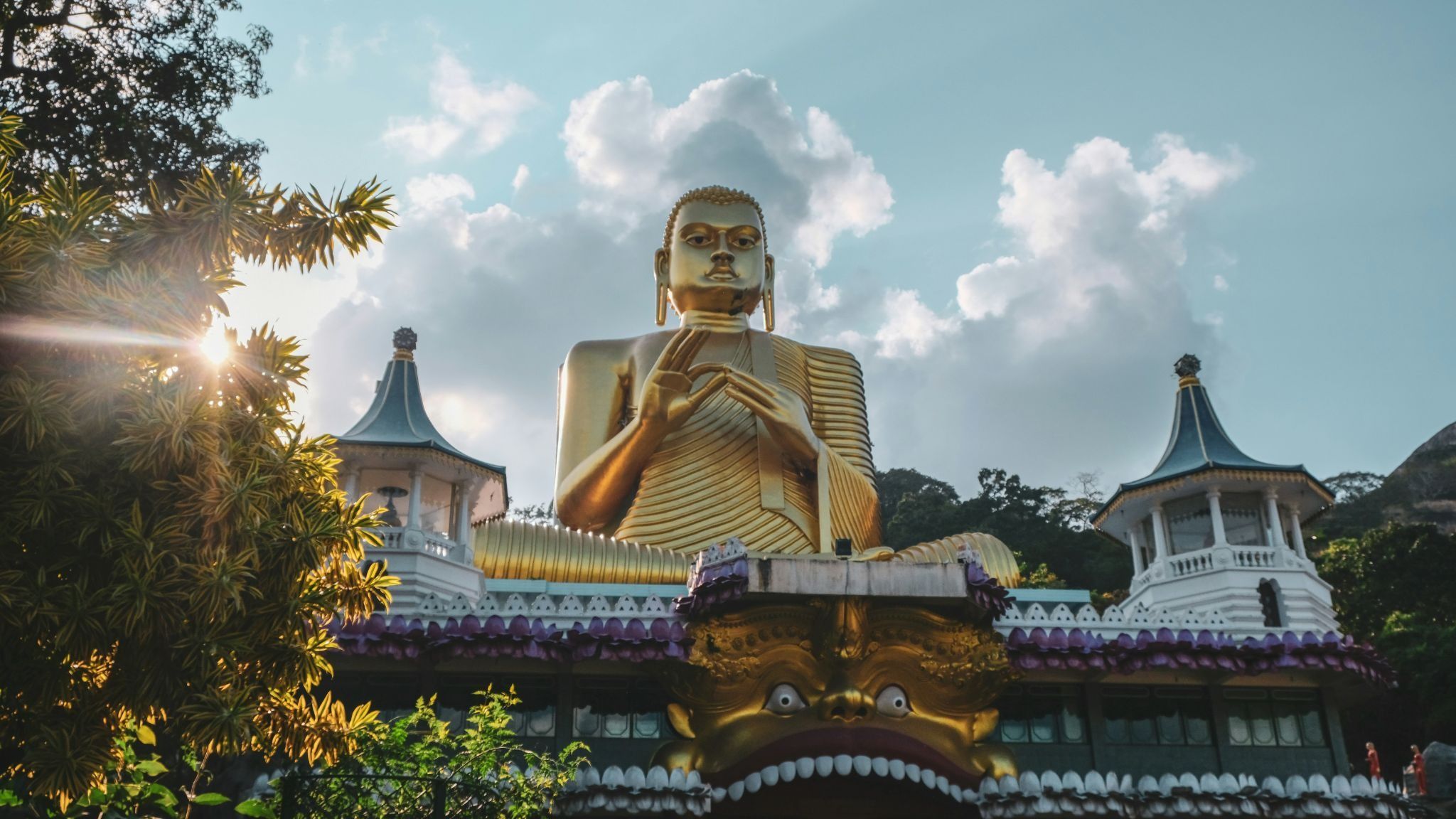
The Dambulla Cave Temple, also called the Golden Temple of Dambulla, is the largest cave temple complex in Sri Lanka. It is a UNESCO World Heritage Site with five caves housing over 150 Buddha statues and 2,100 square metres of murals, dating to the 1st century BC. King Valagamba took refuge here and later had the caves converted into a sacred rock temple.
- Location: Near Habarana, Central Province; about 72 km from Kandy
- Entry fee: Ticket prices are set by the Central Cultural Fund and may change. Check the official ticket portal before your visit.
- Best time: Year-round; early morning for better light and fewer visitors
- Dress code: Cover shoulders and knees; remove footwear at the cave entrance
- Combine with: Sigiriya Rock, less than 30 minutes from the Dambulla Cave Temple.
Tribe Travel Tip: Try to arrive before 9 AM. The morning light is best for seeing the caves, and most group tours arrive after 10 AM. Dambulla is about 3.5 hours from Colombo by road. Once you reach the capital, consider visiting Gangaramaya Temple next.
3. Gangaramaya Temple, Colombo
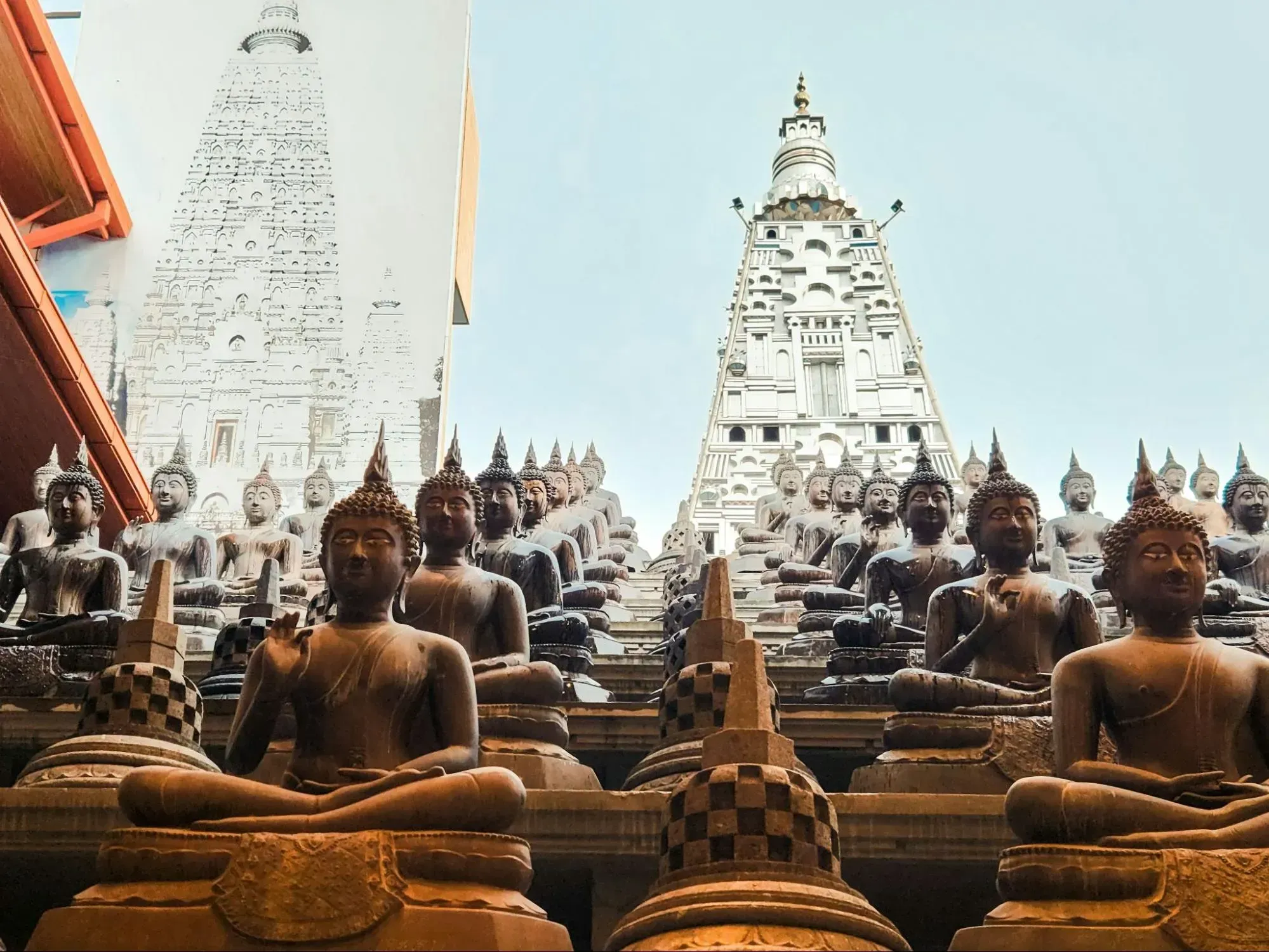
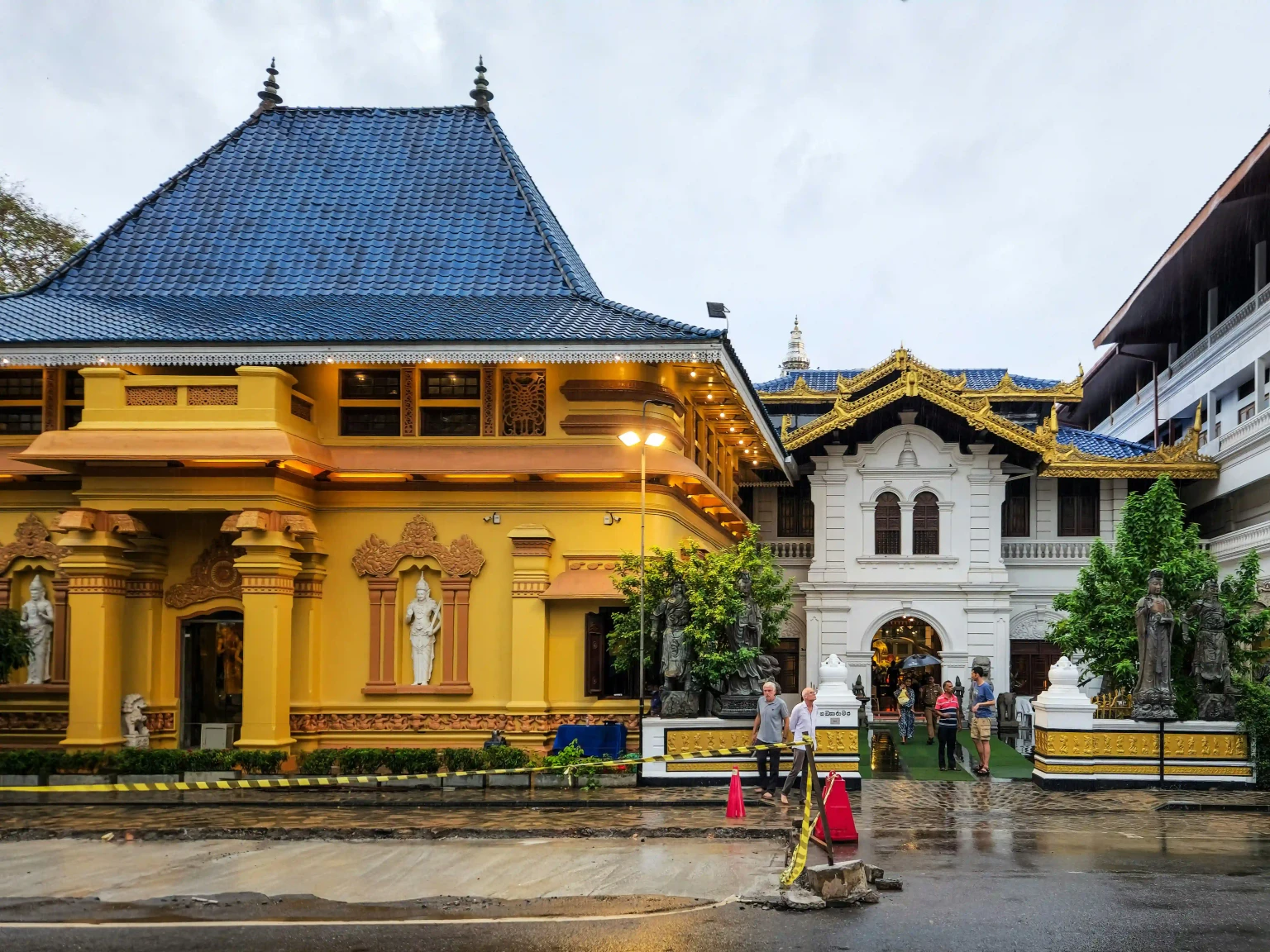
The Gangaramaya Temple, Sri Lanka, is the most accessible Buddha temple in Sri Lanka for visitors based in or passing through Colombo. Located on Sri Jinarathana Road, this 19th-century complex blends Sri Lankan, Indian, Thai, and Chinese architectural styles into one building. Inside, a museum houses religious artefacts, antiques, and ceremonial objects from across Asia, making it one of the few Sri Lankan temples that function as both a place of active worship and a cultural repository. The Gangaramaya Temple in Sri Lanka is open year-round and suitable for a half-day visit.
- Location: Sri Jinarathana Road, Colombo 2
- Entry fee: Entry to the temple is generally free, while donations are welcomed. Some museum exhibits or special areas may have separate charges. Check locally before your visit.
- Best time: Nawam Perahera (February) or Vesak lantern festival (May)
- Ideal for: A half-day cultural stop within Colombo
Which Hindu Temples in Sri Lanka Should You Visit?
1. Nallur Kandaswamy Temple, Jaffna
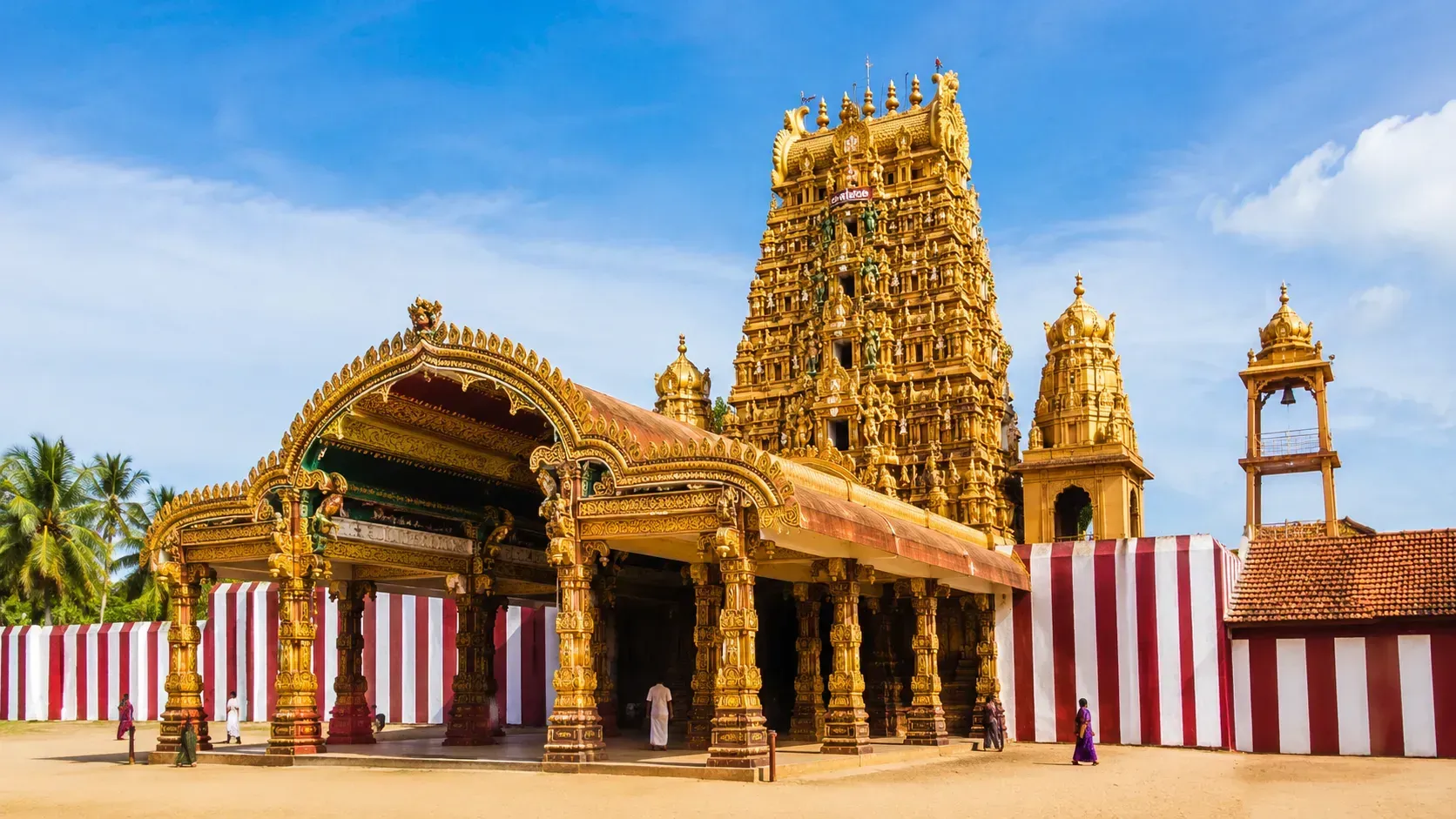
The Nallur Kandaswamy Temple in Jaffna is the most important Hindu temple in Sri Lanka's northern province. Dedicated to Lord Murugan (Karthikeya), it features a towering Dravidian gopuram adorned with intricately carved figures. It is the spiritual and cultural heart of the Tamil Hindu community and one of the top temples to visit in Sri Lanka among Indian pilgrims.
- Location: Jaffna District, Northern Province
- Entry: Free; donations welcomed
- Dress code: Men must wear a sarong or dhoti; women must cover their legs and shoulders. No footwear inside.
- Best time: August, during the annual Nallur festival, a 25-day celebration with daily rituals and nightly processions
2. Koneswaram Temple, Trincomalee
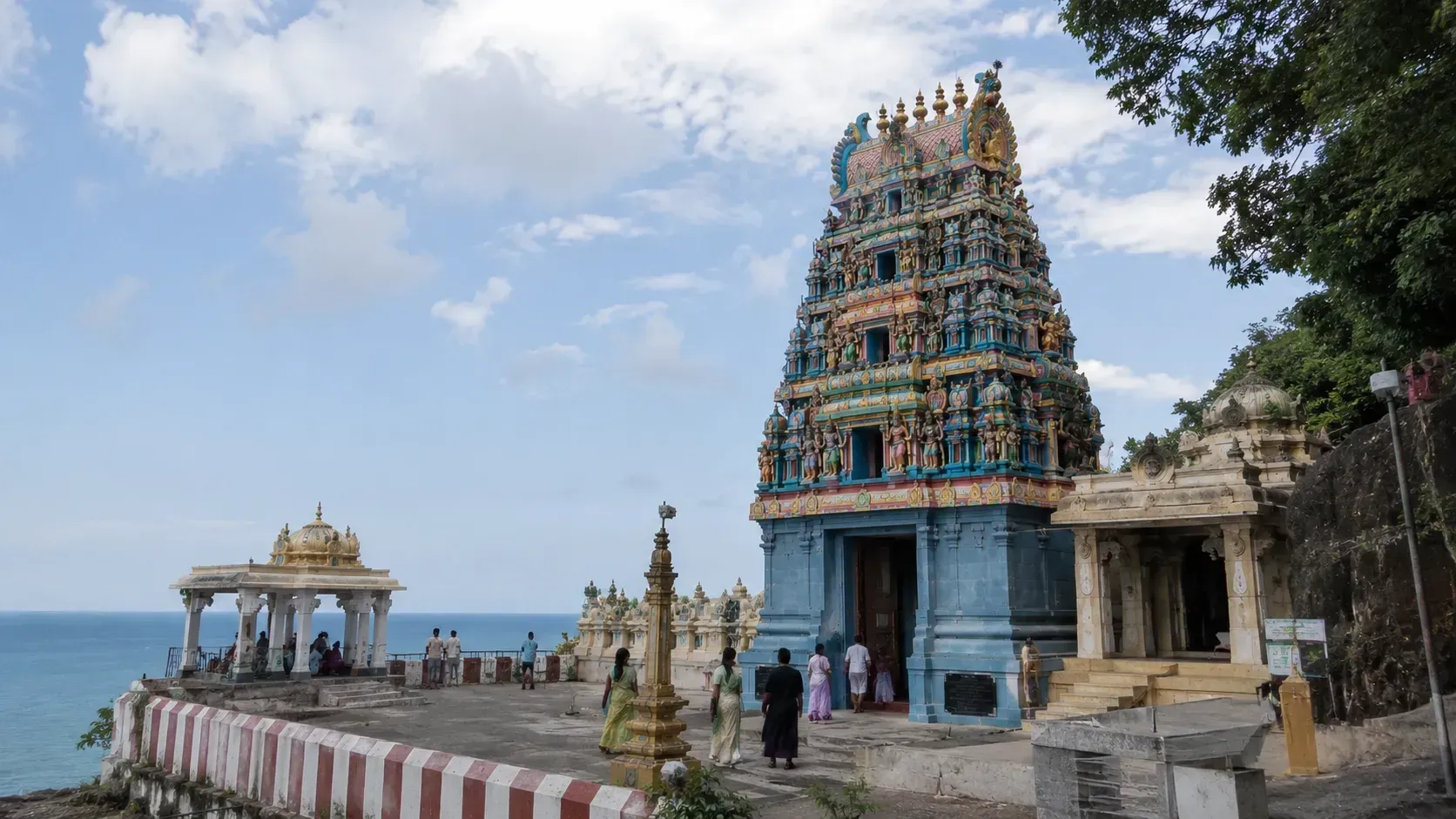
The Koneswaram Temple in Sri Lanka sits atop Swami Rock, a 70-metre cliff above the Indian Ocean in Trincomalee. It is one of the five Pancha Ishwarams (sacred Shiva temples) of Sri Lanka, known as "Dakshina Kailasam," meaning "Kailasa of the South," and believed to lie on the same longitude as Mount Kailash in Tibet.
- Location: Swami Rock, Fort Frederick, Trincomalee
- Entry: Free
- Timings: 5:30 AM to 12:30 PM and 4:30 PM to 8:30 PM
- Combine with: Fort Frederick and Lover's Leap viewpoint, both in the same compound.
Tribe Travel Tip: This is one of the most beautiful temples in Sri Lanka for the best views. Arrive by 6:30 AM to catch the morning light over the ocean before it gets crowded.
3. Seetha Amman Temple, Nuwara Eliya
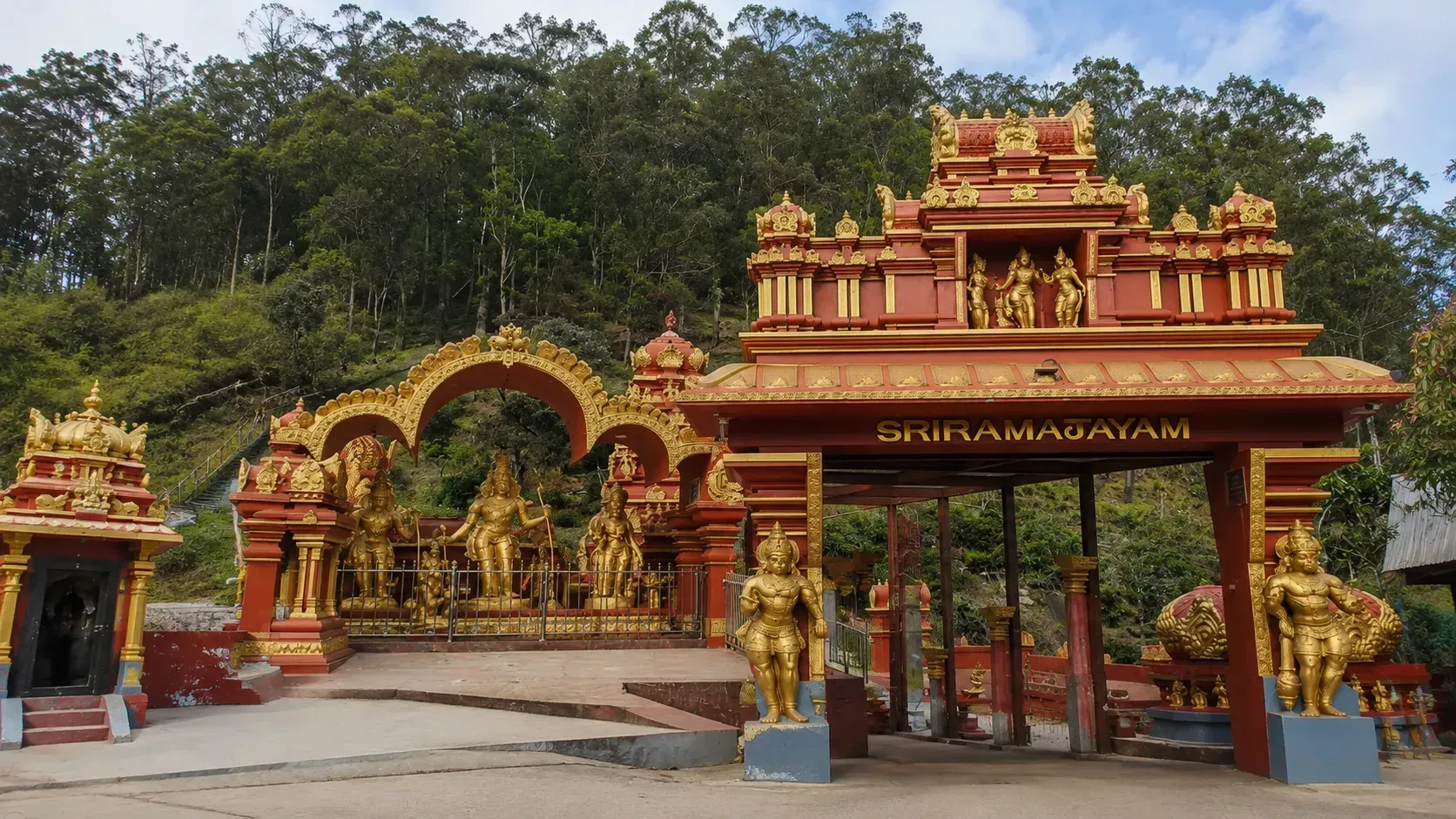
The Seetha Amman Temple, Nuwara Eliya, is widely believed to be the only temple in the world dedicated to Goddess Sita. It sits in Seetha Eliya village, approximately 5 km from Nuwara Eliya town, near Hakgala Botanical Garden. According to the Ramayana, Sita was held captive at this location. Hanuman's footprints are visible on a rock beside the stream running through the grounds.
- Location: Seetha Eliya, 8 km from Nuwara Eliya town
- Entry: Free
- Puja timings: 8 AM to 1 PM and 2 PM to 6:30 PM
- For Indian visitors: One of the most personally significant temples in Sri Lanka along the Ramayana trail. The Seetha Amman Temple in Nuwara Eliya is open 365 days a year.
4. Kataragama Temple, Southern Sri Lanka
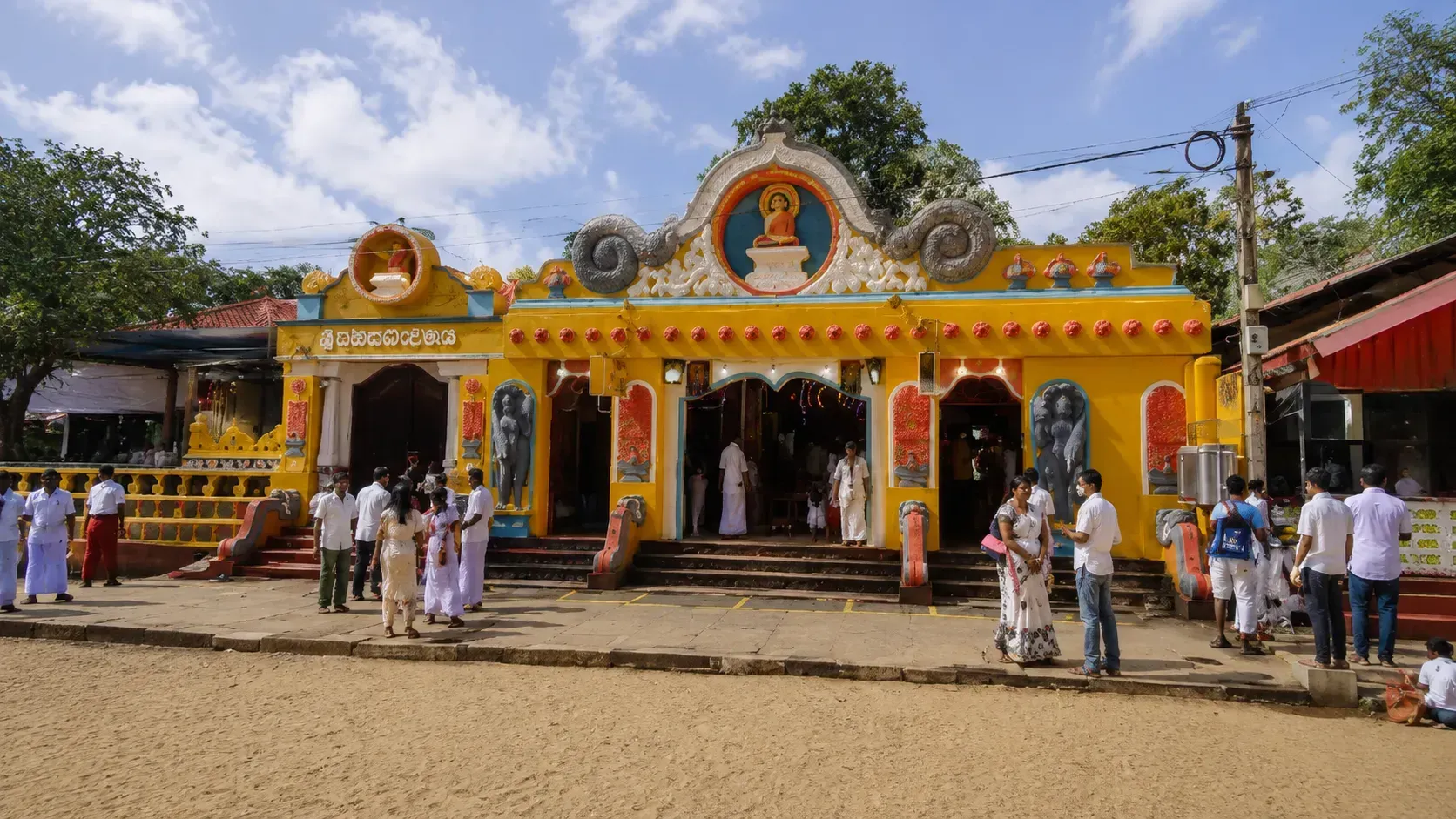
Kataragama is one of the most significant multi-faith pilgrimage sites in Sri Lanka and one of its most distinctive. The complex is sacred to Hindus, Buddhists, and Muslims, who all come here to worship. It is dedicated to Lord Skanda-Murukan in the Hindu tradition and is also an important Buddhist pilgrimage site. This multi-faith importance makes Kataragama one of the most famous temples in Sri Lanka.
- Location: Kataragama, Southern Province
- Entry: Free; pilgrims bathe in the Menik Ganga river before entering the complex
- Best time: July, during the Kataragama Perahera, when fire-walking rituals and kavadi processions draw pilgrims from across the country
What Should You Know Before Visiting Sri Lanka Temples?
These tips apply to every beautiful temple in Sri Lanka, both Buddha temple and Hindu temple.
- Dress code: Make sure your shoulders and knees are covered. Bring a light scarf or sarong just in case. Many temples offer wrap-arounds at the entrance if you need one. Nallur Kandaswamy Temple in Jaffna has the strictest dress code among the temples listed here.
- Footwear: Take off your shoes before entering any temple. At bigger temples, the stone floors can get very hot around midday, so it’s a good idea to bring socks.
- Photography: Always ask before taking photos inside prayer halls. Flash is usually not allowed.
- Cash: Bring Sri Lankan rupees (LKR) for entry fees, donations, and puja services. Most temples do not accept cards.
- Timing: The best time to visit is early in the morning. It’s cooler, less crowded, and you’re more likely to see puja ceremonies taking place.
Conclusion
The best temples in Sri Lanka stretch across the island, from ancient Buddhist shrines in the cultural triangle to sacred Hindu sites along the coast. From Nallur Kandaswamy Temple in Jaffna to Kataragama in the south, these temples carry living traditions that have continued without interruption for centuries.
Plan enough time for each destination, especially if you are visiting during a major festival or puja, when crowds and timings can differ from regular days.
Planning a holiday to see the most beautiful temples in Sri Lanka often takes more coordination than you might expect. Regions, seasons, and festival dates all play a role. Holiday Tribe’s team can help you create an itinerary that matches Sri Lanka's temples to the right time of year.