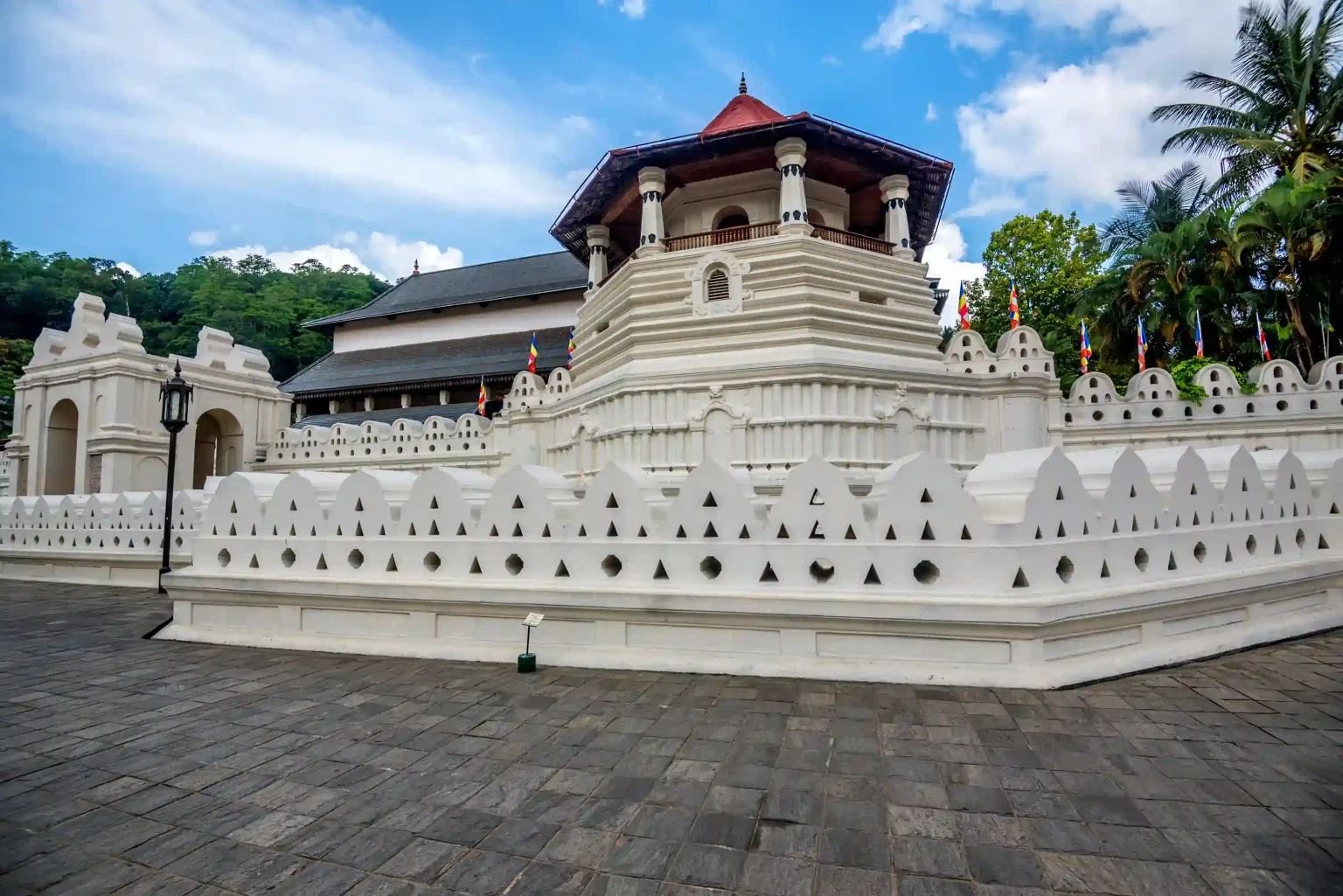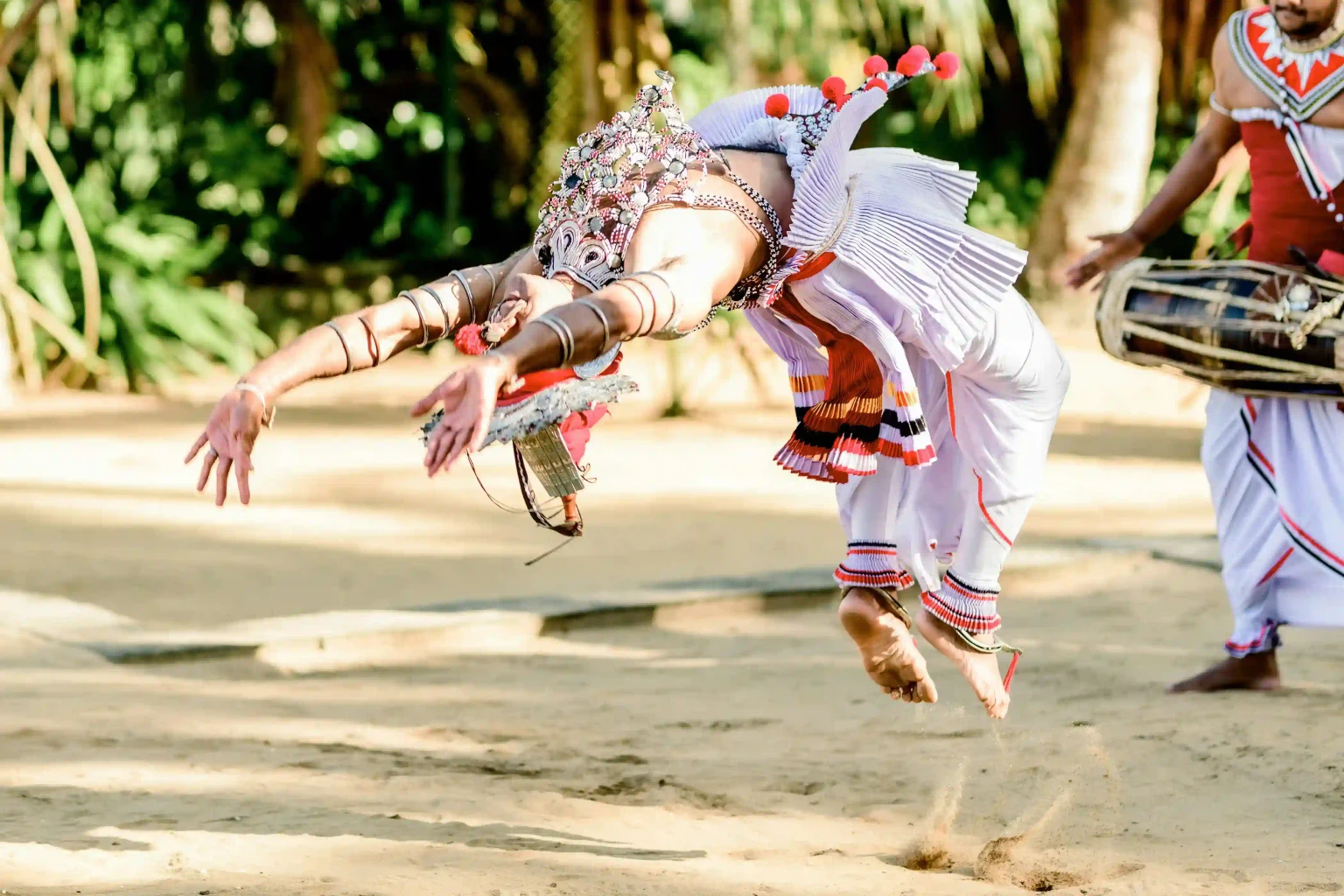


Sri Lanka is known for its ancient cities, Buddhist sites, wildlife, and beautiful coasts, making it a great place to visit in South Asia. At the centre of the Cultural Triangle is Dambulla Cave Temple, a sacred place with a long history of worship, impressive cave paintings, and hundreds of statues inside five rock chambers. The temple in Dambulla, Sri Lanka, remains an important pilgrimage site today.
This guide covers the temple's history, entrance fees, opening hours, the five caves, how to get there from Sigiriya and Kandy, nearby places to visit, and helpful tips. You'll also get advice on how to combine your visit with the Golden Temple Dambulla, so you can plan your holiday more easily.
What Makes Dambulla Cave Temple a Must-Visit in Sri Lanka?
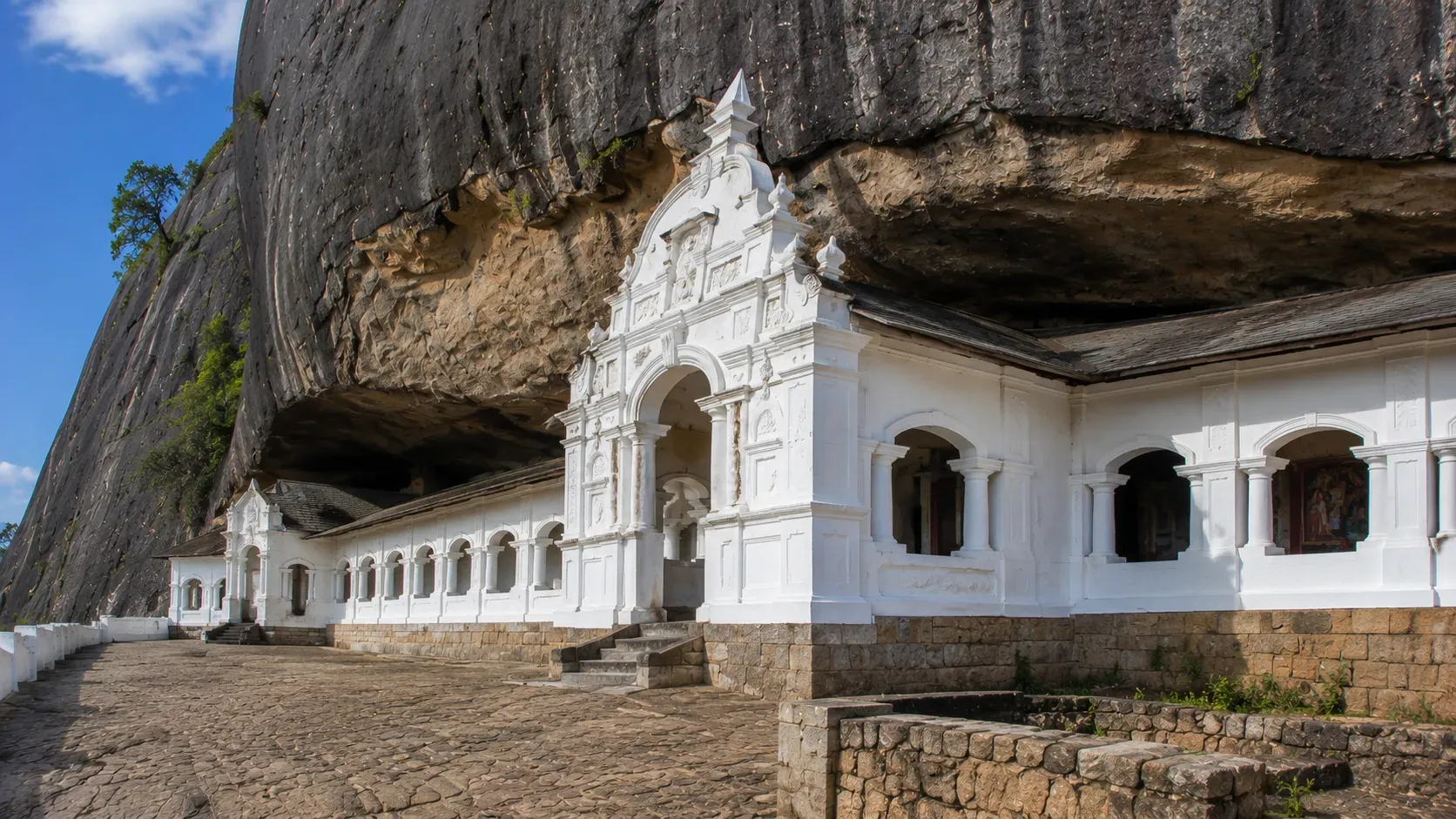
Dambulla, Sri Lanka, is a cave monastery carved into a granite rock outcrop 160 metres above the surrounding plains, in the Matale District of North Central Province, Dambulla, Sri Lanka. It sits approximately 148 km from Colombo and 72 km from Kandy.
The complex consists of five separate cave temples cut directly into the rock face. Together they contain 157 statues, including Buddha figures, statues of Sri Lankan kings, and representations of Hindu deities. The total painted surface across all five caves covers approximately 2,100 square metres of ceilings and walls; it is one of the largest areas of cave paintings in Asia.
At the foot of the rock, the Golden Temple Dambulla section includes a large golden Buddha and a golden-hued temple building. This area is separate from the ancient caves above and serves as both an active temple and a museum.
Detail | Information |
Location | Matale District, North Central Province |
Height of rock | 160 metres above surrounding plains |
Number of caves | 5 |
Buddha statues | 153 |
Painted surface | 2,100 square metres |
King statues | 3 |
God statues | 4 |
How Did Dambulla Become a UNESCO World Heritage Site?
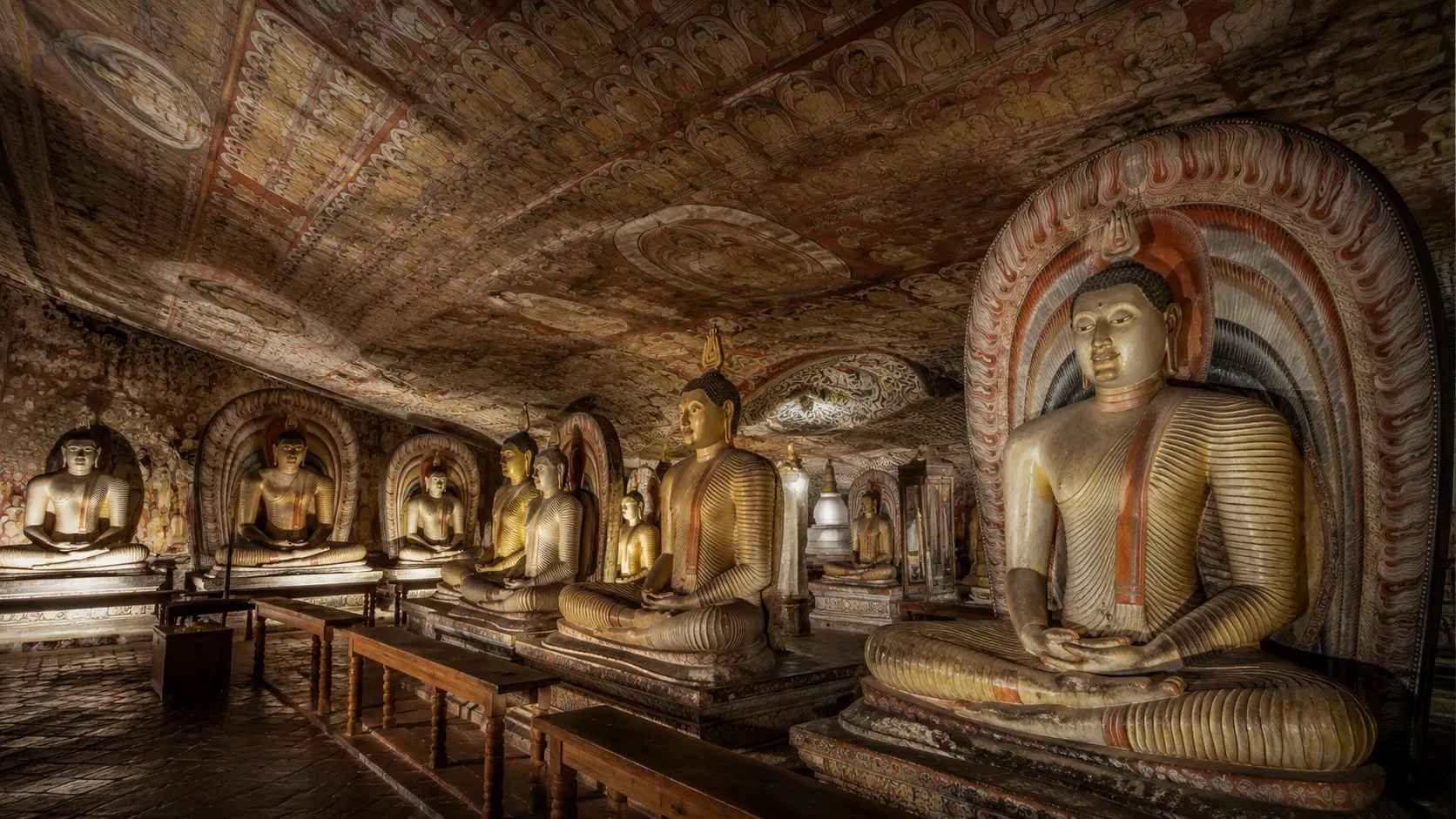
Dambulla Cave Temple has been in active use as a Buddhist site since the 3rd century BCE, making it one of Sri Lanka's oldest continuously occupied rock sanctuaries. Its direct connection to royalty begins around 89 BCE, when King Vattagamani Abhaya (also known as King Valagamba) took shelter in the caves after South Indian Chola invaders drove him out of Anuradhapura. On reclaiming his throne, the king converted the caves into a formal rock temple as an act of gratitude.
King Nissanka Malla of the Polonnaruwa Kingdom undertook major restoration in the 12th century CE, gilding statues and adding to the complex, an act recorded in a stone inscription near the cave entrance. The Kandyan period, between the 16th and 18th centuries CE, brought further expansion; new frescoes in the Kandyan artistic style were added, particularly under King Kirti Sri Rajasinha in the 18th century.
In 1991, UNESCO designated the site as a World Heritage Site under the listing "Golden Temple of Dambulla." It is among the most significant Sri Lankan famous monument sites in the Cultural Triangle, alongside Sigiriya and the Sacred City of Anuradhapura, making Dambulla Cave Temple one of the defining Sri Lankan famous monument sites in the island's Cultural Triangle.
Year | Event |
3rd century BCE | First use of caves as Buddhist shelter |
89 BCE | King Vattagamani Abhaya shelters here during exile |
After 89 BCE | King converts caves into formal rock temple |
16th to 18th century CE | Kandyan period expansion; new frescoes and statues added |
1991 | UNESCO World Heritage designation |
What to Know About Dambulla Cave Temple Entrance Fee and Timings?
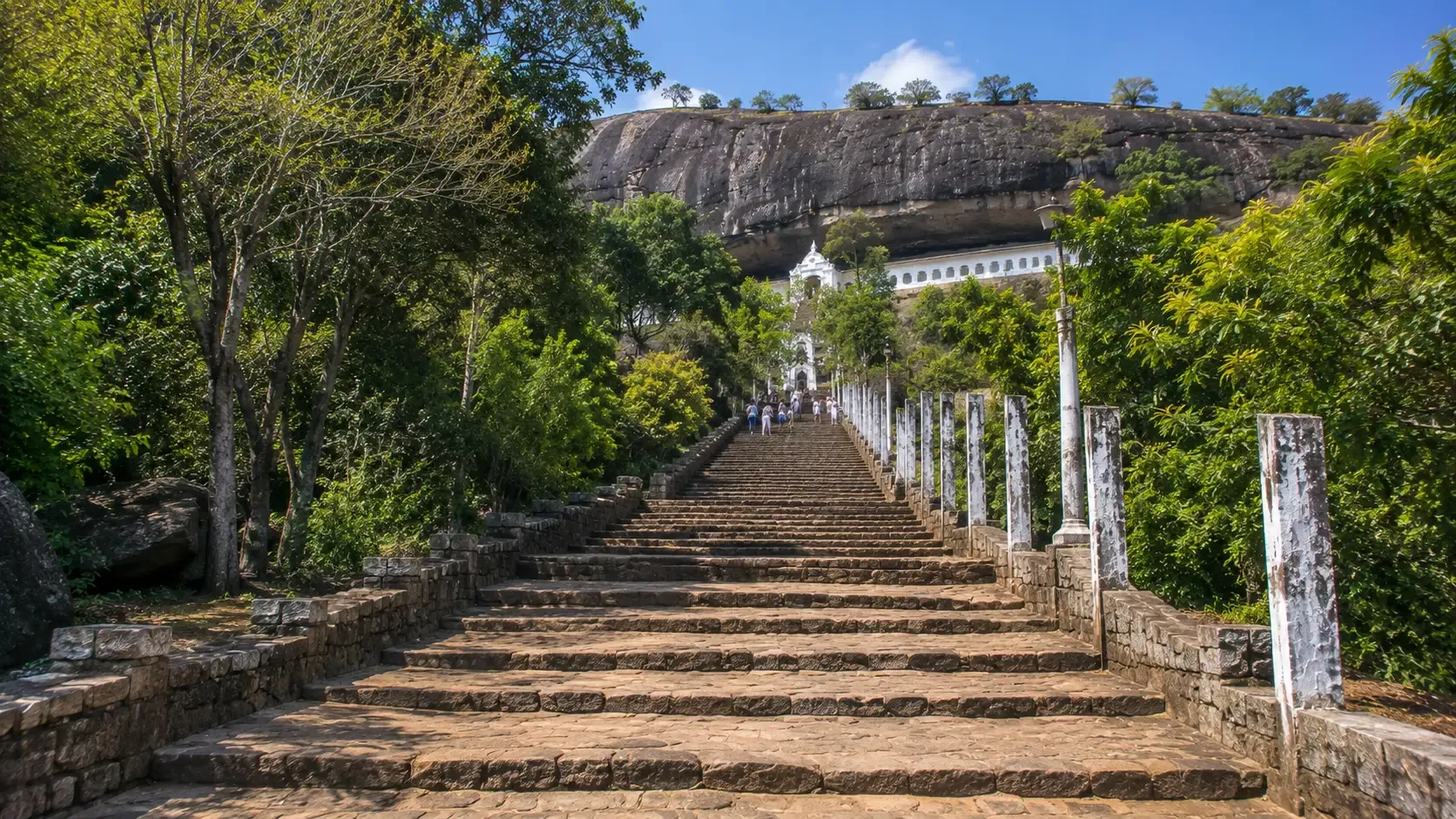
The Dambulla Cave Temple entrance fee for foreign visitors is approximately LKR 1,500 to 2,000 per adult (per the Central Cultural Fund of Sri Lanka, 2026). Fees are revised periodically; always confirm the current rate at the official website or at the ticket counter before visiting. All CCF site fees include 18% VAT, per the Central Cultural Fund.
Dambulla Cave Temple timings: The complex is open daily from 7am to 7pm. The ticket counter typically closes at 5:00pm to allow visitors enough time to complete the staircase ascent and tour all five caves before closing. If you are arriving later in the afternoon, confirm the last entry cut-off at the gate.
Entry rules:
- Tickets, including online reservations, are valid for the date of issuance only; CCF policy permits no extensions or date changes.
- Modest dress is required throughout the site; sarongs are available for hire or purchase at the entrance stall
- Shoes must be removed before entering any of the five cave temples; there are shoe storage areas at the base
- Photography is permitted inside most chambers; flash photography and tripods are restricted in several caves where wall paintings are light-sensitive
Visitor Type | Dambulla Cave Temple Entrance Fee | Notes |
Foreign adult (non-SAARC) | LKR 1,500 | Confirm at the o |
SAARC nationals | Separate rate | Confirm on-site |
Sri Lankan citizen | Nominal fee | ID required |
Museum entry | Included | Golden Temple Museum at base |
What Can You Expect Inside the Five Caves of Dambulla?
Dambulla Cave Temple is best walked in order from left to right, starting at Cave 1 and working through to Cave 5. Caves 1 and 2 require the most time; Caves 3, 4, and 5 can be covered more quickly.
Devaraja Lena: The Cave of the Reclining Buddha
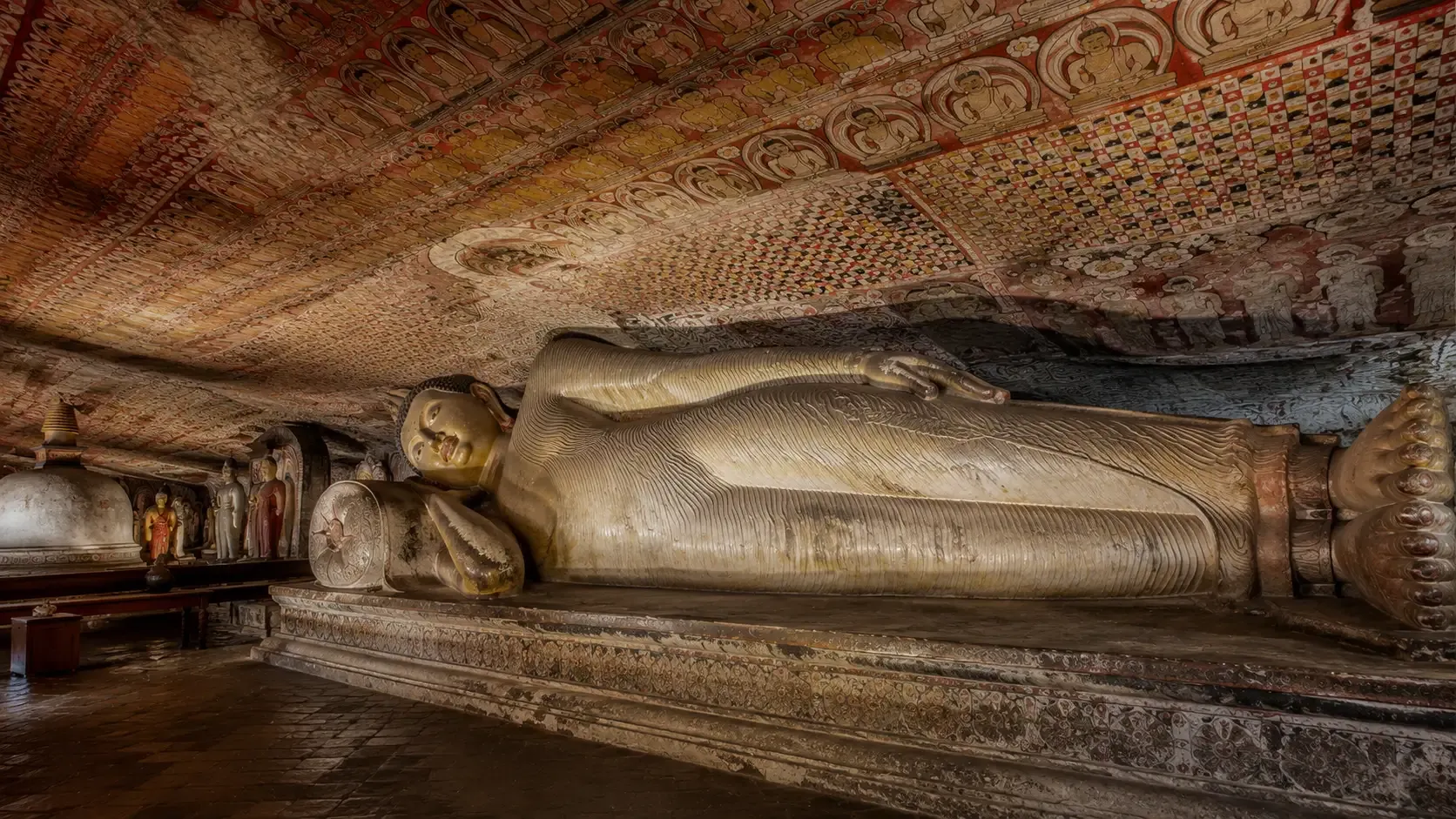
Cave 1 is the oldest and most spiritually significant of the five.
- Key feature: A 15-metre reclining Buddha carved directly from the solid rock; it is one of the largest rock-cut reclining Buddhas in Sri Lanka
- Other figures: Ananda, the devoted disciple of the Buddha, is depicted standing at the feet of the reclining figure; the positioning is a direct reference to the moment of the Buddha's passing into Parinirvana
- Ceiling: Painted with images of the Buddha in various postures; frescoes from multiple restoration periods overlap in places
Maharaja Lena: The Grandest Cave in the Complex
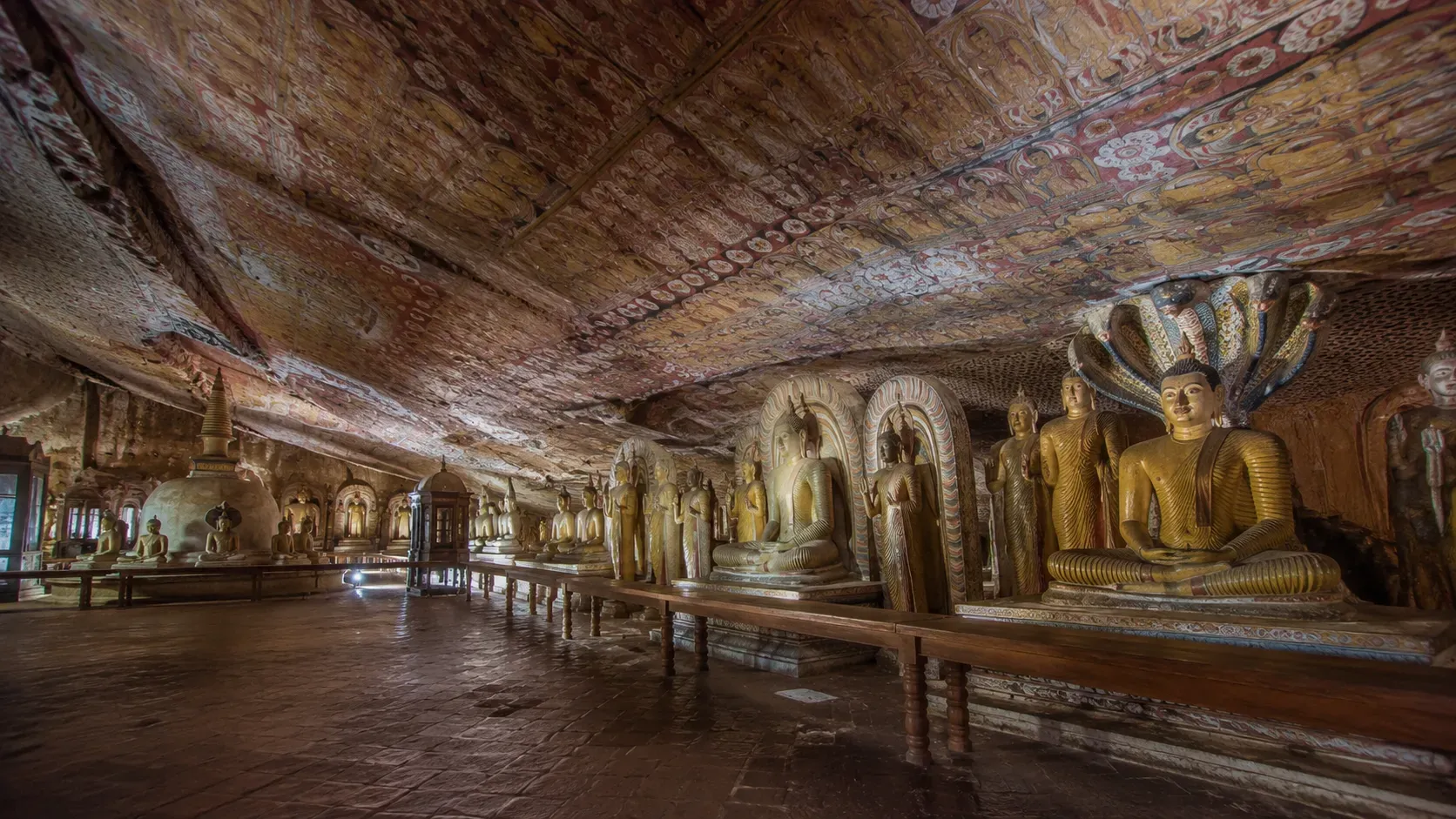
Cave 2 is the largest and most complex of all five temples.
- Size: The largest cave in the complex, covering approximately 2,100 sq ft of floor space
- Key figures: 54 Buddha statues in various postures; statues of King Vattagamani Abhaya and King Nissanka Malla; images of Hindu deities Vishnu and Ganesha also present, reflecting the syncretic nature of the site at various points in its history
- Ceiling: Almost entirely covered in frescoes; the paintings depict the life of the Buddha, scenes from the Mahayana and Theravada traditions, and episodes from Sri Lankan royal history
- Allow the most time here of any cave in Dambulla Cave Temple
Maha Alut Viharaya: A Showcase of Kandyan Art
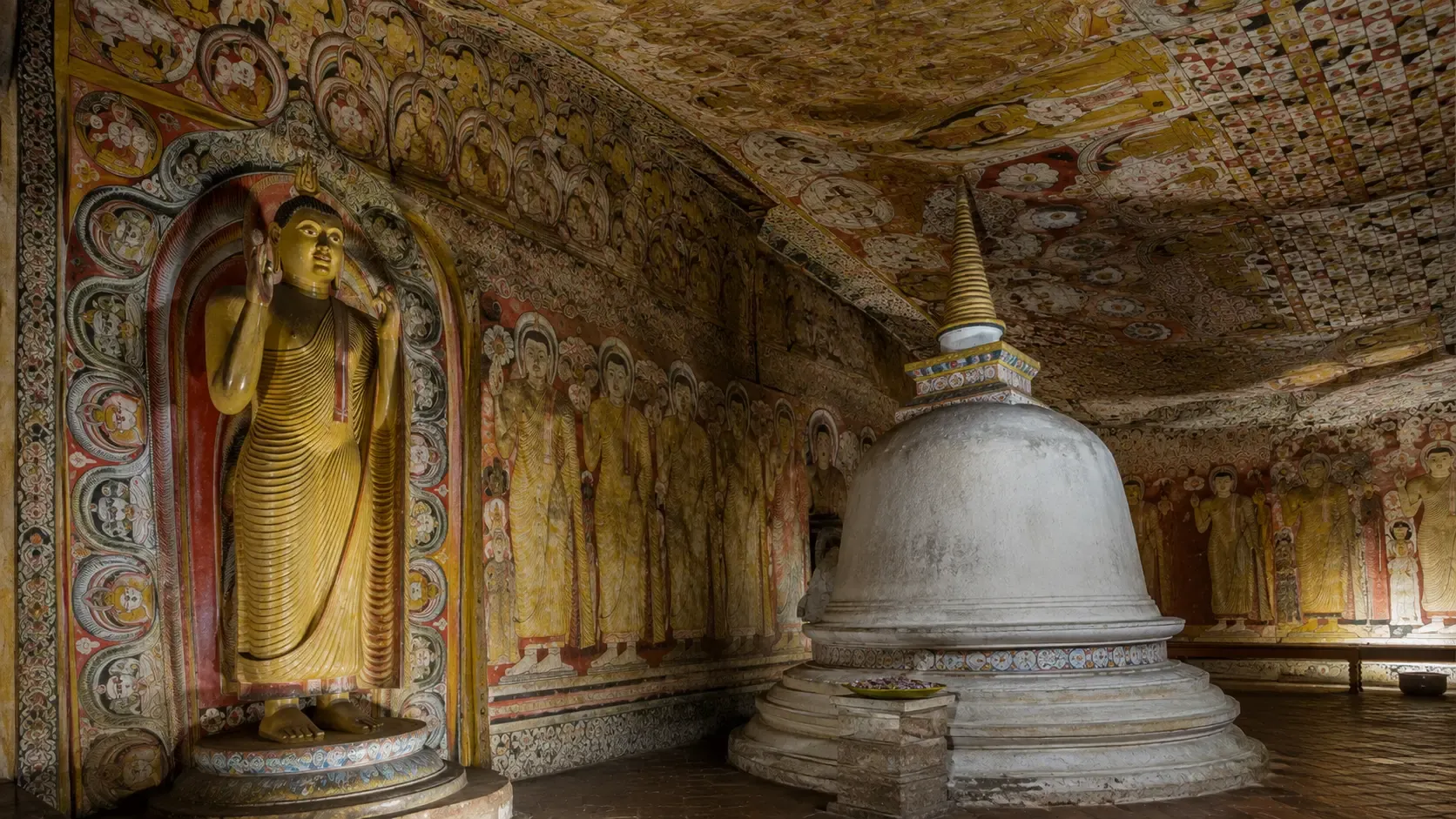
Cave 3 at Dambulla Cave Temple was a Kandyan-era addition and reflects the architectural style of that period.
- Statues: 50 Buddha figures; the central standing Buddha is placed on a gilded lotus seat and is one of the most photographed figures at the site
- Stupa: A well-preserved white dagoba (stupa) occupies the centre of the cave floor; it is unusually positioned inside a cave rather than in an open courtyard
- Paintings: Ceiling frescoes are better preserved here than in Cave 2 in some sections due to later restoration work carried out during the Kandyan period
Pachima and Devana Alut Viharaya: The Final Cave Chambers
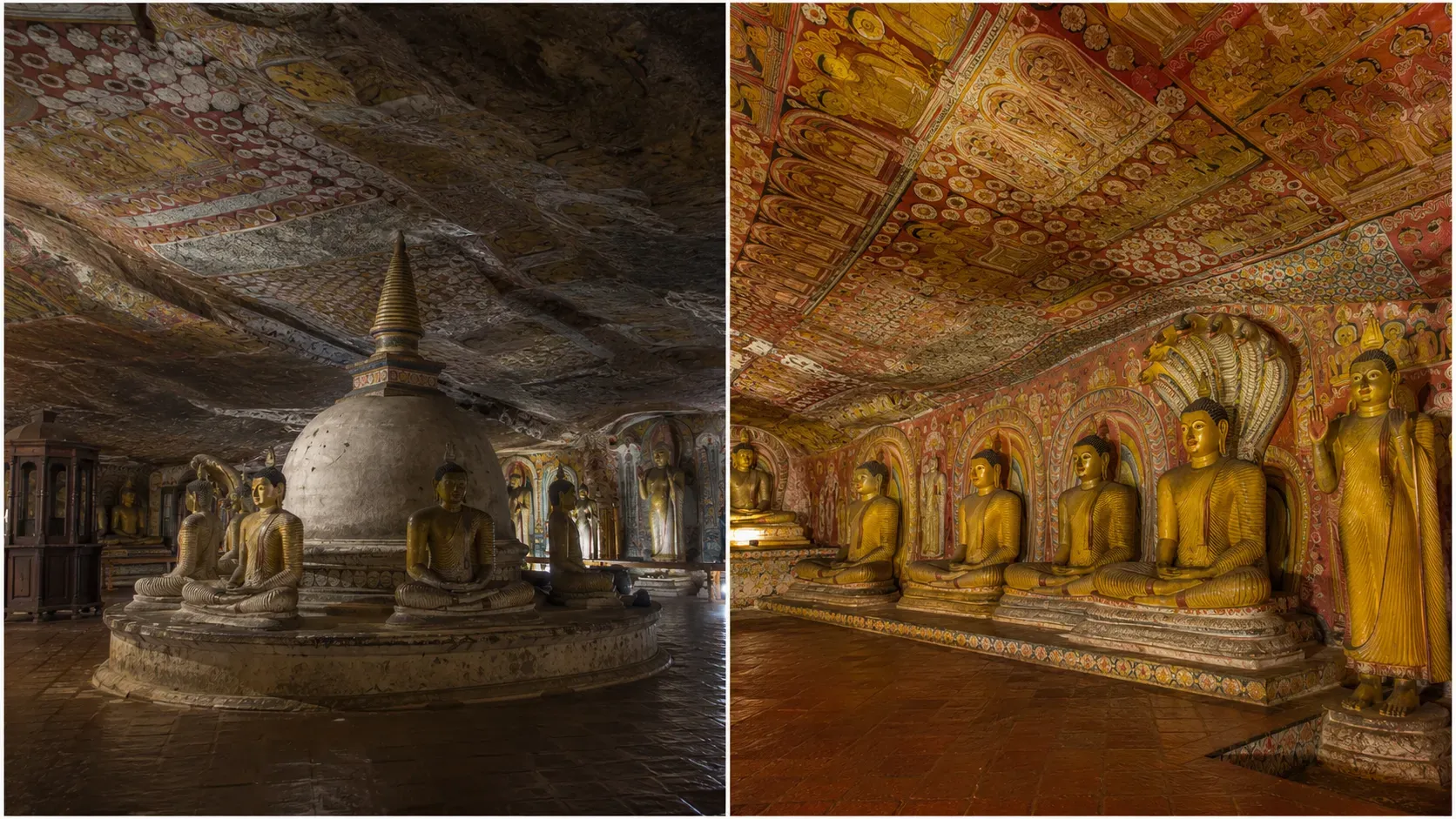
Caves 4 and 5 are the smallest of the group and can be covered in less time.
- Cave 4: The smallest cave; contains a small dagoba believed by tradition to hold jewellery belonging to Queen Somawathi; a few seated Buddha figures line the walls
- Cave 5: The most recent addition to the complex; built after the core four caves; contains a small number of statues including a reclining Buddha; the paintings are more recent than those in the first three caves
Cave | Name | Key Feature | Estimated Visit Time |
1 | Devaraja Lena | 15-metre reclining Buddha | 15 to 20 min |
2 | Maharaja Lena | 54 statues; fully frescoed ceiling | 20 to 30 min |
3 | Maha Alut Viharaya | Central standing Buddha; interior dagoba | 10 to 15 min |
4 | Pachima Viharaya | Small dagoba; Queen Somawathi tradition | 5 to 10 min |
5 | Devana Alut Viharaya | Recent addition; reclining Buddha | 5 to 10 min |
How to Get to Dambulla Cave Temple?
Dambulla Cave is most commonly reached from two bases in the Cultural Triangle: Sigiriya to the north and Kandy to the south. Both are well-connected by road.
Sigiriya to Dambulla Cave Temple
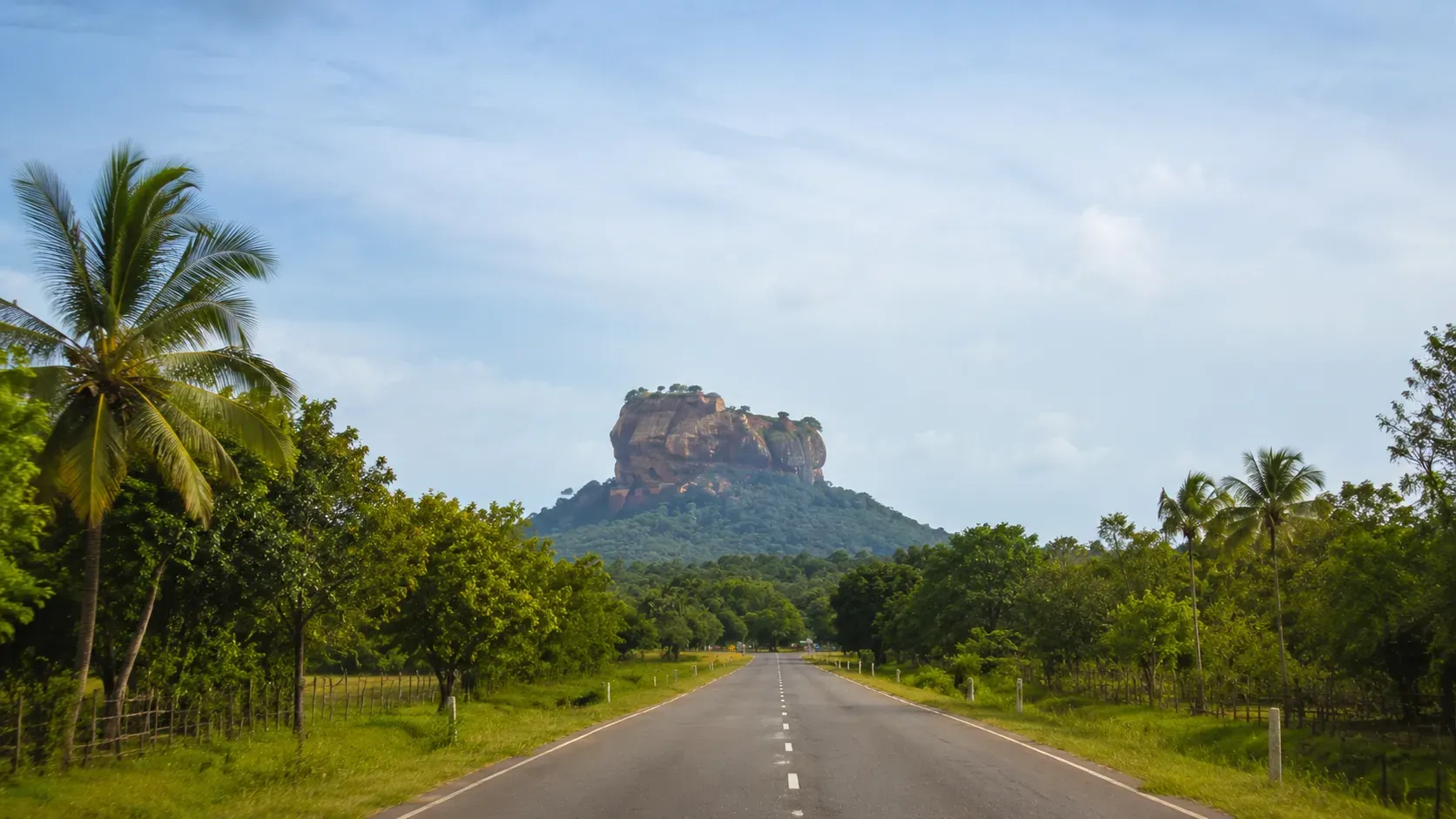
The Sigiriya to Dambulla Cave Temple route is the most popular same-day combination in the Cultural Triangle.
- Distance: Approximately 20 to 25 km depending on the road taken from your accommodation in Sigiriya town
- Travel time: 30 to 40 minutes by car or taxi; tuk-tuks are viable but slower on the main road
- Recommended plan: Visit Sigiriya Rock in the early morning (arrive by 7am; complete the climb by 10am) and then drive directly to Dambulla Cave Temple for an afternoon visit; this leaves adequate time before the ticket counter closes at 5:00pm
- Transport: Taxis are available from the Sigiriya junction and most guesthouses; confirm the fare before departure; a round-trip with waiting time from Sigiriya to Dambulla Cave Temple and back typically costs LKR 3,000 to 5,000
The Sigiriya to Dambulla Cave Temple combination is the standard Cultural Triangle day itinerary for most visitors.
Kandy to Dambulla Cave Temple
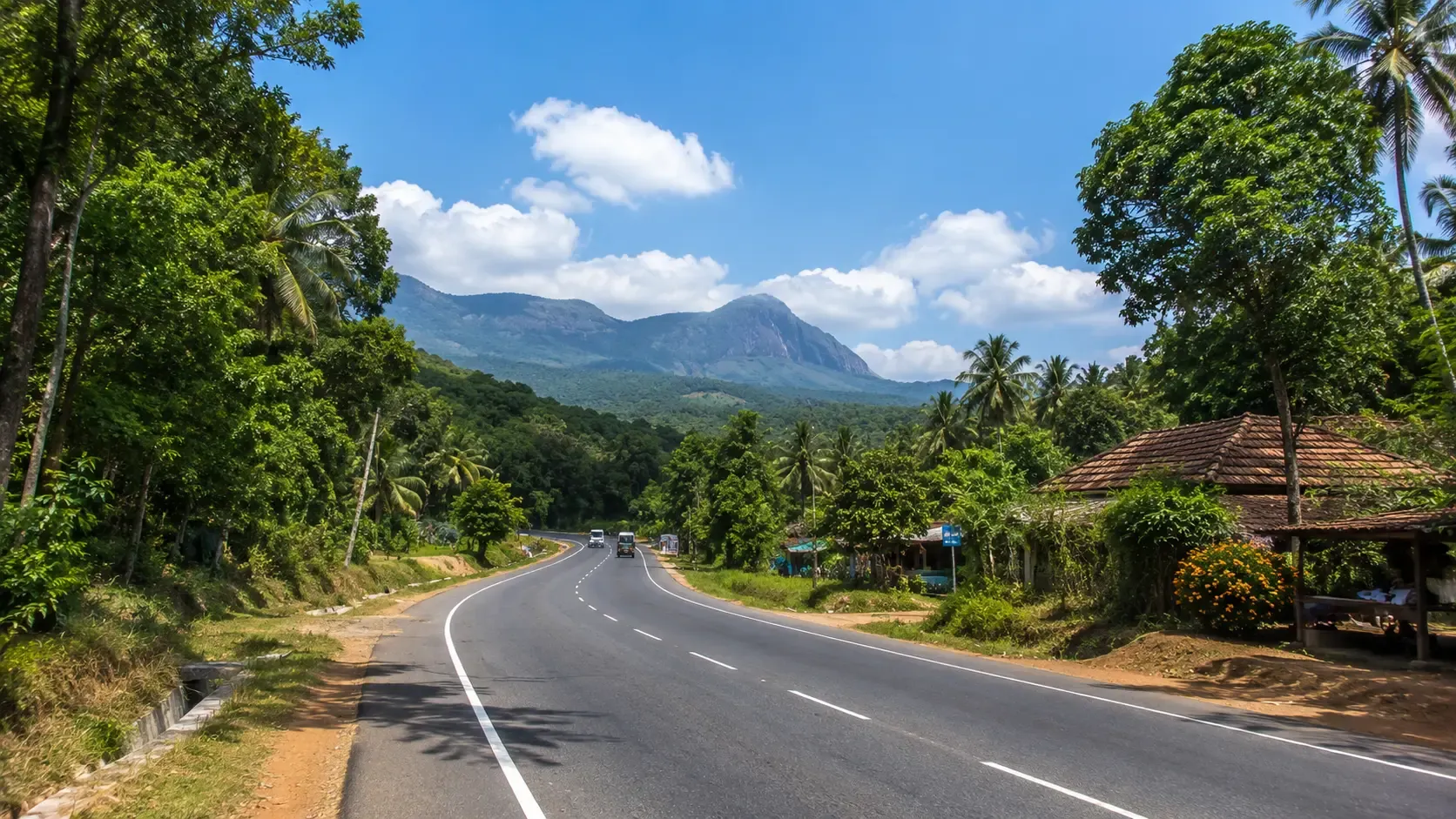
The Kandy to Dambulla Cave Temple route is a longer but very manageable full-day drive.
- Distance: Approximately 72 km via the A9 Kandy-Jaffna highway
- Travel time: 2 to 2.5 hours by car; 2.5 to 3 hours by intercity bus
- By bus: Buses depart regularly from Kandy Central Bus Station; check the schedule at the station as timings vary; this is a reliable route but not time-specific
- By private car: The most comfortable option from Kandy; drivers familiar with the Cultural Triangle often pair Dambulla Cave Temple with a Sigiriya stop in the same day, making the Kandy to Dambulla Cave Temple drive part of a longer circuit
- Note: From Kandy, confirm Dambulla Cave Temple timings before departure; a 9am start from Kandy gives you enough time to reach Dambulla by midday
Which Places Should You Visit Near Dambulla Cave Temple?
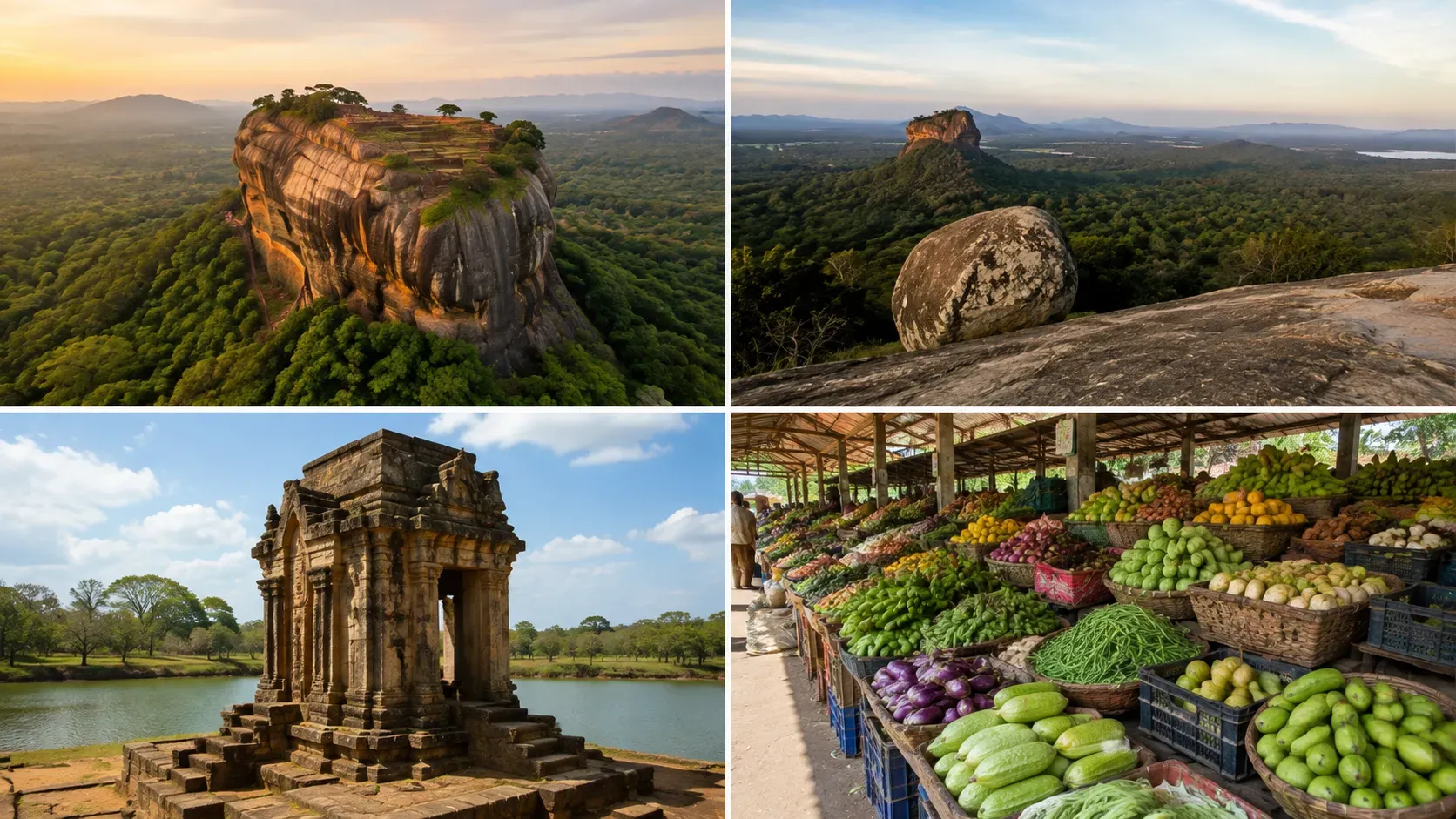
Dambulla Cave is located within the most concentrated area of UNESCO heritage sites in Sri Lanka. Most of the major nearby stops are within 30 km.
Attraction | Distance from Dambulla | Travel Time | Entry Fee |
Sigiriya Rock Fortress | 20 km north | 30 to 40 min | USD 30 (non-SAARC adult) |
Pidurangala Rock | 22 km north | 35 to 40 min | LKR 1,000 |
Nalanda Gedige | 15 km south | 20 to 25 min | Free |
Dambulla Wholesale Market | In town | 5 min | Free |
- Sigiriya Rock Fortress: The most visited site in the Cultural Triangle; a separate full morning; best done before Dambulla; entry USD 30 for non-SAARC foreign adults per the Central Cultural Fund
- Pidurangala Rock: A 30-minute climb to the top; offers the best elevated view of Sigiriya Rock; far less crowded than Sigiriya; entry LKR 1,000
- Nalanda Gedige: A 7th- to 8th-century Buddhist-Hindu stone temple set beside a small lake; free entry; quiet and rarely crowded; one of the lesser-known Dambulla Sri Lanka area sites worth adding for those with extra time
- Dambulla town market: One of Sri Lanka's largest wholesale fruit and vegetable markets; worth a brief stop in the morning if you are driving through town
Tribe Travel Tip: Those planning the Kandy to Dambulla Cave Temple drive can pair it with the nearby Nalanda Gedige stop on the return.
How Can You Prepare for a Comfortable Visit to Dambulla?
- Arrive early: The caves get hot and crowded between 10am and 2pm; arriving at 7am or 8am keeps the visit comfortable and gives you the caves largely to yourself
- Wear comfortable closed shoes: You will remove them before entering each cave, so shoes that slip on and off easily save time; the stone steps on the ascent can be warm underfoot in the afternoon
- Carry water: No drinking water is sold inside the Dambulla Cave Temple complex
- Allow 2 to 3 hours total: The ascent alone takes 15 to 20 minutes.
Final Takeaway
Visiting Dambulla Cave Temple gives you a closer look at Sri Lanka's Buddhist heritage, with its old murals, ancient statues, and ongoing religious traditions. Visiting the five caves and the wider Dambulla, Sri Lanka, area helps you understand the region's history even more. If you plan to see the Golden Temple Dambulla or other nearby sites, organising your schedule ahead of time will help you get the most out of your holiday.
Need help planning your Sri Lanka getaway? Holiday Tribe’s advisors are ready to help you create a holiday that matches your travel style.