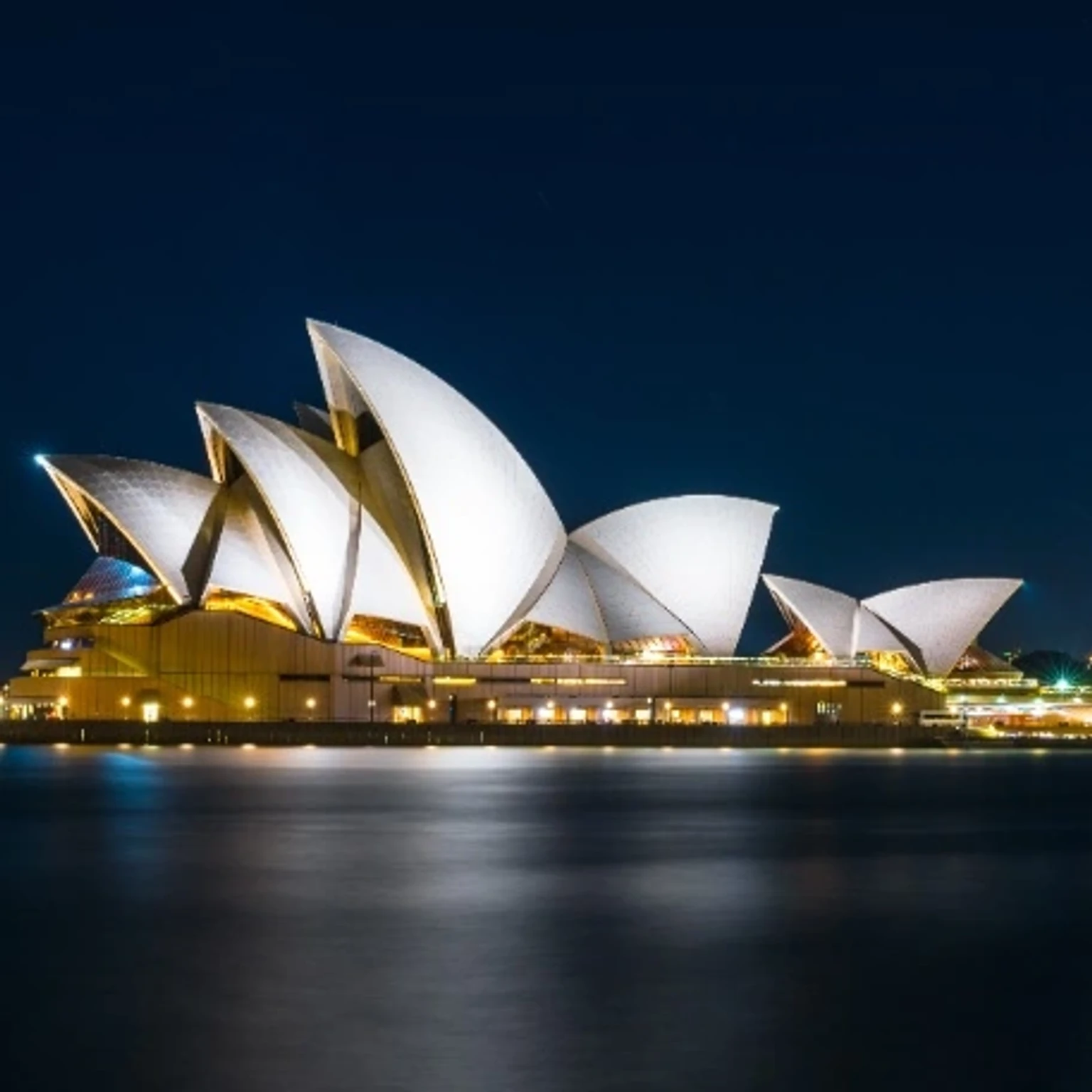


Australia, located in the Southern Hemisphere, is known for its impressive natural features. It is home to the world's largest sand island, the largest monolith, the largest temperate woodland, and, just off its northeastern coast, the largest living structure on Earth. This last wonder lies underwater, stretching over 2,300 km across the Coral Sea, highlighting the unique nature of Australia's environment.
That structure is the Great Barrier Reef in Australia. Coral polyps have built it over millions of years, creating a complex and vibrant ecosystem. In this guide, you'll find important Great Barrier Reef facts, its location in the Coral Sea, details about the Great Barrier Reef Marine Park, tour options, and the best time to visit the Queensland Great Barrier Reef.
What Is the Great Barrier Reef and Where Is It?
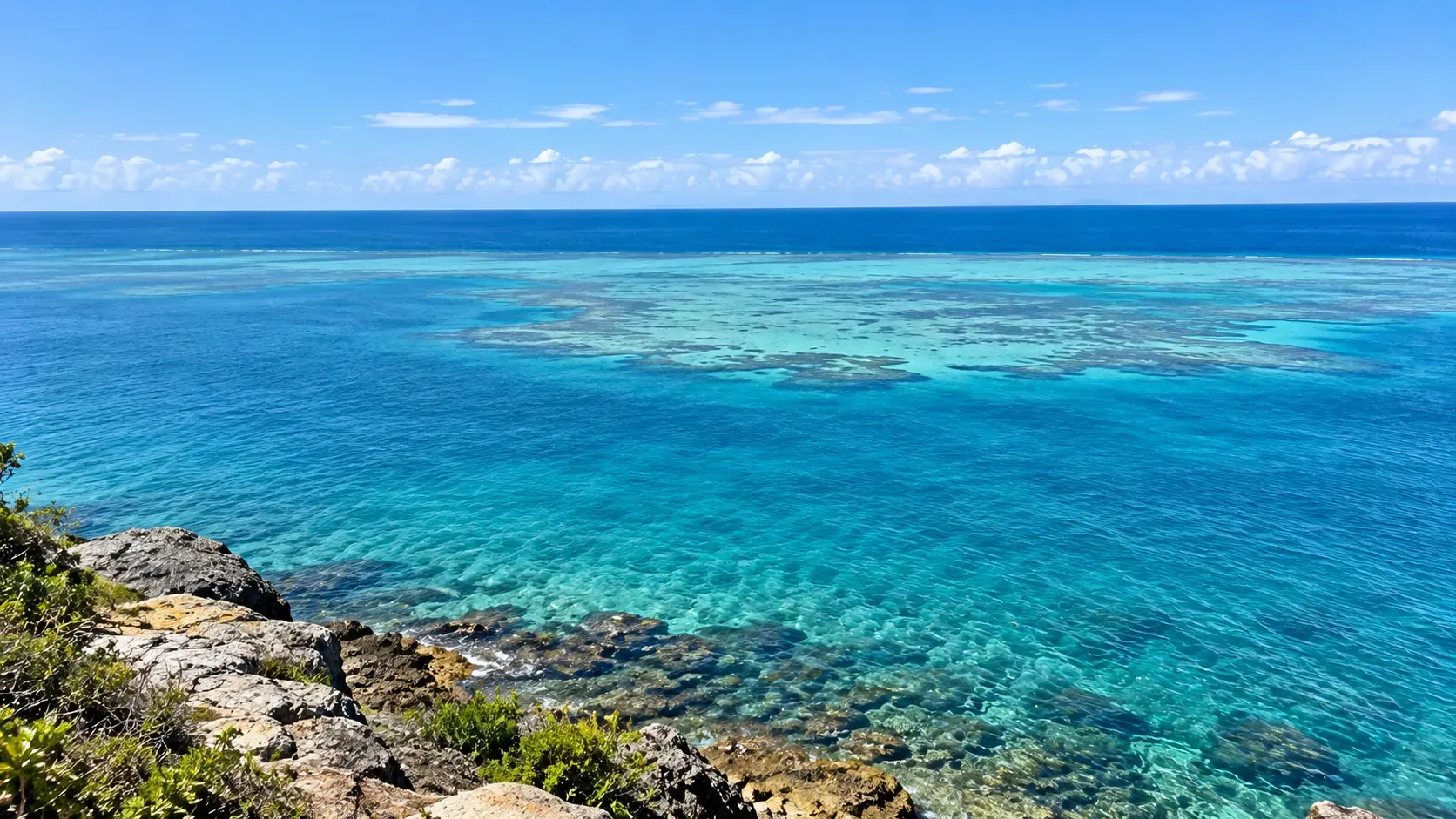
The Great Barrier Reef is the world's largest coral reef system and has been a UNESCO World Heritage Area since 1981. It is often called one of the great natural wonders of the world and is home to the most diverse range of coral species anywhere.
The Great Barrier Reef is located in the Coral Sea, off the northeastern coast of Queensland, Australia. It extends for over 2,300 km from the tip of Cape York in the north to just north of Bundaberg in the south. The offshore distance from the Queensland coast ranges between 16 and 160 km.
The Great Barrier Reef lies in the Coral Sea, which is part of the Pacific Ocean. The reef stretches across 14 degrees of latitude, ranging from shallow inshore areas to deep ocean waters over 250 km from the Queensland coast at its farthest point.
Detail | Information |
State | Queensland, Australia |
Ocean | Coral Sea (Pacific Ocean) |
Length | Over 2,300 km |
Width | 60 to 250 km |
Offshore distance | 16 to 160 km from Queensland coast |
UNESCO listing | 1981 |
What Great Barrier Reef Facts Should You Know?
The most important Great Barrier Reef facts relate to its size and its wide variety of life. A bit of background makes both easier to understand.
Here’s a quick overview:
- Scale and Composition
- Marine Life and Biodiversity
Scale and Composition
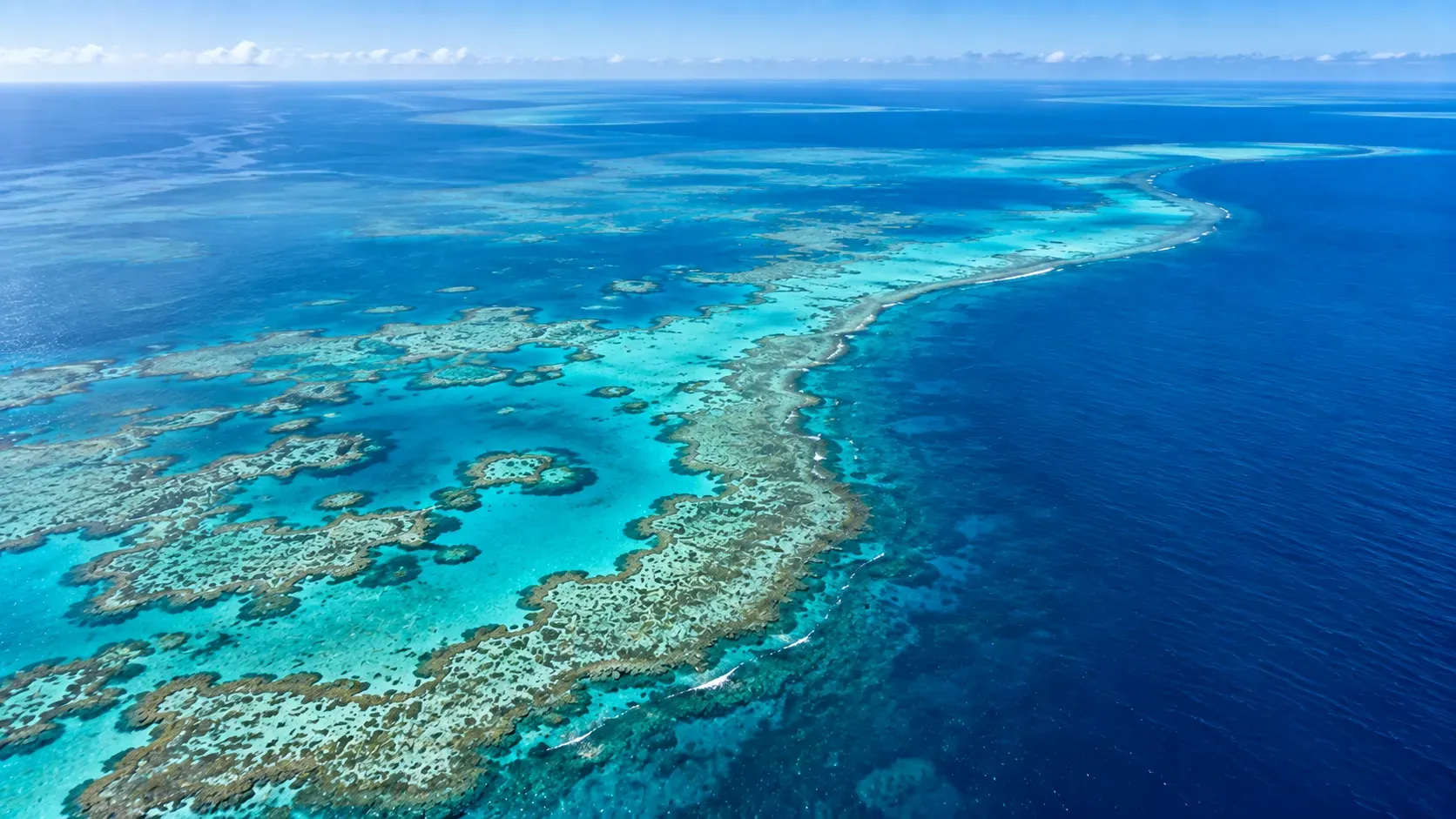
The Great Barrier Reef is the single most concentrated collection of coral on the planet.
- The Great Barrier Reef Marine Park covers 344,400 km²; the UNESCO World Heritage Area is slightly larger at approximately 348,000 km² because it also includes intertidal areas and state waters
- The World Heritage Area is bigger than the combined landmass of the United Kingdom, Holland, and Switzerland
- The reef system includes:
- 3,000 individual coral reefs
- 600 continental islands
- 300 coral cays
- 150 inshore mangrove islands
- The reef accounts for approximately 10% of all coral reef ecosystems on Earth
- It is visible from outer space and is the largest living structure ever created by living organisms
Detail | Measurement |
Marine Park area | 344,400 km² |
World Heritage Area | 348,000 km² |
Length | Over 2,300 km |
Number of reefs | 3,000 individual reefs |
Number of islands and cays | 1,050+ |
% of world's coral reefs | 10% |
Marine Life and Biodiversity
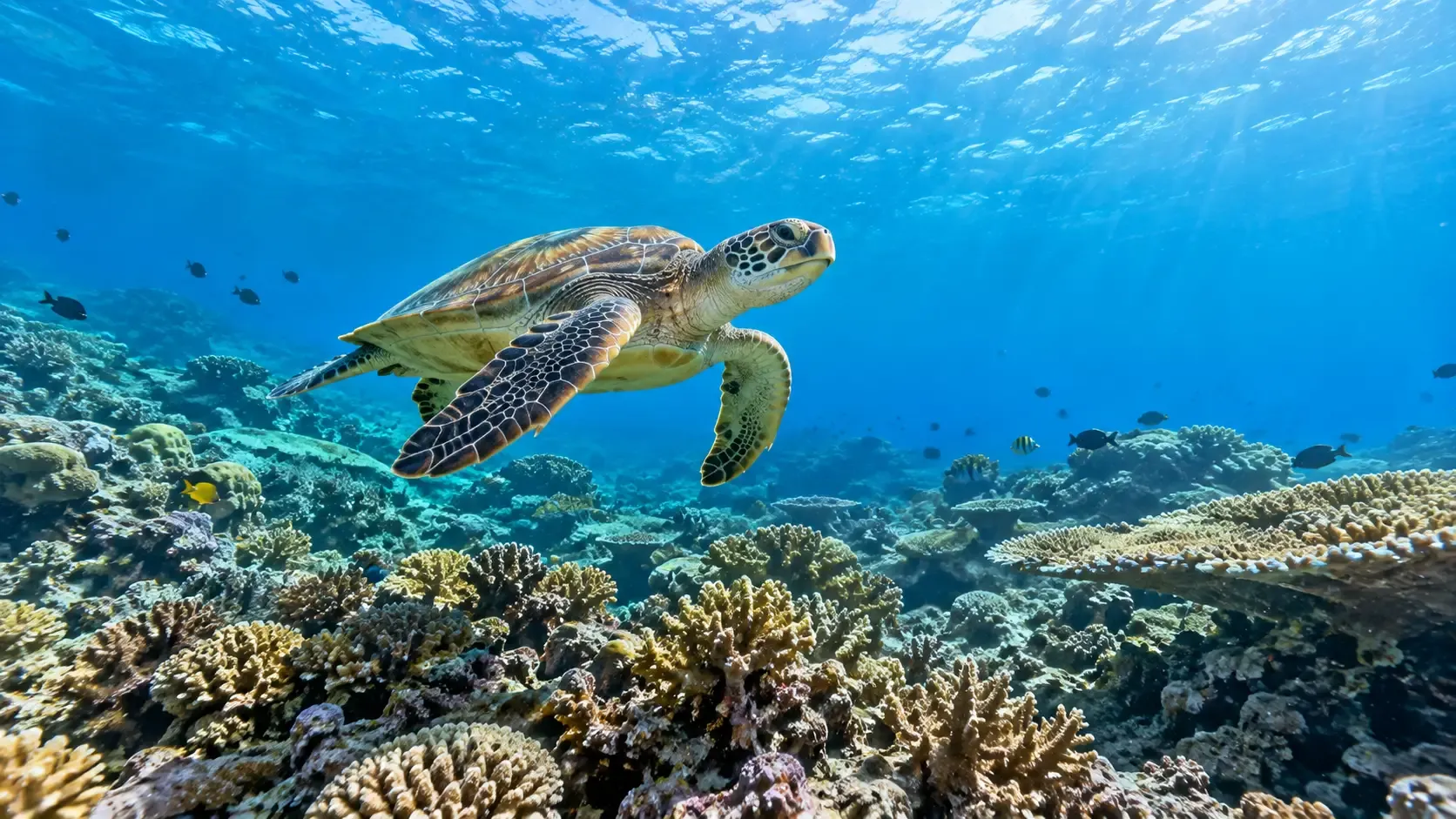
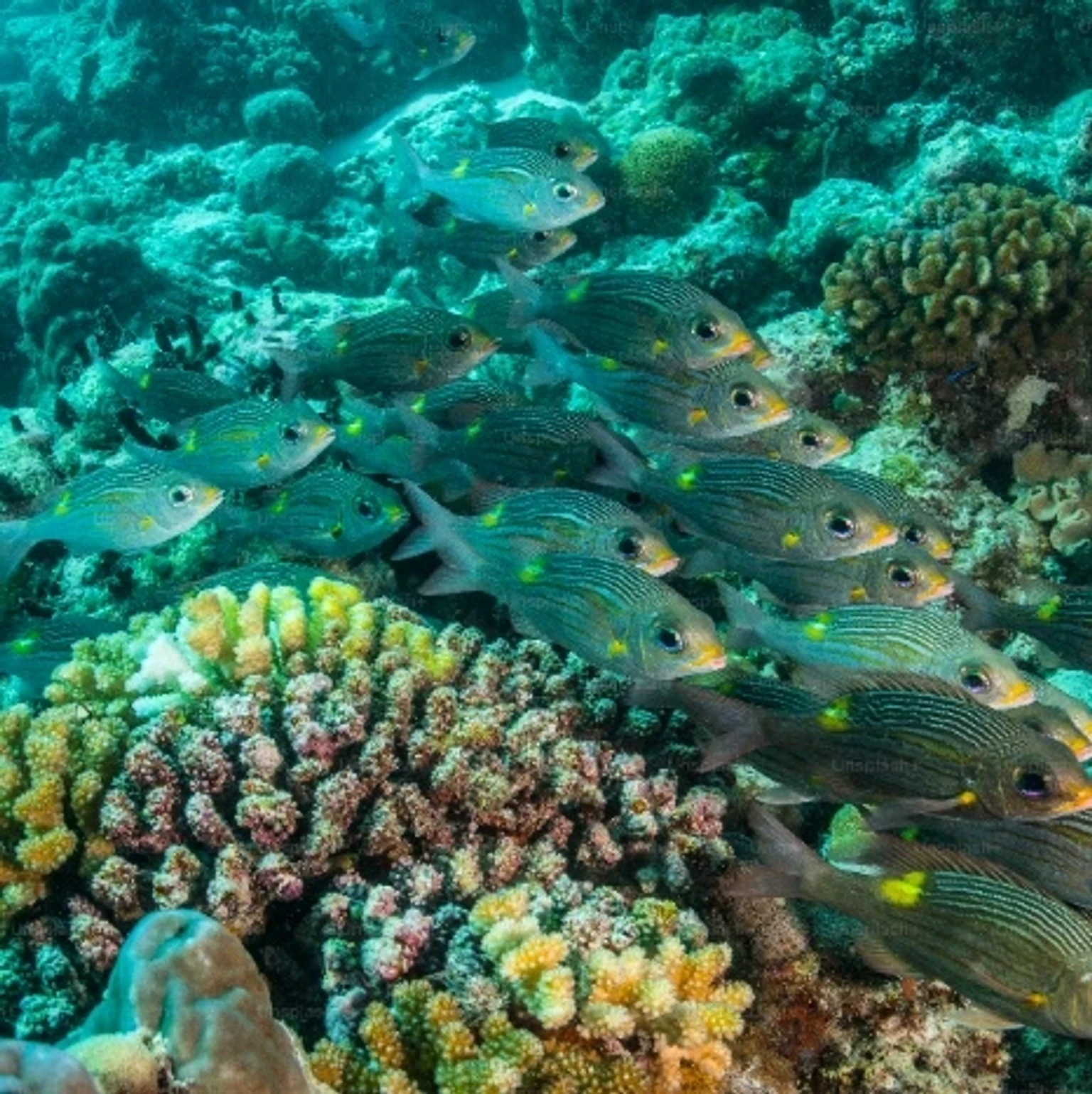
The beautiful Great Barrier Reef is home to one of the richest marine ecosystems ever recorded.
- 1,500+ species of fish: From tiny wrasses and damselfish to large pelagic species including reef sharks and giant trevally
- 400 species of coral: Both hard and soft corals; hard coral structures form the physical architecture of the reef itself
- 4,000 species of mollusk: Including giant clams, nudibranchs, and cephalopods
- 240 species of birds: Many breed on the cays and continental islands
- 6 of the world's 7 marine turtle species: The reef is a critical nesting and feeding habitat for all six
- 30 species of whales and dolphins: Including Humpback Whales on annual migration and the Dwarf Minke Whale
- The dugong (sea cow): This endangered marine mammal feeds on the seagrass beds found in the Great Barrier Reef ecosystem.
- Raine Island: Within the Great Barrier Reef, Australia; the world's largest green turtle breeding area
Species Type | Number | Notable Detail |
Fish | 1,500+ | Includes six shark species regularly seen on reef tours |
Coral | 400 | Both hard and soft species; forms reef structure |
Mollusk | 4,000 | Includes giant clams and nudibranchs |
Birds | 240 | Many breed on reef cays |
Marine turtles | 6 of 7 species | Raine Island: world's largest green turtle breeding ground |
Whales and dolphins | 30 | Includes Dwarf Minke Whale (June to July) |
What Is Protected in the Great Barrier Reef Marine Park?
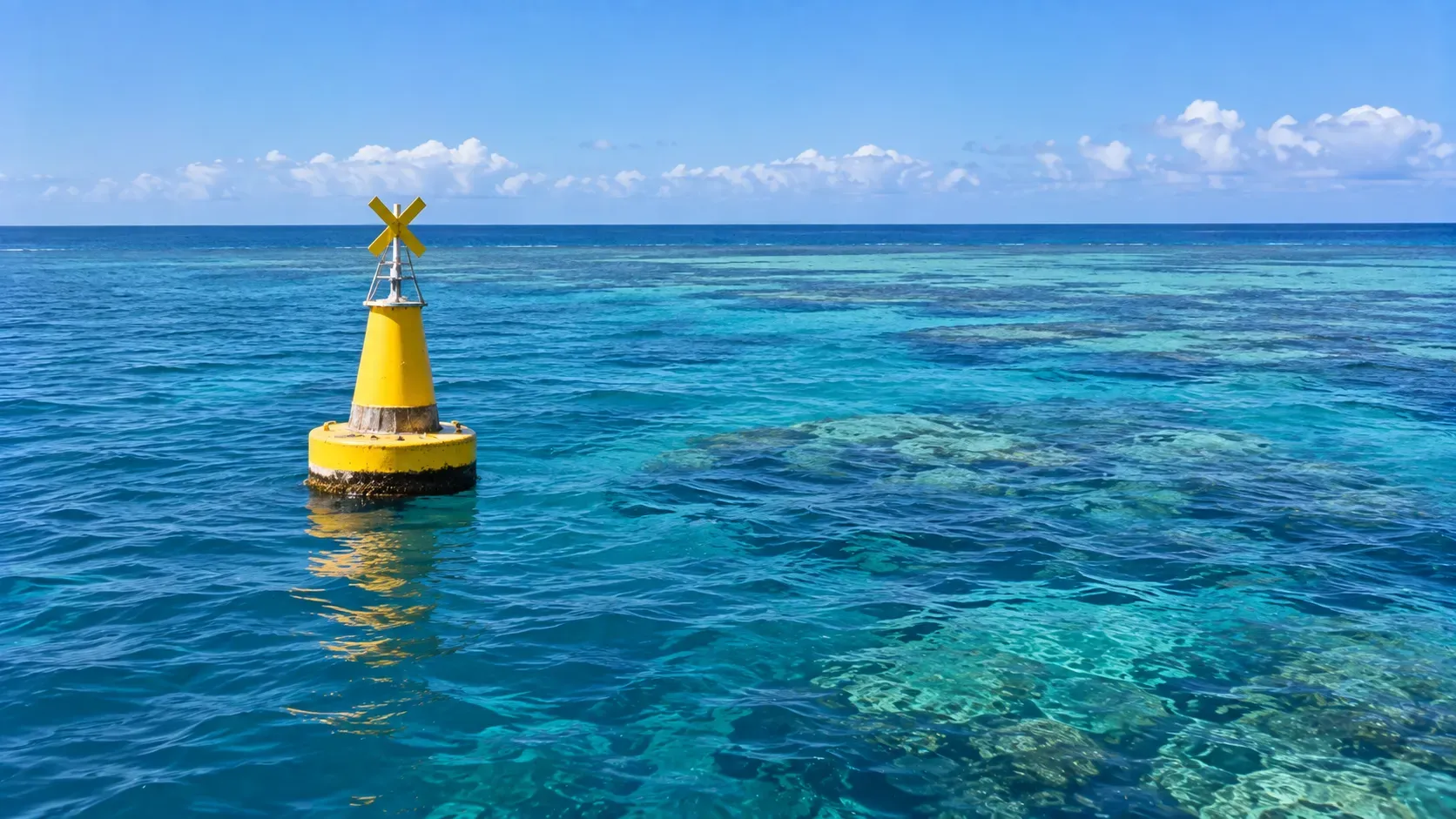
The Great Barrier Reef Marine Park was established in 1975 under the Great Barrier Reef Marine Park Act. It covers 344,400 km² and is governed by the Great Barrier Reef Marine Park Authority (GBRMPA), headquartered in Townsville, Queensland. The GBRMPA website maintains the current zoning maps, permits, and conservation status updates.
The Great Barrier Reef Marine Park operates as a multiple-use zone. This means the same area simultaneously supports commercial marine tourism, recreational use, fishing, scientific research, and Indigenous traditional sea use. Approximately 99% of the UNESCO World Heritage Area falls within the Marine Park boundary.
The park is divided into seven zone types with different levels of permitted activity:
Zone Type | Permitted Activities | Approximate % of Park Area |
General Use Zone | Most activities including fishing and tourism | 33% |
Habitat Protection Zone | Boating, snorkelling; no trawling | 28% |
Conservation Park Zone | Limited fishing; reef-walking | 1% |
Buffer Zone | Limited activities; line fishing only | 3% |
Marine National Park Zone | Snorkelling, diving; no extractive activities | 33% |
Estuarine Conservation Zone | Restricted; conservation research only | Small % |
Preservation Zone | Minimal access; scientific research only | Small % |
The Queensland Great Barrier Reef zoning system is publicly searchable at the official website using the GBRMPA interactive map.
How Do Great Barrier Reef Tours Work?
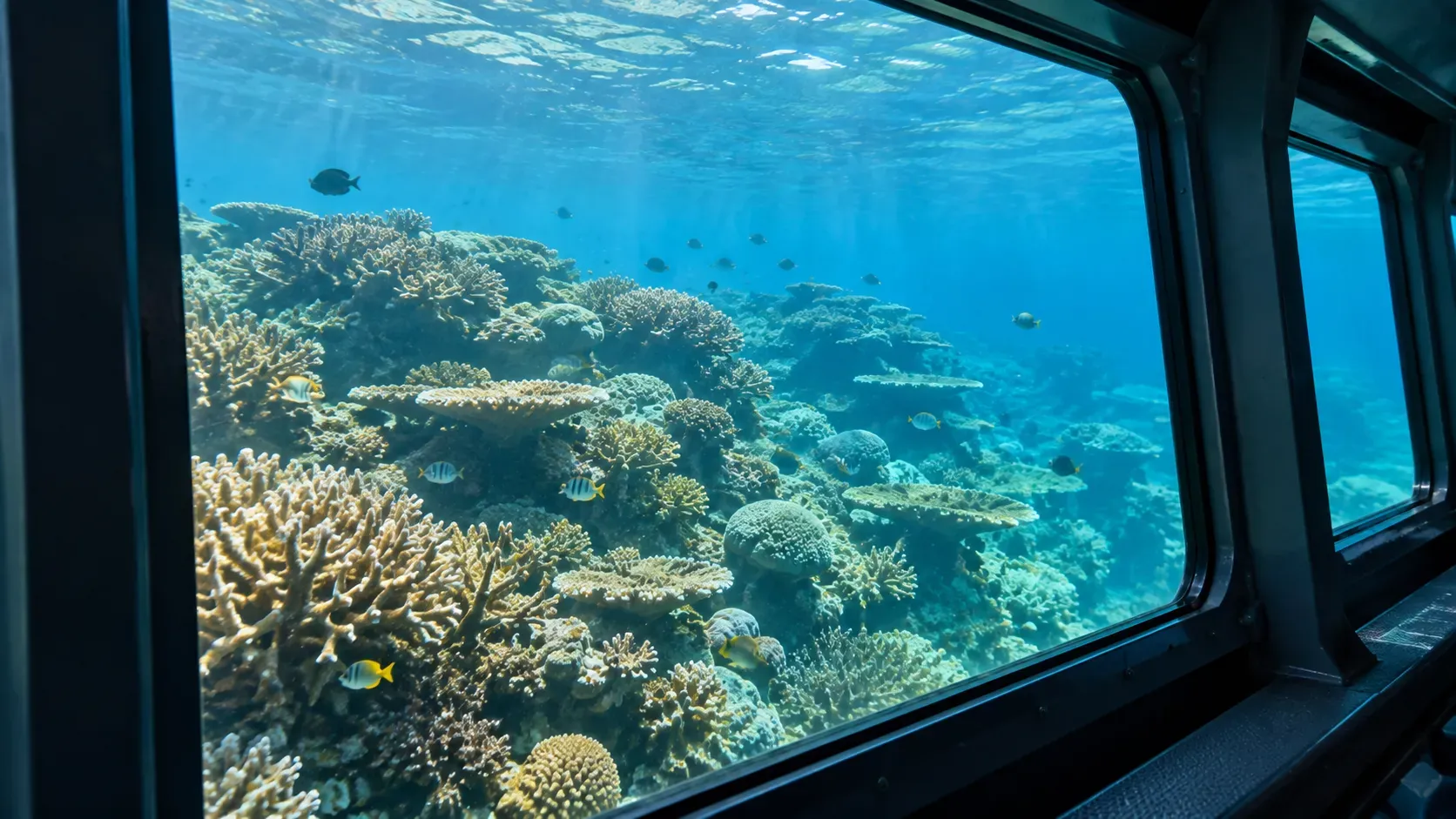
Most Great Barrier Reef tours leave from Cairns and Port Douglas, which are the main gateway cities for visiting the Queensland Great Barrier Reef.
Day tours:
- Departure: Most Great Barrier Reef tours depart the Cairns city marina by 8am and return by approximately 5pm
- Boat journey: 1.5 to 2 hours to the outer reef one-way
- On-site activities: Snorkelling; introductory scuba diving (no certification required); guided certified dives; glass-bottom boat rides; semi-submersible viewing; helicopter flights over the reef
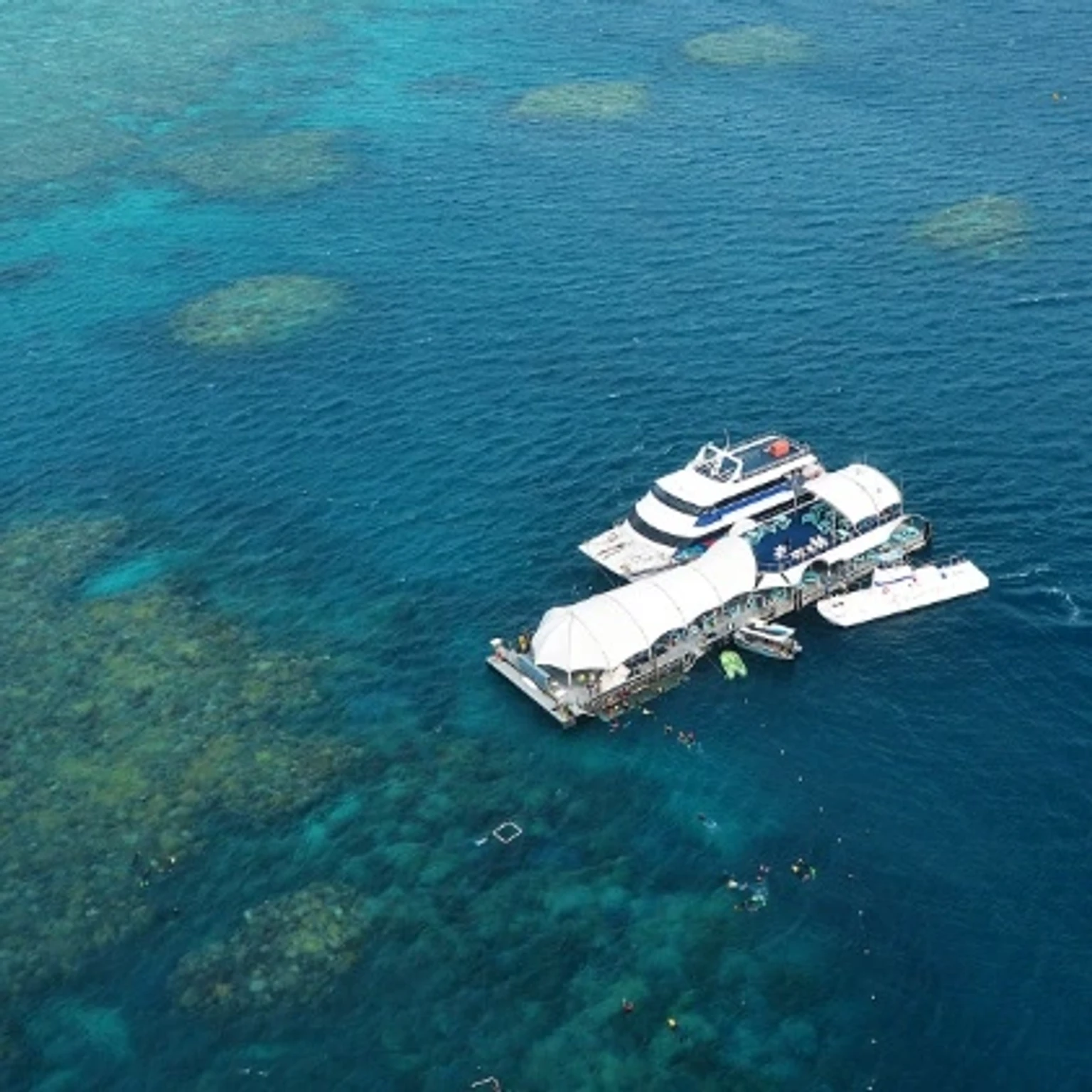
- Pontoon access: Most day tour operators use a floating pontoon anchored on the outer reef; the pontoon includes underwater viewing chambers, a deck for snorkelling, and toilet and changing facilities
Multi-day liveaboard tours:
- For certified divers wanting extended reef access; 2 to 3-night trips cover areas not reachable on day tours
- The Ribbon Reefs, located north of Cairns, are some of the most stunning parts of the beautiful Great Barrier Reef and can only be reached by liveaboard diving experiences. Dwarf Minke Whale encounters are organised here in June and July.
- Liveaboards are also the only access option for the Great Barrier Reef Australia Coral Sea section east of the main reef
Scenic flights:
- Helicopter and seaplane flights from Cairns and Port Douglas offer aerial views of the reef that you can't get from the water.
- Some Great Barrier Reef Australia flight packages combine aerial viewing and on-water time at the reef on the same ticket.
Tour Type | Duration | Departure Point | Main Activities | Best For |
Day tour | 8 hours | Cairns marina | Snorkelling, intro dives, glass-bottom boat | First-time visitors |
Day tour | 7 hours | Port Douglas marina | Outer reef, low isles | Day trip from Port Douglas |
Liveaboard | 2 to 3 nights | Cairns | Multi-dive days, Ribbon Reefs, Coral Sea | Certified divers |
Scenic flight | 30 to 90 min | Cairns or Port Douglas | Aerial reef photography | Non-swimmers; photographers |
When Should You Visit the Queensland Great Barrier Reef?
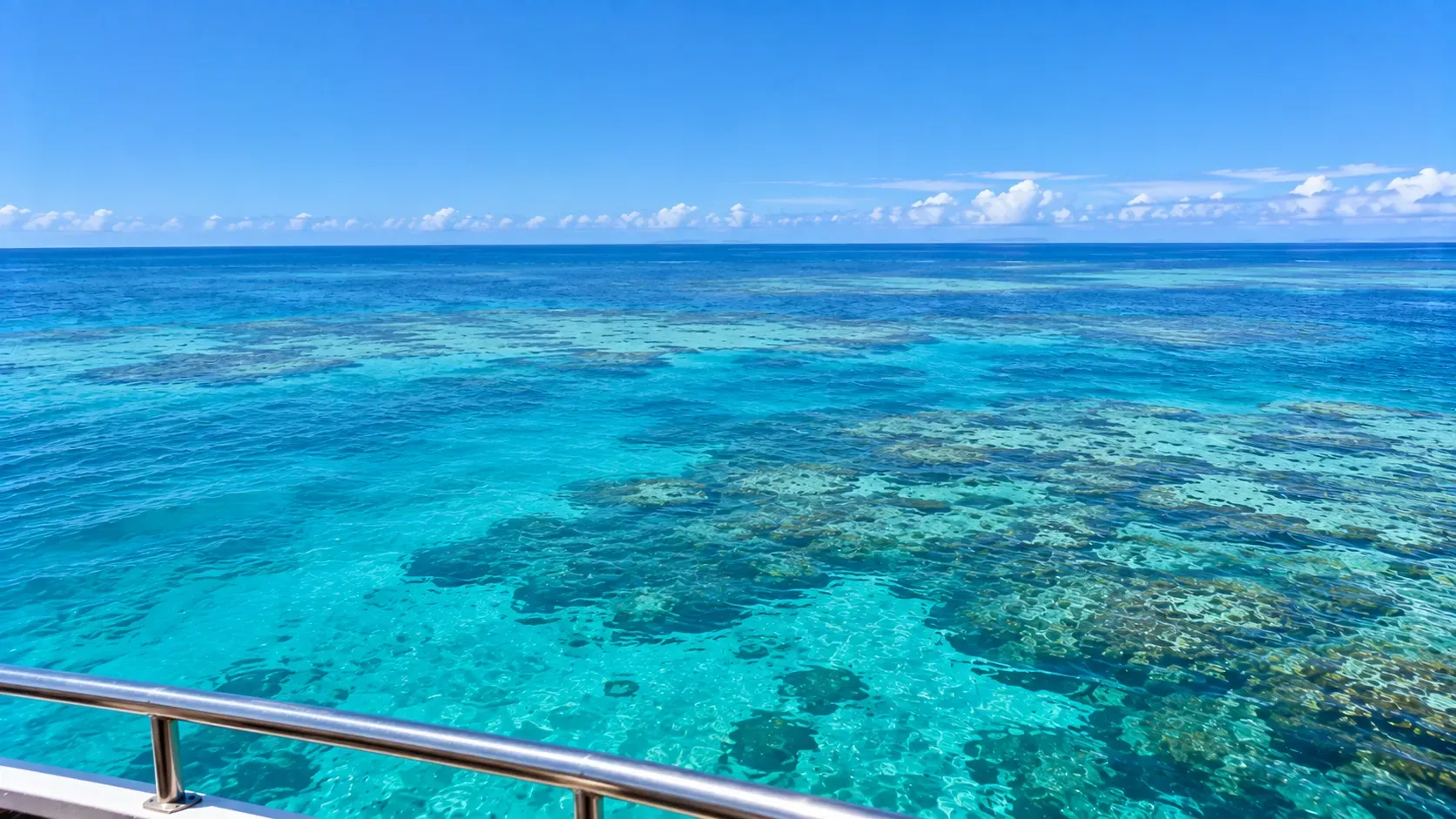
You can visit the Queensland Great Barrier Reef at any time of year, but the conditions change noticeably between the two tropical seasons.
Month | Weather | Water Temp | Visibility | Wildlife | Stinger Risk | Crowd Level |
Jan to Mar | Hot; wet | 29°C | Moderate | Coral spawning (Nov); turtle nesting | High (nearshore) | Low |
Apr | Transitional | 27°C | Improving | – | Reducing | Low to moderate |
May to Oct | Dry; sunny | 23 to 26°C | Excellent | Humpback and Dwarf Minke Whales (Jun-Jul) | None (outer reef) | High |
Nov to Dec | Warming; some rain | 27 to 28°C | Good | Coral spawning (Nov) | Increasing | Moderate |
Here are some important seasonal notes for visiting the beautiful Great Barrier Reef:
- Dry season (May to October): The most popular window for Great Barrier Reef tours; clearest water visibility; no box jellyfish in nearshore coastal areas; calmer Great Barrier Reef Ocean surface; Humpback Whale migration passes through in June to September; the peak visitor period in Cairns and Port Douglas
- Wet season (November to April): Warmer water (average 29°C in summer); annual coral spawning event occurs in November; fewer visitors and lower accommodation rates than the dry season; box jellyfish are present in nearshore beach areas during this period; all Great Barrier Reef tours provide full-body protective suits; fewer visitors and lower accommodation rates than the dry season
Final Takeaway
The Great Barrier Reef, Australia, is the largest coral reef system and the largest living structure on the planet. It lies in the Coral Sea, off the northeastern coast of Queensland, where the water stays warm and clear year-round. The Great Barrier Reef Marine Park was set up in 1975 and is managed by GBRMPA. The beautiful Great Barrier Reef is home to over 1,500 fish species, 400 types of coral, and six species of marine turtles. Great Barrier Reef tours run daily from Cairns and Port Douglas, and the dry season from May to October is usually the best time for first-time visitors.
If you are planning a holiday to Australia and want to visit the reef, Holiday Tribe's advisors can help you create a custom Queensland and Great Barrier Reef itinerary with the best timing, tours, and places to stay.