


Ski lovers from all over India wait for the wintery season, when snowscapes become ornaments of Gulmarg. Such a dazzling show of snow allows travel enthusiasts to engage in high-octane activities across Kashmir’s Pir Panjal range, right here in Gulmarg.
Gulmarg skiing is one of those experiences that sounds intimidating until you understand how the process actually works. This wintery activity is mainly available from December to March, and if skiing appeals to you, knowing the related facts beforehand is the best way to prepare your Kashmir itinerary.
This guide walks you through the full experience: how you get to the slopes, what you need to arrange, how much it costs, and what to know before your first run. Whether you've never stood on skis before or you're looking for off-piste Himalayan powder, Gulmarg has a slope for you.
Key Information | Quick Answer |
Skiing season | December to early March (best: January to February) |
Difficulty | Beginner slopes at Kongdori, advanced at Apharwat Peak |
Gondola pass | Phase 1: ~INR 740 to 810, Phase 2: ~INR 920 to 1,010 |
Equipment rental | INR 800 to 1,500 per day for basic gear |
Instructor | INR 1,500 to 2,500 for a 2-hour beginner session |
Gulmarg altitude | Base at 2,650m, Kongdori at 3,050m, Apharwat Peak at ~3,980m |
Total daily skiing cost | Roughly INR 3,000 to 7,000 per person (gear, pass, instructor) |
What Is the Typical Gulmarg Skiing Experience Like?
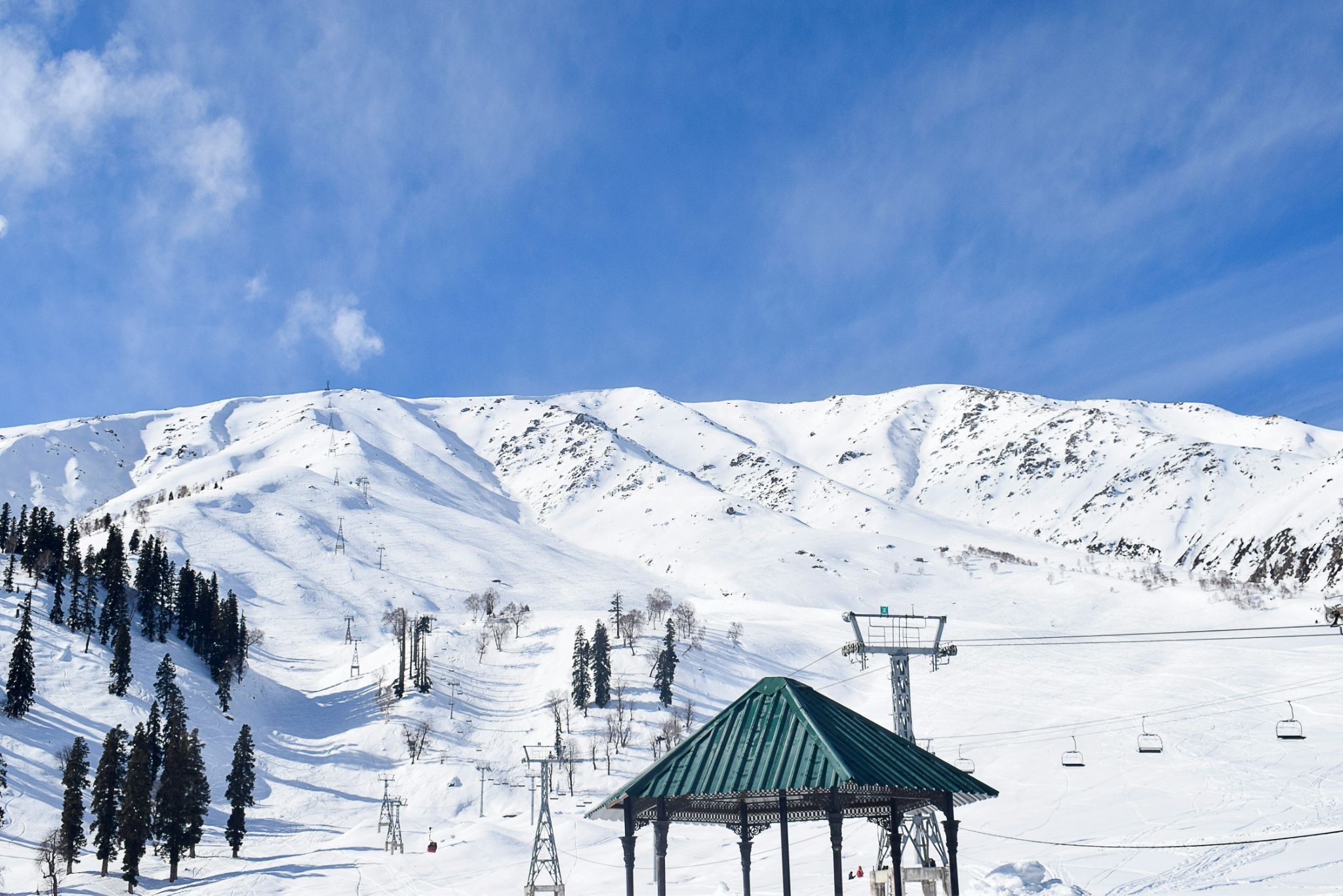 Skiing in Gulmarg involves more than just turning up and stepping onto the snow. There's a clear sequence of things to arrange, and knowing the order makes the whole day easier.
Here's how the process works from start to finish.
1. Getting to the Skiing Area
The journey begins when you reach Gulmarg from Srinagar, the nearest major city and airport. It usually takes around 2 to 3 hours to get here, and you can hire a taxi or arrange a transfer through your hotel.
Once you set foot in Gulmarg, the route to the ski areas becomes accessible. You can either take the Gulmarg Gondola or continue on foot, depending on what suits you. If you choose the gondola, it takes you to Kongdori and then onward towards Apharwat Peak, where the higher ski slopes await.
Tribe Travel Tip: The road can get congested on weekends and holidays, so leave early.
2. Getting Your Gondola Pass
So, there are two phases you have to clear to reach Gulmarg Gondola (this is where the main skiing slopes lie).
- Phase 1 (Gulmarg to Kongdori, 2,650m to 3,050m): The gentler terrain, and is ideal for beginners. Its ticket will cost approximately INR 740 to 810 per person.
- Phase 2 (Kongdori to Apharwat Peak, 3,050m to ~3,980m): Steeper, more challenging, with deep powder, better for intermediate to advanced skiers. Its ticket usually ranges from INR 920 to 1,010 per person.
Buy tickets at the gondola base station or book online through the JKCCC (Jammu and Kashmir Cable Car Corporation) portal. During peak season (December to February), queues can stretch past two hours. Arrive early or book the first available slot.
Holiday Tribe advisors can also help you with the ticketing process and assist you in planning a well-organised ski itinerary for Kashmir.
3. Renting Ski Equipment
You don't need to bring your own gear. Rental shops line the road near the gondola base station and the golf course area. A basic rental set includes:
- Skis
- Boots
- Poles
- Full basic set (skis, boots, poles)
- Premium gear
- Helmet and goggles
- Ski jacket and trousers
Government-run rental shops tend to be the most cost-effective. When renting, always check that boots fit properly and bindings are adjusted. Badly fitted boots are the fastest way to ruin a ski day.
4. Hiring a Ski Instructor
If you've never skied before, an instructor is not optional. Skiing looks straightforward until you're actually sliding downhill with no idea how to stop. A certified instructor will teach you the basics: how to balance, how to snowplough (the beginner's braking technique), how to turn, and how to use the terrain safely.
- Where to find one: The Indian Institute of Skiing and Mountaineering (IISM) runs formal courses, and Kashmir Ski School offers private and group lessons. Local freelance instructors are also available near the slopes
- Private lesson vs group: Private lessons are faster for learning. Group lessons are cheaper and social
- For experienced skiers: If you're heading to Phase 2 or off-piste terrain, a local guide is a genuine safety requirement, not a luxury. They know the avalanche risk, the safe routes and where the best snow is
5. What Are the Slopes Like?
Gulmarg skiing terrain splits neatly by ability:
- Beginner slopes near the golf course: Wide, gentle gradients at the base level. This is where most first-timers start. A small drag lift (baby lift) operates here
- Kongdori (Phase 1): Broader runs with a moderate pitch. Good for progressing once you've got the basics. You ski down from Kongdori back toward the base
- Apharwat Peak (Phase 2): Serious altitude at nearly 4,000 metres. The terrain is steeper, the powder deeper, and the runs longer. This is where experienced skiers and snowboarders come for off-piste and backcountry skiing. Not suitable for beginners
Tribe Travel Tip: The altitude matters. At 3,000 metres and above, the air is noticeably thinner. Go slowly, drink water, and don't push yourself on the first day.
What Is the Best Time to Go Skiing in Gulmarg?
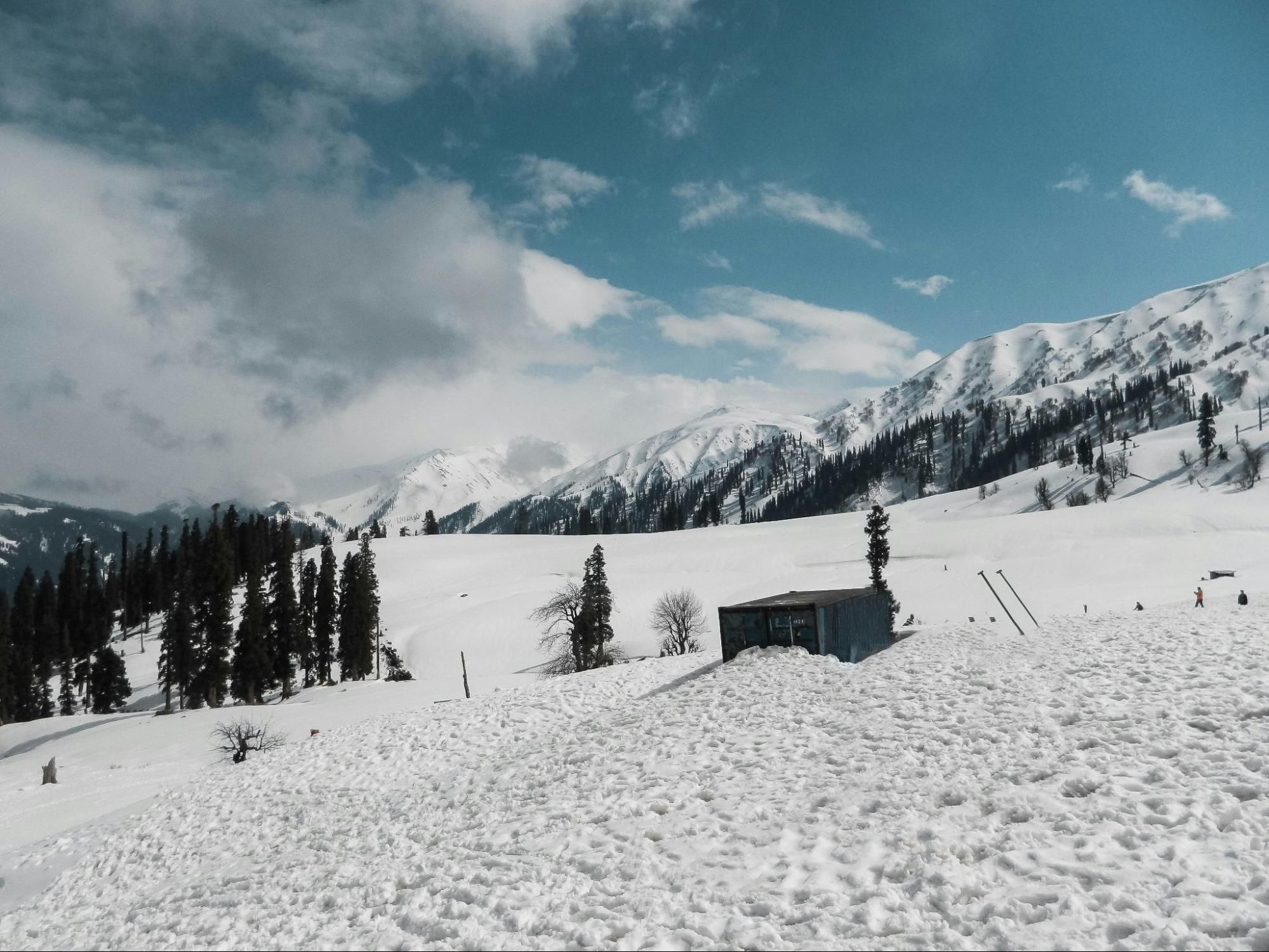 The Gulmarg skiing season runs from December to early March. Surely, since if your main purpose of visiting is skiing, then January and February are the best possible times to spend your holiday around. Besides, the following table will explain different periods and their snow conditions.
Period | Snow Conditions | Best For | Notes |
Early December | Snow starting, coverage patchy | Sightseeing, light snow play | Slopes may not be fully open |
Late December to January | Consistent snowfall, soft slopes | Beginners. Slopes are forgiving, snow is fresh | Peak demand, book ahead |
February to early March | Deepest powder, most reliable coverage | Intermediate to advanced, backcountry | Best powder for experienced skiers |
Late March | Snow melting, patchy conditions | Not recommended for skiing | Season winding down |
Gulmarg in winter gets cold, with January daytime temperatures averaging around 2°C to 5°C. At night, they can drop to around −5°C to −13°C, while higher altitudes can feel even colder. So, it is better to dress in several layers and carry warm gloves and proper eye protection, especially if you plan to head towards the ski areas.
How Much Does Gulmarg Skiing Cost?
Gulmarg skiing is significantly more cost-effective than skiing in Europe or North America. Here's what a day on the slopes typically costs:
Item | Approximate Cost |
Gondola Phase 1 (return) | INR 740 to 810 |
Gondola Phase 2 (return) | INR 920 to 1,010 |
Basic ski equipment rental (full set) | INR 800 to 1,200 per day |
Premium equipment rental | INR 1,500 to 2,500 per day |
Helmet and goggles rental | INR 300 per day |
Ski instructor (2-hour session) | INR 1,500 to 2,500 |
Baby drag lift (beginner slope) | INR 200 to 500 per day |
- For a typical beginner day: gondola Phase 1 + basic equipment + instructor comes to roughly INR 3,000 to 4,500 per person.
- For an experienced skier: gondola Phase 1 and 2 + premium equipment + guide could run INR 5,000 to 7,000 per person.
Note: Prices can vary by season and demand, particularly during the December to January peak. Always confirm current rates at the gondola station or with your ski school before booking.
What Should You Know Before Skiing in Gulmarg?
- Layer your clothing. Gulmarg base is cold. Kongdori is colder. Apharwat is genuinely freezing, even in direct sun. Thermals, a fleece mid-layer and a windproof outer shell are the minimum
- Protect your eyes. Snow glare at altitude can cause snow blindness. Goggles or UV sunglasses are essential, not optional
- Don't skip the instructor if you're a beginner. Falling on a ski slope at altitude is not the same as falling on flat ground. Proper technique keeps you safe
- Check gondola status on the morning you plan to ski. Phase 2 closures happen frequently due to wind. Don't plan your entire day around a Phase 2 run without confirming it's operating
- Altitude sickness is real. At 3,050m (Kongdori) and 3,980m (Apharwat), some people feel dizzy, short of breath or nauseous. Go slow on day one, hydrate constantly, and don't push through symptoms
- Carry cash. UPI and card machines don't always work in Gulmarg. Equipment rental, instructors and most local services prefer cash
- Book the gondola online in peak season. Walk-up queues in December and January stretch past two hours. Online booking through the JKCCC portal saves time
- Negotiate equipment rental. Prices at private rental shops are negotiable, especially for multi-day hires or groups. Government shops are fixed-rate but cheaper
Your Gulmarg Skiing Holiday Starts with the Right Plan
If you have never tried skiing or are simply visiting Gulmarg out of passion for the mountains, it is still worth experiencing this seasonal activity. There are many reasons that make Gulmarg skiing a great choice for visitors: the cost is reasonably affordable, getting there is convenient enough for an impromptu outing, and the activity itself is thrilling and stirs a real sense of excitement.
The guide above covers everything you need to know, from how to get there and what equipment you need to ski passes and instructors, so you can plan your skiing experience in Gulmarg with more ease.
At Holiday Tribe, we build Gulmarg into wider Kashmir itineraries that sequence the gondola day, the ski sessions and the rest of your holiday so everything lands at the right time. Srinagar, Gulmarg, Pahalgam and Sonmarg are planned together with transfers, accommodation and local support.