

The Louvre Abu Dhabi is not your typical museum stop. Opened in 2017 on Saadiyat Island, it was built around a single idea: that art, across every culture and century, is ultimately telling the same human stories. That idea shapes everything about the place, from how the collection is organised to the building itself.
If you are planning a visit for the first time, this Louvre Abu Dhabi visitor guide covers everything you need to know before you go.
Louvre Abu Dhabi at Glance
Location | Saadiyat Island, Abu Dhabi |
Gallery Hours (Tue–Thu) | 10:00 AM – 6:30 PM |
Gallery Hours (Fri–Sun) | 10:00 AM – 8:30 PM |
Dome & Restaurants | Open until midnight |
Closed | Mondays |
Adult Ticket | AED 63 |
Children under 13 | Free |
Recommended Duration | 2 to 3 hours |
What to Expect Inside the Louvre Abu Dhabi Museum?
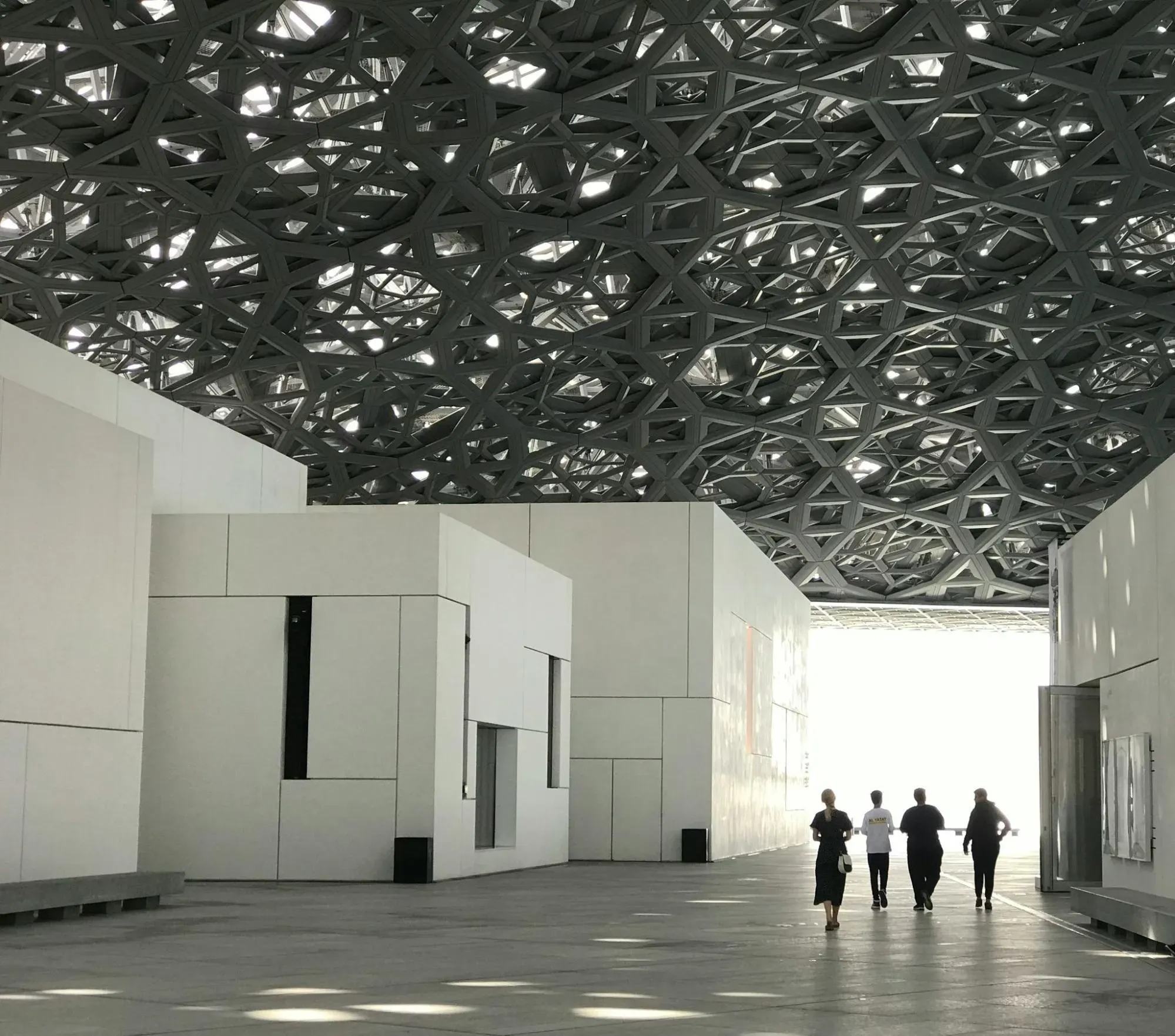
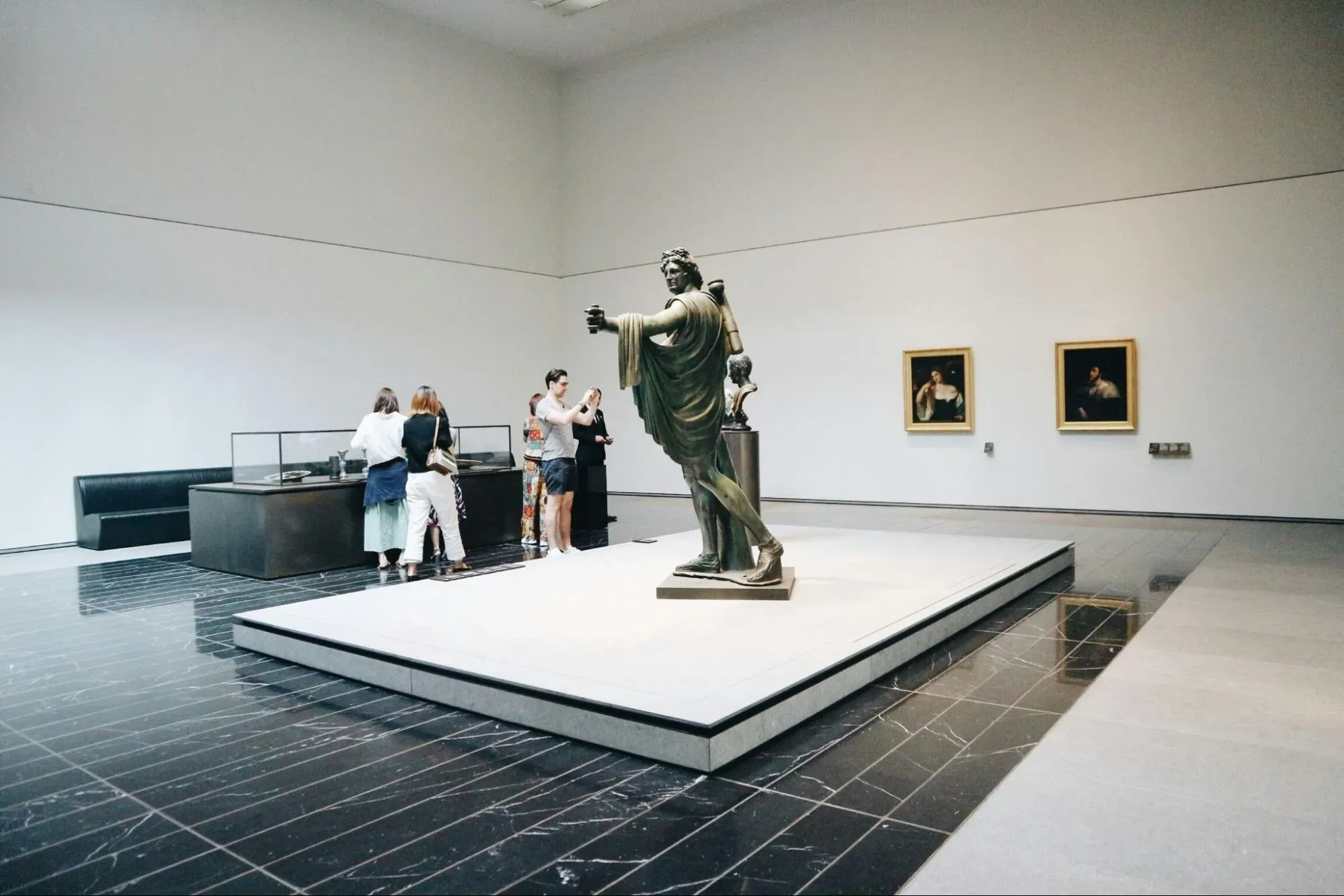
The museum has 23 permanent galleries, and they are not organised by country or time period. Instead, each gallery is built around a universal theme: faith, power, trade, motherhood. Objects from entirely different parts of the world sit side by side, not randomly, but because they are answering the same questions.
It is a format that takes a moment to adjust to, but once it clicks, it makes the collection far more engaging than a conventional museum layout would. You end up making connections you did not expect.
The Islamic art section is one of the strongest parts of the permanent collection. Calligraphy, ceramics, textiles, metalwork; it covers several centuries in genuine depth and is worth setting aside dedicated time for.
The Building
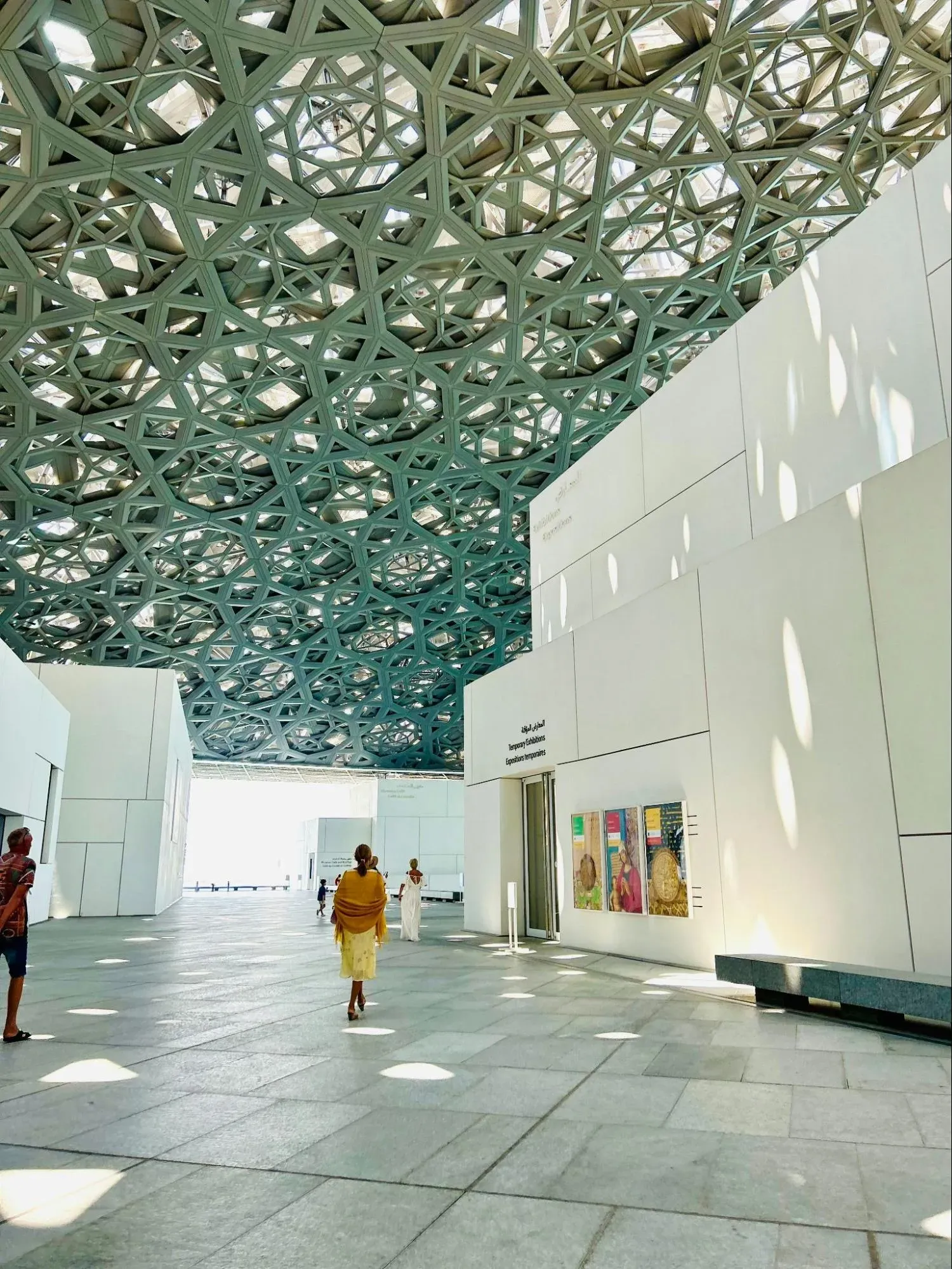
The Louvre Abu Dhabi architecture was designed by French architect Jean Nouvel. The defining feature is the dome: 180 metres wide, built from 7,850 geometric metal stars layered across eight tiers, and held up by four piers hidden within the structure below. From the outside, it appears to float.
Beneath the dome is where the collection lives. Fifty-five connected buildings are arranged around open plazas and shallow pools, all running along the Saadiyat waterfront.
The Rain of Light
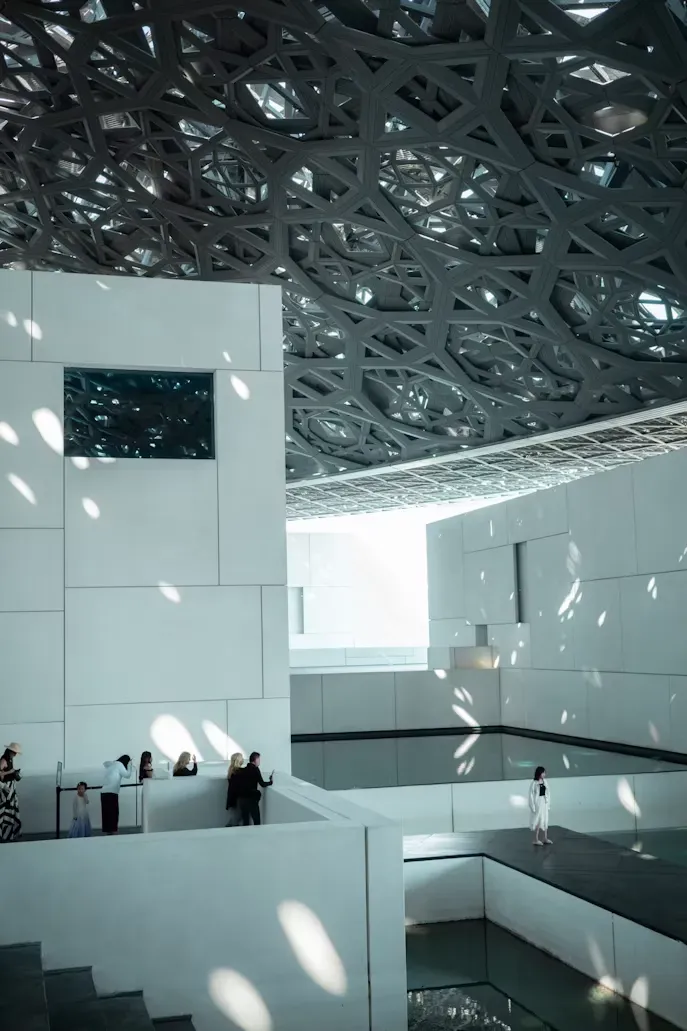
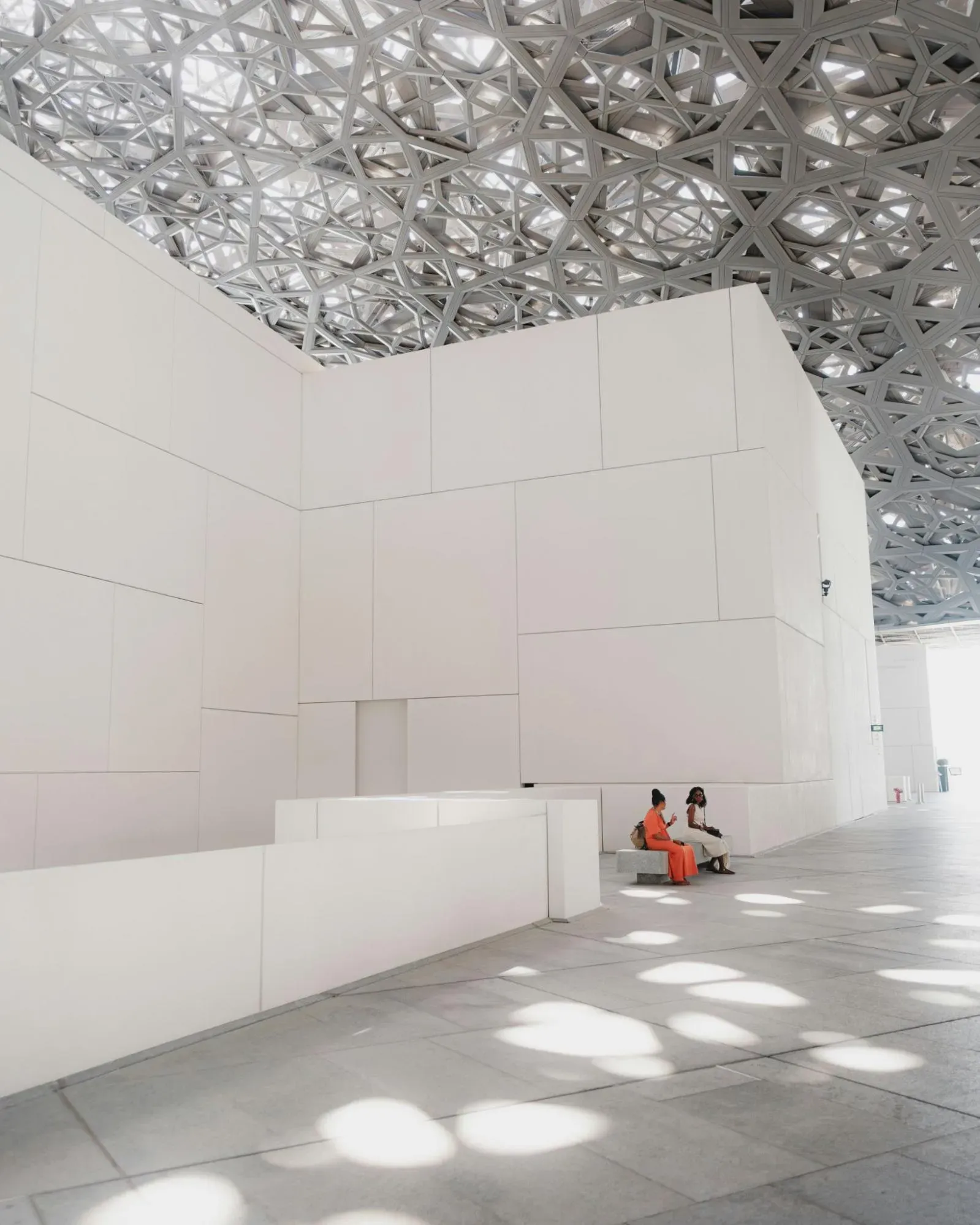
Throughout the day, sunlight filters through the dome's star pattern and scatters shifting pools of light across the plazas below. This is what people mean when they refer to the Louvre Abu Dhabi dome rain of light, and it is the detail most visitors remember long after leaving.
The effect changes with the sun. Late afternoon, when the light comes in at a lower angle, is when the contrast is sharpest. After dark, the dome flips entirely. Lit softly from within, the stars become visible from outside against the night sky.
The Art Collection at Louvre Abu Dhabi
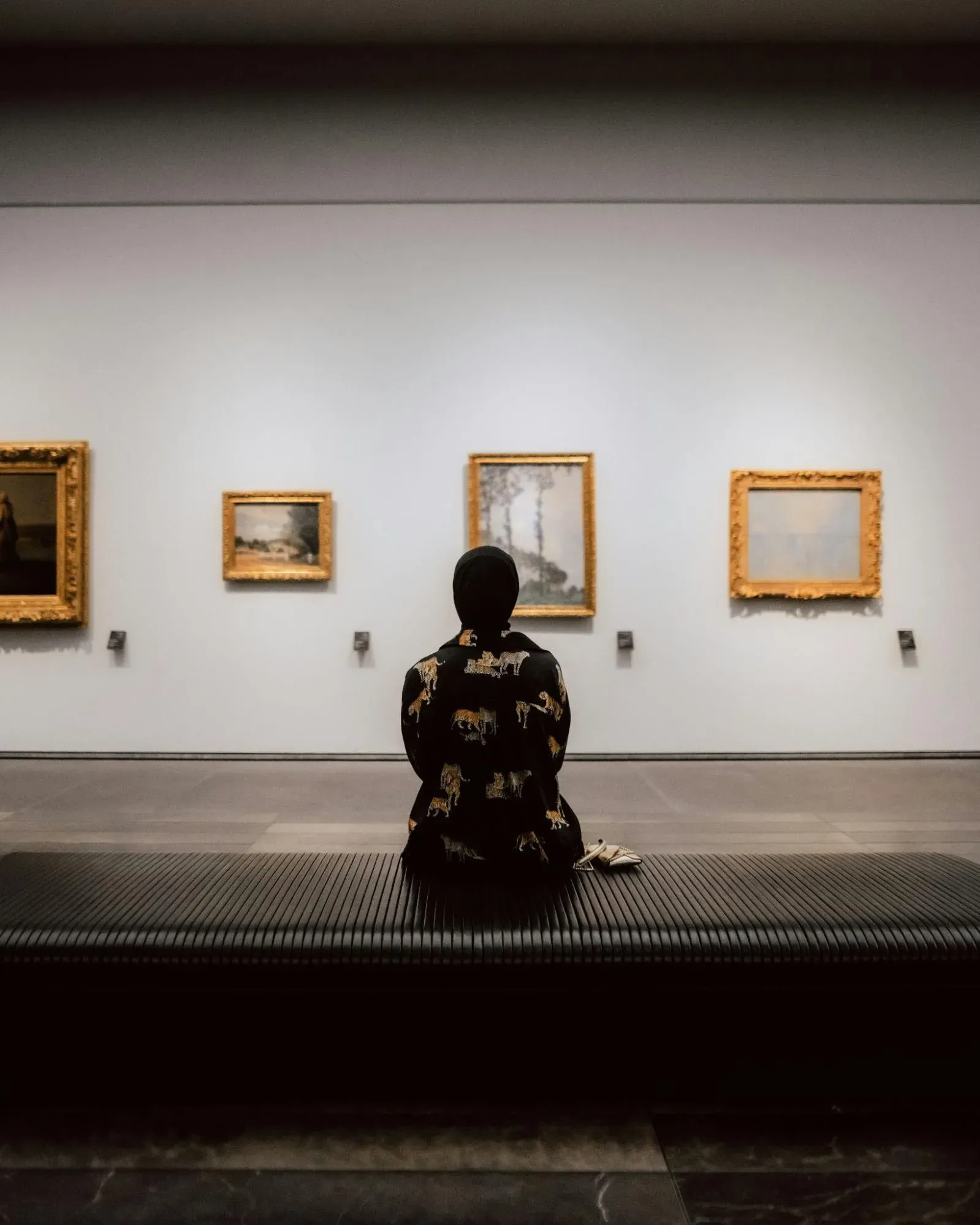
The collection spans from the earliest human settlements to the twentieth century. It includes ancient Egyptian and Mesopotamian artefacts, Islamic art, African and Asian objects, and European paintings, all arranged thematically rather than chronologically.
Alongside the permanent galleries, a dedicated space hosts temporary exhibitions throughout the year. The museum's partnership with the Louvre Paris runs until 2047, which means these shows regularly draw on significant French national collections. It is worth checking what is on before you visit, as it can shape how you use your time.
Louvre Abu Dhabi Tickets and Timings
Tickets are AED 63 for adults whereas, children under 13 enter free. Students with a valid ID qualify for a discount, and UAE residents receive 30% off during the summer months from June to September.
Buying online in advance is the easiest option, especially on weekends or during the peak season between December and March.
One practical detail worth knowing: the dome, outdoor promenade, and restaurants stay open until midnight even after the galleries close. No ticket is needed for that part of the visit. The evening atmosphere under the dome, once the daytime crowd has left, is worth staying for.
Best Time to Visit Louvre Abu Dhabi
For the galleries, Tuesday to Thursday mornings are the quietest. Weekends pick up considerably, especially in the afternoons.
For the dome, late afternoon is the best time. Roughly one to two hours before sunset, the rain of light effect is at its most distinct. If you want both the galleries and the dome at their best, arriving in the early afternoon and staying into the evening covers everything comfortably in one visit.
November to March is the most comfortable season for spending time outdoors. In summer, the interiors are well air-conditioned, but the outdoor areas are hot. The resident discount during those months makes it a good value option if you are based in the UAE.
How Much Time to Spend at Louvre Abu Dhabi?
Two to three hours is enough for the permanent collection at a relaxed pace. Add another hour if you are including a temporary exhibition or the Children's Museum. If you want a meal and time along the promenade, three to four hours total works well. The museum never feels like it demands a full day.
Getting There
- Taxi from Abu Dhabi city centre: around 15 minutes
- By car from Dubai: around 90 minutes via Sheikh Zayed Road
- Free parking on site, open 7:00 AM to midnight
- Water taxi available from Marsa Mina, Abu Dhabi Port
- Free Cultural Express shuttle from Dubai, worth booking in advance
On the Day
- Book tickets online to skip the door queue
- Download the museum app for audio guides in several languages
- Dress modestly and bring a light layer for the air-conditioned galleries
- Photography without flash is allowed in the permanent galleries
- Wheelchairs and strollers are available to borrow from the Loan Desk
- Guided tours can be booked through the official website