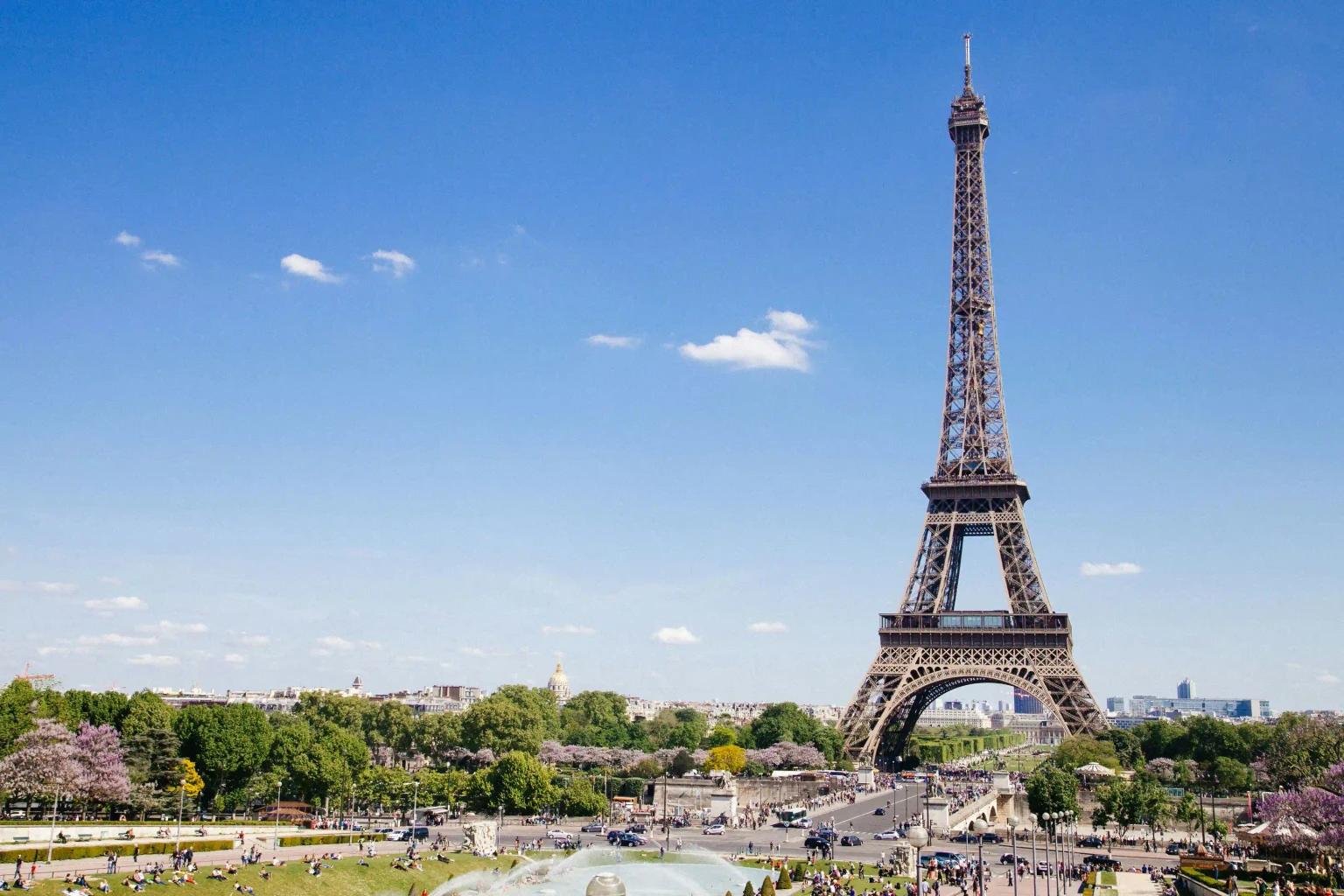


The longer you spend in Paris, the more you notice its many layers. Beyond the famous boulevards, galleries, and riverside walks, the city is filled with buildings that reflect centuries of French history. Some are official landmarks, while others are part of daily life. At the very centre of Paris, on an island in the Seine, stands a place that has been lived on since before France became a nation.
Notre Dame Paris is a must-see for most visitors to France, and after five years of restoration following the fire, it reopened in December 2024. This guide covers the history of Notre Dame Cathedral in Paris, details about the Notre Dame de Paris architects, opening hours, entrance fees, tickets, and the best hotels near Notre Dame Paris.
What Makes the Cathedral of Notre Dame de Paris Significant?
The Cathedral of Notre Dame de Paris stands on the Île de la Cité in Paris’s 4th arrondissement. Each year, about 13 to 14 million people visit, making it one of the world’s most popular monuments. It is both an active Catholic cathedral with daily Mass and a historic site open to the public.
A quick overview:
- History of Notre Dame Cathedral in Paris
- Key Facts About Notre Dame Cathedral in Paris
How a Medieval Cathedral Became a Symbol of Paris
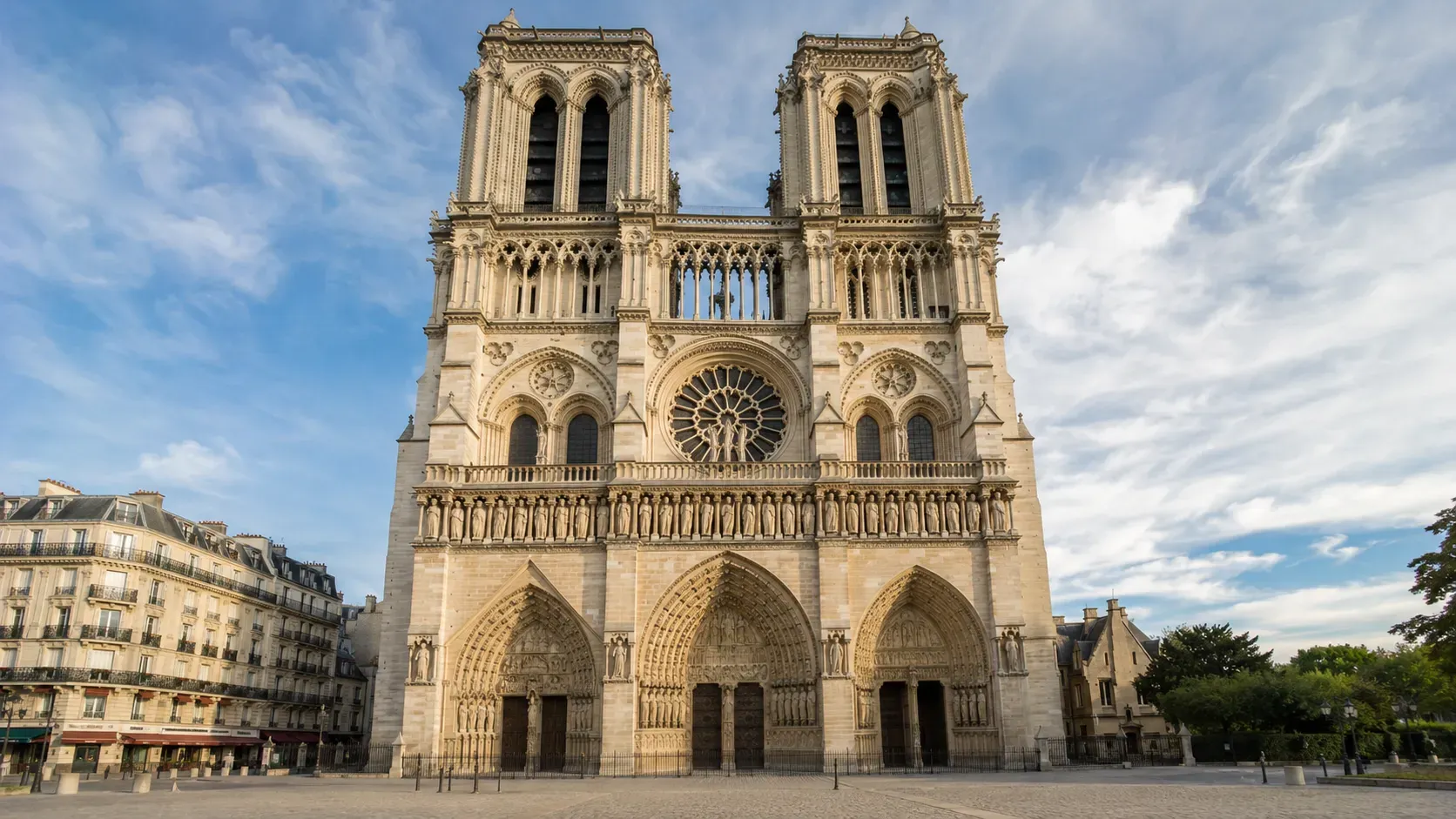
The history of Notre Dame Cathedral in Paris begins in 1163, when Bishop Maurice de Sully commissioned its construction on the Île de la Cité.
- The site had previously held a Roman temple dedicated to Jupiter; the Roman roots of the location gave the island its spiritual significance long before Christianity arrived
- Construction started in 1163 and was largely complete by 1245; the full building was finished by approximately 1345, spanning over 180 years of continuous construction
- During the French Revolution, the cathedral was repurposed as a Temple of Reason; religious symbols were stripped, and many interiors were damaged; it was restored to Catholic use under Napoleon Bonaparte in 1802
- On 15 April 2019, a fire broke out beneath the roof; the medieval oak timber roof was destroyed, the central spire collapsed, and two-thirds of the vaulted ceiling was damaged; over 500 firefighters worked for 15 hours to contain the blaze
- After more than five years of restoration involving over 2,000 craftspeople, the cathedral reopened on 7 to 8 December 2024
The Numbers, Details and Stories Behind the Cathedral
The following facts about Notre Dame Cathedral in Paris cover the architectural and cultural elements that define the building.
Feature | Detail |
Construction dates | 1163 to approximately 1345 (180+ years) |
Location | Île de la Cité, 4th arrondissement, Paris |
Architectural style | Gothic; pioneered use of flying buttresses |
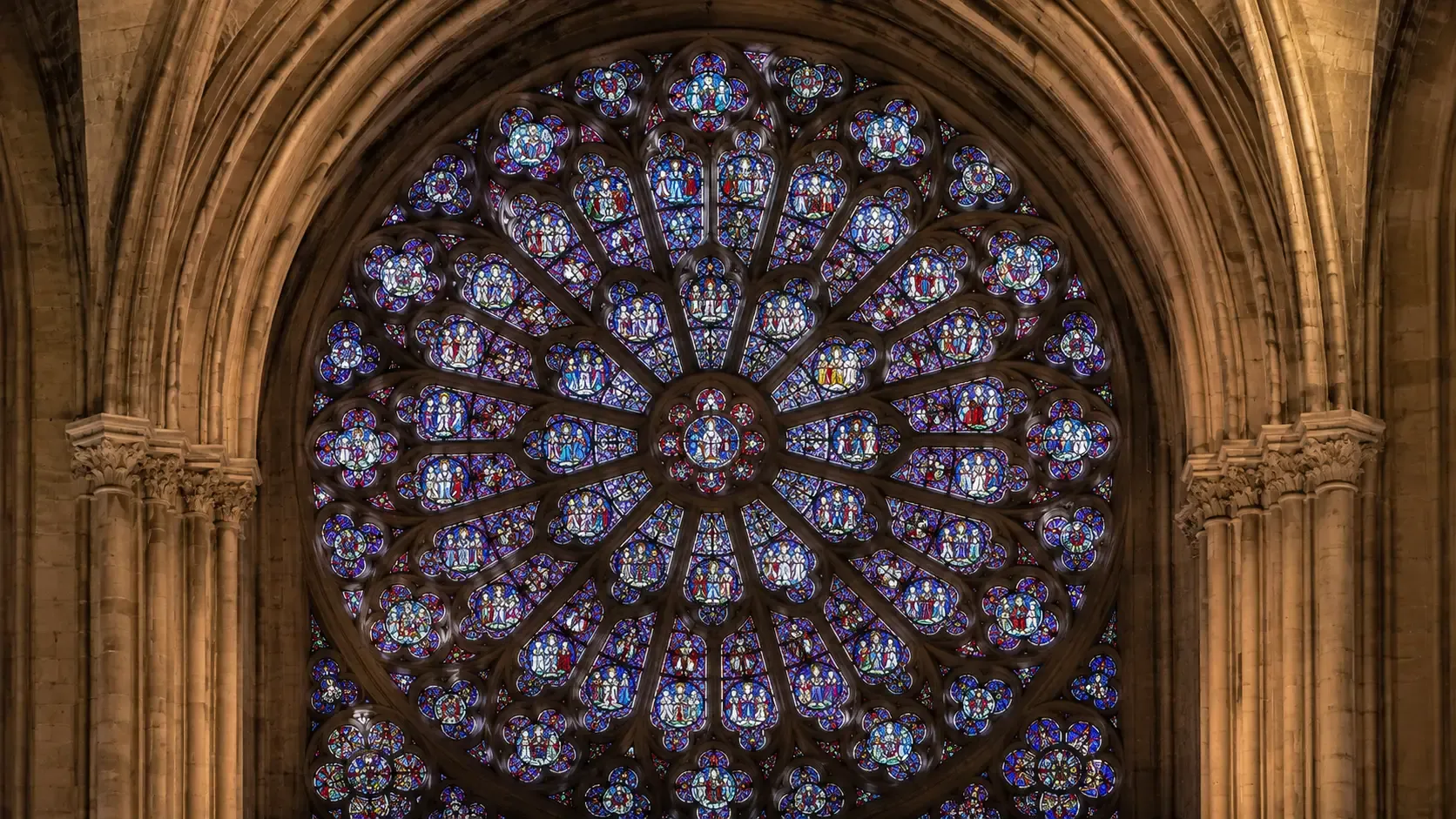
Rose windows | Three: north (1250, largely original), south, and west |
Grand Organ | Nearly 8,000 pipes; one of the largest in the world; survived the 2019 fire |
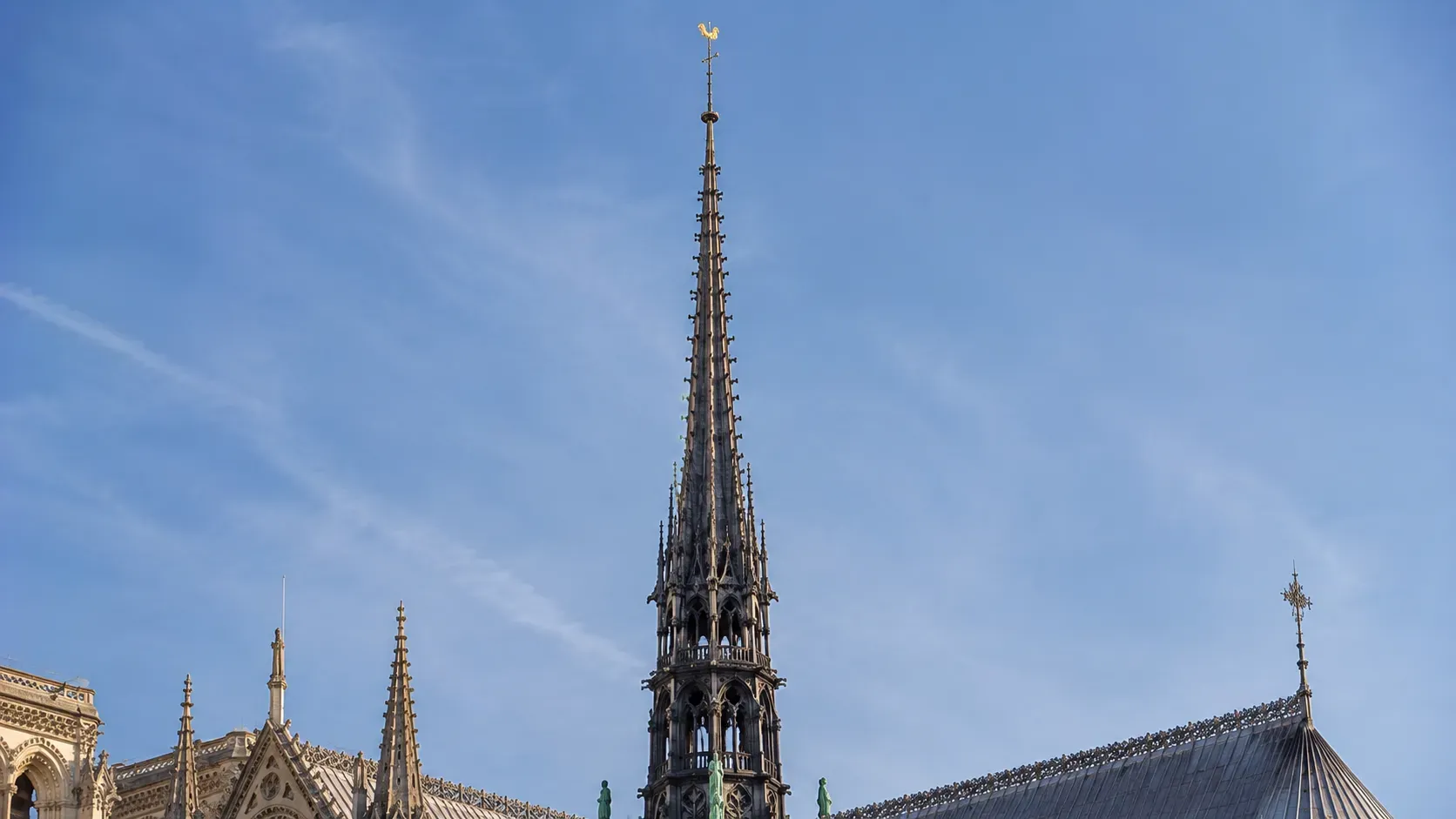
Rebuilt spire | Traditional oak timber; topped with a gilded cockerel; re-erected in 2023 |
Treasury | Holds the Crown of Thorns, medieval chalices, episcopal vestments |
Annual visitors | 13 to 14 million (pre-fire; returning post-2024 reopening) |
Key architectural notes:
- Notre Dame Paris was one of the first large buildings in the world to use flying buttresses as a primary structural element; the external arched supports allowed walls to be built taller and thinner, which in turn allowed for the large stained glass windows
- The three rose windows are among the most significant elements; the north rose window (approximately 1250) is largely original and is considered one of the finest surviving examples of 13th-century stained glass in France
- The famous gargoyle and chimera sculptures that peer over the city from the upper galleries were added during the 19th century restoration; the most recognisable is the Stryge, a winged figure resting its chin on its hands
Who Designed and Restored the Notre Dame de Paris?
The Notre Dame de Paris architects span nine centuries and three distinct phases of the building's life.
Original construction (12th to 14th century):
- Bishop Maurice de Sully commissioned the building in 1163; he was the instigator rather than the designer
- Jean de Chelles contributed significantly in the mid-13th century; he is credited with the northern transept rose window (approximately 1250)
- Pierre de Montreuil worked on the nave and transept chapels through the 1260s and 1270s, refining the interior proportions and adding structural detail
19th-century restoration:
- The most visible layer of Notre Dame Paris today reflects the work of two architects appointed in 1844: Eugène Viollet-le-Duc and Jean-Baptiste-Antoine Lassus
- Viollet-le-Duc designed the iconic central spire that collapsed in 2019; he also added the gargoyle and chimera sculptures that became the cathedral's most photographed features
- The Notre Dame de Paris architects of the 19th century dramatically changed how the building looked; several elements seen today date to this restoration, not to the medieval original
Post-2019 fire restoration:
- Philippe Villeneuve was appointed as the lead architect to supervise the rebuild
- Over 2,000 craftspeople from France and internationally contributed to the work, using traditional methods to match original construction techniques as closely as possible
- The rebuilt spire uses oak timber and is topped with a gilded cockerel, restoring the appearance of Viollet-le-Duc's original design
Period | Key Architects | What They Built or Restored |
12th to 14th century | Jean de Chelles, Pierre de Montreuil | Northern rose window, nave, transept chapels |
19th century | Viollet-le-Duc, Lassus | Central spire, gargoyles, overall Gothic restoration |
Post-2019 | Philippe Villeneuve | Entire post-fire rebuild; new spire in traditional materials |
What Are the Notre Dame Paris Opening Hours and Timings?
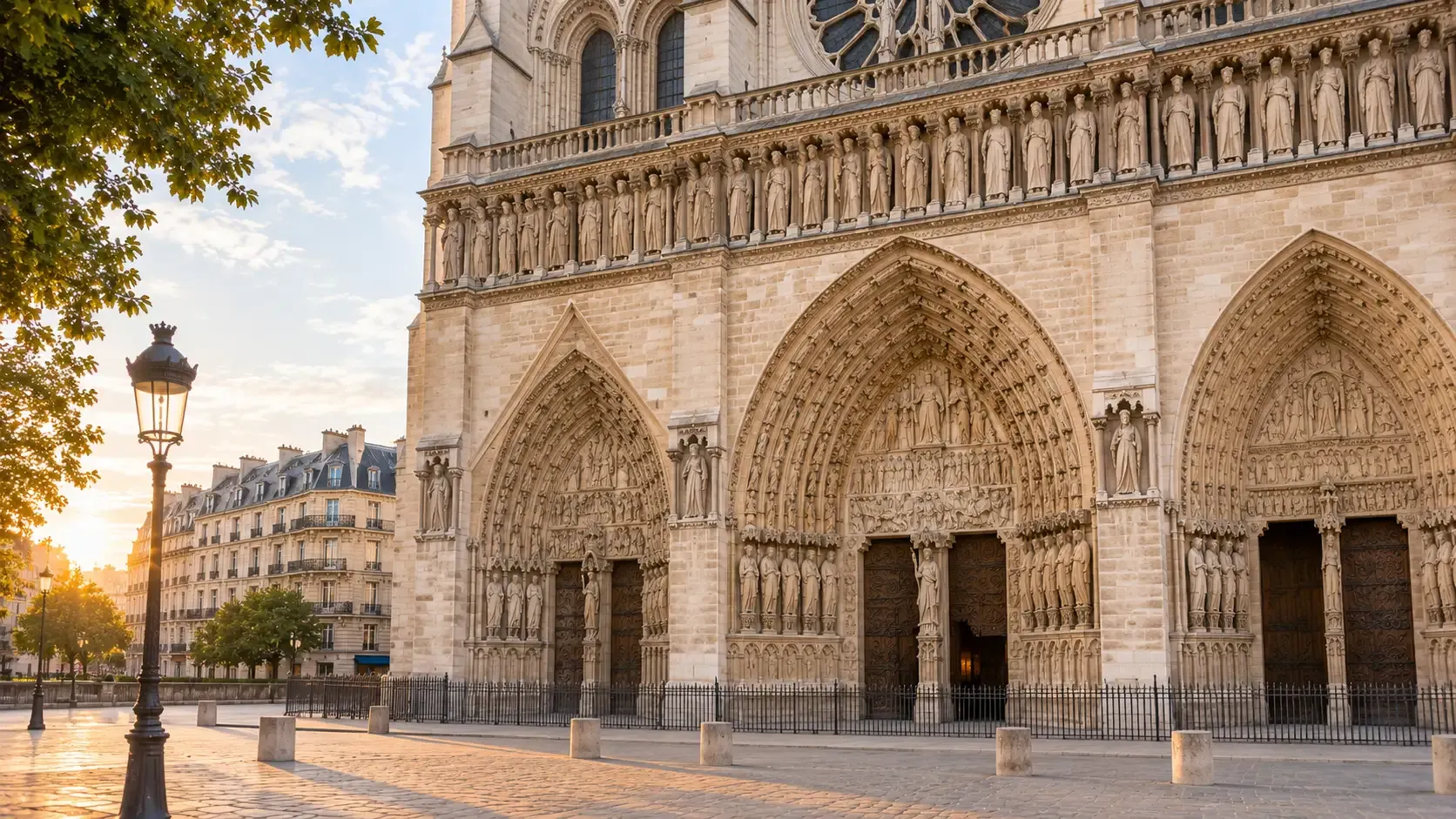
Notre Dame Paris opening hours as of 2026:
Day | Opening Time | Closing Time | Extended Hours |
Monday | 7:50 AM | 7:00 PM | No |
Tuesday | 7:50 AM | 7:00 PM | No |
Wednesday | 7:50 AM | 7:00 PM | No |
Thursday | 7:50 AM | 7:00 PM | Until 10:00 PM |
Friday | 7:50 AM | 7:00 PM | No |
Saturday | 8:15 AM | 7:30 PM | No |
Sunday | 8:15 AM | 7:30 PM | No |
Important Notre Dame Paris timings to know:
- Last entry is 30 minutes before closing; plan for this before building your day around the visit
- The ambulatory (the rear section of the cathedral) begins closing 30 minutes before the main doors; for a full visit, arrive at least one hour before closing
- Thursday evening visits (from 7:00 PM onward) are specifically recommended; the cathedral is open until 10:00 PM and is noticeably less crowded in the final two hours
- The cathedral closes to tourist access during scheduled Masses; timing your visit to avoid these windows will significantly improve the experience
- Notre Dame Paris timings for the bell towers and treasury differ from the main nave; confirm current hours at the official website of Notre Dame de Paris before visiting
What Is the Notre Dame Paris Entrance Fee and Ticket Process?
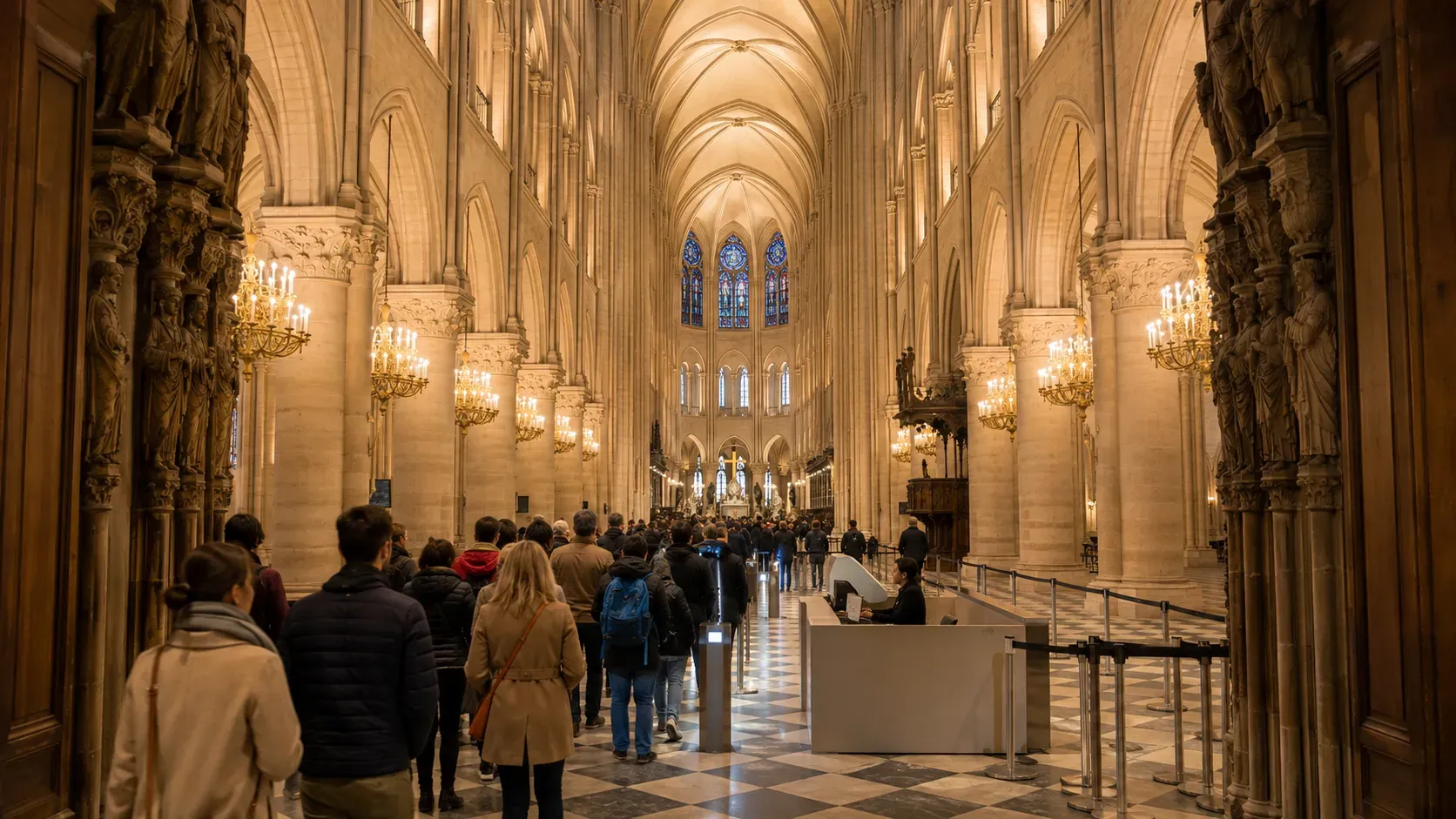
Notre Dame Paris entrance fee breakdown by section (2026):
Area | Admission | Booking Method | Advance Booking Required? |
Cathedral nave (main interior) | Free | Official website | Recommended April to October; not mandatory |
Bell towers | €16 per person | Online only | Yes; no on-site purchase |
Treasury | €12 per adult | On-site only; no advance purchase | No; pay at the door |
Crypte Archéologique | Separate ticketing | Separate venue/website | Confirm before visiting |
On Notre Dame de Paris tickets:
- Cathedral nave (free): Timed reservations for the free nave entry are available at the official website; in peak summer (July to August), walk-in queues can run from 30 minutes to 3 hours; a reserved slot avoids this entirely; booking takes under 2 minutes
- Bell towers (€16): The towers were restored and reopened in January 2025; Notre Dame de Paris tickets for the towers are sold exclusively online and cannot be purchased at the door; they sell out quickly during peak season; book as soon as your travel dates are fixed
- Treasury (€12): Payable on-site only; no advance purchase available; houses the Crown of Thorns, medieval chalices, and episcopal vestments; a new museum-quality presentation was installed for the 2024 reopening
- Crypte Archéologique: Located beneath the square in front of the cathedral; contains Roman-era and medieval ruins from 1960s excavations; operates as a separate venue with its own ticketing
Which Hotels Near Notre Dame Paris Are Best for Visitors?
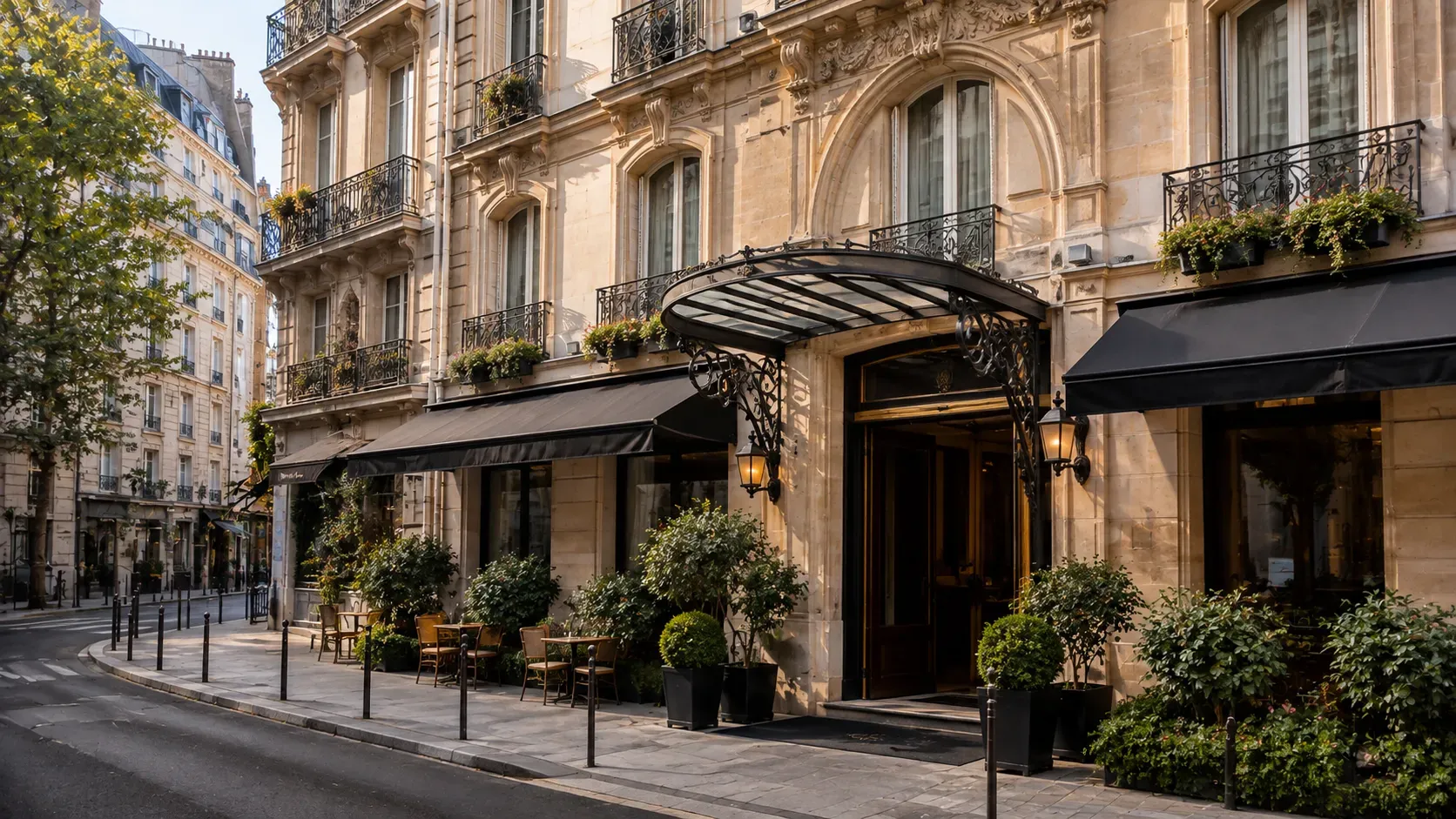
The best hotels near Notre Dame Paris are in three arrondissements, all within 10 to 20 minutes on foot.
Arrondissement | Character | Walking Distance to Notre Dame | Best For |
4th (Marais) | Galleries, Jewish heritage, Place des Vosges | 10 to 15 min | First-time visitors; those wanting a central Right Bank base |
5th (Latin Quarter) | University neighbourhood; brasseries; bookshops | 5 to 10 min | Those combining Notre Dame with a wider Left Bank itinerary |
6th (Saint-Germain-des-Prés) | Boutique hotels, cafes, Luxembourg Gardens | 15 to 20 min | Those combining the cathedral with the Musée d'Orsay |
More on each zone:
- 4th arrondissement (Marais): Closest to the cathedral for Right Bank stays; the Marais is one of Paris's most varied neighbourhoods with galleries, restaurants, and the historic Place des Vosges; Notre Dame, Paris, France, is walkable from most of the Marais's streets
- 5th arrondissement (Latin Quarter): Directly across the river from the cathedral; the closest neighbourhood on the Left Bank; dense with cafes, traditional brasseries, and the Panthéon; a practical base for those visiting the cathedral of Notre Dame de Paris and planning day walks along the Seine
- 6th arrondissement (Saint-Germain-des-Prés): A slightly wider radius but still walkable; home to some of Paris's most character-rich hotels; connects naturally to a south-bank Notre Dame Paris day that includes Sainte-Chapelle, the Conciergerie, and the Musée d'Orsay.
What Should You Know Before Visiting Notre Dame?
A few logistics will make the visit significantly smoother.
- Book your nave slot: Timed reservations for the free cathedral nave entry are available on the official Notre Dame de Paris website; strongly recommended from April to October.
- Dress code: Shoulders and knees should be covered; modest clothing is expected inside the cathedral as it is an active place of worship.
- Book bell tower tickets early: Notre Dame de Paris tickets for the towers are online only and sell out during peak summer; book when you confirm your Paris dates
- Reduced mobility access: Visitors with reduced mobility do not need a reservation and are admitted through a dedicated accessible entrance; confirm the current access point via the official website
- Photography: Personal photography inside is permitted; tripods are not
- Nearby sites for the same day: Sainte-Chapelle (2 minutes walk), Conciergerie (5 minutes walk), and the Crypte Archéologique (directly underneath the square in front of the cathedral) can all be combined in a single morning or afternoon
- Thursday evening: If you cannot secure a daytime reservation, Thursday evenings until 10:00 PM are the quietest access window of the week
Final Takeaway
Notre Dame Paris is now fully open after its biggest restoration in more than 150 years. Entry to the nave is still free, but you need to book a €16 ticket online to visit the bell towers, which reopened in September 2025. For a quieter experience, visit on Thursday evenings or early on weekday mornings. Over nine centuries, many architects have shaped Notre Dame, making it much more than just a photo stop. The cathedral’s story is closely tied to the history of Paris itself. If you want to stay nearby, hotels in the 4th and 5th arrondissements are the most convenient for walking.
If you’re planning a holiday to Paris, France, and want a well-timed itinerary, Holiday Tribe’s advisors can help you plan every detail.