


Ask anyone who's been to Ladakh more than once, and they’ll tell you Pangong Lake looks different every time you see it. The colours in the morning don’t look the same as they do in the evening. There are no physical changes, yet it looks like you’re seeing it for the first time all over again.
This isn’t a camera trick or a filter; it’s the science that plays out at over 13,000 feet, shaped by sunlight, altitude and the water itself. In this guide, you'll learn why the colours shift, what the lake looks like across the seasons, how far it is from Leh, and how to plan your escape so you catch it at its best
Why Does Pangong Lake Change Colour Throughout the Day?
The colour of Pangong Lake Ladakh isn't fixed, and that's exactly what makes it so magnetic. Through the day, the water moves between shades of turquoise, deep blue, grey green and, on rare evenings, a faint hint of red near the horizon. A few things drive this shift, and once you know what to look for, you'll notice it happening in real time.
- Altitude and thin air: The lake sits at over 4,300 metres, where the air is thin and unusually clear, so sunlight hits the water at sharper angles without much interference.
- Sun position: As the sun moves across the sky, the angle of light striking the surface keeps changing, and so does what you see.
- Mineral-rich, saline water: With almost no fish or aquatic plant life, the water stays exceptionally clear, and clear water reflects light very differently from water clouded with sediment.
- Wind and cloud cover: Even small shifts in wind or clouds can change the mood on the surface within minutes.
- Depth: Shallower stretches near the shore often look green or turquoise, while the deeper water toward the centre turns a richer, darker blue.
- The mountains around it: The bare, ochre-toned Changthang peaks reflect their own tones onto the lake, adding to the shifting palette.
What Makes Pangong Lake Leh Ladakh Such a Unique High-Altitude Lake?
Pangong Lake Leh Ladakh isn't just pretty; it's truly one of a kind. Sitting at roughly 4,225 to 4,350 metres above sea level, it's counted among the highest saline lakes anywhere in the world.
The lake stretches about 134 kilometres end to end, though only around a third of that length lies within India, with the rest extending into the Tibetan plateau across the border.
Despite being brackish water, Pangong freezes solid every winter, which is unusual for a saline lake and adds to its reputation as a place that keeps surprising visitors. It has no outlet, so whatever enters through glacial melt stays, concentrating the minerals that give the water its unusual clarity and colour.
That same clarity is also why it supports almost no fish, though bar-headed geese, Brahminy ducks and black-necked cranes pass through in the warmer months.
Here's a quick look at the lake in numbers:
Feature | Details |
Altitude | ~4,225–4,350 m (13,860–14,270 ft) |
Length | ~134 km |
Width (widest point) | ~5 km |
Water type | Saline, brackish |
Share in India | Around one third |
Freezes in winter | Yes, completely |
The lake shot to global fame after appearing in 3 Idiots. But locals in the Changthang region have long considered it sacred, associated with purity and calm, much like the water itself.
How Far Is Pangong Lake from Leh, and How Do You Get There?
The Ladakh to Pangong Lake distance from Leh works out to roughly 150 to 160 kilometres, and it takes about five to six hours to cover by road. That might sound long for the distance, but the route itself is half the experience.
Most vehicles head out via Karu, then climb to Chang La Pass at around 5,360 metres, one of the highest motorable passes in the world. From there, the road drops through Durbuk and Tangtse before finally opening up to your first glimpse of the lake near Spangmik village.
Leh's Kushok Bakula Rimpochee Airport is the nearest gateway if you're flying in. Travellers coming from Nubra Valley can also connect to Pangong via an alternate route, though it takes longer and adds a full extra day.
A few points before you set off:
- Hire a taxi from Leh or join a small group, since self-driving on this stretch needs prior high-altitude driving experience.
- Carry your Inner Line Permit, which is mandatory for this route and easy to arrange through your operator or the DC office in Leh.
- Spend at least two days acclimatising in Leh before attempting the drive, since Chang La sits well above 5,000 metres.
- Keep warm layers in the car even in summer, as temperatures at the pass can be far colder than in Leh town.
Tribe Travel Tip: Start by 6 AM so you reach the lake in soft morning light, with the whole day still ahead of you.
When Is the Best Time to Visit Pangong Lake Ladakh?
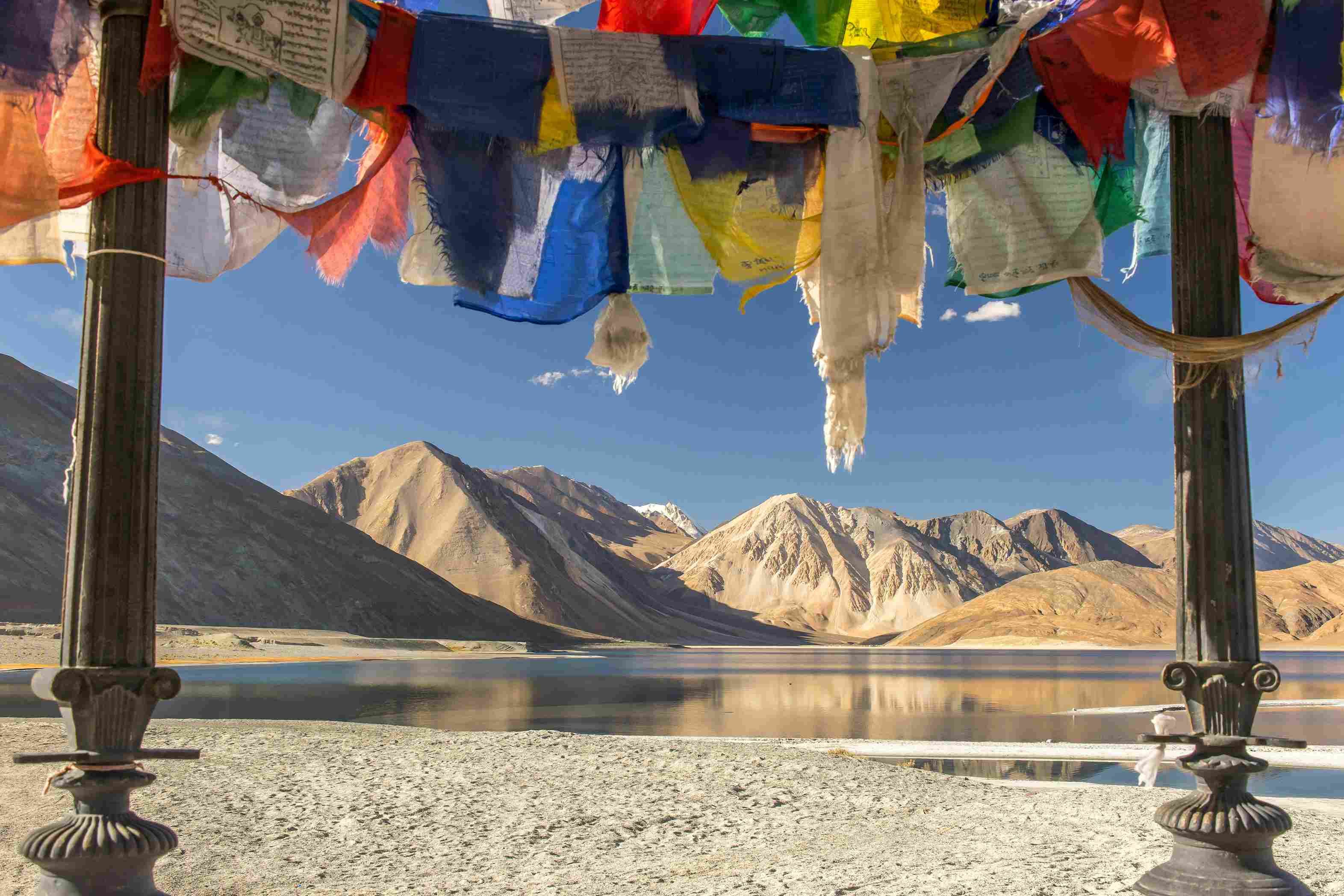 The best time to visit Pangong Lake Ladakh is between May and September, when roads are open, temperatures are manageable, and the lake sits in its most vivid blue.
During these months, daytime temperatures are usually between 5°C and 20°C. Nights remain cold, even in the middle of summer, so you will always need warm layers.
Here is what you need to keep in mind regarding the weather:
- June to August: Peak season, with the clearest skies and the busiest campsites.
- September: A quieter, equally scenic window, with cooler air and fewer people jostling for the same photo spot.
- Early October: Still workable if you don't mind temperatures dipping toward freezing after sunset, though most tented camps start closing by month-end.
- Monsoon effect: Rain is rarely a concern here even during the monsoon months elsewhere in India, since Ladakh sits in a rain shadow.
- For photography: Aim for June to August, when clear skies give you the sharpest reflections and the strongest colour contrast between the water and the mountains.
Here’s a quick look at what you can expect from each season:
Season | Months | Avg. Temperature | What you Can Expect |
Summer | May–Sept | 5°C to 20°C | Vivid blue lake, open roads, peak crowds |
Autumn | Oct | 0°C to 10°C | Fewer tourists, camps starting to close |
Winter | Nov–Mar | -25°C to -5°C | Lake fully frozen, roads often shut |
Spring | Apr–early May | Below 10°C | Quiet, landscape still thawing |
What Does Pangong Lake Ladakh Look Like in Winter?
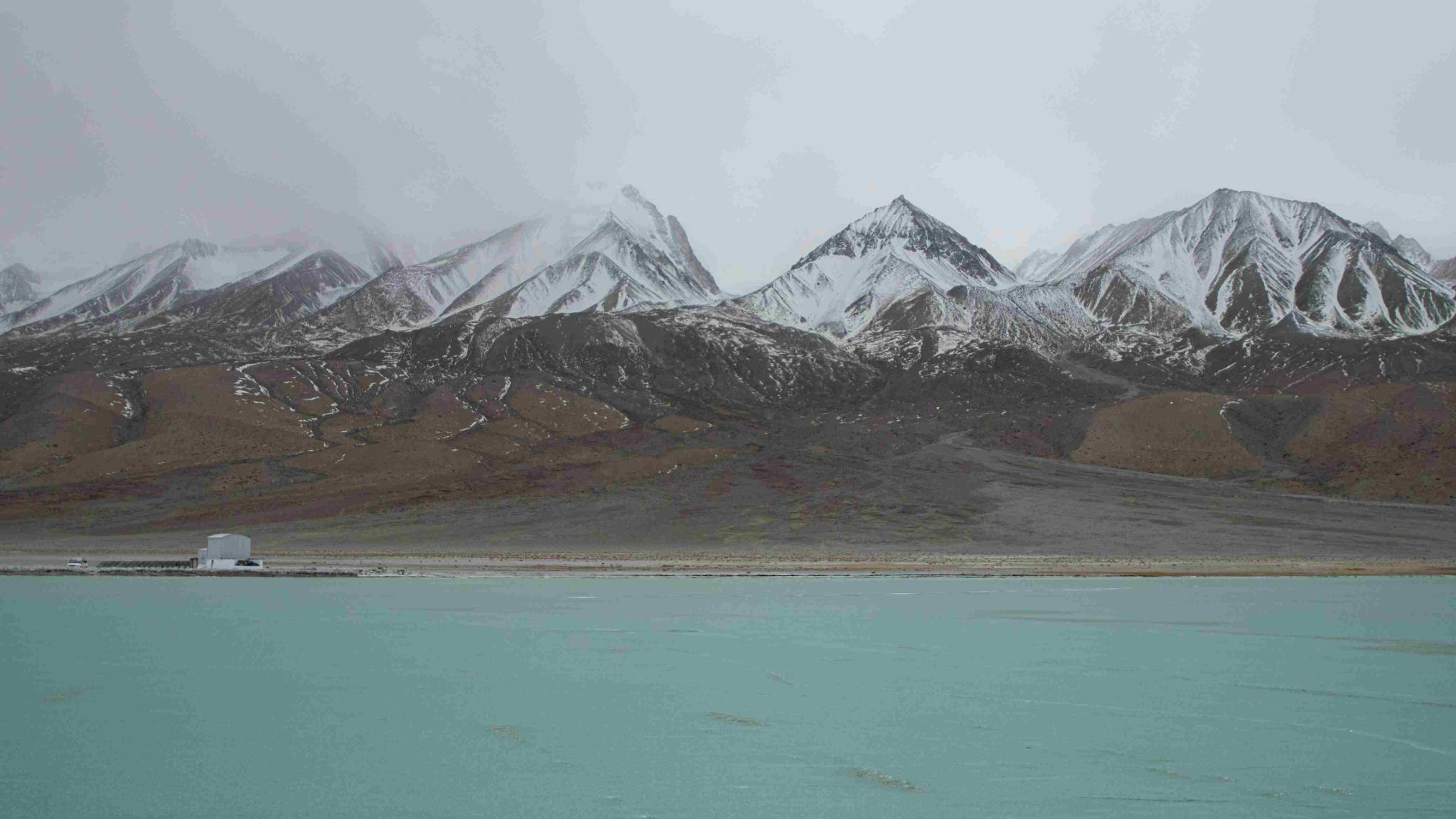 Pangong Lake Ladakh in winter is a completely different destination. From November to March, the lake freezes over entirely, turning into a thick ice sheet strong enough to hold people, and in the coldest months even vehicles in certain stretches. Temperatures regularly drop to -20°C or lower, and the passes leading to the lake are frequently closed after heavy snowfall.
Very few travellers make this journey. Watching the same lake that dazzles in summer turn into a silent, white expanse, one that locals have quietly witnessed for generations.
What you need to keep in mind:
- Most tented camps close by October, leaving only a few basic homestays in villages like Spangmik.
- Roads can close without warning, and mobile networks are unreliable.
- Altitude sickness risk goes up in the extreme cold, so this escape suits experienced high-altitude travellers more than first-timers.
Tribe Travel Tip: If winter is when you’re planning to visit, build extra buffer days into your plan, since road closures near Chang La can delay both your arrival and your return.
Where Can You Stay Near Pangong Lake Ladakh?
Don't expect luxury hotels in Pangong Lake Ladakh. This is remote, high-altitude terrain, and accommodation reflects that. What you'll find instead is a mix of tented camps and simple homestays, most of them clustered around Spangmik village, about 14 kilometres from the lake's main viewpoint.
Spangmik is the most popular place to stay, offering the biggest selection of camps and great lake views just outside your door. If you prefer a quieter spot, Man village and Lukung are good options, but keep in mind that their facilities are simpler.
Here’s what each area near Pangong offers you:
Area | Distance from Pangong Lake | What they offer |
Spangmik | ~14 km | Most camps, best views |
Man | ~7 km | Quieter, fewer options |
Lukung | Close to lakeside | Simple stays, no frills |
Most camps use generators for electricity, usually for just a few hours each day. Hot water is often provided in buckets instead of showers. There are no ATMs near the lake, so be sure to bring enough cash for your whole vacation.
Conclusion
Whether you’re planning on seeing the Pangong Lake change colours or watch it be frozen solid, this stretch of water has something for you in every month of the year.
Getting there takes some planning, and that’s where Holiday Tribe comes in, with customised Ladakh travel packages that cover everything you want to see as well as stays,transfers and optional flight add-ons. Get in touch to book your escape today.