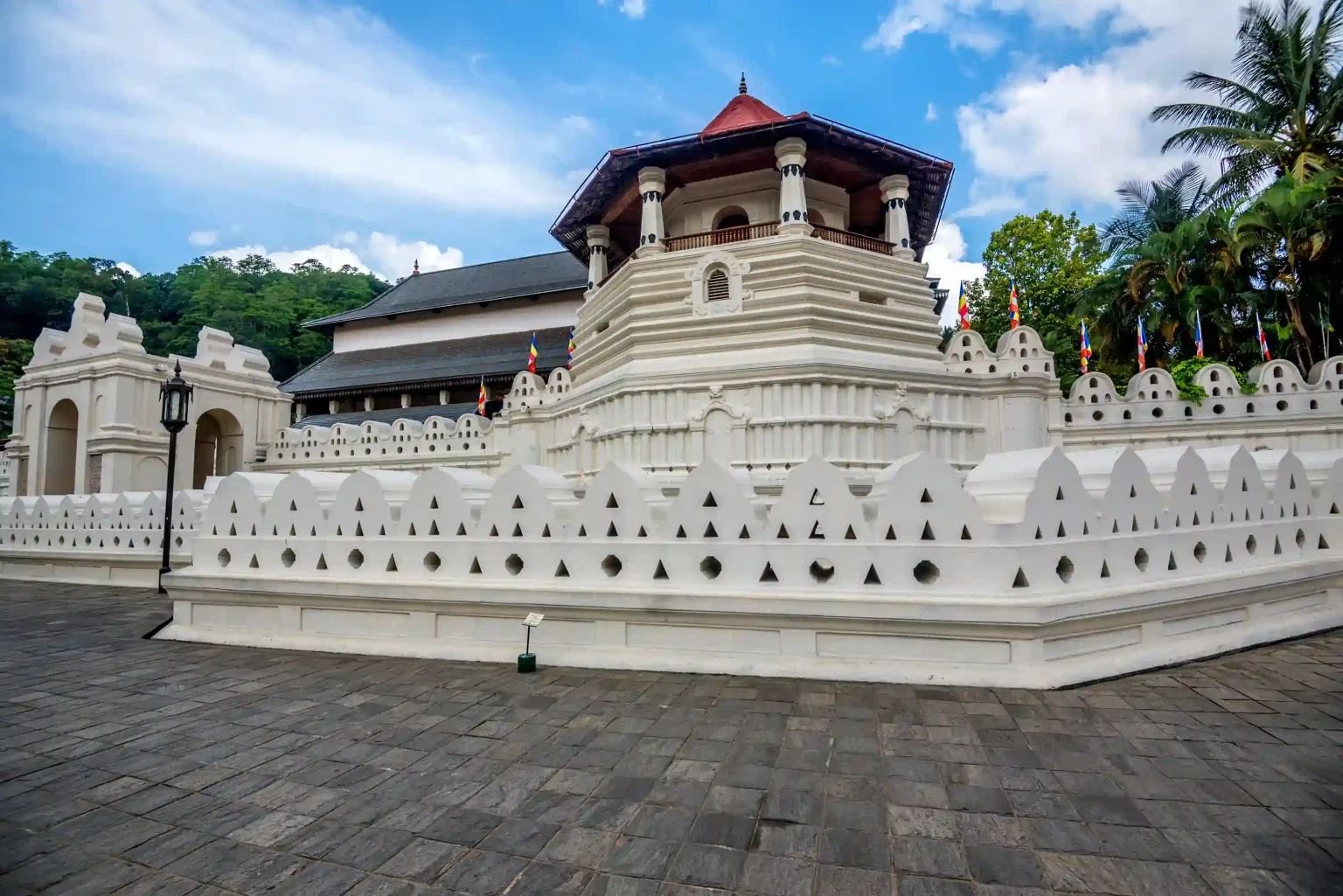


A short drive outside Ho Chi Minh City sits one of Vietnam's most talked-about sites, a network of underground tunnels that once stretched all the way to Cambodia. Walking through the Cu Chi Tunnels feels different from most tourist stops. You see booby traps built by hand, tiny openings barely wide enough for a person to fit through, and rooms once used for cooking and hiding. This guide walks you through what to expect, what it costs, and how to plan the visit properly.
What is the Cu Chi Tunnel and Why Do They Matter?
The tunnels were first dug by hand in the late 1940s, during the fight against French colonial forces. Small groups used them to travel between villages without being noticed. When the Vietnam War began, the tunnel network expanded quickly.
Era | What Happened | Tunnel Network Size |
Late 1940s | Dug during the war against France | Short, local sections |
1960s | Expanded during the Vietnam War | Grew to roughly 200 km |
By 1965 | Linked several villages into one system | Around 200 km, reaching toward the Cambodian border |
Peak network | Used for hiding, planning and moving supplies | Estimated 250 km total |
The tunnels had kitchens, sleeping areas, and meeting rooms underground. During heavy bombing, families sometimes stayed there for days. Because of this, many visitors leave these tunnel networks seeing the Vietnam War in a new way.
Read Also: Vietnam Visa Guide for Indian Travellers
Ben Dinh vs Ben Duoc: Which Tunnels Site Should You Visit?
Only two parts of the tunnel system are open to visitors. Each one gives a different experience of the Cu Chi Tunnels, Vietnam. So it helps to know the difference before booking.
Site | Distance from HCMC | Tunnel Style | Best For |
Ben Dinh | About 50 km | Widened, concrete-lined tunnels | First-time visitors, families, easy access |
Ben Duoc | About 70 km | Larger, dirt-path tunnels, less crowded | Travellers wanting a quieter, more authentic feel |
Ben Dinh Tunnels
Most groups find this tunnel more suitable. It's also the nearest to the site. The tunnels here have been widened for comfort, and the paths are easy to walk. It suits families and travellers who want a simpler visit without long lines or narrow crawling.
- Address: TL15, Phu Hiep, Cu Chi District, Ho Chi Minh City
- Timings: Daily, 7:00 AM to 5:00 PM, ticket counter closes at 4:00 PM
Ben Duoc Tunnels
Fewer people get drawn to this site, as it sits further out. The tunnels here stay closer to their original size, and some deeper sections have no lighting. It also holds a memorial temple listing the names of soldiers who died in the area.
- Address: Phu My Hung Hamlet, Phu Hiep Commune, Cu Chi District, Ho Chi Minh City
- Timings: Daily, 7:00 AM to 5:00 PM, ticket counter closes at 4:00 PM
What Actually Happens on a Cu Chi Tunnels Tour?
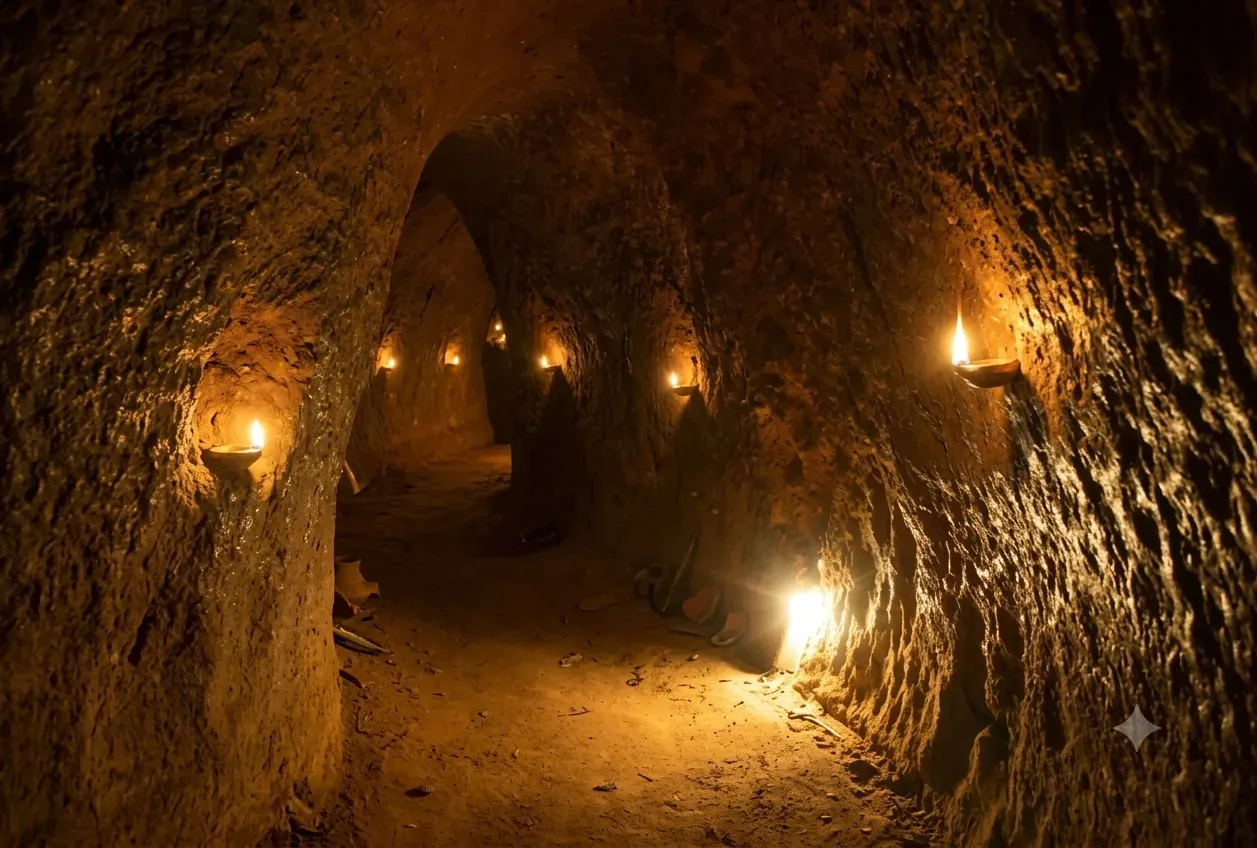 A typical Cu Chi Tunnels tour follows a set pattern, whether you join a group or hire a private guide.
- You’ll start with a short film that introduces the history of the site.
- A guide will show you maps that explain the full layout of the tunnels.
- You’ll watch demonstrations of booby traps, which were designed to wound instead of kill.
- You’ll visit underground rooms that display cooking areas, places where weapons were made, and rest spots.
- You’ll have a chance to crawl or walk through a real tunnel section, usually about 100 to 150 meters long.
- At a small rest stop, you can try steamed tapioca and tea: the same simple food that fighters ate back then.
- If you want, you can visit a shooting range and try firing old rifles for an extra fee.
Tribe Travel Tip: Arriving between 7:00 and 8:00 AM can make the waiting time at each stop short.
Read Also: Things To Do In Vietnam
How Much Does the Cu Chi Tunnels Entrance Fee Cost?
The Cu Chi Tunnels entrance fee stays roughly the same at both sites, though small differences can apply.
Item | Cost | Notes |
Entrance fee | Around 110,000 to 125,000 VND per person | Covers site access, film and guided walk |
Shooting range | Around 55,000 to 60,000 VND per bullet | Minimum purchase usually applies |
Parking (motorbike) | 5,000 to 10,000 VND | If you're driving yourself |
Parking (car) | 20,000 to 30,000 VND | If you're driving yourself |
Children under 7 usually enter free. Ticket counters mostly accept cash only, so carry small notes in Vietnamese Dong before you arrive.
How Do You Get from Ho Chi Minh City to Cu Chi Tunnels?
Getting from Ho Chi Minh to Cu Chi Tunnels takes a bit of planning, since the route runs through busy roads out of the city.
Transport Mode | Travel Time | Approximate Cost |
Guided tour (group) | 1.5 to 2 hours each way | $15 to $25 per person, often includes fee |
Private car or Grab | 1 to 1.5 hours each way | $40 to $60 round trip |
Public bus | 2 to 3 hours each way | Very low cost, slowest option |
Most visitors choose a guided tour, since it includes transport, entry, and an English-speaking guide who explains what you're actually looking at along the way.
Guided Tour vs Visiting on Your Own, Which Is Better?
It’s possible to visit the Cu Chi Tunnels on your own. You just pay at the entrance, and a site guide will join your group. Still, most travellers and travel guides say that having a good English-speaking guide really improves the experience.
- Self-visiting: You control your own timing and pace, and it usually costs less overall
- Guided tour: Includes transport, entry, and a dedicated English-speaking guide who explains the history at each stop
- What gets lost without a guide: The site guides assigned at the gate often have limited English, and a lot of the deeper history behind the booby traps, tunnel life, and battles fought here doesn't come across without proper explanation
- Best for: A guided tour is best for first-time visitors or anyone who doesn’t know much about the Vietnam War. The tunnels themselves don’t tell the full story without some background.
A good guide turns a simple walk through old tunnels into an actual understanding of how people lived and fought underground for years. That context is really the whole reason to visit the Cu Chi Tunnels in the first place.
What Is the Best Time to Visit the Tunnels?
Weather changes the experience here more than most visitors expect, since the paths and tunnel floors are open to rain, wind, and sun.
Season | Months | Conditions |
Dry season | December to April | Dry ground, easier walking, most comfortable overall |
Early rainy season | May to July | Occasional showers, ground starts turning muddy |
Peak rainy season | August to October | Heavy rain, muddy paths, flash flooding possible in lower tunnel sections |
Late rainy season | November | Rain easing off, ground still soft in places |
December to April are the closest to a perfect window for a visit. The ground remains dry, making both walking and crawling convenient.
Read Also: Timing Your Vietnam Holiday Right: A Seasonal Guide for You
What Should You Know Before Crawling Through the Tunnels?
A few practical points make the visit smoother.
- The crawl sections are tight, so anyone uncomfortable in small spaces should stick to walking-only paths
- Wear closed shoes and clothes you don't mind getting a little dusty
- Some sections at Ben Duoc have bats, which is normal and not a safety concern
- Bring water, since the site has limited shade and can get warm quickly
Before You Go
You can get a real closure look at how people lived and fought underground during the Vietnam War by visiting Cu Chi Tunnels. Expect narrow crawl spaces, real booby traps, and underground rooms once used for cooking, resting, and hiding for days at a time. At Holiday Tribe, our advisors can build the right tour, transport, and full Vietnam itinerary around your dates, and handle your holiday visa too, so the planning stays simple from start to finish.