

Kenya is in East Africa, right on the equator, between the Indian Ocean and the Great Rift Valley. The country has a wide range of landscapes, from high mountains and coral reefs to dry deserts and open savannah in the southwest. Among all of Kenya's wildlife areas, one stands out above the rest.
The Masai Mara, Kenya, is a 1,510 square kilometre protected reserve in Narok County and is the northern part of the Greater Serengeti-Mara Ecosystem. In this guide, you'll find information about the Masai Mara National Reserve, Kenya, the Great Migration, safari tours, hot air balloon rides, safari costs, and the area’s top resorts.
What Is the Masai Mara National Reserve Kenya?
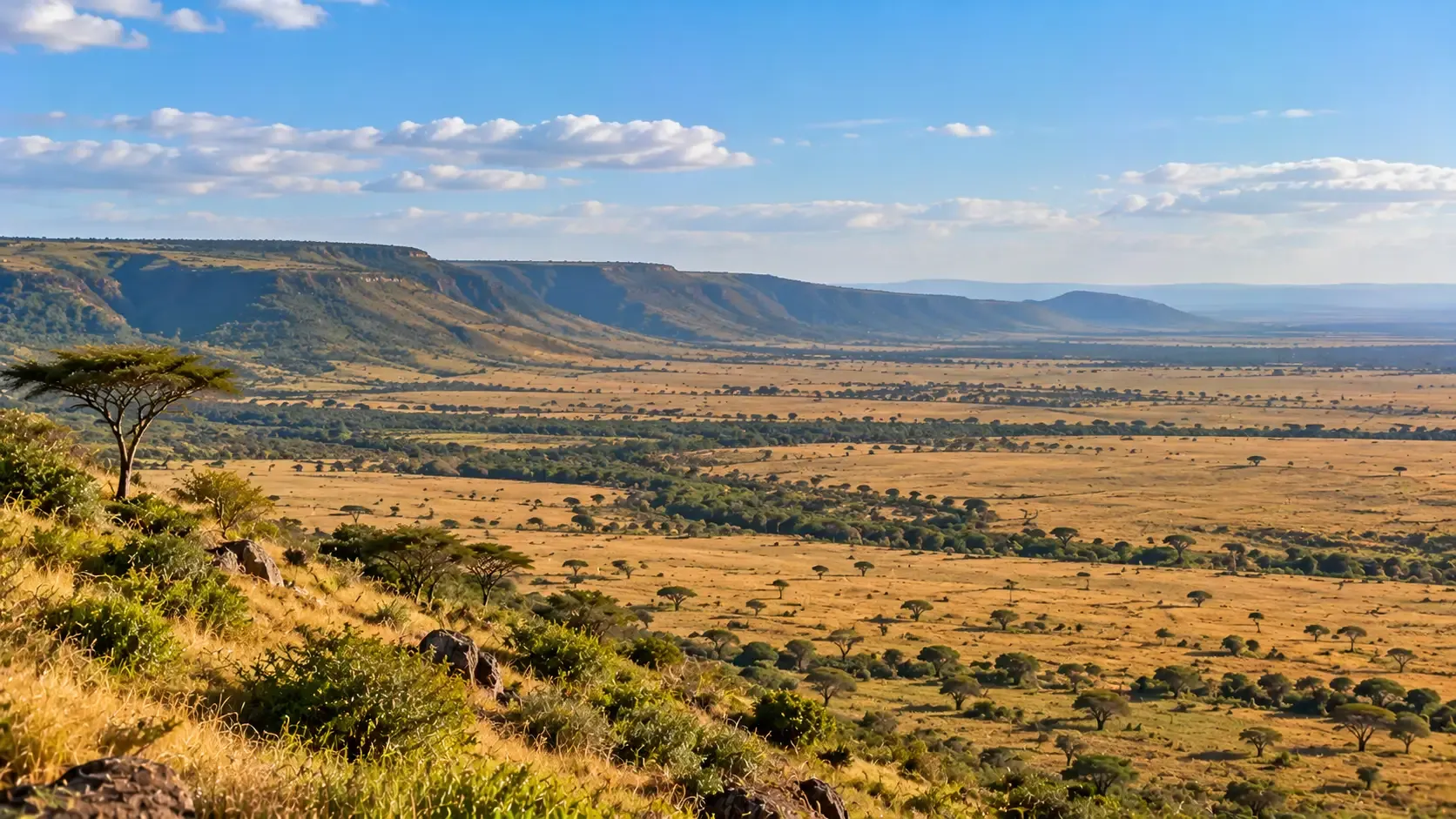
The Masai Mara National Reserve Kenya sits 270 km northwest of Nairobi in Narok County; the reserve was established in 1961 and gazetted as a national reserve in 1974. The Narok County Government manages it, while the Mara Conservancy manages the western Mara Triangle separately.
Together with Tanzania's Serengeti, the Masai Mara, Kenya, forms the Greater Serengeti-Mara Ecosystem, a 25,000 km² transboundary wilderness that lets wildlife move freely across the Kenya-Tanzania border year-round.
Travelling from Nairobi to the Masai Mara is easy. You can drive, which takes about 6 to 7 hours depending on stops and road conditions, or you can fly from Wilson Airport in Nairobi. The flight takes about 45 minutes and lands at airstrips like Ol Kiombo, Musiara, and Keekorok.
You can enter the reserve through gates like Ololaimutia, Sekenani, Talek, and Musiara. In 2026, park entry fees for non-resident adults will vary by season: low season (January to June) and peak season (July to December).
Detail | Information |
Area | 1,510 km² (protected reserve) |
Location | Narok County, southwestern Kenya |
Established | 1961; gazetted as National Reserve in 1974 |
Part of | Greater Serengeti-Mara Ecosystem (25,000 km²) |
Managed by | Narok County Government (Mara Triangle: Mara Conservancy) |
Road access | ~270 km from Nairobi; 6 to 7 hours drive |
Air access | ~45 min from Wilson Airport Nairobi |
Entry gates | Ololaimutia, Sekenani, Talek, Musiara |
What Animals Will You See on Safari Here?
The Masai Mara, Kenya, has some of the highest wildlife density in Africa. Because the reserve is not very large, animals are easier to spot, and you can expect plenty of wildlife even on a short visit.
The Big Five and Year-Round Wildlife
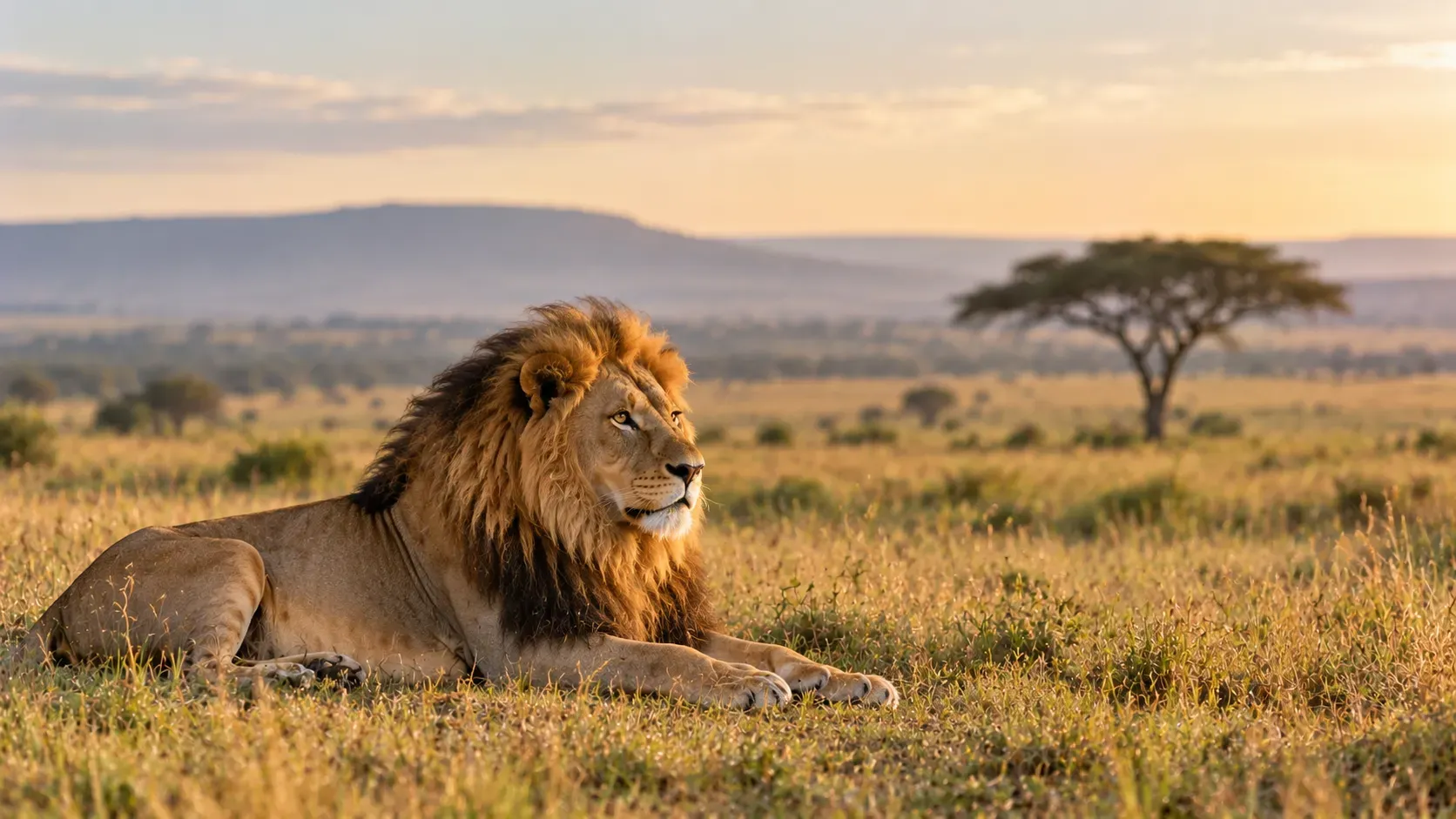
Masai Mara Kenya supports all of Africa's Big Five and some of the continent's highest big cat density.
- Lions: Large prides; one of the most reliably sighted predators in the reserve; frequently seen on kopjes (rocky outcrops) and in open grassland.
- Leopards: More elusive but regularly spotted in riverine trees; early-morning drives offer the best chance of sightings.
- Elephants: Large herds move through the reserve year-round; frequently seen near the Mara River.
- Buffaloes: Abundant across the open grassland; often in large herds.
- Rhinos: Less common within the main reserve; more reliably sighted in the Mara Triangle.
- Cheetahs: Among the highest cheetah concentrations in Africa; flat open terrain makes them easier to spot than in many other parks.
- Other wildlife: Hyenas, wild dogs, jackals, hippos, Nile crocodiles, Masai giraffe, zebra, and multiple antelope species including topi, impala, and wildebeest (year-round, not just during migration).
- Birds: 570+ species recorded; lilac-breasted rollers, Kori bustards, martial eagles, and fish eagles are among the most frequently sighted.
The Great Migration: July to October
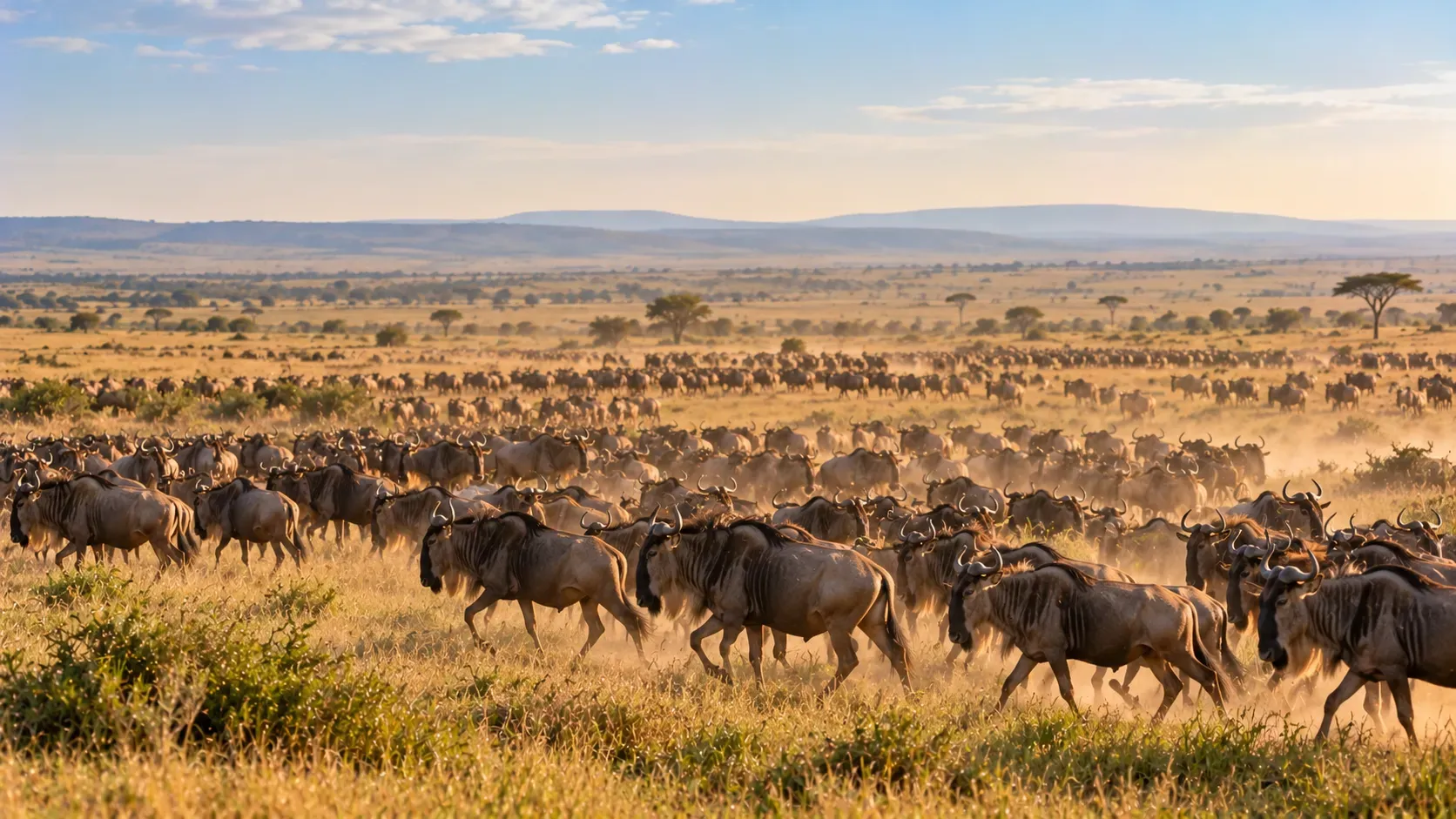
The Great Migration is the world's largest land wildlife movement, and its most exciting moments happen in the Masai Mara, Kenya.
- Scale: 1.3 to 1.7 million wildebeest, 500,000 zebras, and approximately 200,000 other grazers move from Tanzania's Serengeti into the Mara between July and October each year.
- The Mara River crossings: The herds must cross the Mara River, which is filled with Nile crocodiles and flanked by lions waiting on the banks; a single crossing can involve tens of thousands of animals and last from minutes to hours.
- River crossing timing: River crossings are not guaranteed on any particular day. The animals cross in groups based on water levels, herd behaviour, and predators nearby. Staying for 3 to 4 days gives you a much better chance of seeing a crossing.
- Outside migration season: January to March is a great time to see big cats, with fewer visitors and lower Masai Mara Kenya safari costs at most lodges. The reserve is lively and worth visiting any month of the year.
What Are the Top Masai Mara Kenya Safari Tours?
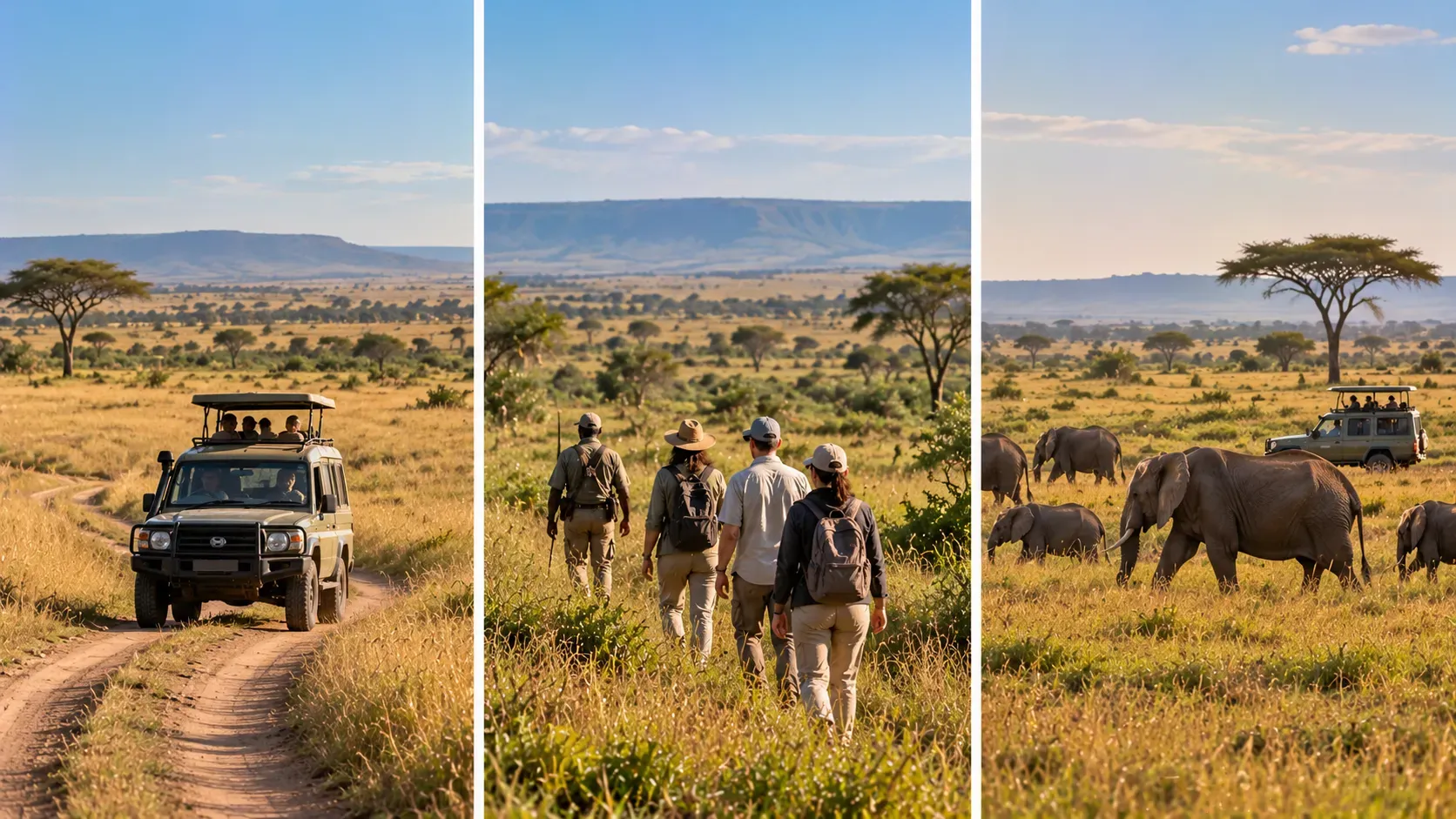
There are three main types of Masai Mara Kenya safari tours. Your choice will affect what activities you can do, where you can stay, and how your trip feels overall.
Tour Type | Duration | Transfer | Key Activities | Best For |
Game drive safari (road) | 3 to 5 days | Road from Nairobi (~7 hrs) | Morning/afternoon game drives; cultural visits | First-time visitors; longer stays |
Fly-in safari | 2 to 5 days | Flight from Wilson Airport (~45 min) | Full game drive programme; balloon safari | Premium visitors; limited time |
Conservancy-based safari | 3 to 7 days | Fly-in or road | Night drives; walking safari; off-road vehicles | Repeat visitors; exclusivity |
More on each format:
- Road transfer safari: The most common format for Masai Mara Kenya safari tours; packages from Nairobi include 2 to 3 daily game drives; full-day and bush breakfast options are widely available; half of Day 1 is travel, so we recommend a minimum of 3 days.
- Fly-in safari: You skip the 6 to 7-hour drive and fly straight to airstrips in or near the reserve. This option is popular at mid-range and luxury lodges. While it costs more, many travelers find the time saved and smooth experience worth it.
- Conservancy-based safari: These tours are based in private conservancies next to the Masai Mara National Reserve, Kenya. You can enjoy night drives, guided walks with rangers, and off-road access, which are not allowed inside the main reserve. With fewer vehicles and guests, this is a great choice for anyone visiting the Masai Mara, Kenya, for a second or third time.
What Does a Hot Air Balloon Ride Feel Like?
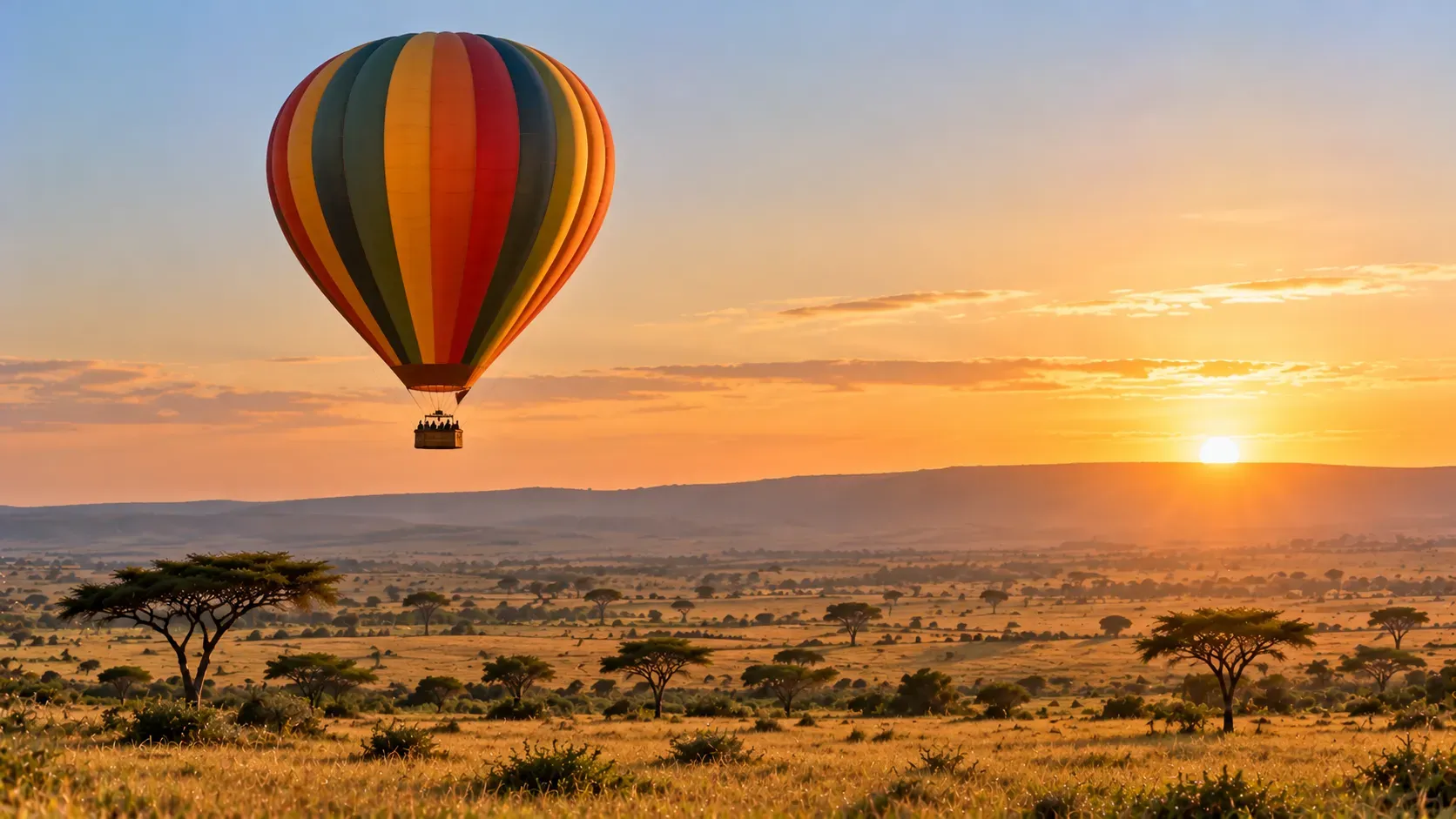
The hot air balloon ride in Kenya, Masai Mara, is the most popular extra activity at the Masai Mara, Kenya, and it offers a unique experience unlike anything else.
Your lodge will take you to the launch site around 5:00 AM. As the balloon fills with air, the sky starts to brighten. The takeoff is gentle and quiet, with only the sound of the burner above you. For about an hour, you float over the open savannah as the sun rises and the scenery comes to life below.
- What you see from above: Wildebeest and zebra spreading across the grass like a moving tide; hippo pods floating in the river below; elephants moving slowly across the floodplain; lions visible in clearings.
- Champagne bush breakfast: After you land, the lodge staff set up a full cooked breakfast right on the savannah, complete with white tablecloths, a full meal, and a glass of champagne. The exact spot depends on where the balloon touches down.
- Capacity: Up to 16 passengers per balloon basket.
- 2026 cost: Approximately USD 450 to USD 600 per person; charged separately from the main package and park entry fees.
- Booking: You need to book in advance during the busy migration season from July to October. The best balloon rides often sell out weeks ahead of time.
Detail | Information |
Departure | ~5:00 AM from your lodge |
Flight duration | ~1 hour |
Capacity | Up to 16 passengers |
Ends with | Champagne bush breakfast in the savannah |
2026 cost | USD 450 to USD 600 per person |
When to book | At least 4 to 8 weeks ahead during July to October |
How Much Does a Masai Mara Kenya Safari Cost?
Masai Mara, Kenya, safari costs can vary a lot, depending on the type of accommodation, how you get there, and the time of year.
The range runs from about USD 400 per person per day (sharing, mid-range packages with road transfer) to USD 5,000+ per person per night at ultra-luxury properties with private vehicles and fly-in access.
Tier | Transfer | Daily Rate (Per Person, Sharing) | Includes | Best Season |
Standard / Mid-range | Road from Nairobi | USD 400 to USD 800 | Meals, 2 to 3 daily game drives, conservancy fees | Jan to March (value) |
Upper mid-range to premium | Fly-in | USD 800 to USD 2,000 | Full board, game drives, flight from Nairobi | June to October |
Luxury and ultra-luxury | Fly-in; private vehicles | USD 2,000 to USD 5,000+ | All-inclusive; private guiding; walking safaris | Any season |
What is typically NOT included in the Masai Mara Kenya safari cost:
- Hot air balloon ride in Kenya Masai Mara: USD 450 to USD 600 per person.
- Kenya national park entry fees (charged per 12-hour visit; peak vs low season rates).
- Guide gratuities: Typically USD 15 to USD 25 per guide per day.
- Maasai village visit: Approximately USD 20 to USD 35 per person.
- Flights to Kenya
Seasonal note: During the peak migration season from July to October, most lodges charge 15 to 30% more. For lower Masai Mara, Kenya, safari costs and great big cat sightings across the Masai Mara, Kenya, January to March is the best time to visit.
Where Should You Stay Near the Reserve?
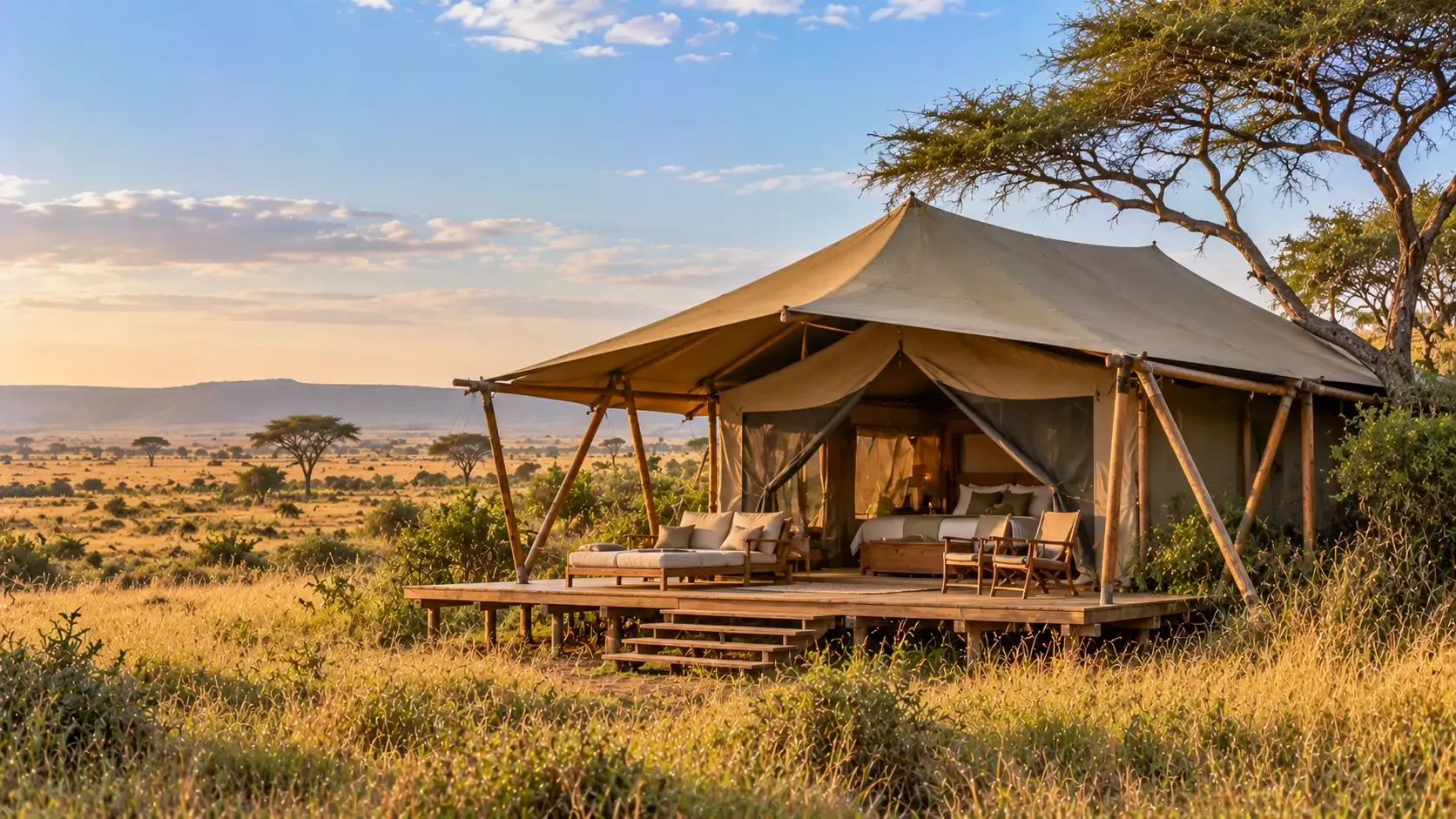
Masai Mara resorts, Kenya, are grouped into three zones, and your choice will affect which activities you can do.
Property Type | Location Zone | Rate Range | Key Features | Best For |
Mid-range lodge or camp | Inside the main reserve | USD 400 to USD 800 per night | Game drives; standard vehicles; restaurant and pool | First visits; standard game drives |
Premium tented camp | Inside the reserve or conservancy border | USD 800 to USD 2,500 per night | Full board; guiding included; atmosphere | Migration season; extended stays |
Conservancy camp | Private conservancy adjacent to reserve | USD 1,500 to USD 5,000+ per night | Night drives; walking safaris; exclusivity | Repeat visitors; premium experience |
Ultra-luxury property | Conservancy or reserve | USD 3,000 to USD 5,000+ per night | Private vehicles; butler service; bespoke | Honeymoon; special occasions |
Key property to note: The Ritz-Carlton Masai Mara opened in 2025 and is currently among the most premium Masai Mara resorts in Kenya, priced from USD 5,000 per night. Confirm current rates and availability directly with the property.
How to choose your zone:
- Inside the reserve: You get the best access to main game viewing areas, but night drives and off-road driving are not allowed. Most mid-range and high-end Masai Mara resorts in Kenya are found here.
- Conservancy-based: There are fewer vehicles and visitors, and you can do walking safaris and night drives. Prices are higher, but you get more activities. This is a good choice if you have already visited Kenya and the Masai Mara.
Final Takeaway
The Masai Mara in Kenya is one of the best wildlife destinations in the world, with something to see every month and truly amazing sights during the Great Migration from July to October. The Masai Mara National Reserve, Kenya, is the main attraction, but the nearby conservancies offer even more options. The Masai Mara, Kenya, safari costs range from mid-range to ultra-luxury, and the hot air balloon ride is a highlight. There are now resorts for every type of traveller. Choosing the right season and where to stay can really shape your experience.
If you are planning a Kenya safari and want a custom itinerary with the best camps, season, and activities, Holiday Tribe's advisors can help with every detail.