

Most people visit Prague Castle in about an hour. They wait in line for a ticket, walk through St Vitus Cathedral, take photos of the guards, and then head back down for a beer. But in doing so, they miss the best part. The Prague Castle you want to discover isn't just one building. It's a walled town on a hill, built up over eleven centuries, and its towers are full of stories. In one, a prisoner is said to have learned the violin while waiting for his fate. Another holds a bell that locals believe can predict disaster. In yet another, alchemists once tried to turn lead into gold. If you know these stories first, the whole hill feels different.
What Makes Prague Castle More Than a Castle
Let’s get a quick sense of scale before we start. Prague Castle holds the Guinness World Record for being the largest ancient castle complex in the world, covering about 70,000 square metres of palaces, churches, lanes, and gardens. Founded around 880 AD, it’s a UNESCO World Heritage Site and still serves as the official seat of the Czech president, so part of it is an active government office. Here’s some good news: you can walk through the courtyards and gardens for free. You only need to pay if you want to go inside the historic buildings, which is where the towers we’re about to visit are located.
The Towers Of Prague Castle and the Stories They Hold
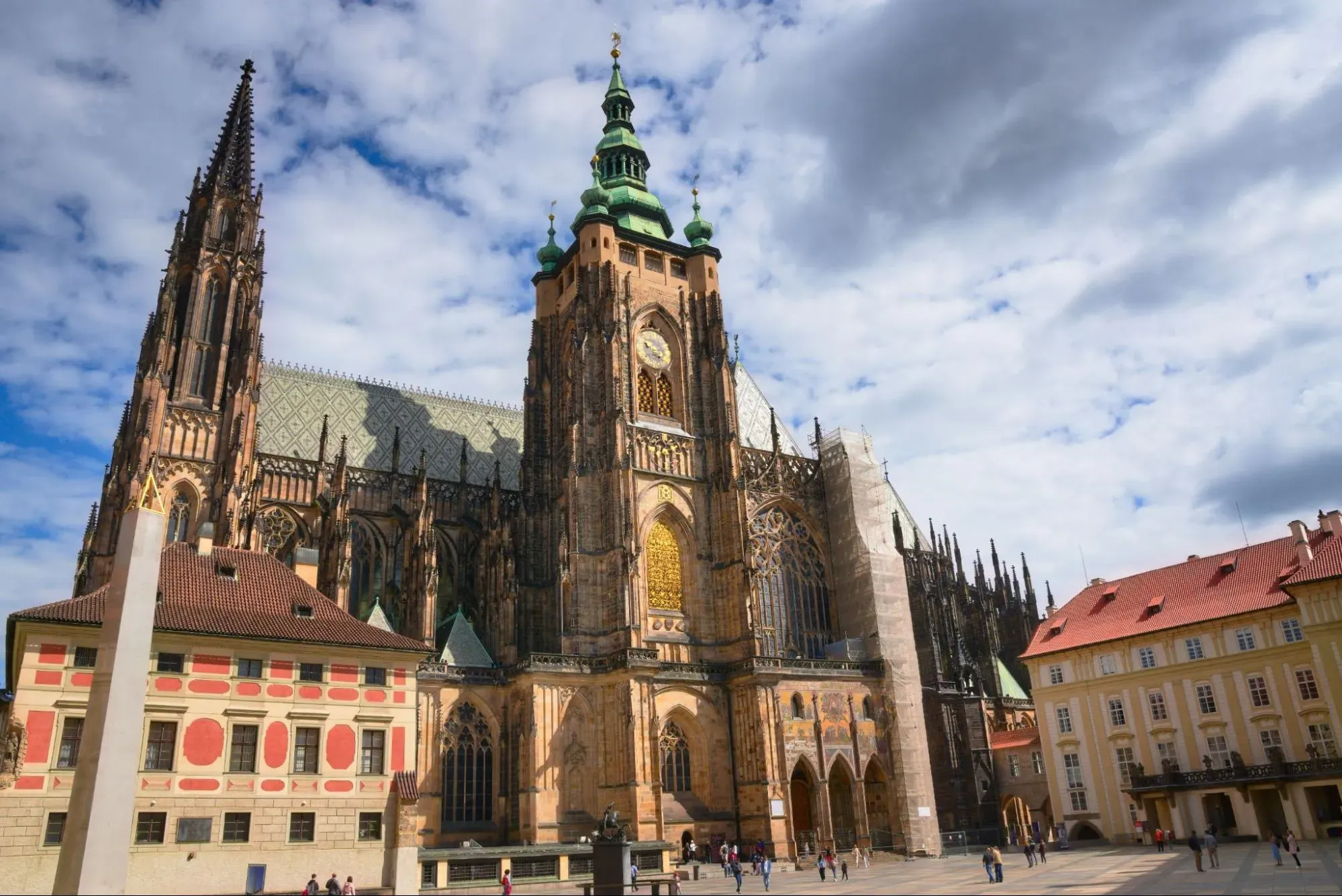
Prague Castle’s story is told best by its four towers. Two of them are open to visitors with a standard ticket, and each offers a view you won’t soon forget.
Daliborka Tower: The Prisoner Who Played The Violin
Daliborka stands at the end of the Golden Lane. Built by Benedikt Ried in 1496 as a gun tower, it quickly became a prison named after its first inmate, Dalibor of Kozojedy. He was locked up for helping rebellious serfs. According to legend, he learned to play the violin in his cell, and the townspeople were so touched by his music that they brought him food.
There’s a darker version of the story. In old Czech, the word for "violin" also meant a torture rack shaped like the instrument, so Dalibor’s "playing" might have meant cries of pain. Still, the romantic tale became more popular. It appears in Alois Jirásek’s Ancient Bohemian Legends, a book many Czech children read, and inspired Smetana’s opera Dalibor.
- Don’t miss: The round hole in the dungeon floor. Prisoners were lowered through it by pulley into a pit with walls 2.6 metres thick.
- The saying: Czechs still joke that "necessity taught Dalibor to play the fiddle," their version of "needs must."
- Ticket: included in the Main Circuit, entered via the Golden Lane.
The Great South Tower: 287 Steps To The Country's Biggest Bell
The cathedral’s south tower is the tall one visible from all over the city, nearly 100 metres high. If you climb its 287 narrow spiral steps, you’ll reach a gallery at 56 metres with the best view of the whole castle. On the way, you’ll see Zikmund, the largest bell in the Czech Republic, cast in 1549 by Tomáš Jaroš. It weighs about 15 tonnes and needs several people to ring it.
There’s an eerie story about Zikmund. When its clapper cracked on 15 June 2002, many Czechs saw it as a bad sign. Two months later, Prague was hit by the worst floods in living memory.
- Steps: 287, narrow and spiral, so skip it if stairs or tight spaces bother you.
- Ticket: Separate, around 200 CZK, and not part of the Main Circuit.
- Tribe Tip: Last entry is 30 minutes before closing, and the tower shuts in bad weather, so climb early in your visit.
Mihulka Powder Tower: Where Alchemists Chased Gold
Mihulka is the large cannon bastion on the northern wall. It was built to be the strongest gun tower on the hill, but it was never used in battle. Its real claim to fame is more unusual. During Emperor Rudolf II’s reign, it became a laboratory for alchemists, including Edward Kelley, who searched for the Philosopher’s Stone and tried to turn lead into gold. Bell-founder Tomáš Jaroš also worked here; he made both Zikmund and the Singing Fountain in the Royal Garden. Later, the tower stored gunpowder, which is how it got the name Powder Tower. That gunpowder exploded during the Swedish occupation in 1649.
- The name: "Mihulka" roughly means "little lamprey."
- Ticket: On the separate Permanent Exhibitions circuit, not the Main one. It now houses the Castle Guard exhibition.
- Next door: The White Tower once jailed that same alchemist, Edward Kelley.
How to Get to Prague Castle From Charles Bridge
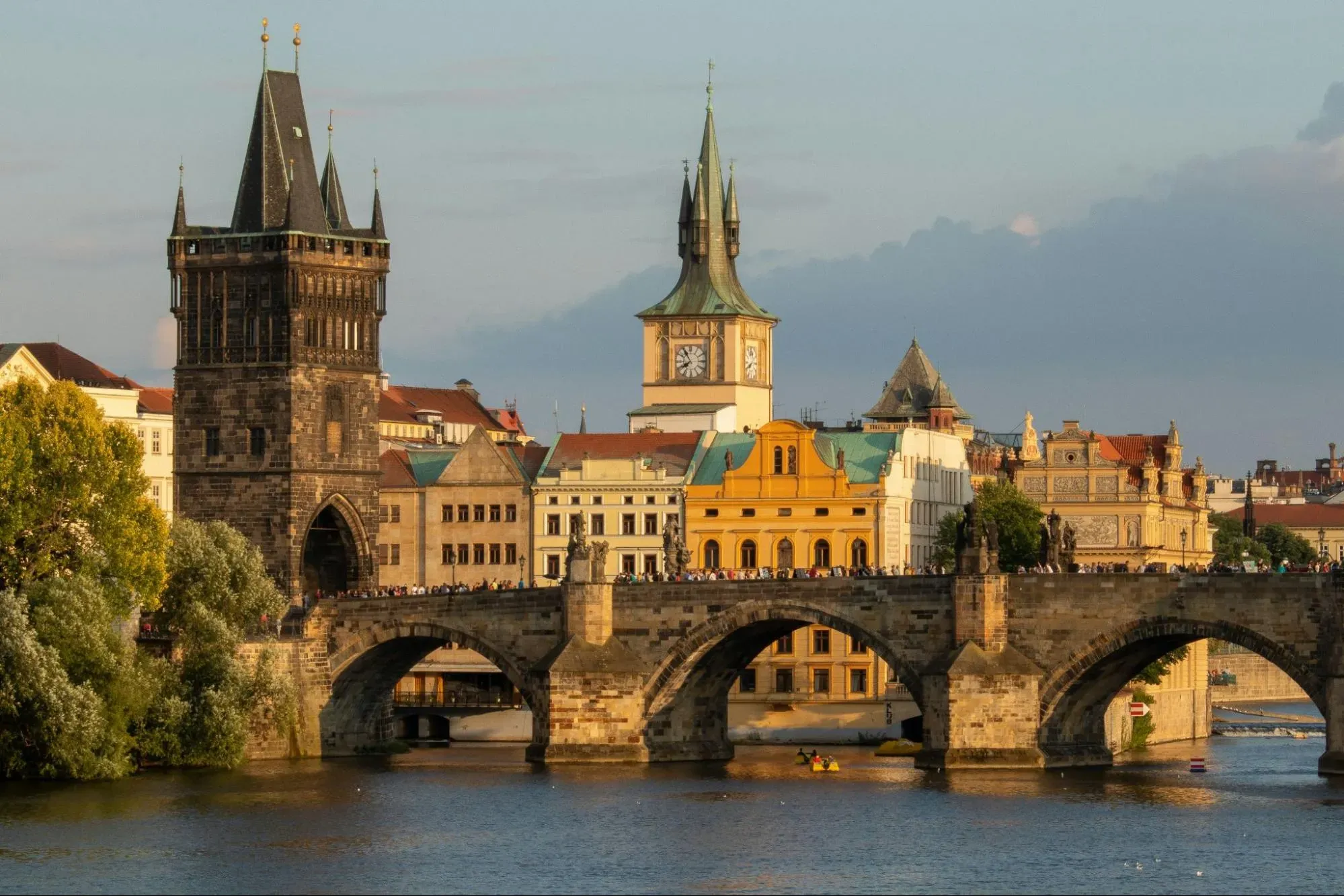
The best way to get there is by walking. It takes about fifteen minutes to walk from Charles Bridge to Prague Castle, and the journey itself is a big part of the experience.
- On foot: Cross Charles Bridge, head through Lesser Town (Malá Strana), and climb either the pretty Nerudova street or the Old Castle Stairs (around 220 steps) to the eastern gate.
- Tram: 22 or 23 to the Pražský hrad stop, the closest to an entrance.
- Metro: Line A to Malostranská, then the Old Castle Stairs or tram 22 uphill.
Tribe Travel Tip: If you’re walking up from Charles Bridge to Prague Castle along Nerudova, stop for a coffee in Malá Strana before you go. There aren’t many cafés once you’re inside the gates.
Prague Castle Tickets and Entrance Fee in 2026
The Main Circuit ticket gives you access to four main attractions: St Vitus Cathedral, the Old Royal Palace, St George's Basilica, and the Golden Lane with Daliborka Tower. The Prague Castle entrance fee for the Main Circuit in 2026 is listed below.
Main Circuit ticket | Price (2026) |
Adult | 450 CZK |
Reduced (6 to 16, students to 26, 65+) | 300 CZK |
Family (2 adults + up to 5 children) | 950 CZK |
Children under 6 | Free |
Here are some helpful tips about Prague Castle tickets:
- Your ticket is good for two days in a row, and you can visit each interior just once.
- You can explore the grounds and courtyards for free.
- If you want to climb the Great South Tower, you’ll need a separate ticket, which costs about 200 CZK.
- The Permanent Exhibitions circuit, which includes Mihulka, costs 300, 200, or 700 CZK depending on the ticket type.
- To avoid waiting in long lines, sometimes 30 to 60 minutes on busy summer mornings, buy your tickets online at hrad.cz.
Opening Hours and the Best Time to Visit
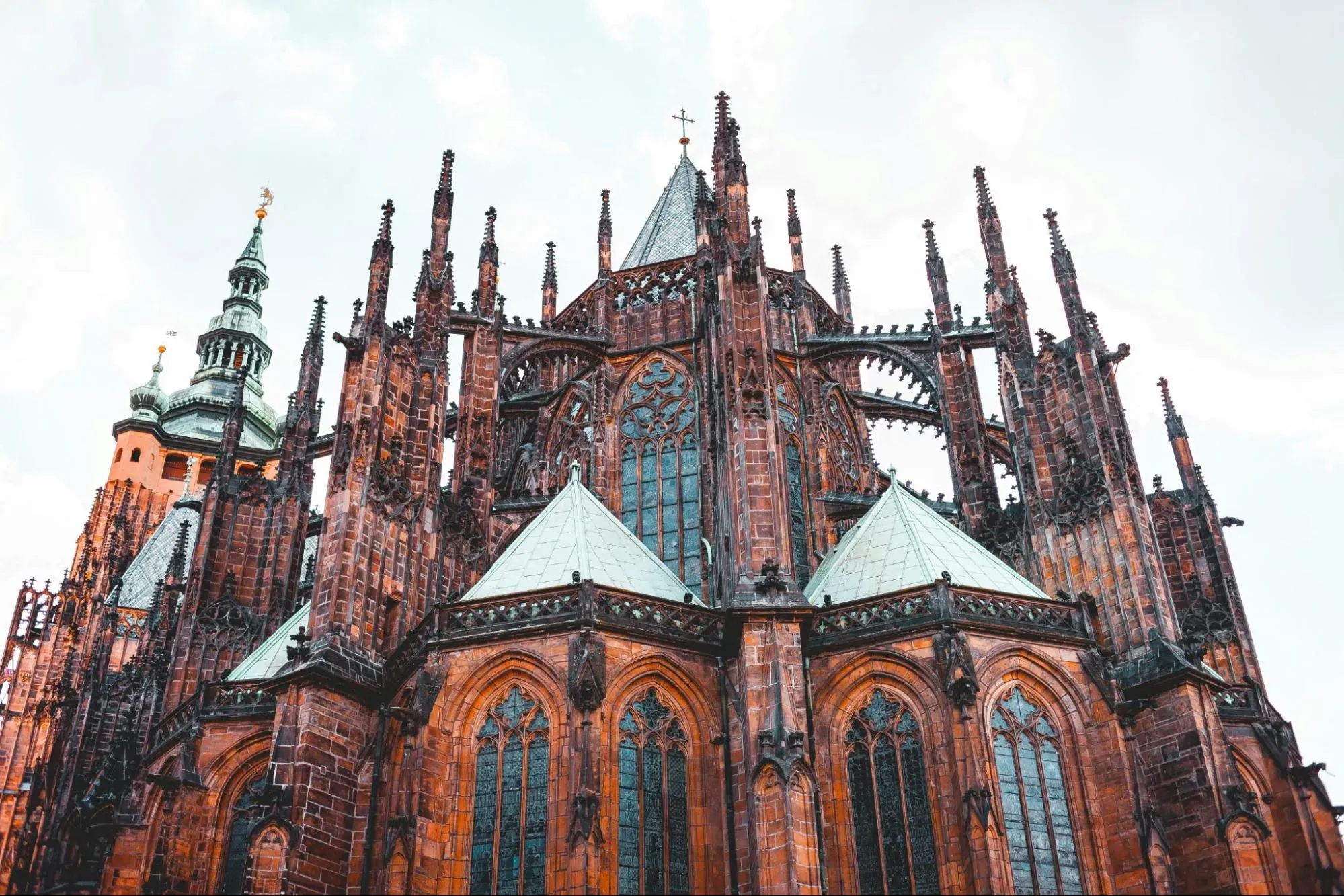
The castle grounds and interiors have different opening times, so be sure to check both when planning your visit.
- Grounds and courtyards: Daily, 06:00 to 22:00.
- Historic interiors: 09:00 to 17:00 (April to October), 09:00 to 16:00 (November to March).
- Closed: Only on 24 December, when the interiors are closed but the grounds stay open.
- Changing of the Guard: On the hour, with the full ceremony, fanfare and flags at 12:00 noon in the first courtyard.
To make the most of your visit to Prague Castle, try to arrive at 9:00 am or after 1:00 pm. The busiest time is between 9:00 am and 1:00 pm, when many tour groups arrive and the guard change happens at noon. Plan to spend three to four hours if you want to see the Main Circuit and the interiors.
Tribe Travel Tip: In 2026, the Old Royal Palace will be closed from September 4 to October 1 for a Crown Jewels exhibition. Be sure to check hrad.cz for updates before you plan your visit.
Is a Guided Prague Castle Tour Worth It?
It really comes down to whether you like reading information panels. Inside, there isn’t much signage, so you might miss a lot of the story unless someone explains it. A live guided tour of Prague Castle, which usually costs about 1,100 CZK per adult including entry, is about the same price as a ticket with an audio guide. With a guide, you can ask questions and go at your own pace. If you’d rather explore on your own, the audio guide (about 350 CZK) works well. A guided tour is best for first-time visitors or anyone who wants a more complete story instead of just the highlights.
What Is Prague Castle at Night Like?
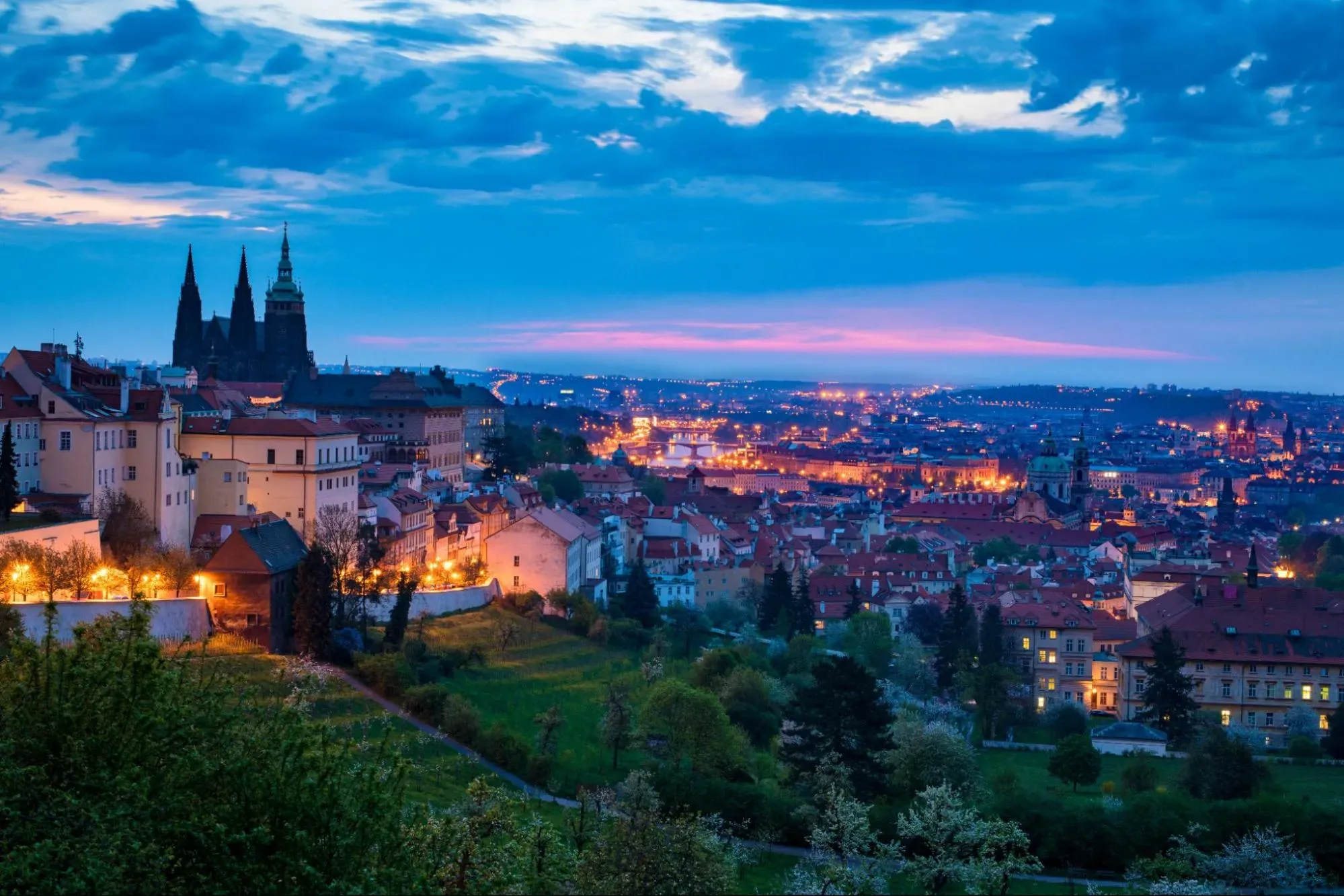
It gets quieter, and some say even better, after the interiors close. The crowds leave, but the hill remains open and well-lit. At night, Prague Castle shines until about midnight. The courtyards are patrolled, safe to explore, and free once the ticket gates close.
- Best view: You can get the best view from Charles Bridge looking up, or from the Old Castle Stairs, which are open all day and night.
- Golden Lane: The small shops and cafés along Golden Lane often stay lit into the early evening.
- Fun fact: The lighting inside the grand halls was paid for by the Rolling Stones as a gift to President Václav Havel in the 1990s.
Is Karlštejn Castle a Good Day Trip From Prague?
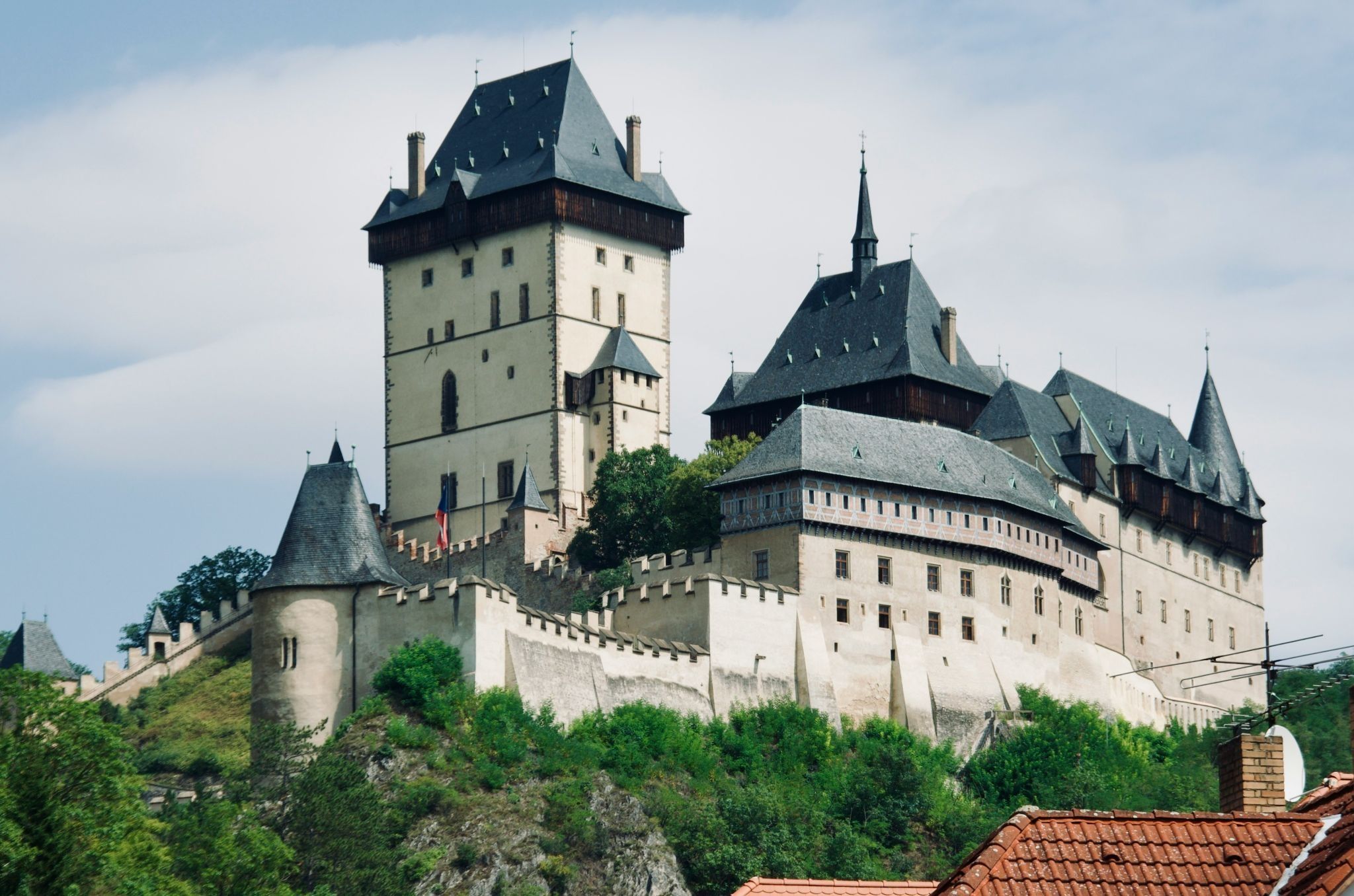
If you’re looking for more towers after visiting Prague Castle, Karlštejn is a classic half-day trip. About 30 km southwest of Prague, Karlštejn Castle was built by Emperor Charles IV in 1348 to protect the Bohemian Crown Jewels. He’s the same king behind Charles Bridge and St Vitus Cathedral.
- Getting there: Take a direct train from Praha hlavní nádraží or Smíchov. The ride takes about 40 minutes, followed by a 20 to 30 minute uphill walk through the village.
- What's inside: You can only visit with a guided tour. The Chapel of the Holy Cross often sells out weeks in advance during summer, so it’s best to book early.
- Why go there: Karlštejn is one of the best-preserved Gothic fortresses in Central Europe, and the walk up from the valley feels like something out of a storybook.
See Prague Castle As a Story, Not a Checklist
Instead of seeing Prague Castle as just another sight to check off your list, try exploring it as a collection of towers, each with its own story or legend. Even a grey morning spent waiting in line can turn into a memory worth sharing later. If you plan your visit well, make sure to climb at least one tower and save an evening to enjoy the view of the hill all lit up.
If you want to make this holiday happen, Holiday Tribe is here to help you plan every detail. You can choose one of our ready-made holidays in Prague and Central Europe, or our advisors can create a custom itinerary based on your schedule, interests, and pace. Whether you want a private Prague Castle tour or a day trip to Karlštejn, our land-based packages include your accommodation, transfers, and experiences. You can book your own flights to fit your plans. Just reach out to us, and we’ll help design a holiday that’s right for you.