

Kenya is a country in East Africa with a coastline on the Indian Ocean, a central highland plateau, and a southern border that runs along the edge of Tanzania. Its landscape changes from the Swahili coast to mountain forests to open savannah in a matter of hours. At the southern edge of the country, in the shadow of Africa's highest mountain, sits one of its most photographed wildlife reserves.
Amboseli National Park draws visitors who want one specific image: elephants crossing open plains with Kilimanjaro visible behind them. But it offers more than one photograph. This guide covers the facts about Amboseli National Park, the Amboseli National Park safari experience, Amboseli National Park fees for 2026, weather, and the best time to visit.
What Is Amboseli National Park Kenya?
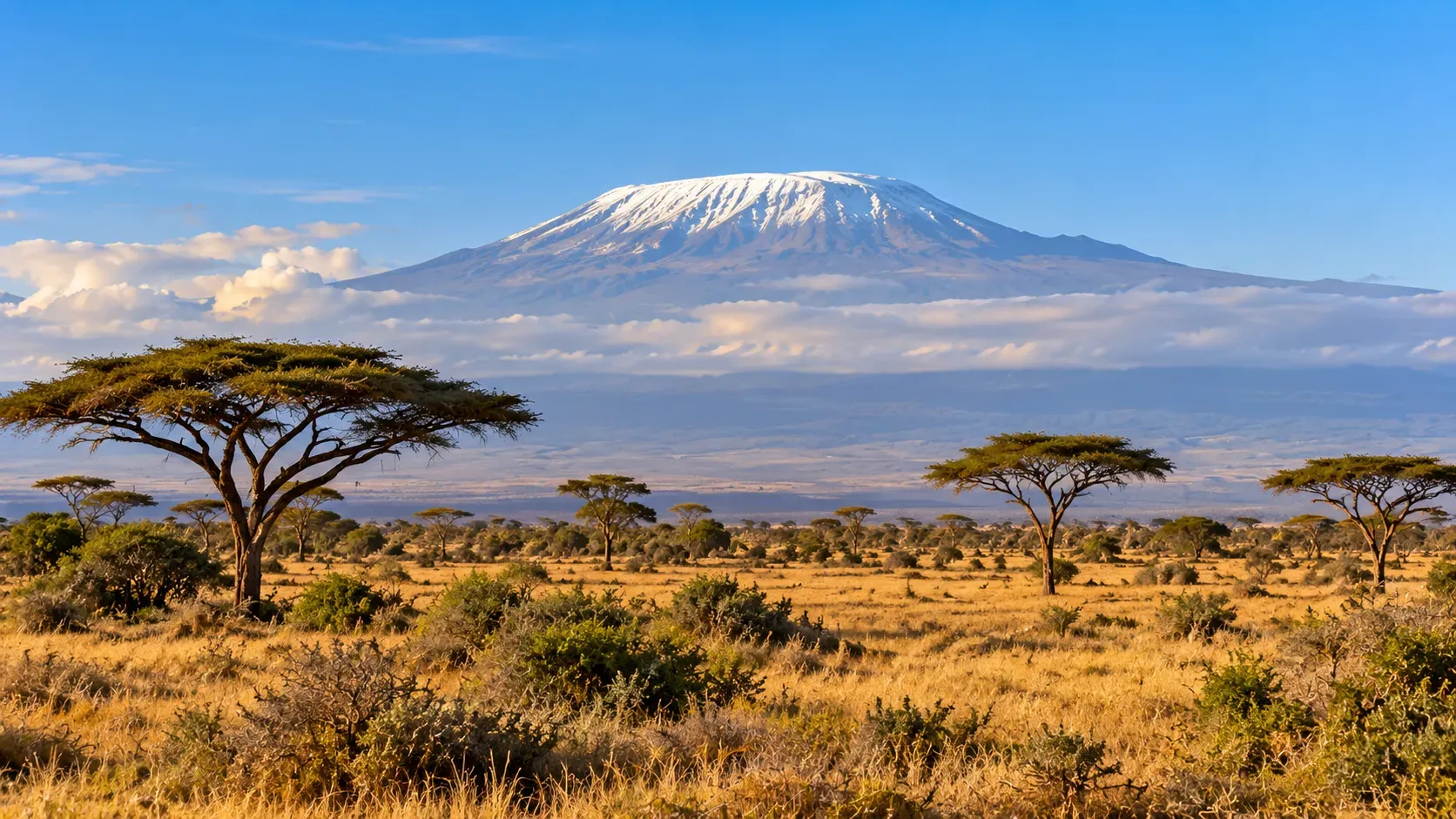
Amboseli National Park Kenya covers 392 km² (approximately 96,865 acres) in Kajiado County, southeastern Kenya, near the Kenya-Tanzania border. It sits at an altitude of approximately 1,180 metres (3,871 feet), directly at the foot of Mount Kilimanjaro; the mountain stands 5,895 metres tall and is entirely within Tanzania, but its most celebrated views are from the Kenyan side, 40 km to the north.
The park was established in 1974 and is managed by the Kenya Wildlife Service (KWS). It holds UNESCO Man and Biosphere Reserve status and is classified by KWS as a premium park.
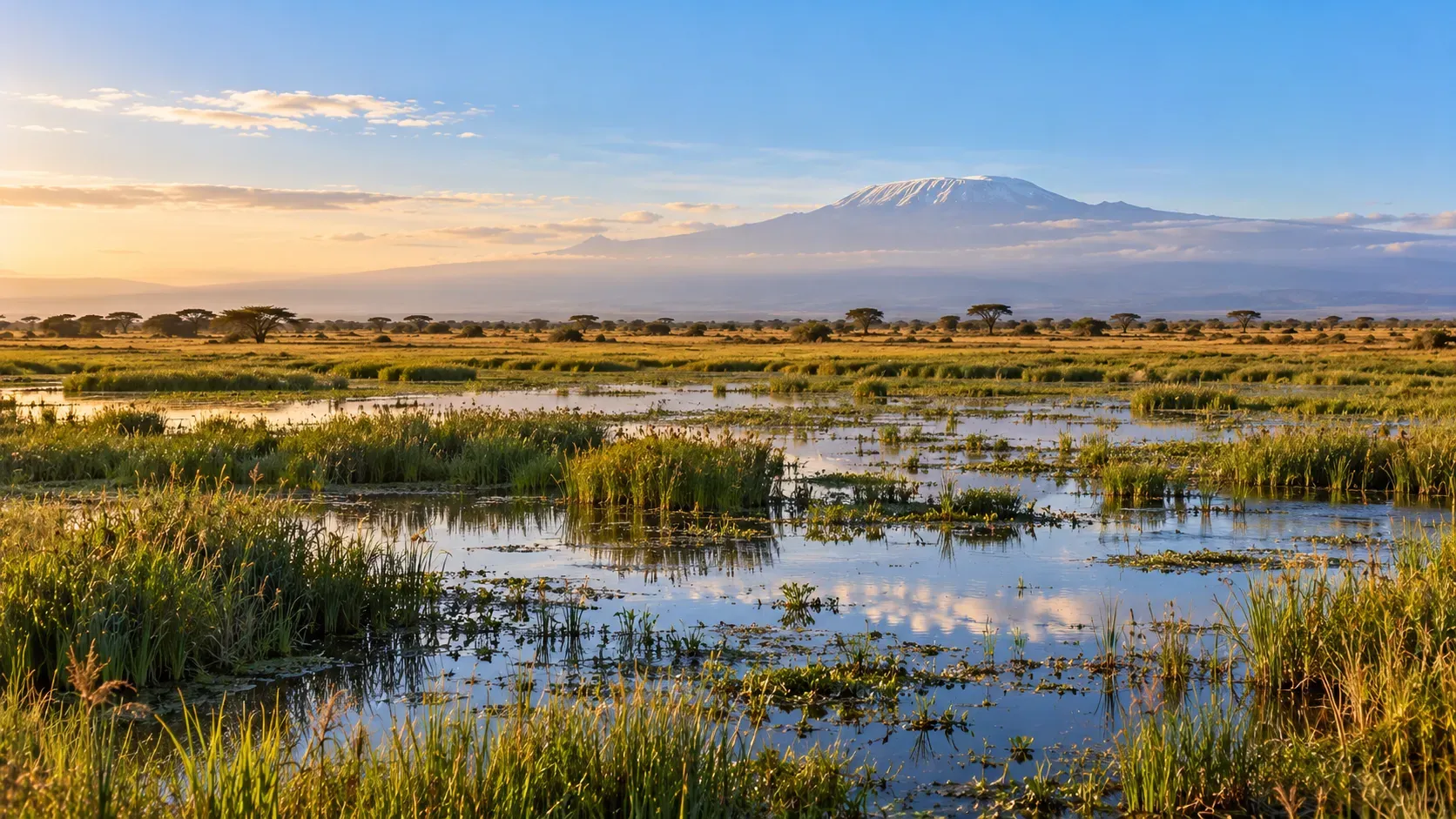
The most important fact about Amboseli National Park from a practical standpoint: its central swamp is fed by underground springs from Kilimanjaro's melting glaciers. This permanent water source concentrates wildlife year-round, even during dry seasons when surrounding land turns to dust.
Detail | Information |
Location | Kajiado County, southeastern Kenya |
Area | 392 km² (96,865 acres) |
Altitude | 1,180 metres (3,871 feet) |
Established | 1974 |
Managed by | Kenya Wildlife Service (KWS) |
UNESCO Status | Man and Biosphere Reserve |
Distance from Nairobi | 230 km (4 to 5 hours by road) |
Distance from Kilimanjaro | 40 km south (across Tanzania border) |
What Can You See on an Amboseli National Park Safari?
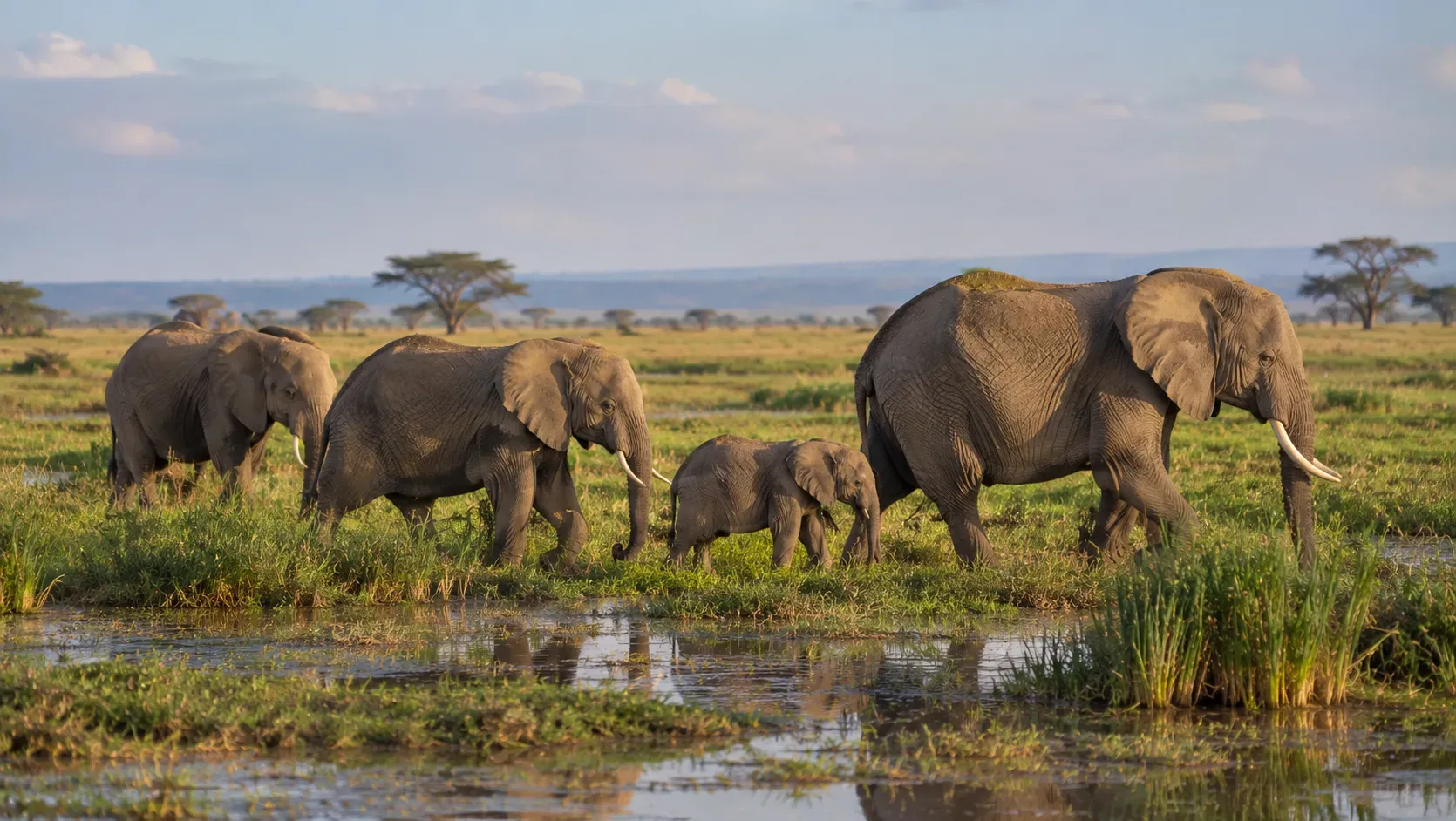
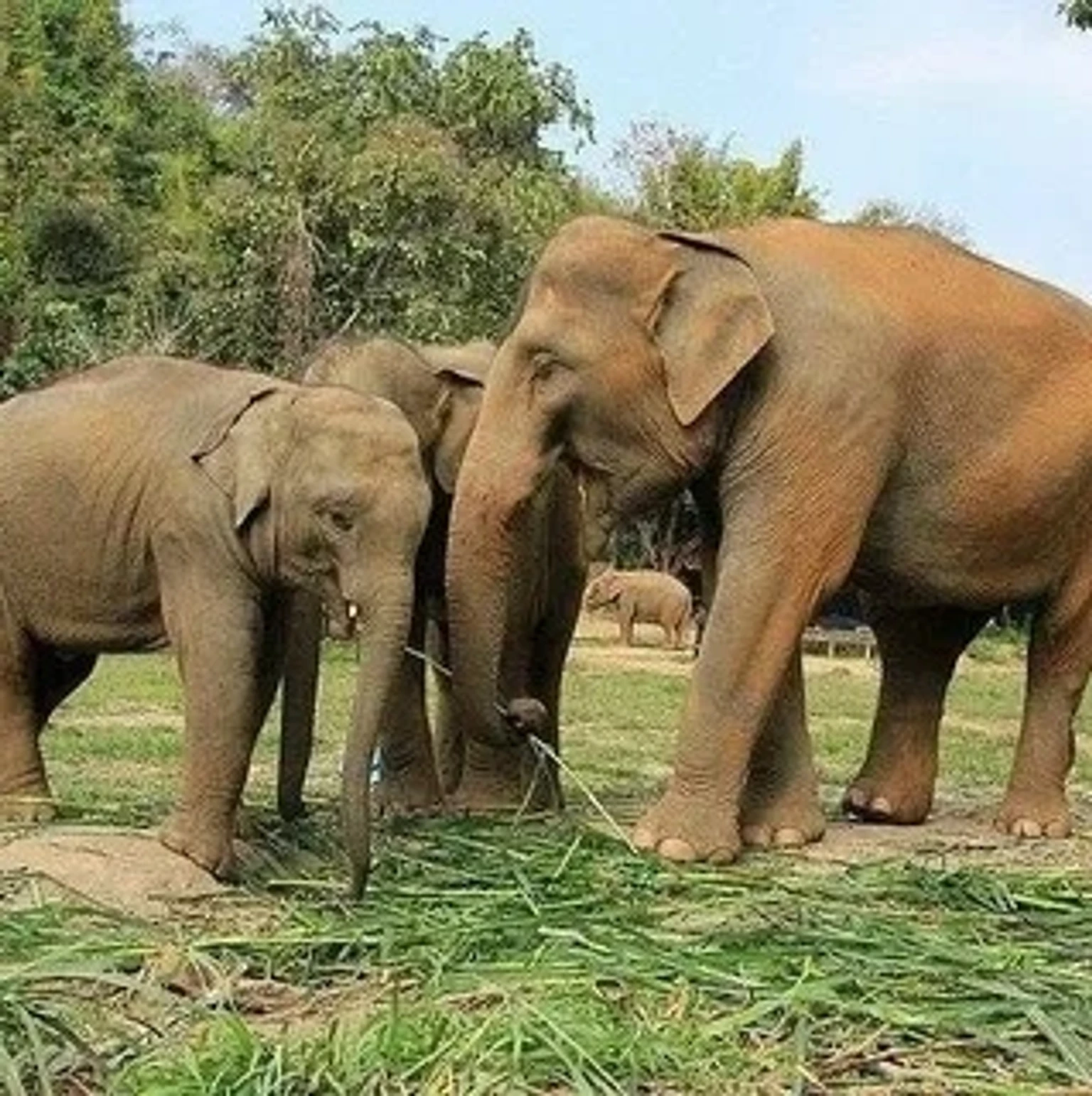
Amboseli National Park holds approximately 1,600 to 1,900 free-ranging African elephants, including some of Africa's last remaining Super Tuskers; fewer than 20 such elephants exist in Kenya. The elephant population here is the most intensively studied in the world through the Amboseli Elephant Research Project (AERP), founded by Cynthia Moss in 1972. Researchers have followed the same family groups for over 50 years, and guides working with the research community can identify individual elephants by name, family history, and personality.
Beyond elephants, an Amboseli National Park safari gives you reliable sightings of lions, cheetahs, leopards, buffaloes, giraffes, zebras, wildebeest, and hyenas. Over 400 bird species have been recorded, including the grey-crowned crane.
The landscape that makes an Amboseli National Park safari distinct divides into five ecosystems:
- Open plains: The vast, flat grassland that gives Kilimanjaro its unobstructed backdrop
- Acacia woodlands: Habitat for giraffe, buffalo, and leopard
- Swamps and marshes: Permanent water fed by Kilimanjaro underground springs; elephants are concentrated here daily
- Seasonal dry lake beds: Ghost-white and wide, a product of the ancient lake that once covered this area
- Bushed grassland: Mixed habitat supporting the widest variety of smaller mammals and bird species
Animal | Where Found | Best Sighting Window |
Elephants | Swamps; open plains | Year-round; dawn and dusk most active |
Super Tuskers | Open plains and swamp edge | Year-round; advance from research guides |
Lions | Open plains; acacia edges | Dry season (June to October) |
Cheetahs | Open plains | Morning; dry season preferred |
Giraffes | Acacia woodland zones | Year-round |
Grey-crowned crane | Swamp margins | Wet season (November to May) |
Buffaloes | Swamp edges and bushland | Year-round; early morning |
How Much Are Amboseli National Park Fees in 2026?
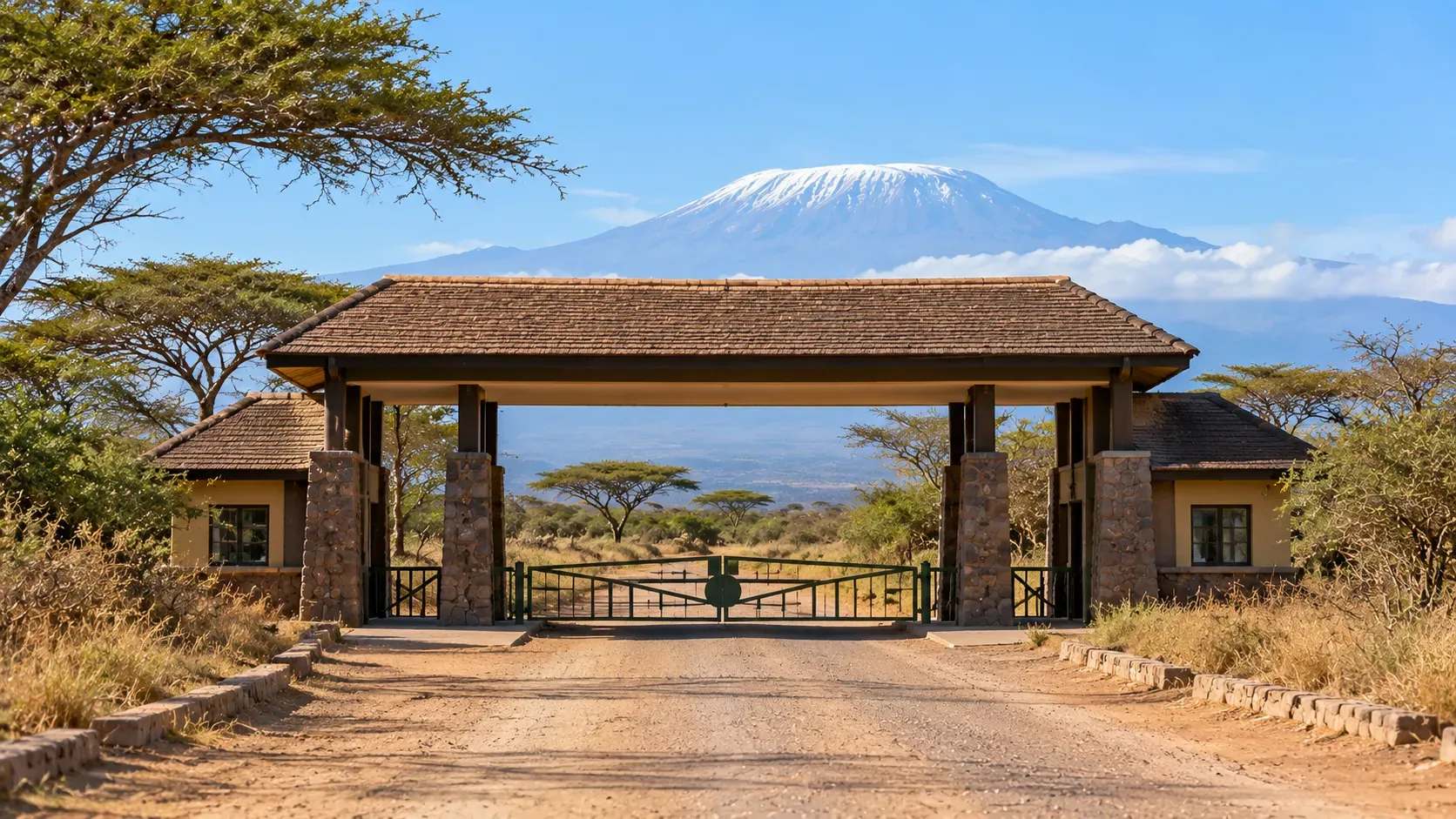
Amboseli National Park fees as of 2026 are managed and published by the Kenya Wildlife Service (KWS). All payments are cashless; Visa, MasterCard, and Kenyan Mpesa are the only accepted payment methods. Cash is not accepted at any KWS park gate.
2026 entry fees (per person per 24-hour ticket):
Visitor Type | Entry Fee | Notes |
Non-resident adults | USD 70 | Verify current rate at the official website of Kenya Wildlife Service; proposed USD 90 under court review as of mid-2026 |
Kenyan citizens (adults) | KES 860 | Valid ID required |
East African Community citizens | Separate KWS rate | Confirm at the official site |
Children | Reduced rate | Confirm child age brackets via KWS |
Additional Amboseli National Park fees for activities:
- Guided walking safari: approximately USD 20 per person per session; arranged in advance through your lodge or operator; not available as a walk-in activity
- Vehicle fees: Apply for self-drive visitors; confirm current rates on the KWS official website before arrival
- The park gates are open from 6am to 6pm daily; entry starts at 6am; the first hour is the most rewarding for Kilimanjaro visibility and elephant activity
What Is Amboseli National Park Weather Like Throughout the Year?
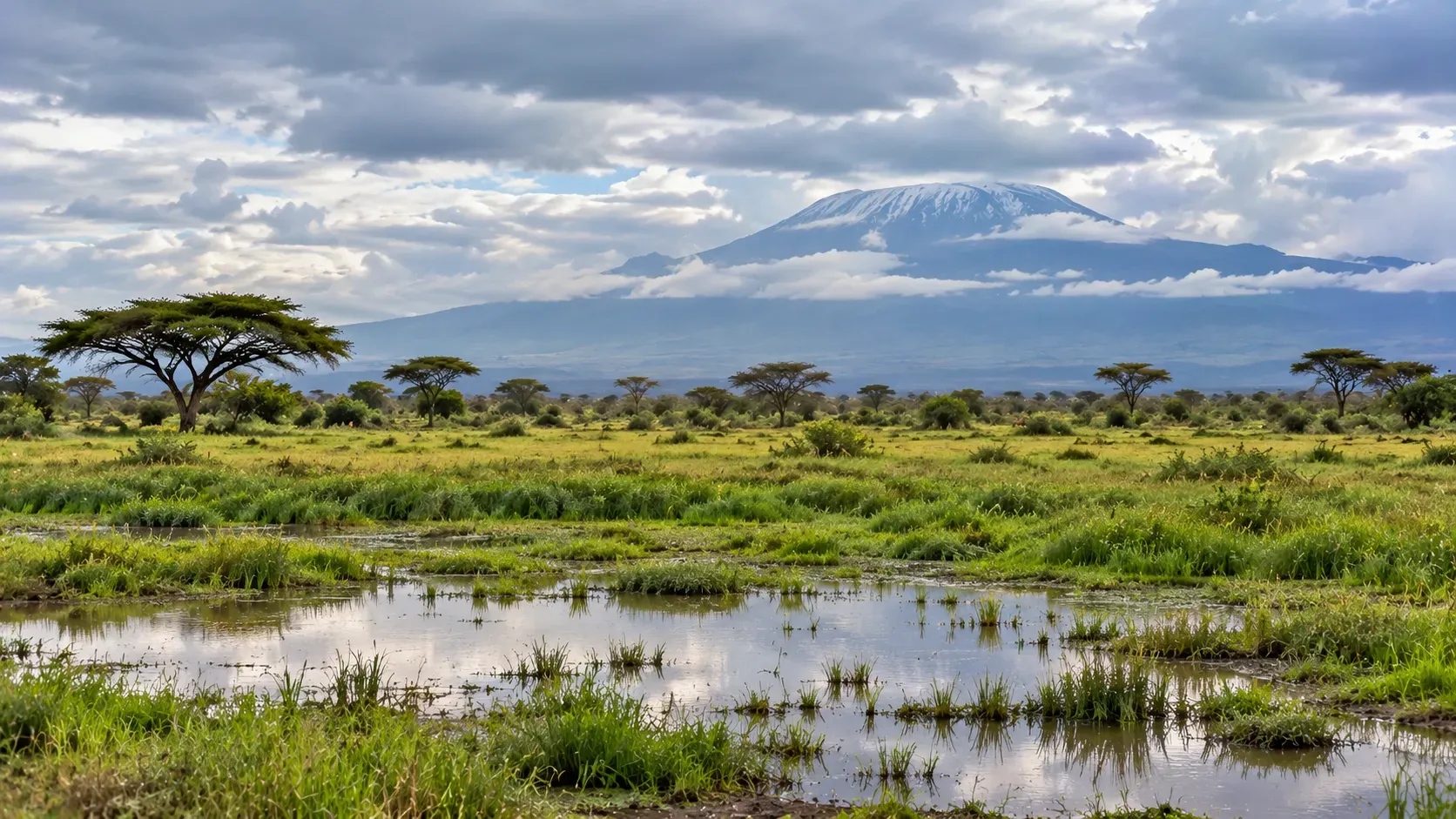
Amboseli National Park weather follows four seasons determined by Kenya's two wet and two dry periods. The park sits at 1,180 metres, which keeps temperatures moderate: typically 15°C overnight and up to 30°C at midday.
Month | Season | Avg Temp | Rainfall | Kilimanjaro Visibility | Game Viewing |
January | Short dry | 22 to 30°C | Low | Excellent | Excellent |
February | Short dry | 22 to 30°C | Low | Excellent | Excellent |
March | Long rains start | 20 to 28°C | Moderate | Variable | Good |
April | Long rains | 18 to 26°C | High | Poor | Moderate |
May | Long rains | 18 to 25°C | High | Poor | Moderate |
June | Long dry begins | 17 to 26°C | Low | Good | Good to excellent |
July | Long dry | 16 to 25°C | Very low | Good | Excellent |
August | Long dry | 17 to 26°C | Very low | Good | Excellent |
September | Long dry | 18 to 27°C | Very low | Good | Excellent |
October | Long dry | 20 to 28°C | Low | Good | Excellent |
November | Short rains | 20 to 28°C | Moderate | Variable | Good |
December | Short rains ease | 21 to 29°C | Low to moderate | Good | Good to excellent |
Amboseli National Park weather key points:
- March to May (long rains): Wet; roads can become difficult; visitor numbers are lower; Kilimanjaro frequently cloud-covered through the day
- April and May are the most challenging months for an Amboseli National Park safari logistically
- November tends to bring clearer Kilimanjaro mornings than its reputation as a wet month suggests
When Is the Amboseli National Park Best Time to Visit?
The Amboseli National Park best time to visit depends on what matters most to you: Kilimanjaro views, wildlife concentration, or avoiding crowds.
January to February (recommended):
- The Amboseli National Park best time to visit for Kilimanjaro views specifically; the mountain is most consistently clear in the pre-dawn and early morning
- Dry and cool; roads are in good condition; visitor numbers are moderate
- Elephant herds are active and spread across the open plains with the mountain visible behind them; this is when the defining Amboseli photographs are made
June to October (recommended):
- The Amboseli National Park best time to visit for maximum wildlife concentration; the long dry season forces animals to gather around the permanent swamps as surrounding plains dry out
- Elephant herds are particularly large and predictable; lions, cheetahs, and other predators are more visible as vegetation shortens
- July to August is peak season; visitor numbers are highest but wildlife sightings are most consistent
March to May (avoid if possible):
- Long rains; difficult road conditions; Kilimanjaro hidden most days
- Worthwhile for birding and lower visitor numbers; not the ideal window for photography or predictable game drives
Month | Visitor Season | Game Viewing | Kilimanjaro Views | Notes |
Jan to Feb | Shoulder | Excellent | Excellent | Best for mountain photos |
Mar to May | Low | Moderate | Poor | Wet; road conditions difficult |
Jun to Oct | Peak | Excellent | Good | Most wildlife; highest visitor numbers |
Nov to Dec | Shoulder | Good to excellent | Variable to good | Good combination month |
What Facts About Amboseli National Park Should You Know?
A few practical points will significantly improve your Amboseli National Park safari before you arrive.
Getting There: Road and Air Options
- By road: 4 to 5 hours from Nairobi via the Namanga route (A104 highway through Kajiado); the final section into the park is unpaved
- By air: Under 1 hour from Wilson Airport Nairobi to the Amboseli airstrip; most premium safari packages include fly-in transfers
- Confirm your gate arrival time; gates open at 6am and a dawn entry maximises both game viewing and Kilimanjaro visibility
Money and Payments: What to Carry
- No ATM or bank inside the park; carry sufficient Kenyan shillings for tips, village visits, and souvenirs
- USD is accepted but must be printed after 2013 and in pristine condition; torn, marked, or old-series notes are refused
- All Amboseli National Park fees must be paid cashlessly via Visa, MasterCard, or Mpesa; cash is not accepted at the KWS gates
Photography: When to Capture Kilimanjaro
- Best light: 6am to 8am on the open plains facing Kilimanjaro; the mountain is most frequently clear before cloud builds
- Afternoon game drives (4pm to 6pm) are best for active predator behaviour and golden-hour light across the swamp
Conservation: Supporting Amboseli's Wildlife
- The Amboseli Trust for Elephants allows visitors to support elephant research directly; adoption programmes start at entry-level annual contributions and include research updates
- Visitor entry fees contribute to Amboseli National Park ranger patrols, anti-poaching efforts, and community initiatives around the park
Final Takeaway
Amboseli National Park combines the most intensively studied elephant population in Africa with one of the continent's most recognised natural backdrops. Amboseli National Park Kenya is unlike any other reserve because it offers both outstanding wildlife year-round and a permanent view of Kilimanjaro in the distance. Amboseli National Park fees in 2026 are approximately USD 70 per non-resident adult; confirm current rates at kws.go.ke before travel. The Amboseli National Park best time to visit is January to February or June to October; Amboseli National Park weather is most settled and clear in both dry seasons. A proper Amboseli National Park safari rewards early starts and at least three nights.
If you are planning a Kenya safari or a holiday to South Africa, and want a customised itinerary built around the right camps, timing, and transfers, Holiday Tribe's holiday advisors can manage every detail.