

Most people have seen a photograph of Uluru before they know anything else about it. The colour is the first thing. That deep red against flat desert, changing shade as the sun moves, looking different at dawn from how it looks at dusk. Ayers Rock is one of those places where the real thing still manages to exceed the photograph, which is a harder thing to pull off than it sounds for something that is essentially a single large rock in the middle of a flat landscape. This guide covers what it actually is, how to reach it, what you can do there, and what you should know before going.
Key Takeaways
Key Information | Quick Answer |
Official name | Uluru |
Location | Northern Territory, Central Australia, near Yulara |
Why famous | Sacred Anangu site, major natural landmark, UNESCO World Heritage |
Best time to visit | May to September (cooler, drier, comfortable for walking) |
Airport | Ayers Rock Airport (Connellan), 6km from Yulara |
Climb | Permanently closed since 26 October 2019 |
Park entry | AUD 38 per adult for a 3-day pass. Children free |
Main experiences | Base walks, cultural tours, Field of Light, camel rides, scenic flights |
Nearby places | Kata Tjuta (25km) and Kings Canyon (300km) |
Why Is Ayers Rock So Famous?
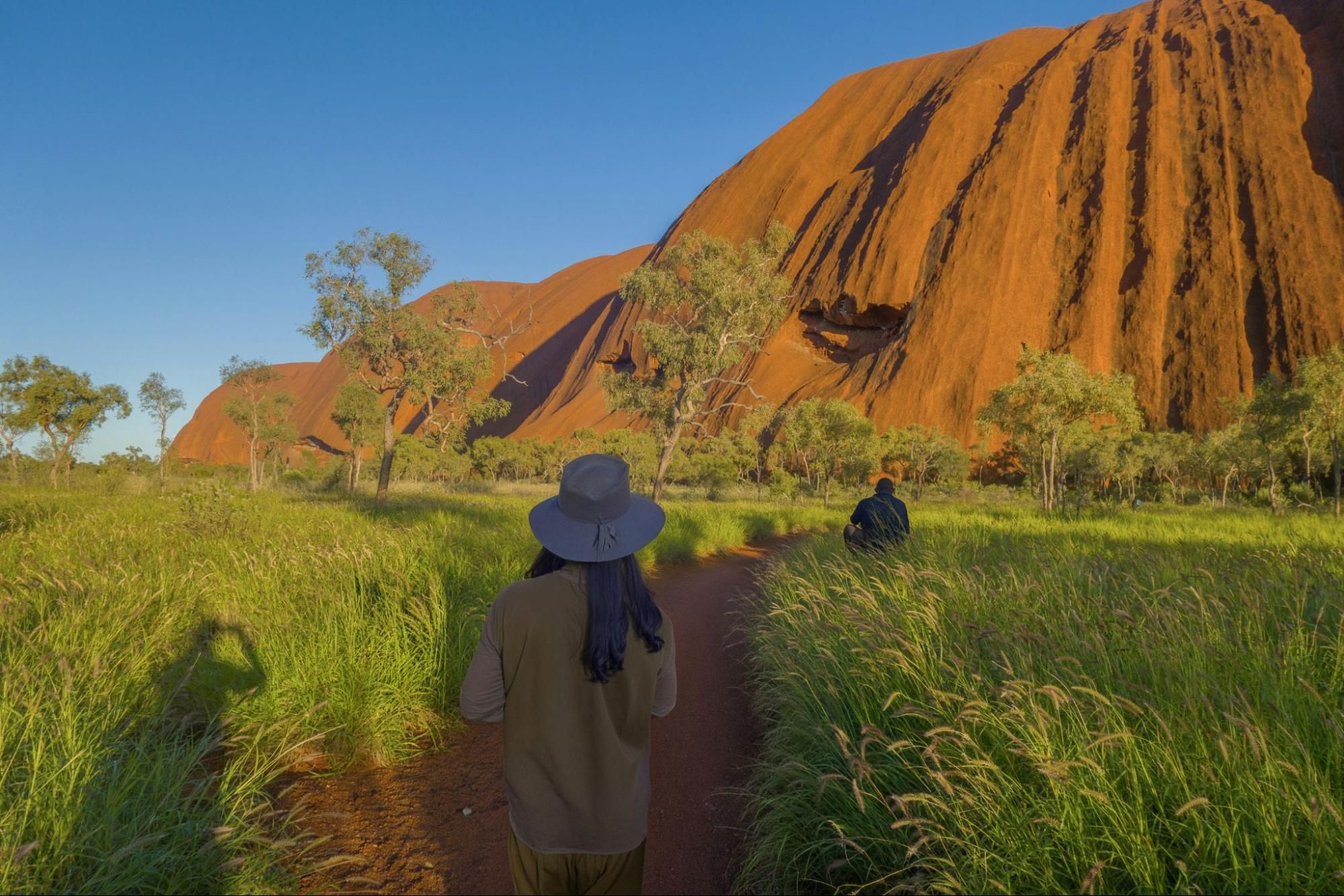 A single rock formation in the middle of the Australian desert should not hold the attention the way Ayers Rock in Australia does. But the combination of size, colour, cultural weight, and the way the landscape around it strips everything else away is what keeps people coming back and what kept the Anangu people connected to this place for tens of thousands of years.
- Where it is: Central Australia, Northern Territory, about 450km southwest of Alice Springs
- What it is: A sandstone formation rising 348 metres above the desert, extending an estimated 2.5km below the surface
- Official name: Officially called Uluru. "Ayers Rock" was the European name given in 1873. Both are used, but Uluru is primary
- Ayers Rock meaning: Named after Sir Henry Ayers, then Chief Secretary of South Australia. "Uluru" is the Anangu name with deep spiritual significance.
- UNESCO status: Uluru-Kata Tjuta National Park, a UNESCO World Heritage Site since 1987 for both natural and cultural importance
- How big is Ayers Rock: 348 metres high, 9.4km around the base
- How was Ayers Rock formed: Ancient sediment compressed into sandstone around 550 million years ago. Erosion removed the softer surrounding rock, leaving the harder formation standing.
- Changing colour: Appears red, orange, purple or darker depending on sunlight, time of day and moisture. Most intense at sunrise and sunset
- Anangu connection: The Anangu are the Traditional Owners. Uluru holds deep spiritual meaning connected to ancestral creation stories.
- Tjukurpa: The Anangu cultural framework connecting people, ancestors, land and law. Living practice, not ancient history
- Climb closure: Permanently closed 26 October 2019, following the Anangu Traditional Owners' longstanding request
- Current importance: Base walks, cultural tours, Field of Light, camel rides, sunrise and sunset viewing. The visit has more substance without the climb than most people expect
How Do You Get to Ayers Rock?
The desert location means reaching Uluru takes some planning, but the infrastructure at Yulara and Ayers Rock Airport makes it more straightforward than it looks on a map.
By Air
- Fly directly to Ayers Rock Airport (AYQ), about 6 km from Yulara. Virgin Australia, Qantas and Jetstar operate flights to Yulara. Direct flights are available from Sydney, Melbourne, Brisbane and Cairns. Also, free Ayers Rock Resort shuttle connects the airport with Yulara hotels.
By Road
- From Alice Springs: Uluru is approximately 450 km away, around a 5-hour drive via the Stuart Highway and Lasseter Highway.
- Driving yourself: The roads are sealed and well maintained, but fuel stops are spread out, so plan your fuel and supplies in advance.
Do You Need a Car?
Not necessarily. You can use the resort shuttle and join guided tours with pick-up from your hotel. A car gives you more freedom for independent sunrise and sunset visits and for visiting Kata Tjuta.
Getting around
Uluru Hop On Hop Off is a paid shuttle service connecting the resort with Uluru and Kata Tjuta. The free resort shuttle operates only around Yulara and does not enter the national park. Guided tours handle all transport for specific activities.
What is the Best Time to Visit Uluru?
May to September is the best time to visit Uluru. Days stay around 20 to 27°C, nights are cold, and the weather is better for walking. Summer can cross 40°C, making long outdoor walks tough.
What Are the Best Things to Do at Ayers Rock?
 The climb is closed, but the experiences that replaced it are genuinely more interesting than walking up and down ever was. The base of Uluru, the desert around it and the guided cultural programme give the visit more depth than a single climb could.
Uluru Base Walk
The walk takes 3 to 4 hours at a comfortable pace and passes waterholes, rock art, caves and sections of the rock face that look completely different from each other. Ranger-guided Mala Walks cover a shorter section with cultural commentary and are free. Self-guided walks are available year-round.
Aboriginal-Guided Cultural Tours
Anangu-led tours explain the rock's significance through storytelling, bush food identification and cultural context. The SEIT Outback Australia Aboriginal Cultural Tour is one of the more established options. These tours give the visit a dimension that walking alone does not.
Field of Light
Bruce Munro's installation covers an area larger than seven football fields with over 50,000 illuminated glass spheres that glow in shifting colours after dark. Now in its 10th year at Uluru, the installation has been extended indefinitely. General admission is AUD 50 per adult, AUD 39 per child, and includes a self-guided walk and return coach transfer.
Camel Rides
Camel tours run at sunrise and sunset through the red sand dunes near the resort, with Uluru visible in the background. The rides last approximately one hour and are run by Uluru Camel Tours.
Scenic Flights
Helicopter and fixed-wing flights over Uluru and Kata Tjuta give a perspective of the formations that ground-level visits cannot. Flights range from 15 minutes (Uluru only) to 40 minutes (Uluru plus Kata Tjuta plus Lake Amadeus).
Sunrise and Sunset Viewing
Designated viewing areas on both the sunrise and sunset sides of Uluru are accessible by car or shuttle. The colour change on the rock face during these windows is the most photographed moment at the site. Arrive 30 to 45 minutes early for positioning.
What Nearby Places Are Worth Visiting?
Kata Tjuta (The Olgas)
Distance: 25km from Uluru (approximately 30 minutes by car)
Why visit: A group of 36 domed rock formations, some taller than Uluru itself. The Valley of the Winds walk (7.4km loop, 3 to 4 hours) passes between the domes with wide views at every turn. Less visited than Uluru despite being equally impressive in scale. Covered by the same national park pass.
Kings Canyon (Watarrka)
Distance: 300km from Uluru (approximately 3 to 3.5 hours by car)
Why visit: A deep sandstone canyon with a 6km rim walk that passes the Garden of Eden (a permanent waterhole surrounded by palms) and weathered sandstone domes called the Lost City. Best as an overnight addition or a long day outing. The rim walk involves a steep climb at the start.
What Should You Know Before Visiting Ayers Rock?
A few things that make the visit smoother and more respectful.
- Sacred site: Uluru is a living cultural landscape, not a geological exhibit. Follow all signage, stay on marked paths, and do not photograph restricted sacred sites (clearly signed)
- Park access: A park pass is required. AUD 38 per adult for 3 days, AUD 50 for an annual pass. Children under 17 are free. Purchase online at Parks Australia before arrival.
- Walking: The base walk is flat and sealed. Kata Tjuta's Valley of the Winds involves uneven ground and moderate climbs. Both are manageable for most fitness levels.
- Heat: Summer temperatures regularly exceed 40 degrees Celsius. Carry at least 2 to 3 litres of water per person.
- Flies: Persistent in warmer months. A fly net (available at the resort shop) is genuinely useful rather than an overreaction.
- Photography: Photographs are welcome in most areas. Some sections of the base walk have signs requesting no photography due to cultural sensitivity. Respect every sign
- What to skip with limited time: If you only have one day, prioritise a sunrise base walk at Uluru and an afternoon at Kata Tjuta. Field of Light after dark completes the day.
- Climb: Permanently closed. Do not plan around reopening. The closure is not under review.
Conclusion
Ayers Rock is a place that delivers more than the photograph promises, which is rare for a landmark this well known. The base walks, the cultural tours, the Field of Light after dark and the sheer presence of the rock against the desert all add up to a visit that works better now than it did when climbing was the main activity.
Holiday Tribe builds Uluru into structured Australia holiday packages that combine the Red Centre with Sydney, Melbourne, the Great Barrier Reef or the wider Northern Territory. Our holiday advisors can help plan the route, the stays and the timing so the visit fits the rest of the itinerary. Flights are not included unless you want them added.