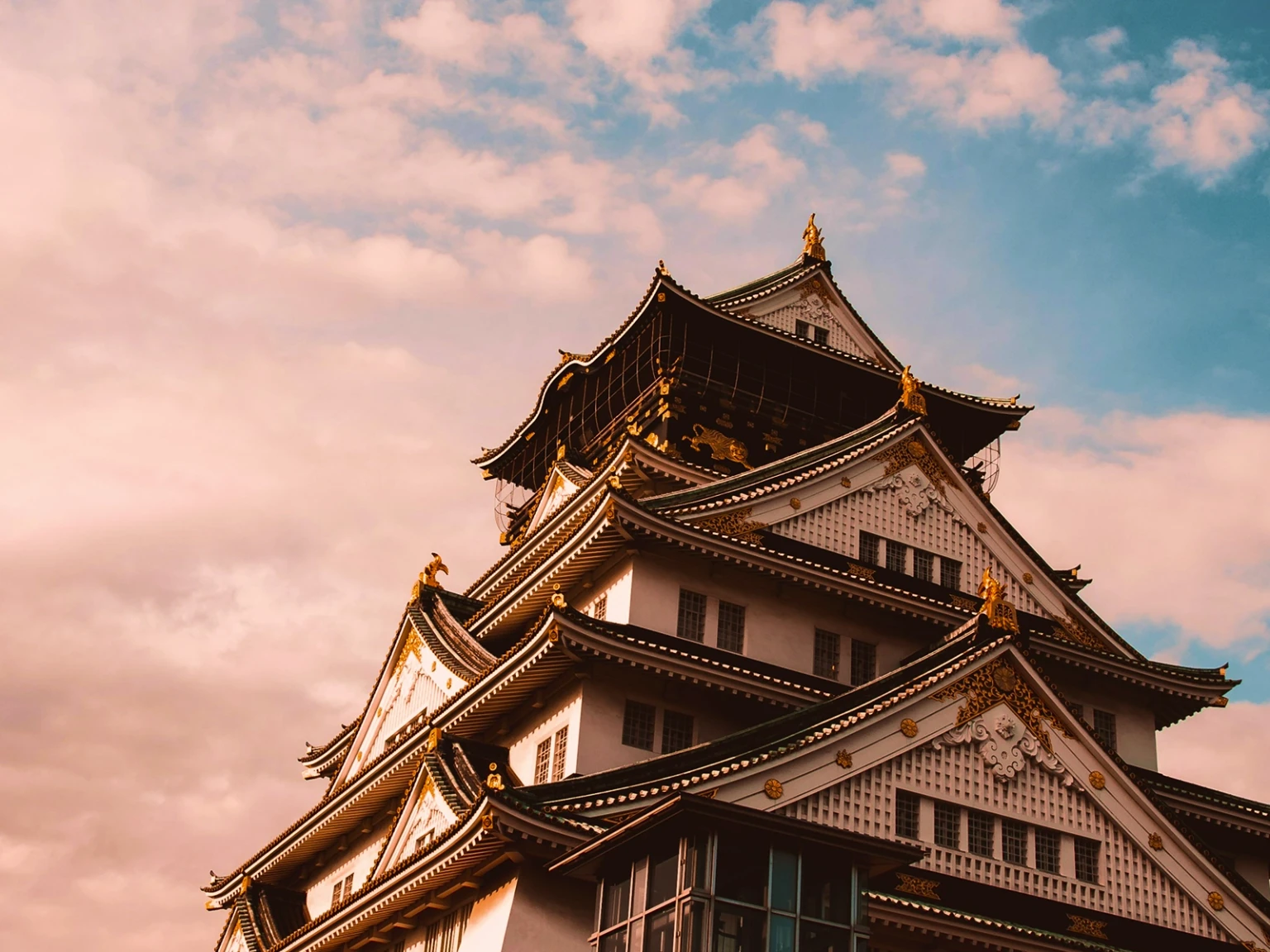


Osaka is Japan's third-largest city, famous for its vibrant food scene, modern skyline, and long history. At its center is Osaka Castle, a well-known landmark and symbol of the city. The castle is now an eight-floor museum inside a rebuilt tower, surrounded by the large Osaka Castle Park. You can also visit Nishinomaru Garden, take a boat ride on the moat, and visit the Toyotomi Stone Wall Museum, which opened in April 2025.
This guide will cover the castle's history, what the Osaka Castle ticket includes, a floor-by-floor look inside, top nearby hotels, and ideas for what to do after your visit.
What Is the History of the Castle?
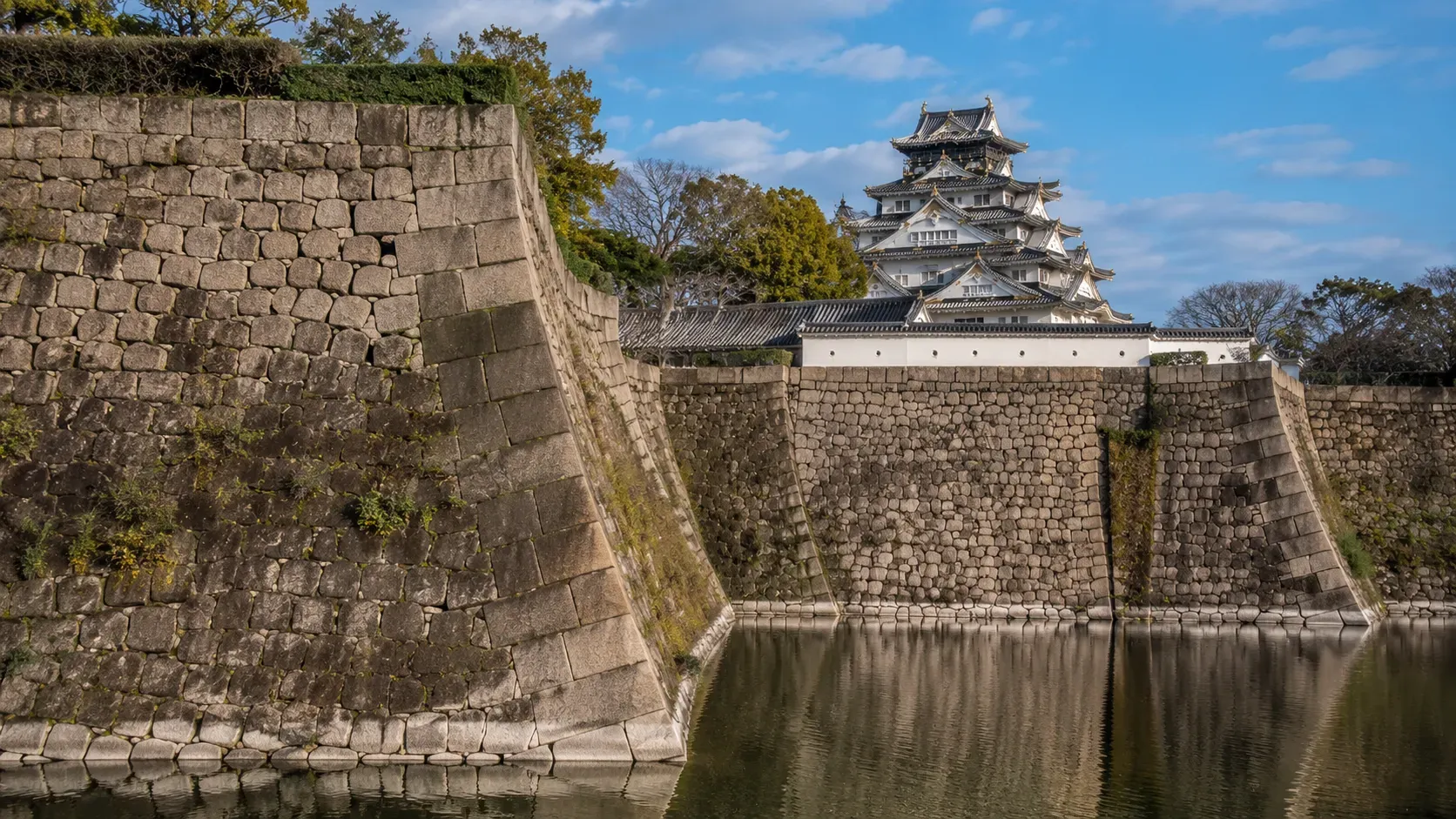
Osaka Castle was originally built in 1583 by Toyotomi Hideyoshi, a samurai and feudal lord who helped unify Japan. At the time, it was the largest castle in the country and took over 100,000 workers more than three years to finish.
The original castle did not last long. It was attacked and destroyed in 1614 during the Tokugawa conquest. Tokugawa Hidetada rebuilt it in the 1620s, but a lightning strike in 1660 set the gunpowder warehouse on fire. Then, in 1665, lightning struck again and destroyed the main tower.
The castle you see today is a reconstruction finished in 1931. Some original features from the 1620s, such as stone walls, moats, and turrets, still remain and are recognised as Important Cultural Properties by the Japanese government. The Toyotomi Stone Wall Museum, opened in April 2025, lets visitors see the original 1583 walls that were buried underground after the 1615 siege.
Year | Event | What Survived |
1583 | Original castle built by Toyotomi Hideyoshi | Foundation buried underground |
1614 | Attacked and destroyed during Tokugawa conquest | Nothing from this period |
1620 | Rebuilt by Tokugawa Hidetada | Stone walls, moats, and turrets (Important Cultural Properties) |
1660 | Lightning strikes gunpowder warehouse; fire damages the castle | Partially survived |
1665 | Main tower (tenshu) struck by lightning and destroyed | Stone walls, moats, and turrets remained |
1868 | Burnt down during civil conflict | Outer stone walls and moat |
1931 | Current reconstruction completed | Full castle exterior and museum |
2025 | Toyotomi Stone Wall Museum opens | Original 1583 walls now publicly visible |
Want to continue your Japan itinerary? Read our guide to the Things to Do in Japan for more must-visit attractions across the country.
What Should You Know About the Osaka Castle Ticket?
The Osaka Castle ticket now includes entry to both the main castle tower museum and the Toyotomi Stone Wall Museum, which opened in April 2025. This combined ticket has replaced the old single-tower ticket and is now the standard option for everyone.
Osaka Castle ticket prices (as of July 2026):
Visitor Type | Osaka Castle Ticket Price | Notes |
Adults | ¥1,200 | Includes castle museum and Stone Wall Museum |
High School / University Students | ¥600 | Valid ID required |
Junior High School and younger | Free | All children under 15 |
Nishinomaru Garden (separate) | ¥200 adults; Free for children | Not included in main ticket |
Gozabune Boat Ride (separate) | ¥1,800 adults / ¥1,200 seniors (65+) / ¥900 children | Not included in main ticket |
Standard hours: 9:00am to 5:00pm daily; last entry 4:30pm | Cherry blossom season 2026 (20 March to 12 April): extended until 9:00pm | Closed: 28 December to 4 January
Getting there:
- Tanimachi 4-chome Station (Tanimachi Line and Chuo Line, Exit 9): 10-minute walk; recommended for the main Otemon Gate entrance and Nishinomaru Garden
- JR Osaka-jo-koen Station (JR Loop Line): 15-minute walk; recommended during cherry blossom season for a pleasant approach through the park
It's a good idea to book your Osaka Castle ticket online through the official website, especially during cherry blossom season and public holidays, since lines at the ticket counter can get quite long.
What Can You See Inside the Osaka Castle Interior?
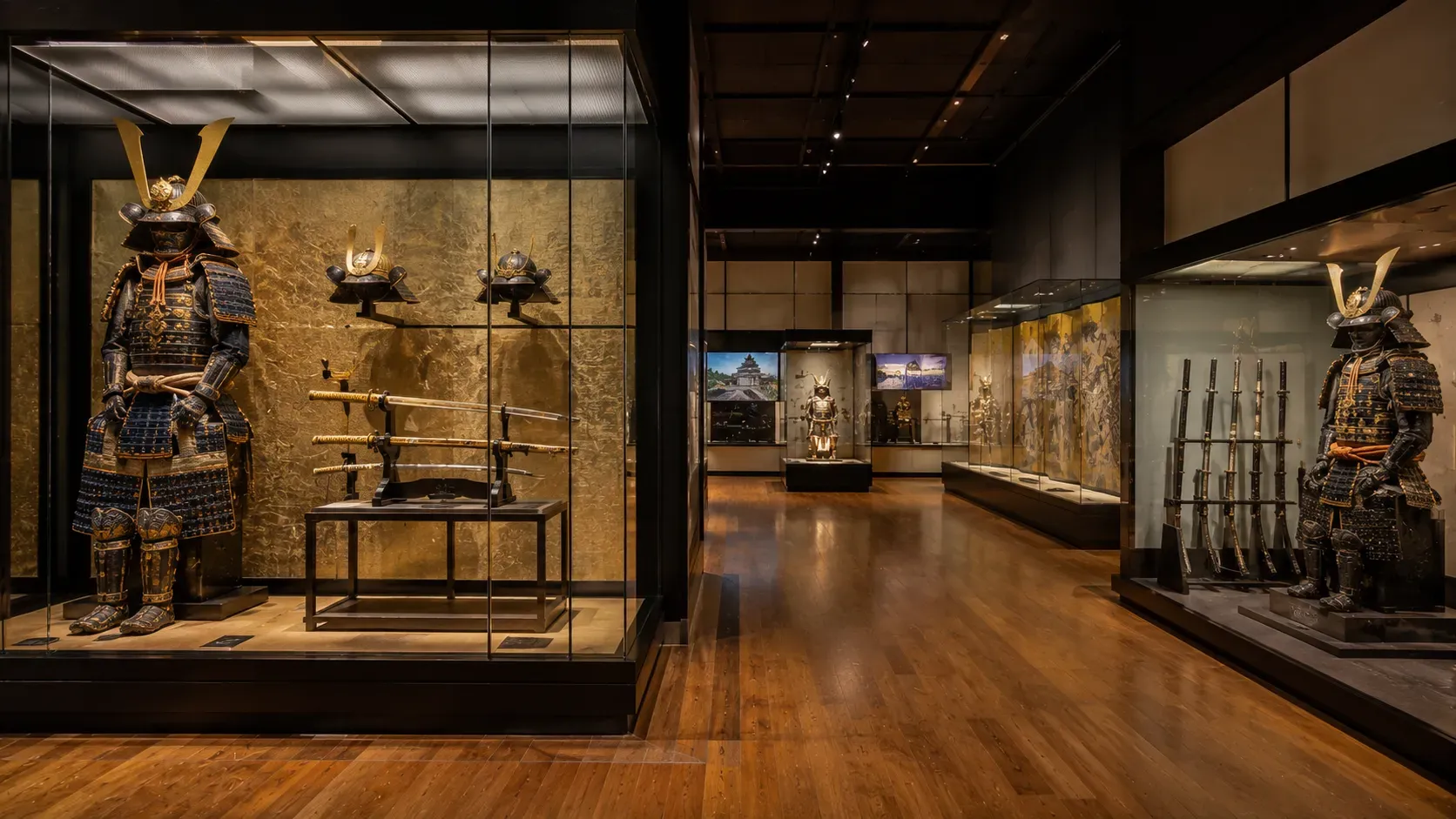
The Osaka Castle interior is a fully modern museum within its historic walls. There are both stairs and an elevator, but the elevator only goes up to the 5th floor. To reach floors 6 to 8, you'll need to use the stairs.
Tribe Travel Tip: Take the elevator up to the 5th floor, then walk up the last three floors to reach the observation deck. After that, you can check out each museum floor as you head back down.
Floor-by-floor breakdown of the Osaka Castle interior:
Floor | Theme | Key Exhibit |
1 (Ground) | Entrance level | Information centre, small theatre, souvenir shop |
2 | Castle construction | Golden replica of the shachihoko (half-carp, half-tiger roof ornament) |
3 and 4 | Sengoku period and Toyotomi Hideyoshi | Samurai armour, helmets, swords; replica helmet of Toyotomi available to try |
5 and 6 | The Summer War of 1615 (Osaka Natsu no Jin) | Interactive folding screen with digital zoom; miniature warrior battle dioramas |
7 | Daily life at the castle | 19 hologram dioramas of Toyotomi's family life, seasonal celebrations, and court routines |
8 (Top) | Observation deck | 360-degree panoramic view of Osaka; safety net present on the perimeter |
Here are a few things to know about experiencing the Osaka Castle interior:
- The exhibits rotate partially every two months, particularly on floors 3 and 4
- You can take photos throughout the museum, including on the observation deck. For the clearest shots, try to position your camera lens past the safety net.
- The hologram dioramas on the 7th floor are especially interesting parts of the Osaka Castle interior and worth spending a little extra time to see.
- The observation deck can get crowded between 10am and 2pm on busy days. Arriving early will make your visit to the Osaka Castle more comfortable.
What Makes Osaka Castle Park Worth Visiting?
Osaka Castle Park is a large green space, covering 105.6 hectares and surrounding the castle. It's free to enter and open all day and night. Locals often come here to jog, cycle, or have picnics, so it feels more like a community park than a typical tourist spot.
There are a couple of highlights to look out for: Ginkgo Avenue, a one-kilometre stretch near the softball field and Osaka-Jo Hall, which turns bright yellow in November. There's also a 300-year-old ginkgo tree near the main keep. Osaka-Jo Hall, inside the Osaka Castle Park, can seat up to 16,000 people and often hosts concerts and events.
Cherry blossom season, from late March to early April, is the busiest time in the park. It becomes one of the most popular places in the Osaka Castle’s area for hanami, or cherry blossom viewing.
Season | Best Feature | Best Viewing Spot in the Park |
Spring (Mar to Apr) | Cherry blossoms; hanami gatherings | Nishinomaru Garden; south outer moat lawn |
Summer (Jun to Aug) | Green canopy; summer festivals | Along the Gokuraku Bridge moat path |
Autumn (Oct to Nov) | Ginkgo Avenue turns bright yellow | Ginkgo Avenue near Osaka-Jo Hall; 300-year-old ginkgo near the main keep |
Winter (Dec to Feb) | Plum grove blossoms; winter illumination | Plum Grove (1,245 trees of 105 varieties); Nishinomaru Garden (illumination) |
What Can You See at Nishinomaru Garden?
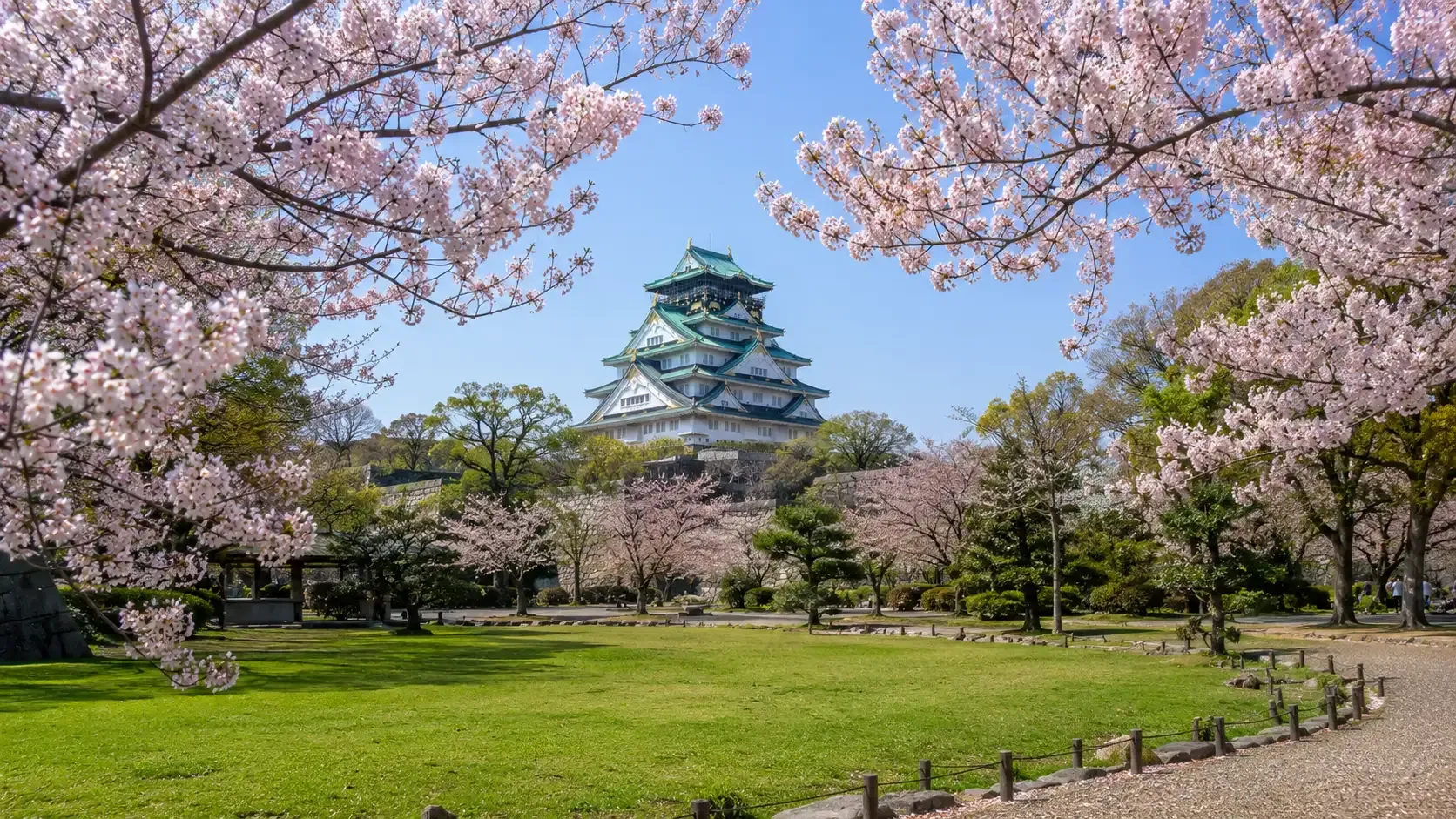
Nishinomaru Garden is on the west side of the castle and covers 60,000 square meters. It was once the home of Lady Nene, Toyotomi Hideyoshi's wife. Entry costs ¥200 for adults and is free for children. The garden is not included in the main Osaka Castle ticket.
The garden has about 300 cherry trees and is Osaka's top spot for cherry blossom viewing in late March and early April. In winter, from November to February, Nishinomaru Garden hosts a big illumination event with over 3 million LED lights and a new theme each year.
Opening hours:
- March to October: 9am to 5pm
- November to February: 9am to 4:30pm
- Cherry blossom and winter illumination periods: Open until 9pm; closed Mondays except during illumination events
The Gozabune Boat Ride:
The Gozabune is a golden tourist boat modelled after Toyotomi Hideyoshi's original leisure boat, depicted in a 17th-century folding screen now in Graz, Austria. The ride lasts about 20 minutes and circles the castle's inner moat, with an audio guide provided.
- Operates daily: 10am to 4:30pm (final departure)
- Frequency: every 10 to 15 minutes
- You can buy tickets at the booth near Gokurakubashi Bridge. On busy days, it's best to buy early, since tickets can sell out by early afternoon.
- For the best photos of the castle, try to sit on the left side of the boat.
Where Are the Best Hotels in Osaka Near the Castle?
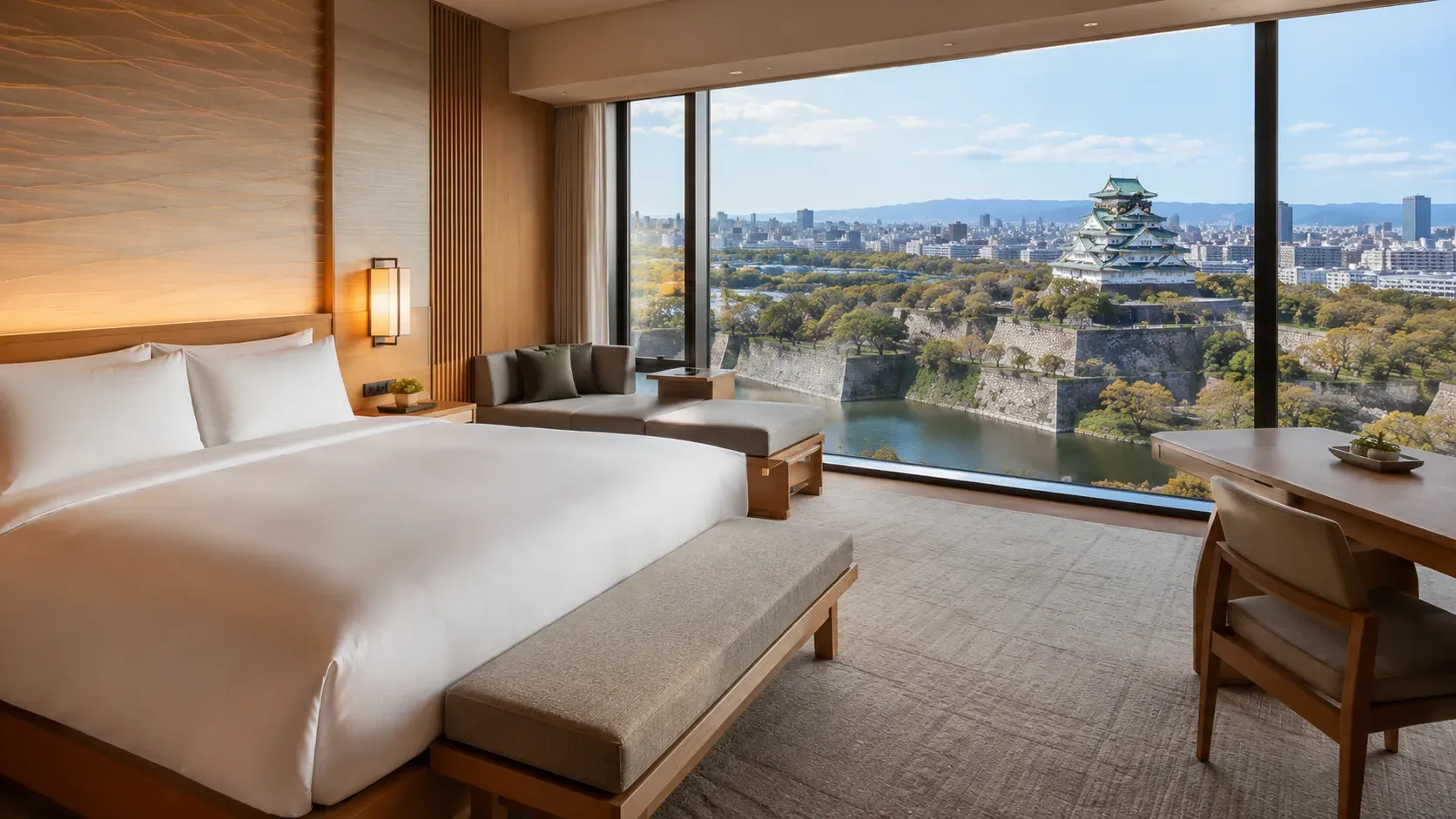
The areas for the best hotels in Osaka are Chuo Ward, which is right around the castle, and Namba or Shinsaibashi. These last two are about 20 to 25 minutes away by metro and make it easy to reach Dotonbori's dining and entertainment.
Best hotels in Osaka within or adjacent to the castle district:
- DoubleTree by Hilton Osaka Castle: Directly adjacent to the castle grounds; upper-floor rooms have castle views; indoor pool and 24-hour gym on-site; rates from approximately ¥30,000 per night
- Patina Osaka (opened 2025): Luxury 5-star hotel with a 20-metre indoor pool, sauna, steam room, and hot tub; Sonata Bar on the top floor has castle views and DJ events on Friday nights; rates from approximately ¥50,000 per night
If you want to be close to Dotonbori Osaka and the Namba area, hotels in Shinsaibashi or Namba are about 20 minutes from the castle by metro (Chuo Line). You'll also be within walking distance of Osaka's main restaurant and shopping areas.
Property | Area | Approx. Rate Per Night (¥) | Distance to Osaka Castle |
DoubleTree by Hilton Osaka Castle | Chuo Ward (castle-adjacent) | From ¥30,000 | Walking distance |
Patina Osaka | Chuo Ward (castle area) | From ¥50,000 | 10-minute walk |
Hotels in Shinsaibashi | Shinsaibashi / Namba | Varies | 20 min by metro (Chuo Line) |
Hotels in Namba | Namba | Varies | 20 to 25 min by metro |
What Can You Do After Visiting Osaka Castle?
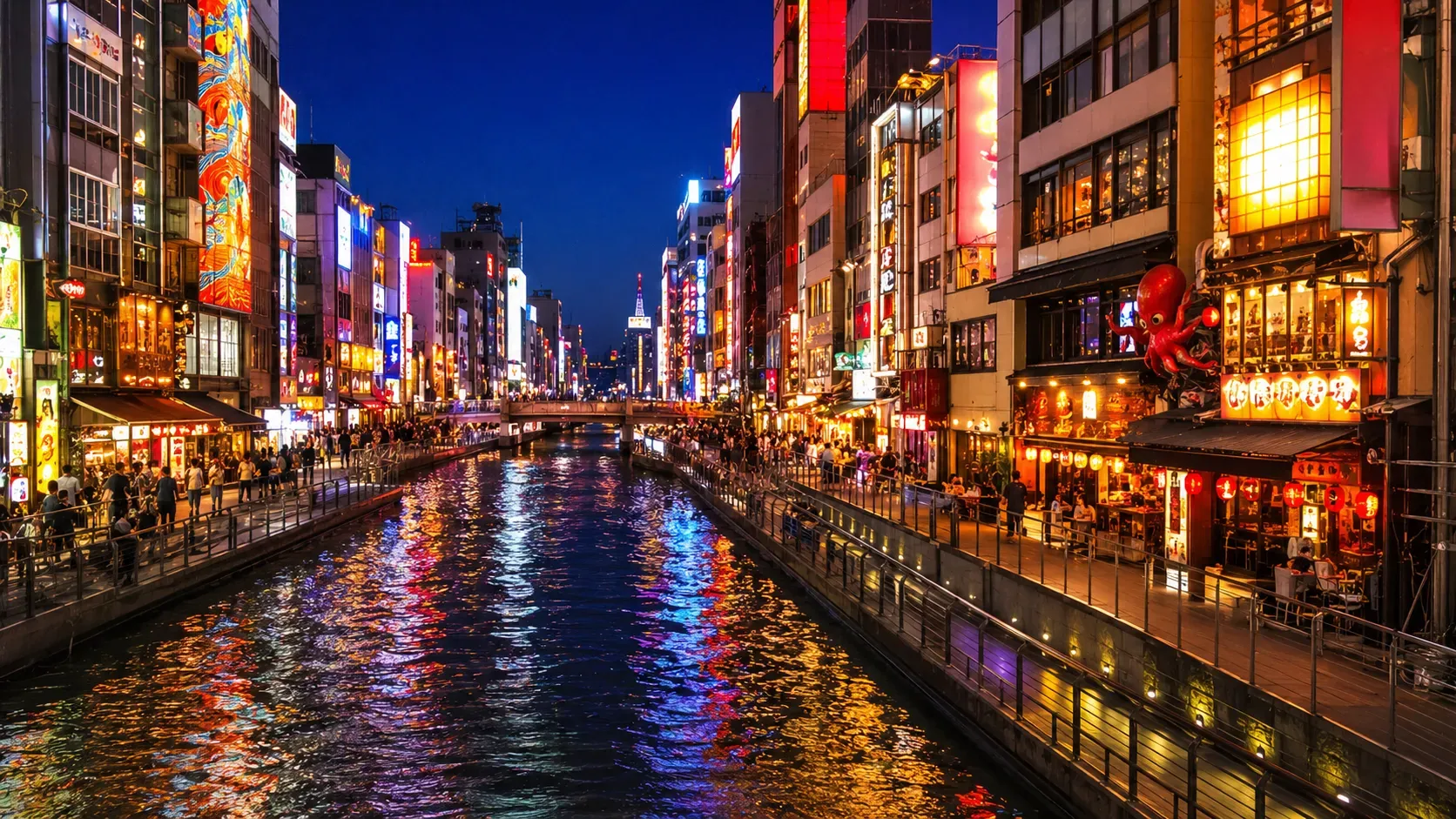
You can easily spend a full morning in Osaka Castle and its park. In the afternoon, most people visit one or two nearby attractions.
Attraction | Distance from Castle | Travel Time | Best For |
Dotonbori Osaka | 3.5 km south | 20 min by metro (Chuo Line to Nippombashi or Namba) | Evening dining, neon signs, street food |
Osaka Museum of History | 5 min walk (south side of castle) | 5 min walk | Osaka history; scale models of the original castle |
Shinsaibashi Shopping Street | 3.5 km south | 20 min by metro | Shopping, fashion, local brands |
Namba Parks | 4 km south | 20 to 25 min by metro | Rooftop garden, retail, dining |
Tennoji Zoo | 5 km south-west | 20 to 25 min by metro | Families, outdoor space |
Dotonbori, Osaka, is a great place to visit after a morning at the castle. This lively area is known for its riverside walkway, the famous Glico running man sign, takoyaki stands, okonomiyaki restaurants, and bright neon lights at night. It also connects to Shinsaibashi shopping street and Den Den Town, which is popular for electronics and anime.
The Osaka Museum of History is just a 5-minute walk from the castle and is a great stop if you want more background on the area. Before you go, check the museum entrance or official website for the latest information on combined tickets and prices.
Also Read: Our guide to the Places to visit in Osaka for more attractions, neighbourhoods, museums, and experiences to add to your itinerary.
Final Takeaway
Osaka Castle offers much more than just a tower to climb. The Osaka Castle Park, Nishinomaru Garden, Gozabune boat ride, and Toyotomi Stone Wall Museum all add something unique to your visit, making it easy to spend a whole morning here.
Be sure to book your Osaka Castle ticket online before you arrive. This lets you skip the line, which can get long during cherry blossom season and on weekends.
If you're planning a holiday to Osaka or Japan and want a custom itinerary with the castle, the best hotel for you, and time in places like Dotonbori, our travel advisors can help you plan it.