

The Cape of Good Hope sits at the end of a long, narrow peninsula south of Cape Town, where the land drops into the Atlantic. Most visitors come for the photograph beside the famous wooden sign, but the wider reserve holds enough coastline, walking trails, viewpoints and wildlife to fill a full day. This guide covers what the Cape of Good Hope actually is, six experiences worth building the visit around, and the practical details for getting there and getting around.
Key Takeaways
Key Information | Quick Answer |
Location | Cape Peninsula, about 60km south of Cape Town, within Table Mountain National Park |
What it is | A rocky coastal headland at the southwestern tip of the Cape Peninsula |
Main highlights | Cape of Good Hope signboard, Cape Point lighthouse, Flying Dutchman Funicular, Diaz Beach, coastal walks, wildlife |
Time needed | Half day minimum, full day recommended |
Entry | SANParks conservation fee: R515 per international adult, R250 per child (valid to 31 October 2026). Cashless only |
Getting there | Self-drive from Cape Town (about 1 hour) or guided day tour |
What Is the Cape of Good Hope?
A rocky headland where the Cape Peninsula ends and the Atlantic takes over. The cliffs, the wind and the water meeting below them are the main visual experience. The Cape of Good Hope sits inside the Cape of Good Hope section of Table Mountain National Park, a protected landscape that also includes Cape Point, the old lighthouse, Diaz Beach and several walking routes.
- Location: Southwestern tip of the Cape Peninsula, about 60km south of Cape Town city centre
- History: Bartolomeu Dias rounded this coastline in 1488 during the Portuguese exploration of a sea route to Asia. Indigenous Khoisan communities had lived in the region for thousands of years before European contact.
- Cape of Good Hope meaning: The name is attributed to King John II of Portugal, who saw the successful rounding of the Cape as a sign of "good hope" for reaching the Indian Ocean by sea.
- Geography: The Cape of Good Hope is not the southern tip of Africa. That distinction belongs to Cape Agulhas, about 150km to the southeast.
- Cape of Good Hope vs Cape Point: These are two separate landmarks within the same reserve. The latter is the higher headland with the old lighthouse and funicular. The Cape of Good Hope is the lower, western point with the famous wooden sign.
- Why visit: Coastline, cliffs, viewpoints, walking trails, wildlife (baboons, ostriches, bontebok) and one of the more distinctive coastal landscapes in South Africa
- Entry: SANParks conservation fee required at the gate. Cashless payment only
- Time needed: 3 to 5 hours covers the main stops comfortably
6 Experiences to Add to Your Cape of Good Hope Visit
The reserve covers more ground than the famous signboard suggests. These six experiences give a first-time visitor the strongest combination of views, walking, history and wildlife.
1. Stand at the Cape of Good Hope Signboard
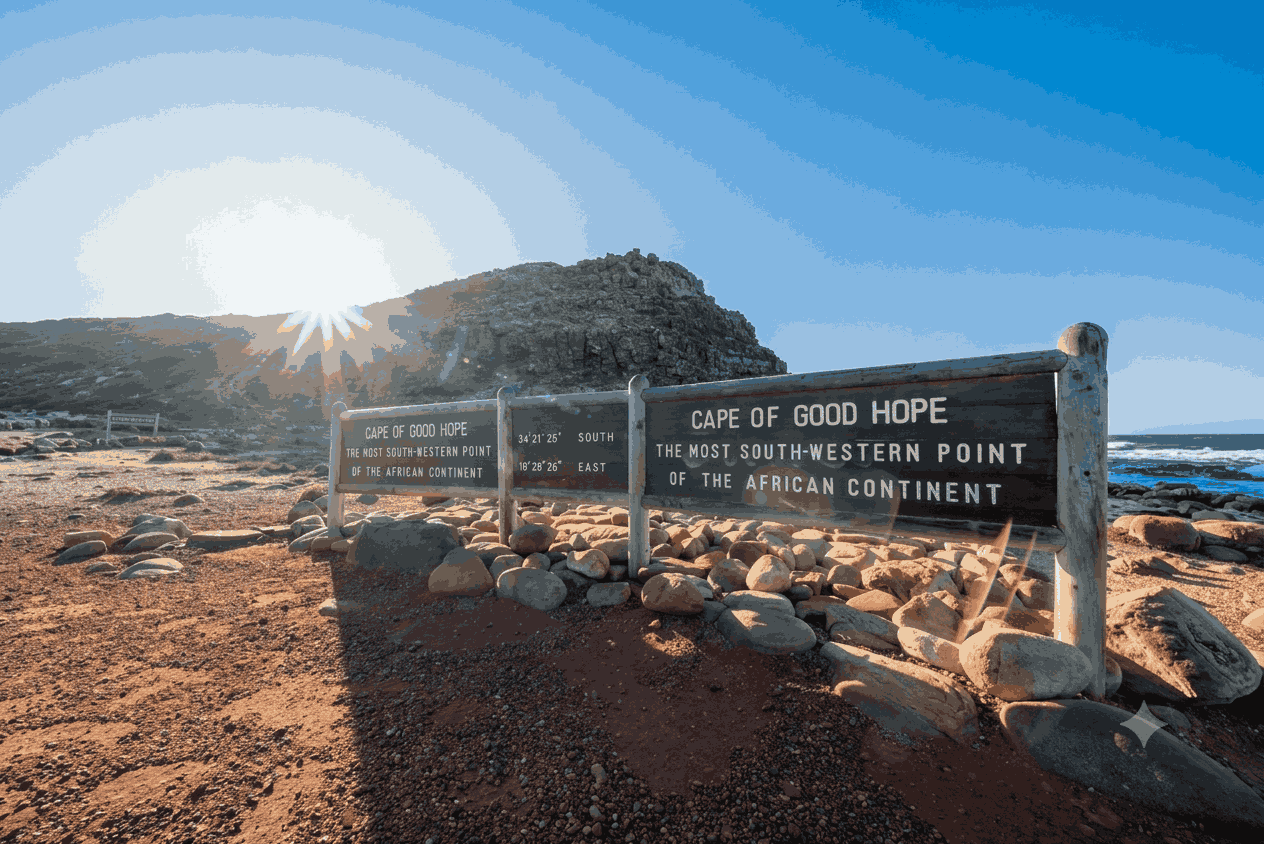 The wooden sign you see here is quite popular, with many visitors stopping to take photos. It marks the southwestern tip of the Cape Peninsula. It’s easy to understand why this place catches everyone’s attention when you see the cliffs dropping sharply towards the ocean. The coastal scenery makes the stop worth it.
Best For: The photograph, the view south, and understanding where the Cape of Good Hope is on the map
Time Needed: 20 to 30 minutes
2. Take the Flying Dutchman Funicular to the Cape Point Lighthouse
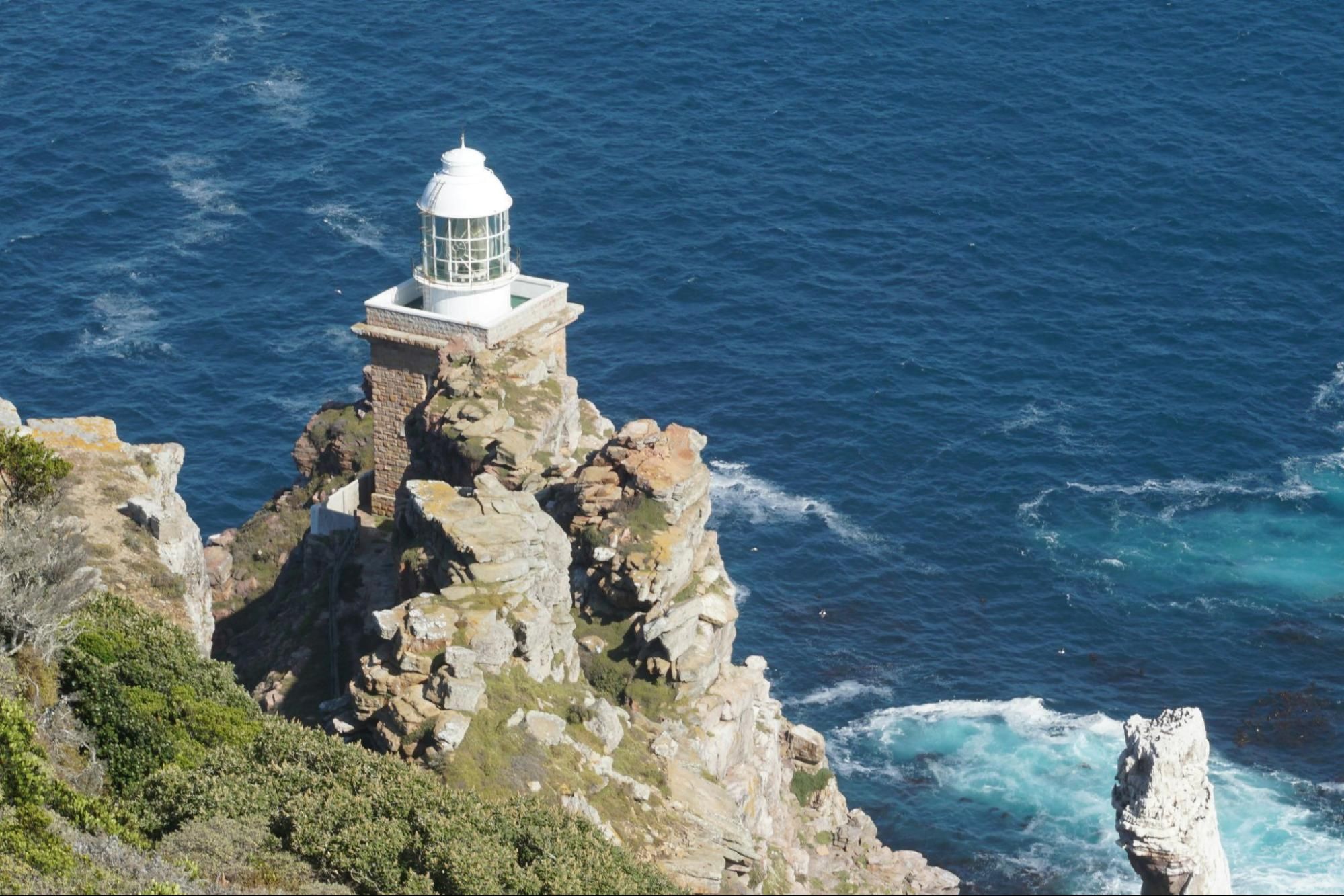 The funicular runs 585 metres up from the lower car park to the upper viewpoint near the old lighthouse at Cape Point. The ride takes about three minutes and saves a steep 20-minute climb. From the top, you look down at the point where the Atlantic and False Bay coastlines converge. The lighthouse itself dates from 1860 and was eventually replaced by a lower one after ships could not see its light through low cloud.
Best For: The highest viewpoint in the reserve, the lighthouse and the panoramic coastal views
Time Needed: 30 to 45 minutes (including the funicular and the walk to the lighthouse)
Practical Note: Funicular return: R115 adult, R60 child. Operates 9 am to 5.30 pm. Closed in high winds. Currently closed 20 July to 31 August 2026 for maintenance; scheduled to reopen 1 September 2026
3. Walk Down to Diaz Beach
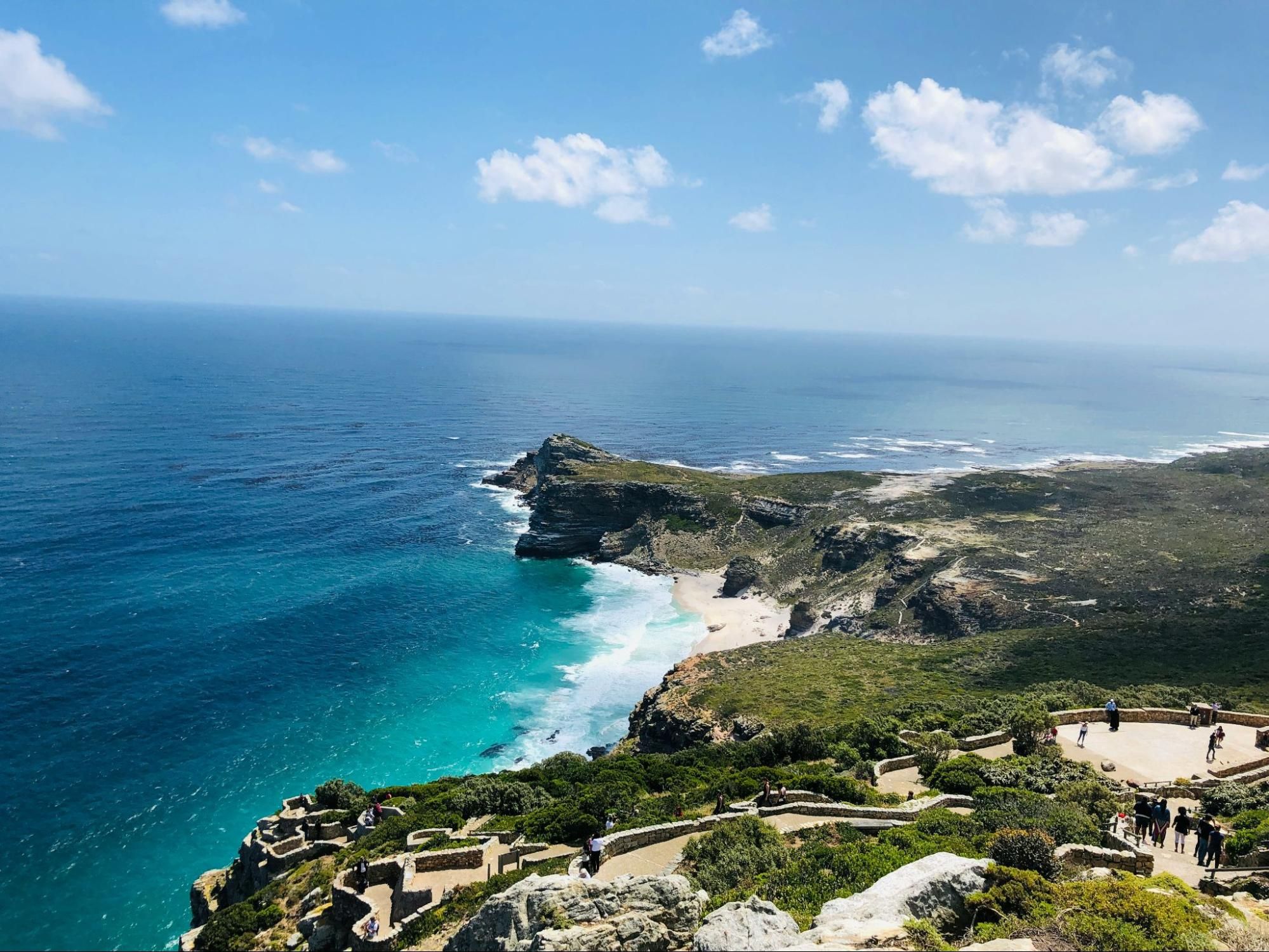
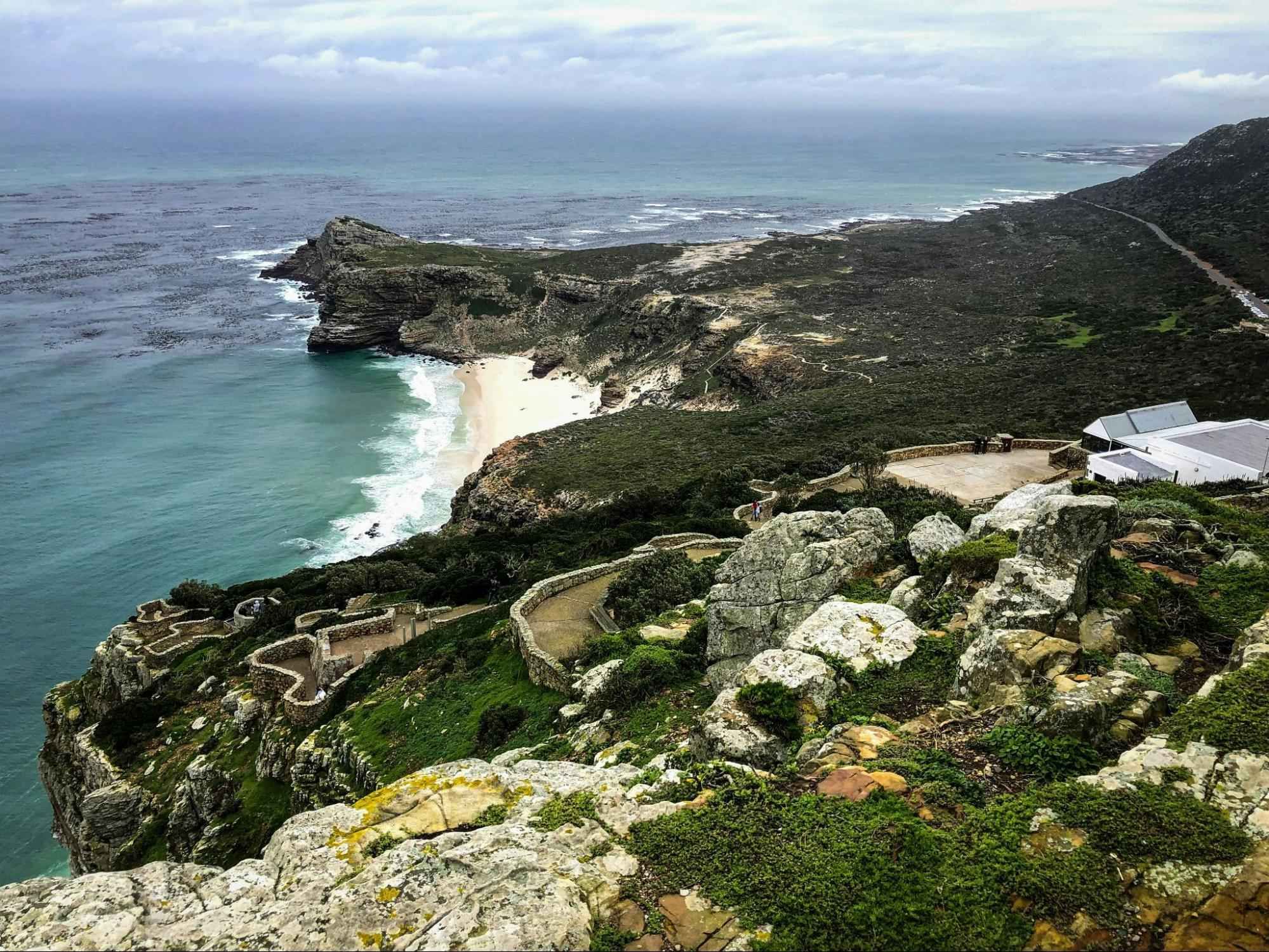 These steep stairs take you all the way down from the Cape Point car park to Diaz Beach. This small, quiet and uncrowded beach sits at the bottom of the cliffs. Naturally, the scenery is dominated by tall cliffs standing in different directions. You are sure to find this beach quiet because most visitors do not want to deal with the difficulty of getting down and climbing back up those stairs. The clean sand tempts you to walk along the shore. However, swimming here is not permitted because of the strong currents hitting the shore. The water is cold too.
Best For: A quieter beach stop, cliff views from below, and photographs looking back up at Cape Point
Time Needed: 30 to 45 minutes including the descent and return climb
4. Walk the Shipwreck Trail or Lighthouse Keepers' Path
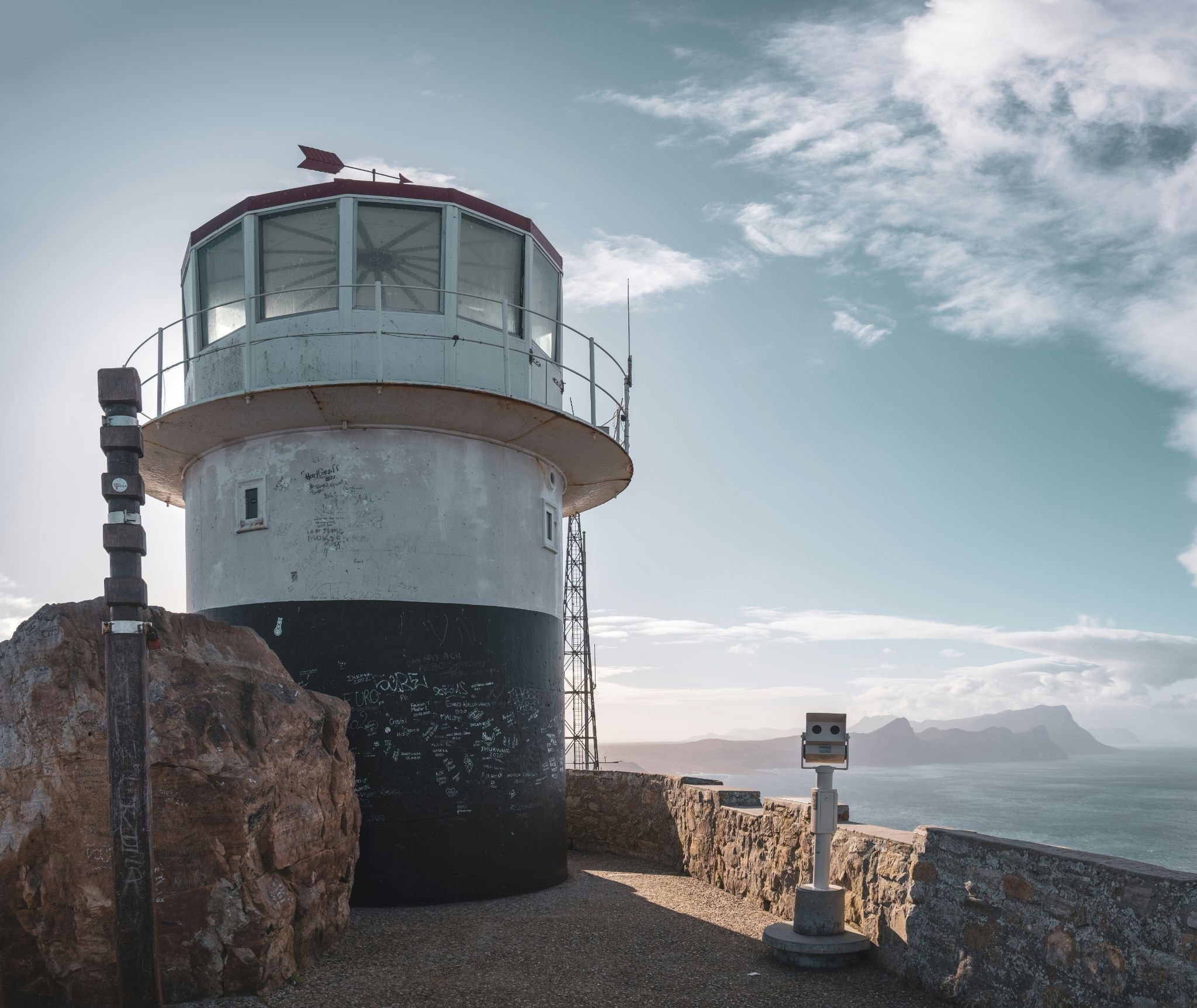 Two walking routes give different perspectives. The Lighthouse Keepers' Path follows the old route from the lower car park to the lighthouse (the walking alternative to the funicular, about 20 minutes uphill). The Shipwreck Trail runs along the coast for approximately 2km with views of the rocky shoreline and occasional markers noting past wrecks. Both are manageable for most fitness levels.
Best For: Coastal walking, views and getting away from the car park crowds
Time Needed: 30 minutes to 1.5 hours depending on the route
5. Watch for Wildlife Across the Reserve
 The reserve holds bontebok, eland, Cape mountain zebra, ostriches and baboons. Baboons are the ones to be cautious around. They will approach vehicles and take food from open bags. Keep car windows up, do not feed them, and keep food sealed and out of sight. Ostriches are often visible near the road. Bird species include Cape sugarbirds, sunbirds and various seabirds along the coast.
Best For: Wildlife spotting, photography and birdwatching
Time Needed: Ongoing throughout the visit (wildlife is visible along the roads and walking routes)
6. Drive Chapman's Peak on the Way There or Back
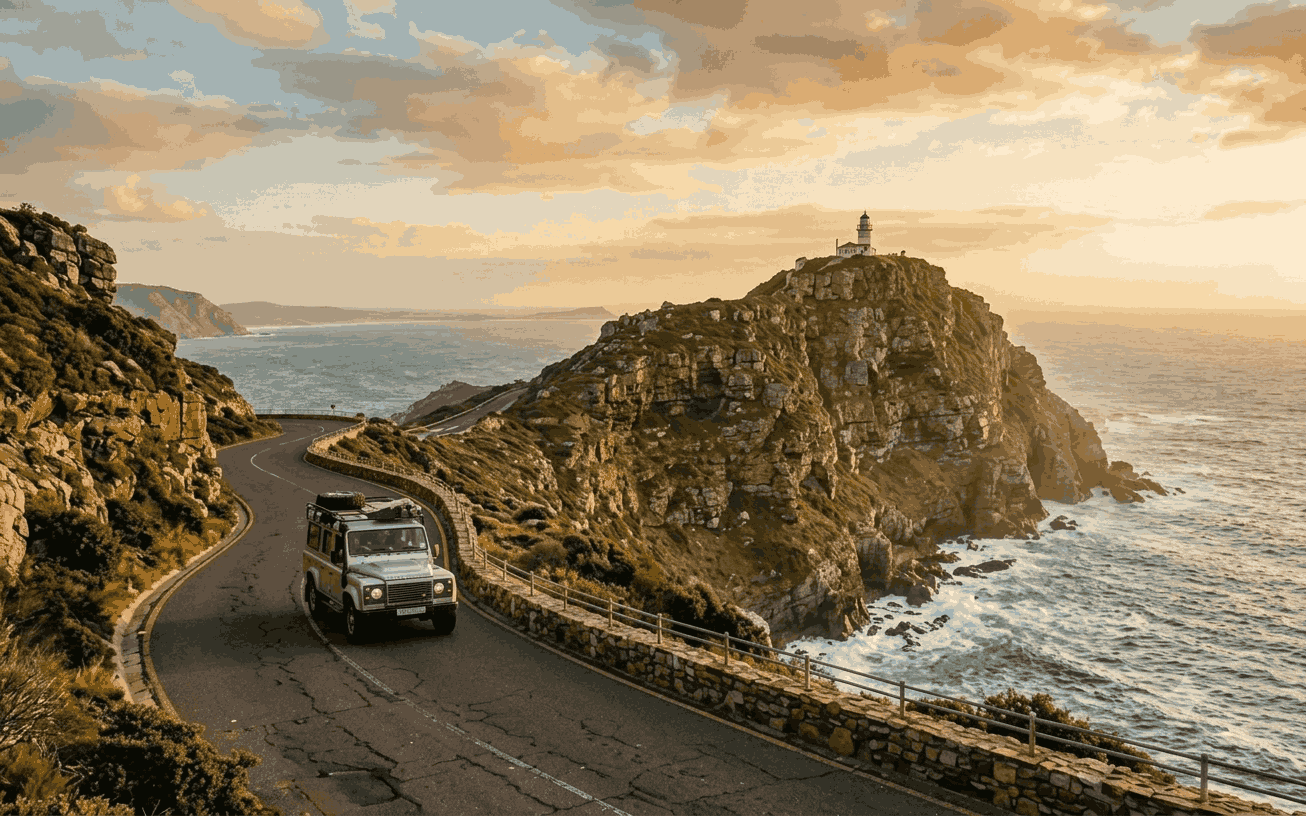 Chapman's Peak Drive is a 9km toll road carved into the cliffs between Hout Bay and Noordhoek, about 30 minutes north of the Cape of Good Hope reserve. It is not inside the reserve itself, but it sits on the most common driving route from Cape Town and is one of the most scenic coastal roads in South Africa. The road has multiple lookout points with views over the Atlantic.
Best For: A scenic drive with ocean views, best combined with the Cape of Good Hope as part of a full peninsula loop.
Time Needed: 20 to 30 minutes for the drive, longer with stops
Practical Note: Toll applies (approximately R52 per car in 2026). The road can close in high winds or bad weather
Things to Know Before Visiting the Cape of Good Hope
Visiting the Cape of Good Hope can be much more convenient and smooth if you plan each step beforehand. It is essential to know about ticket prices, accessible routes, photo spots and weather conditions to have a comfortable and hassle-free experience.
How Do You Get There?
The reserve sits about 60km from Cape Town. A car is the most practical option.
Self-drive
The most flexible choice. Takes about 1 hour from Cape Town via Chapman's Peak or the False Bay coastal road. You need a car inside the reserve to move between Cape Point, the Cape of Good Hope viewpoint and Diaz Beach (they are several kilometres apart)
Guided day tour
Many Cape Town operators run full-day Cape Peninsula tours that include the Cape of Good Hope, Cape Point, Boulders Beach and Chapman's Peak. A good option if you do not want to drive
Public transport
Not practical. No direct bus or train reaches the reserve.
Entry Fee, Opening Hours and Parking
The cost of entering this attraction along with the details of operating hours and parking facility is shared below.
Detail | Information |
International adult | R515 |
International child (2 to 12) | R250 |
South African adult | R105 |
South African child (2 to 12) | R50 |
Payment | Cashless only (Visa, Mastercard, Amex) |
Flying Dutchman Funicular (return) | R115 adult, R60 child. Purchased separately at Cape Point |
Summer hours (October to March) | 6am to 6pm |
Winter hours (April to September) | 7am to 5pm |
Parking | Available at Cape Point and the Cape of Good Hope viewpoint. Free with entry |
Prices valid 1 November 2025 to 31 October 2026 (SANParks). Wild Card holders enter free.
What to Know About Weather, Walking and Wildlife
There are a few small but important details that travellers often miss but are worth knowing before your visit.
Wind: The Cape is exposed and windy, particularly in the afternoon. Gusts can be strong enough to affect walking and photography. Dress in layers and bring a windproof jacket.
Walking surfaces: Paths to the lighthouse and Diaz Beach are uneven and steep in places. Wear closed, grippy shoes
Baboons: Do not approach, feed or leave food visible. They will open bags, enter vehicles and take anything edible. Keep windows closed when parked.
Sun and heat: Limited shade on most walks. Carry water and sun protection, particularly in summer.
Daylight: Plan to leave before the gate closes. Vehicles remaining after closing time can be fined.
Best Photo Spots at the Cape of Good Hope
One of the best ways to preserve your holiday memories is by capturing them in pictures. It is also important to know the best spots to take them.
Cape of Good Hope signboard: The classic shot, best in morning light when the sun is behind you
Cape Point lighthouse: Looking south from the top with the cliffs dropping away on both sides
Diaz Beach from above: The staircase lookout gives a wide view down to the cove
Chapman's Peak lookout points: Several pull-offs along the toll road with ocean and cliff views
Conclusion
The Cape of Good Hope fills a half to full day with coastline, cliffs, walking routes, wildlife and viewpoints that no other part of Cape Town quite matches. Cape Point adds the lighthouse and the funicular. Diaz Beach adds a quieter cove. Chapman's Peak adds one of the best coastal drives in the country. The key is arriving early, bringing a car and giving yourself enough time to see more than just the signboard.
Holiday Tribe builds the Cape of Good Hope and the Cape Peninsula into structured South Africa holiday packages that include Cape Town, accommodation, transfers and day tours. Our holiday advisors can help plan the route, the timing and the wider itinerary so the peninsula day fits the rest of the holiday properly.