

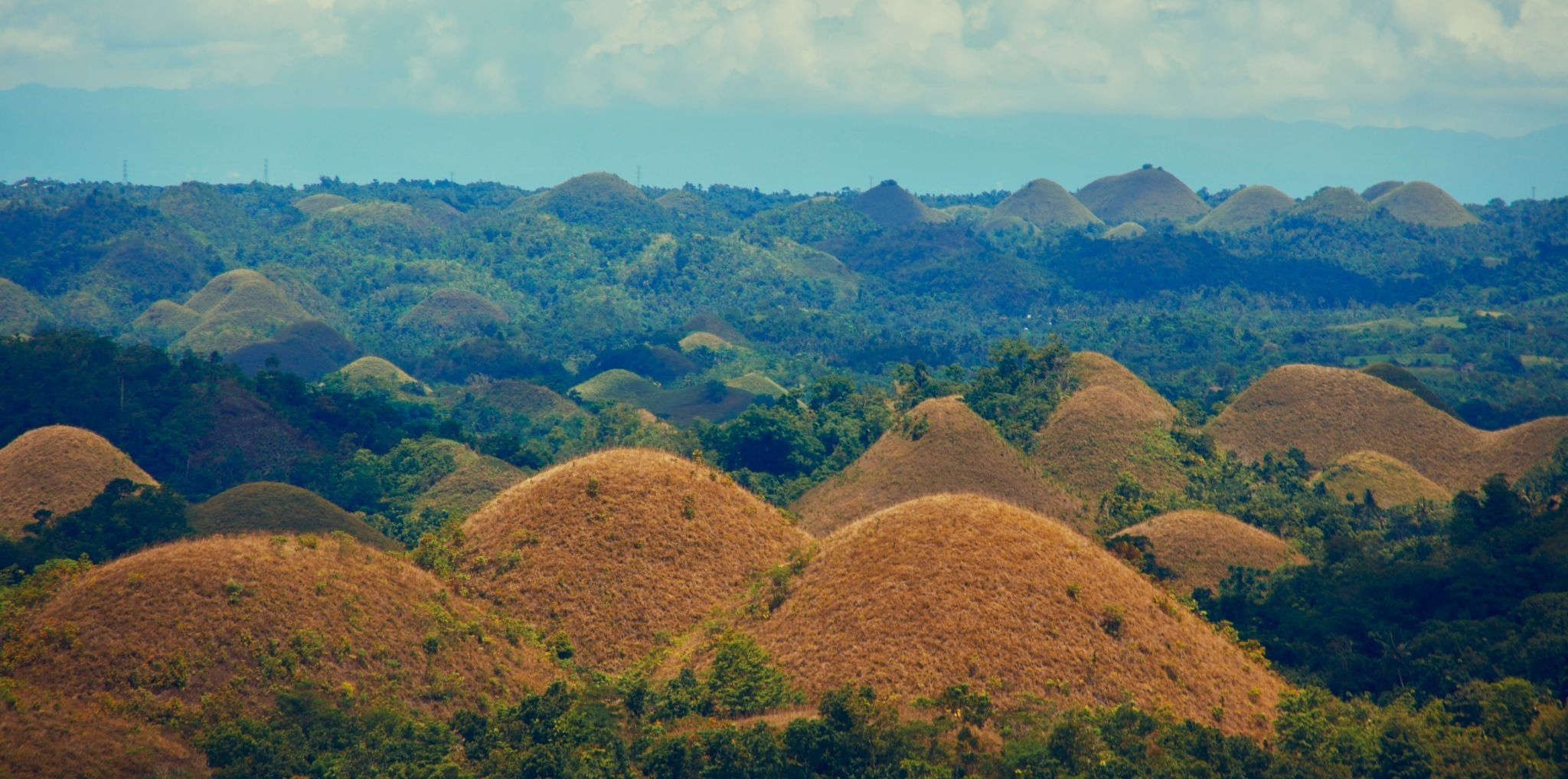
Standing at the top of the observation deck in Carmen, you are not looking at one hill. You are looking at a sea of over a thousand nearly identical, cone-shaped mounds stretching across central Bohol in every direction, all roughly the same height, all covered in the same dry grass that turns a warm shade of brown when the rains stop. That brown is the reason the Chocolate Hills are one of the most recognised natural landmarks in the Philippines, and also why the timing of your visit matters more than most people realise.
This guide covers what the Chocolate Hills are, when the colour peaks, how to reach them from Tagbilaran, Cebu and Manila, what to do once you are there, and what to know before you go.
What Are the Chocolate Hills and Where Are They Located?
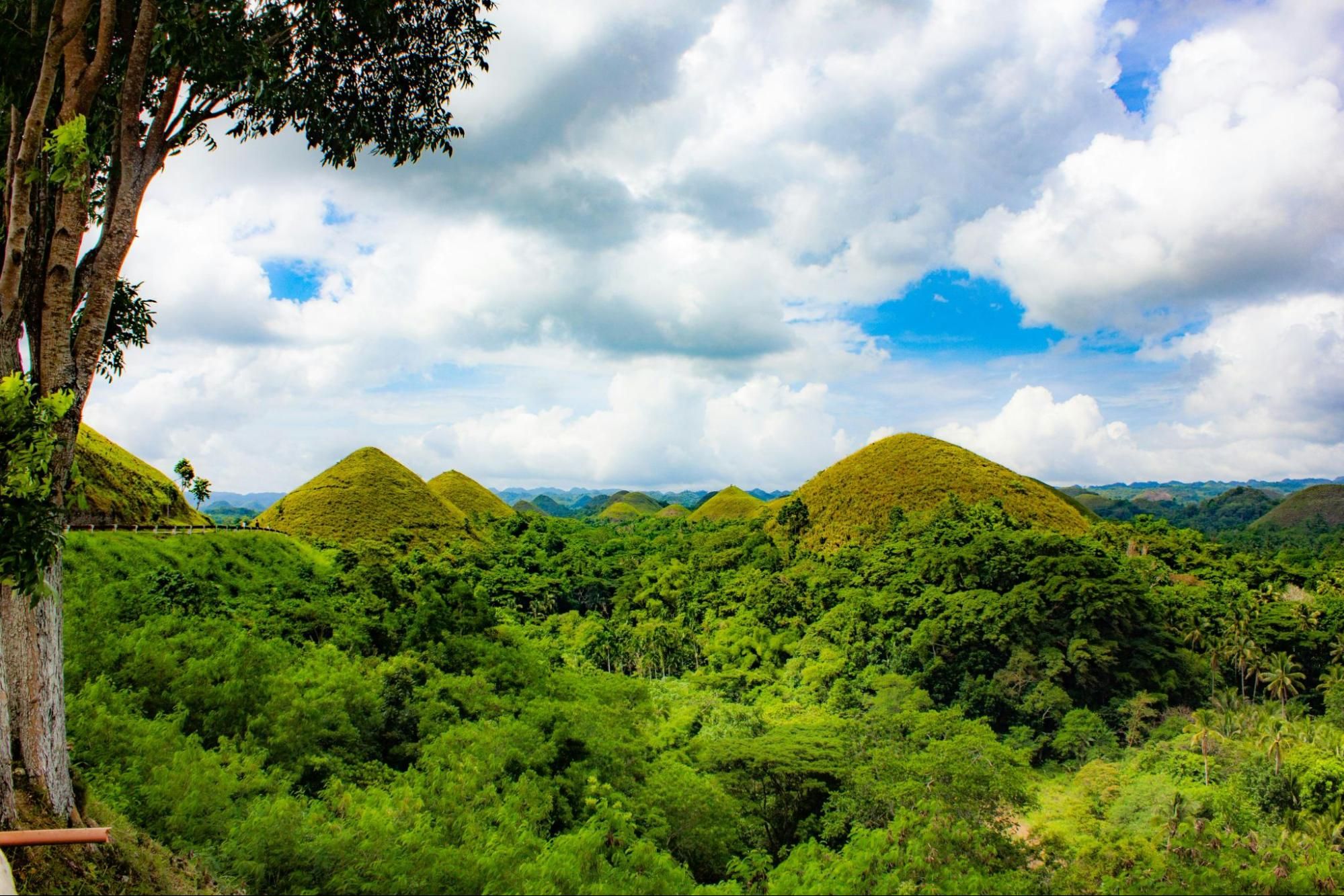 These hills are spread across Bohol province in the Philippines, covering parts of Carmen, Batuan, Sagbayan and nearby towns. Together, they cover more than 50 square kilometres, so you are looking at a huge landscape filled with a huge landscape of over a thousand almost identical cone-shaped hills.
Before getting into the details, here are a few quick facts worth knowing:
- The exact number is debated: Estimates range from 1,268 to 1,776 hills, depending on the survey.
- They vary in height: Most hills are around 30 to 120 metres tall.
- Their near-identical shapes are what make the landscape so unusual; karst formations exist worldwide, but none produce this degree of uniformity at this scale.
- They have national geological importance: The Chocolate Hills were declared the Philippines' third National Geological Monument in 1988.
Even though people debate the exact number of hills, the size of the area alone makes it worth seeing.
How Did the Chocolate Hills Form?
 There are two very different ways to explain the Chocolate Hills. One comes from science, the other from stories passed down by locals.
The science:
- The area was once underwater, covered with coral and limestone.
- Over millions of years, movements in the Earth pushed the limestone above sea level.
- Rainwater slowly dissolved and wore down the softer parts of the limestone.
- This karst erosion gradually shaped the hills into the smooth, rounded forms you see today.
The legend:
- One story says two giants got into a mud-throwing fight that lasted for days, and the mounds are what they left behind
- Another says a giant cried an ocean of tears over a lost love, and the the hills are what remained when those tears dried
Why Do the Chocolate Hills Turn Brown?
The hills are covered with grass that grows well during the wet months and dries out when the rain ends. From June to October, the hills stay green. When the dry season starts, the grass turns brown, giving the hills their famous name.
Season | Rough Months | Hill Colour |
Wet season | June to October | Green |
Dry season | November to May | Brown |
Where Are the Best Spots to View the Chocolate Hills?
Each viewpoint offers a different perspective, so it helps to know which ones are the best.
Carmen Viewing Complex
This is the main and most visited lookout, reached by climbing a set of stairs to an elevated deck. From the top, the mounds stretch out in every direction, making it the spot most people picture when they think of this landscape.
Sagbayan Peak
This spot is quieter than Carmen and generally less physically demanding, making it a good alternative for a more relaxed visit.
Roadside Viewpoints
You can also find roadside viewpoints along the roads between Carmen, Batuan, and Sagbayan. These spots are simple but still give you good views if you are just passing through.
What Can You Do at the Chocolate Hills Besides Sightseeing?
Sightseeing is the main draw, but there is more to fill out a day here.
- Take an ATV ride through the countryside to get a better look at the landscape.
- Try zipline courses that let you soar over parts of the hills.
- Book a hot air balloon ride at sunrise for a stunning aerial view. These usually need to be reserved in advance.
- Visit nearby attractions such as the Philippine tarsier sanctuary or the Loboc River, both just a short drive away.
Pairing the hills with one or two of these activities makes for a fuller day rather than just a quick photo stop.
When Is the Best Time to Visit the Chocolate Hills?
The best time to visit depends on what view you want. From November to May, the dry season brings the famous brown color and clear skies for photos. During the wet season, the hills turn green, which is also beautiful but different from the classic look. Visiting early in the morning gives you softer light and fewer crowds, no matter the season.
How Do You Get to the Chocolate Hills?
- Most visitors start from Tagbilaran City, Bohol's main hub, with the drive taking roughly one and a half to two hours
- Most people hire a private van or car for the day, especially if they want to visit other places in Bohol along with the hills.
- You can use public transport, but it usually requires more transfers and planning.
- Anyone arriving from Cebu can reach Bohol by ferry and then continue by road to the hills
Chocolate Hills: A Landscape Worth Building a Vacation Around
It is rare to find a place as unique and natural as the Chocolate Hills. Whether you stop by for a short visit or spend a full day exploring, this landscape lives up to its reputation. If you are planning a getaway to the Philippines, Holiday Tribe can help with your Bohol itinerary and even offer visa advice. The only thing left to decide is which viewpoint to visit first.