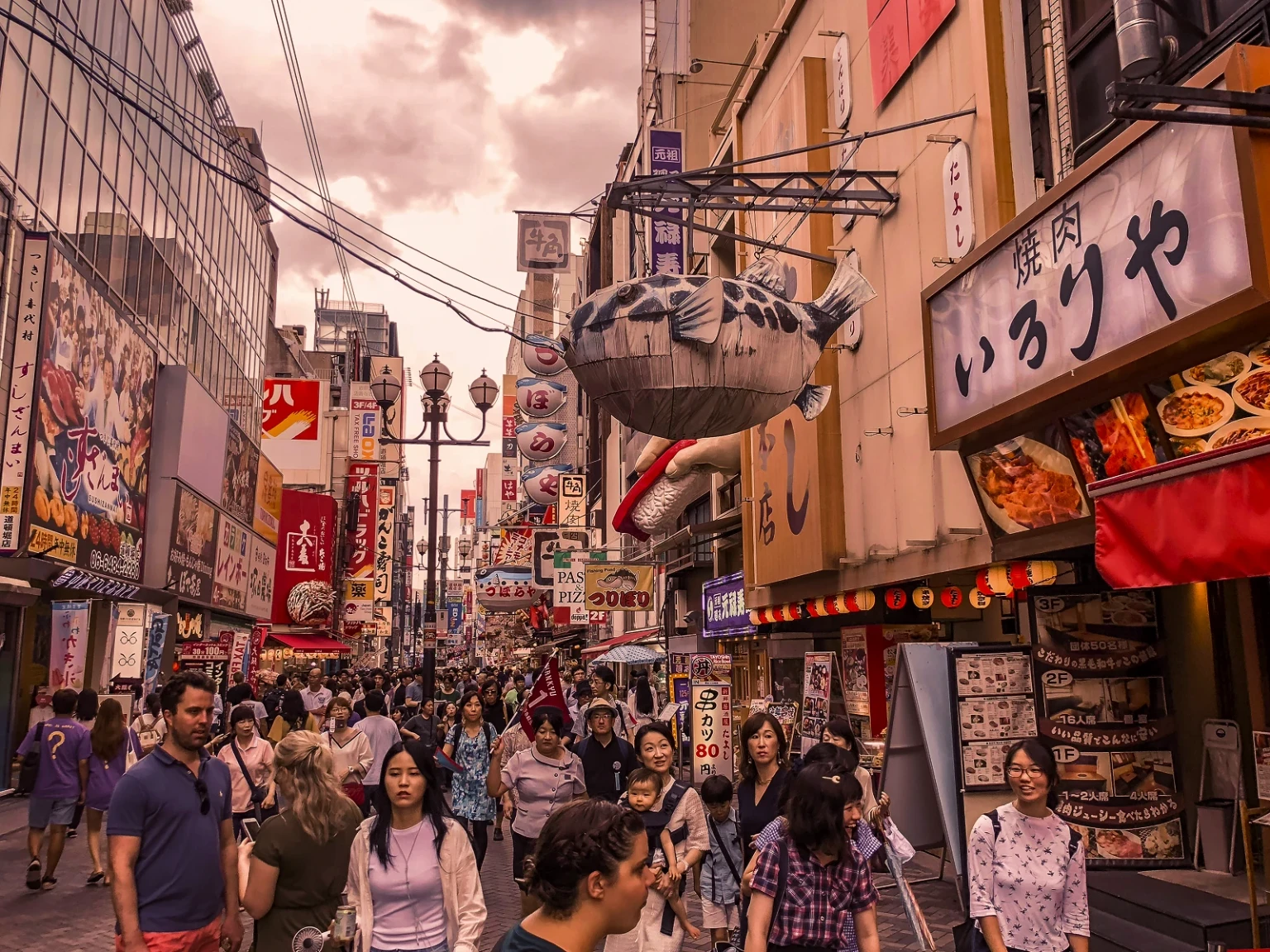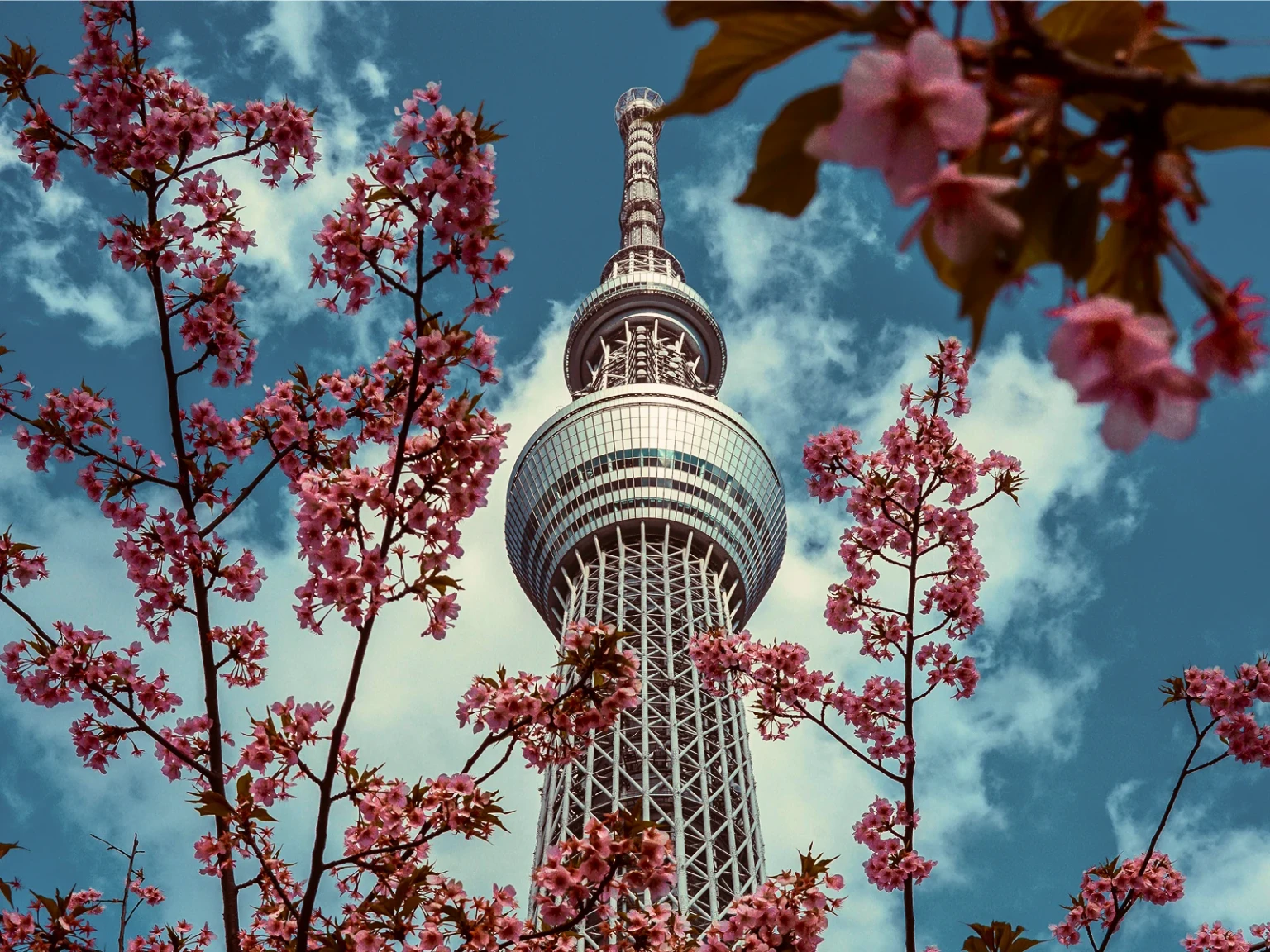


Japan holds hundreds of matsuri each year, each with its own local traditions, shrine or temple roots, or seasonal customs. From Hokkaido’s snow sculptures to Kyoto’s historic float parades, every region celebrates in its own style. Visiting these famous festivals in Japan lets you experience Japan’s living culture. The largest festivals draw millions, and some have been celebrated for over a thousand years, with several recognised by UNESCO.
This guide features 11 of Japan’s top festivals, including both the Spring and Autumn Takayama Festivals. They’re organised by season, with details on dates, locations, and what you’ll find at each event.
What Makes Japanese Festivals Distinct?
A matsuri in Japan is more than just a street party. It’s a public ritual linked to a shrine, a local deity, or a key moment in the farming or spiritual year. These famous festivals in Japan connect people to their local history in a way that’s both visible and hands-on.
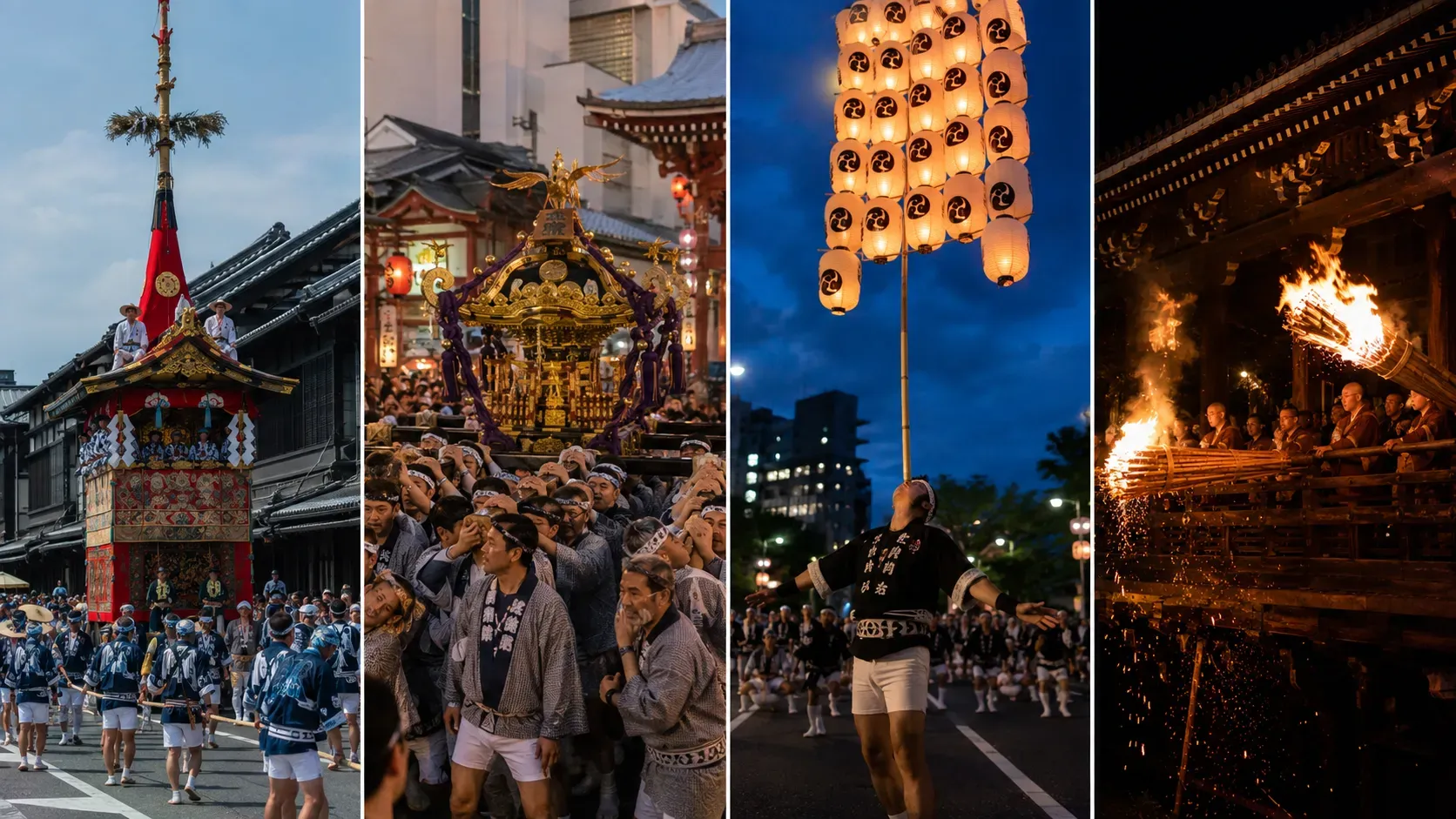
The biggest festivals in Japan all have a defining visual element:
- Towering wooden festival floats (yamaboko) assembled without nails
- Portable shrines (mikoshi) carried through city streets by teams of bearers
- Bamboo poles fitted with illuminated paper lanterns balanced on shoulders and foreheads
- Mass street dances with set movements performed by hundreds of participants
- Fire ceremonies at temple halls continuing through the night
Many of Japan’s biggest festivals happen in summer, especially from July to August. Others are timed with shrine traditions, farming cycles, or Buddhist events.
Festival | Location | Month | Type | UNESCO Status |
Omizutori | Nara | March | Buddhist fire/water ceremony | No |
Sapporo Snow Festival | Hokkaido | February | Snow and ice sculpture | No |
Kanamara Matsuri | Kawasaki | April | Fertility shrine festival | No |
Spring Takayama Festival | Gifu | April | Float procession | Yes |
Kanda Matsuri | Tokyo | May (odd years) | Mikoshi procession | No |
Sanja Matsuri | Tokyo | May | Mikoshi procession | No |
Gion Matsuri | Kyoto | July | Float procession | Yes |
Tenjin Matsuri | Osaka | July | Land and river procession | No |
Akita Kanto Matsuri | Akita | August | Lantern pole balancing | Yes |
Awa Odori | Tokushima | August | Bon Odori street dance | Yes |
Autumn Takayama Festival | Gifu | October | Float procession | Yes |
Which Famous Festivals in Japan Happen by Season?
The biggest festivals in Japan take place throughout the year. Here are 11 of the most important, listed in order by date.
Here’s a quick overview of the list:
- Sapporo Snow Festival (February)
- Omizutori (March)
- Kanamara Matsuri (April)
- Spring Takayama Festival (April)
- Kanda Matsuri (May, odd years)
- Sanja Matsuri (May)
- Gion Matsuri (July)
- Tenjin Matsuri (July)
- Akita Kanto Matsuri (August)
- Awa Odori (August)
- Autumn Takayama Festival (October)
Sapporo Snow Festival (Hokkaido, February)
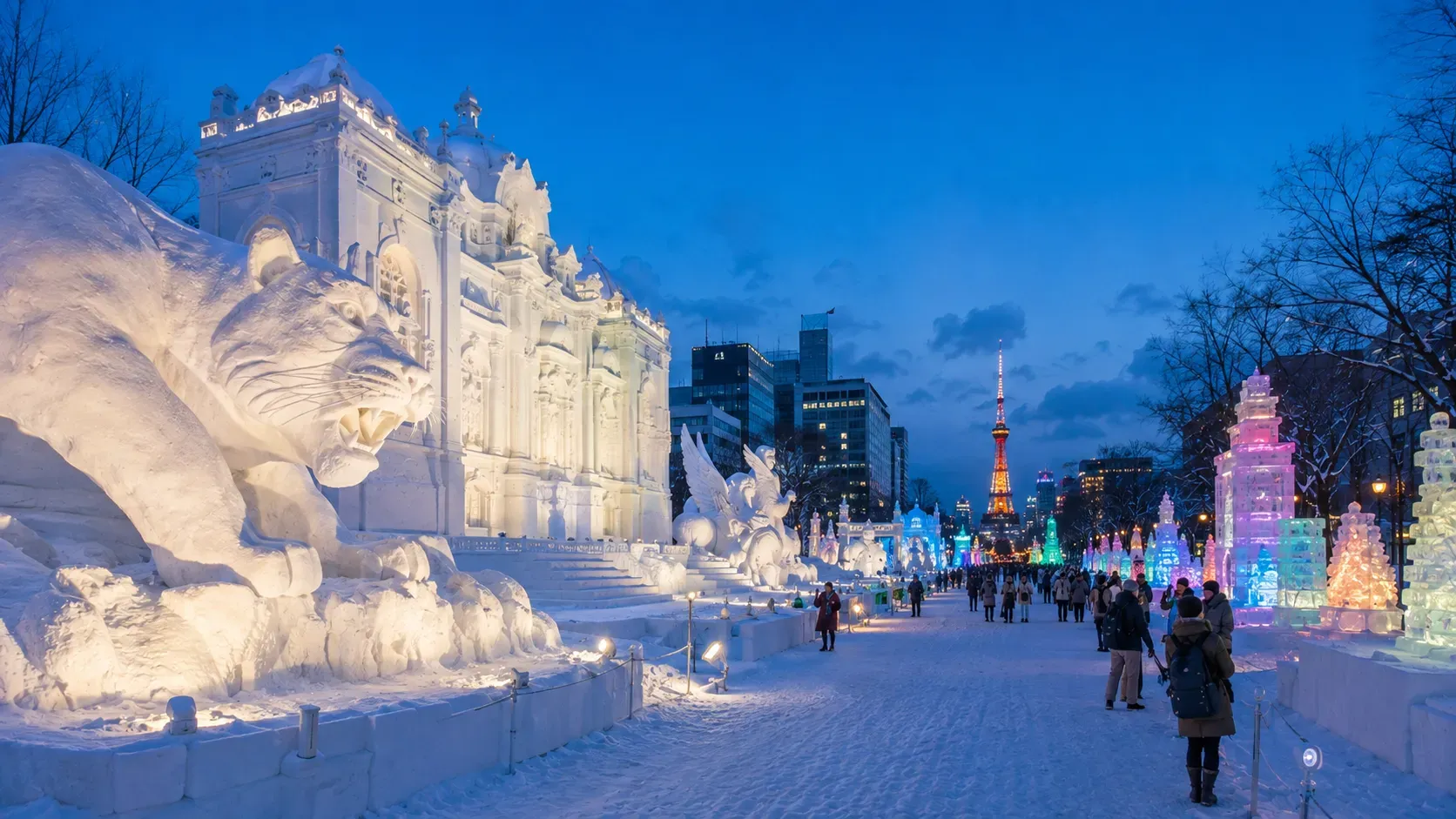
The Sapporo Snow Festival is one of the most famous festivals in Japan and a popular winter event that attracts huge crowds every year.
- First held in 1950, when local middle and high school students created six snow sculptures in Odori Park; now one of the largest winter events in Asia
- Three sites: Odori Park (large snow and ice sculptures up to three storeys high); Susukino (ice sculptures); Tsudome (outdoor activities including snow slides for children)
- The festival draws over two million visitors across the 7-day event
- Access: walk 5 minutes from Odori subway station; JR Sapporo Station is 15 minutes by foot from the eastern end of the park
- Dates: early February annually
Omizutori (Nara, March 1 to 14)
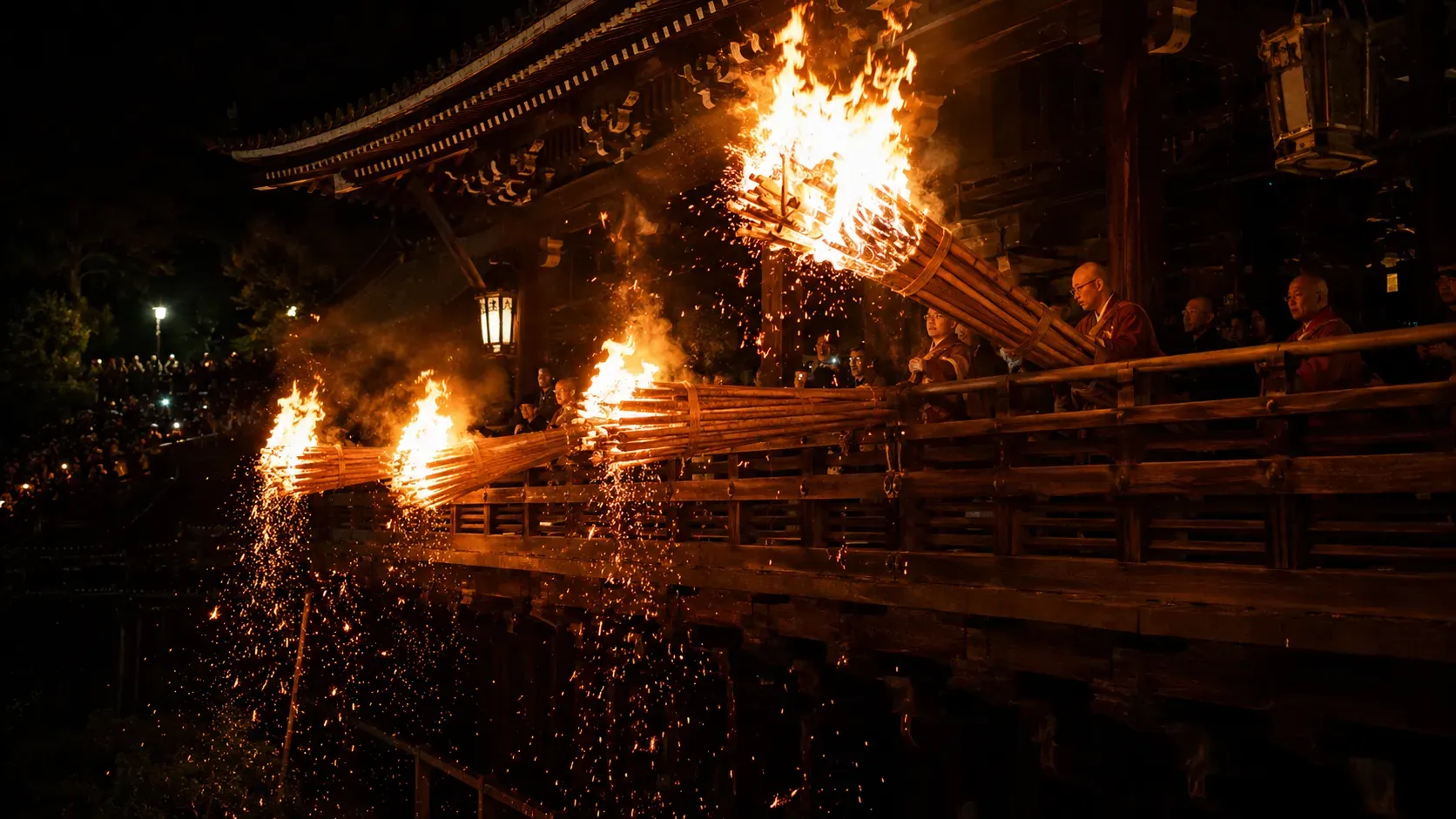
Omizutori is a Buddhist water-drawing ritual at Nigatsu-do Hall, within the Todai-ji temple complex in Nara, and is one of the oldest continuously performed ceremonies in Japan.
- Omizutori has taken place every year for over 1,260 years, making it one of the most famous festivals in Japan and one of the oldest ongoing Buddhist ceremonies.
- The torch ceremony (Otaimatsu) runs each evening from approximately 7:30pm to 8:15pm; monks swing large lit cedar torches from the wooden balcony, sending sparks over the crowd below
- No entry ticket required for the outdoor torch ceremony; the Nigatsu-do balcony itself is a short uphill walk from the main Todai-ji gate
- The culminating water-drawing ceremony (Omizutori proper) happens late on March 12 into March 13
Kanamara Matsuri (Kawasaki, First Sunday of April)
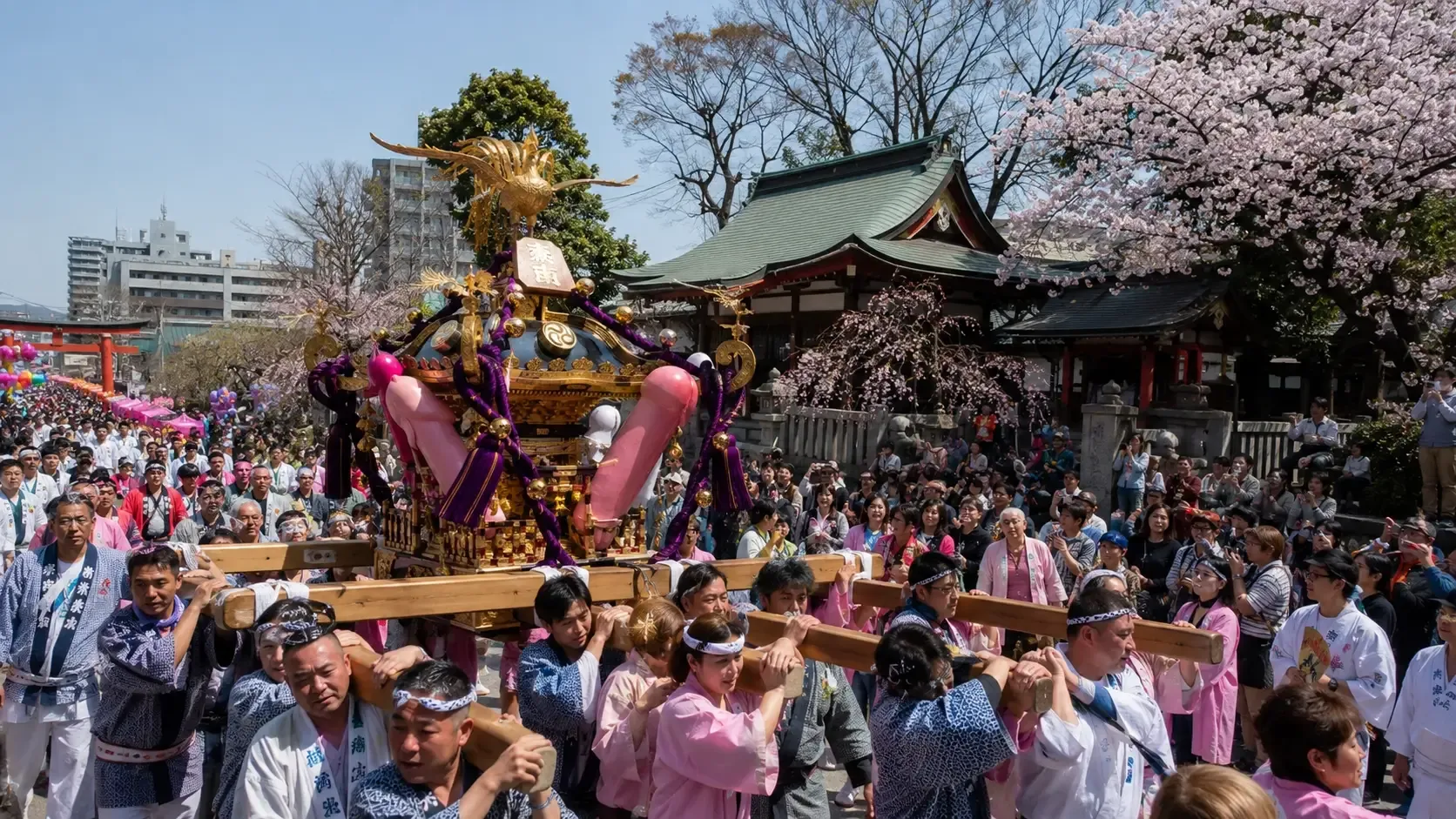
Kanamara Matsuri takes place at Kanayama Shrine in Kawasaki and is a famous festival in Japan known worldwide for its unique traditions.
- Rooted in prayers from Edo-period sex workers who visited the shrine for protection and health; now widely attended by couples seeking fertility blessings
- The parade includes three portable mikoshi; proceeds from the festival support HIV research organisations
- Kanamara Matsuri is famous for its bold and colourful displays, which attract curious visitors from around the world. Despite its reputation, the festival has a friendly atmosphere and is attended by local families.
- Access: 5-minute walk from Kawasaki Daishi Station (Daishi Line) or 15 minutes from Kawasaki Station
Takayama Festival, Spring (Gifu, April 14 to 15)
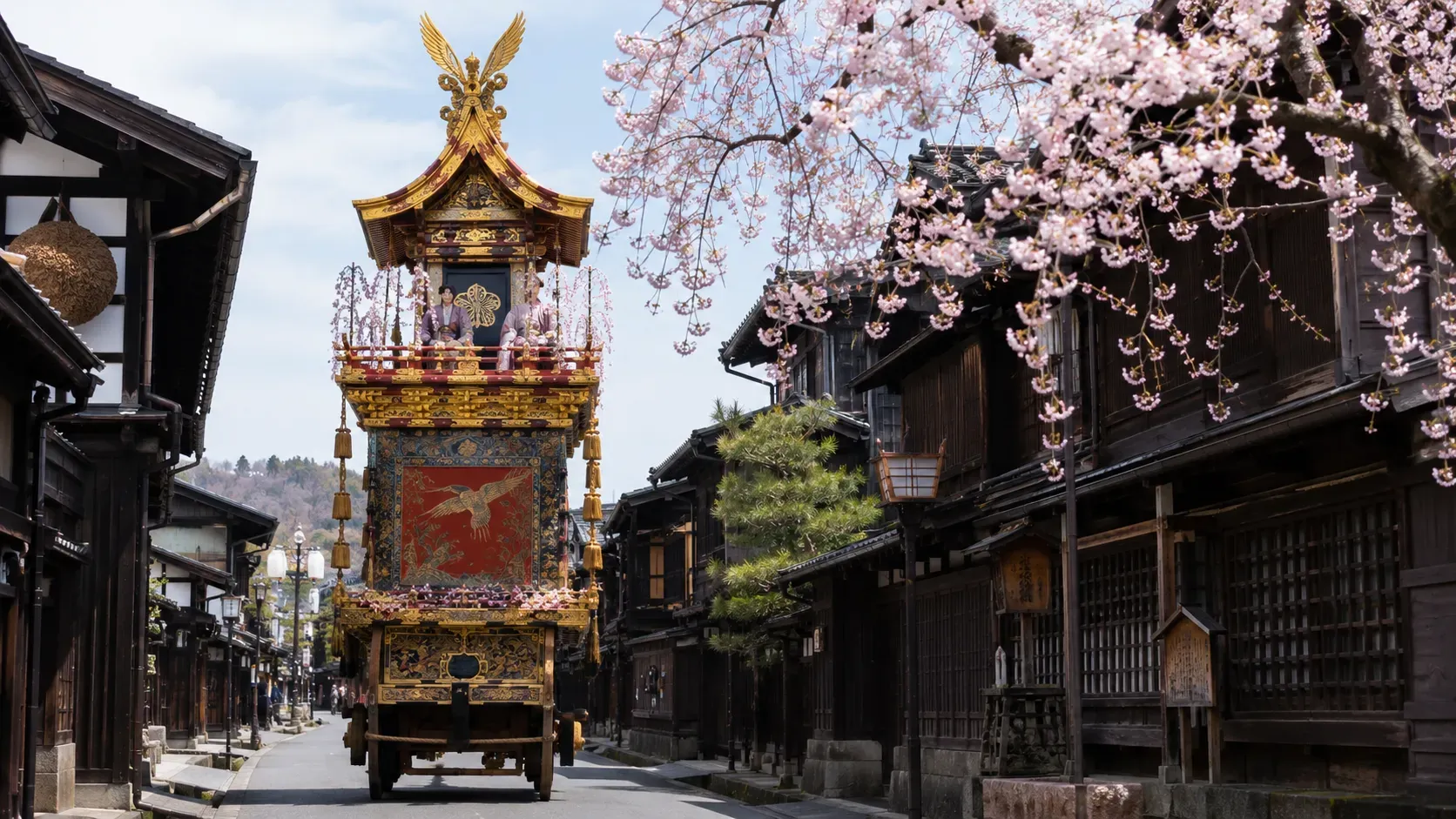
Takayama Festival occurs twice a year; the spring edition (Sanno Matsuri, April 14 to 15) is held at Hie Shrine in Takayama, a preserved Edo-era town in the Japanese Alps.
- Known for its Yatai floats: mechanised wooden structures controlled by puppeteers using hundreds of strings; the puppets perform short plays as the floats move through the old town streets
- The floats are assembled without metal fasteners using only rope-lashing, a technique passed down through generations
- The Takayama Festival float tradition is included within UNESCO's "Yama, Hoko, Yatai, Float Festivals in Japan" inscription (2016).
- Takayama's old town (Sanmachi Suji) is accessible from Nagoya by JR Hida Express in approximately 2.5 hours
Kanda Matsuri (Tokyo, May, Odd Years Only)
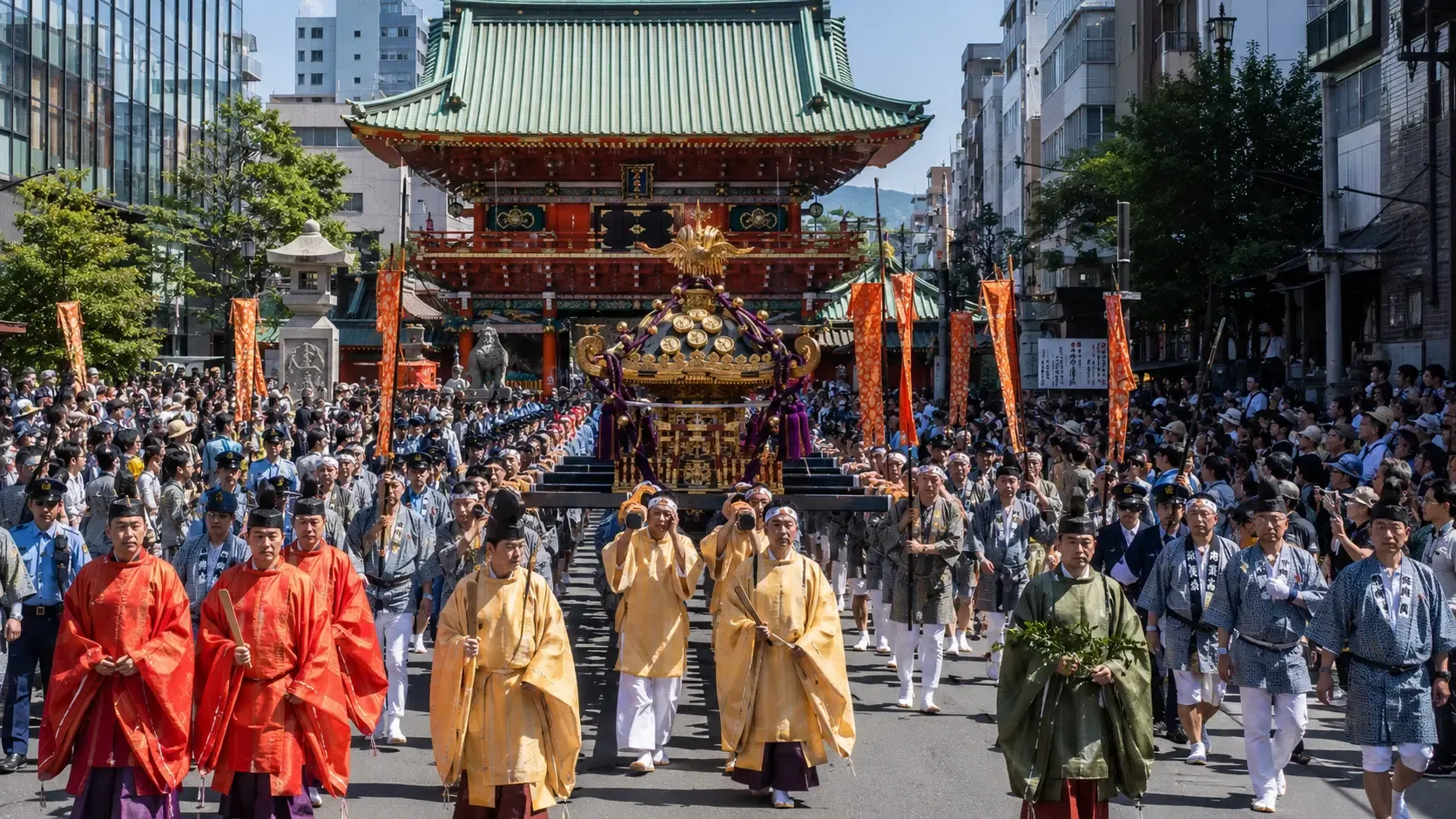
Kanda Matsuri is held in mid-May in odd-numbered years at Kanda Myojin shrine in central Tokyo.
- One of the three great Edo festivals; the main procession (Shinko-sai) involves over 300 participants in Heian-era court costume escorting mikoshi through Kanda, Akihabara, and Nihonbashi
- Kanda Matsuri last occurred in May 2025; the next is May 2027
- The Kanda Myojin shrine is a 5-minute walk from Akihabara Station or 10 minutes from Ochanomizu Station
Sanja Matsuri (Tokyo, Third Weekend of May)
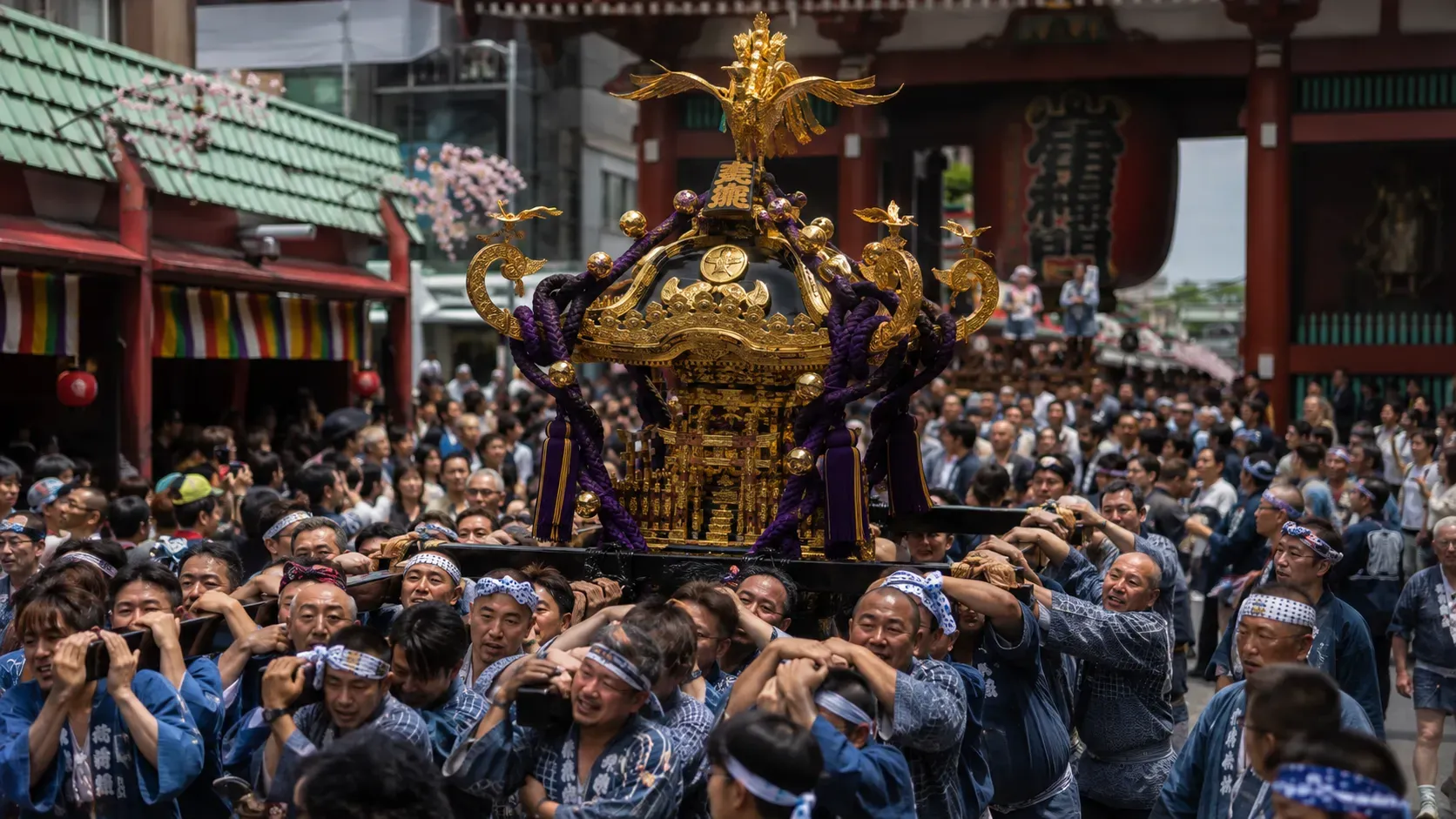
Sanja Matsuri is held at Sensoji Shrine in Asakusa across the third weekend of May and draws approximately 1.5 million visitors over three days.
- The centrepiece is the procession of 100 mikoshi (portable shrines) carried through Asakusa's streets by teams of bearers; the three main Sensoji mikoshi are among the heaviest in Japan
- The atmosphere in Asakusa during Sanja Matsuri is notably different from the shrine's regular operation; the streets are filled with festival food stalls and taiko drumming from Friday evening through Sunday
- One of the most accessible famous festival in Japan events for first-time visitors; Asakusa has strong tourist infrastructure and English-language signage
- Access: Asakusa Station on the Ginza Line, Tobu Skytree Line, or Tsukuba Express
Gion Matsuri (Kyoto, July)
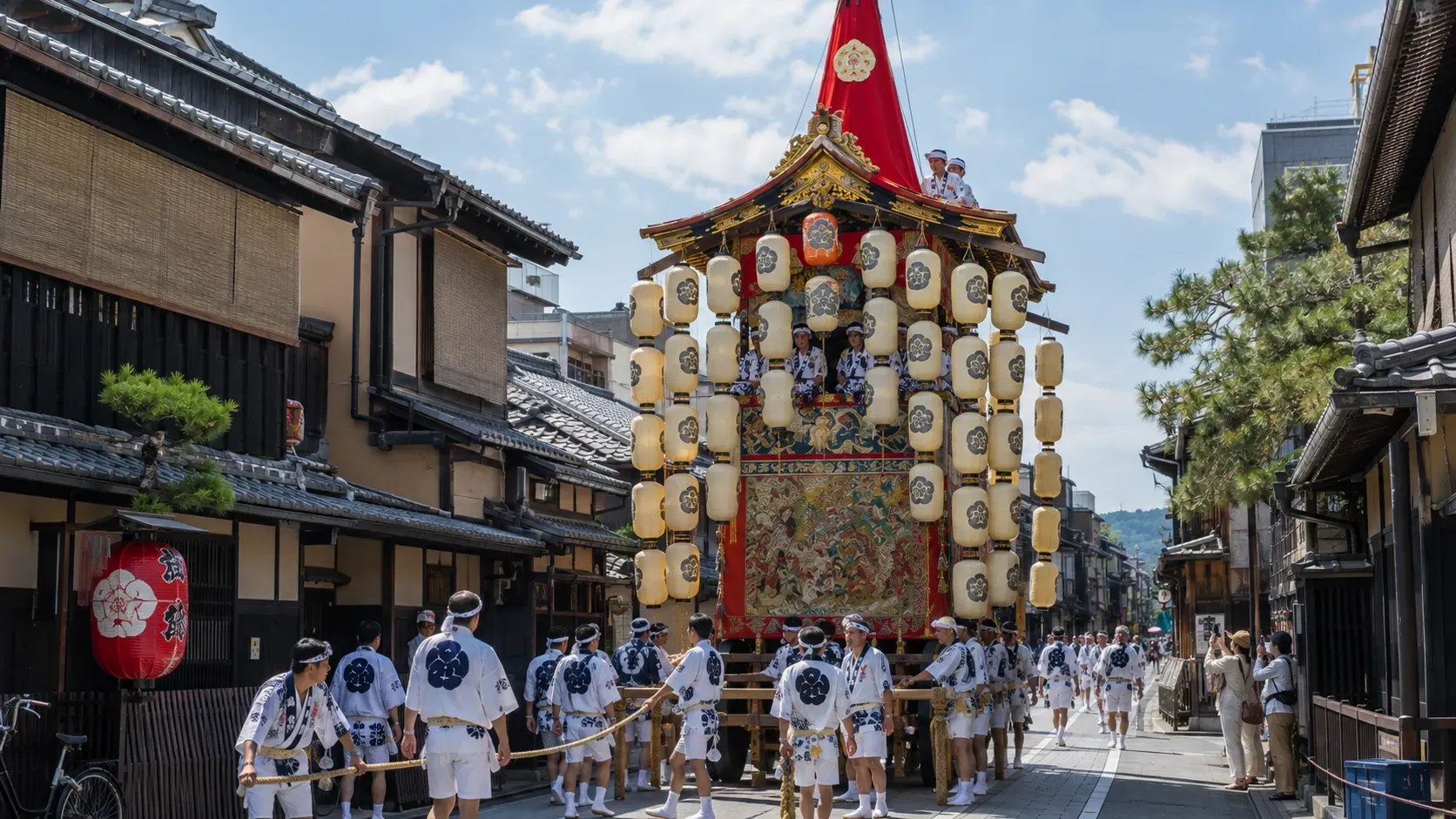
Gion Matsuri is held throughout July at Yasaka Shrine in Kyoto. It is one of the three great festivals of Japan alongside Tenjin Matsuri and Kanda Matsuri.
- Origins date to 869 CE when the festival was held to pacify the gods during an epidemic; designated a UNESCO Intangible Cultural Heritage
- The main visual events are the Yamaboko Junko float processions: Saki Matsuri on July 17 and Ato Matsuri on July 24; the Yamaboko floats weigh up to 12 tonnes and are assembled entirely without nails using rope-lashing techniques
- The three evenings before each procession (collectively called the Yoiyama evenings) see the floats displayed stationary in the streets with lanterns lit; these evenings are among the most atmospheric in Kyoto's annual calendar
- Gion Matsuri is one of the famous festivals in Japan, and hotels in Kyoto fill up quickly during the main events. It’s best to book your stay several months ahead.
Tenjin Matsuri (Osaka, July 24 and 25)
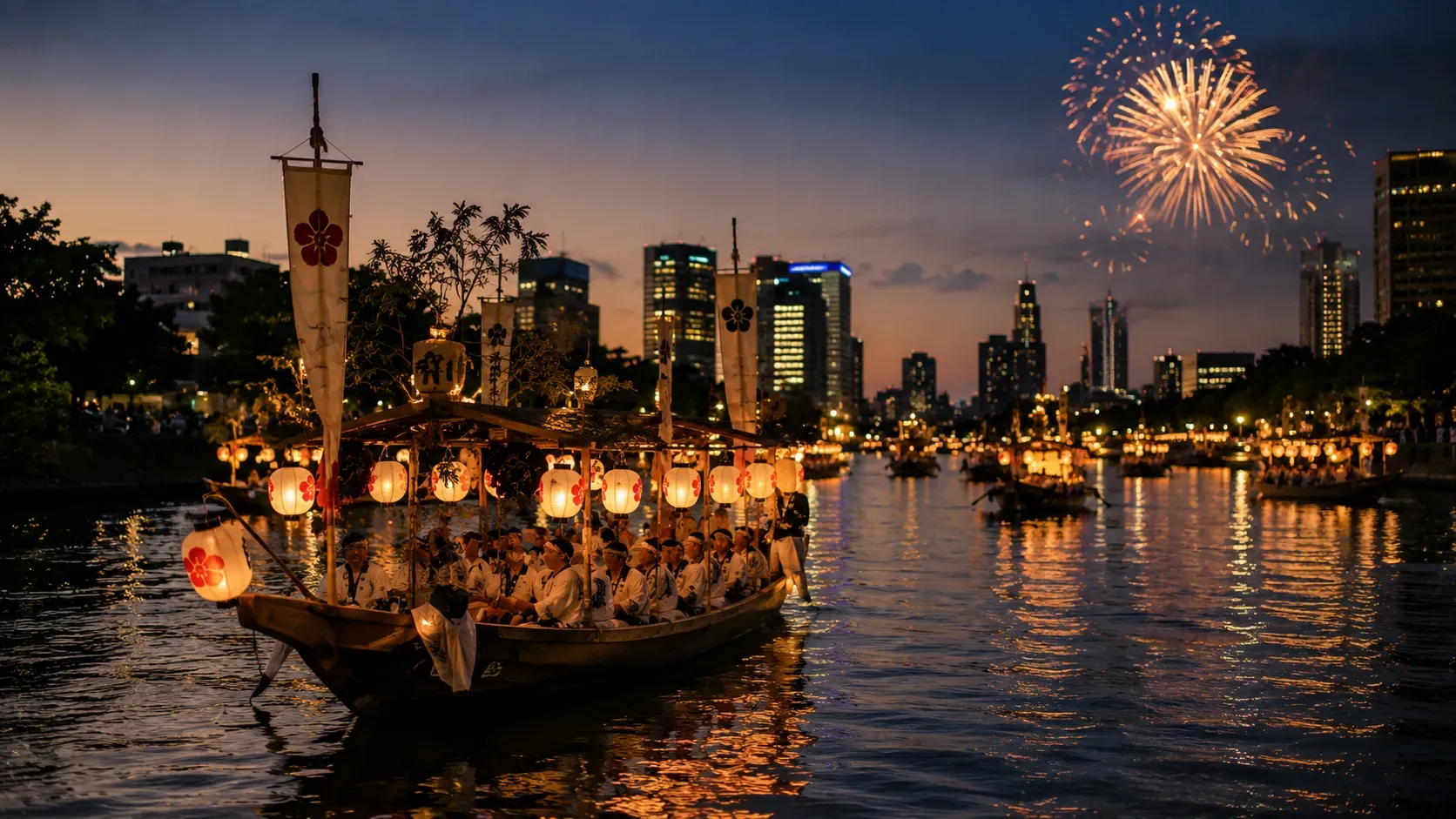
Tenjin Matsuri is held on July 24 and 25 at Osaka Tenmangu Shrine and is one of Japan's three great festivals.
- It honours Sugawara no Michizane, the deity of scholarship and calligraphy, who died in exile in Dazaifu (present-day Fukuoka Prefecture) in 903 CE; Osaka Tenmangu was established in 949 CE in Osaka to enshrine his spirit and became the home of the festival.
- The July 25 programme begins with a land procession followed by a river procession (Fune-togi): decorated boats carry shrine priests and dignitaries along the Okawa River from Tenma toward Namba; the evening ends with fireworks over the water
- Tenjin Matsuri is one of the biggest festivals in Japan for atmosphere; the combination of river procession, taiko drumming from the boats, and fireworks brings huge crowds to the riverside.
- Access: Osaka Tenmangu Station (JR Tozai Line) or Minami-Morimachi Station (subway)
Akita Kanto Matsuri (Akita, August 3 to 6)
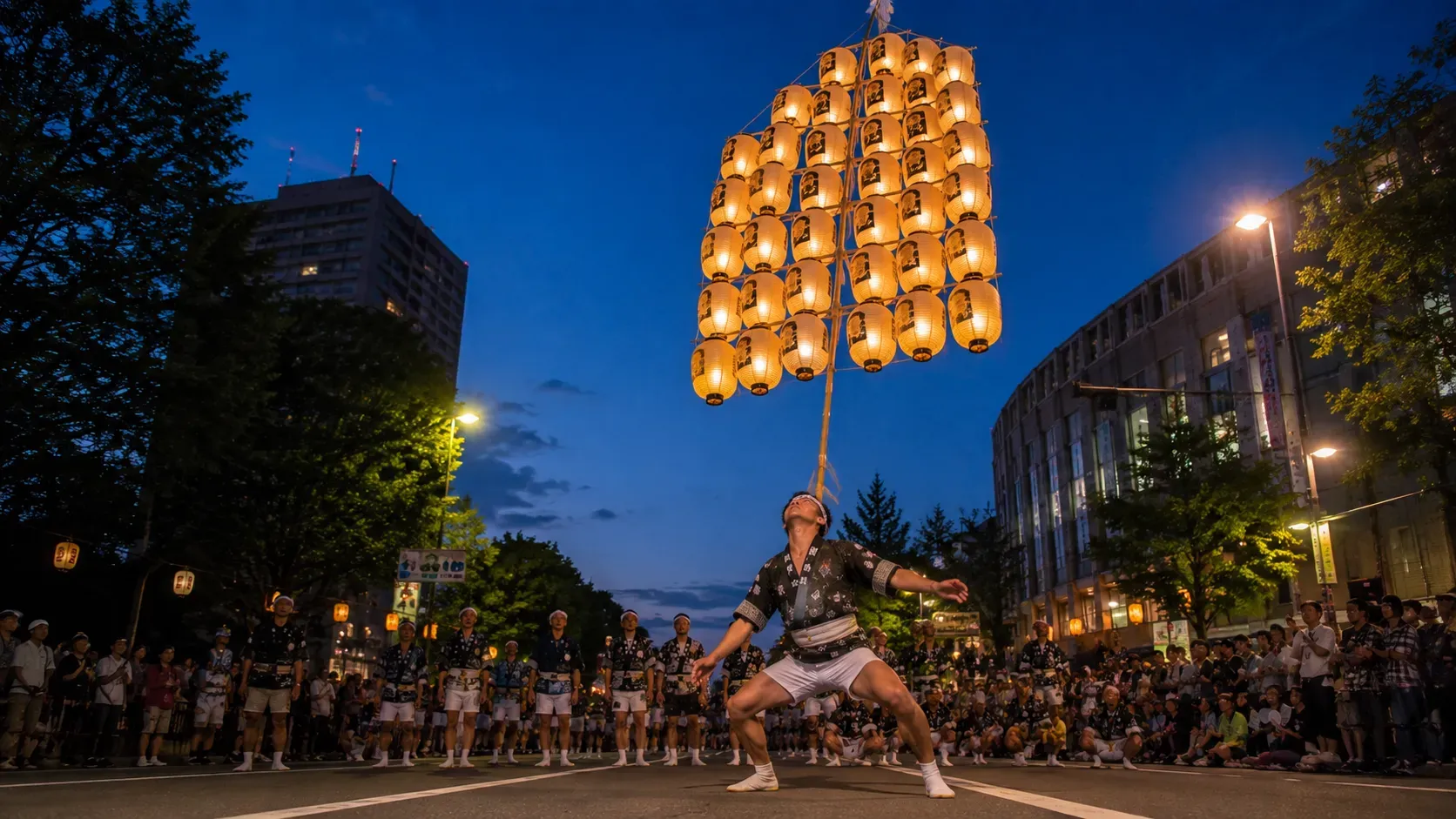
Akita Kanto Matsuri is held August 3 to 6 in Akita City and is designated a UNESCO Intangible Cultural Heritage; it is one of the three great festivals of the Tohoku region.
- Performers balance bamboo poles (kanto) fitted with 46 paper lanterns on their forehead, shoulder, or hip; the large kanto weigh approximately 50 kg; the small practice kanto used by children weigh around 5 kg
- Evening performances along Kanto Odori begin at 7:15pm; daytime events on August 3 to 5 include workshops where visitors attempt to balance the kanto
- You’ll get the best view of Akita Kanto Matsuri from the reserved seating areas, which require tickets. Standing spots are free but are farther from the action.
- Access: Akita Station is the main access point; Kanto Odori is a 15-minute walk from the station
Awa Odori (Tokushima, August 12 to 15)
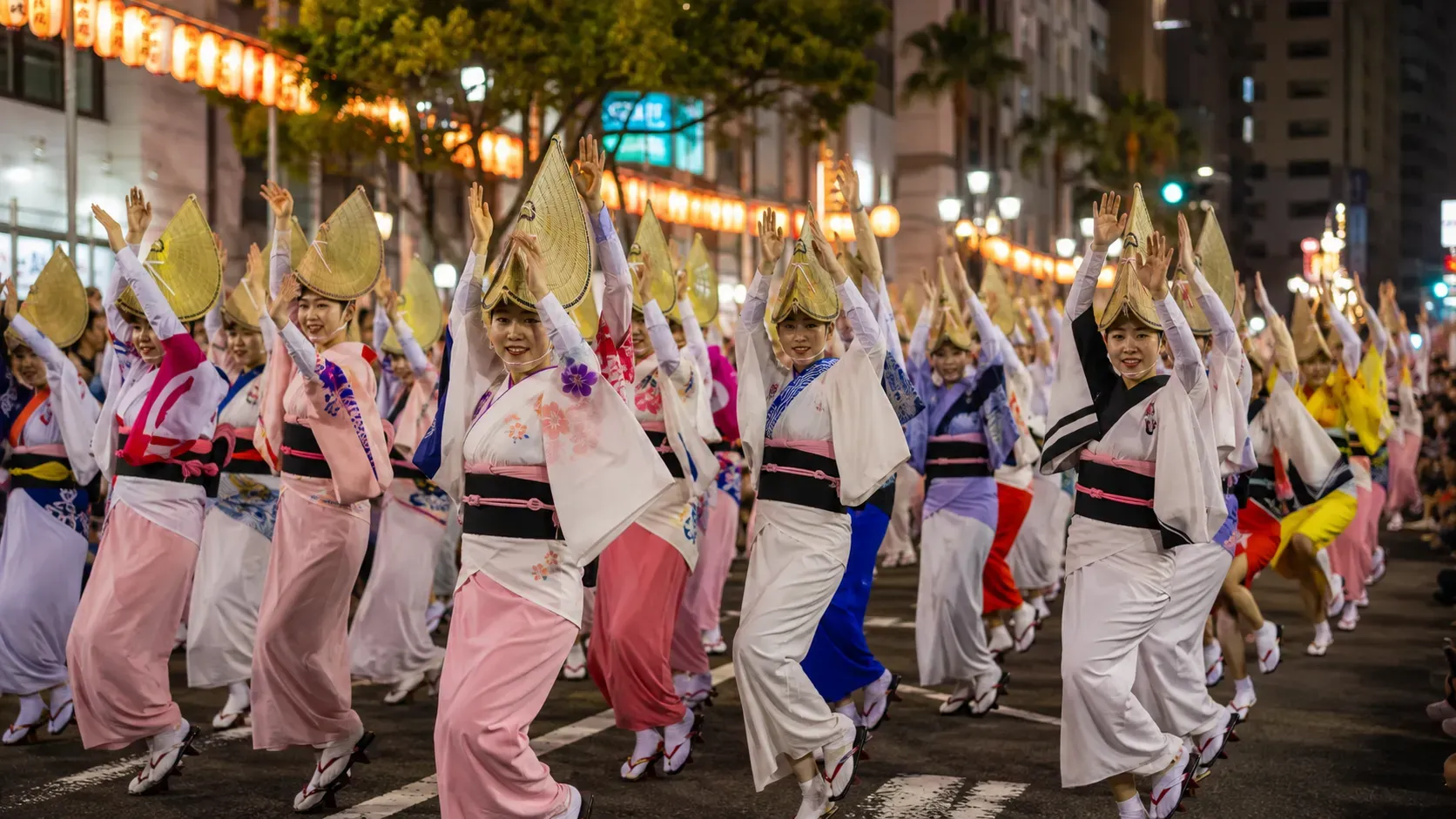
Awa Odori is held from August 12 to 15 in Tokushima on Shikoku Island and is one of Japan's largest Bon Odori dances, held for approximately 400 years.
- Groups called "ren" of up to several hundred dancers move through the city's main boulevards performing the Awa dance: specific arm positions, footwork, and chants set to three-beat shamisen, taiko, and kane (bell) music
- The main venue (enbajo) performances require tickets purchased in advance; outdoor street dancing along Tokushima's main roads is free to observe
- Awa Odori is known for the saying: "The dancing fool and the watching fool are both fools; if you're going to be a fool either way, you might as well dance"
- Access: Tokushima Station is the arrival point; the festival venues are within 15 to 20 minutes on foot
Takayama Festival, Autumn (Gifu, October 9 to 10)
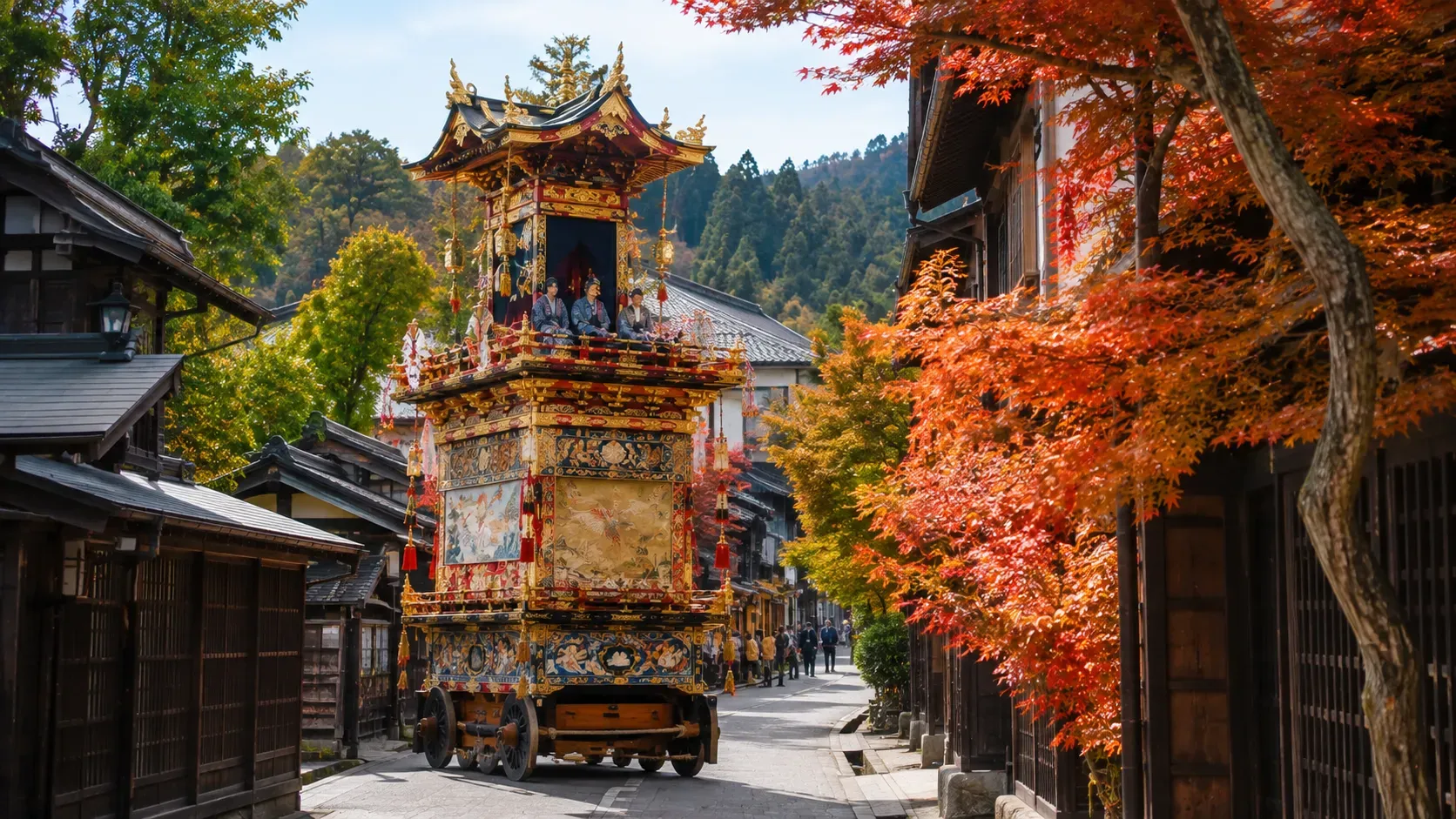
The autumn Takayama Festival (Hachiman Festival) is held at Sakurayama Hachimangu shrine and mirrors the spring edition with the same Yatai floats in a different seasonal setting.
- During the October festival, the Hida mountains are usually covered in autumn colours. The mix of festival floats and fall leaves is one of the most photographed sights of any Japanese festival.
- Accommodation in Takayama books out months ahead for the October 9 to 10 dates; staying in Takayama the night before (October 8) gives you access to the Yoi Matsuri preview evening
How Should You Prepare for a Festival?
If you want to visit a famous festival in Japan, you’ll need to plan further ahead than for regular sightseeing.
- Book accommodation 6 to 12 months ahead: Gion Matsuri in Kyoto and Sapporo Snow Festival are among the most difficult events for last-minute hotel availability; Awa Odori in Tokushima books out even on weekdays in August
- Arrive early at outdoor events: For Akita Kanto Matsuri and Awa Odori evening performances, the best positions are taken by 6:30pm
- Check odd-year festival dates: Kanda Matsuri only occurs in odd-numbered years; verify dates at the official Kanda Myojin website before booking
- Wear appropriate clothing: Most festivals involve significant outdoor time; comfortable shoes for cobblestone streets and layering for summer evenings are practical for both city and mountain events
- Carry cash: Food stalls at most festivals are cash-only; ATMs in convenience stores (7-Eleven, Lawson) are the most reliable source of cash throughout Japan
- Photography etiquette: Participants in costume generally allow photography in open areas; ask before photographing in close proximity; some mikoshi-carrying sections restrict access during the active procession
What Is the Festival Etiquette in Japan?
Respecting local customs helps you enjoy the famous festivals in Japan and shows appreciation for their traditions. Since many festivals are held at shrines or temples, be aware of your surroundings and follow any instructions from organisers.
Etiquette Tip | What to Do |
Respect sacred spaces | Stay within designated visitor areas and avoid entering restricted sections around shrines or temples. |
Follow photography rules | Take photos from public viewing areas and avoid blocking processions or using flash during ceremonies if prohibited. |
Queue patiently | Wait your turn at food stalls, ticket counters, and viewing areas, especially during Gion Matsuri, Sanja Matsuri, and Tenjin Matsuri. |
Dispose of rubbish properly | Use the available bins or carry your rubbish until you find one. |
Dress appropriately | Wear comfortable footwear and clothing suitable for walking and changing weather conditions. |
Tribe Travel Tip: Festival schedules can change due to weather or operational reasons, so check the official festival or shrine website before attending.
What Can You Visit Near Major Festival Sites?
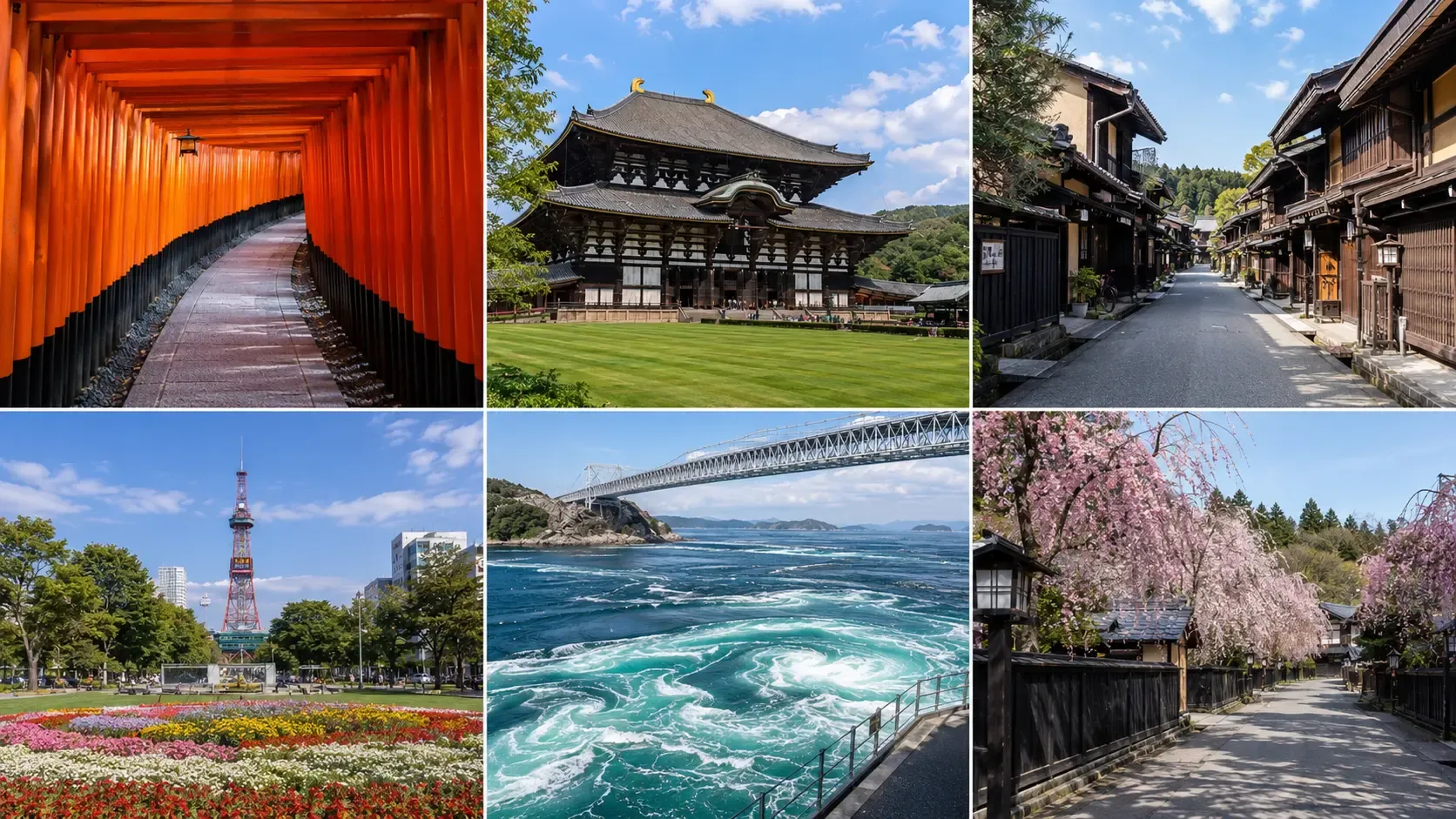
Many of these famous festivals in Japan are close to Japan’s top cultural sites, so it’s easy to combine a festival visit with sightseeing. Japan’s rail network makes getting around simple.
Festival | Nearby Attraction | Distance | Travel Time |
Gion Matsuri (Kyoto) | Fushimi Inari Taisha, Nishiki Market, Gion District | Within the city | 10 to 20 min by bus or foot |
Omizutori (Nara) | Todai-ji Great Buddha, Kasuga Taisha, Nara Park deer | Same complex | 5 to 10 min walk |
Awa Odori (Tokushima) | Iya Valley vine bridges, Naruto Whirlpools | 60 to 90 km | 1 to 1.5 hrs by car |
Akita Kanto Matsuri | Kakunodate samurai district | 45 km | 45 min by shinkansen |
Sapporo Snow Festival | Hokkaido shrine, Odori Park, Nijo Market | Within city | 10 to 15 min walk |
Takayama Festival | Hida Folk Village, Sanmachi Suji old town | 5 km | 15 min by bus |
Omizutori in Nara places you within the Todai-ji complex, one of Japan's most significant Buddhist sites in its own right, worth visiting even if you are not attending the ceremony.
Final Takeaway
The famous festival in Japan's calendar is a big reason many people visit. From the Sapporo Snow Festival in February to the Takayama Festival in October, every season offers at least one major event worth planning your holiday around.
Gion Matsuri, Sanja Matsuri, Tenjin Matsuri, and Awa Odori are the most attended. Omizutori and Kanamara Matsuri are the most distinctly Japanese in character. Akita Kanto Matsuri and Takayama Festival are the most visually distinctive.
If you want to plan your Japan holiday around a festival and need a custom or preplanned itinerary with the best dates, places to stay, and nearby sights, Holiday Tribe’s travel advisors are here to help with every detail.