

Sri Lanka sits in the Indian Ocean, just off the southeast coast of India. Its food shows the impact of centuries of trade and cultural exchange, blending local traditions with influences from Arab, Portuguese, Dutch, and British communities.
Meals across Sri Lanka are built on rice, coconut, and spices, but each region adds its own twist. This rich mix of traditions makes these famous foods in Sri Lanka worth knowing before you arrive.
In this guide, you’ll find traditional breakfasts, popular main dishes, local desserts, street food favorites, and helpful tips for enjoying Sri Lankan food during your visit.
What Makes Sri Lankan Food Different?
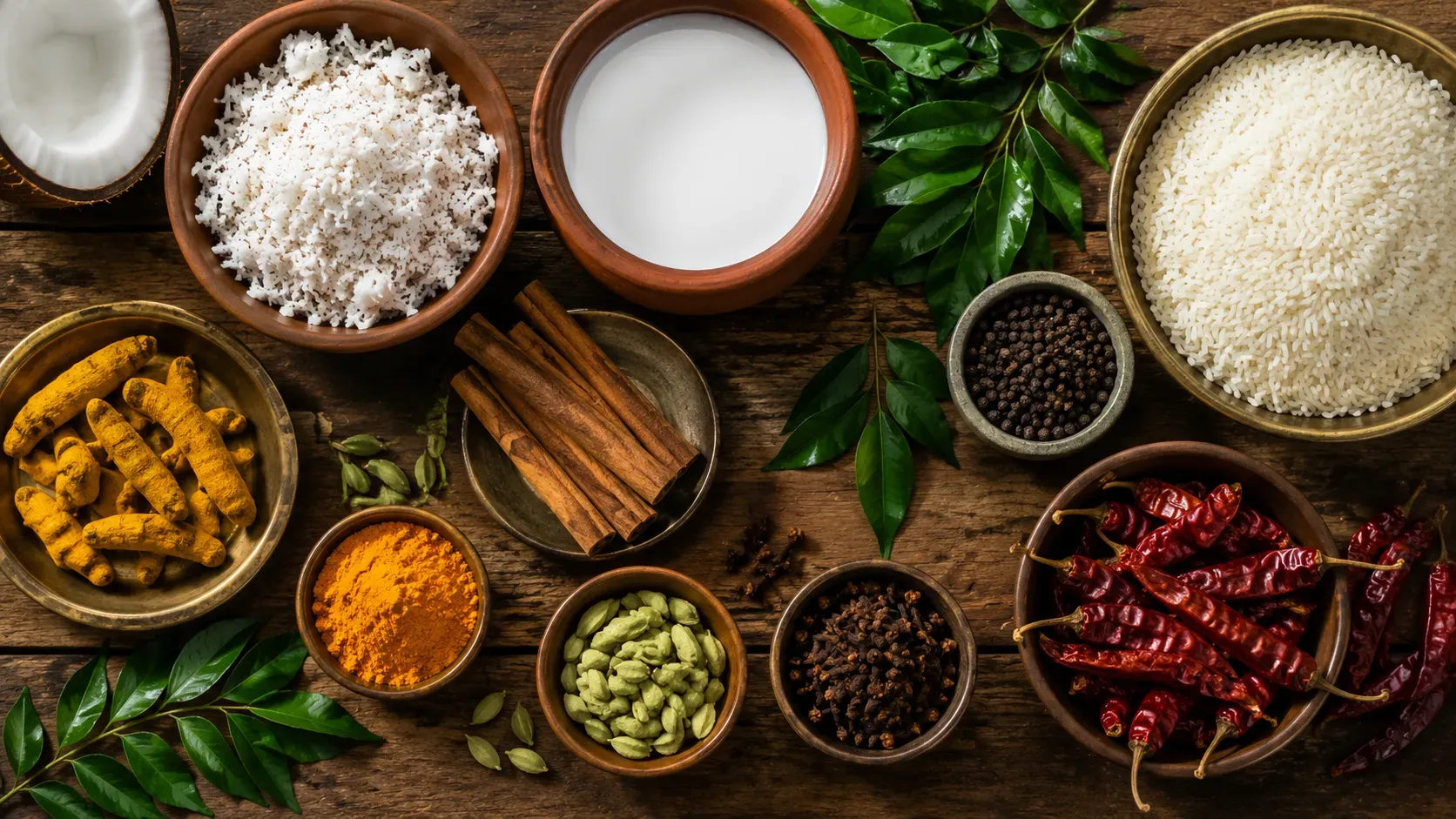
Sri Lankan cooking stands out because it combines rice, coconut, and local spices with unique roasting and tempering methods.
The Sri Lankan national food is rice and curry. It is eaten daily, usually at lunch, and served with several side dishes at once. What you get on the plate reflects where you are on the island and what is in season.
The famous foods in Sri Lanka are quite different from those in India. It uses more freshly roasted spice blends instead of garam masala, and coconut milk is used more often than yoghurt. The flavours are bold, but they develop in a way unique to Indian dishes.
Coconut appears across most meals in multiple forms. The table below shows how each one is used.
Key Ingredient | How It Is Used in Sri Lankan Cooking |
Coconut milk | Added to curries for a creamy, mild base |
Grated coconut | Mixed into sambols and chutneys |
Coconut oil | Used for tempering spices and frying |
Cinnamon | Stirred into curries; native to Sri Lanka and prized as Ceylon cinnamon |
Curry leaves | Tempered in oil at the start of most dishes |
Cardamom and cloves | Used in rice dishes, desserts, and spice blends |
Which Breakfast Dishes Should You Try in Sri Lanka?
Breakfast in Sri Lanka is very different from the usual toast and eggs. It often features steamed, fermented, or pressed foods, usually served with coconut or curry. These three dishes are found at guesthouses, local cafes, and family homes every morning.
1. Hoppers (Appa)
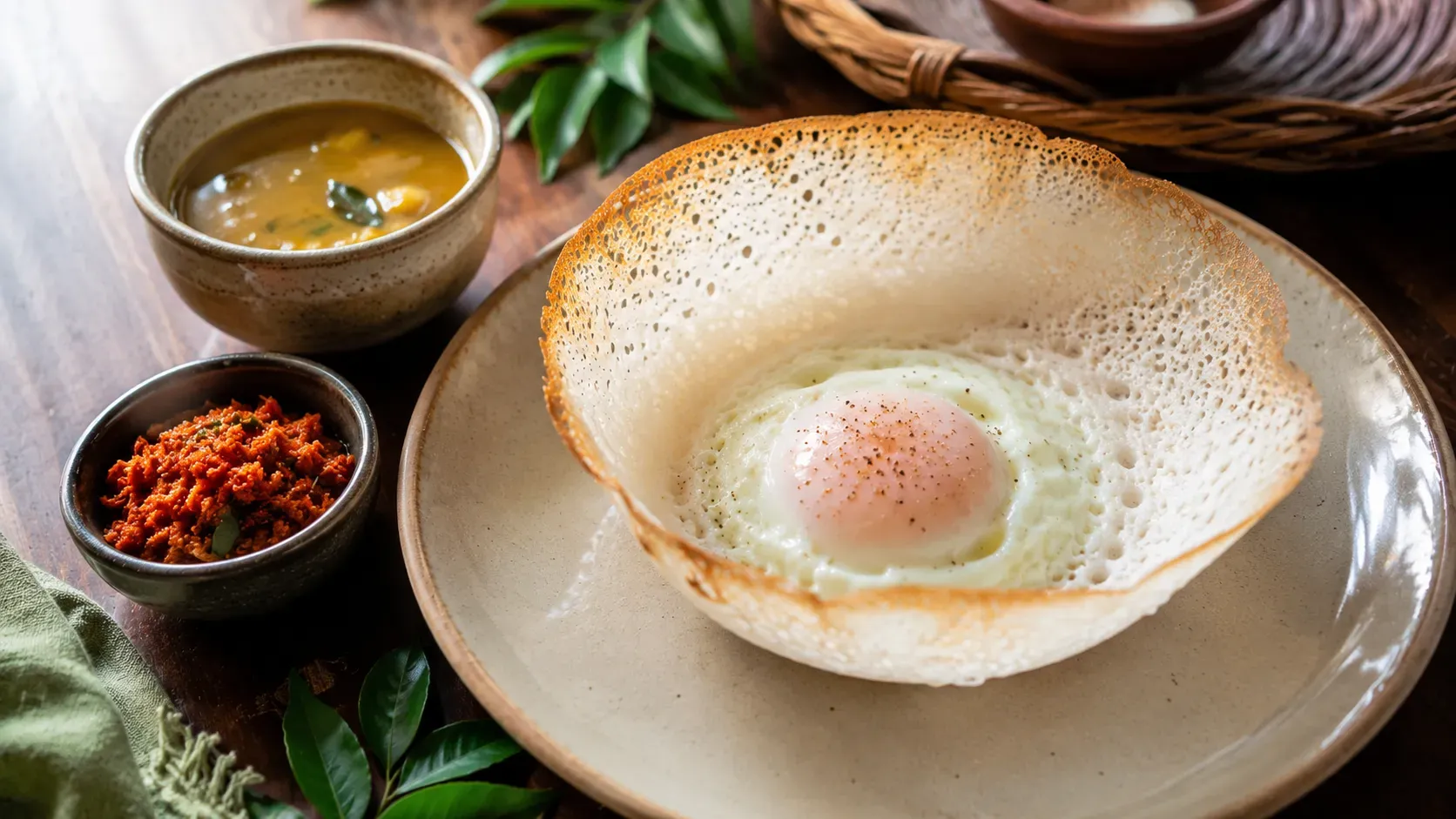
Hoppers Sri Lanka are bowl-shaped pancakes made from fermented rice flour and coconut milk. They are cooked in a small, rounded pan until the edges turn crispy and the centre stays soft and slightly spongy.
The most common version you will see is the egg hopper (bittara appa), where a whole egg is cracked into the centre before the hopper sets. It comes out with a firm egg in the middle and lacy, crisp edges around it.
This hopper food is almost always served with pol sambol or a thin curry on the side. You scoop from the edges and dip as you go.
2. String Hoppers (Idiyappam)
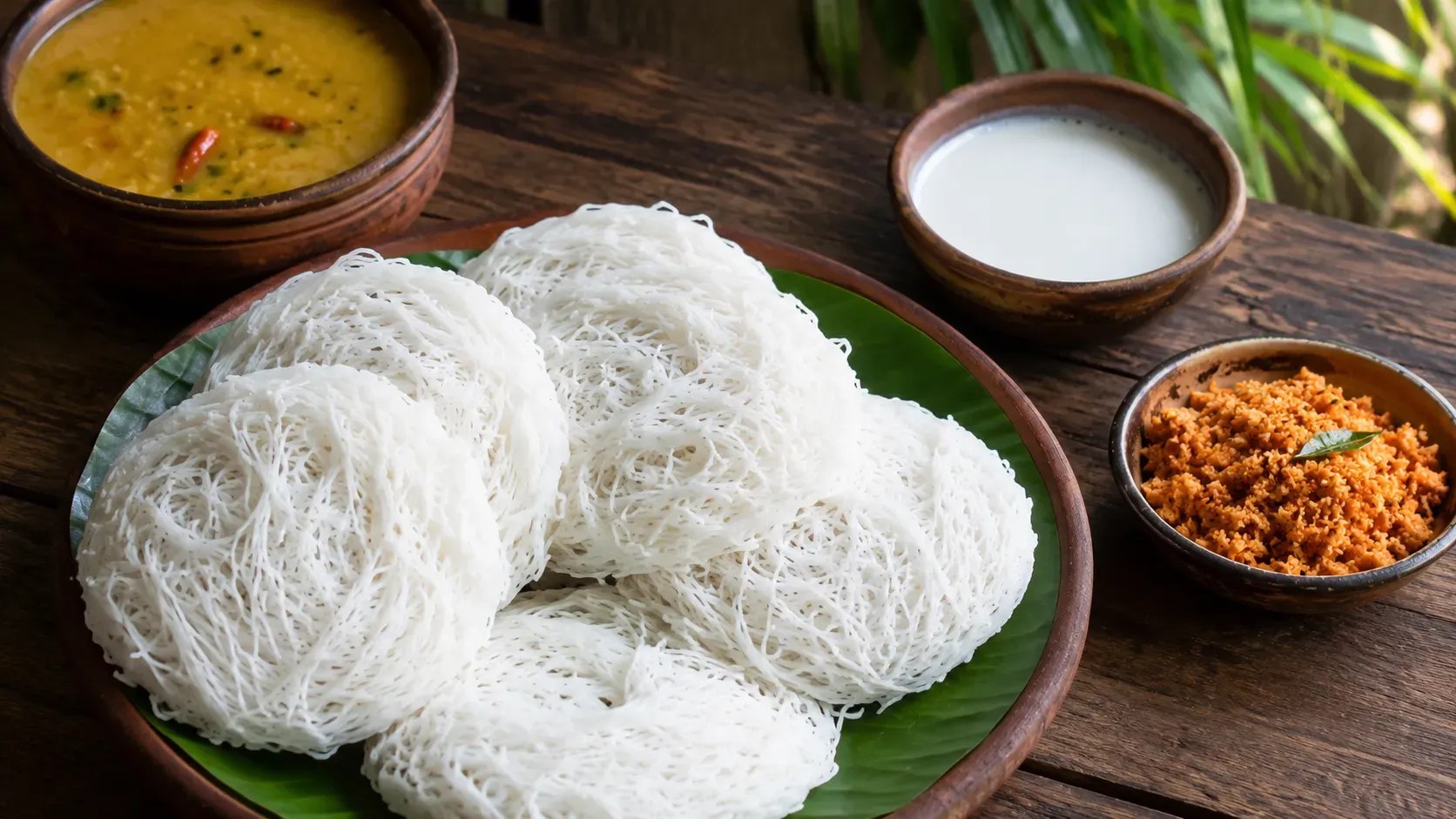
String hoppers are small, flat, round noodles made from steamed rice flour. The dough is pressed through a fine-holed mould, creating thin noodle strands that are then shaped into rounds and steamed.
They are light and mild on their own. Most people eat them with:
- Coconut milk (poured over and eaten slightly sweet)
- Dhal curry (the most common pairing at breakfast)
- A meat or fish curry for dinner
People eat string hoppers for both breakfast and dinner. They soak up sauces easily, so they go well with both light and rich dishes.
3. Pittu
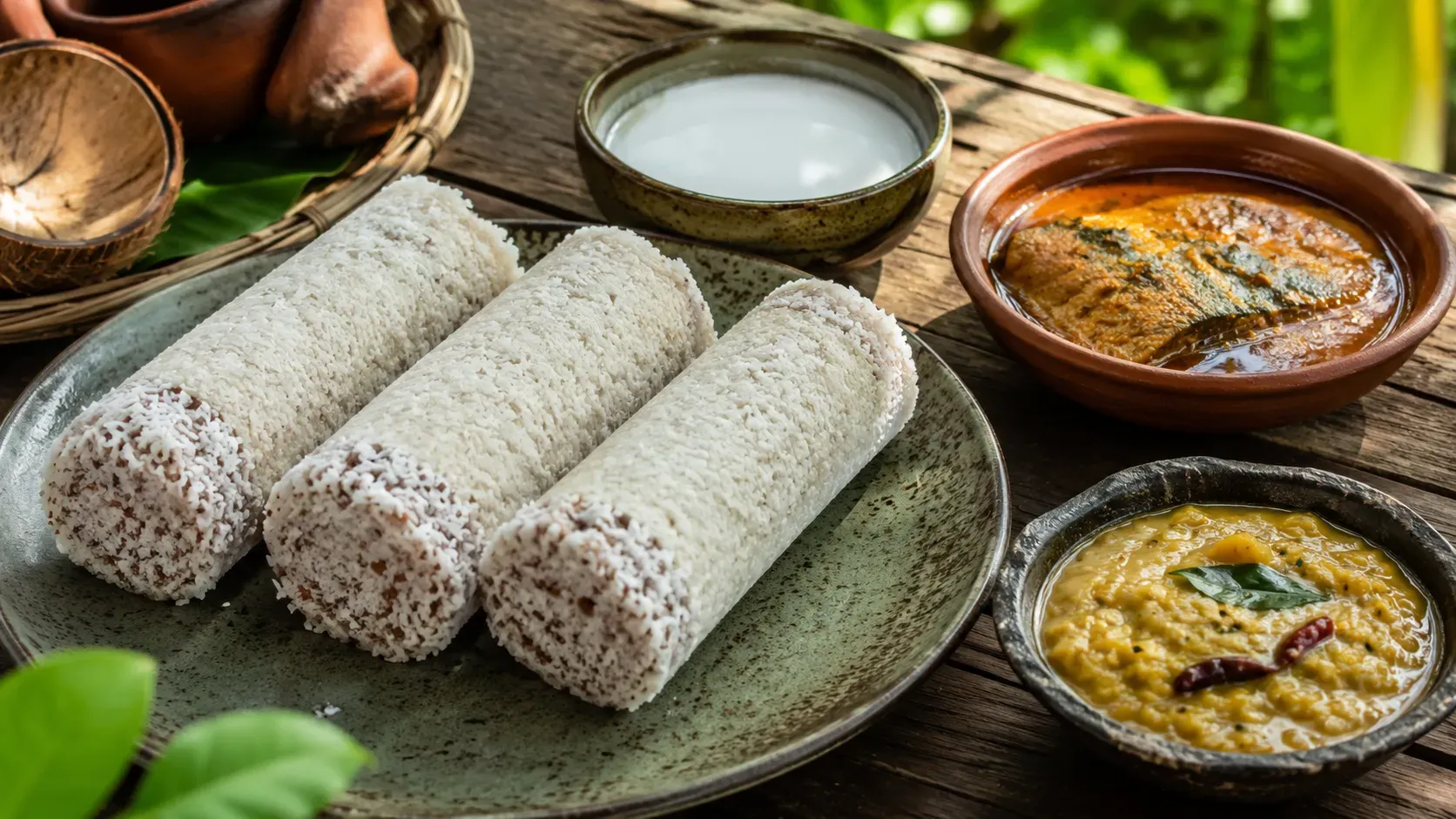
Pittu is a steamed dish made from rice flour and freshly grated coconut, layered together and packed into cylindrical moulds. Traditionally, these moulds were made from bamboo. Today, metal moulds are more common, but the method is the same.
Once steamed, pittu comes out as a firm cylinder with a slightly crumbly, layered texture inside. It is served with:
- Coconut milk poured over it.
- Dhal curry
- A meat or fish curry
Pittu is especially popular in northern and eastern Sri Lanka, where it has been a staple for generations. You’ll also find it all over the island, especially at small local restaurants.
Dish | What it is made of | Typically served with |
Hoppers (Appa) | Fermented rice flour, coconut milk | Pol sambol, egg, curry |
String hoppers (Idiyappam) | Rice flour noodles, steamed | Coconut milk, dhal curry, meat curry |
Pittu | Rice flour, grated coconut, steamed | Coconut milk, dhal curry, fish curry |
Which Famous Food in Sri Lanka Should You Try?
After breakfast, Sri Lankan cuisine centres on a few key dishes that appear at nearly every meal, in every region, and for all kinds of occasions. Here are the main ones to know before your holiday.
1. Rice and Curry: The Sri Lankan National Food
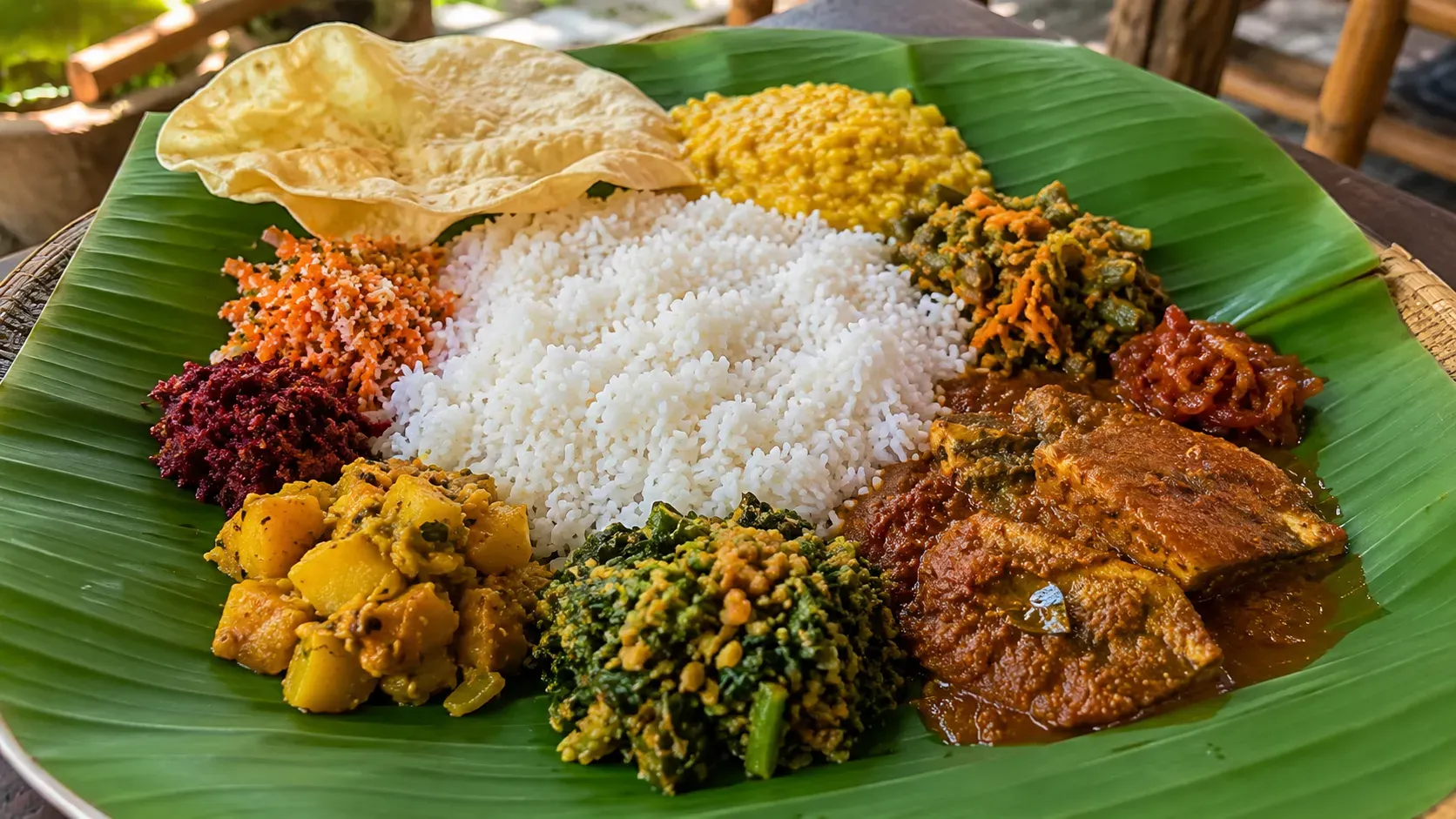
If there is one dish that defines eating in Sri Lanka, it is rice and curry. It is widely regarded as Sri Lanka’s national food, and for good reason. You will find it served at lunch in homes, local restaurants, and roadside eateries across the island.
A proper plate looks like this:
- A mound of steamed rice in the centre
- At least three curries around it: one protein (fish, chicken, or lentil) and two vegetable curries
- Sambols on the side, usually pol sambol or lunu miris
- Papadums (papadam), thin and crisp, served alongside
The types of curries vary by region, season, and even from one home to another. Coastal areas usually serve more fish, while inland regions offer more lentils and vegetables.
Sambols such as pol sambol are almost always served alongside the curries. Traditionally, the meal is eaten with the right hand, gently mixing the rice and curries together as you eat.
This is the famous food in Sri Lanka that most visitors try first, and usually come back to it again and again.
2. Kottu Roti
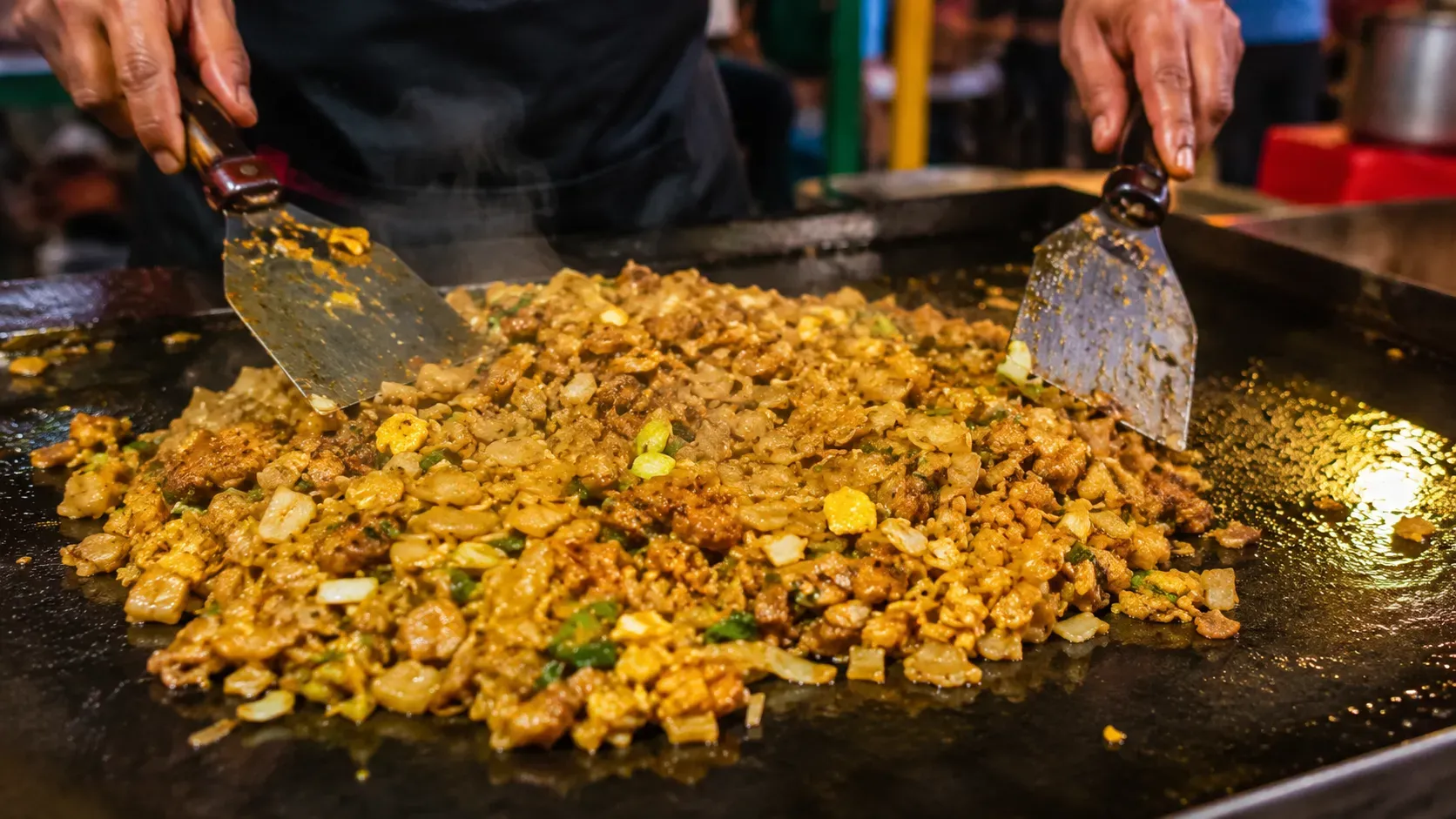
Kottu roti is Sri Lanka's most recognisable street food. It is made from godamba roti, a thin, stretchy flatbread that is chopped into small pieces on a flat-top griddle, then stir-fried with vegetables, egg, and your choice of chicken, beef, or seafood.
The first thing you’ll notice is the sound: the steady clanging of metal blades chopping on the griddle. You often hear it from the street before you see the food stall, and it’s become a classic part of evenings in Sri Lanka.
Kottu roti is available in several versions:
- Chicken or beef (most common)
- Seafood (especially near the coast)
- Vegetarian or egg (widely available)
It is served with a curry sauce or gravy poured over the top. Eat it hot, straight off the griddle.
3. Pol Sambol
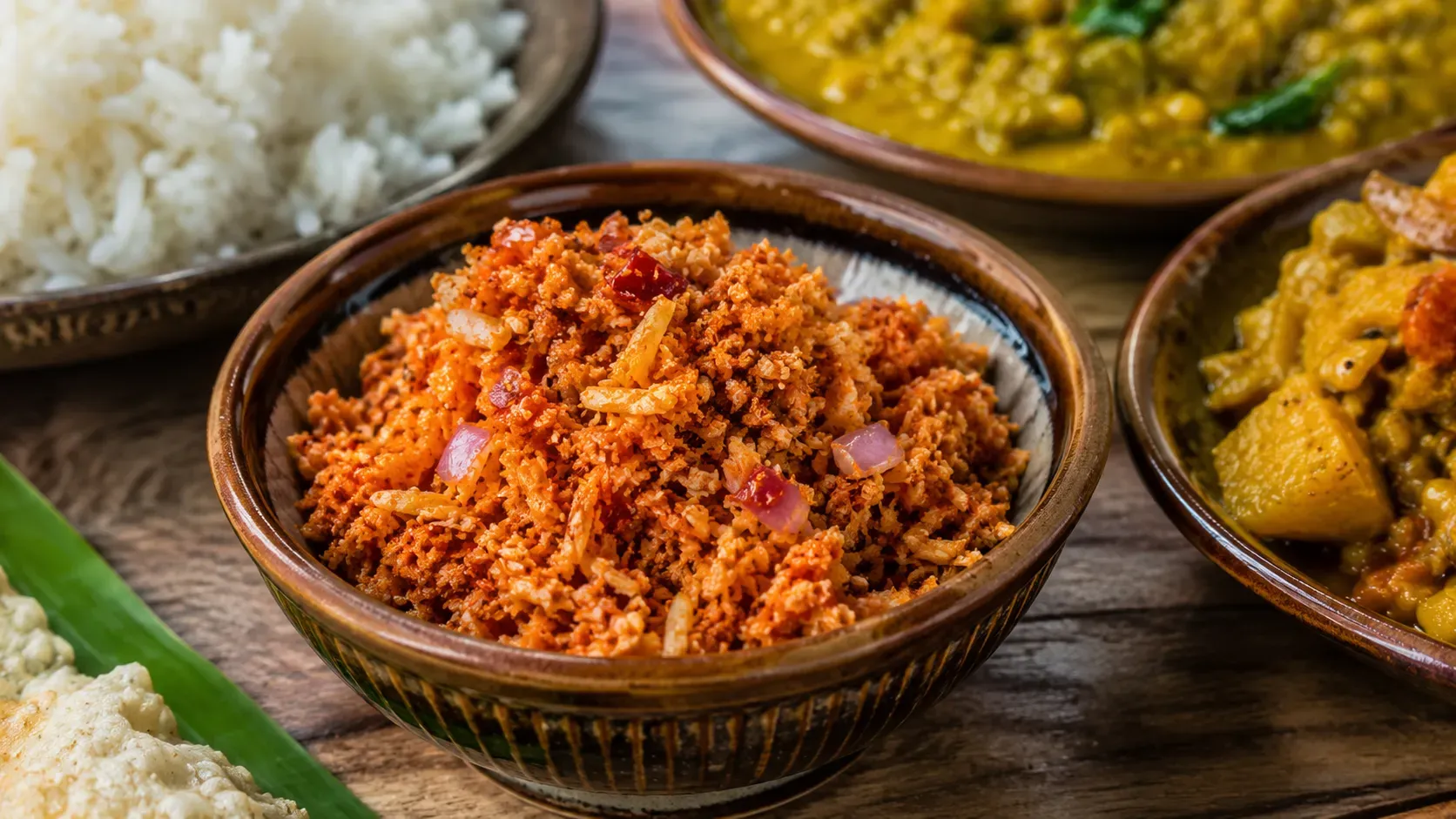
Pol sambol isn’t a main dish; it’s a relish that appears alongside almost every meal in Sri Lanka. Even though it’s small, it packs a lot of flavour.
It is made from:
- Freshly grated coconut
- Red chilli powder
- Lime juice
- Small red onions
- Maldive fish (dried and cured tuna, which adds a deep, savoury note)
Coconut adds texture, lime gives it a tangy kick, and chili brings the heat. All the ingredients are mixed or ground by hand until they’re combined but still a bit coarse.
Pol sambol goes with almost anything: rice and curry, hoppers, string hoppers, roti, or pittu. If you’re vegetarian, just ask for it without Maldive fish. Most places are happy to make it that way.
4. Lamprais
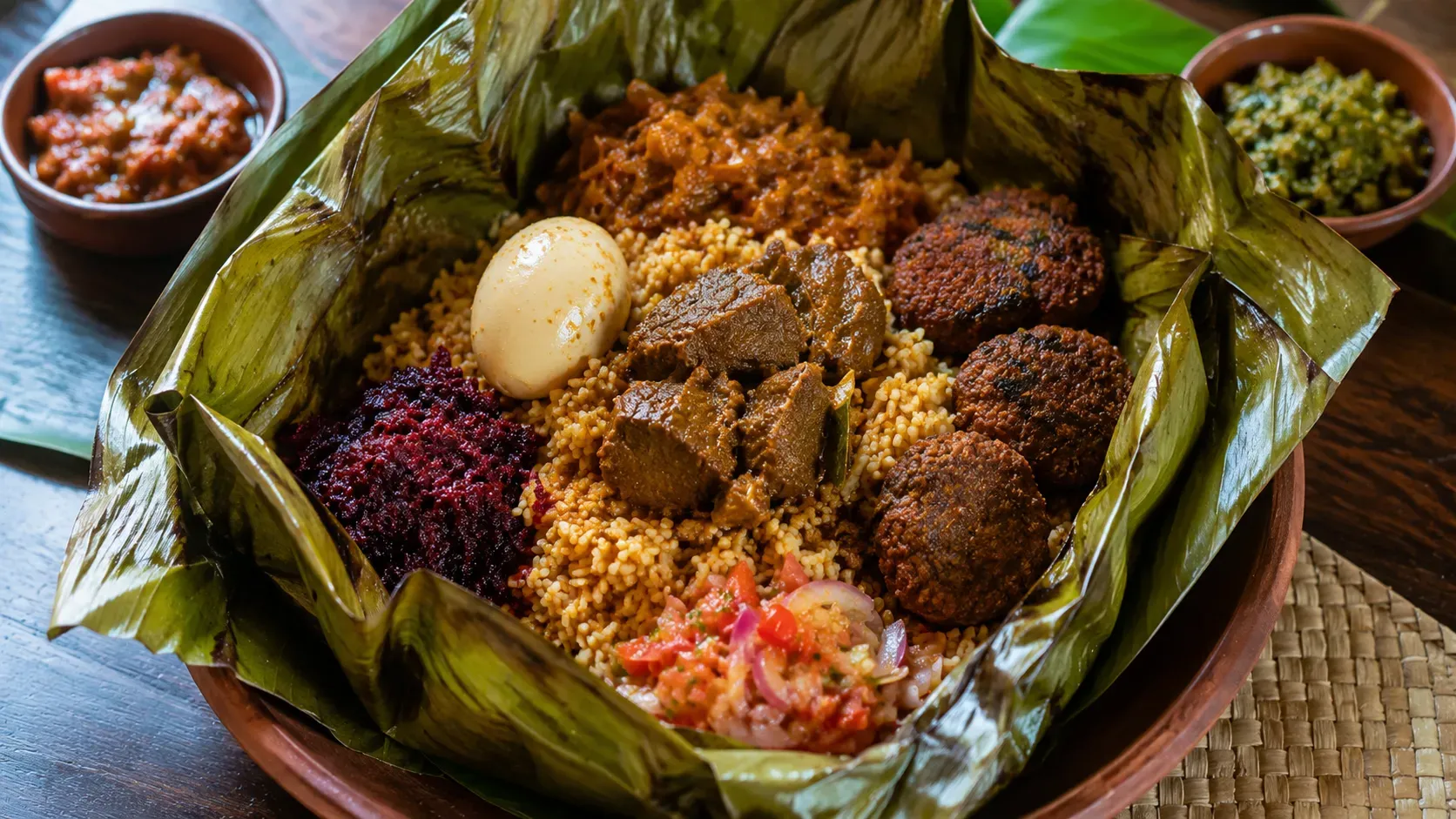
Lamprais is a Dutch-Burgher dish with a history dating back to Dutch colonial rule in Sri Lanka. The name comes from the Dutch lomprijst, which means a packet of rice or other food.
Everything is packed into a single banana leaf parcel:
- Fragrant rice, cooked in stock
- A meat curry (traditionally a three-meat mix of beef, pork, and lamb, though modern versions often use a single meat)
- Sometimes a boiled egg (a modern adaptation; not part of the original recipe)
- Frikkadels (small Dutch-style meatballs)
- Brinjal moju, blachan, and other traditional accompaniments
The parcel is sealed and baked in the oven. As it cooks, the banana leaf gently steams everything inside, adding a subtle, grassy flavour to the rice and curry.
Lamprais is served still wrapped in its banana leaf, and you open it at the table. It’s a festive dish, often made for special occasions or weekend lunches, but some bakeries and restaurants in Colombo serve it regularly.
Dish | Type | Key Ingredients |
Rice and curry | Sit-down, everyday | Rice, fish or chicken curry, vegetable curry, sambol, papadum |
Kottu roti | Street food | Godamba roti, egg, vegetables, meat or seafood, curry sauce |
Pol sambol | Condiment / side | Grated coconut, red chilli, lime, red onion, Maldive fish |
Lamprais | Festive / sit-down | Rice, meat curry, egg, sambol, banana leaf |
Which Sri Lanka Famous Food Is Served as Dessert?
Sri Lankan desserts are simple, made from just a few ingredients like coconut milk, jaggery, rice, and spices. Many of these sweets have cultural meaning that goes beyond their taste.
1. Watalappam
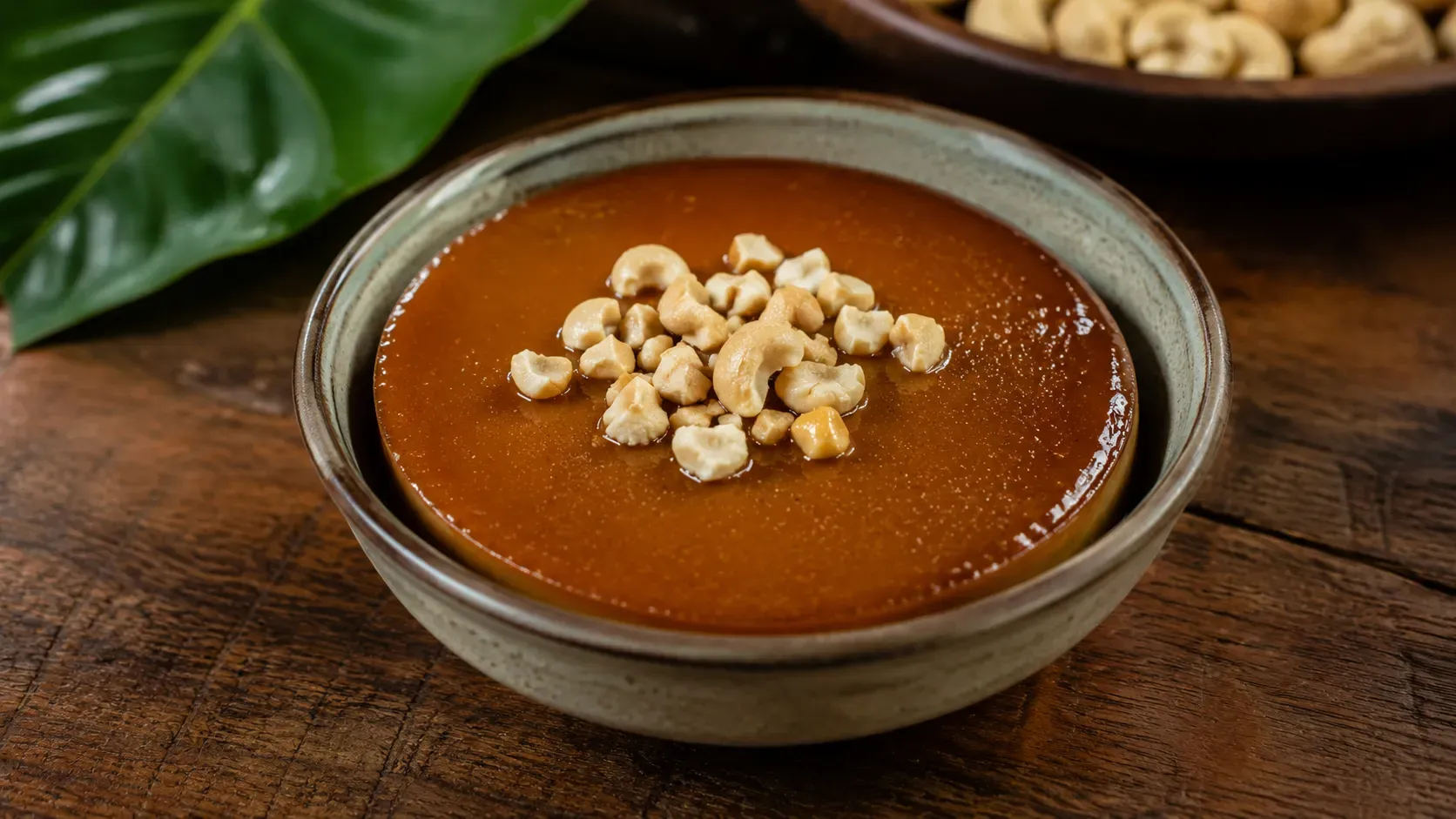
Watalappam is a steamed custard made from:
- Coconut milk
- Jaggery (unrefined palm sugar, which gives it its dark colour and caramel depth)
- Eggs
- Cardamom and nutmeg for spice
- Cashew nuts (typically placed on top as garnish)
Watalappam is steamed, not baked, so it has a smooth, dense texture. The top is dark and a bit sticky from the jaggery, while the inside is soft, almost like a firm pudding.
Wattalappam is of Malay origin and was brought to Sri Lanka by the Malay community in the 18th century during the Dutch colonial period. It is most closely associated with Sri Lanka's Muslim community, where it is a staple at Eid celebrations and weddings. Today, it is also enjoyed widely across the island.
You can find it in restaurants and bakeries all over Sri Lanka, especially in Colombo and the southern regions.
2. Kiri Bath (Milk Rice)
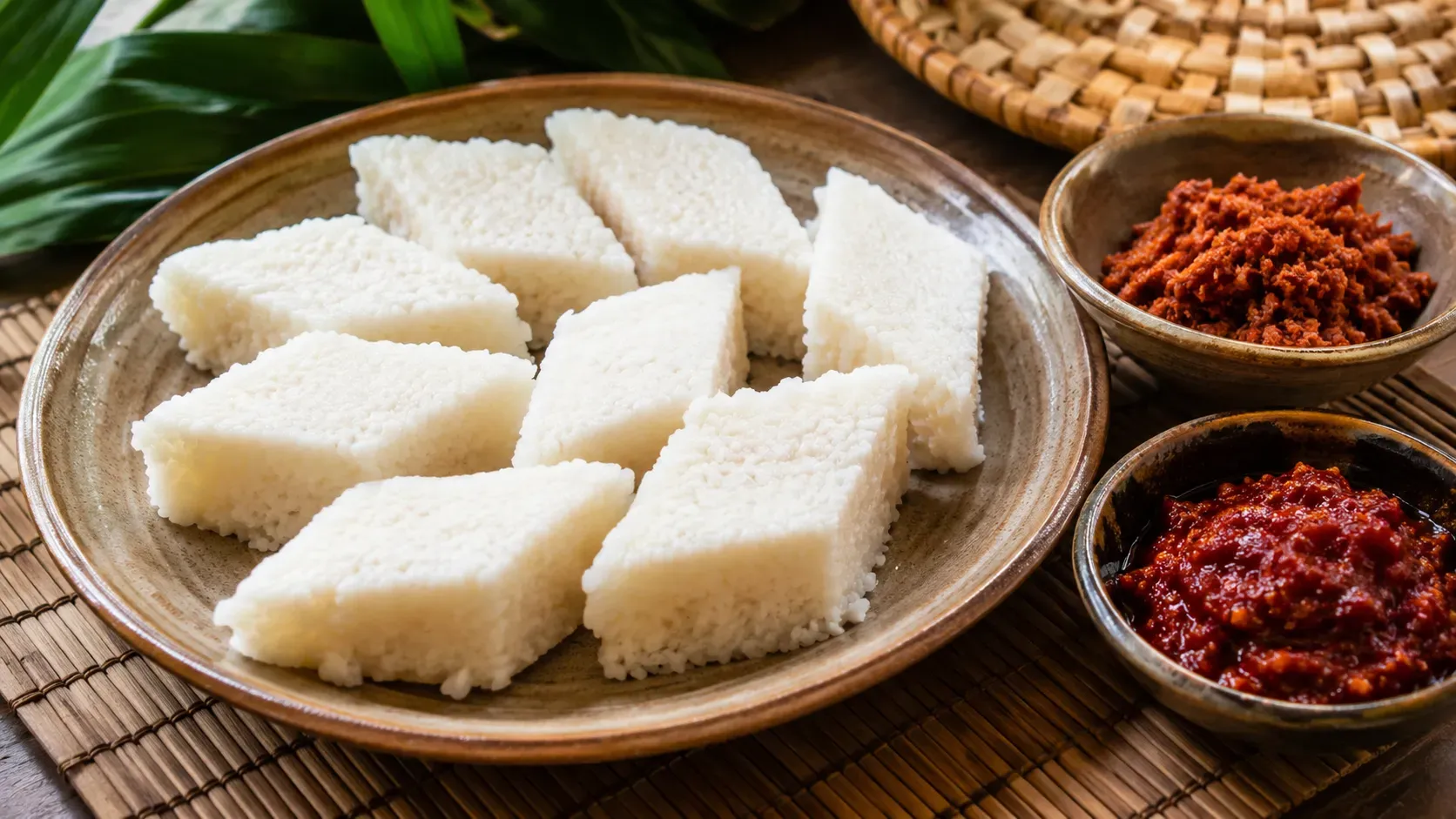
Kiri bath means milk rice in Sinhala. It is made by cooking rice slowly in coconut milk until it thickens into a dense, creamy block. That block is then shaped on a flat plate and cut into diamond pieces before serving.
Kiri bath is a ceremonial dish. It is made for:
- Sinhala and Tamil New Year (mid-April)
- Weddings and housewarmings
- The first day of a new job or a new month in some households
Kiri bath isn’t sweet. Its flavour is mild with a gentle coconut taste, so it’s always served with something sharp; pol sambol is the most common pairing, but lunu miris (a chilli and onion relish) is also popular.
Kiri bath is an important part of Sri Lankan food culture and is one of the most ceremonial examples of Sri Lanka's famous food that you are unlikely to find on a standard restaurant menu.
Which Street Food Should You Try in Sri Lanka?
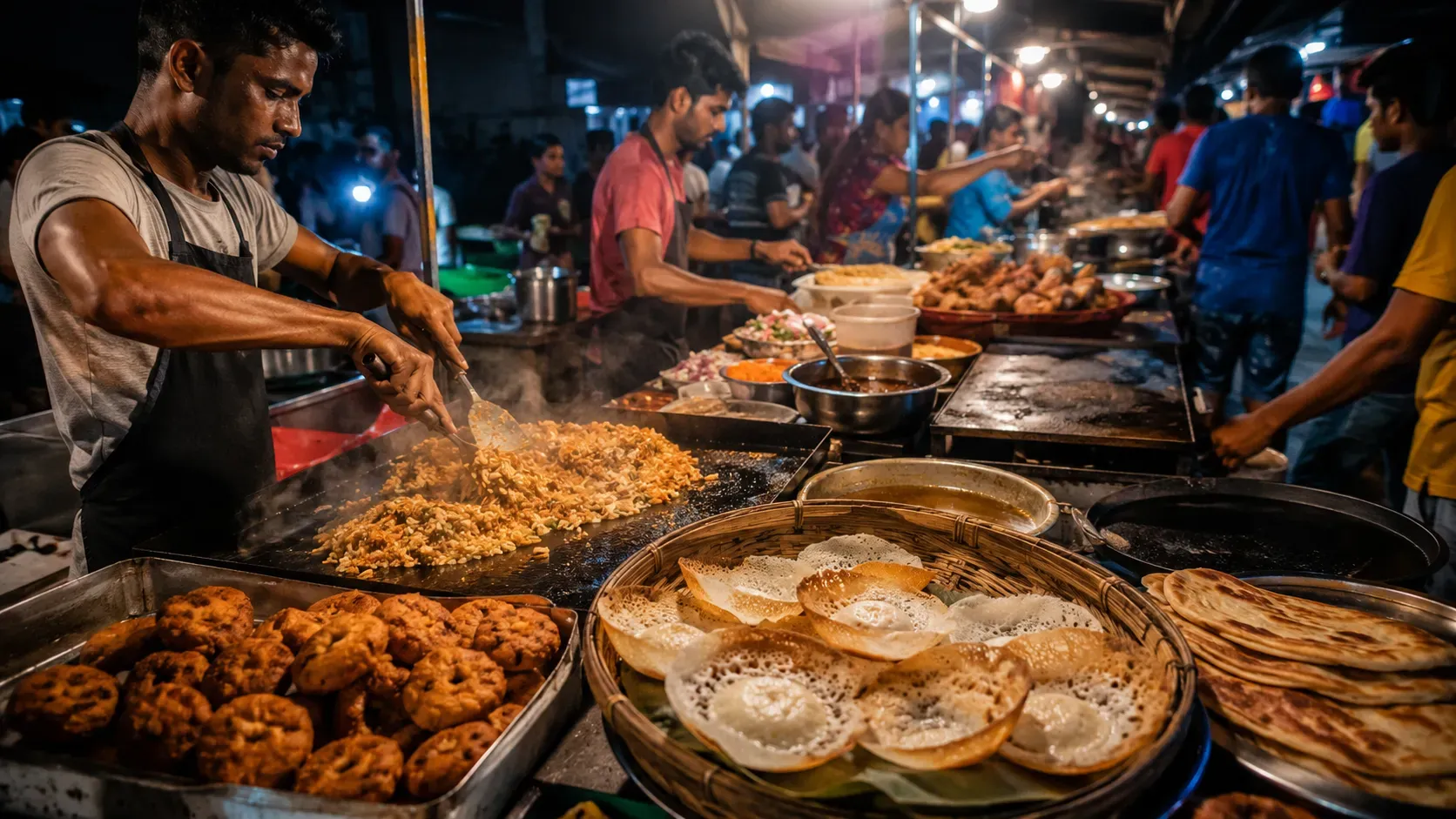
Street food is where you see the famous food in Sri Lanka at its most honest. It is fresh, made to order, and varies by location. Coastal towns serve more seafood, while the hill country offers more vegetables, lentils, and lighter snacks.
Here are five street foods to look out for:
- Isso vadai: Crispy lentil fritters topped with whole prawns, especially popular along Colombo's coastline.
- Egg hoppers: A street-side favourite served fresh with sambol or curry.
- Kottu roti: The iconic chopped flatbread cooked to order on a hot griddle.
- Fish ambul thiyal: Sour tuna curry commonly found in southern coastal towns.
- Parippu with roti: A comforting combination of dhal curry served with flatbread across the island.
Street Food | Where to Find It |
Isso vadai | Galle Face Green, Colombo; coastal towns |
Parippu with roti | Nationwide; common at local canteens |
Fish ambul thiyal | Southern coast; Galle, Matara, Tangalle |
Kottu roti | Everywhere; especially active in the evenings |
Egg hopper | Island-wide; street stalls and small eateries |
Tribe Travel Tip: Watching vendors cook each dish is part of the fun, especially at evening food stalls where everything is made fresh to order.
What Should You Know Before Eating in Sri Lanka?
Sri Lanka's famous food can surprise first-time visitors, especially with its spice and some unique ingredients. Here are four tips to help you eat with confidence:
- Ask for chilli on the side. Most dishes come with a hot chilli paste or sambol. If you prefer milder food, ask for it separately rather than assuming the dish will be mild.
- Maldive fish is dried, cured tuna used in many sambols and chutneys, including pol sambol. If you are a vegetarian, ask before ordering.
- Fresh coconut milk is different from tinned. Many Sri Lankan curries use freshly pressed coconut milk. The flavour is lighter and less sweet than tinned versions you may have tried elsewhere.
- Spice varies by region. The south and coastal areas tend to use more chilli. The hill country around Kandy and Ella is generally milder, so meals there may feel more approachable if you are sensitive to heat.
How Can Holiday Tribe Plan Your Sri Lanka Holiday?
The famous food in Sri Lanka is best experienced when your schedule allows time for regional dining. A well-planned itinerary lets you enjoy Sri Lanka's regional dishes alongside the island's temples, coastlines, and tea country. From a proper rice and curry lunch in Kandy to freshly made hoppers at a coastal stay in Galle, the right plan puts you in the right place at mealtimes.
Holiday Tribe’s travel advisors can create a personalised Sri Lanka itinerary that fits your dates and interests. Contact Holiday Tribe to start planning your getaway.