

Planning a visit to Omaha Beach raises a question that most Normandy guides do not answer clearly: how much can you realistically see in one day, and what should you prioritise? The beach itself is open and free. The Normandy American Cemetery sits on the bluffs above it. Three museums within a few kilometres cover different aspects of the D-Day landing. And further along the coast, Pointe du Hoc adds another layer. This guide helps you decide what to see, in what order, and how much time each stop genuinely needs.
What Happened at Omaha Beach?
 The Landing
- On the morning of 6 June 1944, American forces landed on a 8-kilometre stretch of Normandy coastline known as Omaha Beach.
- It was one of five Allied landing sites during Operation Overlord, the largest seaborne invasion in history.
- Omaha saw the heaviest losses of the day.
The Beach and the Defences
- The beach was divided into sectors, running west to east: Charlie, Dog Green, Dog White, Dog Red, Easy Green, Easy Red, Fox Green and Fox Red.
- The first waves of infantry from the US 1st and 29th Infantry Divisions came under intense fire from German positions built into the bluffs above the sand.
- These fortified strongpoints, known as Widerstandsnester, had clear sightlines across the open beach.
The Cost
- Estimates of American casualties vary, but most cite approximately 2,000 to 4,700 killed, wounded or missing by the end of 6 June.
- The severity of the losses led to the name “Bloody Omaha,” a term reflecting the cost of the landing rather than any official military designation.
- By evening, the beachhead was secured, but at a price that has shaped how the landing is remembered ever since.
What Can You See at Omaha Beach Today?
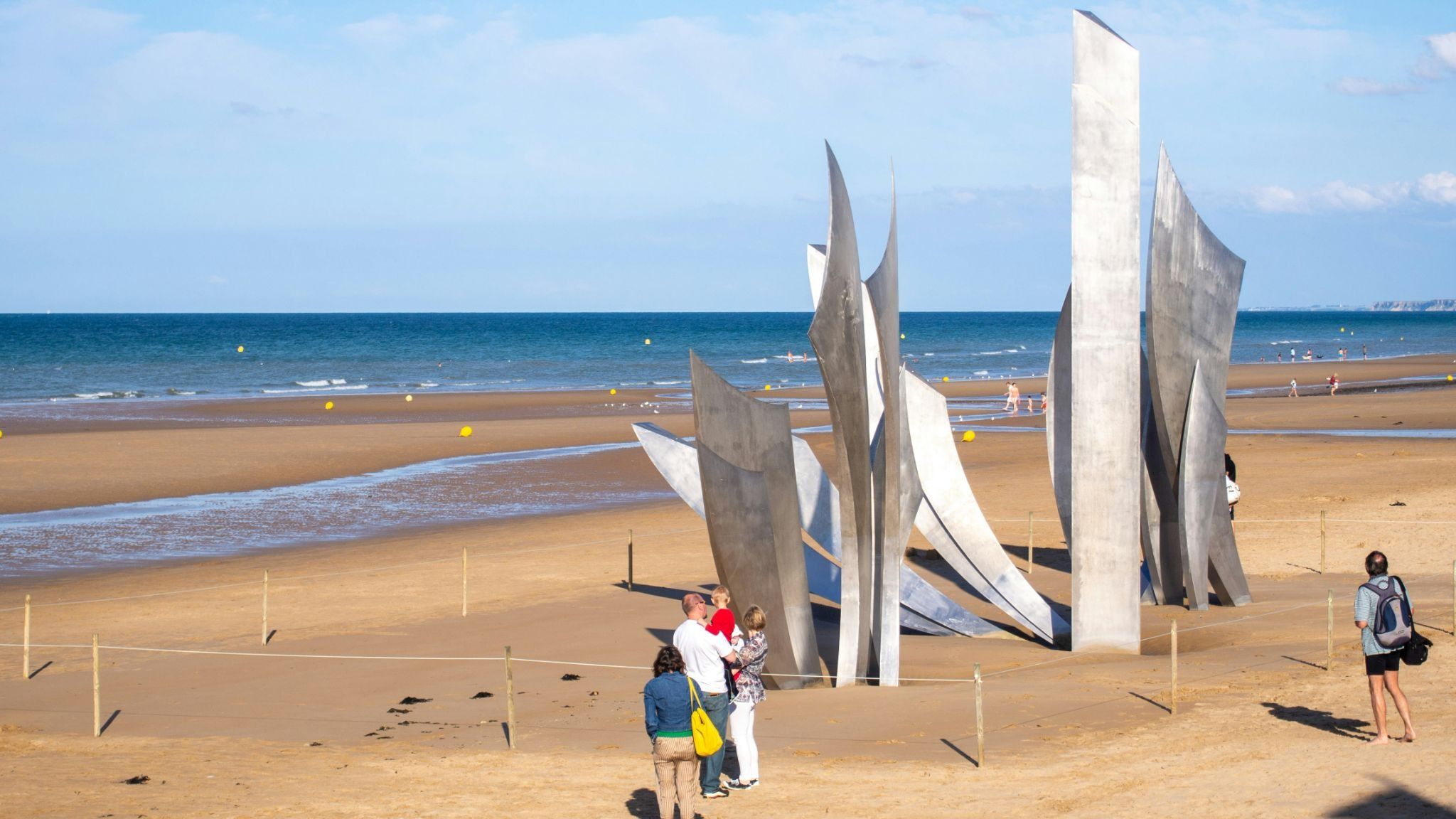 The beach is a wide, flat stretch of sand backed by grassy bluffs. It is a public beach, open year-round and free to walk. Outside the summer months, it is often quiet enough that the scale of the landscape becomes part of the experience.
- Les Braves: Anilore Banon’s steel sculpture on the sand, installed in 2004, is the most recognisable memorial on the beach.
- What’s left: Concrete German strongpoints still sit along the bluffs, and rusted obstacles show up at low tide.
- The bluffs: Walk up from the sand, and you’ll feel the height and exposure the landing forces faced.
- Beach access: Several access points run along the coastal road between Vierville-sur-Mer and Colleville-sur-Mer, with free parking along the seafront.
What Should You See at the Normandy American Cemetery?
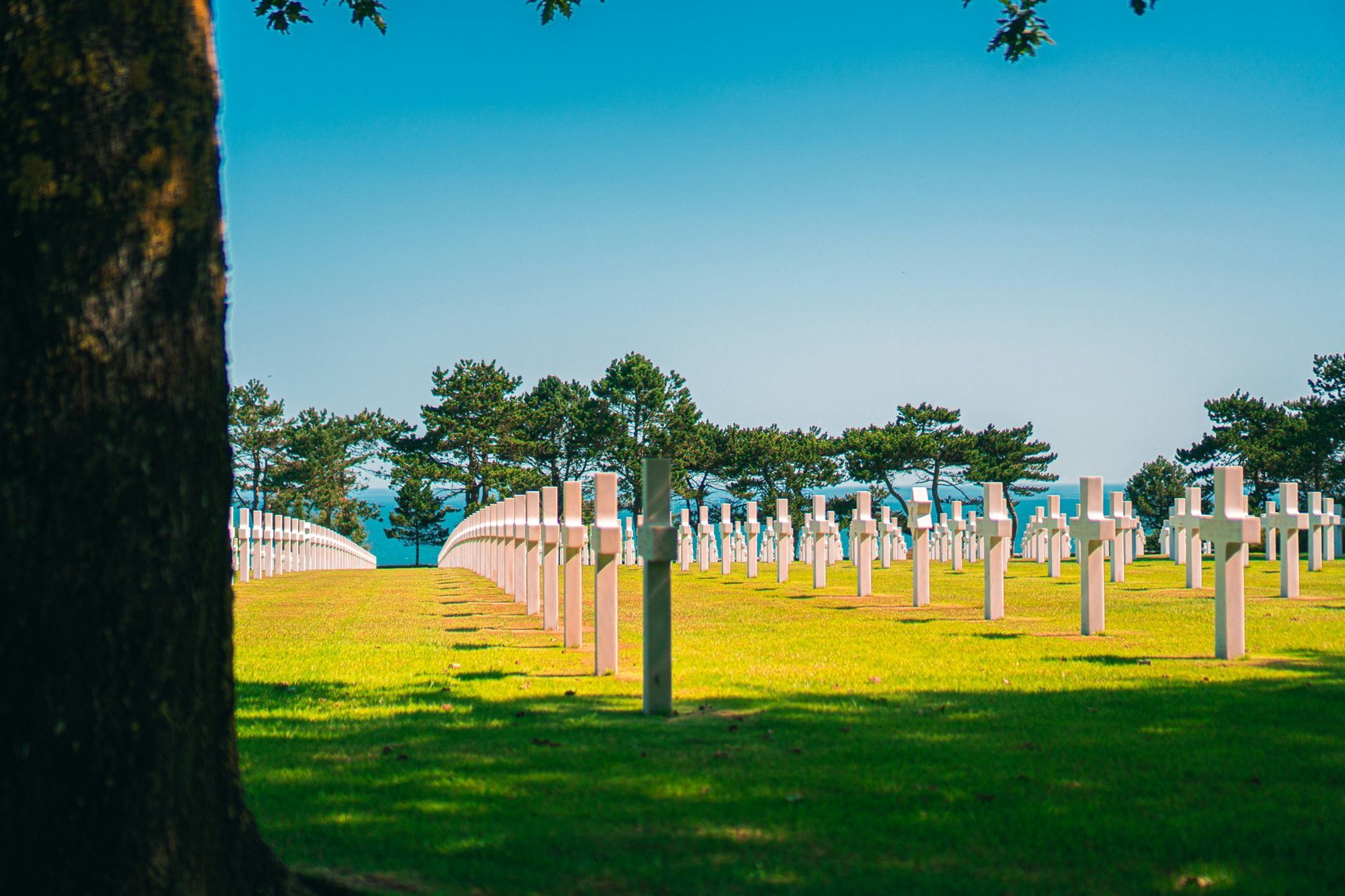
The Normandy American Cemetery sits on the bluffs directly above the eastern end of Omaha Beach, at Colleville-sur-Mer. It is the most visited American military cemetery outside the United States.
- Graves: 9,388 white marble headstones in rows facing west, toward the sea and toward home. The headstones include crosses and Stars of David.
- Wall of the Missing: 1,557 names of service members whose remains were never recovered
- Visitor Centre: Opened in 2007. Exhibits, films and personal items from soldiers buried in the cemetery. Allow 45 minutes to 1 hour inside.
- The bluff overlook: A path from the cemetery leads to the edge of the bluff, with a direct view down to the beach below.
- Entry: You can visit for free, daily from 9 am to 5 pm. Last admission is at 4:30 pm. Closed on 25 December and 1 January.
- Pre-registration: Advance registration is not currently required. ABMC plans to introduce reservations for summer 2027 visits.
- Time needed: 1.5 to 2 hours for the cemetery, visitor centre and bluff overlook
Which Museums Should You Visit Near Omaha Beach?
Three museums sit within a few kilometres of the beach, each with a different focus.
Museum | Focus | Entry | Time Needed | Location |
Omaha Beach Memorial Museum | The landing itself. Photos, personal items, uniforms, weapons and vehicles from the assault | EUR 7.90 per adult in 2026 | 1 hour | Saint-Laurent-sur-Mer, 200 metres from the beach |
Overlord Museum | Military hardware. Over 10,000 pieces including tanks, vehicles and weapons from both sides | EUR 9.90 adult | 1 to 1.5 hours | Colleville-sur-Mer, 500 metres from the cemetery |
D-Day Omaha Museum | The American D-Day experience. Reconstructions, personal stories and equipment | Verify current price before visiting | 1 hour | Vierville-sur-Mer |
Which to Choose
- Memorial Museum: Covers the landing story, so it’s best for first-time visitors who want the clearest narrative.
- Overlord Museum: Better if you’re interested in military equipment and the wider Normandy campaign.
- Short on time? Pick the Memorial Museum, as it’s the most directly connected to what you see on the beach.
Opening Hours
- All three museums operate seasonally.
- In 2026, the Omaha Beach Memorial Museum is open from 16 February to 29 December. The Omaha Secret D-Day Museum is open from 1 April to 15 November.
- The Overlord Museum stays open with limited winter hours.
- Check each museum’s website before you travel.
Can You Visit Omaha Beach in One Day?
Yes. A realistic one-day plan covers the beach, the cemetery and one museum comfortably, with a second museum possible if you start early.
Time | Stop | What to Do | Duration |
9am | Normandy American Cemetery | Visitor centre, cemetery and bluff overlook. Arrive at opening for the quietest experience | 1.5 to 2 hours |
11am | Overlord Museum | Military hardware collection. 500 metres from the cemetery, walkable | 1 to 1.5 hours |
12.30pm | Lunch | Restaurants in Colleville-sur-Mer or Saint-Laurent-sur-Mer | 45 minutes to 1 hour |
1.30pm | Omaha Beach and Les Braves | Walk the beach at Saint-Laurent-sur-Mer. See Les Braves, the bluffs and any visible remains | 1 to 1.5 hours |
3pm | Omaha Beach Memorial Museum | The landing narrative. 200 metres from the beach | 1 hour |
4pm | Optional: Pointe du Hoc | 15 to 20 minute drive west. The Ranger assault site with cratered clifftop and visible German bunkers. Free, outdoor site | 45 minutes to 1 hour |
Optional additions with more time:
Pointe du Hoc
- A cratered clifftop 15 to 20 minutes west of Omaha Beach.
- US Army Rangers scaled the cliffs here under fire on D-Day.
- Access is free and open year-round.
- Worth adding if your day allows an extra hour.
Maisy Battery
- A German artillery position about 10 minutes from Pointe du Hoc.
- Guided tours are available seasonally.
- Check current opening times before you visit.
When Is the Best Time to Visit Omaha Beach?
The Normandy coast has a maritime climate. Weather conditions affect how comfortable you feel while walking along Omaha Beach, visiting the cemetery and spending time outdoors.
Period | Weather and Visitor Conditions | What to Expect |
May to June | Mild temperatures, longer daylight hours and generally manageable crowds | One of the best periods for comfortable sightseeing. Crowds increase around 6 June. |
July and August | Warmest weather and long days, but peak visitor numbers | Arrive early, as car parks at the cemetery and beach can fill by mid-morning. |
September to October | Cooler temperatures and fewer visitors than in peak summer | A good time for quieter visits and outdoor walks. |
November to March | Cold, wet and windy, with fewer visitors | The beach and cemetery remain accessible, but some museums have reduced hours or close seasonally. |
6 June | Annual D-Day anniversary commemorations | Expect large crowds, official events and possible access restrictions. The experience differs from a regular visit. |
A few practical weather tips:
- Forecast: Check it before you leave, since coastal wind and rain can make walking uncomfortable even in summer.
- Layers: You may carry a warm layer and a waterproof jacket regardless of the month you visit.
Practical Tips for Visiting Omaha Beach
- Footwear: Try to wear comfy shoes, since you’ll be walking on sand, grass and uneven ground.
- Weather: Carry a waterproof layer, as the coast is exposed and the weather changes fast.
- Opening hours: Check museum and cemetery hours before you go, because some close for winter.
- Parking: You’ll find free parking at the cemetery, along the Saint-Laurent-sur-Mer seafront and near the museums, though it fills early on summer weekends.
- Accessibility: Cemetery paths are mostly paved, but you may find the beach and some museum interiors harder going, so check with each site.
- Children: Younger kids may tire with all the walking and history, so use the beach as a good break point.
- Respect: You’re in places of remembrance, so keep noise low, follow posted rules and treat monuments with care.
Conclusion
A single focused day is enough to take in the most meaningful parts of Omaha Beach and the Normandy American Cemetery, without trying to see everything. You’ll find that the beach, the bluffs, the headstones and the museums together tell a story that reading alone can’t fully convey. Before you travel, check opening hours and the cemetery’s pre-registration requirements, then give the visit the time and quiet it deserves.
Holiday Tribe builds Normandy and Omaha Beach, France into structured France holiday packages that combine the D-Day coast with Paris, the Loire Valley or the wider north. Talk to a holiday advisor about fitting the visit into a route that suits your time.