

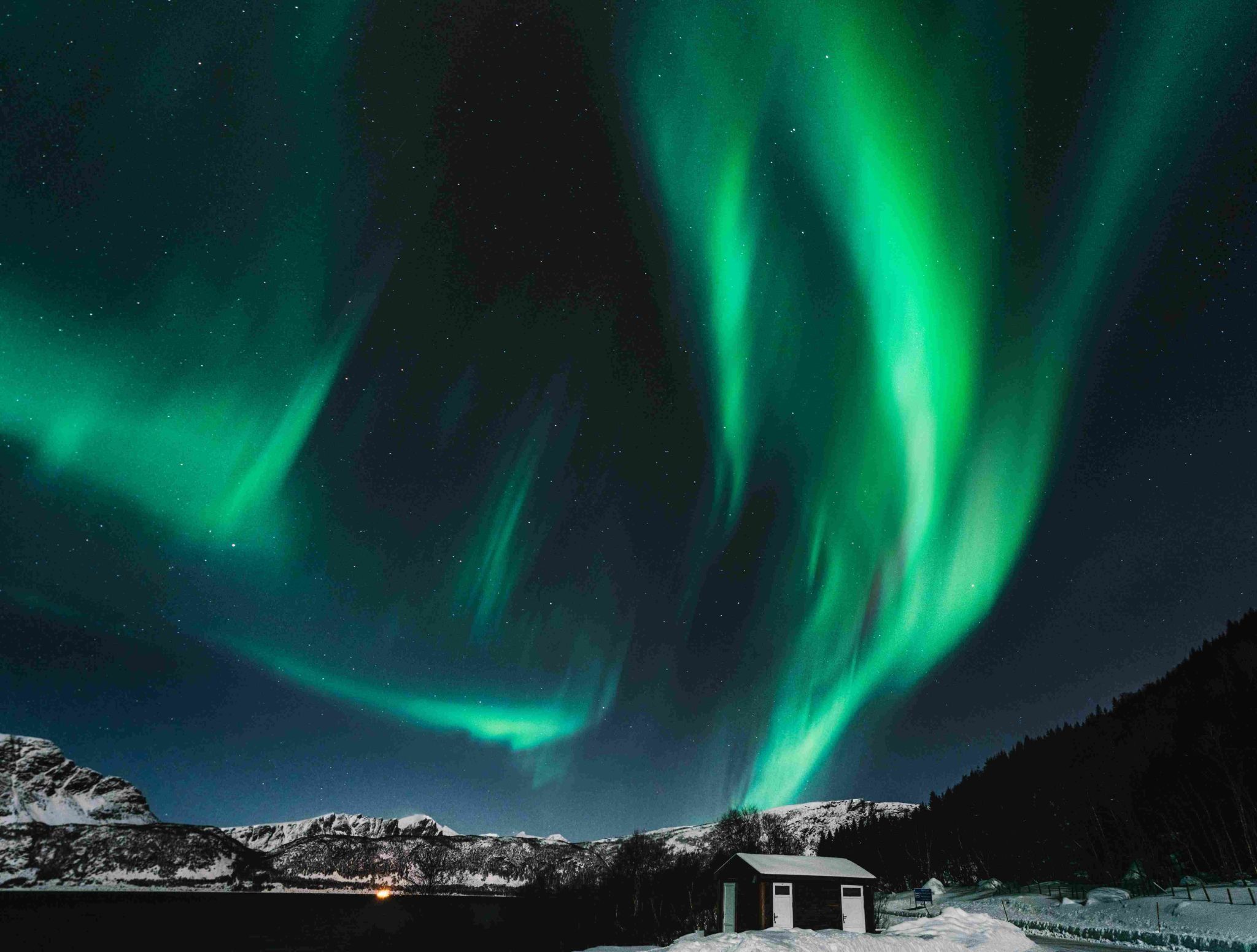
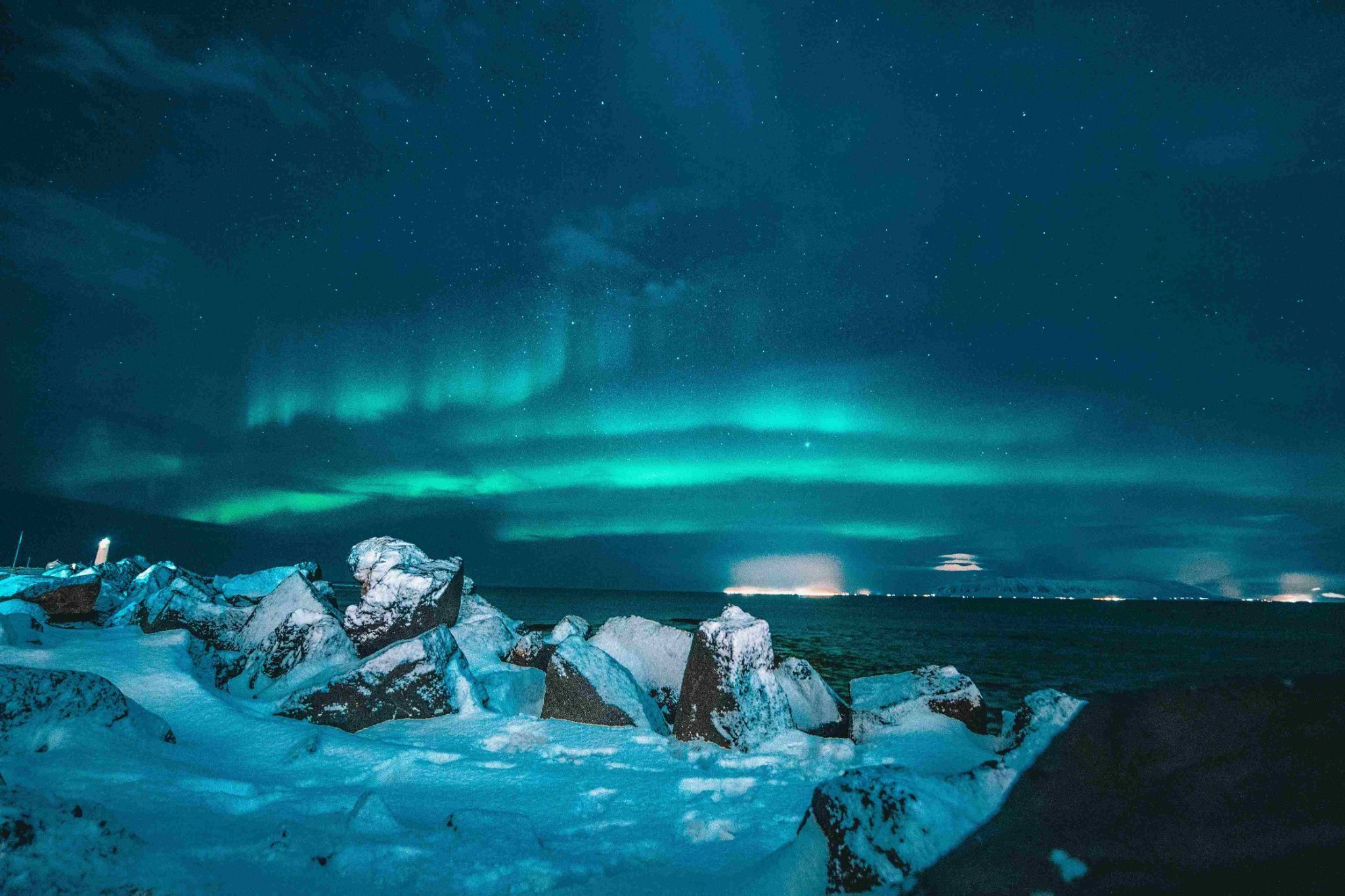
Some rare experiences in the world make you realise just how amazing the Earth is; the auroras are one of them. A faint green ribbon appears in the sky, then stretches into a full curtain of light over snow-covered mountains and lakes.
Being this rare, there are only a few locations where you can experience these auroras; among those destinations, Norway holds a special place. That’s because it provides both the darkness and the scenery to go with the lights. You don’t just see the northern lights over an empty sky; you watch them over mountain peaks, fishing villages and open water, which makes your northern lights experience in Norway even more memorable.
This guide walks you through when you should go, where you can stay and how to plan an aurora adventure so you can have the best chances of witnessing them.
What Are the Northern Lights in Norway?
If you have ever wondered what the northern lights are all about, the short answer is that they are a natural light display caused by charged particles from the sun colliding with gases in the Earth's upper atmosphere. Scientists call it the aurora borealis. When these particles hit oxygen and nitrogen high above the ground, they release energy as light, usually in shades of green, and sometimes pink, purple, or red on stronger nights.
Norway is located right beneath the auroral oval, which is a ring-shaped area around the North Pole where the northern lights are most active and reliable. This is why people see the northern lights in Norway much more often than in most other places.
You will not be able to see this phenomenon everywhere in Norway, though. You need dark skies, so the far north of the country, above the Arctic Circle, gives you the best odds. Southern cities like Oslo occasionally catch a faint glow during strong solar activity, but this is rare and unpredictable.
Weather also plays a bigger role than most first-time visitors expect. A strong aurora hiding behind thick clouds is invisible from the ground, so flexibility with your evenings matters just as much as your dates.
Tribe Travel Tip: Download an aurora forecast app before you land. Most local guides in the north check it every evening to decide where to drive that night.
When Is the Best Time to See the Northern Lights in Norway?
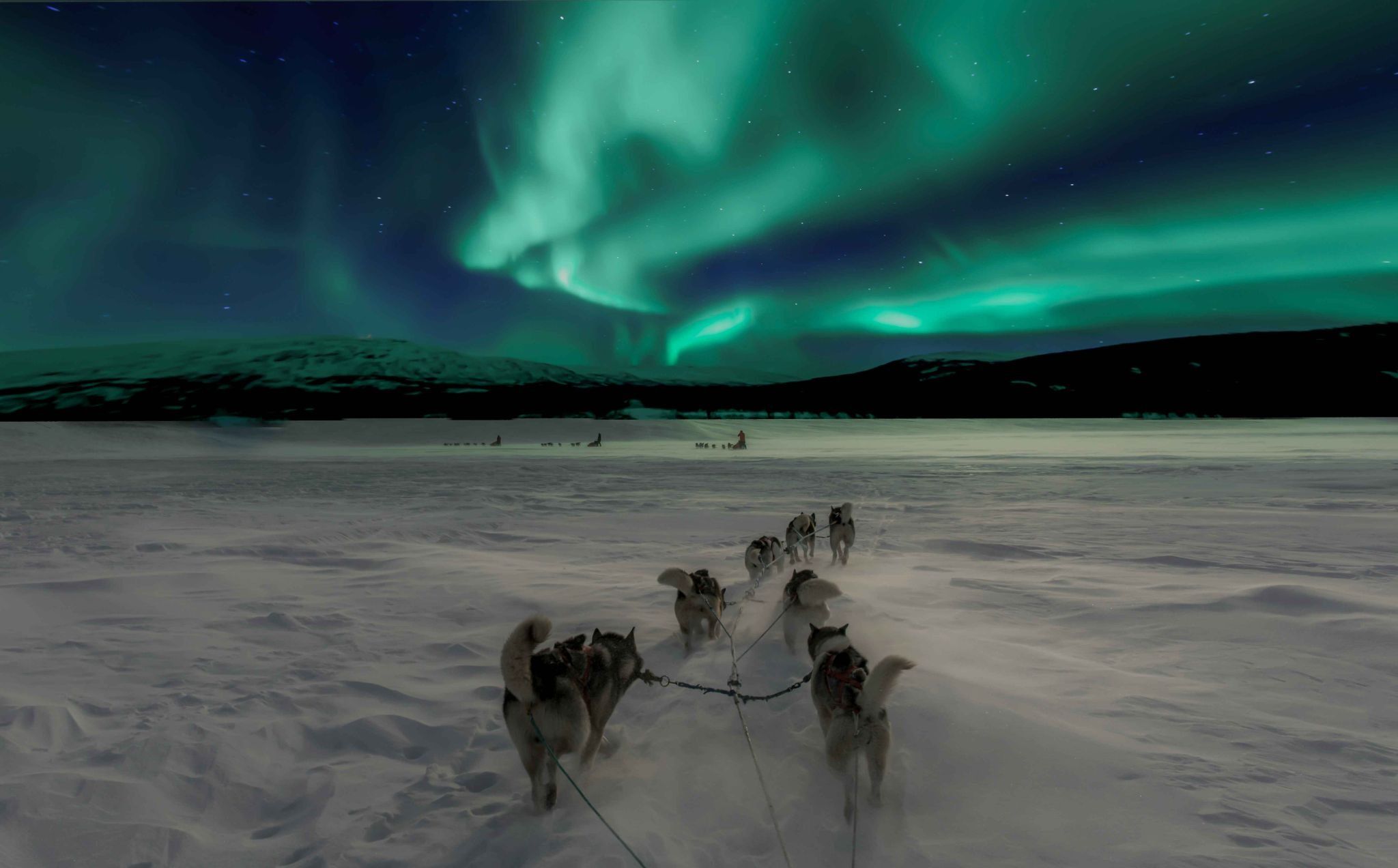 The best time to see the northern lights in Norway is from late September to late March. During these months, the far north gets enough darkness for the lights to appear. Outside this period, the midnight sun makes the sky too bright, even if the aurora is active above the clouds.
During that time, some months are better than others. Cold, clear nights in the middle of winter have the longest periods of darkness. In autumn and spring, around the equinox, the weather is usually calmer, and there are fewer clouds.
Period | Months | Why it Works |
Early Season | Late Sep – Oct | Long nights return, milder temperatures |
Deep Winter | Nov – Jan | Longest darkness, snowy scenery |
Late Season | Feb – Mar | Clearer skies, good balance of day light and dark |
Prime viewing hours generally fall between 6 pm and 2 am, once the sky is fully dark. It helps to stay somewhere for at least three or four nights rather than just one, since the aurora does not appear on command and clouds can block even a strong display.
Booking early matters too, since December and January slots around Tromso and Lofoten fill up fast with travellers chasing the same clear nights you are.
Tribe Travel Tip: If your dates are flexible, aim for the days around a new moon. A darker sky makes even a faint aurora easier to spot.
What Are Norway's Northern Lights Seasons?
 Norway's northern lights seasons break down into three stretches, each with its own character. Knowing which one matches your travel style makes it easier to pick your dates with confidence.
Autumn (September to October)
In autumn, the north experiences its first real darkness again. Nights get longer fast, but the temperatures stay mild by Arctic standards.. The land is still green or just starting to turn gold. Sometimes storms come in from the Atlantic, but when the sky clears, the aurora often appears brightly around the equinox.
Winter (November to January)
This is deep winter, the heart of the season. Snow blankets the fjords, days are short, and darkness stretches for most of the twenty-four hours in the far north. It is the most atmospheric time to visit, though heavier snowfall can also mean more cloud cover on certain nights.
Spring (February to March)
People who live here often say this is the best time of year. The sun rises a bit earlier every day, the weather becomes more stable, and there is usually still snow on the ground. There are fewer people than during the busy December and January months, so you can enjoy both daytime activities and lively night skies.
Season | Months | Day Light | Crowd Level |
Autumn | Sep – Oct | Moderate | Low |
Winter | Nov – Jan | Very short | High |
Spring | Feb – Mar | Increasing | Moderate |
Each season gives you a distinctly different version of Norway, so think about whether you would rather have long snowy nights or a bit more day light to explore in between aurora hunts.
Where to See the Northern Lights in Norway?
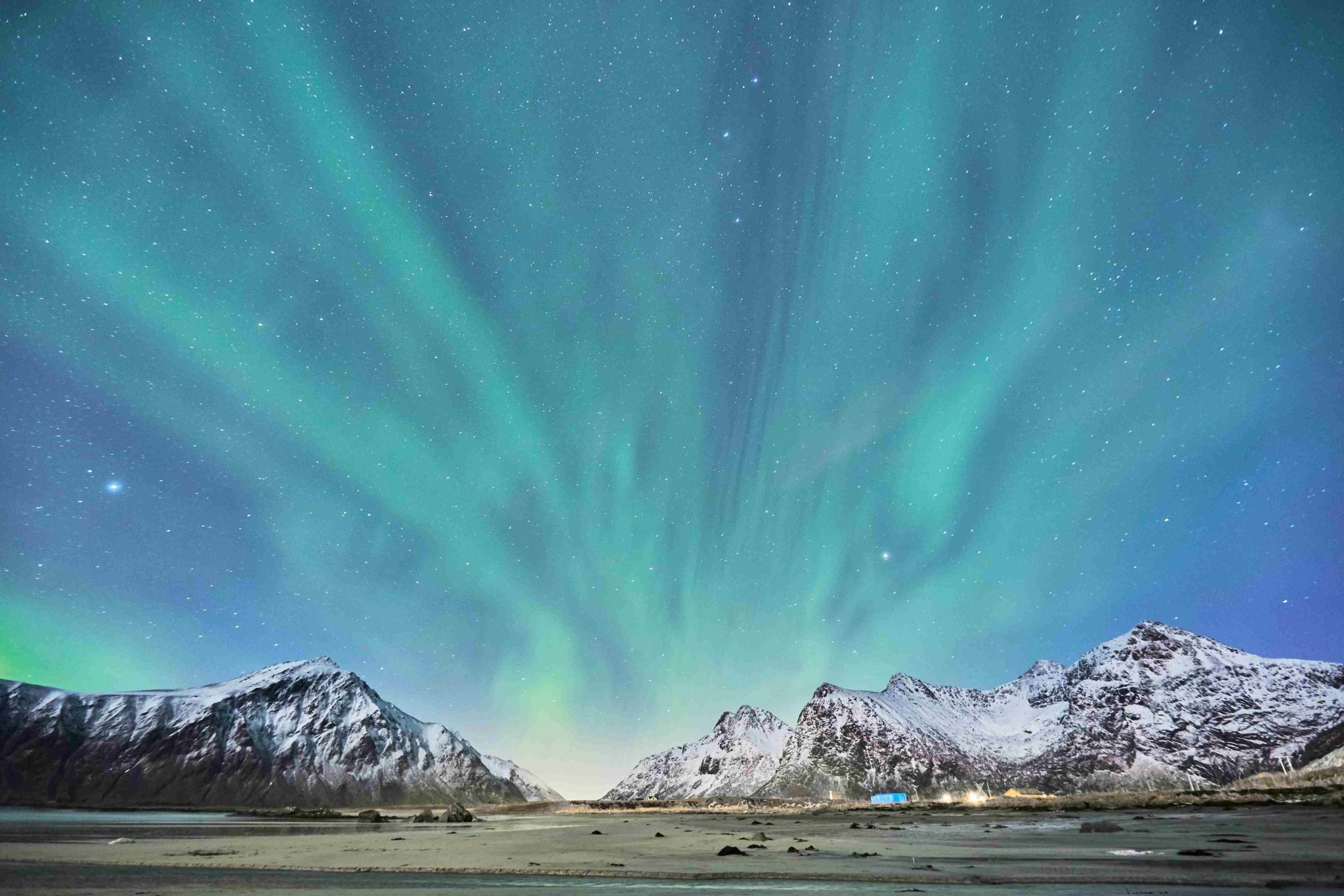 If you want to see the northern lights in Norway, just remember one simple rule: go north and stay away from city lights. You have a good chance anywhere above the Arctic Circle, but some areas are known for the best views:
- Tromso and surroundings: The most established base, with guided tours, easy transport, and quick access to darker spots just outside the city
- Lofoten Islands: Striking peaks and fishing villages create some of the most photogenic backdrops in the country, though coastal cloud cover can be more frequent
- Senja: A quieter island between Tromso and Lofoten, with fewer crowds and striking mountain and fjord views
- Alta and the Finnmark region: Drier inland weather often means more clear sky nights than the coast
- Lyngen Alps: Steep mountains create a rain shadow effect, giving this pocket some of the driest, clearest conditions in the north
Beyond these five, smaller towns like Bodo, Kirkenes, and Narvik are also gaining a following among aurora chasers who want fewer crowds and still excellent odds, especially if you are happy to base yourself somewhere less touristy for your escape.
You might also want to take a coastal cruise between Bergen and Kirkenes. This way, the ship moves you toward clearer skies each night, so you do not have to drive yourself.
Tribe Travel Tip: If your first choice looks cloudy at night, ask your guide about a short drive inland. Coastal weather in Norway can change within a few kilometres.
What Is the Best Place to See the Northern Lights in Norway?
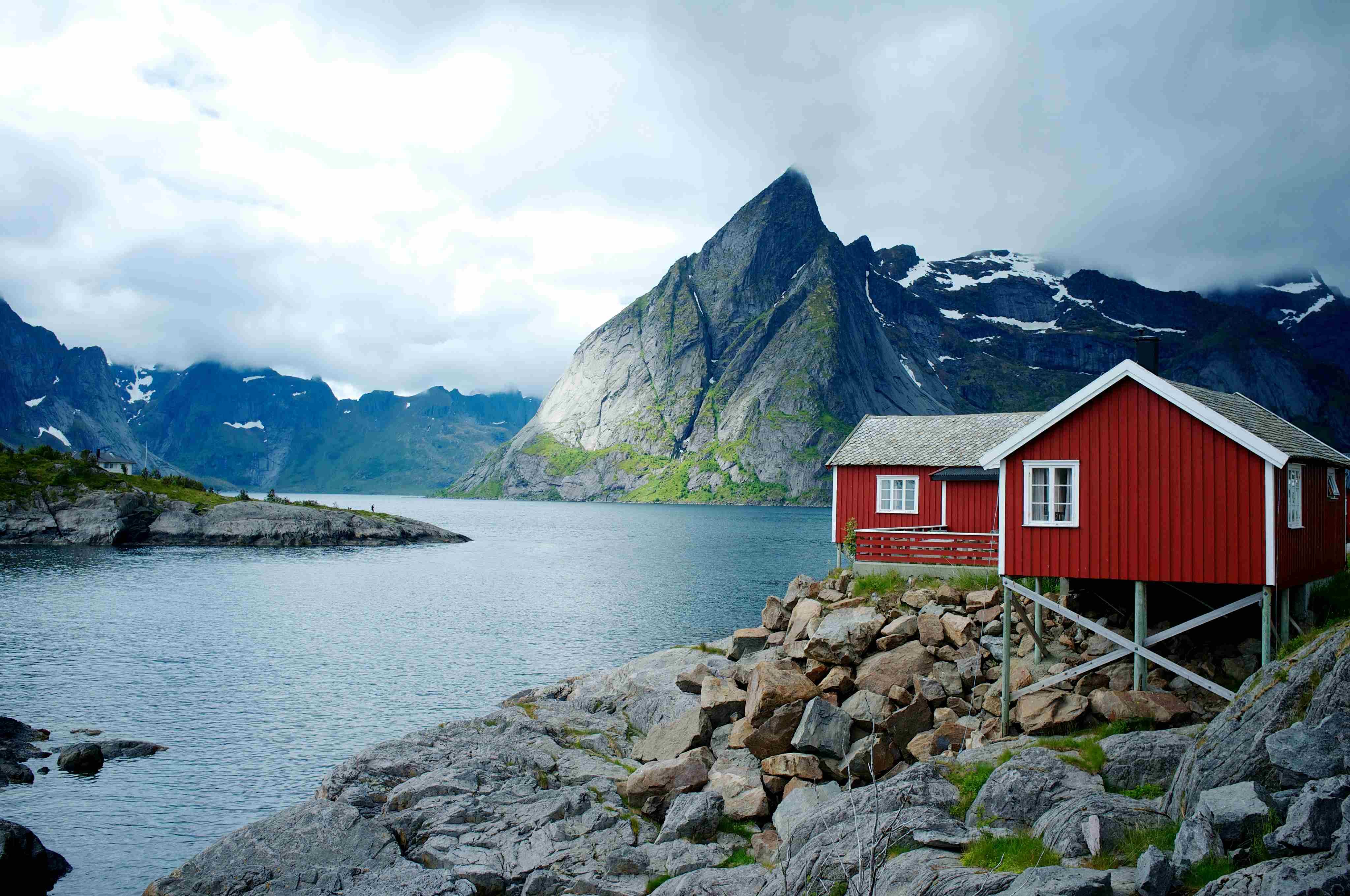 If you are looking for a simple answer, Tromso is the best place in Norway to see the northern lights, especially for first-time visitors. The city has good transport options, plenty of guided tours, and it is easy to reach the dark countryside just outside the city.
That said, your ideal base really depends on what kind of holiday you want around your aurora hunting.
Destination | Best for | Watch Out for |
Tromso | First timers, easy logistics | Light pollution close to town |
Lofoten | Scenery and photography | More frequent cloud cover |
Alta | Reliable clear skies | Fewer flight options |
Senja | Quiet, uncrowded views | Limited infrastructure |
Svalbard | Polar landscapes, dark polar nights | Cold, remote, pricier |
Photographers tend to gravitate toward Lofoten for its peaks and reflections. On the other hand, travellers whose main goal is simply seeing the lights often prefer Alta or Senja, where the weather statistically cooperates more often.
If you would rather skip the debate entirely, Svalbard offers something no mainland region can. Its polar night stretches for weeks in the deepest winter months, meaning the sky stays dark around the clock and your odds of catching a display go up simply because you have more hours to watch the sky.
Tribe Travel Tip: Pair two regions if your schedule allows: a few nights in Tromso for convenience and a few in Lofoten or Senja for scenery, so you are not relying on just one sky.
Which Airports in Norway Are Best for Northern Lights Chasers?
 Knowing your airports in Norway to see northern lights options in advance saves you a lot of guesswork once you land. Almost every international flight into the north connects through Oslo Gardermoen Airport (OSL), the country's main gateway.
Airport | Code | Best for |
Tromso Airport | TOS | Tromso city and Lyngen Alps |
Alta Airport | ALF | Alta and Finnmark |
Harstad Narvik Airport, Evenes | EVE | Lofoten and Vesteralen |
Bodo Airport | BOO | Bodo, ferries to Lofoten |
Svalbard Airport | LYR | Longyearbyen and Svalbard |
There is no non-stop service from India to Norway, and in order to get to Oslo you must change planes in a city in Europe or in the Middle East. Once you have arrived in Oslo, you can take a short domestic flight to the north. Several airlines, including Widerøe and SAS, provide regular flights from Oslo to the northern airports, particularly during the peak season.
Indian passport holders travelling for leisure need a Schengen holiday visa to enter Norway, which you can apply for through the official Norwegian immigration website well ahead of your travel dates.
Once you land at your chosen northern airport, renting a car gives you the most freedom to chase clear patches of sky, though most towns also have local guides and shuttle services if you would rather not drive on icy roads yourself.
Tribe Travel Tip: If Lofoten is on your list, remember there is no direct flight there. You will land at Evenes or Bodo first, then continue by road or ferry.
Conclusion
The long dark winters, beautiful fjords and reliable aurora activity make Norway one of the best places to see the northern lights. Whether you choose the easy access of Tromso, the raw beauty of Lofoten, or the quiet skies of Alta, you are getting ready to witness something that few will ever get the chance to.
If you want to see this phenomenon up close in Norway, Holiday Tribe offers customised Norway holiday packages, complete with itineraries,stays, transfers and optional flight and visa assistance. Contact our holiday advisors to book your adventure today!