

You can’t just flip a switch to see the aurora borealis. It depends on space weather and often means waiting in the cold, hoping for a show. The upside is that some parts of Europe give you much better chances than others, and knowing where to go is key. This guide covers 15 of the best places to see the northern lights across the continent, with tips on the best times to visit, what each place is best for, and how to get there. From Norway’s Arctic coast to Iceland’s glacier lagoons and Scotland’s dark-sky parks, these are the top northern lights destinations to plan your winter trip around.
What Are the Northern Lights, and Why Does Location Matter so Much?
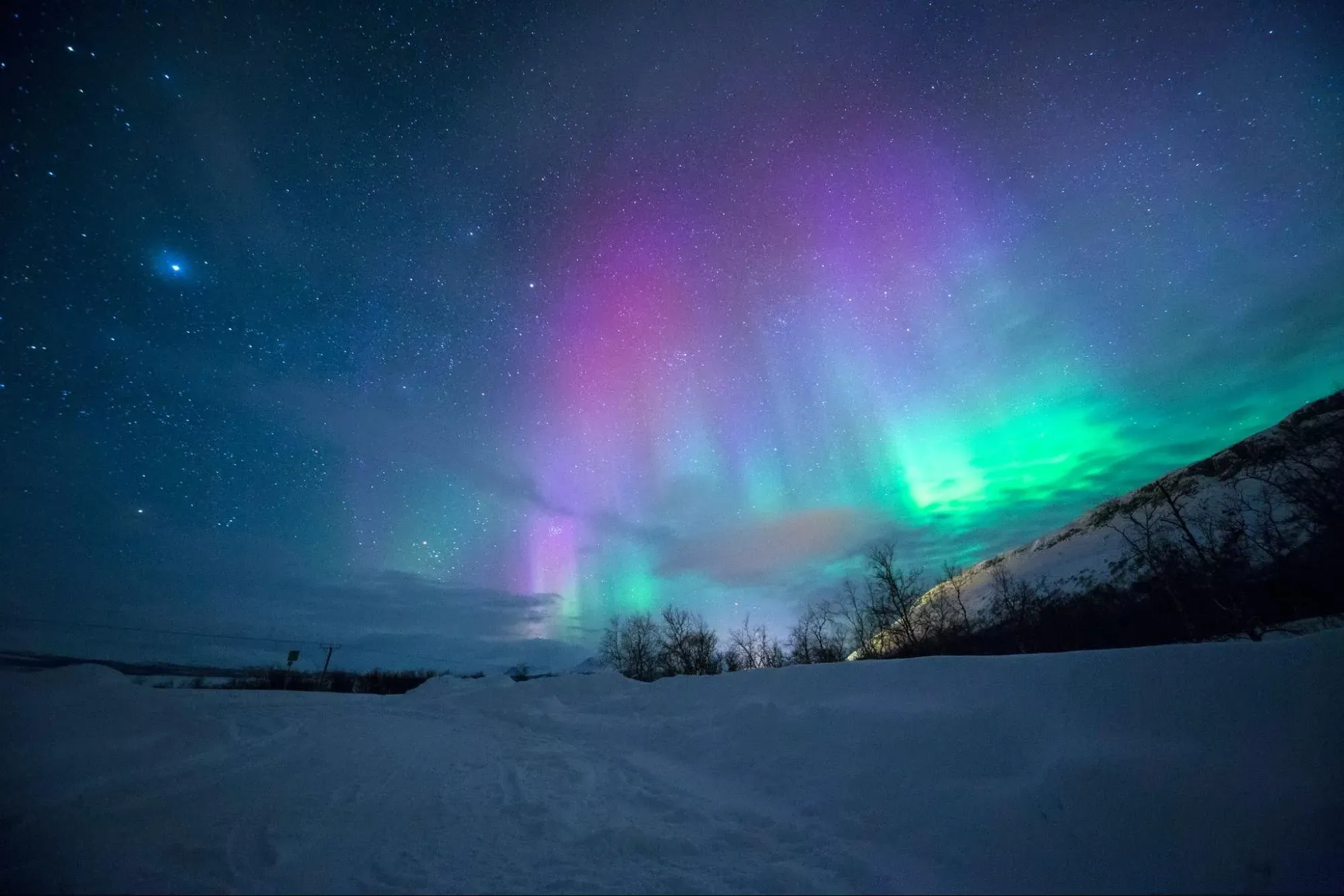
The aurora occurs when charged particles from the sun enter Earth's atmosphere near the magnetic poles and excite the gases, usually green but sometimes pink or violet. This glow forms a ring called the auroral oval, so where you are on the map matters a lot. Any country with northern lights in its tourism ads is usually under or close to this oval. In Europe, the best places to see the aurora borealis are Norway, Sweden, Finland, and Iceland. On nights when the aurora is especially active, you might also see it in Greenland, the Faroe Islands, and northern Scotland.
When Is the Best Time to See the Northern Lights?
In short: look for dark, clear, and active nights. The best time to see the northern lights is from late September to late March, when nights are long and the sky gets truly dark. December to February offers the most hours of darkness, while the September and March equinoxes often bring stronger geomagnetic activity.
- The best time to watch is between about 10 pm and 2 am local time, which is close to magnetic midnight.
- Try to avoid nights with a full moon, since its brightness can make the northern lights harder to see.
- A note for 2026: The solar maximum reached its peak in late 2024 and is now starting to decline, but activity will stay high through 2026. This means it is still a great time to watch for the northern lights.
Here’s something many people don’t realize: the aurora often looks dimmer to your eyes than it does in photos, since cameras collect more light. A pale grey arc overhead can turn into bright green on your camera screen.
The 15 Best Places to See the Northern Lights in Europe
1. Tromsø, Norway
Tromsø, known as the "Paris of the North," is right under the auroral oval and is the easiest well-known spot for first-time visitors. The city also has the brightly lit Arctic Cathedral.
- Best time to visit: Late September to early April.
- Why visit: You’ll find frequent aurora activity here, and the town has cafés and museums to enjoy if the sky is cloudy.
- How to get there: Fly via Oslo. The city is easy to get around on foot, and nightly tours are available.
2. Alta, Norway
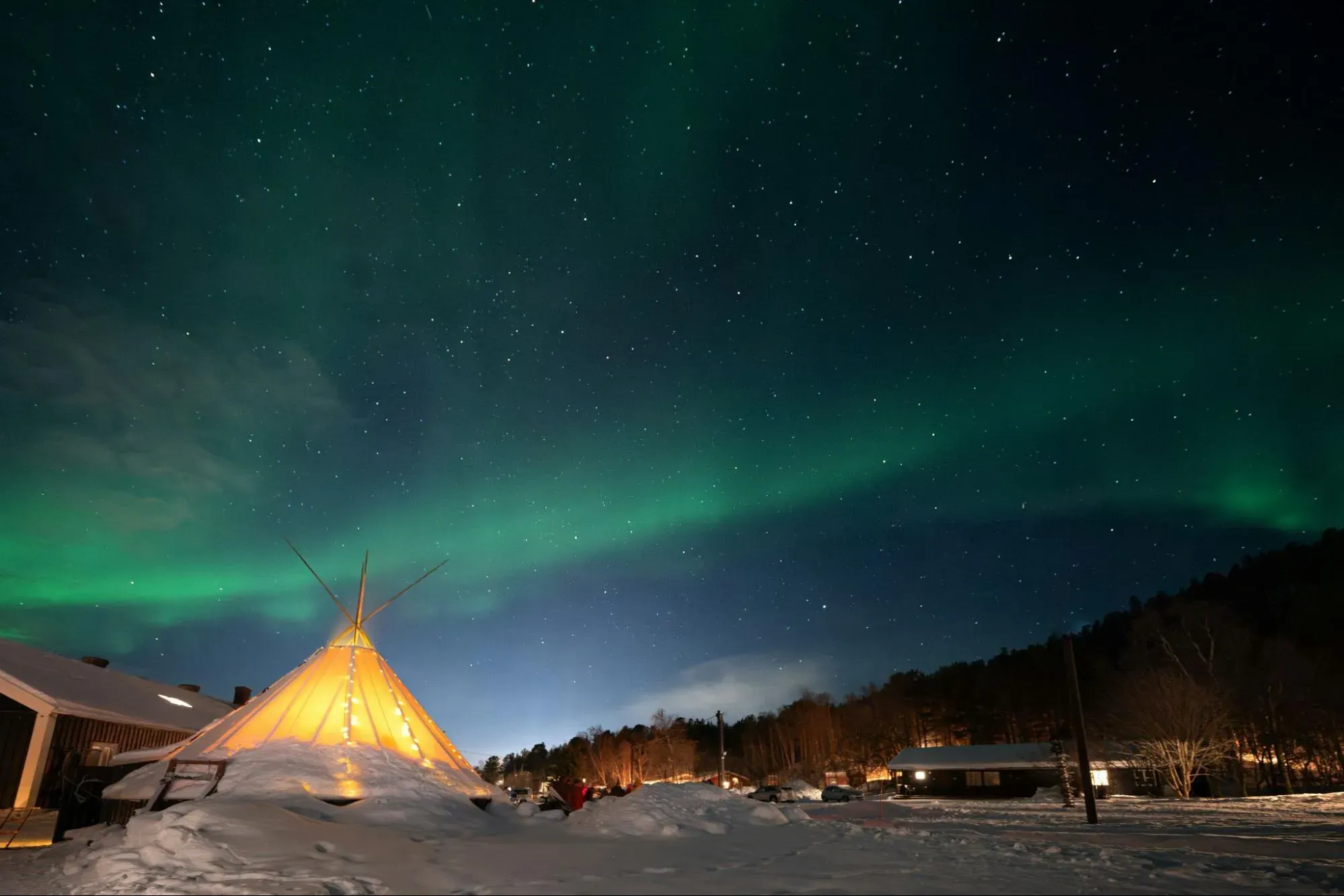
Alta is known as the "City of the Northern Lights" because the world’s first permanent aurora observatory opened on Mount Haldde in 1899. The first photograph of the aurora was also taken nearby in 1892.
- Best time to visit: Late September to early April, with spikes around the equinoxes.
- Why visit: The inland, dry climate here means clearer skies than on the coast. This makes Alta one of the best places in Norway to see the northern lights, even during cloudy weeks.
- How to get there: Fly from Oslo (about 2 hours) or from Tromsø (about 35 minutes).
3. Lofoten Islands, Norway
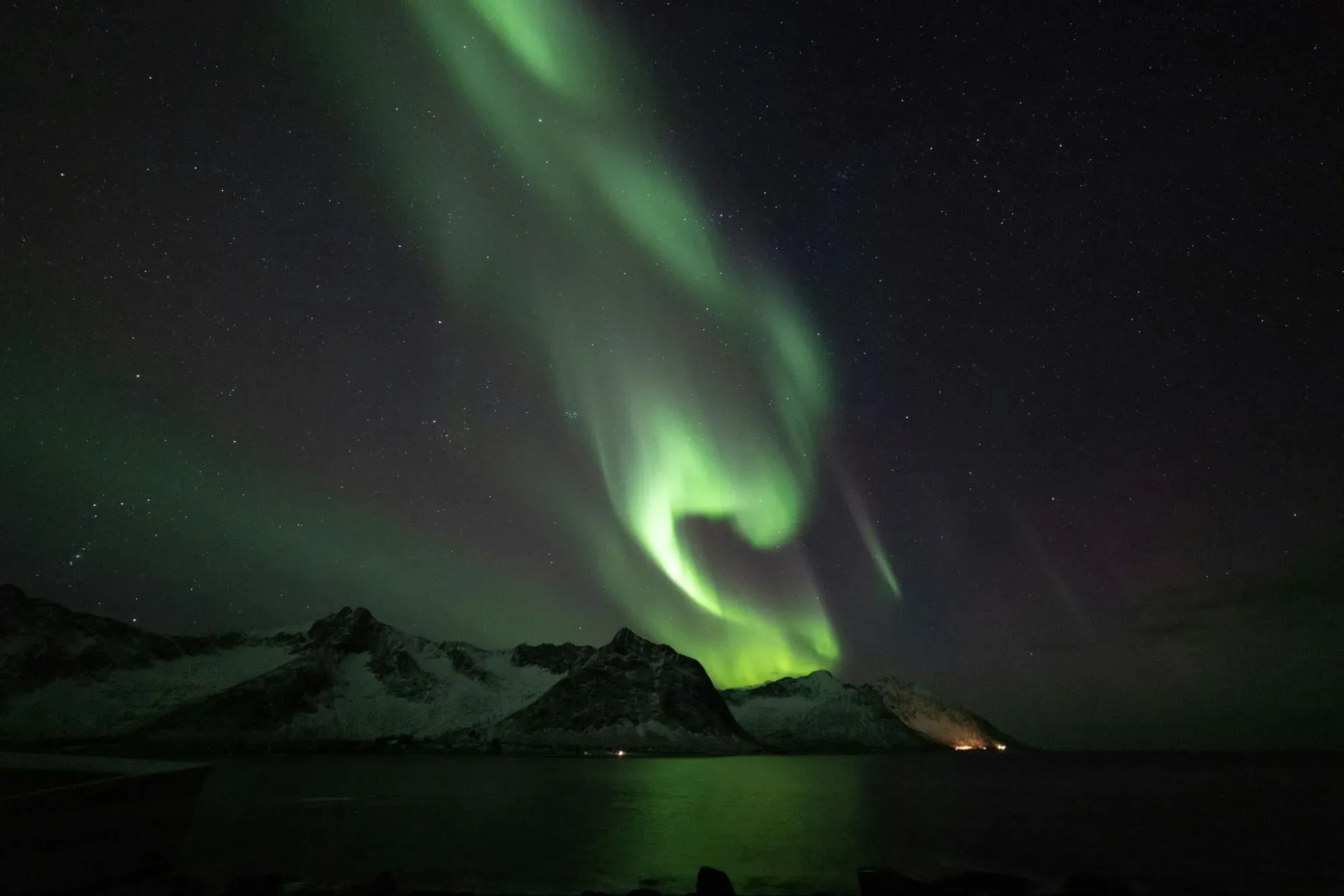
Photographers love Lofoten for its green auroras over sharp sea peaks and red fishing cabins. Thanks to the Gulf Stream, winters here are milder than you might expect for this far north.
- Best time to visit: October to March.
- Why visit: Lofoten offers the most photogenic scenery on this list.
- How to get there: Fly to Bodø or Harstad/Narvik, then continue by plane or ferry.
4. Svalbard, Norway
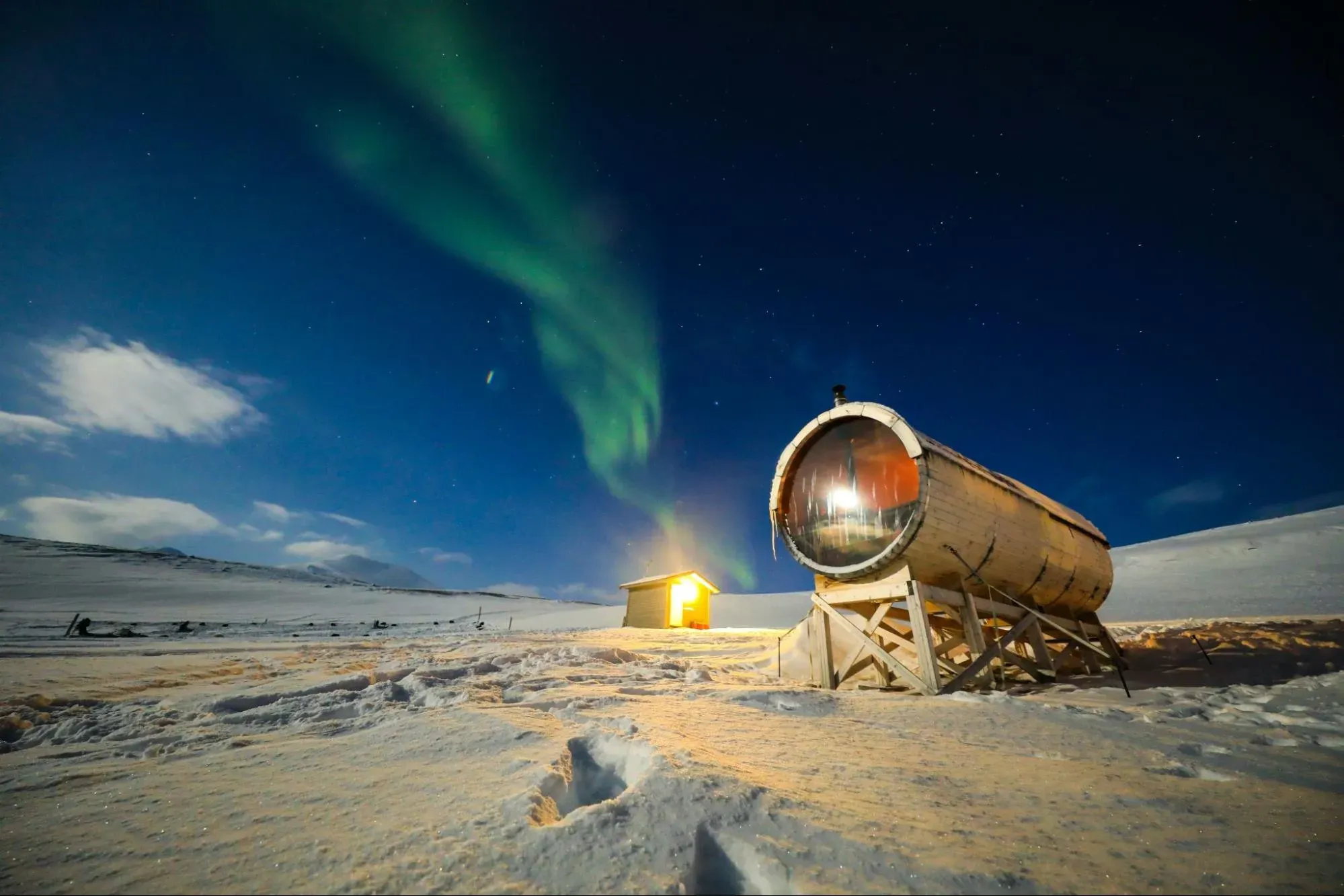
Svalbard is the only inhabited place where you can see the aurora even during the day, thanks to the polar night from about 14 November to 29 January, when there is no daylight. Interestingly, the lights here often appear in the southern sky.
- Best time to visit: The polar night, November to January.
- Why visit: Experience true high-Arctic wilderness and the rare chance to see the aurora during the day.
- How to get there: Fly via Oslo or Tromsø to Longyearbyen. Always take a guide with you, since this is polar bear territory.
5. Abisko, Sweden
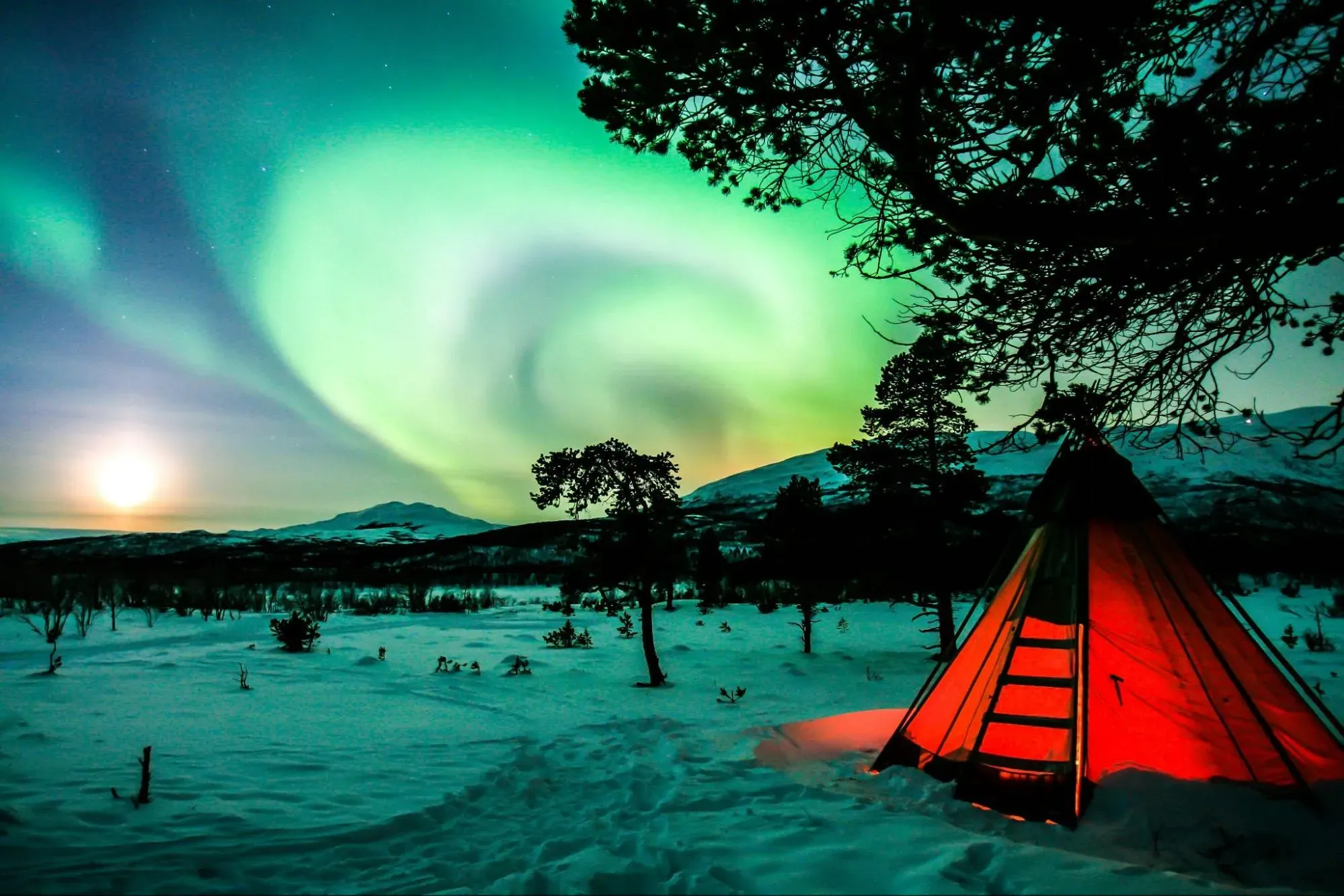
Abisko is famous for its "blue hole," a microclimate that keeps the skies clear even when nearby areas are cloudy. This makes it one of the most reliable places to see the northern lights.
- Best time to visit: Best odds mid-November to mid-March.
- Why visit: The Aurora Sky Station on Mount Nuolja, which you reach by chairlift, sits above the light pollution for great viewing.
- How to get there: The village has its own train station, or you can fly to Kiruna and transfer about 100 km.
6. Kiruna, Sweden
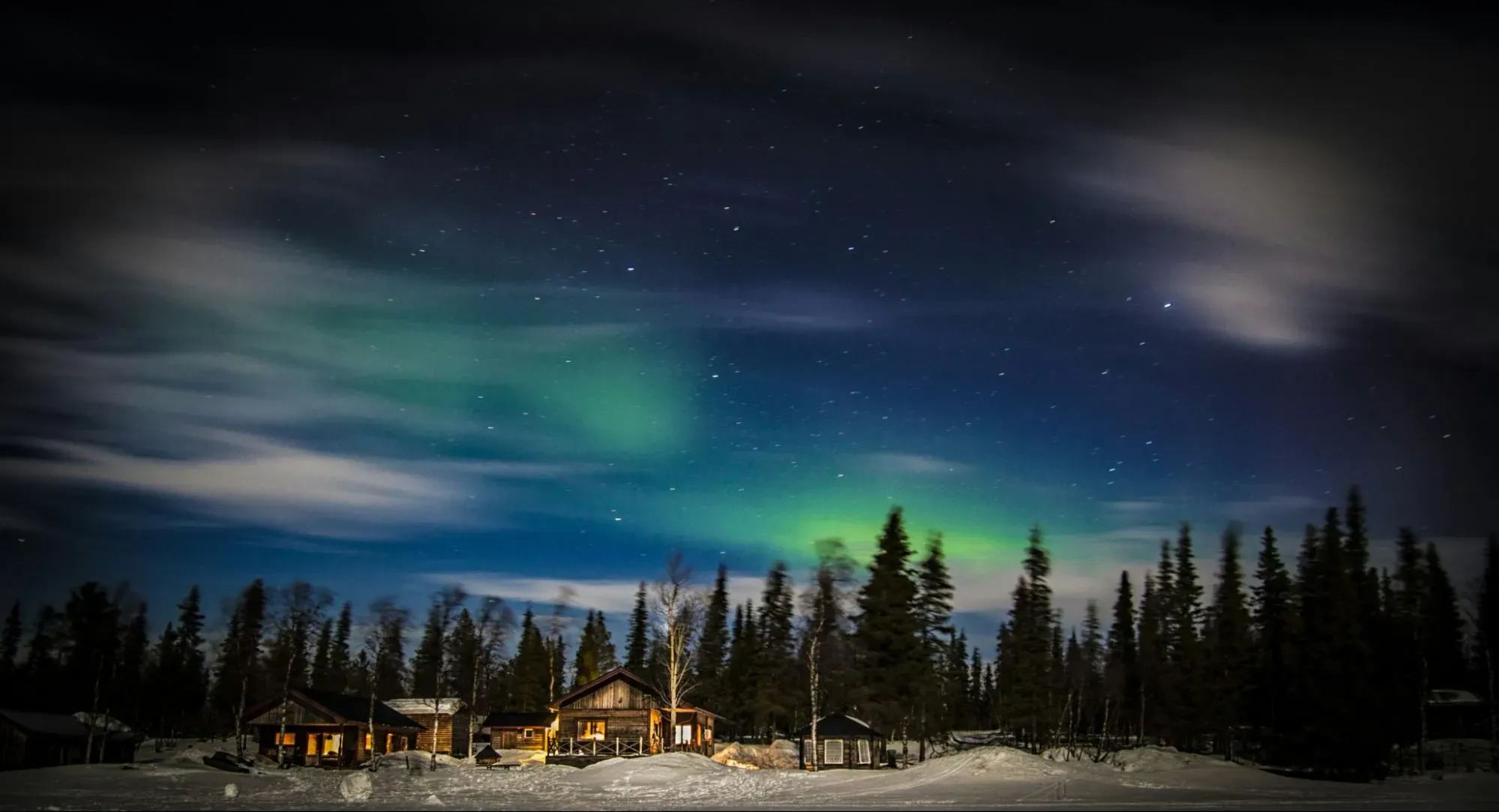
Sweden’s northernmost town offers great chances to see the aurora and is home to the original ICEHOTEL in nearby Jukkasjärvi, rebuilt each winter from ice from the Torne River. The town centre is also being moved due to mining subsidence.
- Best time to visit: December to March.
- Why visit: See the aurora and spend a night in a room made entirely of ice.
- How to get there:: There are direct flights from Stockholm.
7. Rovaniemi, Finland
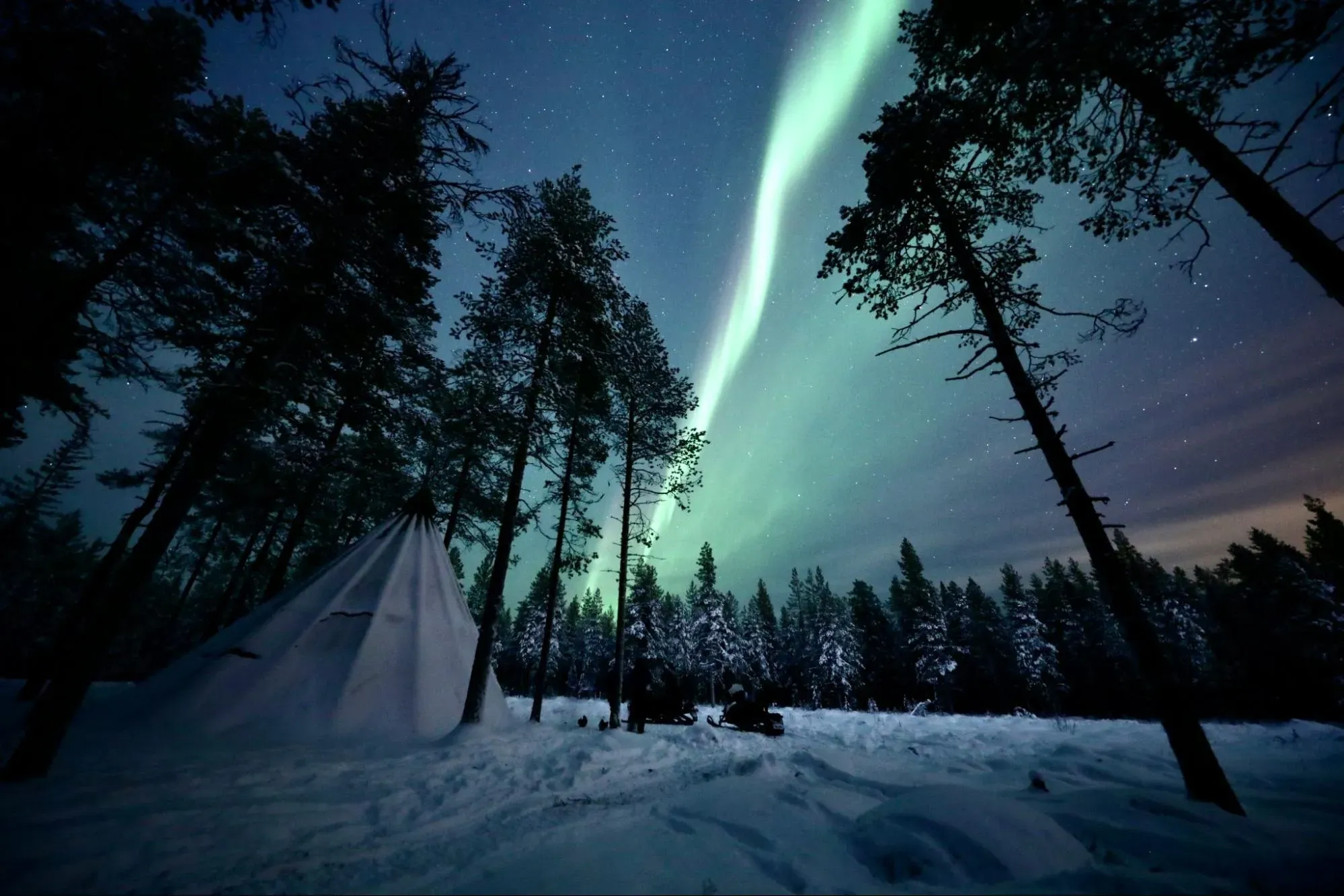
Rovaniemi, the official hometown of Santa Claus, is right on the Arctic Circle. The Finnish word for aurora, revontulet, means "fox fires" and comes from a folk tale about an Arctic fox sweeping sparks into the sky with its tail.
- Best time to visit: late August to early April.
- Why visit: On clear nights, the aurora can appear every other evening, and there are many activities to enjoy during the day.
- How to get there: Fly via Helsinki or take the overnight Santa Claus Express train.
8. Saariselkä and Kakslauttanen, Finland
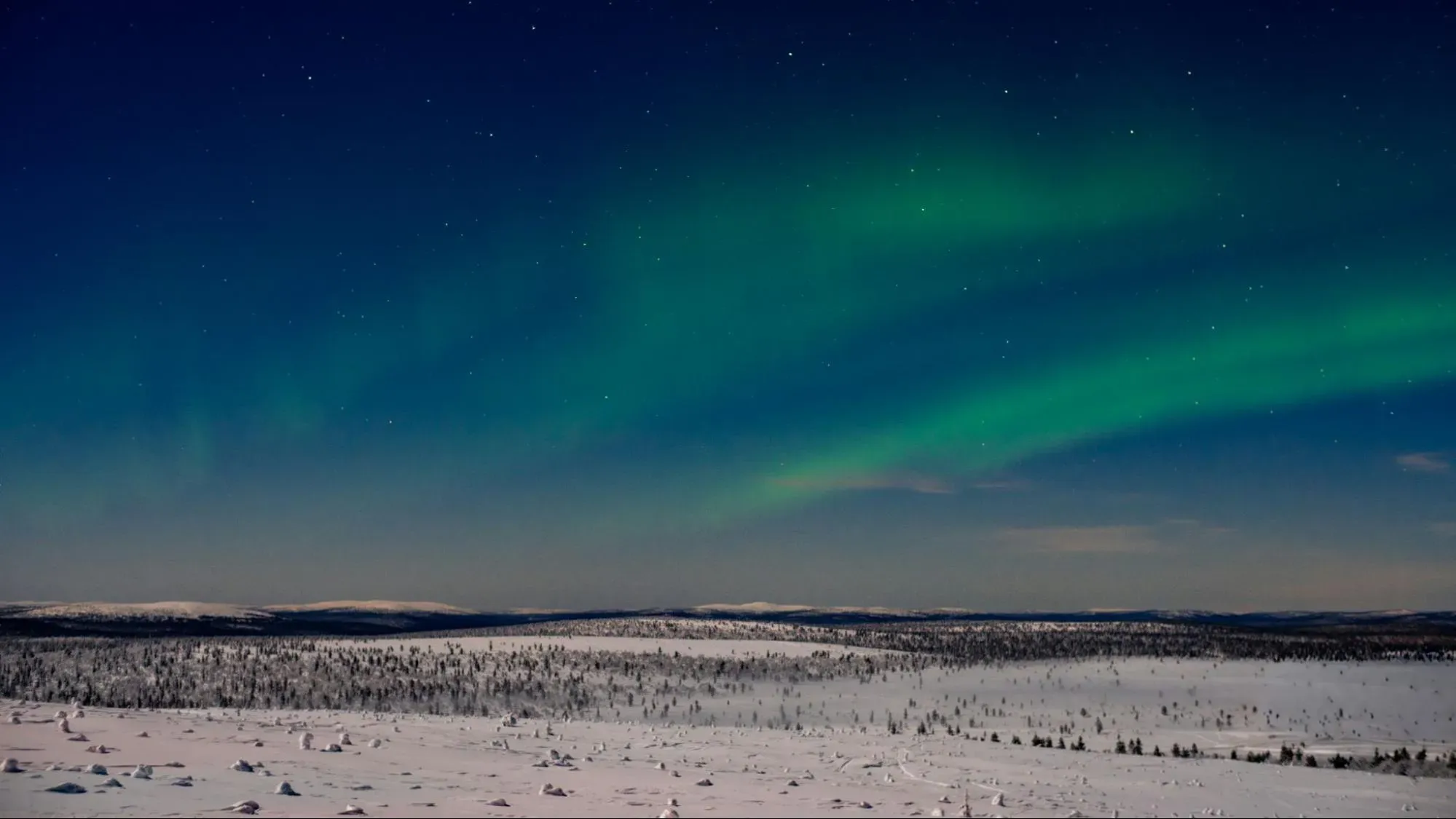
This area is famous for its glass igloos, where you can watch the aurora from a warm dome without leaving your bed.
- Best time to visit: December to March.
- Why visit: Enjoy comfortable aurora viewing, perfect for couples and honeymooners.
- How to get there: Fly to Ivalo, then take a short transfer.
9. Inari, Finland
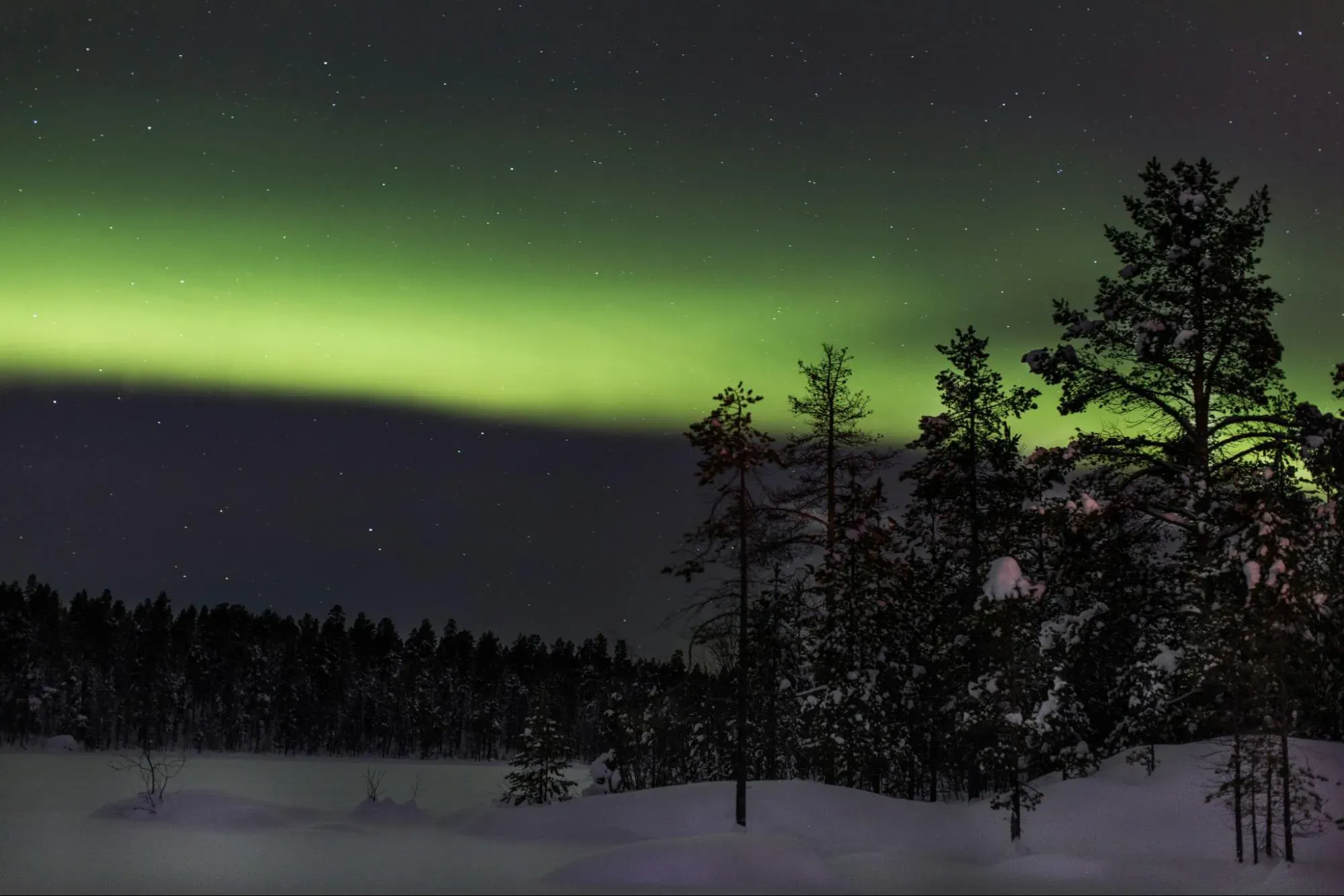
Inari is the centre of Finnish Sámi culture, set on a large frozen lake with very dark skies. In Northern Sámi, the aurora is called guovssahas, meaning "the light you can hear."
- Best time to visit: September to March.
- Why visit: It’s remote, peaceful, and full of culture, far from the crowds.
- How to get there: Fly to Ivalo, then drive to Inari.
10. Reykjavík and Þingvellir, Iceland
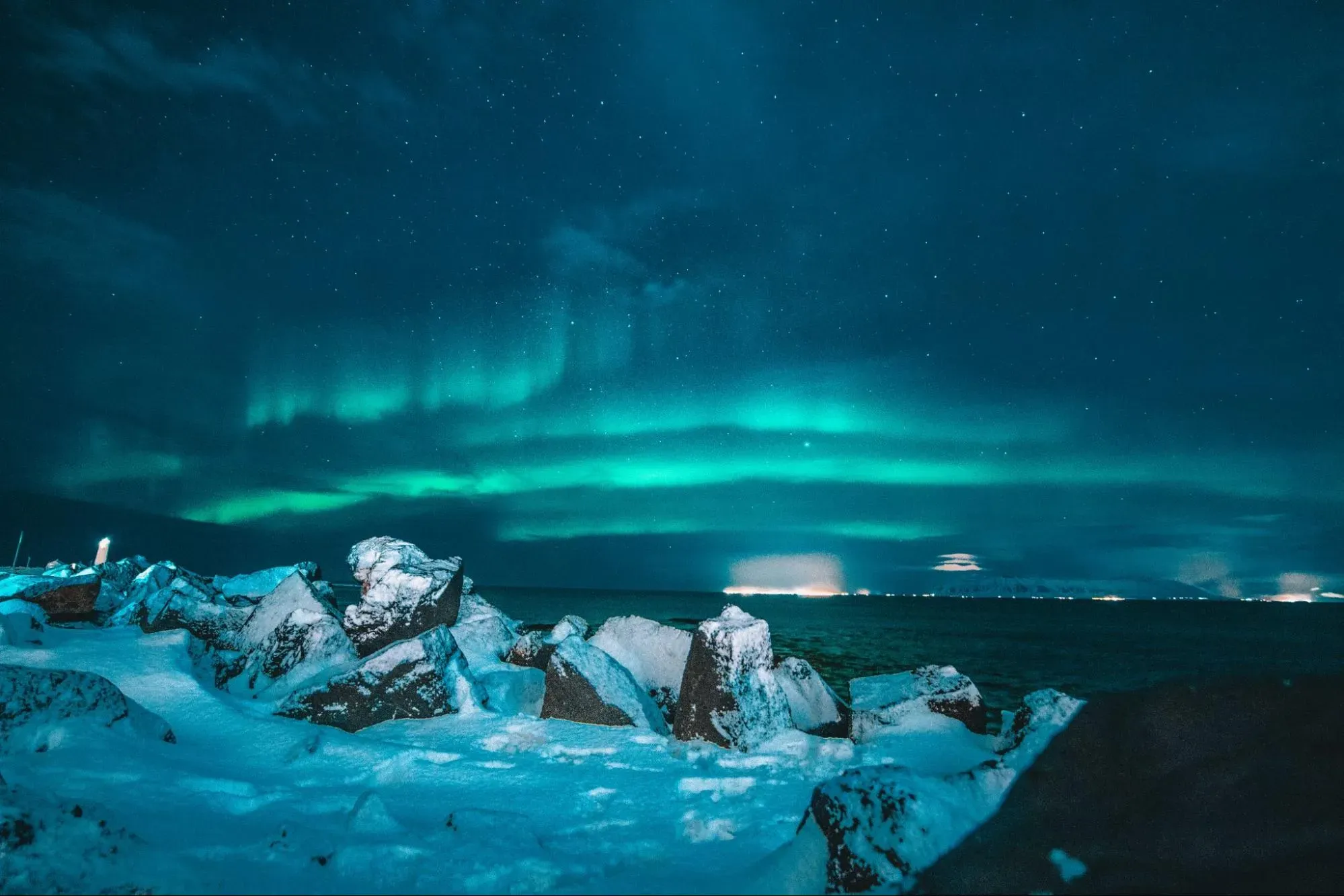
You can sometimes see the aurora from Reykjavík, but a 45-minute drive to Þingvellir National Park, a UNESCO site where two tectonic plates meet, offers darker skies close to the city.
- Best time to visit: September to April.
- Why visit: See the aurora along with geysers, waterfalls, and lagoons, all nearby.
- How to get there: Fly to Keflavík, then rent a car or join a tour.
11. Snæfellsnes and Kirkjufell, Iceland
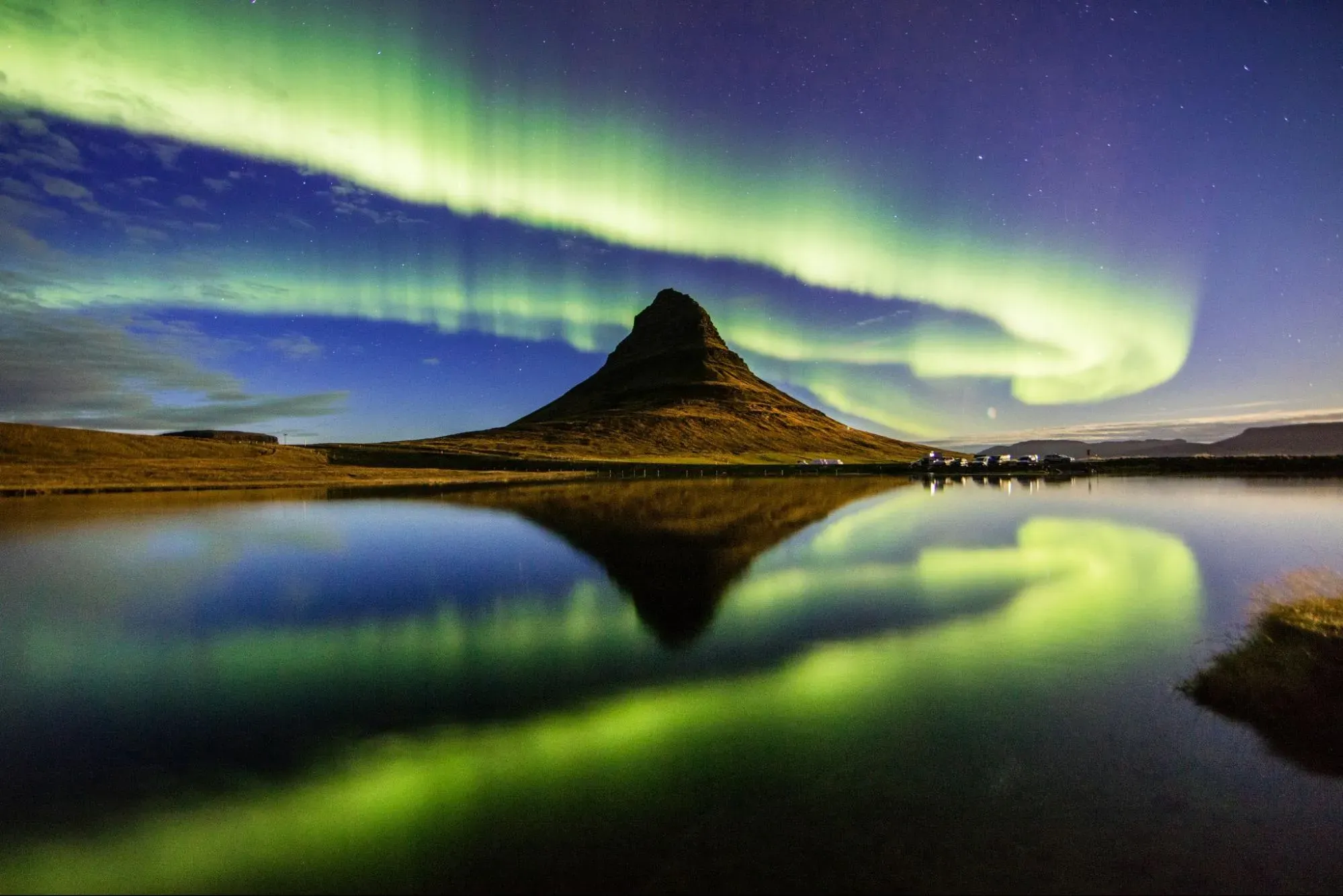
Kirkjufell, or "church mountain," is Iceland’s most photographed peak. With a waterfall in front and the aurora behind, it’s a must-see for photographers.
- Best time to visit: September to April.
- Why visit: Enjoy postcard-worthy scenery with far fewer visitors than the south coast.
- How to get there: It is about a 2-hour drive from Reykjavík.
12. Jökulsárlón, Iceland
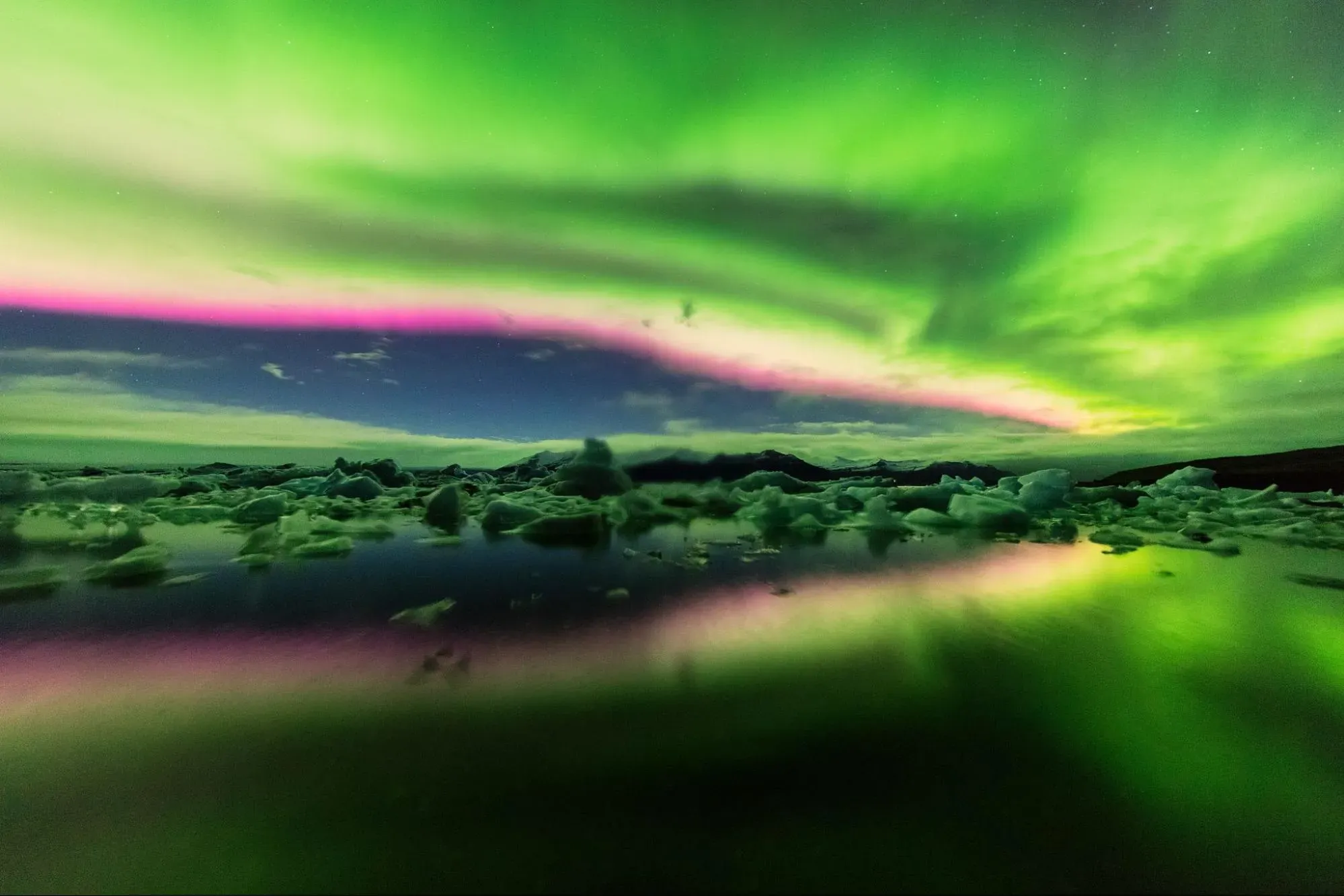
The green aurora reflected in a lagoon full of floating icebergs is why serious photographers travel all the way to Iceland’s southeast.
- Best time to visit: October to March.
- Why visit: You’ll see reflections here that you just can’t find inland.
- How to get there: Roughly a 5-hour drive from Reykjavík along the Ring Road.
13. Kangerlussuaq, Greenland
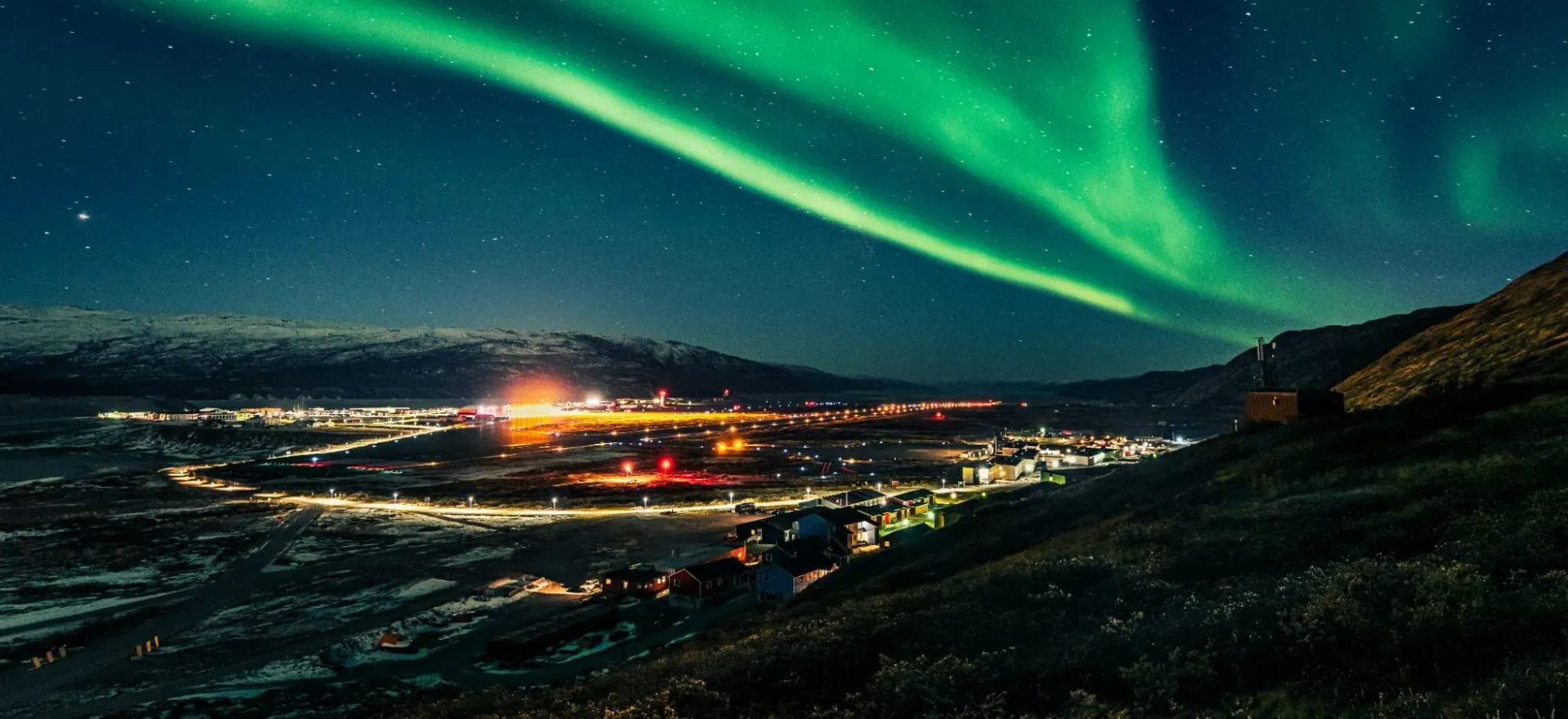
Greenland is part of the Kingdom of Denmark, and Kangerlussuaq’s inland location gives it some of the steadiest clear-sky records in the Arctic, right next to the ice sheet.
- Best time to visit: September to April.
- Why visit: For the raw, remote scenery and dependable dark skies.
- How to get there: Fly via Copenhagen or Iceland.
14. Faroe Islands
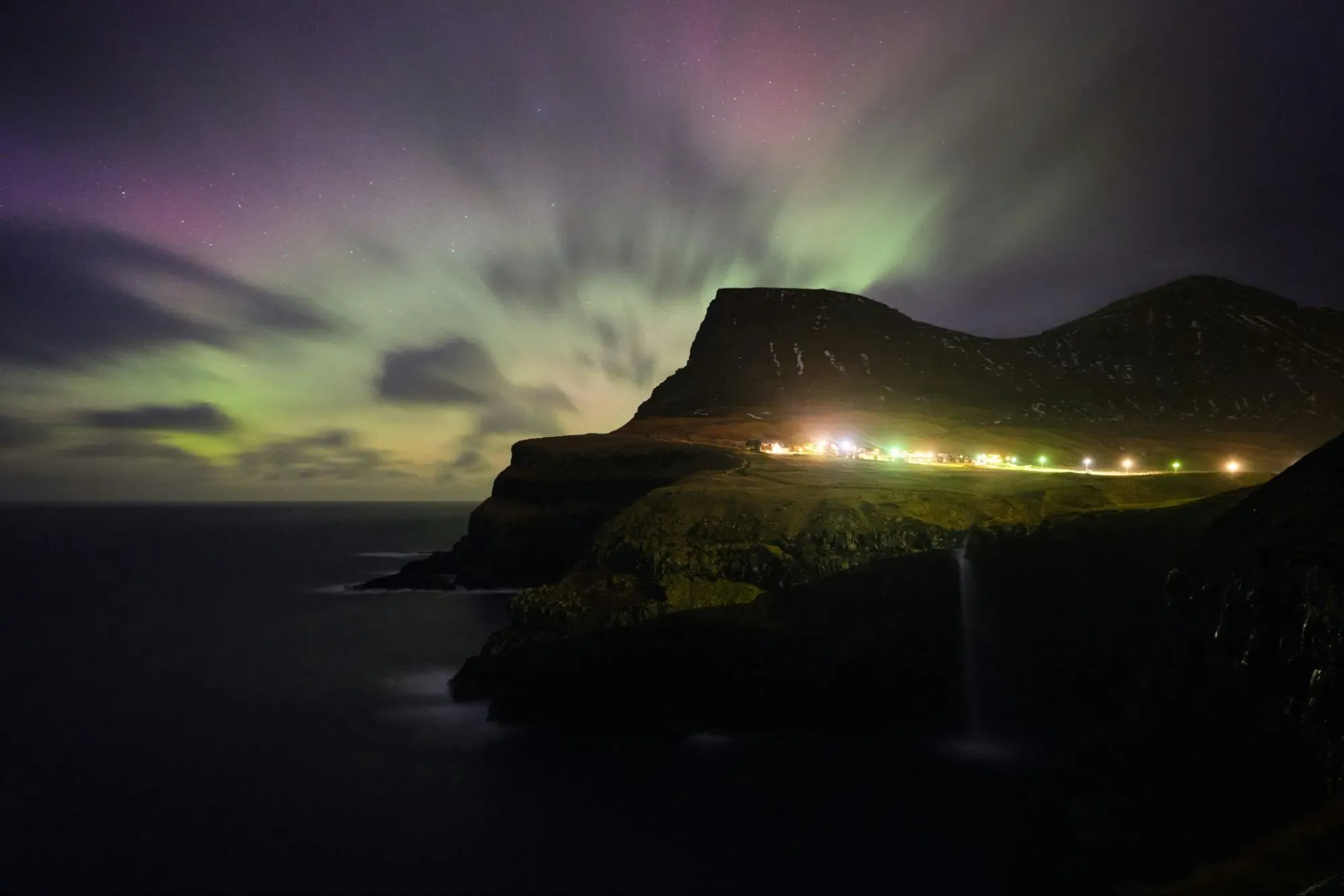
Located between Iceland and Norway, these Danish islands offer aurora displays over sheer sea cliffs and almost no crowds, though the weather can change quickly.
- Best time to visit: October to March.
- Why visit: This is one of the most under-visited northern lights destinations in Europe.
- How to get there: Fly via Copenhagen or Edinburgh.
15. Cairngorms, Scotland
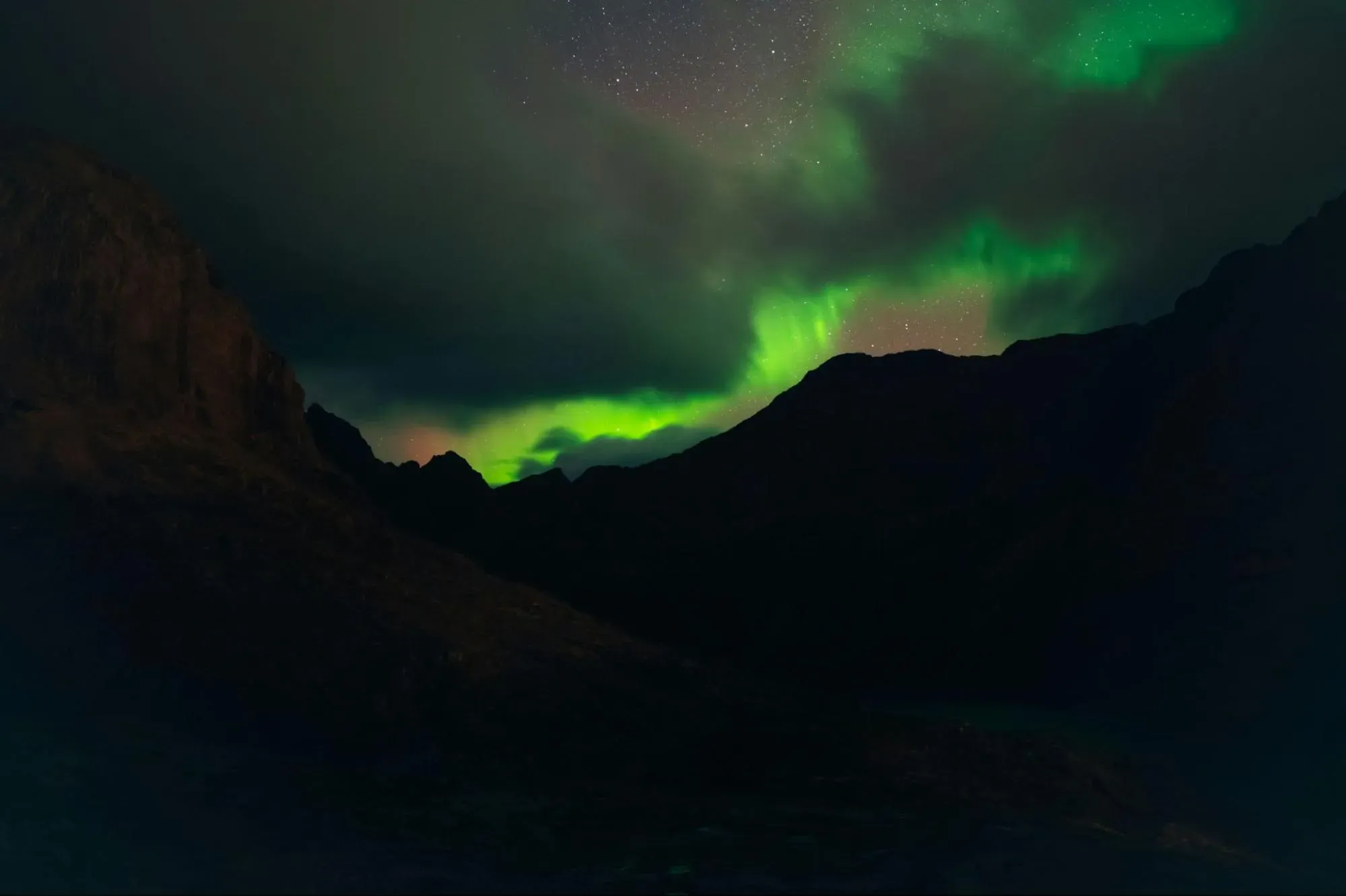
Scotland shares its latitude with parts of Norway and Alaska, and the Tomintoul and Glenlivet area is a Gold Tier Dark Sky Park. Locals in Shetland and Orkney call the lights the "Mirrie Dancers"; in Gaelic, they’re Na Fir Chlis, the "Nimble Men."
- Best time to visit: October to March, on strong solar nights.
- Why visit: This location is the most accessible, English-speaking option, with no Arctic flight required.
- How to get there: Fly to Inverness, Aberdeen, or Edinburgh, then drive to dark skies.
Which Northern Lights Destination Should You Pick?
Travellers have different preferences, so here’s a simple way to find the best place to see the northern lights for your holiday.
Destination | Country | Best months | Ideal for |
Tromsø | Norway | Sep-Apr | First-timers, easy access |
Alta | Norway | Sep-Apr | Reliable clear skies |
Lofoten | Norway | Oct-Mar | Photographers |
Svalbard | Norway | Nov-Jan | High-Arctic adventurers |
Abisko | Sweden | Nov-Mar | Best odds of clear sky |
Kiruna | Sweden | Dec-Mar | Ice hotel stays |
Rovaniemi | Finland | Aug-Apr | Families |
Saariselkä | Finland | Dec-Mar | Couples, honeymooners |
Inari | Finland | Sep-Mar | Culture and quiet |
Reykjavík/Þingvellir | Iceland | Sep-Apr | Sightseeing combos |
Snæfellsnes | Iceland | Sep-Apr | Scenery lovers |
Jökulsárlón | Iceland | Oct-Mar | Photographers |
Kangerlussuaq | Greenland | Sep-Apr | Remote wilderness |
Faroe Islands | Faroe Islands | Oct-Mar | Crowd-free views |
Cairngorms | Scotland | Oct-Mar | Short, easy holidays |
Tribe Travel Tips
- Be patient and plan to stay for at least three or four nights. Since the aurora isn’t guaranteed every night, having more nights gives you a better chance, especially if there are clouds.
- Look for clear skies, not just the right location. Clouds are the main obstacle. Choosing inland areas or joining guided tours that can take you to clear spots is better than staying in one place and hoping for the best.
- Move away from city lights and give your eyes 20 to 30 minutes to adjust before you decide what you can see in the sky.
Planning Your Aurora Holiday with Holiday Tribe
Watching the aurora move across the Arctic sky is something many people dream of, and the best part is that every destination here has something special to offer, even on nights when the lights are quiet. During the day, you can enjoy reindeer sledding, visit ice hotels, explore glacier lagoons, and experience Sámi culture. Good planning is what makes the difference between a relaxing holiday and a stressful one, and that is where we can help.
Holiday Tribe offers travel advice, not just bookings. We create custom land-only packages that include your accommodation, transfers, sightseeing, and local aurora experiences, all tailored to your travel style. We help everyone, from honeymooners to families and first-time visitors. Our team combines personal advice with support from our AI travel planner to help you choose the best destination and season for your holiday, increasing your chances of seeing the northern lights. When you are ready to make your dream getaway a reality, we will take care of the details.