


Hue, Vietnam, is a city where history is always visible. For more than 140 years, it was home to the Nguyen emperors, the country’s last royal dynasty, and you can still sense their presence today. The city’s walls, gates, tombs, and temples stretch along both sides of the Perfume River, and most are just a short ride from the centre. If you are deciding the places to see in Hue, this guide highlights the ten most important sites: the royal Citadel, the imperial tombs, a famous pagoda, and a market that is even older than the nearby bridge. You’ll find dates, background, and details that most guidebooks miss, so you can visit knowing exactly what you’re looking at.
1. The Citadel, Hue Vietnam's Royal Core
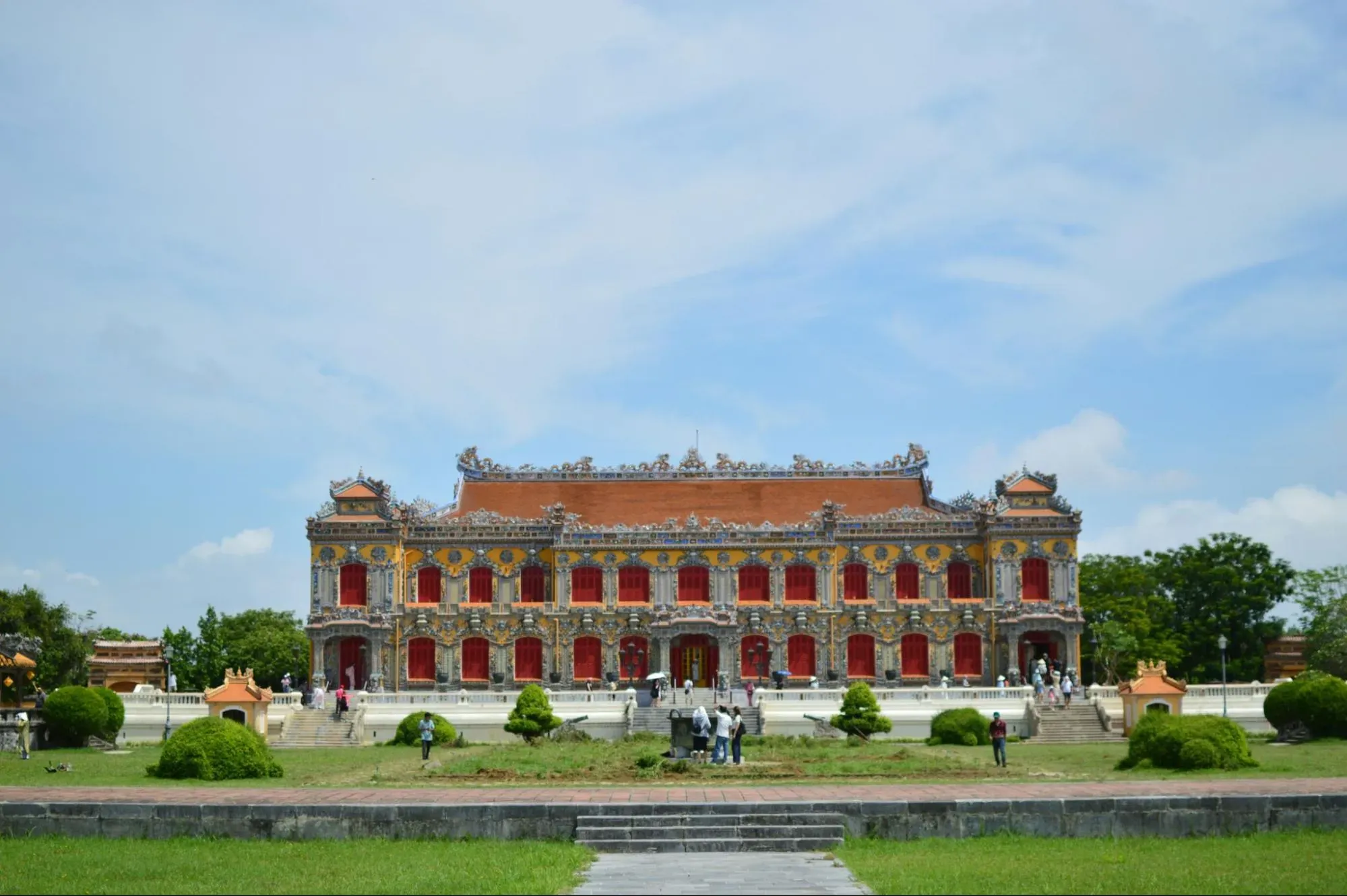
The Citadel of Hue, Vietnam, sits right in the centre of the city. Emperor Gia Long started building this moated, walled city in 1804 along the Perfume River. UNESCO named the entire complex a World Heritage Site in 1993. If you walk through its gates today, you’ll find a citadel that still covers a square about 600 metres on each side. The site once had about 150 buildings. War and weather reduced their number, but the place still feels large.
- Entry Fee: 200,000 VND (about £6.50) for adults; 40,000 VND for children aged 7-12; free for children under 7
- Opening Hours: Opens daily 6:30am-5:30pm (last tickets sold around 5pm)
- Dress Code: Shoulders and knees must be covered
Tribe Travel Tip: A combo ticket is available for the Citadel and the Minh Mang, Tu Duc, and Khai Dinh tombs and costs 530,000 VND. It is valid for two days and is a good deal if you plan to visit all four.
2. Ngo Mon Gate, Where the Monarchy Ended
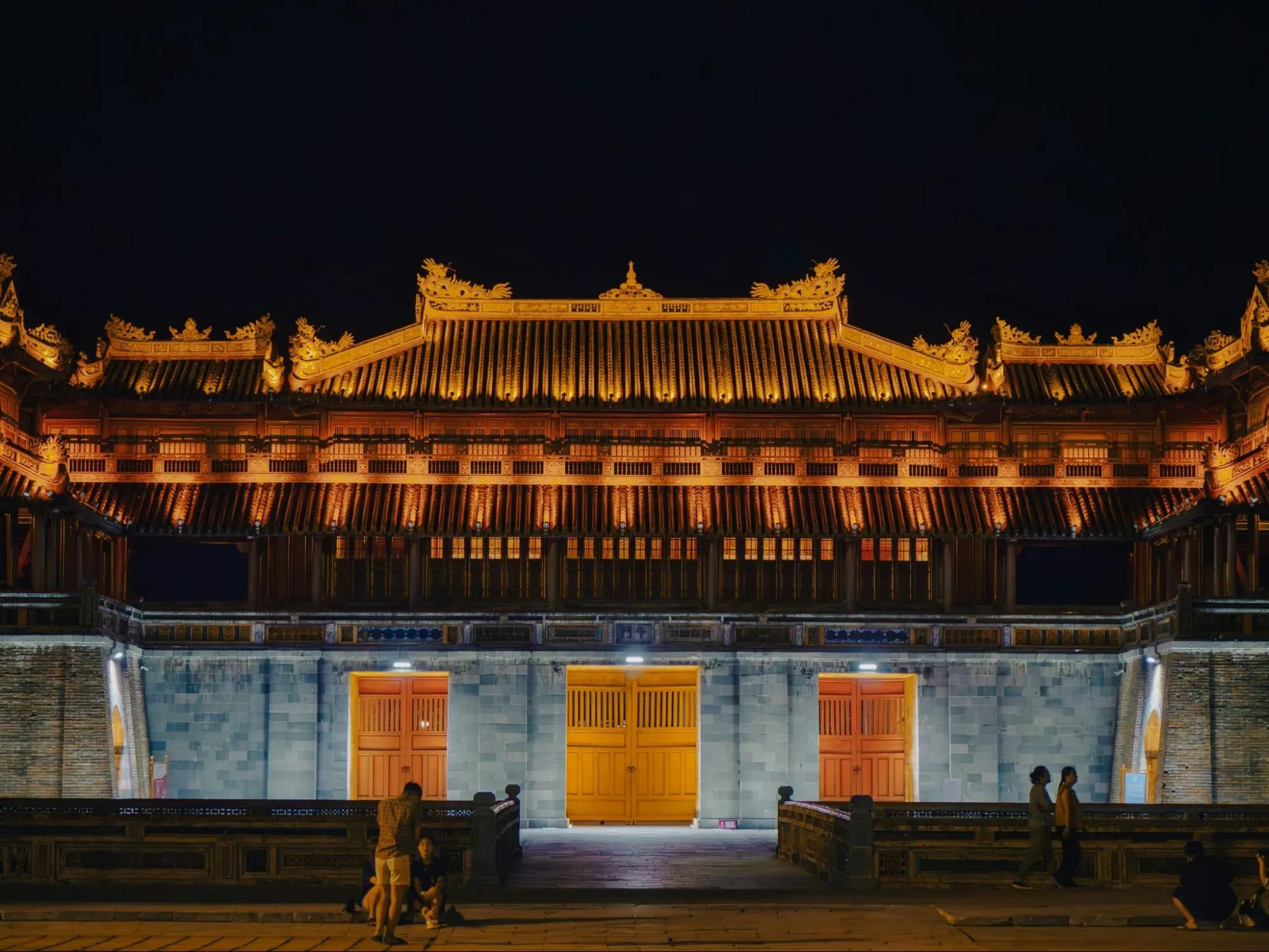
Are you a history lover who likes standing on the exact spot where an era ended? Ngo Mon Gate is where you must be. This impressive southern gate marks the end of the Nguyen dynasty. On August 30, 1945, Emperor Bao Dai stepped down from the upper pavilion here, bringing the era to a close. Today, you enter under the same yellow-tiled Five Phoenix tower once used for royal ceremonies.
- Entry Fee: Included in the main Citadel ticket, no separate fee
- Good to Know: This is also where the main ticket booth sits, so it's your entry point into the whole complex
Tribe Travel Tip: Go up to the upper level to get a clear view along the central axis toward the throne hall.
3. Thai Hoa Palace, the Throne Hall
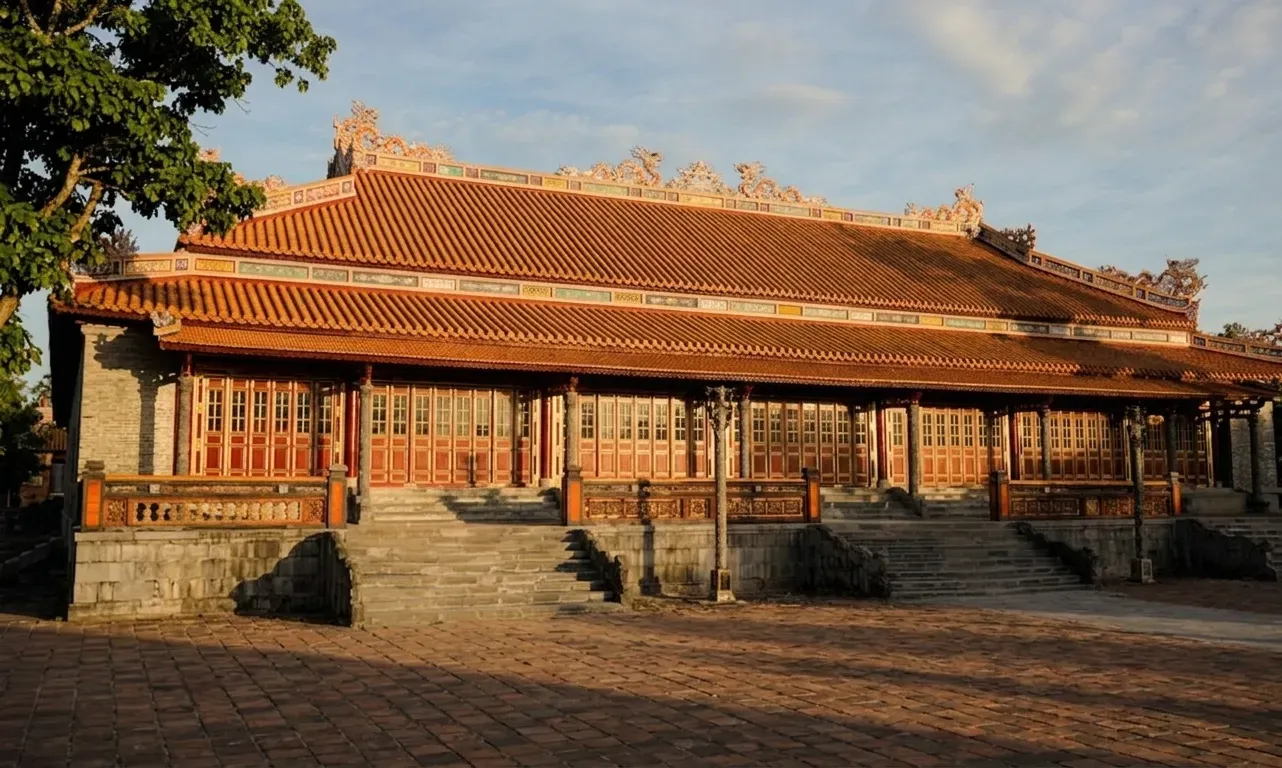
Just beyond the gate is Thai Hoa Palace, where emperors once held coronations and grand gatherings under 80 red and gold lacquered ironwood columns. It is one of the best-preserved royal interiors in Hue, Vietnam.
- Entry Fee: Covered by the Citadel ticket
- Good to Know: No flash photography inside; the lacquerwork is fragile
Tribe Travel Tip: This is a quick stop. Do not spend more than 15-20 minutes here.
4. The Nine Dynastic Urns, a Bronze Encyclopedia
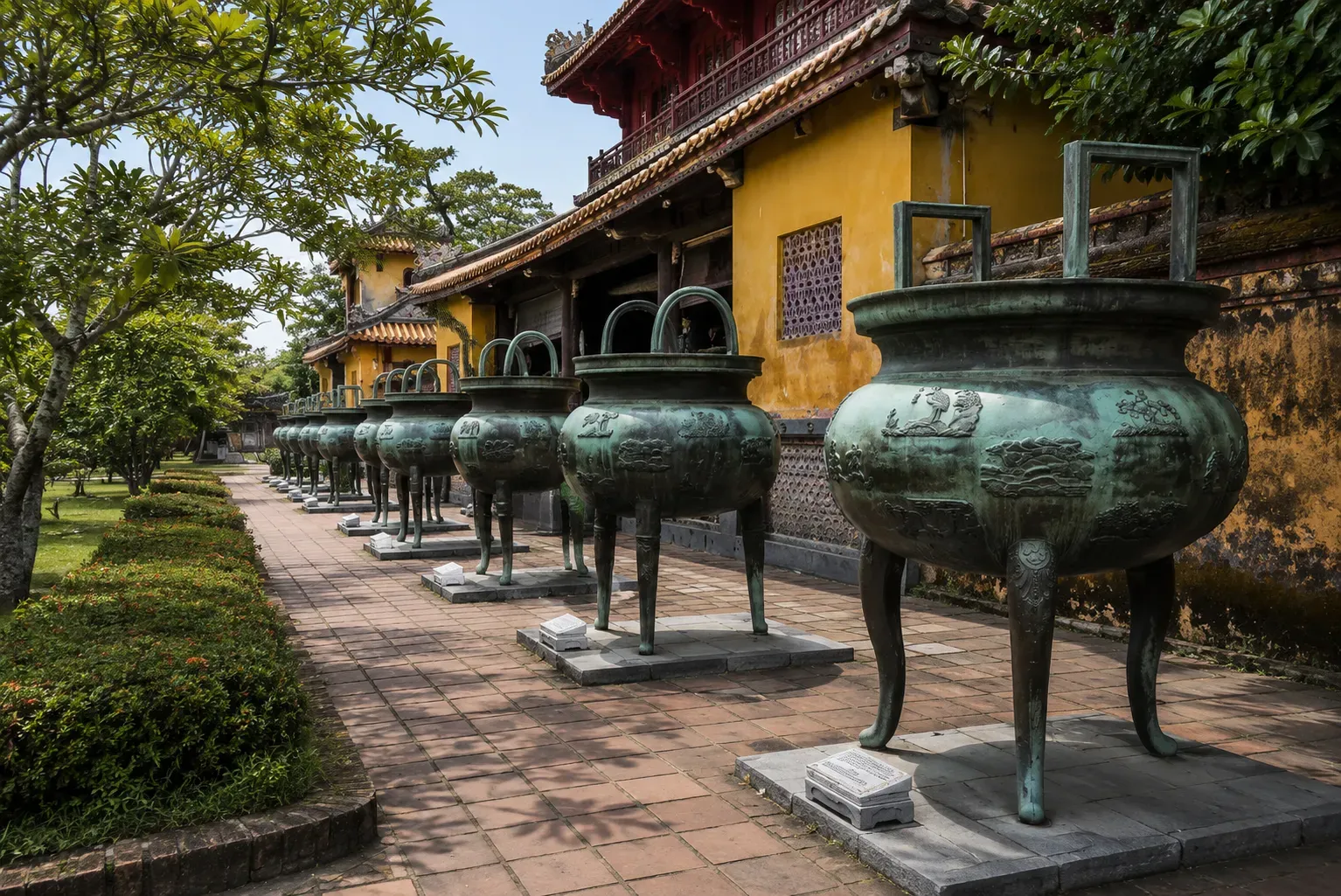
Nine large bronze urns, made for Emperor Minh Mang from 1835 to 1837, stand in front of the To Mieu temple. The nine urns together carry 162 cast images showing Vietnam's rivers, mountains, plants, and animals. In 2024, UNESCO added them to its Memory of the World register.
- Entry Fee: Included in the Citadel ticket
- Location: Located near To Mieu Temple, a short walk from the main palace area
Tribe Travel Tip: If you want a closer look at the carvings, bring binoculars or a zoom lens. The carvings are placed behind low barriers.
5. Thien Mu Pagoda and Its Silent Witness
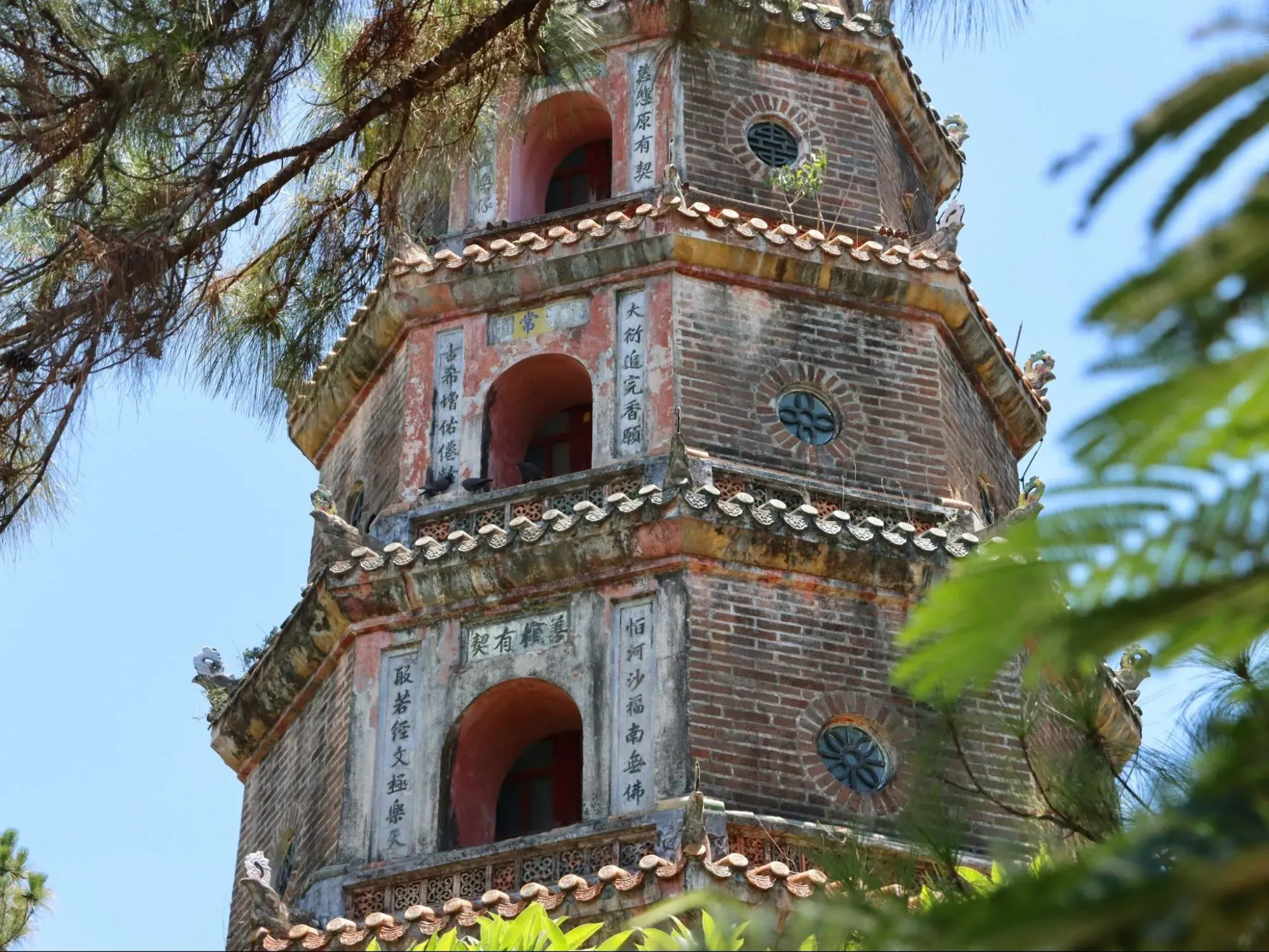
Four kilometres upriver is Thien Mu, the oldest pagoda in Hue, Vietnam. Founded in 1601, its seven-tier tower has become the city's symbol. Behind the pagoda, a pale blue Austin car is parked. This is the car that took the monk Thich Quang Duc to his self-immolation in Saigon in 1963, a moment captured in a photo that was seen around the world.
- Entry Fee: Entry is free because this is an active pagoda, not a ticketed monument.
- Location: About 4-5 km from the city centre
- Good to Know: Since this is an active place of worship, please cover your shoulders and knees and speak quietly.
Tribe Travel Tip: Take a dragon boat along the Perfume River for the most scenic way to arrive. Boats leave from Toa Kham Wharf on Le Loi Street. It's a good idea to book in advance during busy times.
6. The Tomb of Minh Mang, Royal Symmetry
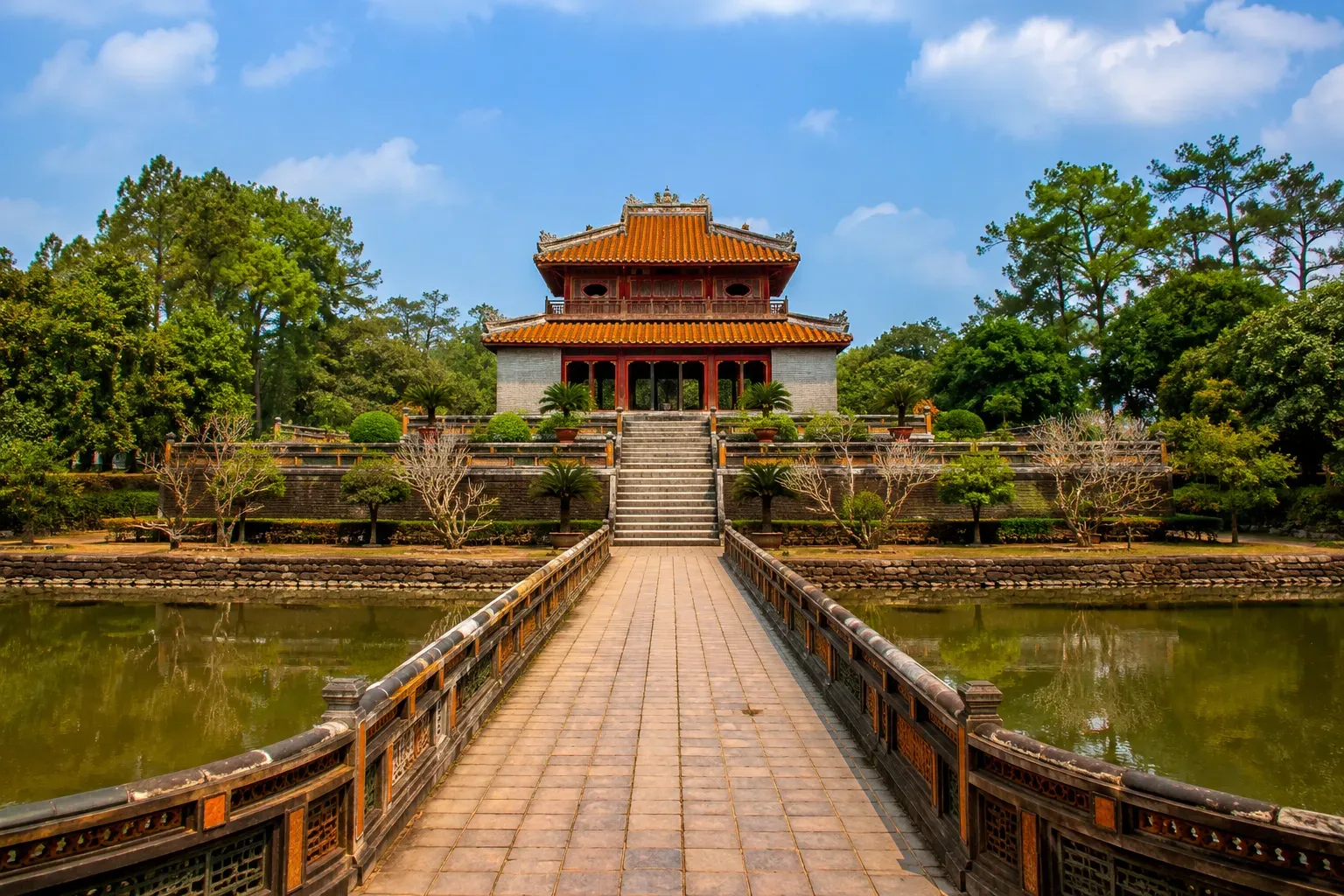
The imperial tombs are among the top places to visit in Hue, Vietnam. Minh Mang's tomb, finished in 1843, stands out for its neat layout, with lakes, courtyards, and pavilions arranged along a straight Confucian line.
- Entry Fee: 150,000 VND for adults; 30,000 VND for children 7–12
- Location: Around 12 km from the city centre
- Fact: Minh Mang designed it himself but died before it was finished, leaving his son Thieu Tri to complete the work.
Tribe Travel Tip: Visit Khai Dinh as well since it is close by. This way, you can save on transportation costs.
7. The Tomb of Tu Duc, the Poet's Retreat
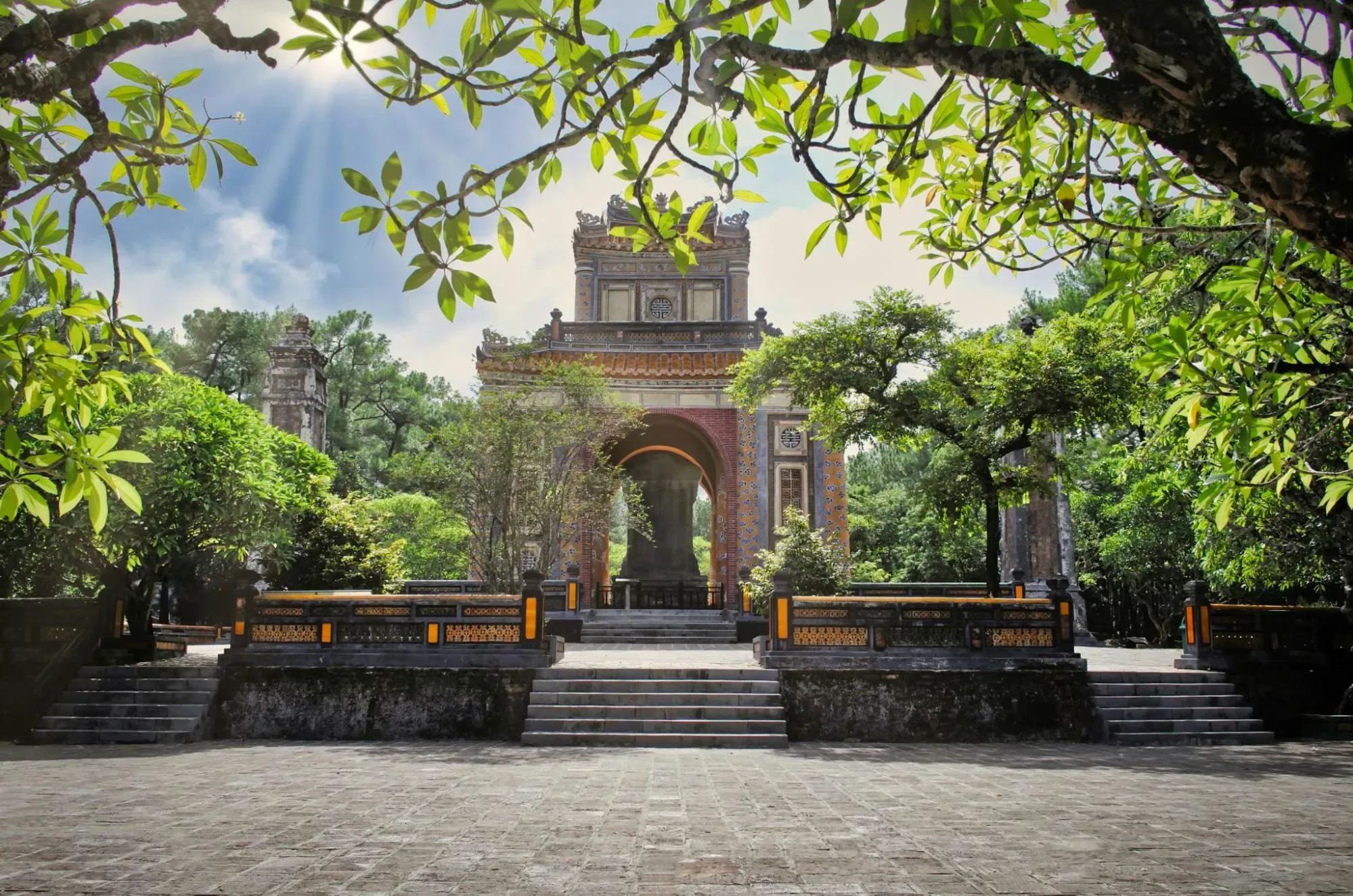
Tu Duc's tomb, completed in 1867, served as a peaceful lakeside retreat where the poet-emperor wrote poetry during his lifetime. The construction was so tough on workers that it led to a revolt. Strangely, Tu Duc is not actually buried in the tomb that bears his name.
- Entry Fee: 150,000 VND for adults; 30,000 VND for children 7-12
- Location: 10 minutes by car from the centre if no traffic
Tribe Travel Tip: Try visiting in the late afternoon, when the light is gentle on Luu Khiem Lake and there are fewer people around.
8. The Tomb of Khai Dinh, East Meets West
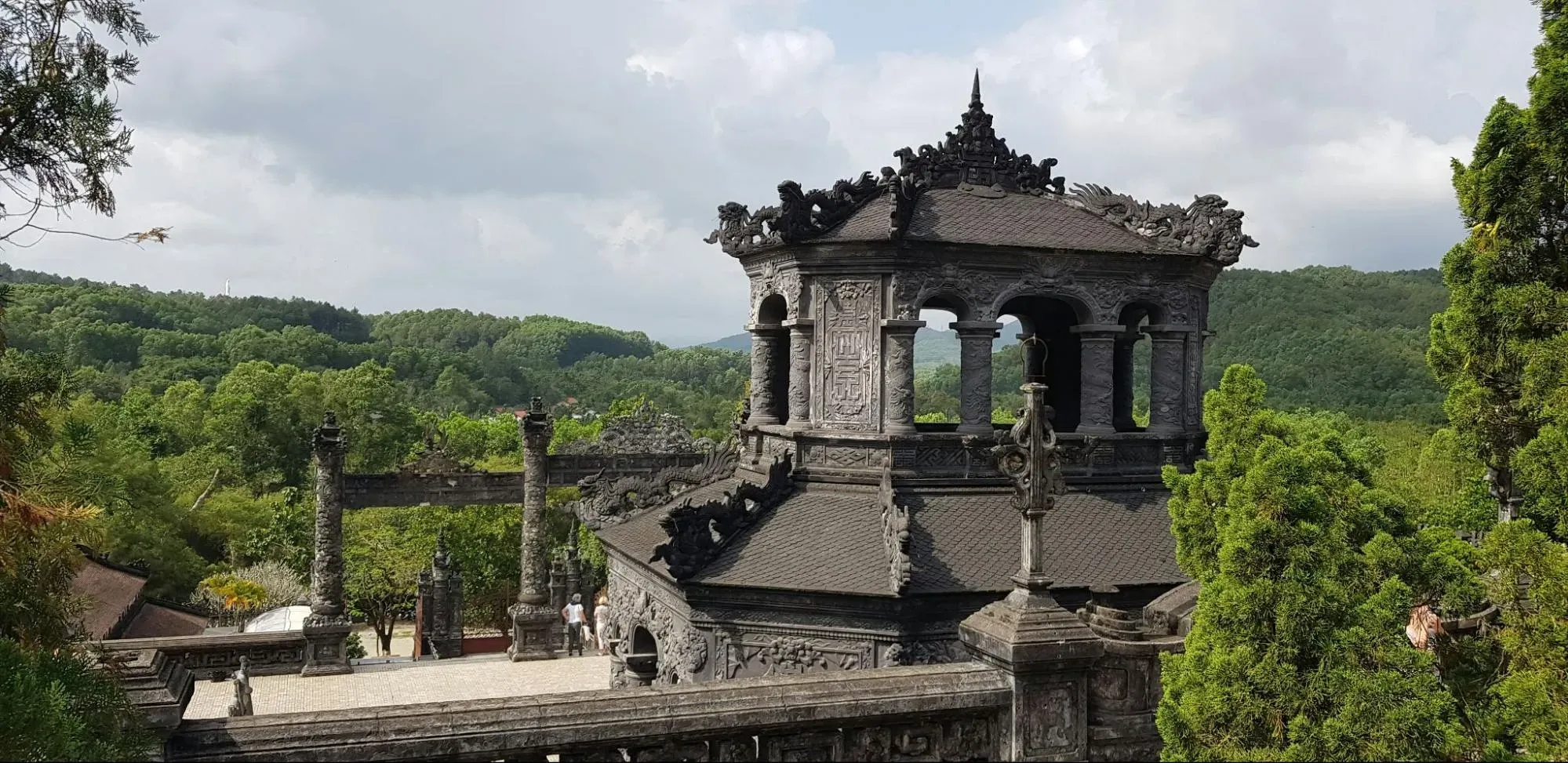
Khai Dinh's tomb, completed in 1931, gets mixed reactions, which makes it interesting. Grey concrete steps rise up the hillside, and inside, the walls burst with ceramic and glass mosaics you won't find anywhere else in Hue, Vietnam.
- Entry Fee: 150,000 VND for adults; 30,000 VND for children 7-12
- Location: About 10 km from the city centre, 20-25 minutes by car
Tribe Travel Tip: There is a steep staircase to climb, so it is a good idea to consider mobility needs before buying tickets, especially for older travellers or young children.
9. Ho Quyen, Vietnam's Forgotten Arena
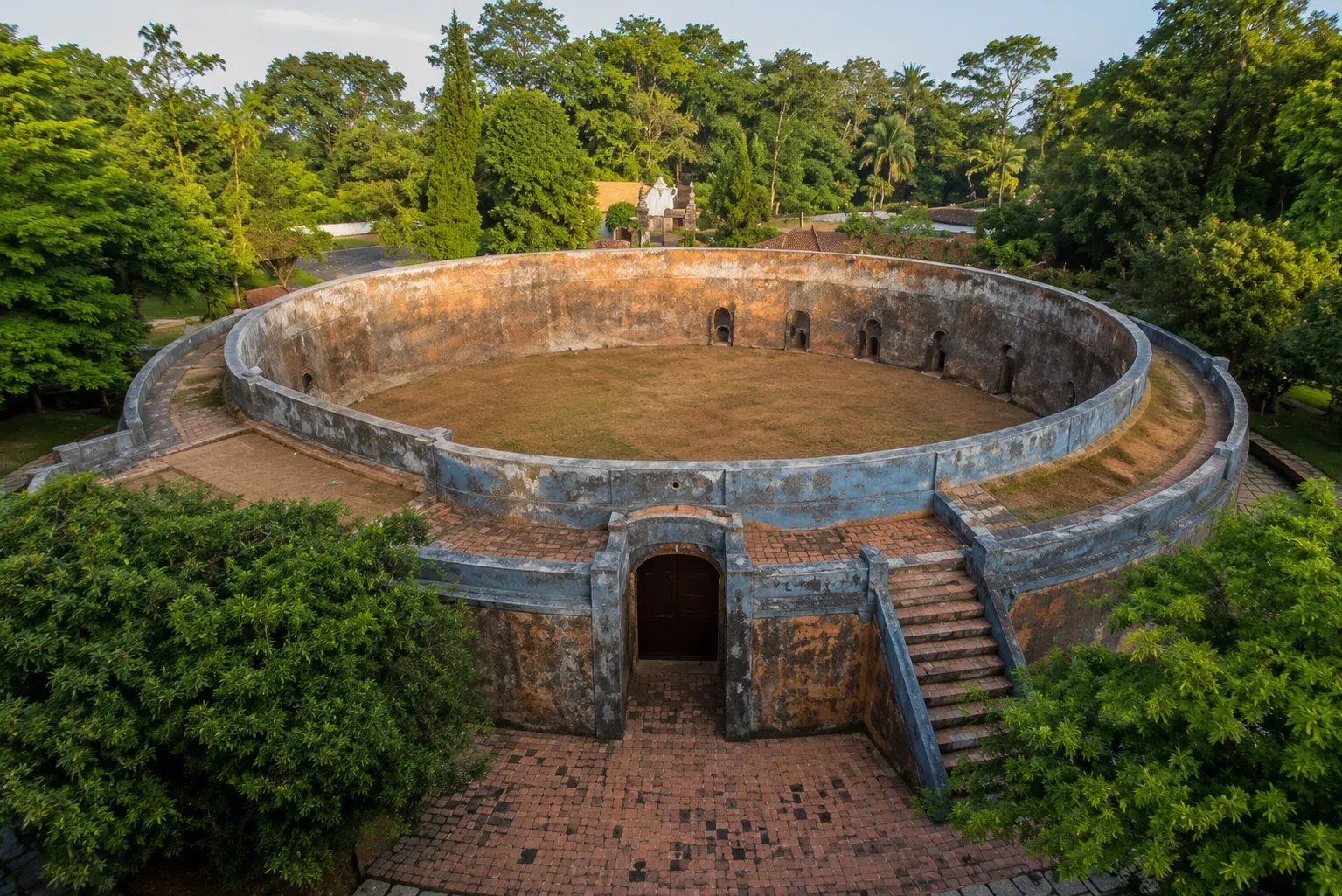
This circular stone arena was built in 1830 during Minh Mang’s reign on the outskirts of Hue, Vietnam. Often called Vietnam’s Colosseum, it hosted ritual elephant-versus-tiger fights for the royal court. The matches were rigged so the elephant, representing the throne, always won because the tigers were declawed first. The final fight took place in 1904.
- Entry Fee: Unlike the main monuments, this site does not always have staff or ticketing. Some visitors pay a small fee, while others find it open and free. It is a good idea to bring some small cash, just in case.
- Location: It is about 4 km from the centre and is usually quiet. You can visit it along with the nearby Thuy Bieu garden village.
Tribe Travel Tip: Since there are no facilities here, please bring your own water and be careful on the worn brick steps.
10. Dong Ba Market and Truong Tien Bridge
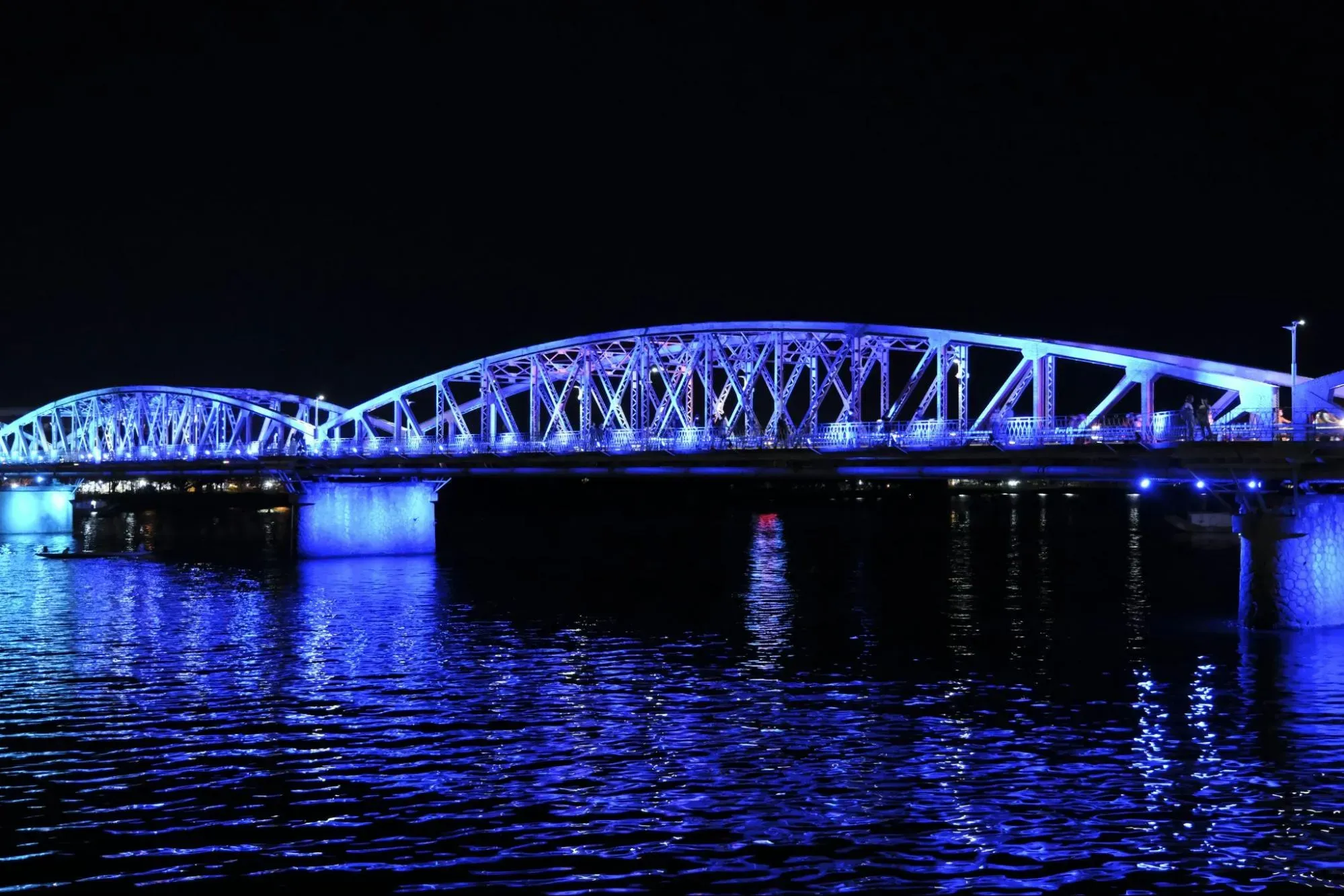
End your visit where locals shop: Dong Ba, the oldest market in Hue, Vietnam. It was moved to its riverside location by Emperor Thanh Thai in 1899. Try a bowl of spicy bun bo Hue, the city’s famous beef noodle soup, then head to the steel Truong Tien Bridge. Completed in 1900, the bridge stretches over the Perfume River and lights up with vibrant colours at night.
- Location: Located in the city centre on Tran Hung Dao Street, this place is just a short walk from most central hotels.
- Opening Hours: The place is usually open from about 6am to 6pm, but food stalls often start serving as early as 4 or 5am.
Tribe Travel Tip: Try to visit before 9 am to find the freshest food stalls and enjoy quieter aisles.
Hue Vietnam Weather and the Hanoi to Hue Vietnam Route at a Glance
Every visit depends on two things: the time you choose to go and the way you get there.
Planning point | What to know |
Best Hue weather | January to April, dry and mild, around 20 to 25°C |
Wettest months | October to November, heavy rain and possible flooding |
Hanoi to Hue by air | About 1 hr 15 min, Noi Bai to Phu Bai airport |
Hanoi to Hue by train | About 12 to 14 hrs, scenic overnight sleepers |
Getting around the city | Taxi, motorbike, cyclo or dragon-boat |
Making the Most of Hue, Vietnam
Hue, Vietnam, is especially rewarding for travellers who take the time to appreciate what they see. These ten sites connect the city’s royal history. Spend two relaxed days here, and you’ll really get to know the old capital. When you’re ready to plan your holiday at your own pace, Holiday Tribe can help you create a personalised Vietnam holiday with honest advice, instead of a one-size-fits-all package.