

The Acropolis of Athens stands 156 metres above the city, and from every angle, you can see how modern Athens seems to give way to its presence. This plateau, about the size of three football fields, is home to four of the ancient world’s most important buildings. All of them were built within a single generation, in the 5th century BC, during Pericles' leadership. If you plan to visit Athens in 2026, seeing the Acropolis is a must. However, you will need to plan ahead. Timed-entry tickets, a daily limit of 20,000 visitors, hot summer weather, and slippery marble make it important to be prepared. This guide will help you with everything from getting tickets for the Acropolis and checking opening hours to understanding each monument and making the most of your visit.
What Exactly Is the Acropolis of Athens?
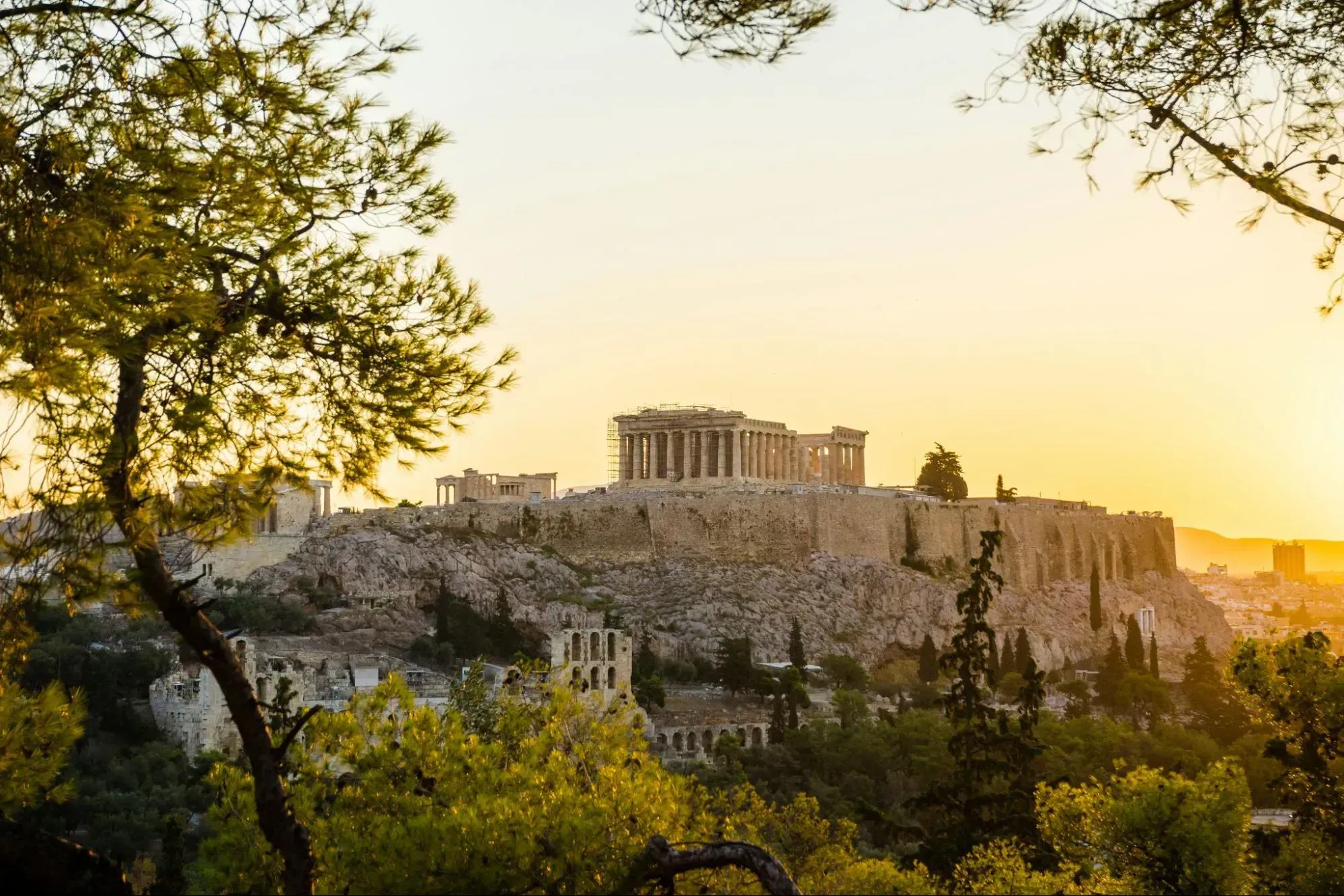
People often confuse the Acropolis of Athens with the Parthenon. The Acropolis is the whole hilltop complex, while the Parthenon is just one building on it, though it is the most famous.
The word "acropolis" comes from Greek and means "high city." Almost every ancient Greek city had an acropolis, but Athens built the most impressive one.
- UNESCO World Heritage Site since 1987
- Current monuments built between 447 and 406 BC during Athens's Golden Age
- Three hectares covering the summit plateau and the slopes below
- More than 3 million people visit each year, making it the most popular paid attraction in Greece.
The buildings have survived Persian raids, a Venetian cannon explosion in 1687, Ottoman rule, and looting in more recent times. What remains today is the result of 2,500 years of endurance and a restoration program that is considered one of the most complex ancient monument conservation projects ever.
What Are the Main Buildings at the Acropolis of Athens?
The buildings on the Acropolis of Athens are not ruins like you might see in movies. They are some of the best-preserved examples of classical Greek architecture and are still being studied and restored today.
The Parthenon
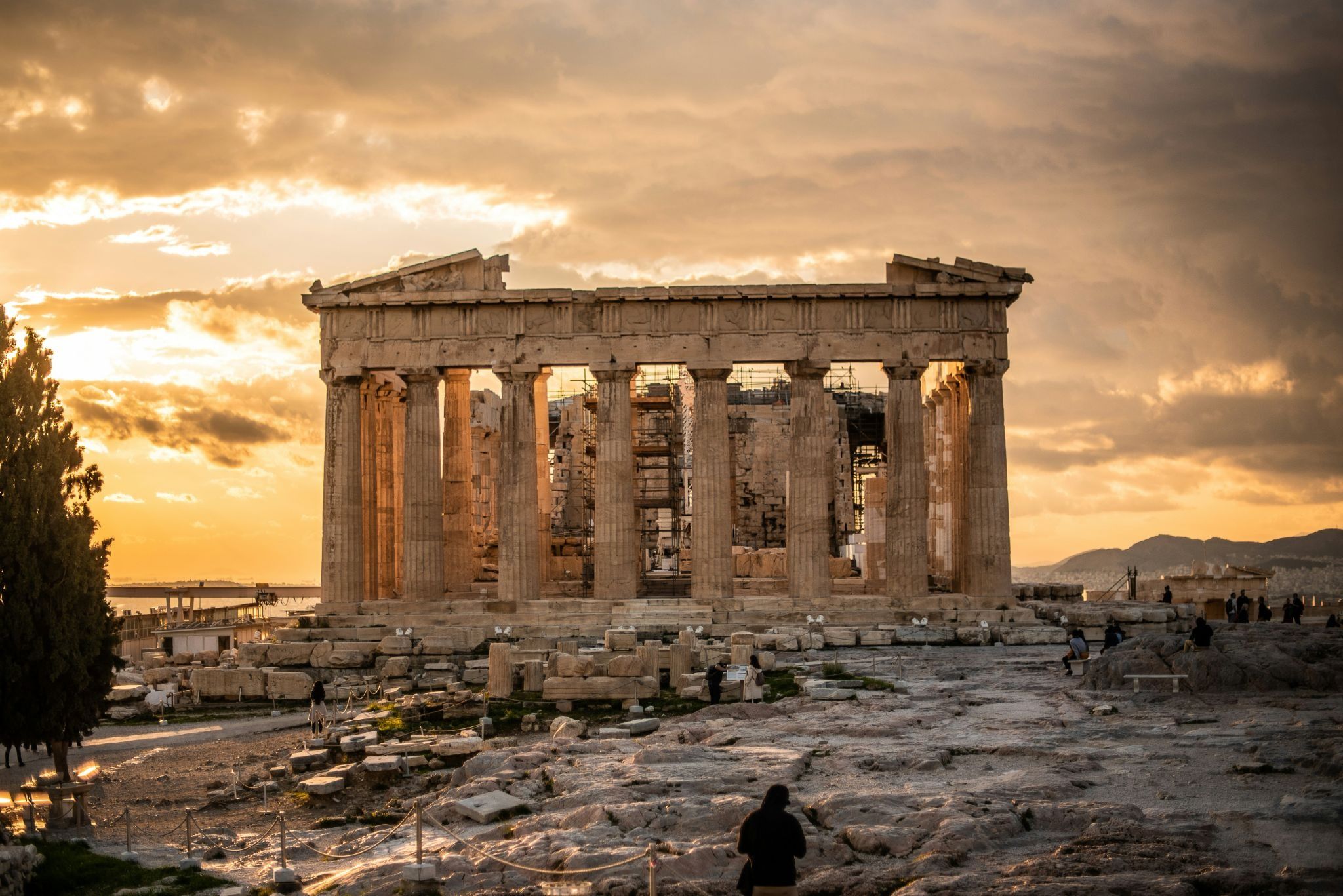
Most visitors come to Athens to see the Parthenon on the Acropolis. It was built between 447 and 432 BC by the architects Iktinos and Kallikrates and dedicated to Athena Parthenos, the city’s patron goddess.
- The Parthenon has 46 outer Doric columns made of Pentelic marble, quarried about 16 kilometres away.
- Inside, there was once a 12-meter gold and ivory statue of Athena, but it has been lost over time.
- The columns are not perfectly straight. They taper, lean inward a bit, and swell in the middle. These were intentional design choices to make the building look perfect to the human eye.
- The Parthenon has served many purposes: first as a temple, then a church, later a mosque, and finally a gunpowder store. In 1687, it exploded after being hit by a Venetian cannonball.
The famous Parthenon Marbles, a 160-meter frieze, are divided between the New Acropolis Museum in Athens (50 meters) and the British Museum in London (75 meters, known as the Elgin Marbles). Greece has been formally requesting their return since 1983.
As of 2026, most of the scaffolding has been removed from the east façade after work in 2025. Restoration continues on the west and north sides.
The Erechtheion
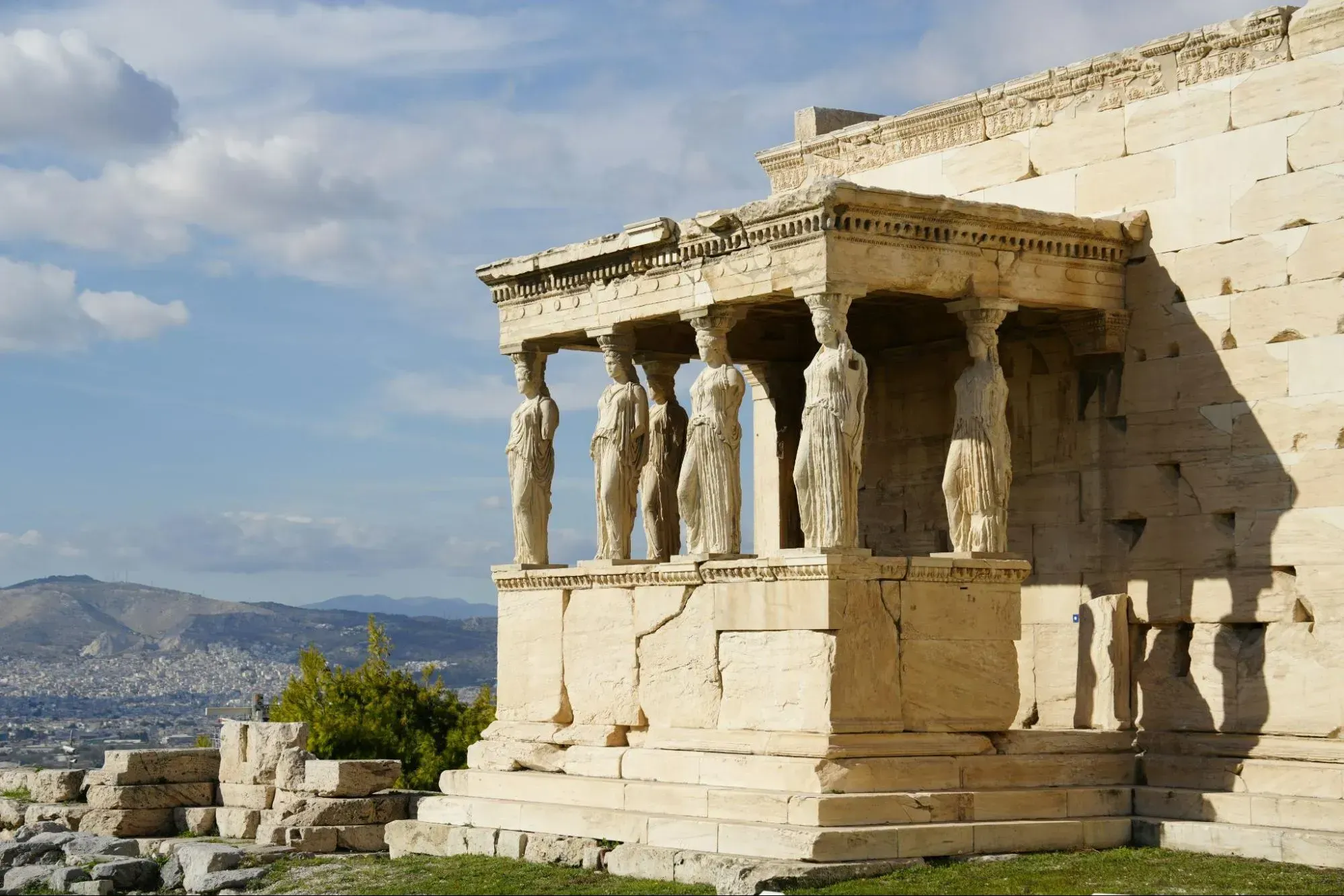
The Erechtheion was built between 421 and 406 BC on the site where Athena and Poseidon were said to have competed for Athens. Its most famous feature is the Porch of the Caryatids, with six marble female figures as columns. The ones you see there are replicas; five originals are in the Acropolis Museum in Athens, and one is in the British Museum. An olive tree still grows nearby, a symbol the ancient Greeks would have recognised.
The Propylaea
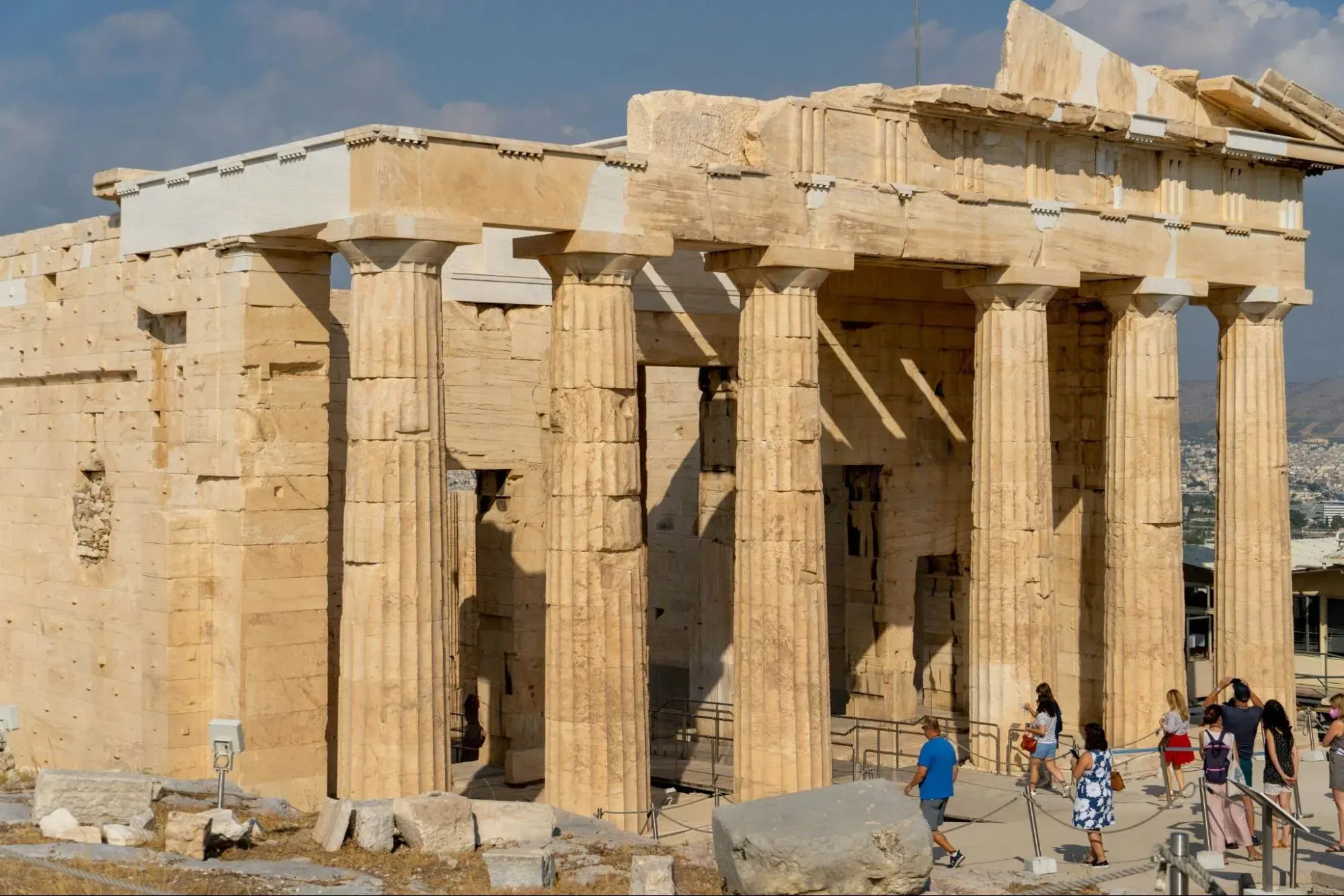
The Propylaea is the grand gateway to the Acropolis of Athens, built between 437 and 432 BC. It was originally wide enough for chariots. The north wing was once a picture gallery, later used by the Franks as a royal court and by the Ottomans as an armoury. The site’s history is truly remarkable.
The Temple of Athena Nike
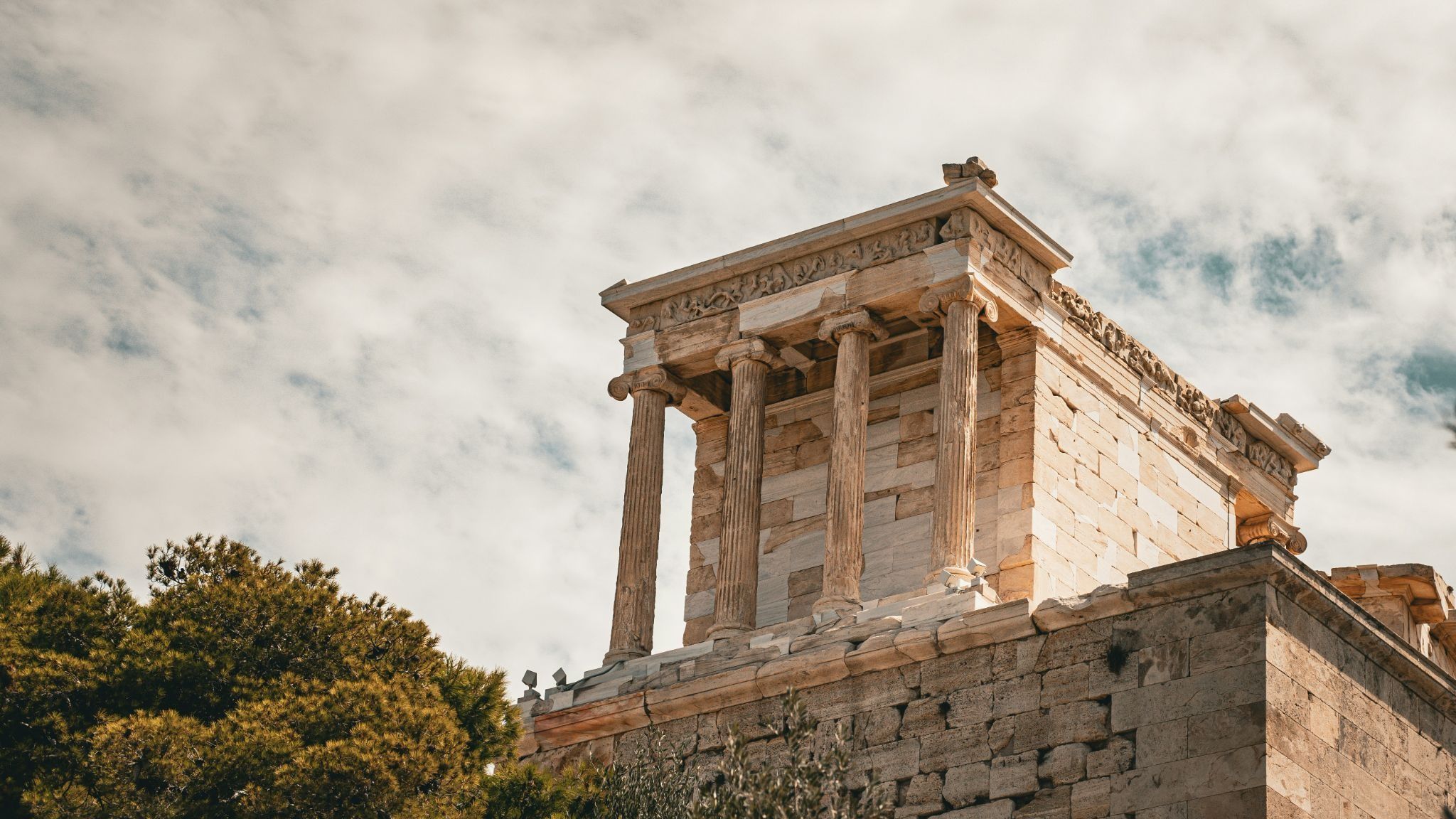
The Temple of Athena Nike is small and elegant, and it is easy to miss when focusing on the Parthenon. Built around 420 BC at the entrance to the site, it shows Athena as wingless (Nike Apteros) so she would always stay with the Athenians. The Turks demolished the temple and used its building material to erect a fortification wall, and Greek archaeologists have since rebuilt it several times.
Theatre of Dionysus and Odeon of Herodes Atticus
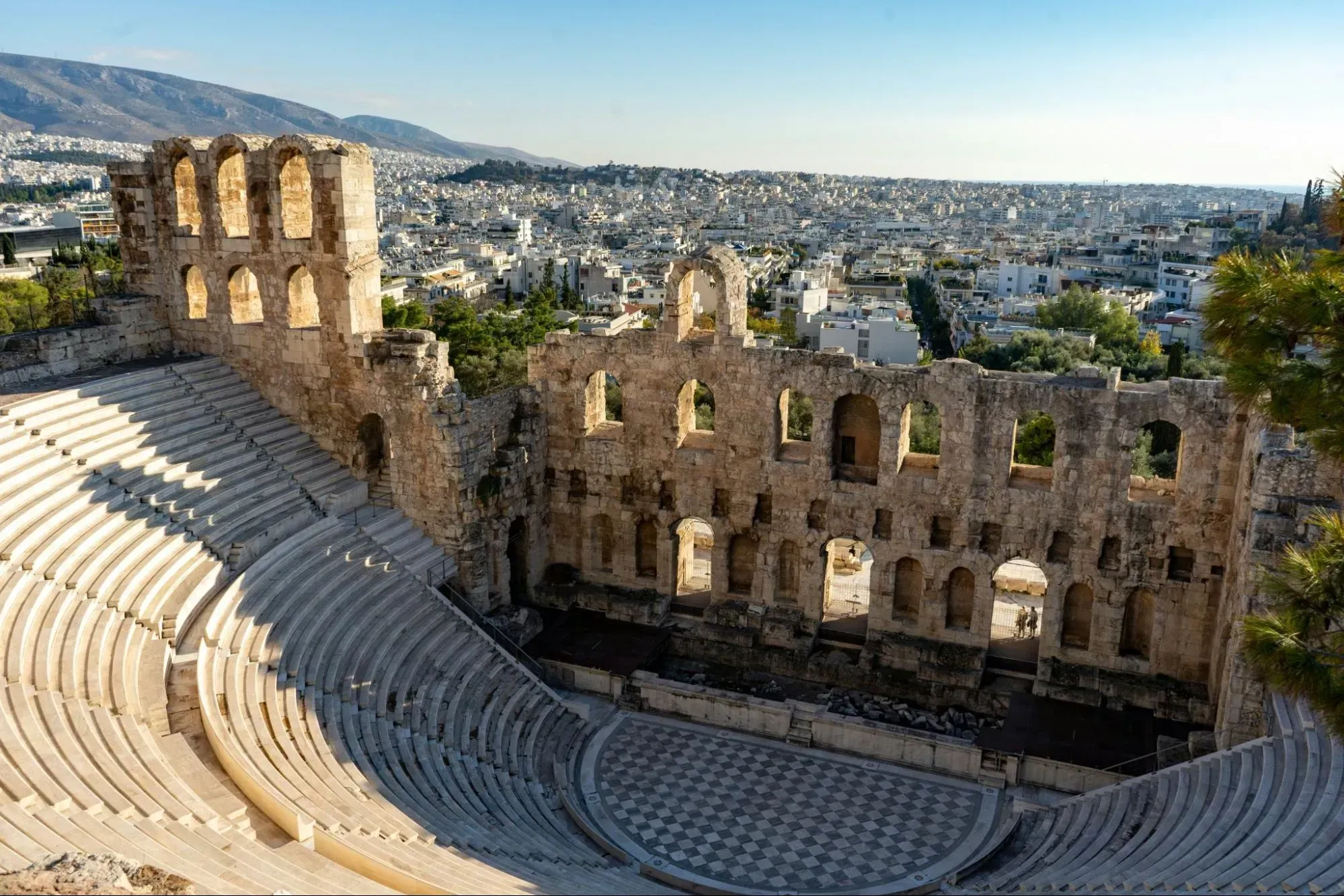
Both theaters are located on the south slope, just before you reach the top of the Acropolis.
Theatre of Dionysus | Odeon of Herodes Atticus | |
Built | 6th century BC | 161 AD |
Capacity | Around 17,000 | Around 5,000 |
Significance | First theatre in Europe; Sophocles and Euripides premiered here | Still used today for the Athens and Epidaurus Festival |
Access | Included in Acropolis ticket | Visible from above; performance access separate |
Acropolis of Athens Tickets in 2026: What You Need to Know
You now need to book a timed slot in advance to visit the Acropolis of Athens at any time of year. If you try to buy tickets on a busy day during busy months, you could wait 45 to 60 minutes in line and might not get in if the daily limit is reached.
You can book your tickets at hhticket.gr, which is the official portal of the Hellenic Ministry of Culture.
Ticket Type | Price |
Standard adult | €30 |
EU citizens under 25 | Free with valid ID |
Children under 6 | Free |
Free admission days (for everyone):
You can visit for free on March 6, April 18, May 18, the last weekend of September, October 28, and on the first Sunday of each month from November to March.
Key 2026 change:
The government stopped offering the combo ticket that included the Acropolis and six other Athens sites in April 2025. Now, places like the Ancient Agora and Roman Agora need separate tickets. If you want to visit several sites, third-party bundles from companies like GetYourGuide can still be a good deal.
The ticket for the Acropolis Museum in Athens is completely separate from the ticket for the Acropolis site.
What Is the Best Time to Visit the Acropolis of Athens?
By Season:
Season | Verdict |
April-May | Best overall: pleasant weather, longer hours, manageable crowds |
June-August | Hottest and most crowded; cruise groups dominate 10 AM–2 PM; go at 8 AM only |
September-October | Excellent: summer hours still in effect, fewer visitors |
November-March | Great for solitude; closes at 5 PM; cooler and occasionally rainy |
By Time of Day:
- 8:00-10:00 AM: Coolest temperatures, fewest crowds, best light on the Parthenon
- After 5:00 PM (summer): The marble turns honey-gold. Far fewer people than at midday
- 10:00 AM-2:00 PM in summer: Avoid. Heat on the exposed rock hits 35–40°C regularly, and cruise groups fill the site
If you plan to visit between May and September, book the 8:00 AM time slot at least a week ahead.
How Do You Get to the Acropolis of Athens?
The Acropolis of Athens is located in the city centre and can be seen from much of downtown Athens.
- Metro (recommended): Line 2 (Red Line) to Acropoli station, a 5-minute walk to the south slope entrance
- Monastiraki station (Lines 1 and 3): 15-minute walk through Plaka
- Taxi: €6–10 from central Athens
- On foot: 15 minutes from Syntagma Square, 10 minutes from Plaka
Two entrances:
- South Slope entrance (Dionysiou Areoparitou Street): Recommended, less crowded, nearest to the metro
- Main West entrance: The classic approach from Plaka, but busier
Do You Need a Guided Tour of the Acropolis?
To be honest, if you haven’t read much about the site before your visit, you probably will miss a lot. Without some background, it’s easy to walk by amazing things without realising what they are.
Here’s what you get from an Athens Acropolis guided tour:
- You’ll learn about the optical illusions built into the Parthenon, explained right where you can see them.
- Guides share the stories behind each building, including who built them, what happened over the years, and what was removed.
- Most small-group Athens Acropolis tours last about two hours and include headsets.
For most visitors, the best option is a half-day guided tour that covers both the hill and the Acropolis Museum with a licensed guide. Seeing both together really helps you understand the site. If you’ve already done your research, you can also buy the official ticket at hhticket.gr and use the €7 audio guide for a good self-paced visit.
The Athens New Acropolis Museum: Should You Visit?
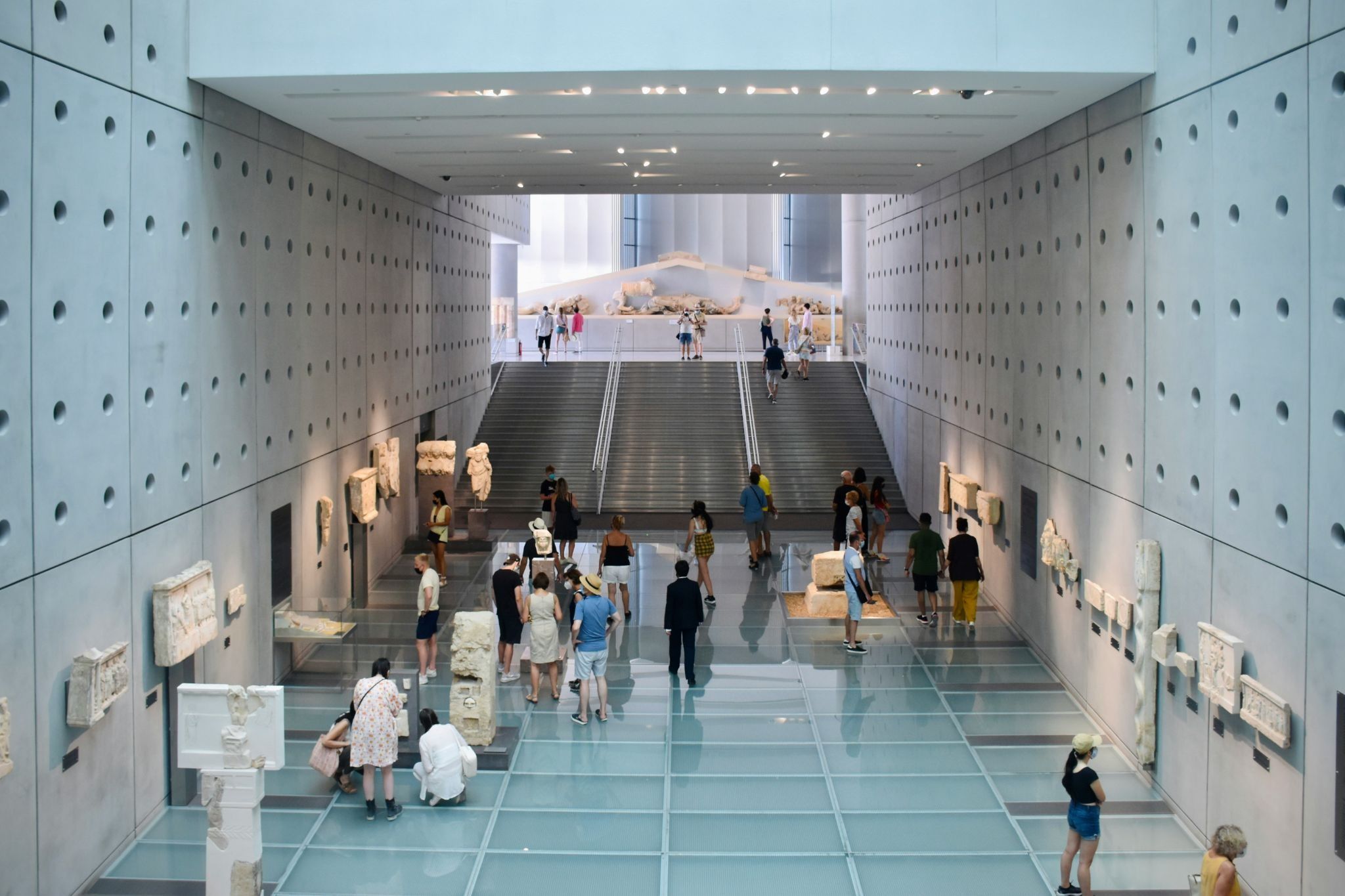
Yes, go to the museum after you visit the hill, not before.
The new Acropolis Museum in Athens opened in 2009 at the base of the hill. It holds priceless artefacts from the Parthenon and other monuments. Architect Bernard Tschumi designed it with large glass walls that keep a clear view of the Acropolis above.
Three things not to miss:
- Ground floor glass ramp: You walk on a transparent floor that reveals a real excavation. Ancient Athenian houses and workshops are right beneath your feet.
- Caryatid Hall: Five of the six original Caryatids from the Erechtheion are on display here. Seeing them up close is a very different experience compared to viewing the replicas on the hill.
- Parthenon Gallery: The friezes are arranged at the same angle as the temple, and floor-to-ceiling windows frame the Parthenon across the city. Sections from London are displayed as white plaster casts next to the original golden marble pieces.
Notes: You need a separate ticket for the museum. Photography is allowed everywhere except in the Archaic Acropolis Gallery. Tripods and flash are not permitted. There is a restaurant on the third floor with views of the Acropolis, and it stays open until 10 PM on Fridays.
Tribe Travel Tips
- Wear rubber-soled, closed-toe shoes with good grip. The marble can be very slippery, so avoid sandals and flip-flops.
- In summer, bring a wide-brimmed hat and use SPF 50+ sunscreen. There is no shade at the summit.
- Bring at least one litre of water per person. Inside, the only fountain is near the south entrance.
- Download your ticket to your phone. You do not need to print it.
- Tripods and selfie sticks are not allowed and will be taken at the entrance.
- Prams and strollers are not permitted on the site.
- A free lift on the northwest side takes visitors with mobility needs to the summit. The Acropolis Museum is also fully accessible.
- Please do not touch or climb the monuments. This rule is strictly enforced, and visitors have been removed and fined.
The site is closed on 1 January, 25 March, 1 May, Easter Sunday, and 25 and 26 December. On Good Friday, it closes at 12:30 PM.
Plan Your Visit to the Acropolis of Athens
The Acropolis in Athens is best enjoyed with a little planning. Buy your tickets ahead of time, arrive by 8 AM, and visit the Acropolis Museum as well. Set aside at least half a day for the experience. If you want to hear the stories behind the ruins, consider joining a guided tour.
Are you planning a holiday to Greece? Holiday Tribe’s advisors can help you create a balanced itinerary with the best hotels, activities, and a clear daily plan. Visit holidaytribe.ai to get started.