

Melbourne, Australia, is famous for its Victorian-era buildings, lively laneways, arts scene, and great public transport. In the city centre, you'll find historic sites, galleries, riverfront areas, and top cultural attractions. Flinders Street Railway Station is one of the city's most recognisable landmarks and a key part of Melbourne's transport story. It sits across from Federation Square on Flinders Street and welcomes thousands of commuters daily.
This guide shares the station's history, architecture, entry details, and nearby places to visit in Melbourne.
What Makes Flinders Street Railway Station Melbourne So Important?
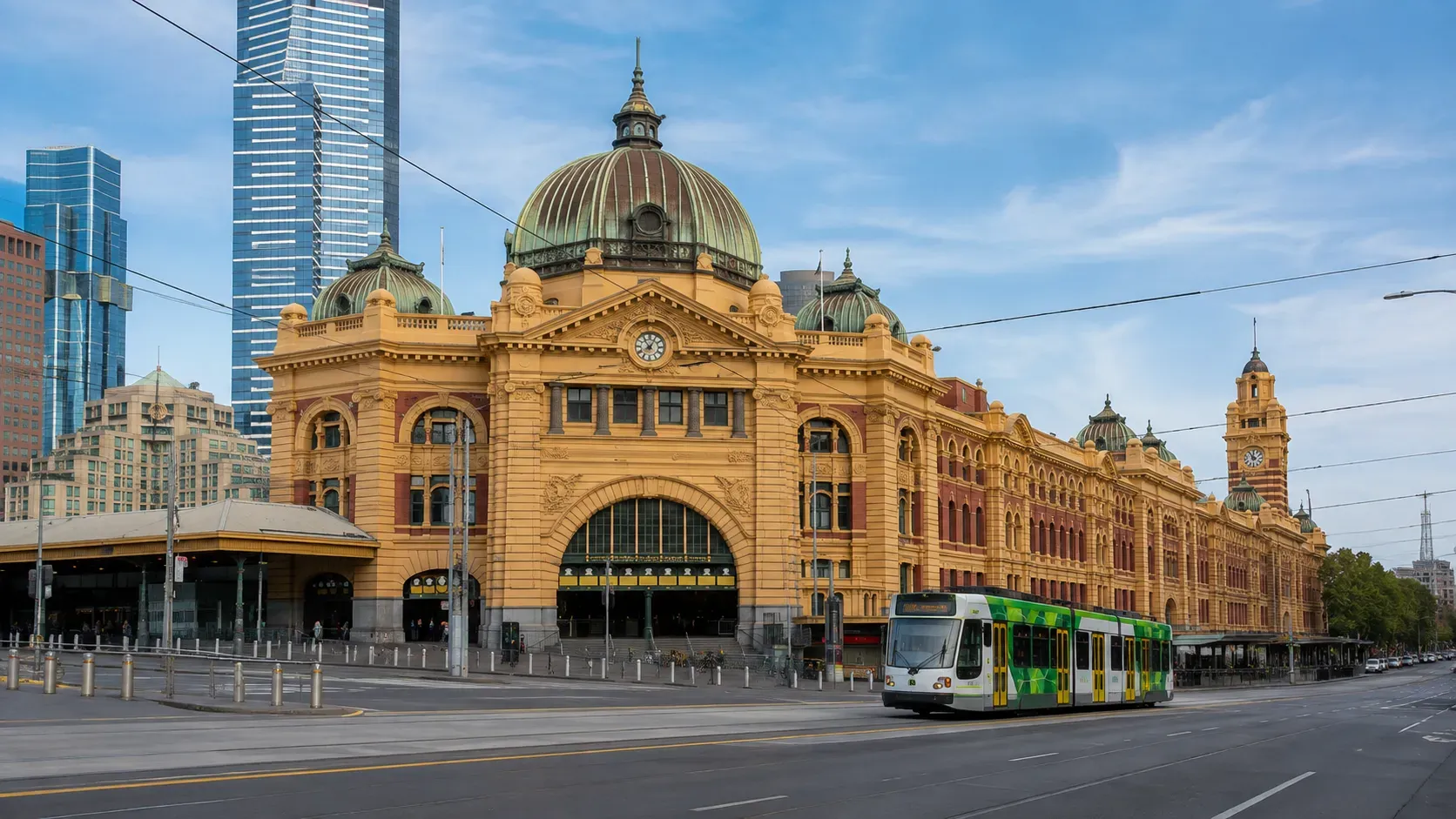
Flinders Street Railway Station in Melbourne is the main hub for the city’s electric train network. Metro Trains runs the station, which serves all suburban lines and V/Line trains to Gippsland. There are also 15 tram routes that pass by on Flinders Street.
The station is at 207-361 Flinders Street, Melbourne VIC 3000. It's right across from Federation Square and next to St Paul's Cathedral. Flinders Street is a Premium Station in Myki Zone 1.
More than 110,000 people and 1,500 trains pass through Flinders Street Station each day, making it one of the busiest suburban stations in the Southern Hemisphere.
Detail | Information |
First opened | 12 September 1854 |
Current building completed | 1910 |
Heritage status | Victorian Heritage Register (listed 1982) |
Daily passengers | 110,000+ |
Daily trains | 1,500+ |
Platforms | 13 (plus one removed) |
Myki zone | Zone 1 |
Operated by | Metro Trains |
How Did Flinders Street Station Shape Australia's Railway History?
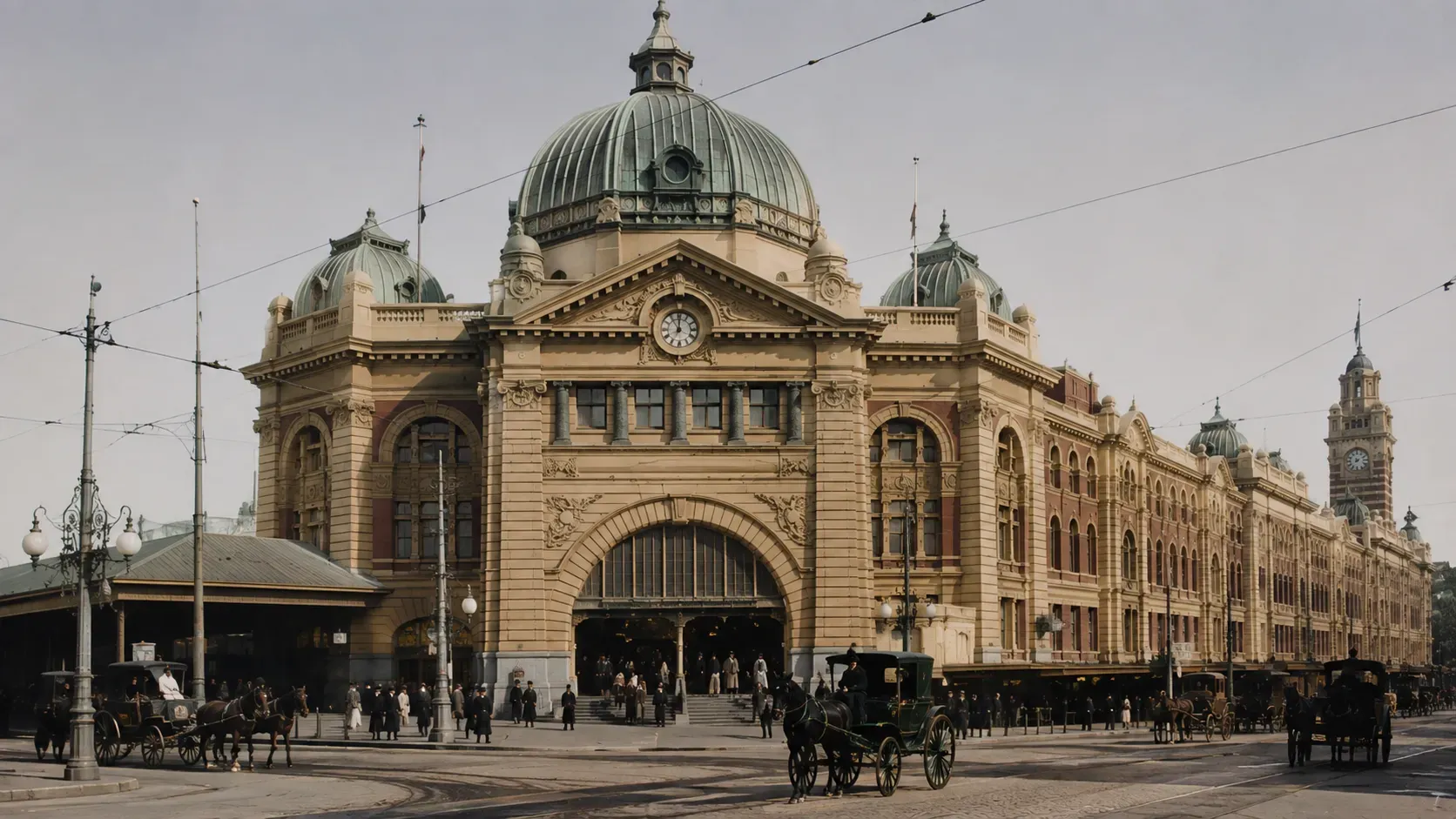
Flinders Street Railway Station is one of Australia's oldest public buildings. Trains have run here since 12 September 1854, when Lieutenant-Governor Charles Hotham opened the original Melbourne Terminus. Back then, it was just a few weatherboard sheds on a single platform and was the country's first city railway station.
On its opening day, Australia's first steam train left from this site and travelled to Sandridge (now Port Melbourne), marking the beginning of rail travel in the country.
By the 1880s, the old buildings were no longer enough. In 1899, a design competition was won by architect James Fawcett and engineer H.P.C. Ashworth. Construction started in 1900, finished in 1909, and the current station opened in 1910. The project cost about £514,000.
Flinders Street Station was added to the Victorian Heritage Register on 20 August 1982. The National Trust of Australia had already protected it since 1976.
Year | Event | Significance |
1854 | Melbourne Terminus opened by Charles Hotham | Australia's first city railway station |
1854 | First steam train journey in Australia | Train travelled to Sandridge (Port Melbourne) |
1899 | Design competition won by Fawcett and Ashworth | Foundation of current building's design |
1900 | Construction begins | Demolition of original weatherboard buildings |
1910 | Current building opens | Federation/Edwardian Period Baroque station completed |
1976 | National Trust protection | Recognised as nationally significant |
1982 | Victorian Heritage Register listing | Heritage protection formalised by the state |
What Makes the Architecture and Famous Clocks So Recognisable?
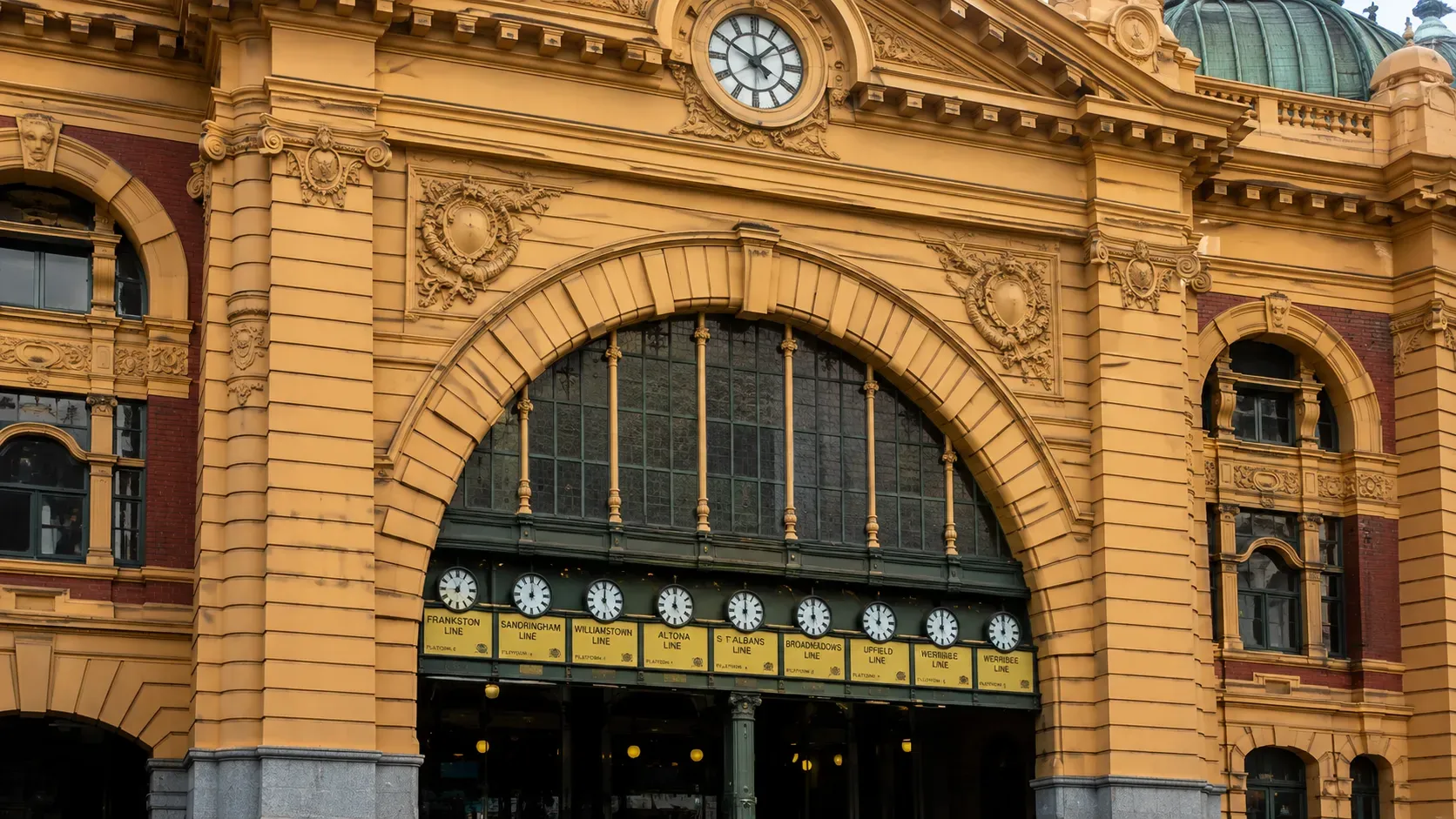
The current Flinders Street Railway Station building features Federation and Edwardian Baroque styles, with French Renaissance and Art Nouveau details. Its ochre facade is made from sandstone, bluestone, and granite, and a copper dome sits above the main entrance.
The main entry arch is set at a 45-degree angle to the street, facing the intersection of Flinders Street and Swanston Street. The raised steps give a clear view into the city from the entrance.
Above the main entrance of Flinders Street Station, a row of departure clocks shows the next train for each suburban line. For over a century, this spot has been Melbourne's favourite meeting place, inspiring the saying "meet under the clocks." When the clocks were first installed, one person had to change the times by hand up to 900 times in an eight-hour shift. Today, the clocks are fully automated.
Platform 1 at Flinders Street Railway Station is 708 metres long, making it one of the longest railway platforms in the world.
Feature | Description | Year Built or Added |
Copper-clad main dome | The signature feature above the corner arch | Completed 1910 |
Ochre facade | Sandstone, bluestone, and granite cladding | Completed 1910 |
Departure clocks | Row of clocks above main entrance showing next train per line | Original installation; now automated |
708m main platform | One of the longest in the world | In use since 1910 |
Escalators (Platforms 2 and 3) | Replaced original ramps | Added 1982 during refurbishment |
What Should You Know About Flinders Street Railway Station Entry?
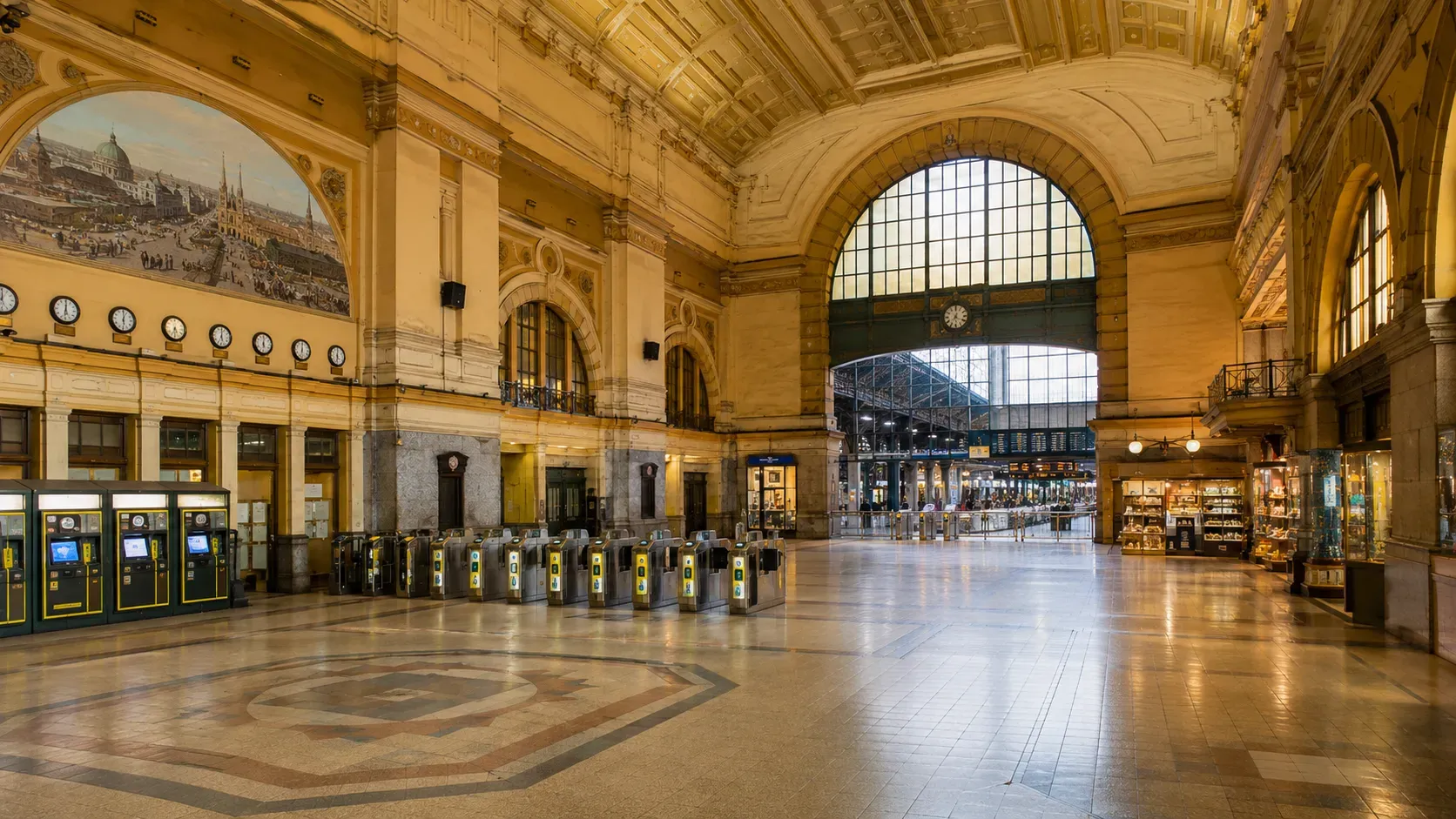
Flinders Street Railway Station entry to the public concourse is free. No ticket or Myki card is needed to walk through, visit the shops, or stand under the departure clocks.
To catch a train from Flinders Street Station, you'll need a valid Myki card. You can buy one at Myki machines around the concourse or at the staffed PTV Hub. Flinders Street Station is in Myki Zone 1, and all Metro suburban trains and V/Line services to Gippsland leave from here.
Area | Entry Cost | Requirements | Hours |
Public concourse and shops | Free | None | 24 hours |
Platform access (train travel) | Myki card required | Valid Myki loaded with fare | During train service hours |
Myki card purchase | Available on-site | Cash or card | During staffed hours |
V/Line services | Separate V/Line ticket | Booked or walk-up ticket | Check vline.com.au for times |
Flinders Street Railway Station entry to the concourse is free, making it one of the best places to visit in Melbourne for those who want to step inside a living 1910 heritage building at any hour, with no booking or charge required.
Which Places to Visit Near Flinders Street?
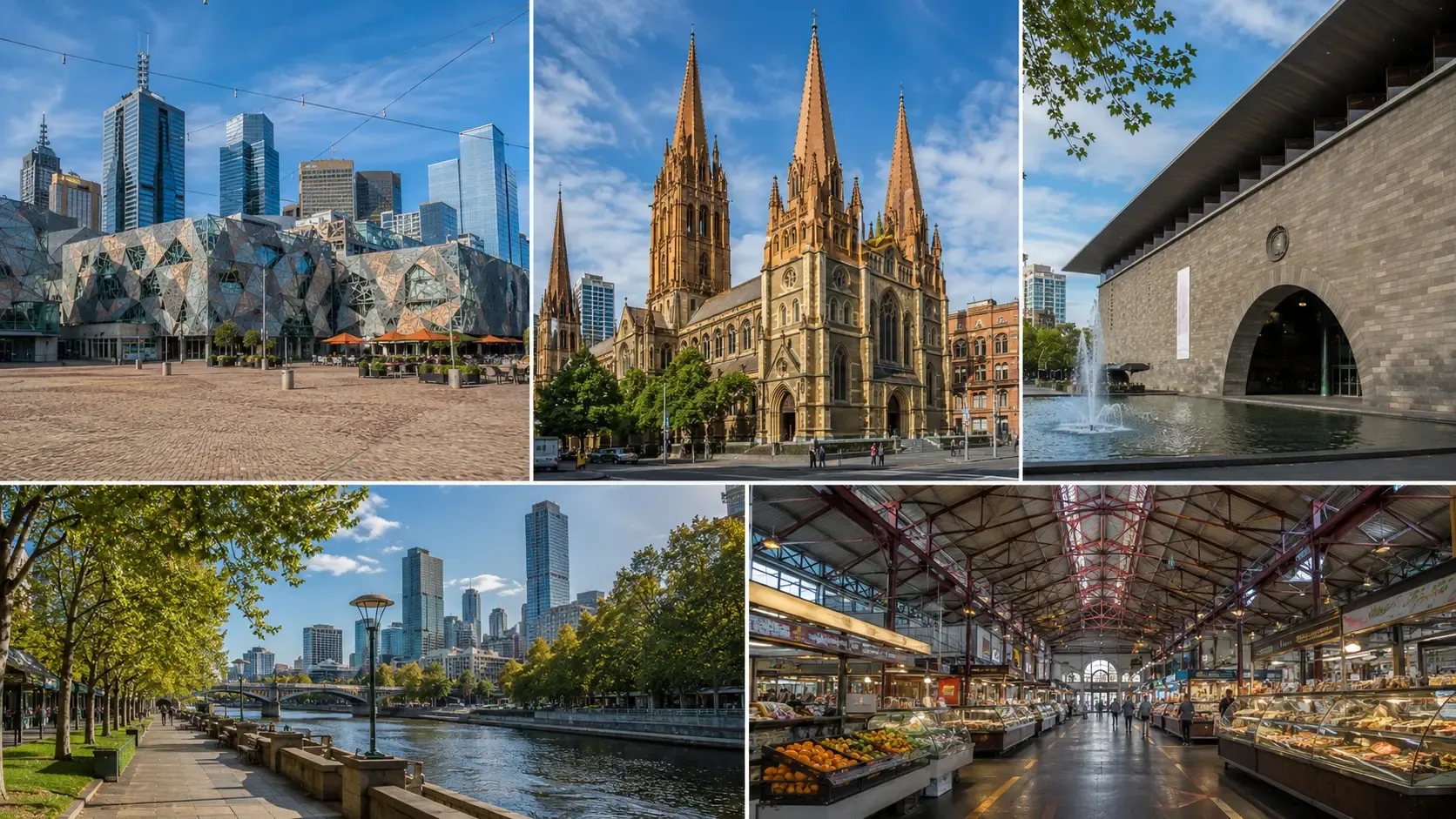
Flinders Street Railway Station, Melbourne, is at one of the city's most central intersections. The area around it includes some of the best places to visit in Melbourne, making the station a great starting point for a full-day city itinerary.
Attraction | Distance | Travel Time | Entry |
Federation Square | 0m (directly opposite) | 2-minute walk | Free (public space and NGV Australia permanent collection) |
St Paul's Cathedral | Adjacent | 1-minute walk | Free |
NGV International (St Kilda Rd) | 700m south | 10 to 15 min walk | Free (permanent collection) |
Birrarung Marr and Yarra River | 200m south-east | 5 min walk | Free |
Queen Victoria Market | 1 km north | 15 min on City Circle Tram (Route 35) | Free to enter; trading hours vary |
Melbourne Museum (Carlton) | 2 km north | 15 min by tram | Ticketed |
Places to visit in Melbourne within walking distance of Flinders Street:
- Federation Square: Directly opposite Flinders Street Station; houses the Ian Potter Centre: NGV Australia (free entry for permanent collection), ACMI, and the Koorie Heritage Trust; hosts more than 2,000 public events per year
- St Paul's Cathedral: Immediately adjacent to Flinders Street Railway Station on the Swanston Street corner; a 19th-century Anglican cathedral open to visitors at no cost
- National Gallery of Victoria (NGV International): On St Kilda Road, approximately 10 to 15 minutes on foot from Flinders Street Station; Australia's oldest and most visited gallery; permanent collection free
- Birrarung Marr: 5 minutes on foot from Flinders Street; Yarra River parkland with the Princes Bridge footbridge and Southbank access
How Do You Reach the Station and Make the Most of Your Visit?
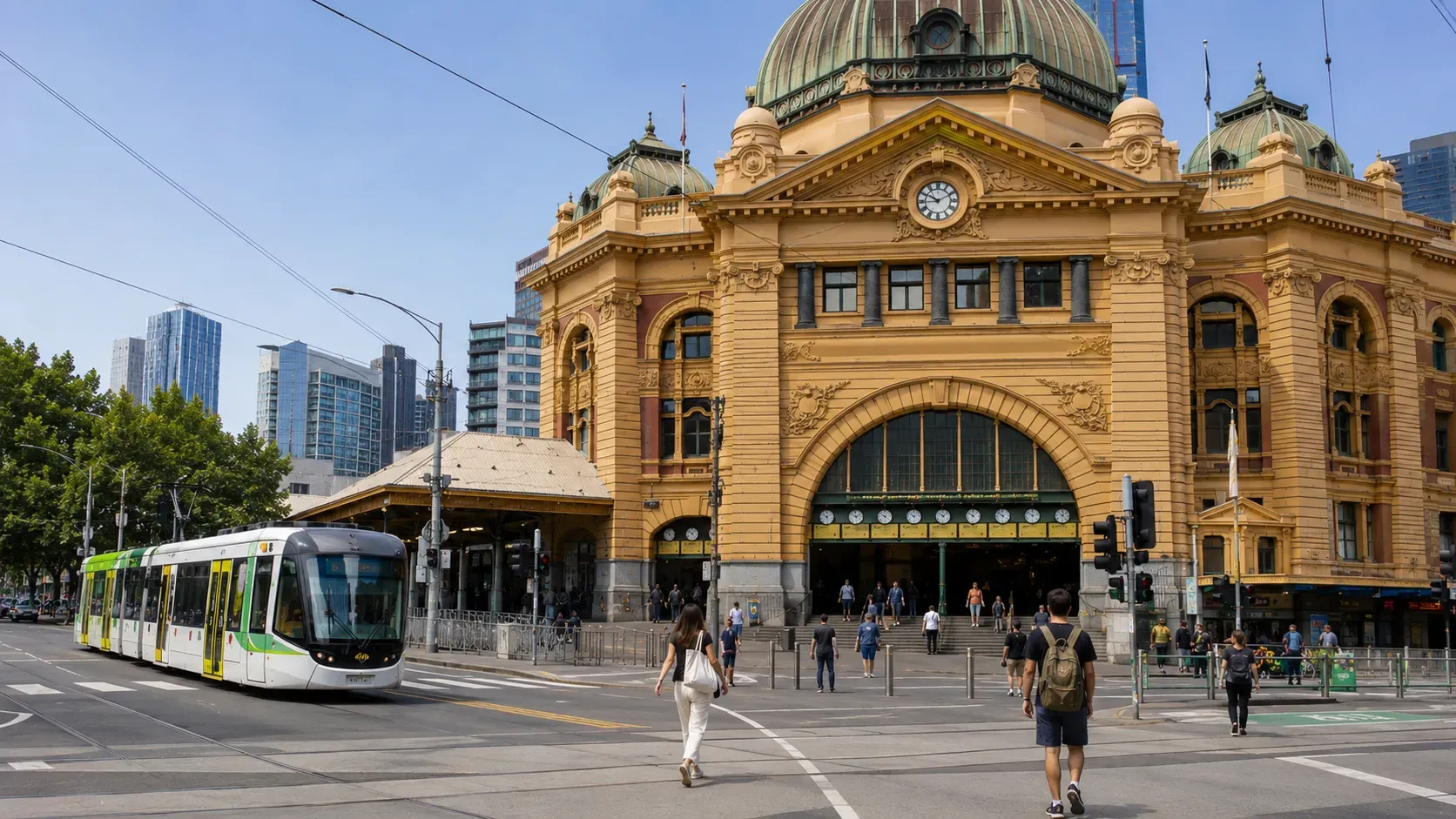
Flinders Street Railway Station is served by every Metro suburban rail line in Melbourne. All trains on all suburban lines call here at peak and off-peak hours. It is also the connection point for 15 tram routes running along Flinders Street and Swanston Street.
- From Melbourne Airport: Take SkyBus to the Melbourne CBD stop near Flinders Street or take a taxi or rideshare directly to the station
- Myki card: Required for all Metro train and tram travel; buy and top up at Myki machines inside Flinders Street Station or at the PTV Hub on the concourse
- City Circle Tram (Route 35): Free tram connecting the CBD in a loop, with a stop at Flinders Street Station on Swanston Street; no Myki card required for this route only
- Photography: Permitted throughout the public concourse and on Flinders Street outside; the departure clocks, the copper dome, and the ochre facade are the most photographed features
- Accessibility: Flinders Street Railway Station is step-free throughout; lift access to all platforms; accessibility details confirmed at the official Metro portal
- Station map: Available at the PTV Hub on the concourse and at ptv.vic.gov.au; useful for finding specific platforms given the station's 13 platforms across a large footprint
Final Takeaway
Flinders Street Railway Station is more than just a transport hub. It's Australia's first city railway station, a heritage-listed Baroque building that's been in use since 1854, and the city's main landmark for getting around. You can enter the concourse for free and see the famous departure clocks, ochre dome, and Flinders Street facade any time. From here, the best places to visit in Melbourne are just a short walk or tram ride away.
If you're planning a holiday to Melbourne, Australia, and want a custom itinerary with the best experiences and places to stay, Holiday Tribe's holiday advisors can help plan every detail.