

Standing next to water that looks like a milkshake is a unique experience. Australia is one of the best places for this, with salt lakes that shine in shades from soft pink to bright bubblegum. If you’re planning a pink lake Australia road trip in 2026, here’s a straightforward guide: which lakes are actually pink right now, the best times to visit, and how to get there without a wasted journey. But first, a quick heads-up: some of the most famous lakes online haven’t been pink for years, so it’s good to know that before you make any plans.
Why Is Pink Lake in Australia Pink?
The reason the water in Australia's pink lakes glows rosy is biological, not a chemical accident. These lakes are extremely salty, saltier than the sea, and only a few hardy microbes can live there.
- The colour comes from a green algae called Dunaliella salina and salt-loving halobacteria.
- When exposed to strong sunlight and high salt levels, the algae produce beta-carotene, which is the same orange-red pigment found in carrots.
- The pink colour appears when there is strong sunlight, high salt, and heat. If the salt level drops or there is heavy rain, the pink fades to a pale blue-grey.
- Is it safe? Yes. The pigment is harmless and is even grown commercially for use in food and supplements.
The point about salinity is important to remember, since it explains why the same lake can look bright pink one year and dull the next.
How Many Pink Lakes Are There in Australia?
If you ask how many pink lakes there are in Australia, you probably won't get a simple answer. There are well over ten, and the Esperance region alone has dozens of pink and rainbow lakes hidden among the farmland. Here are eight you should consider visiting, listed from the most reliable to the most seasonal.
1. Hutt Lagoon, Western Australia
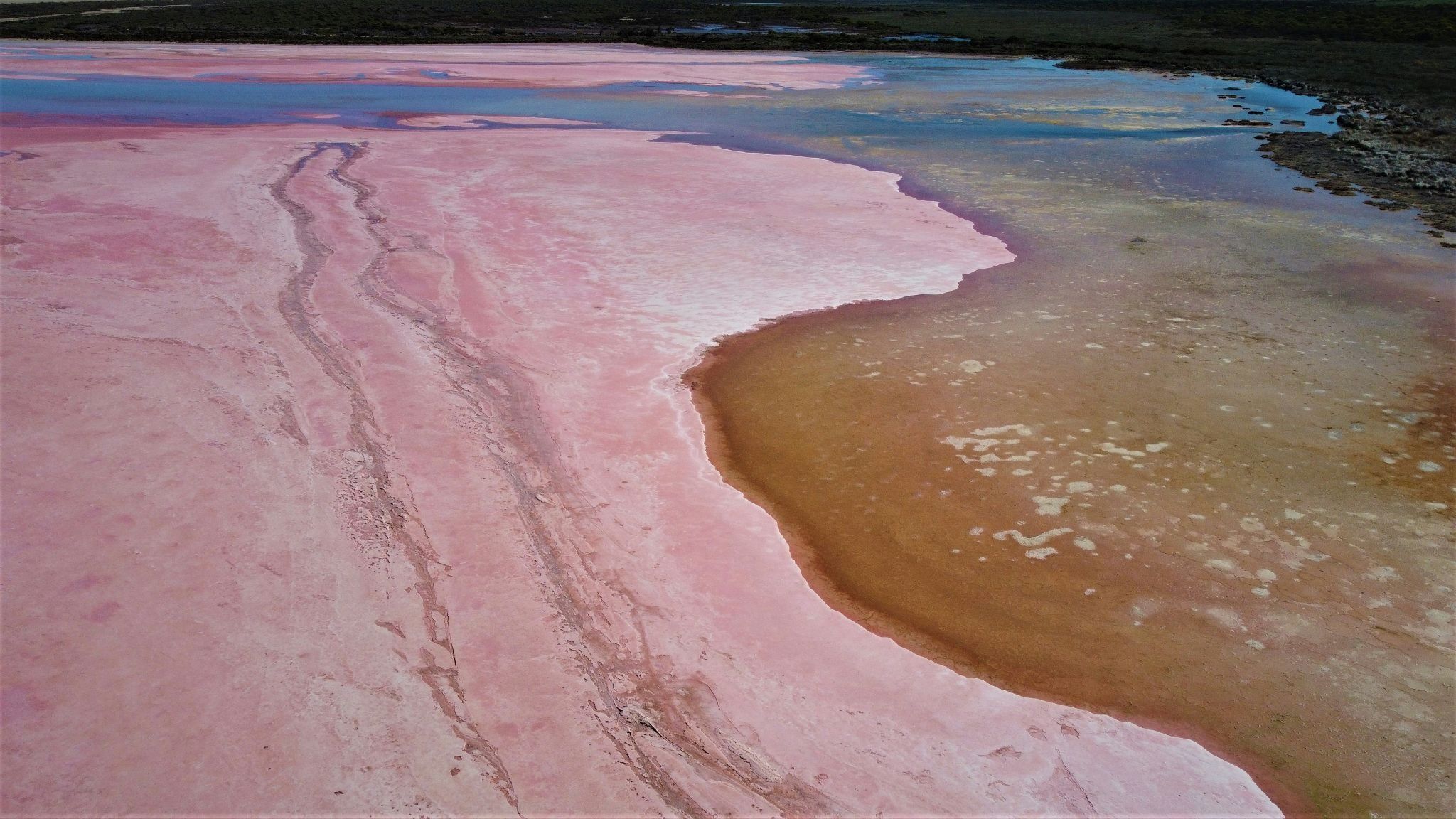
If you’re looking for a sure thing, Hutt Lagoon near Port Gregory is your best bet. It’s the most accessible pink lake in Australia, covering 70 square kilometres, and you can drive right up to it. The lagoon is about five and a half hours north of Perth.
- Location: Port Gregory on the Coral Coast, about 45 minutes south of Kalbarri.
- Best time to visit: Go on a clear day between 10 am and 2 pm to see the brightest pink colour.
- How to get there: Drive yourself along George Grey Drive. There’s a free Pink Lake Lookout by the road.
- Cost: Visiting is free.
Tribe Travel Tip: Wear closed shoes at the edge because the salt crust can be sharp underfoot.
2. Lake MacDonnell, South Australia
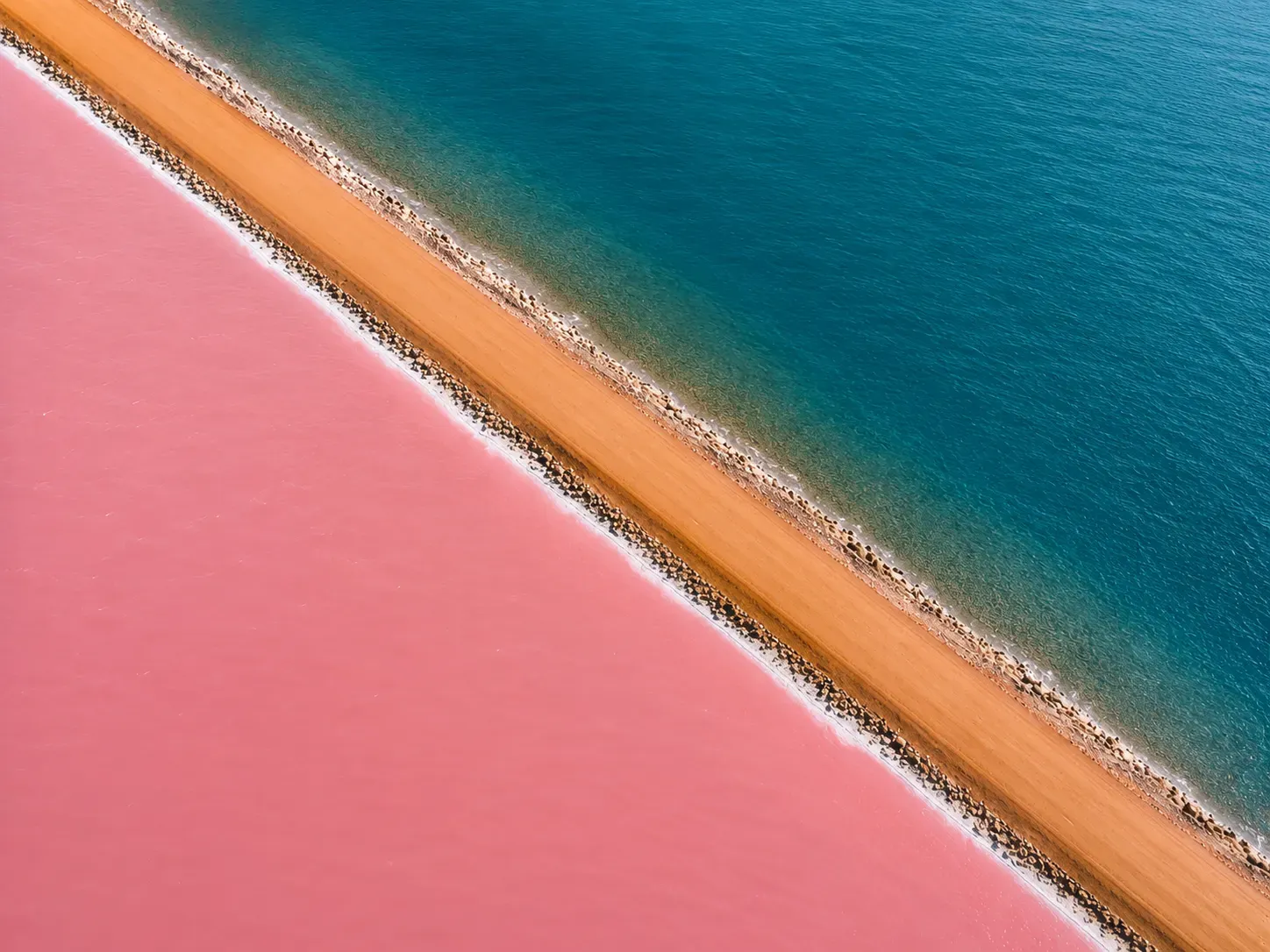
Lake MacDonnell, known for being the brightest pink lake around, is on the Eyre Peninsula near Penong. Its highlight is Watermelon Avenue, a causeway with bright pink water on one side and blue-green on the other.
- Location: About 15 km south of Penong in far-west South Australia.
- Best time to visit: Go around midday when the sun brings out the strongest colour contrast.
- How to get there: The unsealed road is well maintained and most cars can handle it.
- Cost: Free. Keep in mind the area is also used for salt and gypsum production.
Tribe Travel Tip: If you have time, head to Cactus Beach nearby for a great coastal experience.
3. Lake Bumbunga, South Australia
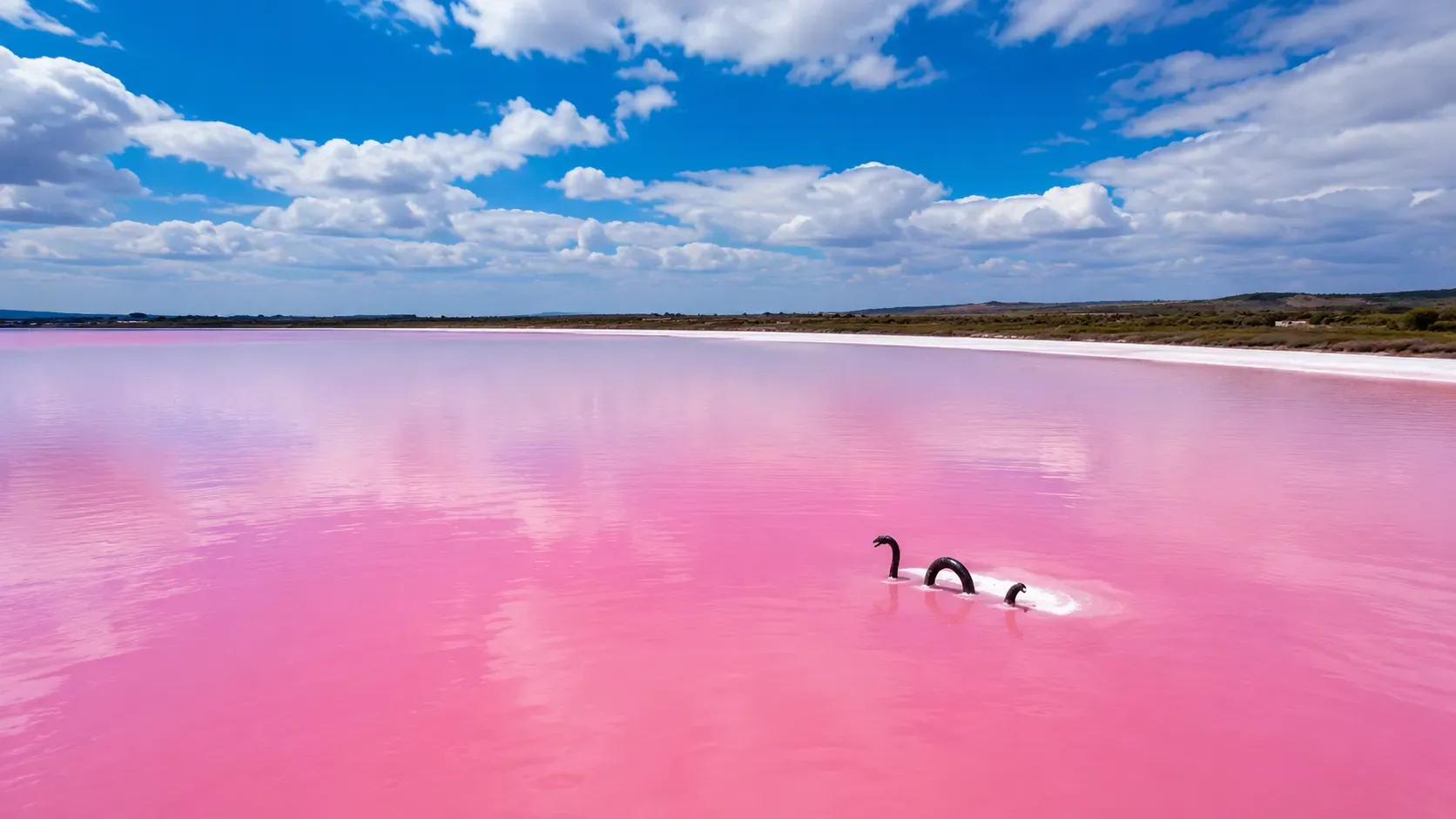
This is an easy visit from the city. Lake Bumbunga, near Lochiel, is less than two hours from Adelaide and changes from pink to white depending on how salty the water is.
- Location: Lochiel, which is on the route to the Clare Valley.
- Best time to visit: Any time works, since the lake's colour depends more on its salt levels than the time of day.
- How to get there: It's an easy drive from Adelaide on sealed roads.
- Cost: There is no entry fee.
Tribe Travel Tip: You can also visit a Clare Valley riesling cellar door on the same day.
4. The Pink and Rainbow Lakes, Western Australia
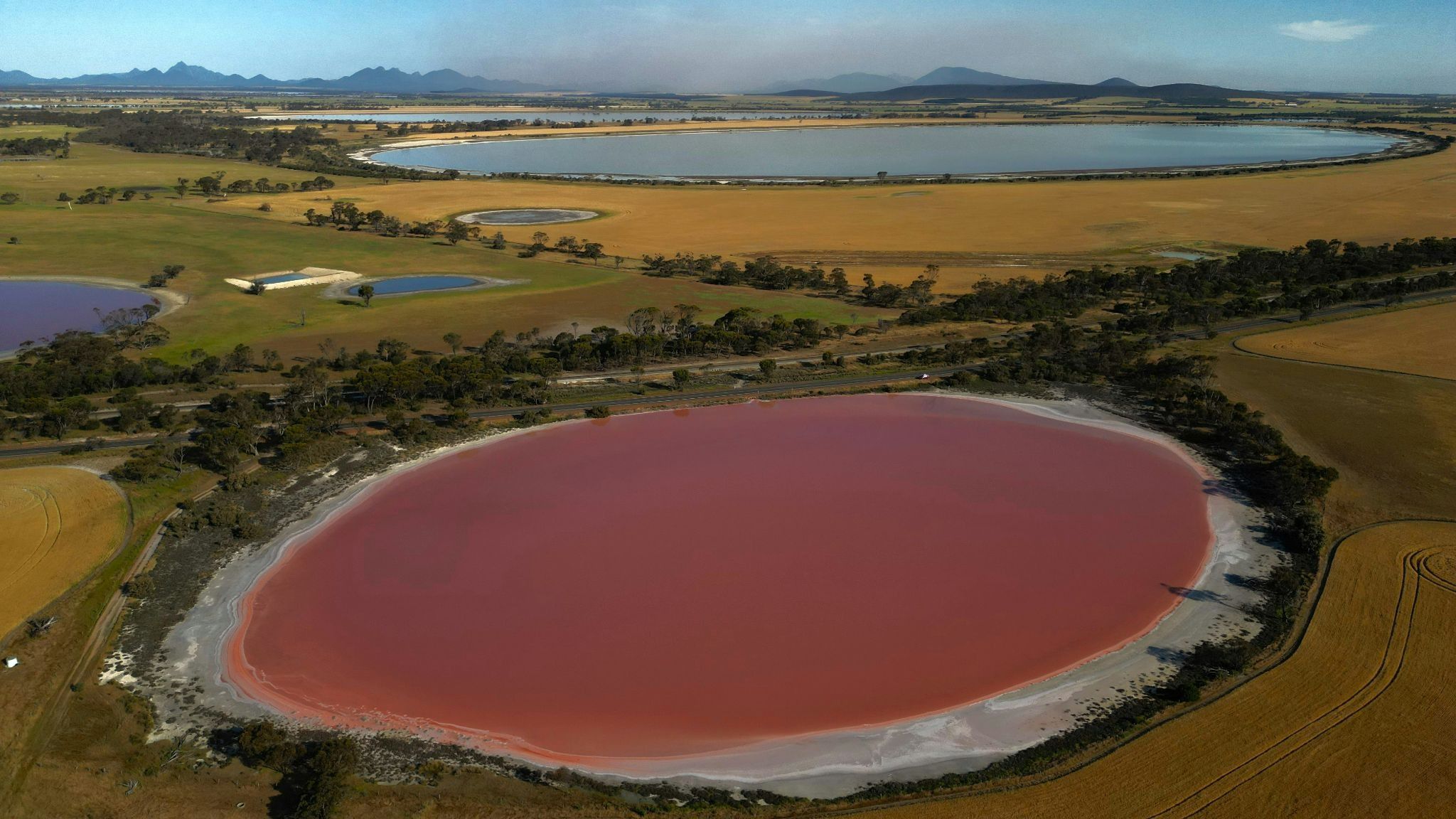
Just outside Esperance, you’ll find dozens of lakes that range in colour from soft pink to deep red. Since they’re on private land, the best way to see them is from above.
- Location: Near Esperance, about a 1.5-hour flight from Perth.
- Best time to visit: June to January, when you’ll see the most vibrant colours.
- How to get there: You can only reach the lakes by taking a scenic flight.
- Cost: Scenic flights are available for a fee and tend to be on the pricier side for pink lake visits.
Tribe Travel Tip: Flights often pass over the white beaches of Cape Le Grand as well, so be sure to grab a window seat.
5. Lake Hillier, Western Australia
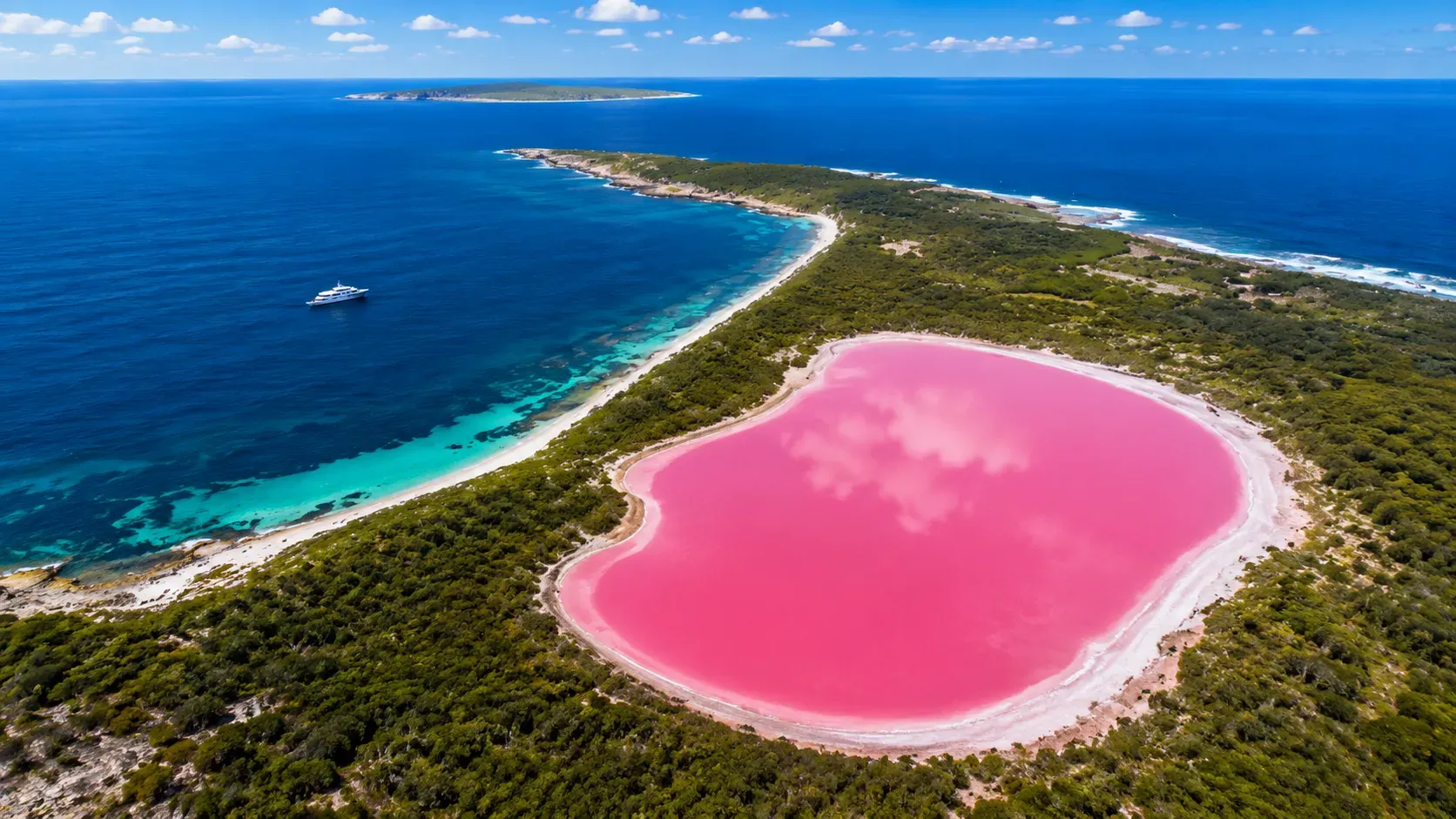
Lake Hillier is well known, but there’s a catch. Once famous for its permanent pink colour, heavy rain in 2022 diluted the salt and turned the lake blue-grey. Scientists think it could turn pink again as the salt returns, maybe within ten years.
- Location: Middle Island, in the Recherche Archipelago near Esperance.
- Current status: The lake isn’t always pink in 2026, so check before you book.
- How to get there: Take a scenic flight from Esperance. Boat access is limited.
- Cost: It’s expensive because of the flight.
Tribe Travel Tip: Think of it as a bonus to your flight, not the main reason to go.
6. Kati Thanda-Lake Eyre, South Australia
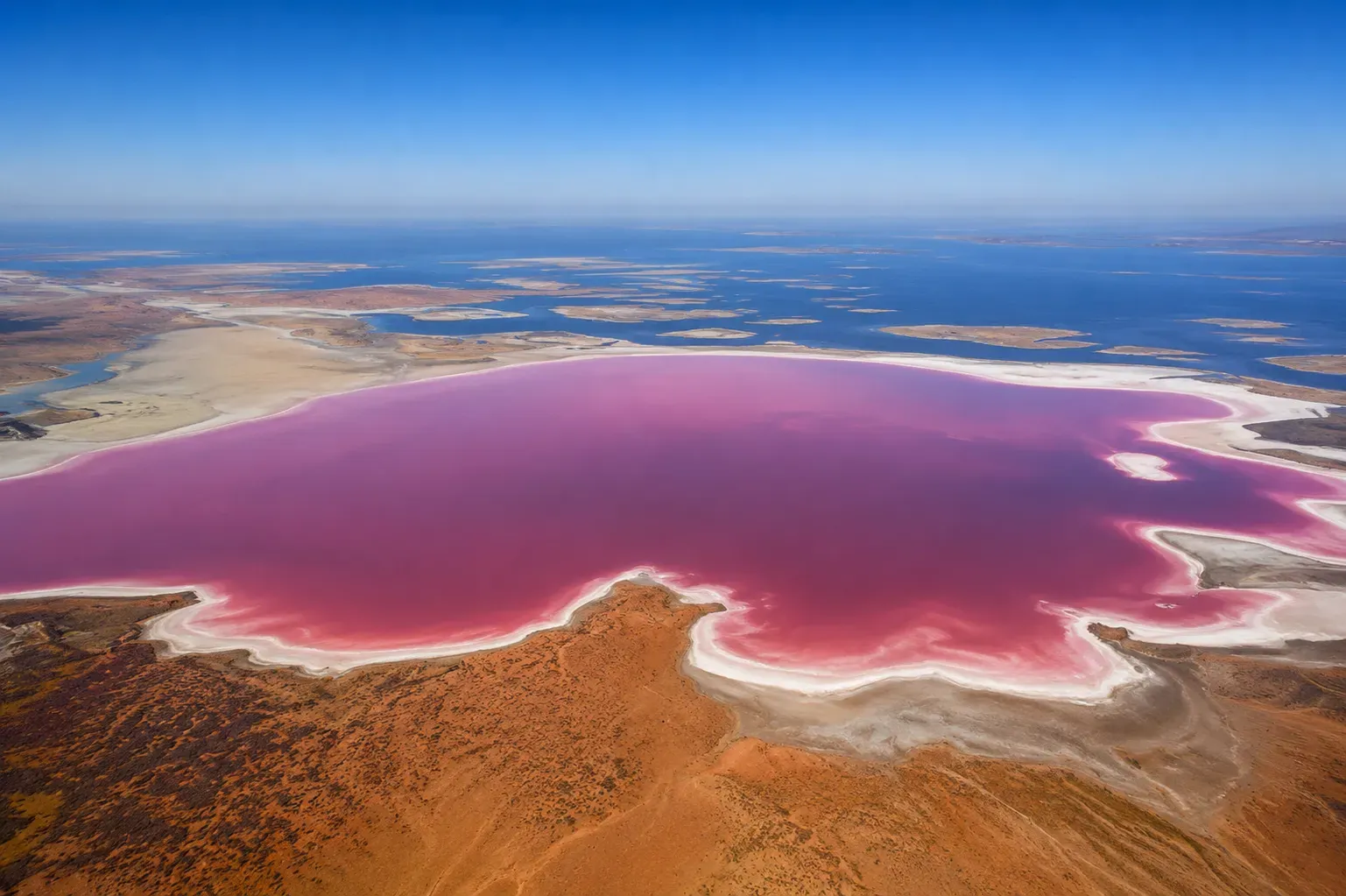
Most of the time, Australia’s largest lake is a white salt pan. Every few years, though, it floods and transforms into dreamy shades of pink, orange, and yellow, attracting plenty of birdlife.
- Location: Outback South Australia, close to the Flinders Ranges.
- Best time to visit: During or just after a flood year. Be sure to check the latest conditions.
- How to get there: It’s about a six-hour drive or a 1.5-hour flight from Adelaide.
- Cost: You’ll need to pay for national park entry, and scenic flights cost extra.
Tribe Travel Tip: The aerial view is the point here, as the scale is hard to grasp from ground level.
7. Lake Hart, South Australia
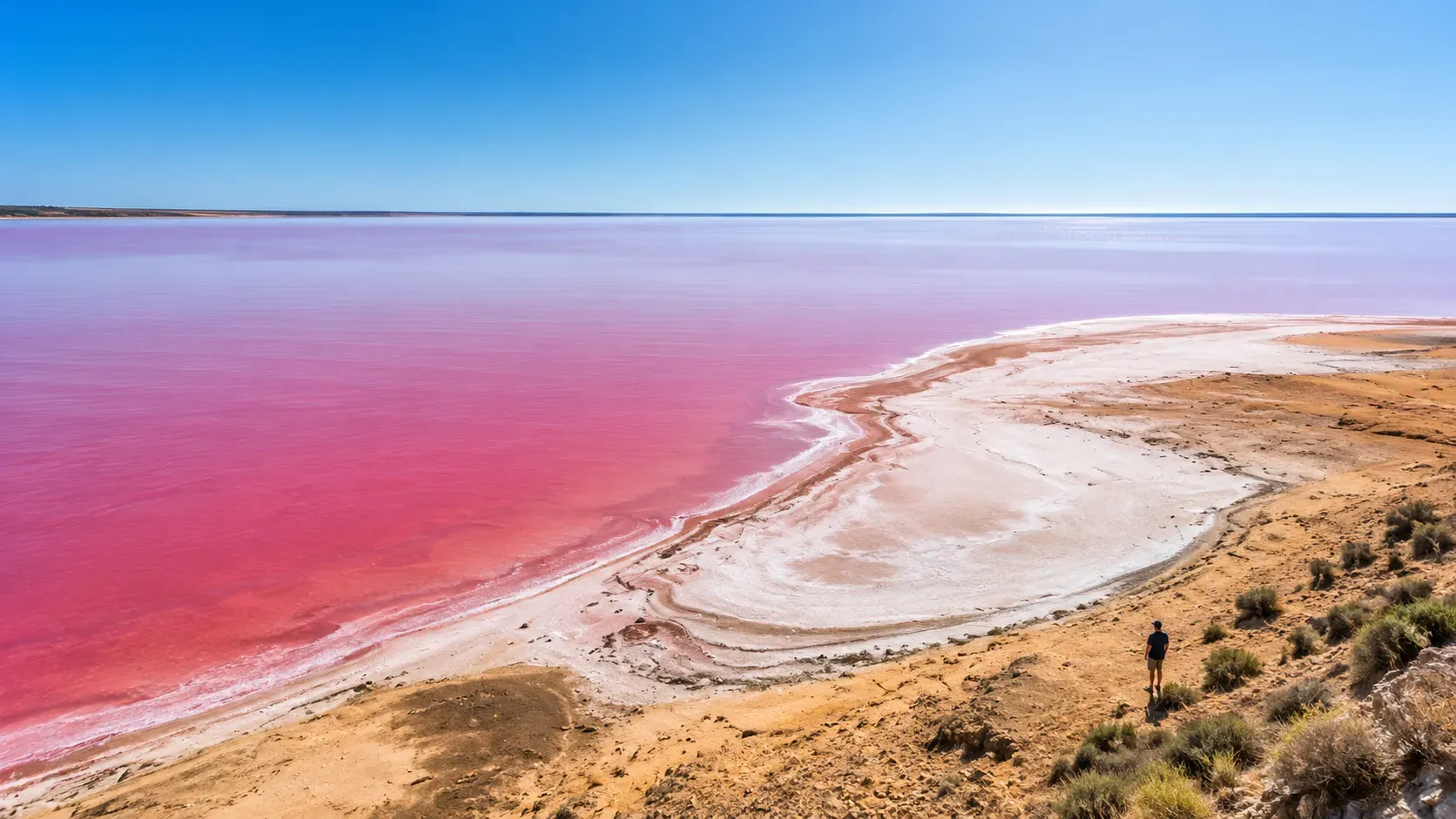
This pastel pink salt lake sits deep in the outback. During the day, its sparkling crust stands out, and at night, it becomes a perfect spot for stargazing.
- Location: Outback South Australia, close to Woomera.
- Best time to visit: Go during golden hour for beautiful colours, or after dark to see the stars.
- How to get there: You can stop along the Stuart Highway drive or take the Indian Pacific train.
- Cost: There is no charge to visit.
Tribe Travel Tip: This spot is also known as one of the best places in the state for stargazing.
8. The Pink Lakes, Murray-Sunset, Victoria
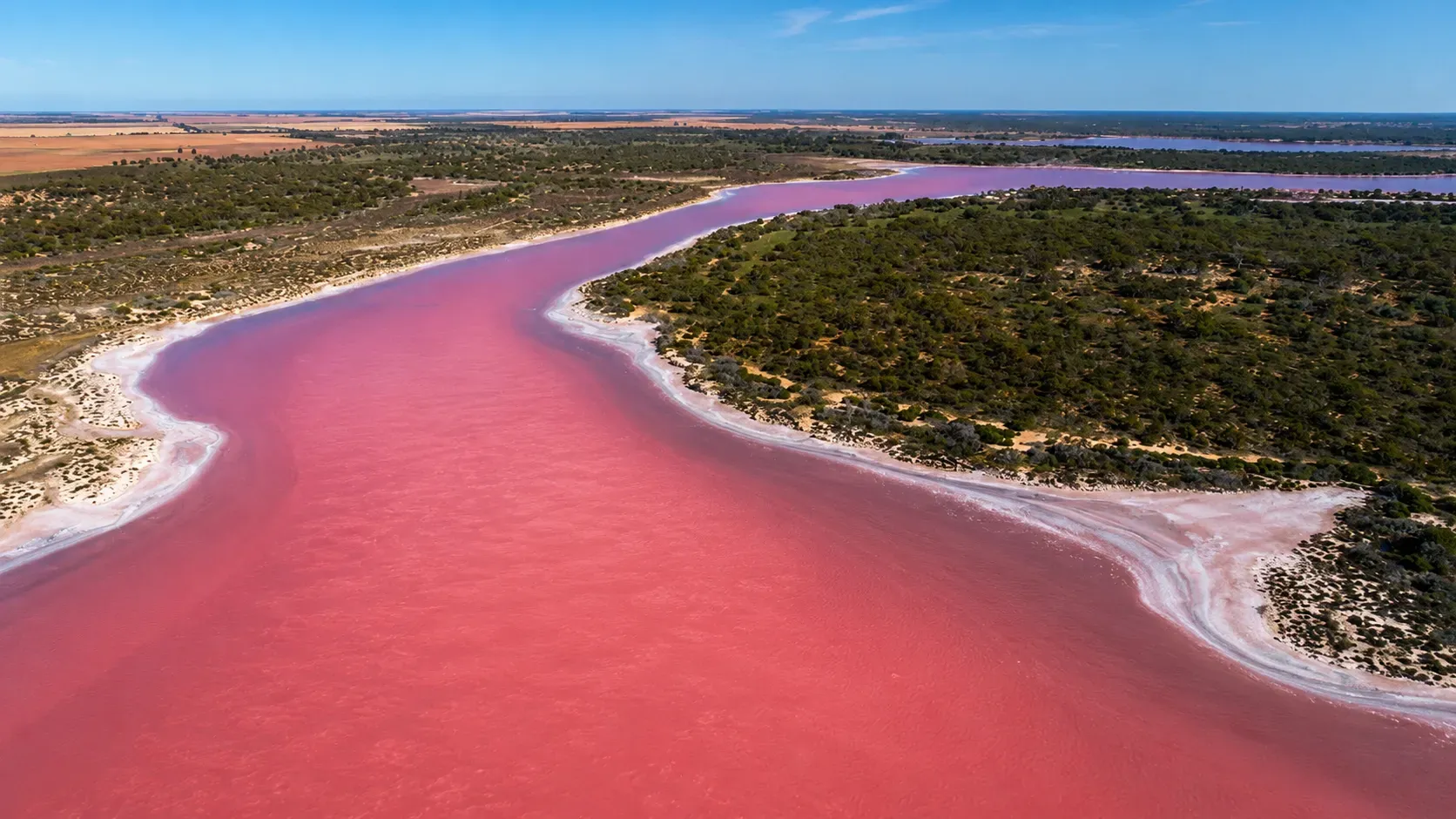
In north-west Victoria, the Pink Lakes at Murray-Sunset National Park shift from pink to white, and interestingly, they often look brightest when the sky is cloudy.
- Location: Murray-Sunset National Park, roughly five hours’ drive from Melbourne.
- Best time to visit: Go during the cooler months, especially on cloudy days, to see the softest pink shades.
- How to get there: You’ll need to drive yourself, and some tracks are best for high-clearance vehicles.
- Cost: Entry is free, and there are camping spots nearby.
Tribe Travel Tip: Plan to stay overnight, since the walking tracks and campgrounds make it worth spending an extra day.
Can You Swim in the Waters of Pink Lake Australia?
Can you swim in the pink lakes of Australia? At Hutt Lagoon, swimming is technically allowed outside the commercial area, but it is not the relaxing experience many imagine. The water is very shallow and salty, with a sharp salt crust over sticky mud, and even a small cut will sting. Most other pink lakes are either too shallow, protected, or can only be seen from above. Realistically, in 2026, it is best to visit for photos and maybe wade at the edge, rather than try to swim.
When Is the Best Time for a Pink Lake Australia Visit?
Timing is crucial because salt and sunlight determine the colour.
Season | Colour odds | Notes |
Summer (Dec-Feb) | Strong | Bright colour, but some lakes shrink or dry |
Autumn (Mar-May) | Mixed | Lower water can mean salt pans, not pink water |
Winter (Jun-Aug) | Fair | More water, softer colour under cloud |
Spring (Sep-Nov) | Strong | Good balance of water and vivid pink |
Try to visit most lakes on a clear day around midday for the best views. Murray-Sunset is different, though, and looks its best when it's cloudy.
Planning Your Australia Holiday
A pink lake is usually just one highlight of a bigger holiday to Western Australia or South Australia, not a destination on its own. The distances between lakes are long, and some can only be seen by taking a scenic flight. The lakes' colour also changes with the weather, so it is best to check conditions close to your travel dates. That is why a bit of planning goes a long way. At Holiday Tribe, our advisors create land-only itineraries that include these lakes on self-drive or fly-in routes, timed for when the colours are at their best. We also arrange hotels, transfers, and sightseeing, so you do not risk a long drive only to be met with a disappointing view. Just let us know your travel dates, and we will honestly tell you which lakes are worth visiting then.