

Hoi An shows what Vietnam looked like in its its ancient period. This ancient town was recognised by UNESCO in 1999 for its well-preserved centuries-old buildings and traditional culture that still feels alive today.
This town has everything. Attractions? There is no lack of them. Food? Its local dishes like white rose dumplings and cao lau are among the most highly appreciated foods. Vibe? The old buildings and heritage sites, many of which are still used by locals for shopping and living, immerse you in the local culture and take you away from fast-paced modern life. Shopping? Hoi An was once a major trading hub, and many tourists still come here mainly to get clothes custom-made by local tailors.
In this guide, you will get familiar with Hoi An, Vietnam and understand why this town deserves a place in your Vietnam holiday.
What You're Actually Walking Into?
Hoi An was one of Southeast Asia's busiest trading ports between the 15th and 19th centuries. Japanese merchants had their own quarter. Chinese traders built clan halls that are still standing. Portuguese and Dutch ships came and went. Each group left something behind, and a surprising amount of it is still here.
When the Thu Bon River silted up and trade shifted to Da Nang, Hoi An got left alone. No one had a reason to modernise it. That neglect is basically why the town survived so well.
The quick version:
- There are over 1,100 heritage structures in Hoi An, Vietnam, all packed into an area you can easily walk across in around 20 minutes.
- UNESCO listed the town in 1999, but it had already been quietly preserving its old character for decades.
- Most of these buildings aren't museums. They are still homes and working shops, where people cook, live and sell things inside houses that are around 400 years old.
That last point is really what sets Hoi An apart from most "old town" destinations.
What Are the Best Hoi An Places to Visit: Ancient Town and Beyond
Here's where to actually spend your time, starting with the old town and working outward.
The Hoi An Ancient Town
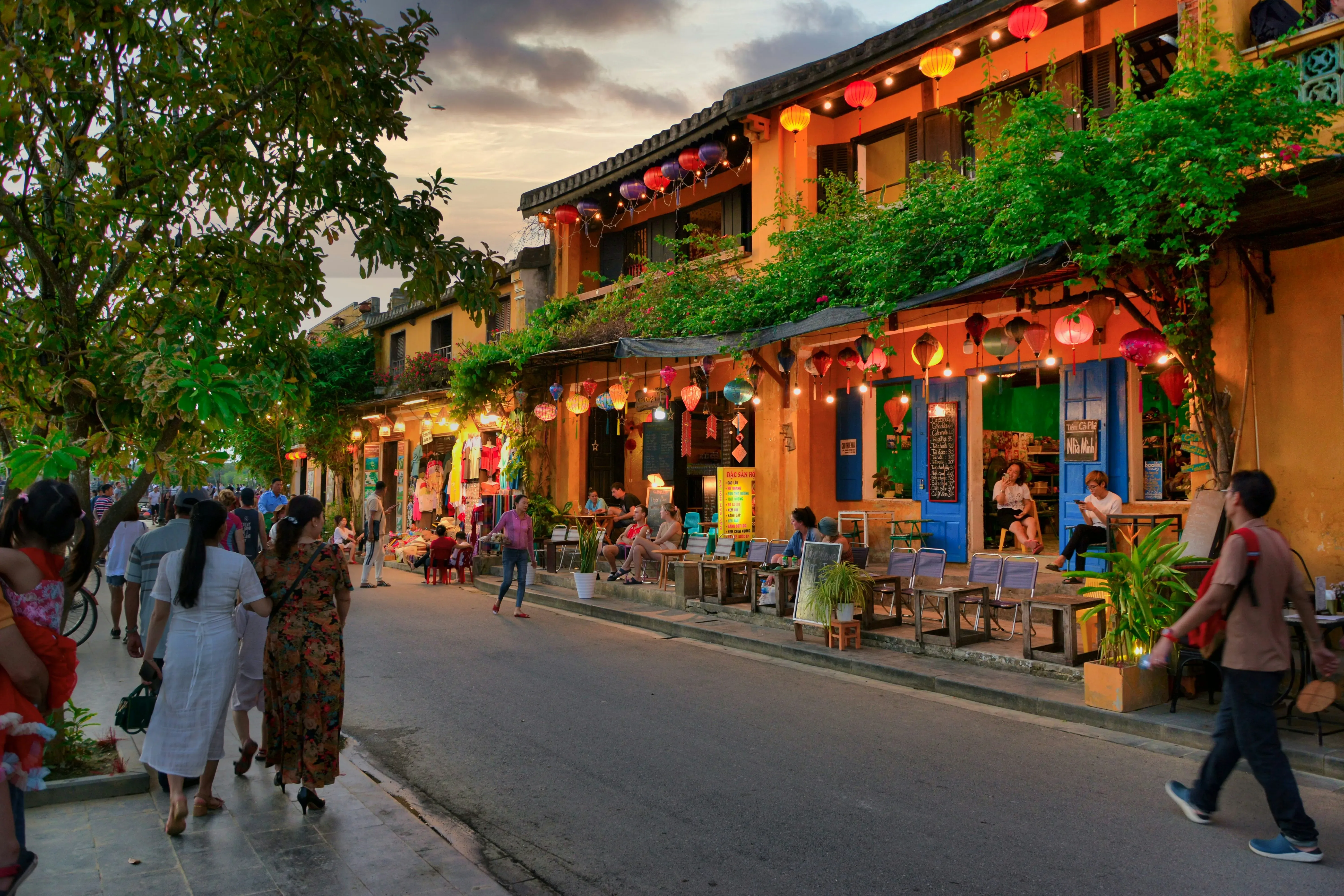 Walking the streets of Hoi An, an ancient town, is free. But to venture inside its heritage sites and buildings, you’ll need a combined ticket.
- Price: You have to buy a ticket of 120,000 VND per person (~$5 USD), which remains valid for 24 hours.
- What you get: 5 entries, picked from 22 heritage sites, old merchant houses, Chinese clan assembly halls, folk art museums, and the Japanese Bridge
- Where to buy: Ticket booths at the main entrances to the protected zone (Holiday Tribe can help you in this aspect)
- Hours: Most sites open at 7 am, close by 9 pm
The Japanese Bridge
.webp-1788783296195) The Japanese Bridge in Hoi An, officially Lai Vien Kieu ("Bridge Welcoming Guests From Afar"), was built somewhere in the mid-17th century to connect the Japanese quarter to the Chinese one next door. It's 18 metres long, covered, and smaller in person than photos make it look. Architectural beauty is what makes the Japanese Bridge an exquisite attraction of Hoi An, Vietnam.
The Japanese Bridge in Hoi An, officially Lai Vien Kieu ("Bridge Welcoming Guests From Afar"), was built somewhere in the mid-17th century to connect the Japanese quarter to the Chinese one next door. It's 18 metres long, covered, and smaller in person than photos make it look. Architectural beauty is what makes the Japanese Bridge an exquisite attraction of Hoi An, Vietnam.
Two things most visitors miss entirely:
- There is a small temple inside the bridge, and it is devoted to Tran Vo Bac De, a Taoist guardian who is believed to protect the town from floods.
- The bridge just finished a 19-month restoration in August 2024, timed to the 20th Hoi An, Japan Cultural Exchange Festival. It cost 20.2 billion VND, and thanks to the open-dissection method used, visitors could watch the work happen in real time.
Worth Knowing: After the restoration, the building looked almost too clean and new, lost some of the old charm that reflected its history
Tra Que Organic Vegetable Village
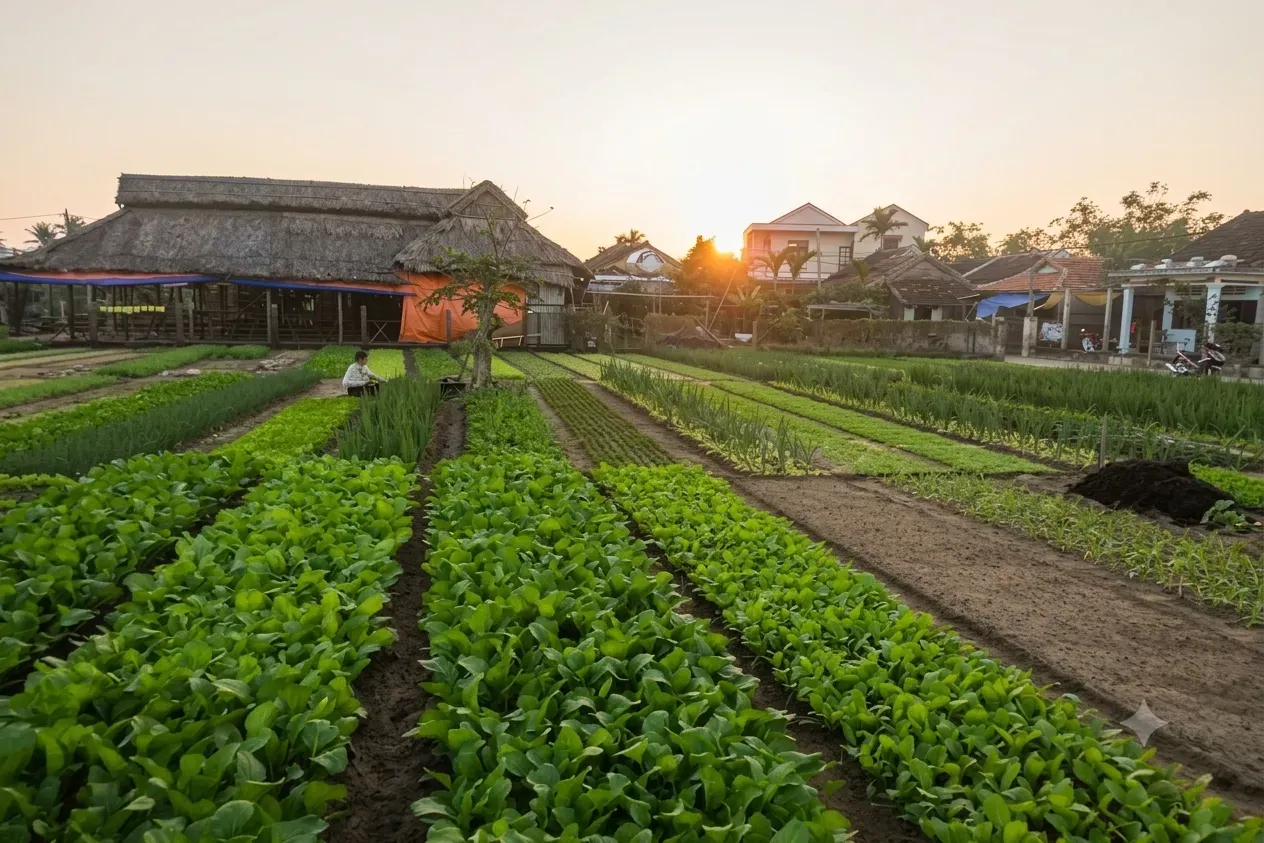 Tra Que has been supplying fresh vegetables to the Hoi An market and local kitchens for generations.
This isn't just a farm made for tourists to look at. People still work here, and you can actually join them and experience the farming yourself.
- Distance: 3km from the ancient town, 10 to 15 min by bicycle
- Activities: Herb raking, planting, a cooking class combo
- Cost: From 300,000 VND per person, depending on what you do
- Good for: couples, families, anyone who cares about food
Cham Island (Cu Lao Cham)
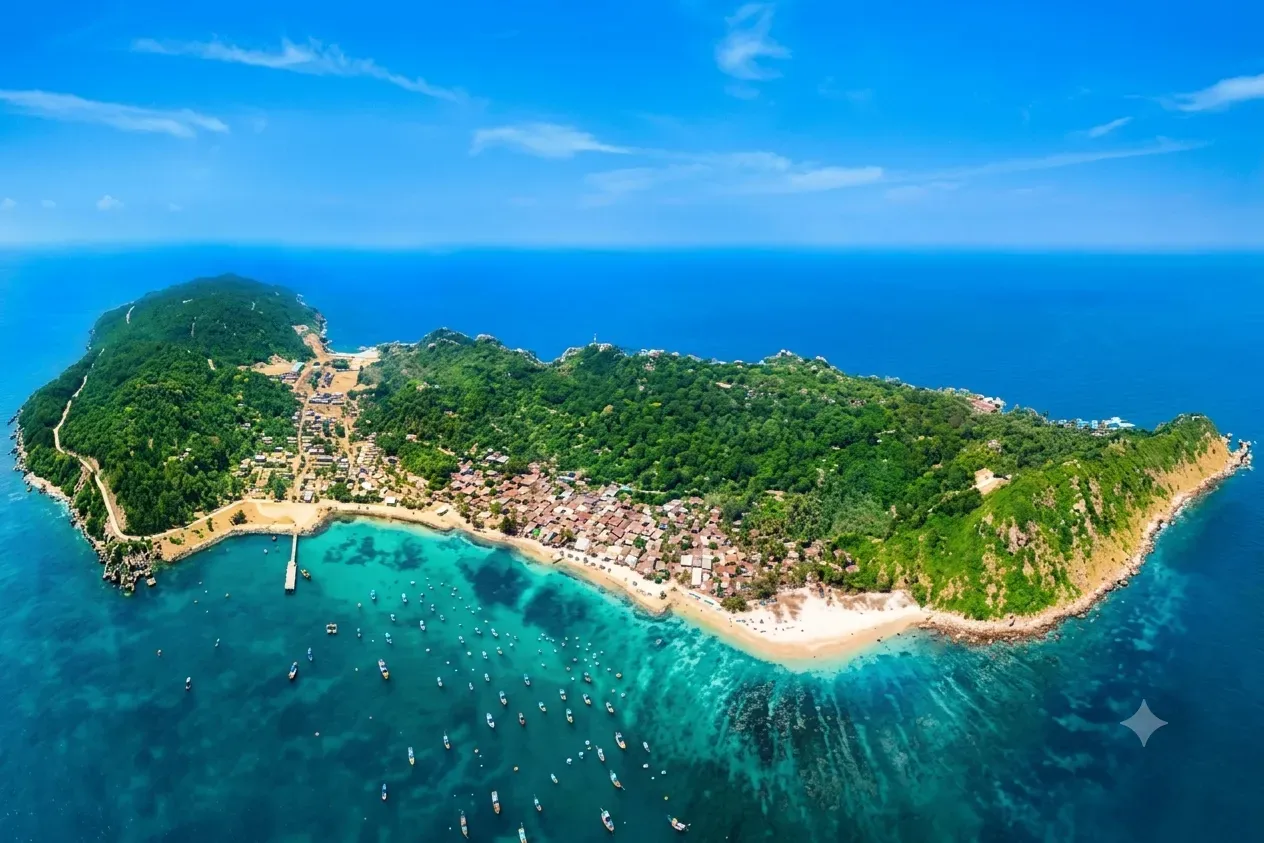 Cham Island, Hoi An, has been a UNESCO Biosphere Reserve since 2009. It has eight islands that are about 15km offshore from Hoi An, Vietnam. The water here sits inside a protected marine zone, and the visibility shows it.
- Getting there: Speedboat from Cua Dai Port, 15 to 20 minutes
- Visit window: March to August only; boats don't run in rough seas
- Activities: Snorkelling, diving, beach time, fresh seafood on the island
- Marine life: 270+ coral species and 250+ fish species recorded in the reserve
- Staying over: Basic homestays exist, but keep expectations modest
Basket Boat Ride in Cam Thanh
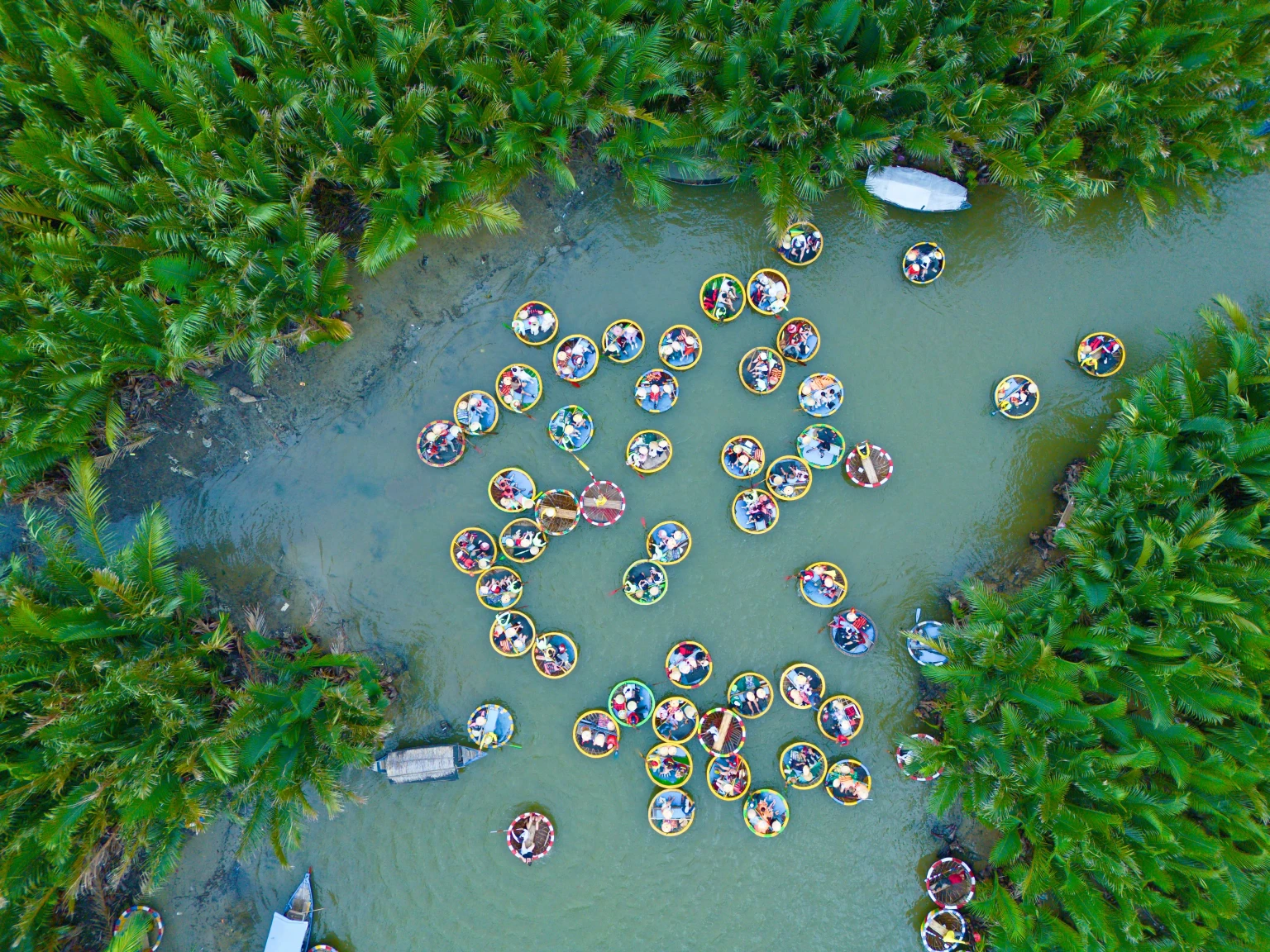
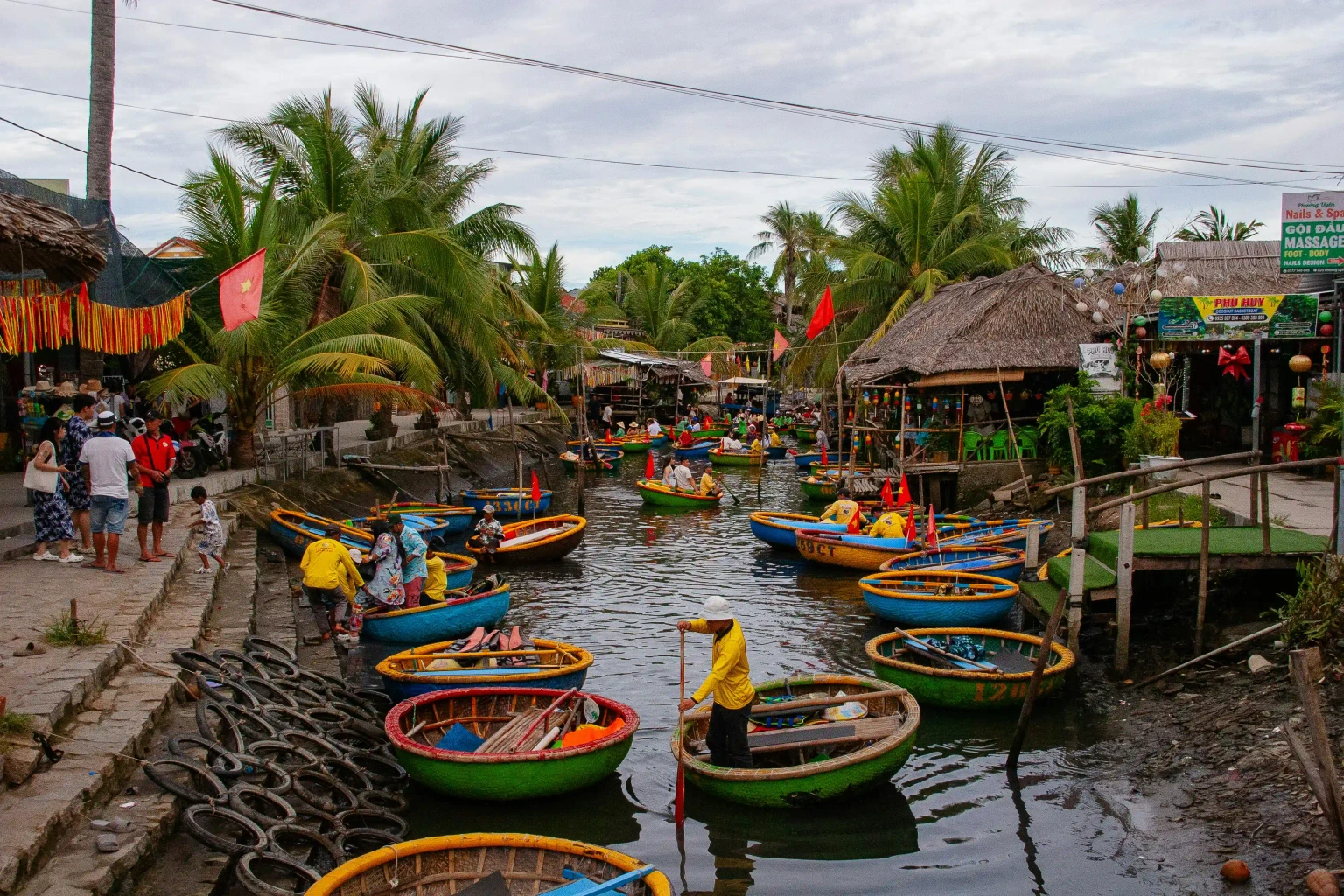
.webp-1788783394028) The basket boat Hoi An experience happens in Cam Thanh village, where boatmen spin you through narrow coconut-palm waterways in round bamboo coracles (thung chai). They'll spin the boat, throw a traditional fishing net, and generally make it more fun than it sounds on paper.
The basket boat Hoi An experience happens in Cam Thanh village, where boatmen spin you through narrow coconut-palm waterways in round bamboo coracles (thung chai). They'll spin the boat, throw a traditional fishing net, and generally make it more fun than it sounds on paper.
- Duration: Hardly 1 hour
- Cost: Around 80,000 to 100,000 VND if you book directly with local operators; roadside touts charge noticeably more
- Hours: daily, 7 am to 6 pm
Tribe Travel Tip: Book at the village itself rather than through a tout on the street
An Bang Beach
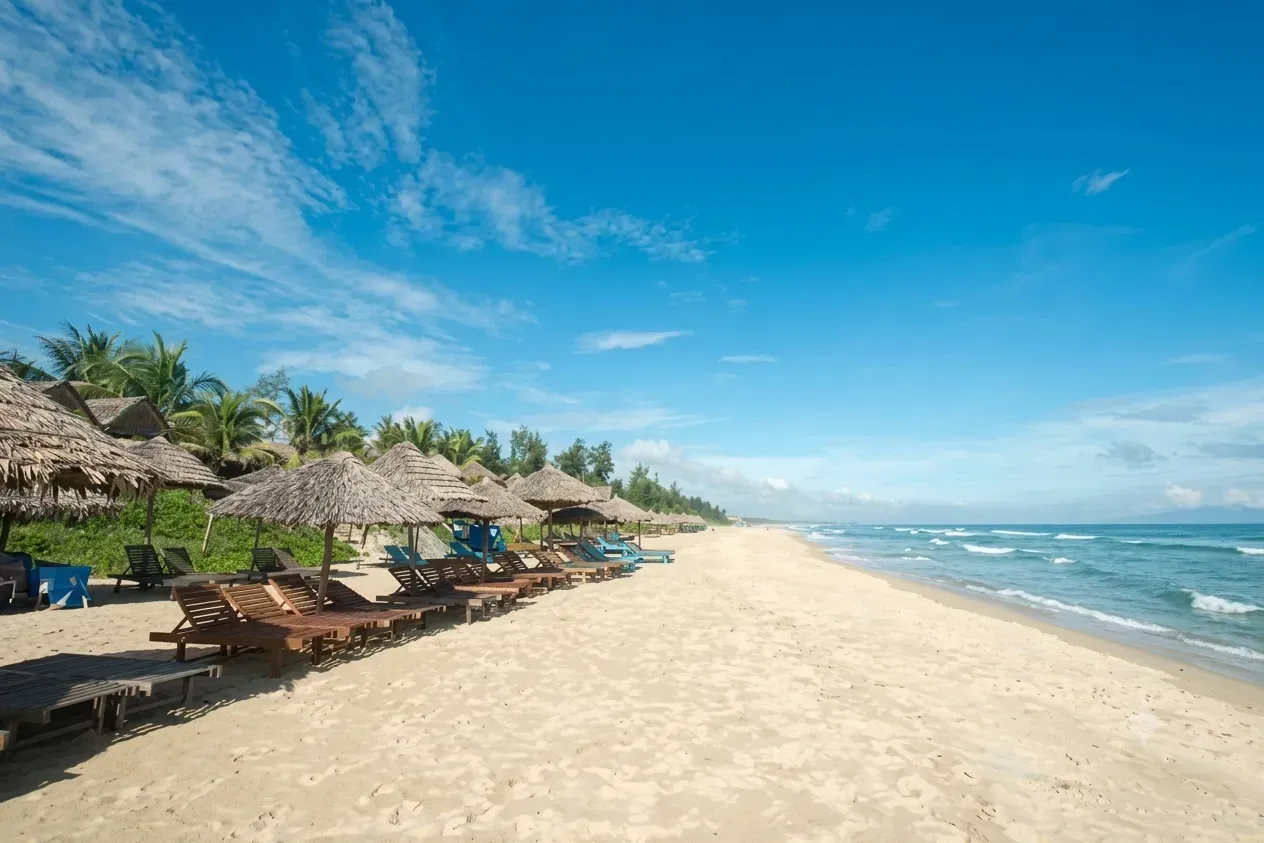 Located around 3 kilometres from the Old Town, An Bang is a beach where you can find local fishermen sailing traditional basket boats and spreading their fishing nets across the water. It is quieter than Cua Dai, with tasty food, soft sand and calmer water during the dry months. This is a perfect place to visit in Hoi An, Vietnam, if you want to escape the city bustle and experience the local culture.
- Getting there: 10 min by bicycle, 5 min by Grab
- Vibe: Relaxed, beach shacks, grilled seafood
- Best months: October to April for swimming
What Are Things to Do in Hoi An, Vietnam ?
The best thing about Hoi An is that it does not limit you to simply sightseeing and visiting attractions. Instead, it offers multiple opportunities to engage in interesting activities, experience the local culture and make your time there more enjoyable and memorable.
Get Custom Clothes Made
Hoi An has over 400 tailor shops, with decades of experience in making clothes quickly and efficiently. You can get a custom-made ao dai, suit, shirt or dress ready within just 24 to 48 hours. So, if you want something specially made during your holiday, Hoi An gives you the opportunity to get it tailored without having to wait for days.
- Cost: Shirts from ~$15 USD, ao dai from $20 to 40 USD, suits from $80 to 150 USD
- Bring: A clear photo or sketch of what you want made
- Where: Le Loi Street and Tran Phu Street have the most established shops
- Before you order: ask to see the stitching on a sample piece first
Take a Cooking Class
Most cooking classes in Hoi An, Vietnam begin early in the morning with a walk through Hoi An Market on Tran Phu Street.
A local guide introduces you to the different ingredients before taking you to a kitchen, where you learn to prepare local dishes like cao lau, white rose dumplings and fresh spring rolls.
The best part is that you don't just learn how these dishes are made; you get to sit down and enjoy everything you have prepared yourself.
- Duration: 3 to 4 hours
- Cost: From 650,000 VND per person
- Includes: Market visit, hands-on cooking, full meal
- Book ahead: Classes fill up fast between February and April
Cycle Through the Countryside
- Bike rental in Hoi An usually costs around 30,000 to 50,000 VND for a day.
- The area is mostly flat, so cycling to places like Tra Que, An Bang, or Cam Thanh is quite easy, even if you are not someone who regularly cycles.
- It is also one of the simplest and cheapest ways to explore the surroundings and enjoy a morning in Hoi An.
The Hoi An Lantern Festival: Full Moon, No Electricity, Just Light
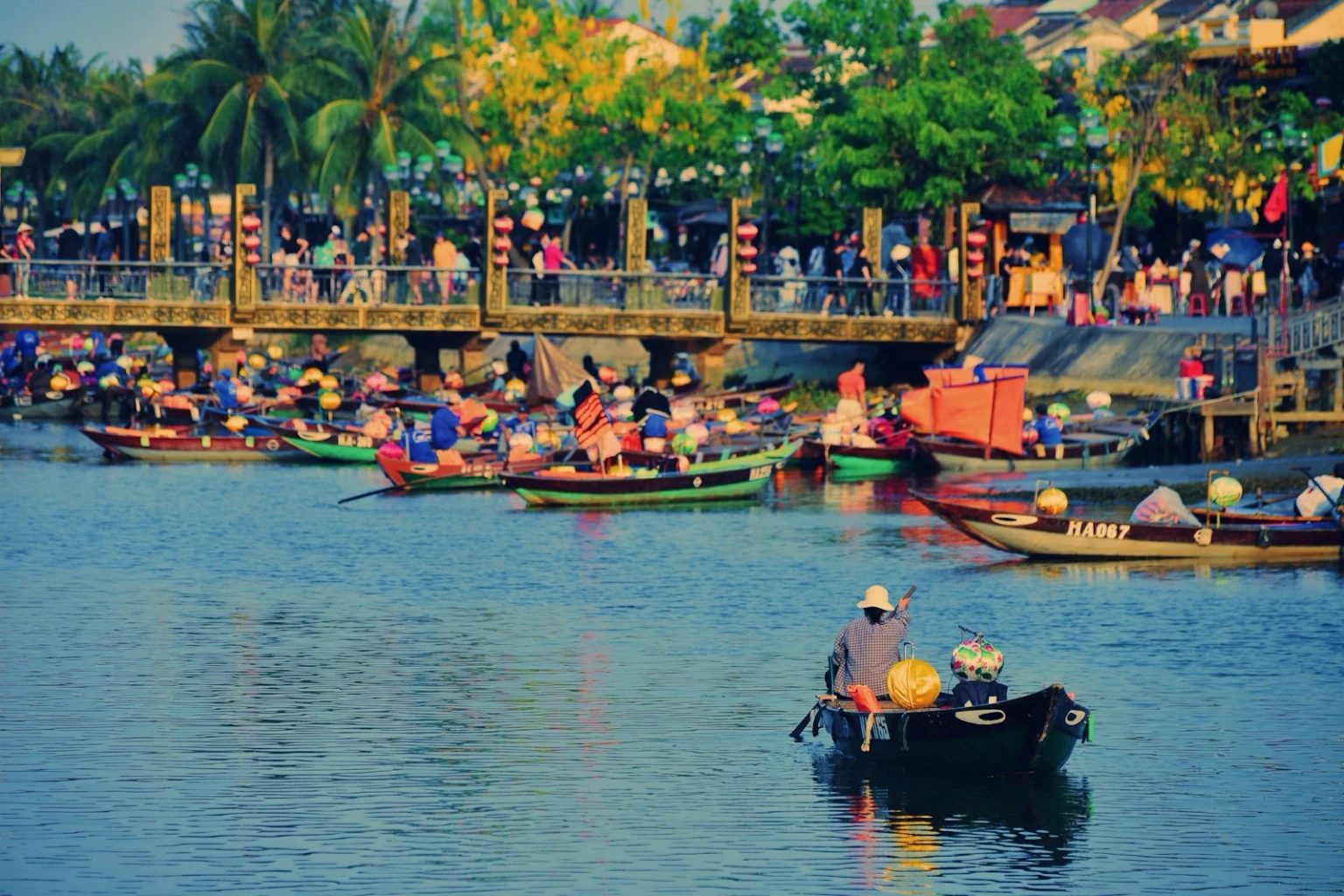
On the 14th of every lunar month, the Hoi An lantern festival takes over the ancient town. The electric lights get switched off, and Hoi An lanterns made from silk and paper take over instead. Candle-lit boats drift down the Thu Bon River. There's no ticket, no gate, no formal event space; it just starts around 6 pm and runs until 10 pm.
Basic | Info |
When | 14th of every lunar month |
Best spots | Thu Bon riverside and inside the ancient zone |
Floating lanterns | From riverbank vendors, ~5,000 to 20,000 VND each |
Times | 6pm to 10pm |
Crowd level | High February to April, moderate the rest of the year |
Photo timing | Arrive by 6pm to catch daylight turning into lantern light |
Eat Your Way Through Hoi An
The Hoi An market on Tran Phu Street opens at 6 am. The best stalls and the most energy are before 9 am, so go early and go hungry.
What to eat in Hoi An, Vietnam:
- Cao Lau: Thick rice noodles served with sliced pork, greens and crispy croutons. The noodles are traditionally made using water from the ancient Ba Le well.
- Bánh Mì Phuong: Located on Phan Chau Trinh Street, this is one of the most talked-about bánh mì shops in the country and was also popularised by Anthony Bourdain. Expect a queue, with prices around 30,000 to 40,000 VND.
- White Rose Dumplings (Banh Bao Vac): Delicate shrimp dumplings that are made exclusively by one local family and then supplied to restaurants across the town.
- Com Ga: Hoi An-style chicken rice made with turmeric, giving it a distinct flavour that makes it different from the more familiar Hainanese version.
- Bia Hoi: Local draught beer that costs around 10,000 VND a glass. Having it by the riverside around dusk is a simple way to enjoy the evening.
After dark:
- An Hoi Night Market: Located across the footbridge from the Old Town, the market opens around 5 pm and has street food, handicrafts and riverside seating. It is a relaxed option for spending your evening.
- White Marble Wine Bar and Bistro: A quieter place with a good selection of wines, suitable if you want to spend the evening somewhere less crowded.
- Dive Bar: A casual bar with pool tables, cocktails and a crowd that usually keeps the place lively.
- The Venue Bar: A rooftop terrace where you can enjoy live music on weekends while taking in the surroundings.
Best Time to Visit Hoi An, Vietnam
Most guides go easy on this: Hoi An, Vietnam floods. Every year, usually October and November, streets in the old town go knee-deep. It's not a rare risk; it's basically scheduled.
Month | Weather | Notes |
Feb to Apr | Dry, 22 to 28°C | Best overall window |
May to Aug | Hot, 30 to 35°C | Best for Cham Island Hoi An holiday |
Sep to Nov | Heavy rain, flooding | Avoid unless conditions confirmed |
Dec to Jan | Mild, some rain | Decent, watch late November |
- Peak season: February to April, post-Tet to pre-summer heat
- Best for Cham Island: March to August, when speedboats operate
- Best for a quieter lantern festival: June or July, on a weeknight
- Avoid: October and November, unless you've checked current flood conditions
Quick Travel Tips for Hoi An
A few practical things that'll make the holiday smoother:
- Carry cash. Small shops, tailor stores and market stalls may not accept cards, so keeping some cash with you is useful.
- Buy your heritage ticket on the first day. You don't have to visit every attraction at once, as the ticket remains valid for 24 hours from the first time you use it.
- Book your stay early during the lantern festival season. If you're travelling between February and April, booking at least 3 weeks ahead is better, especially around the full moon closest to Tet.
- Pack light layers. The days can be hot, while the temperature near the river can drop quickly in the evening.
- Check the flood forecast shortly before your holiday. If you're visiting in October or November, checking a day or two before is more useful because conditions can change quickly.
- Use Grab for longer distances. It works reliably in Hoi An and is an easy option when places are too far to reach on foot.
Plan Your Hoi An, Vietnam Holiday with Holiday Tribe
Every type of traveller finds something to love in Hoi An. Honeymooners get the riverside ambience and lantern-lit evenings. Families get car-free streets, beach days and Cham Island snorkelling that suits older kids. First-time travellers find it walkable, English-friendly and low-stress.
The usual trap is one of two things: under-planning, so you end up doing the same five things as everyone else, or over-planning, going back and forth until the good dates are gone.
At Holiday Tribe, we build Hoi An, Vietnam into a full itinerary: the ancient town, a morning at the market, a cooking class, Cham Island, and lantern festival timing when it lines up. Or if you'd rather build around your own dates, our advisors can put together something custom around your pace and group, flights included only if you need them.