

The sandstone pillars at Meteora rise straight out of the Thessalian plain with monasteries built on top of them. The monks who originally climbed up there in the 14th century used rope ladders and nets. You get stairs now, but the setting has not changed. Meteora in Greece is one of those places where photographs do not quite prepare you for the scale of it. The rocks are taller, the monasteries are smaller against them, and the valley below is wider than any screen suggests. This guide covers which monasteries to visit, how to reach them, what else to do, and how to plan two days without rushing.
Key Takeaways
Key Information | Quick Answer |
Why Meteora is famous | UNESCO-listed monasteries built on natural sandstone pillars |
Main monasteries | Six active monasteries, each open on different days |
Entry fee | EUR 5 per monastery, cash only |
Best time to visit | April to October (summer schedule, longer hours) |
Time needed | 2 days covers the monasteries, viewpoints and a hike comfortably |
Main effort | Stairs, walking and uneven stone paths at each monastery |
From Athens | 4 to 5 hours by car, or approximately 4 hours by train to Kalabaka |
Dress code | Cover your shoulders and knees; wraps may be available at the entrance. |
Best for | Monasteries, rock formations, valley views and hiking |
Why Is Meteora, Greece Special or Famous?
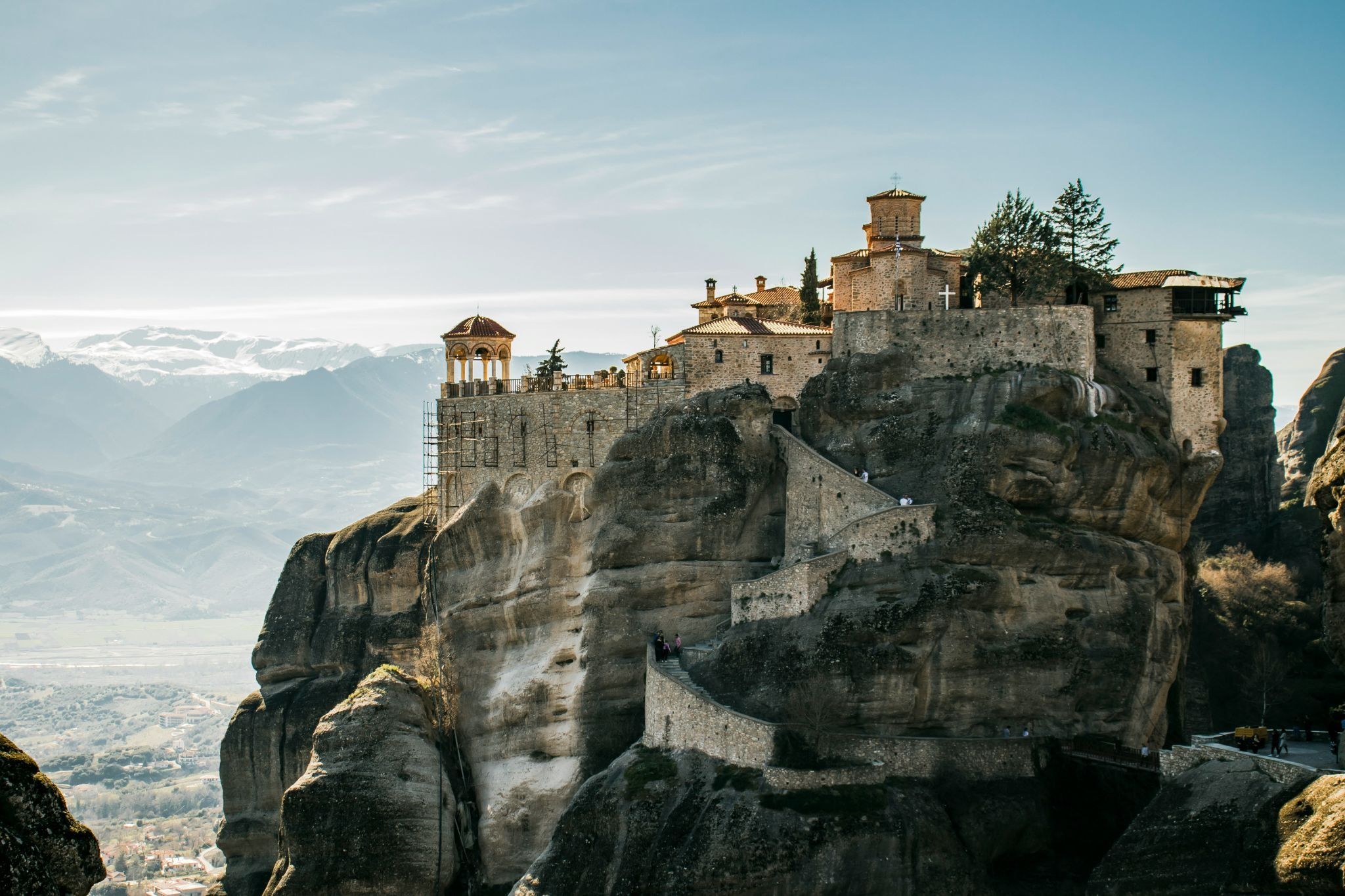 The rock formations alone would be worth the visit. The fact that monasteries were built on top of them, centuries ago, using methods that seem impossible even now, is what makes Meteora genuinely unlike anywhere else in Europe.
- UNESCO World Heritage Site since 1988, recognised for both its natural landscape and its monastic heritage
- Sandstone pillars rise up to 400 metres above the surrounding plain, formed over millions of years by river and earthquake activity.
- Six active monasteries still function as religious communities and welcome visitors on scheduled days.
- Why they were built there: monks sought isolation and protection from invaders. The height made the monasteries nearly unreachable.
- What visitors see: rock formations, monasteries perched on clifftops, deep valleys, wide views across the Thessalian plain and the Pindos mountain range
- Eastern Orthodox significance: Meteora remains one of the most important monastic centres in Greece, second only to Mount Athos
How Do You Get to the Meteora Monasteries?
The monasteries sit above the towns of Kalabaka and Kastraki. You drive or take local transport up the winding road to the monastery area, park, and then walk and climb stairs to reach each one individually.
- By car: The most flexible option. A single road loops past all six monasteries with parking areas along the way
- On foot from Kalabaka: Footpaths connect the town to the monastery area. The walk up takes 30 to 60 minutes depending on the route and your pace.
- By local taxi: Available from Kalabaka. Useful if you do not have a car and want to reach specific monasteries without the uphill walk
- Stairs: Most monasteries require stairs, with around 100 to 300+ steps depending on the monastery.
- Accessibility: The monasteries are not wheelchair accessible. The paths are uneven, the stairs are steep, and there are no lifts.
- Parking: Available at or near each monastery, but limited at Great Meteoron and Varlaam during peak hours (10 am to 2 pm in summer). Arrive early or visit in the late afternoon.
- Effort level: Moderate. The driving and parking are straightforward, but the stairs and walking between monasteries add up across the day.
Tribe Travel Tip: Check each monastery's closing day before planning your route. All six follow different weekly schedules. Saturday and Sunday are the days when all six are open; on Thursday, five are open.
Which Meteora Monasteries Can You Visit?
Six monasteries are active and open to visitors. Each one has its own schedule, its own character and its own set of stairs. The entry fee is the same across all six: EUR 5 per person, per monastery, paid in cash at the entrance.
Monastery | Closed Day (Summer) | What to Notice | Stairs | Parking |
Great Meteoron | Tuesday | The largest and oldest. Main church frescoes and a bone crypt | Around 300 steps | Limited. Fills early during peak hours |
Varlaam | Friday | Strong frescoes, a wooden barrel once used to hoist supplies | Around 140 steps | Shared with Great Meteoron, limited |
Rousanou (Roussanou) | Wednesday | Compact convent with views down to the valley on both sides | Around 100 steps | Small area at the base, usually manageable |
St Nicholas Anapausas | Open daily (summer) | Small, quiet, with 16th-century frescoes by Theophanes | Around 150 steps | Roadside, usually available |
Agios Stefanos | Monday | The easiest to access. A bridge rather than stairs. Views toward the valley | Flat bridge, no major climb | Good parking, less crowded |
Holy Trinity | Thursday | The most isolated. Reached by a steep staircase cut into the rock. The monastery from the James Bond film For Your Eyes Only | Around 140 steep steps | Small, roadside |
Dress Code
- Shoulders and knees must be covered.
- Women must wear a skirt or dress covering the knees. Trousers are not permitted.
- Wrap skirts or shawls may be available at some entrances, but availability and whether they are free or sold can vary.
- Men should wear modest clothing. Shorts above the knee are not permitted; long trousers are recommended.
Entry Fee
- EUR 5 per person, per monastery
- Payment: Cash only
- Carry small change for the entrance fee.
What Can You Do in Meteora Beyond the Monasteries?
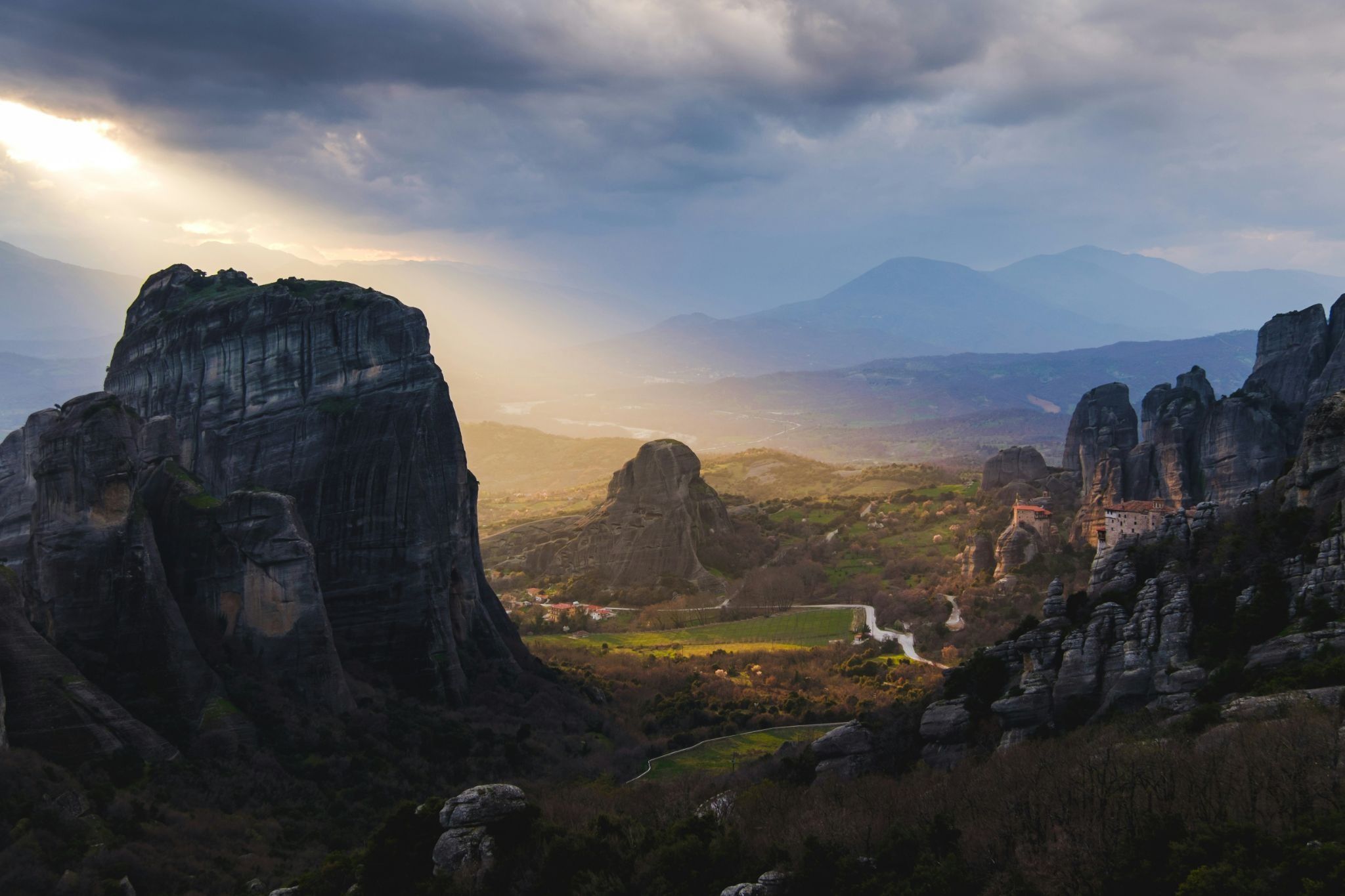 The rocks and valleys around the monasteries offer a full day of outdoor activity on their own.
- Hiking: Several marked trails connect the monasteries, the viewpoints and the surrounding valleys. The trail from Kastraki to Great Meteoron takes about 1 to 1.5 hours and passes through forest and rock formations. Difficulty ranges from easy to moderate.
- Cycling: Road cycling on the monastery loop road is popular in the early morning before traffic builds. Mountain biking routes run through the surrounding area. Bike rental is available in Kalabaka.
- Viewpoints: The Observation Point (Psaropetra) near Rousanou gives one of the widest views across the pillars. The viewpoint near Holy Trinity looks back across the valley. Both are accessible by car with a short walk.
- Sunset: The area near Rousanou and the Psaropetra viewpoint is the most popular sunset spot. Arrive 30 to 45 minutes before sunset for a position. The light on the rocks changes through orange and gold as the sun drops.
- Photography: Early morning (before 9 am) and the hour before sunset give the best light. The monastery road has several pull-off points with wide views.
How Do You Reach Meteora from Athens?
The journey from Athens takes roughly half a day regardless of how you travel.
- By train: Athens (Larissa station) to Kalabaka. Approximately 4 hours. One direct train runs daily. A second option involves a change at Paleofarsalos. Book tickets at trainose.gr
- By car (Athens to Meteora by car): Approximately 350km via the E75 motorway through Lamia. The drive takes 4 to 4.5 hours in normal traffic. The road is well maintained. Parking at the monasteries is free at most locations.
- By bus: KTEL buses run from Athens (Leoforos Liossion terminal) to Kalabaka and Trikala. The journey takes approximately 5 hours, with a possible change at Trikala.
How Can You Spend 2 Days in Meteora Without Rushing?
Two days give you enough time for the monasteries, the viewpoints, a hike and the sunset without packing everything into one exhausting day.
Day 1
- Morning: Start with Great Meteoron and Varlaam (arrive by 9 am to beat the tour buses). These are the two largest and sit close together.
- Late morning: Walk or drive to Rousanou. The approach gives you one of the best views of the monastery from below before you climb up.
- Afternoon: Visit St Nicholas Anapausas. Smaller and quieter. The 16th-century frescoes are worth the stop.
- Sunset: Head to the Psaropetra viewpoint near Rousanou. Arrive 30 to 45 minutes early.
Day 2
- Morning: Visit Holy Trinity (check it is open on your day). The steep staircase and the isolated setting make this the most atmospheric monastery visit.
- Late morning: Drive or walk to Agios Stefanos. The easiest access (bridge, no stairs) and good valley views
- Afternoon: Hike from Kastraki through the rock formations toward the monastery area. The trail takes 1 to 1.5 hours and passes through a different landscape from the road.
- Evening: Dinner in Kastraki or Kalabaka
What Should You Eat and Where Should You Stay in Meteora?
What to Eat
- Souvlaki and grilled meats at local tavernas in Kalabaka
- Moussaka, stuffed vine leaves and Greek salad at Kastraki's family-run restaurants
- Fresh pies (spanakopita, tyropita) from bakeries in Kalabaka
- Local Thessalian wine, available at most restaurants
Where to Stay
- Kalabaka: The larger town, with more hotels, restaurants and services. Walking distance to footpaths leading up to the monasteries
- Kastraki: A smaller, quieter village closer to the rock formations. Better views from most accommodation. Fewer dining options but a more atmospheric setting
- Mid-range options: Guesthouses and small hotels in both towns, typically EUR 60 to 120 per night for a double room
- View rooms: Several Kastraki guesthouses have balconies facing the rock pillars directly. Worth requesting when booking
Conclusion
Meteora in Greece earns the visit because nothing else in Europe looks quite like it. Six monasteries on top of sandstone pillars, a valley stretched out below, hiking trails between the rocks, and a sunset that changes the colour of every surface it touches. Two days is the right amount of time. One day covers the main monasteries but misses the hiking, the quiet morning light and the feeling of the place when the tour buses have left.
At Holiday Tribe, we build Meteora into structured Greece holiday packages that combine Athens, the monasteries and the islands in one itinerary. Our holiday advisors can help with transfers, accommodation and monastery route planning so the two days actually flow. Flights are not included unless you want them added.