

Death Valley is famous as the hottest place on Earth, but there's much more to see than just the heat. You'll find vast salt flats, colourful hills, towering sand dunes, and some of the darkest night skies in the USA. Nature lovers, photographers, and anyone looking to experience one of America's most unique landscapes will find plenty to enjoy in Death Valley, USA. This guide covers everything you need to know, including the best time to visit, what to expect, and useful tips for planning your visit.
What Is Death Valley National Park, USA?
Death Valley is a vast desert valley in eastern California, USA. It's part of Death Valley National Park and is known as one of the hottest places on Earth. Despite the name, the area is filled with unique scenery, colourful rocks, sand dunes, salt flats, and canyons.
Fact | Detail |
Location | Eastern California, near the Nevada border |
Size | Around 3.4 million acres |
Lowest point | Badwater Basin, 282 feet below sea level |
Record heat | 134°F (56.7°C), recorded July 1913 |
Nearest city | Las Vegas, about 2 hours away |
What's so special about Death Valley?
Death Valley, USA, offers more than you might think. Here’s what makes it special:
- The desert here is unlike anywhere else, with colours you rarely see in other parks.
- It holds three major records: it’s the hottest, the lowest, and the largest national park in the contiguous United States.
- The night sky here is incredible, with more stars than you’ll likely see anywhere else.
- It’s only a short drive from Las Vegas, so you can visit without much extra planning.
- You can visit for just a few hours or take your time and stay a few days; both options work well.
How Hot Does Death Valley Get?
Heat is the main feature of Death Valley, USA, so check the temperatures before planning your route.
Season | Typical Daytime Temp | Notes |
Summer (May to Sep) | 110°F to 120°F+ | Risky for hiking, plan indoor time |
Winter (Nov to Mar) | 60°F to 75°F | Most comfortable, full days outside |
Spring/Fall | 85°F to 100°F | Warm, best tackled in early morning |
Fun Fact: The Death Valley USA record still stands at 134°F, set at Furnace Creek in July 1913.
What is the Best Time to Visit Death Valley National Park?
The best time to visit Death Valley is from November to March. It's simply because daytime temperatures remain comfortable for hiking, scenic drives, and sightseeing. But this is also the busiest season, so you expect more visitors at the site.
- Best overall: November to March
- Best for wildflowers: late February to April
- Best avoided: June to August
Tribe Travel Tip: If summer is your only option, plan outdoor stops for sunrise and keep the rest of the day inside an air-conditioned car or hotel.
What are the Top Places to See Inside Death Valley, USA?
Most of Death Valley National Park’s top sights are along one main road, so you won’t have to drive far to see them. Here’s a quick overview of each spot, so you know what to expect before you visit.
1. Badwater Basin
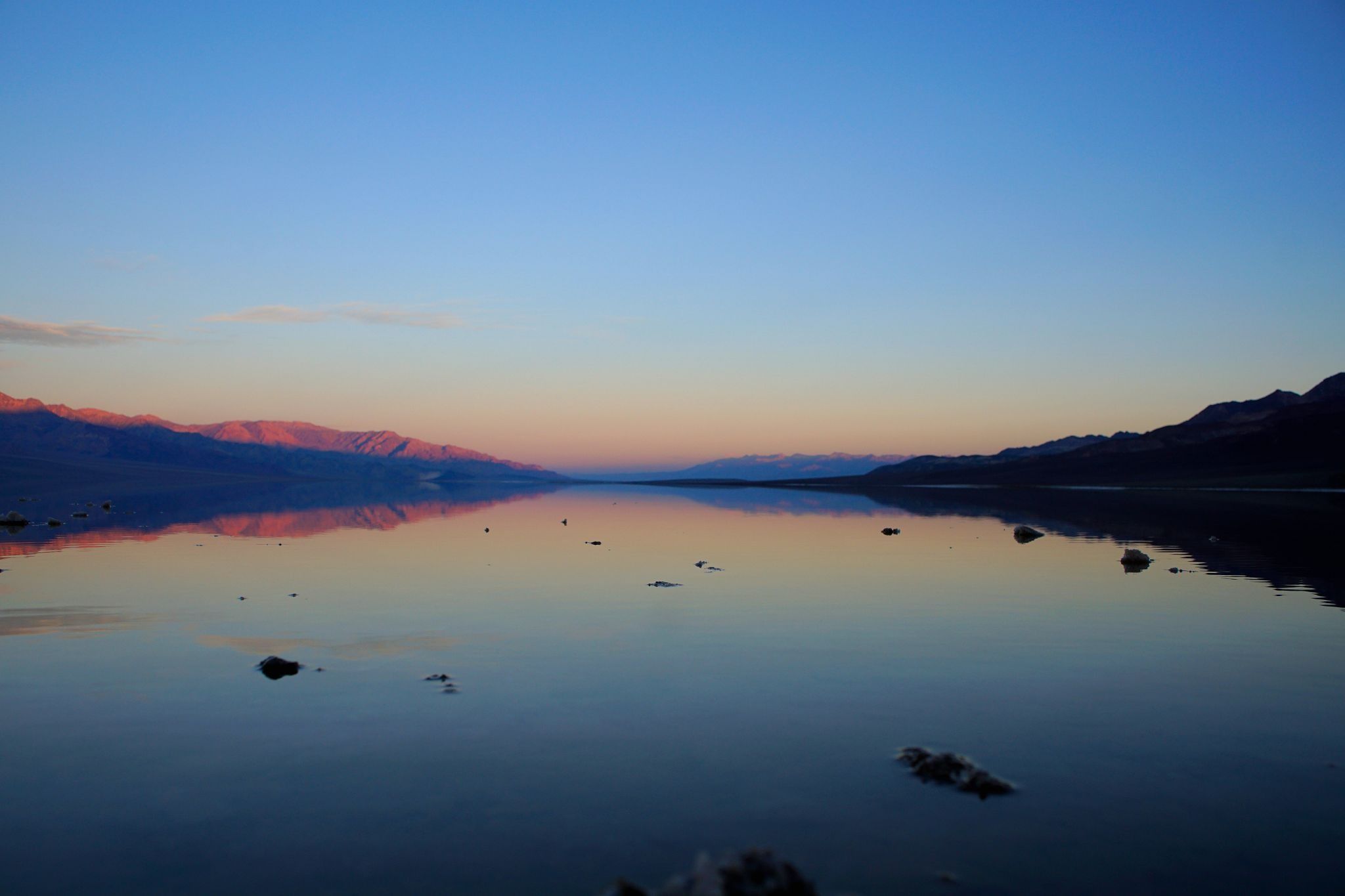 The lowest spot in North America sits 282 feet below sea level. A vast white salt flat stretches as far as you can see, and walking on it feels almost unreal.
2. Zabriskie Point
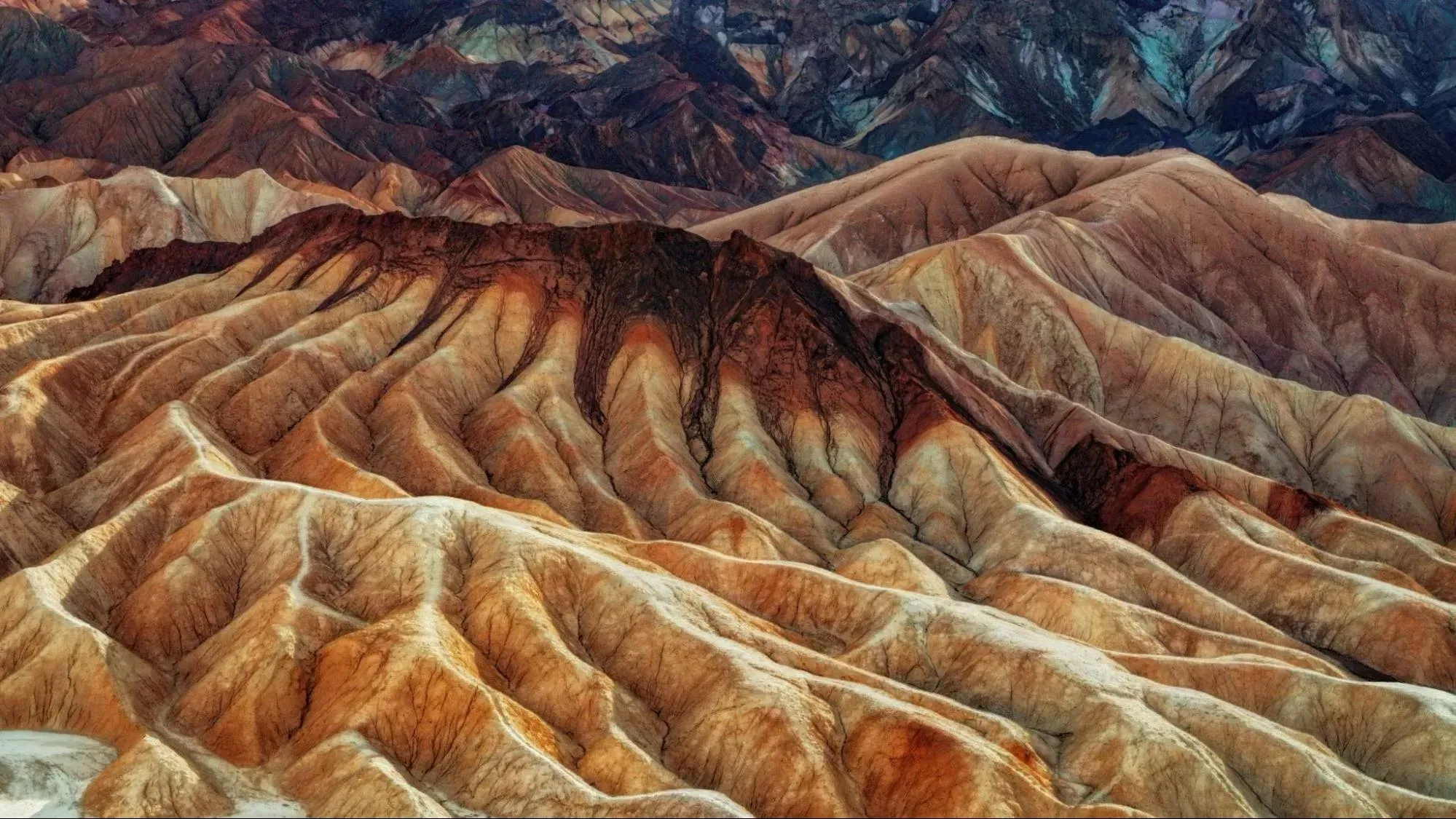 Golden, wave-shaped hills look especially beautiful at sunrise or sunset. It’s an easy stop just off the road, so you won’t need to hike far to enjoy the view.
3. Mesquite Flat Sand Dunes
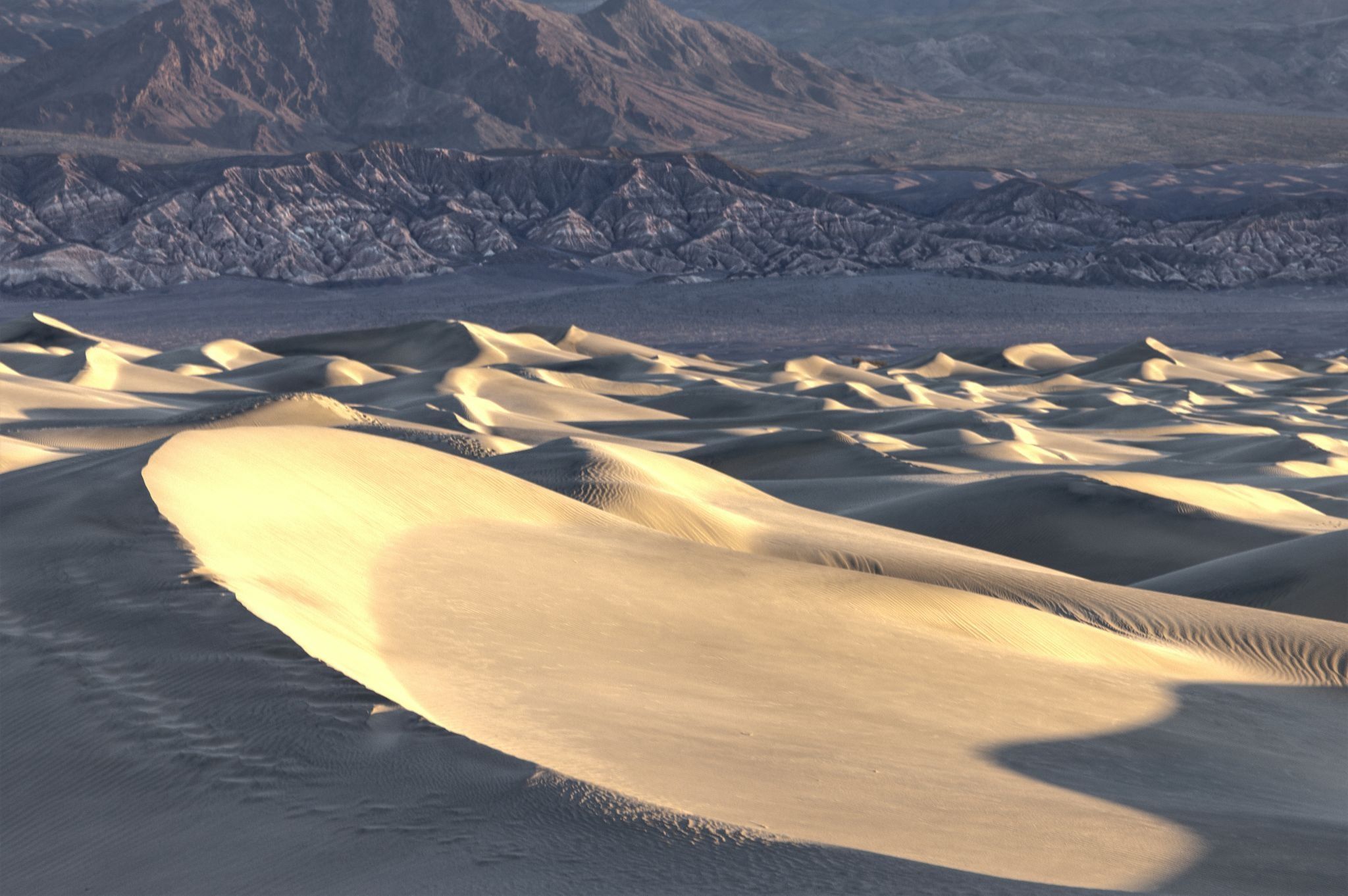 Soft, rolling sand dunes near Stovepipe Wells. The shadows and shapes stand out best in the early morning or evening light.
4. Artist’s Drive and Artist’s Palette
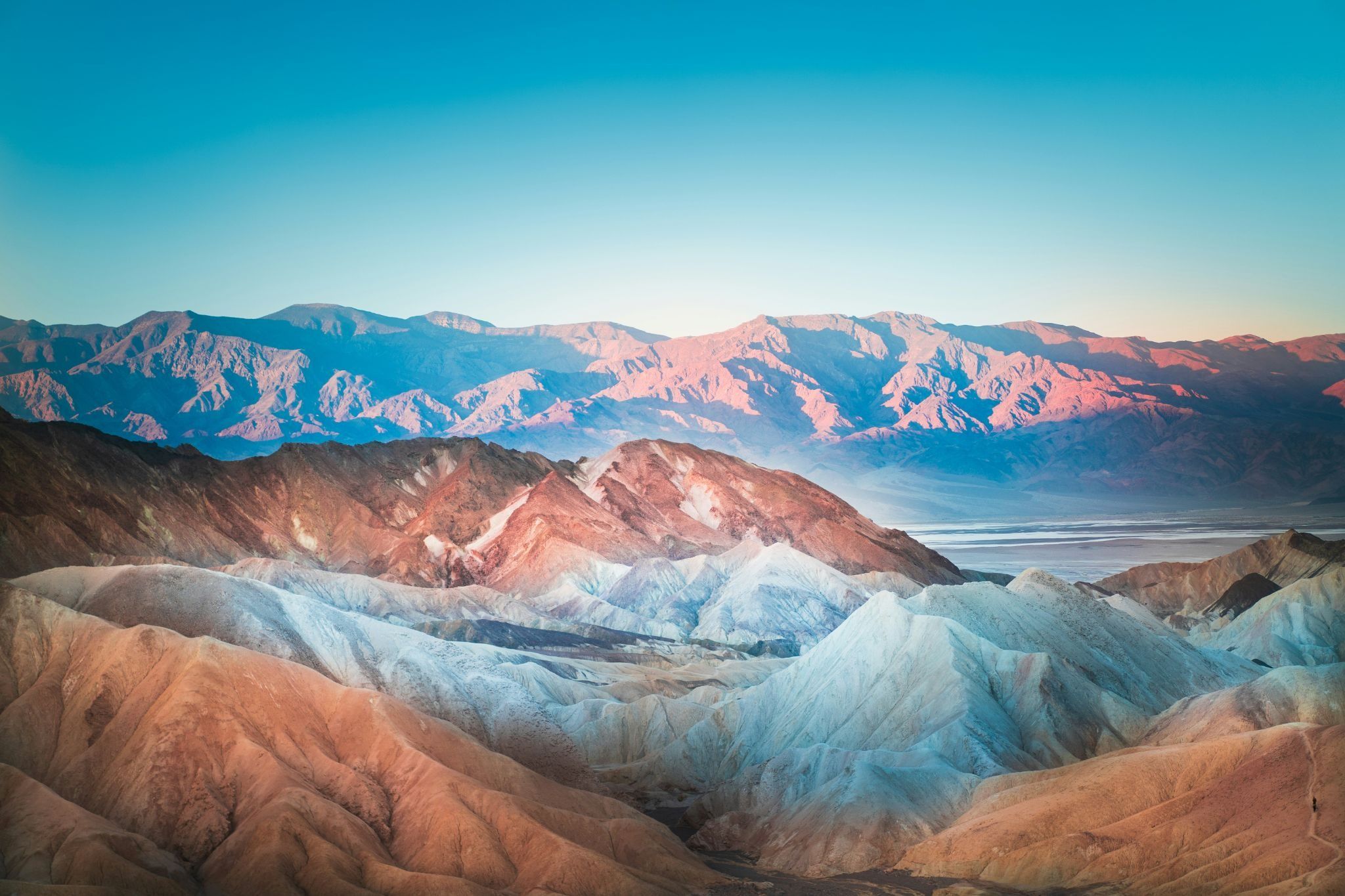 This scenic one-way road winds through hills painted with natural colours. Pinks, greens, and purples in the rocks come from minerals, and these colours are most vivid in the afternoon light.
5. Dante's View
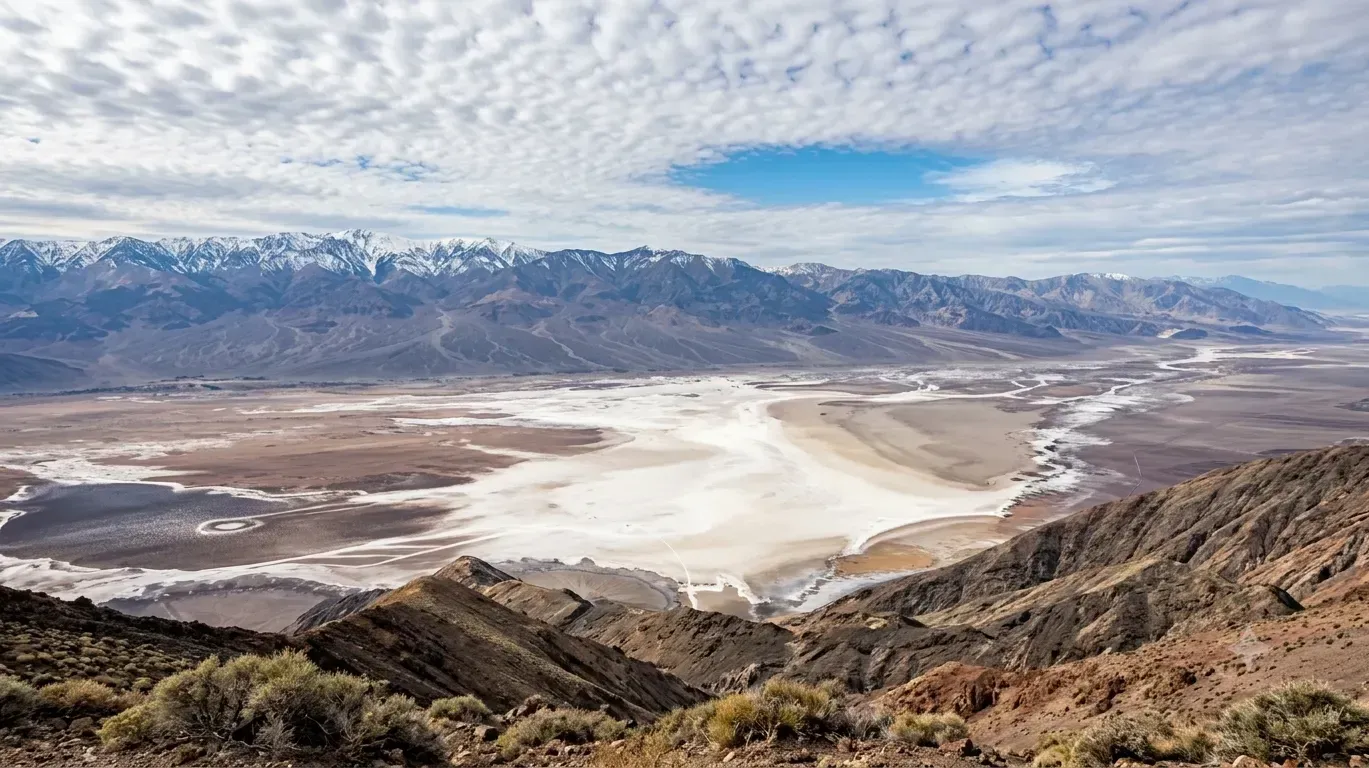 This high viewpoint is over 5,000 feet above the valley floor. From here, you get a wide view of the entire park, including Badwater Basin far below.
How long should you spend in Death Valley?
If you're visiting from Las Vegas, which is about two hours away, you can see the main attractions in a day. However, spending two to three days here gives you more time to enjoy scenic drives, visit places like Dante's View, and experience the park's incredible night skies without rushing.
Good to Know Before You Go
- Entrance fee: around $30 per vehicle, valid for 7 days
- Fuel and food: limited inside the park, so fill up and stock up before you enter
- Cell service: minimal to none across most of the park; download maps in advance
- Closest airport: Harry Reid International Airport, Las Vegas
- Skip low-elevation hikes after mid-morning in the warmer months
- Carry at least one gallon of water per person, per day
Tribe Travel Tip: Fill your tank the moment you see a station, even if it isn't empty. The next one could be over an hour away.
Conclusion
Death Valley, USA, is best enjoyed by visitors who prepare for its extreme conditions. Visit during the cooler months and bring more water than you think you will need. You will see landscapes unlike anywhere else in the United States. If you are planning a longer visit through California or Nevada, our Holiday Tribe advisors can help you add Death Valley to your plans.