

The Parthenon is the building most people picture when they think of ancient Greece. It sits on top of the Acropolis hill in Athens, visible from most of the city, and it has been standing in some form since 447 BC. This guide covers what makes it worth visiting, what you will actually see, how to get there, whether a guided tour adds enough to justify the cost, and the practical details that make the difference between a smooth visit and a frustrating one.
Key Takeaways
Key Information | Quick Answer |
Location | Acropolis Hill, Athens |
What it is | Ancient temple dedicated to the goddess Athena |
Ticket | Acropolis ticket required: EUR 30 adult, EUR 15 reduced. Timed entry |
Time needed | 2 to 3 hours for the Acropolis site including the Parthenon |
Best for | Ancient history, architecture and panoramic Athens views |
Access | Uphill walk on stone paths. Not fully wheelchair accessible |
Guided tour | Worth it for first-time visitors wanting context. From EUR 35 to 67 |
Why Visit the Parthenon in Greece?
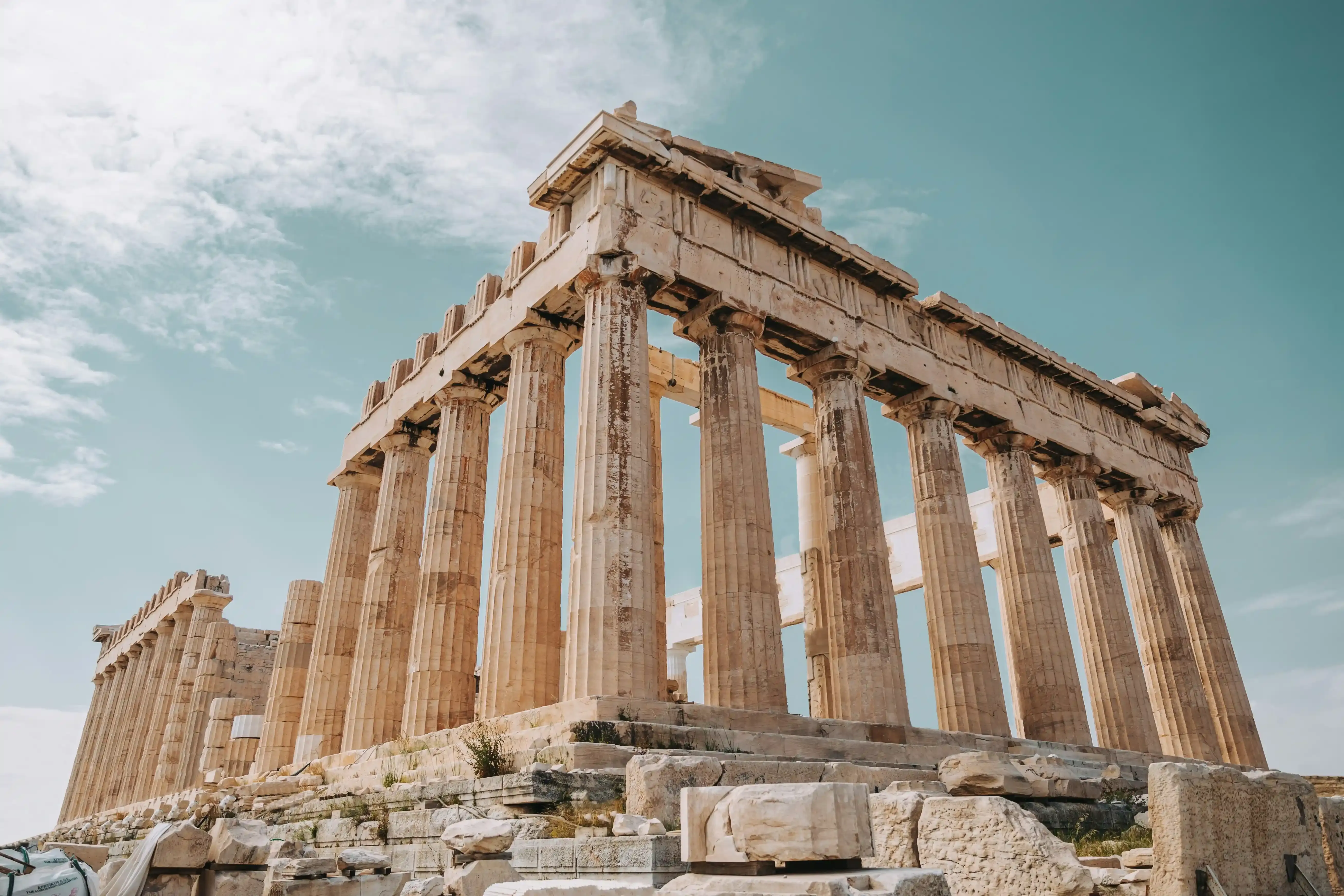
Parthenon Greece stands at the highest point of the Acropolis, the fortified hilltop at the heart of ancient Athens. Built between 447 and 432 BC, it was dedicated to Athena, the city’s patron goddess. The temple once housed a 12-metre gold and ivory statue of Athena, though only parts of the original structure remain today.
- History: Built between 447 and 432 BC under Pericles. Ictinus and Callicrates were the architects, while Phidias led the sculptural work.
- Why it is famous: One of the most important surviving examples of Classical Greek Doric architecture and a lasting symbol of classical Greek architecture.
- Architecture: It has 46 outer Doric columns. The columns taper and lean slightly inward, while their subtle swelling is known as entasis.
- What you see: The outer columns, surviving pediment sections, restoration scaffolding and the rocky Acropolis plateau.
- Views: From the Acropolis summit, you can see the Ancient Agora, Plaka, Lycabettus Hill, the Temple of Olympian Zeus and Athens towards the coast.
- Ticket: There is no separate Parthenon ticket. Entry is through the Acropolis ticket, priced at EUR 30 for adults and EUR 15 at the reduced rate. Timed entry is mandatory.
- Time needed: Allow 2 to 3 hours for the Acropolis site. Around 30 to 45 minutes is enough for the Parthenon itself.
Parthenon vs Acropolis:
Parthenon | Acropolis |
Ancient temple dedicated to Athena | The fortified hilltop and wider archaeological site |
One building within the Acropolis | Contains the Parthenon, Erechtheion, Temple of Athena Nike, Propylaia and other structures |
5 Reasons You Should Visit the Parthenon
 Each of these gives you something different from simply looking at an old building.
1. See the Most Recognised Ancient Temple in the World
The Parthenon is the single most referenced piece of classical architecture on the planet. Government buildings, museums and universities on every continent have borrowed from its proportions, its columns and its pediment shape. Seeing the original after a lifetime of seeing copies puts the influence into perspective.
2. Understand the Architecture Up Close
When you look from above, the Parthenon looks symmetrical and straight. Up close, the refinements become visible. The columns lean inward by about 7cm. The floor curves gently upward in the centre. Every adjustment was calculated to make the building appear perfect from a distance. Understanding that the imperfections are deliberate changes how you look at it.
3. Stand Where Athens Began
The Acropolis was an important centre of Athenian life for centuries. This is the same hill where religious processions climbed to the temples, and major religious ceremonies took place. Walking through the site today gives you a sense of the history that is difficult to understand from photographs alone.
4. See Athens from the Best Viewpoint in the City
The Acropolis Athens Greece summit gives a panorama that includes the Ancient Agora, the Plaka neighbourhood directly below, Lycabettus Hill, the Temple of Olympian Zeus, Hadrian's Arch and the modern city spreading toward the Saronic Gulf. No other viewpoint in Athens gives you this combination of ancient and modern in one frame.
5. Understand What the Parthenon Marbles Mean in Context
Walking around the temple makes the absence of the original sculptural decoration visible. The surviving Parthenon sculptures are mainly divided between the Acropolis Museum in Athens and the British Museum in London, with important fragments also held by museums elsewhere in Europe. Seeing where they came from, and the spaces they left behind, adds a layer to the ongoing repatriation conversation that reading about it does not.
How Should You Visit the Parthenon?
The Parthenon is situated inside of the the Acropolis archaeological site. Therefore, you cannot separately visit this attraction without entering the Acropolis temple.
Practical Detail | Information |
Ticket | Acropolis ticket: EUR 30 adult, EUR 15 reduced. No separate Parthenon ticket |
Timed entry | Mandatory. Book a 2-hour slot online at hhticket.gr |
Main entrance | West entrance (Propylaia side), accessible from Dionysiou Areopagitou pedestrian street |
Security | Bag check and security screening at the entrance. Similar to airport security |
Walking effort | Uphill walk on uneven stone paths. The climb from the entrance gate to the summit takes 10 to 15 minutes at a comfortable pace |
Accessibility | The site has a lift for wheelchair users at the north entrance. Stone paths remain uneven and steep in sections |
Opening hours | Summer (April to September): 8am to 8pm. Winter (November to March): 8am to 5pm. Last entry 30 minutes before closing |
Visitor restrictions | No food or drink on the Acropolis. No drones. No touching the monuments. Bags may be checked at security |
Time needed | 2 to 3 hours for the full Acropolis site |
Tribe Travel Tip: Book the earliest 8 am slot. The site is quieter in the first 30 to 45 minutes, with softer morning light before the crowds arrive around 10am.
Is a Guided Tour Worth It?
Yes, for most first-time visitors. The Acropolis has limited signage on site, and the Parthenon's architectural refinements, history and connection to the wider Greek world are not obvious from looking at it without context.
- What a guide adds: Explains the buildings, sculptures, architecture and Acropolis history.
- What you miss without one: Details like the leaning columns, curved floor, different column styles and Caryatids.
- Cost: Shared tours cost about EUR 35-67 for the guide, or EUR 67-99 with entry.
- When to skip: If you visit the Acropolis Museum first or prefer exploring with an audio guide.
When Is the Best Time to Visit?
It’s better to know when the weather conditions are favourable for a comfortable visiting experience at the Acropolis in Athens, Greece.
Best months: April to June and September to October. Warm enough to enjoy the site, cool enough to manage the uphill walk comfortably.
What Should You Know Before Visiting?
- Book timed entry online: Walk-up entry is not guaranteed, especially in summer.
- Visit the Acropolis Museum separately: It has a separate EUR 20 ticket. Allow about 2 hours. With the Acropolis, plan a half-day.
- Keep the morning free: The Acropolis visit involves walking, climbing and descending, so it can be more tiring than expected.
Conclusion
Parthenon Greece earns the visit because nothing else in Athens, or in most of Europe, delivers the same combination of ancient architecture, city-wide views and historical weight in one place. The temple is not complete. The scaffolding is part of it now. But the columns, the proportions and the position above Athens still do what they were designed to do 2,400 years ago.
Holiday Tribe builds Athens and the Parthenon into structured Greece holiday packages that combine the city with the islands, Meteora or the wider mainland. Our holiday advisors can help with stays, transfers, timed entry planning and a sightseeing pace that fits the time you have.