

South Korea and Japan keep showing up on your shortlist, and choosing between them isn’t simple. You’ve got your time off ready, your excitement is growing, and you want this holiday to be perfect, but the South Korea vs Japan question just will not settle. From a distance, they seem similar, but once you look closer, they each offer a unique vibe.
Honestly, there’s no wrong choice, just the one that suits you best. One country is lively, playful, and packed with pop culture. The other is calm, precise, and deeply traditional. In this guide, we’ll cover the real differences in food, cities, cost, weather, and visas in simple terms, so you can pick the country that fits your travel style.
How Do You Even Choose Between South Korea and Japan?
Choosing between these countries is really about your travel style, not which one is better. Both are safe, clean, easy to roam around, and have plenty of food options. The main difference is the pace and overall vibe.
Before we dive in, here’s a quick look at the South Korea vs Japan picture. Check which column feels right for you.
What matters to you | Leans South Korea | Leans Japan |
Overall pace | Fast, youthful, trend-led | Calm, orderly, traditional |
Food style | Bold, spicy, shared | Delicate, refined, varied |
Best for | K-culture fans, first-timers | Culture lovers, repeat visitors |
Daily spending | Often a touch gentler | A little higher, still great value |
Star seasons | Spring and autumn | Spring and autumn |
South Korea vs Japan: The Vibe and the People
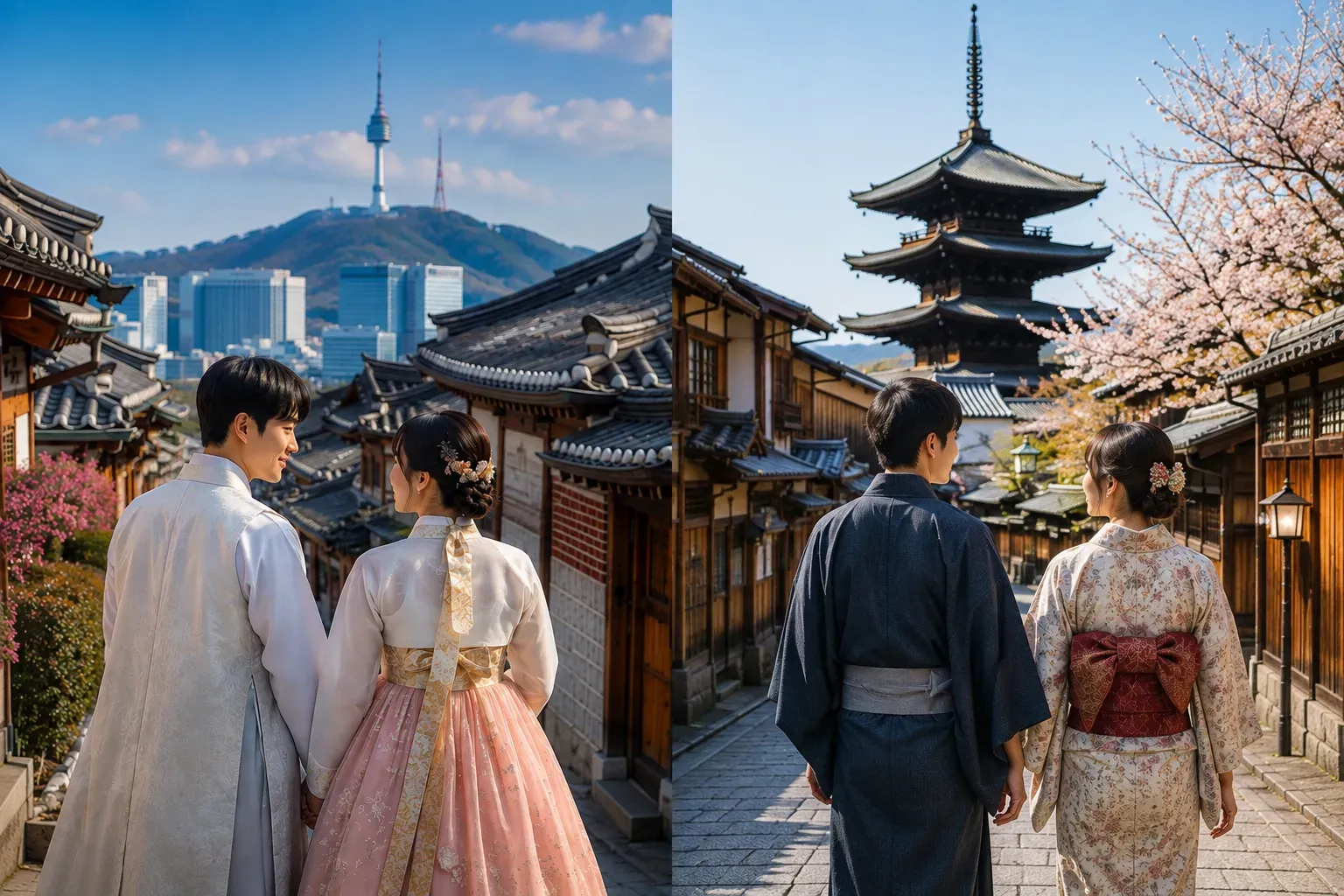
You notice the difference right away. One country always seems a step ahead of the latest trends, while the other feels calm and experienced.
- South Korea: South Korea feels young and lively, driven by the popularity of K-pop and K-dramas. Old palaces stand beside modern glass buildings, cafes stay open late, and the cities in South Korea are full of energy. People in South Korea are friendly and quick to help visitors who need directions.
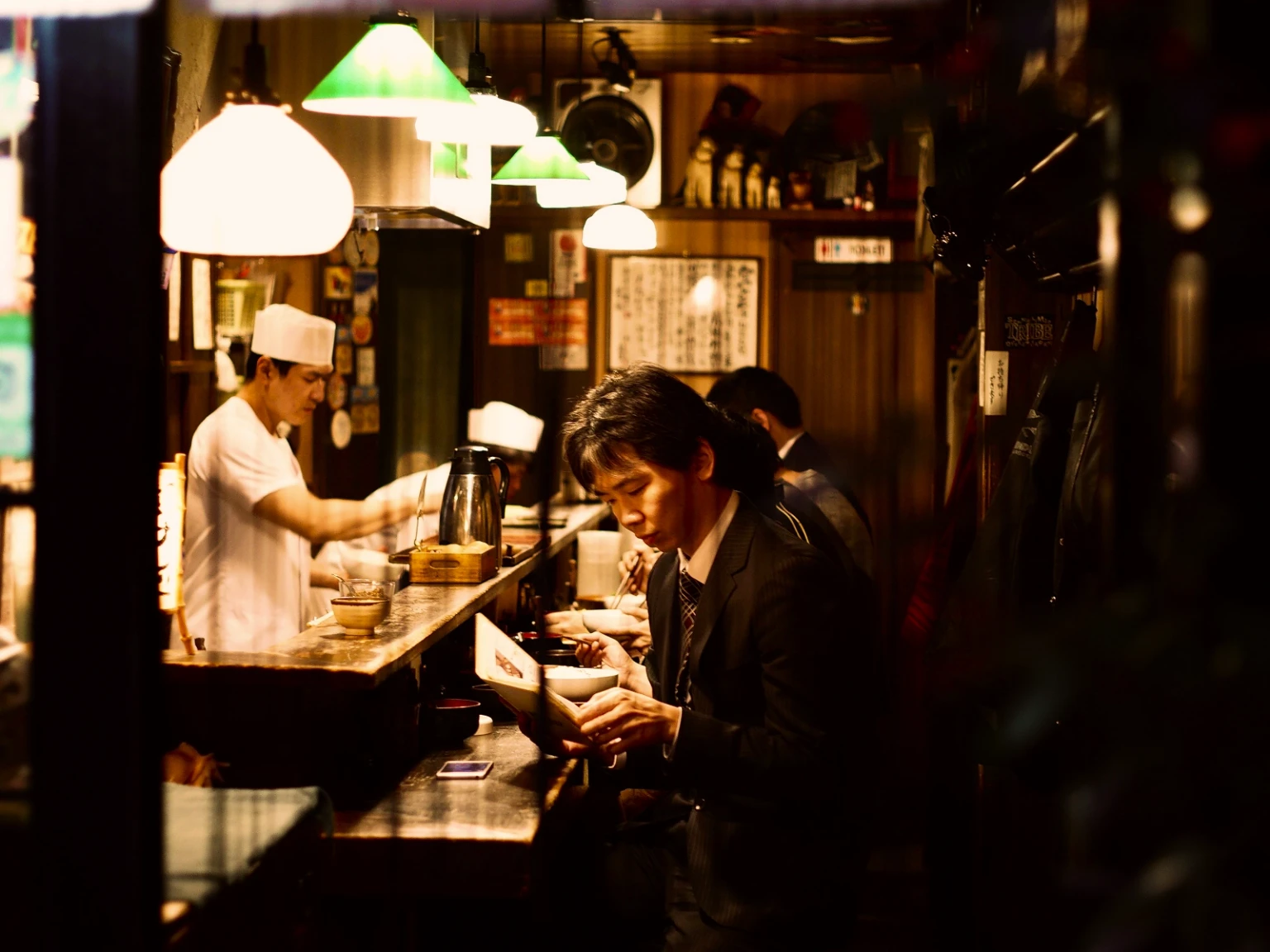
- Japan: In Japan, politeness and attention to detail are part of daily life, whether it’s a tea ceremony or trains that arrive exactly on time. People show real respect for skill and doing things the right way.
- Pick this if you want: If you want excitement and modern culture, choose South Korea. If you prefer calm and deep tradition, choose Japan.
South Korea vs Japan: The Food You'll Remember
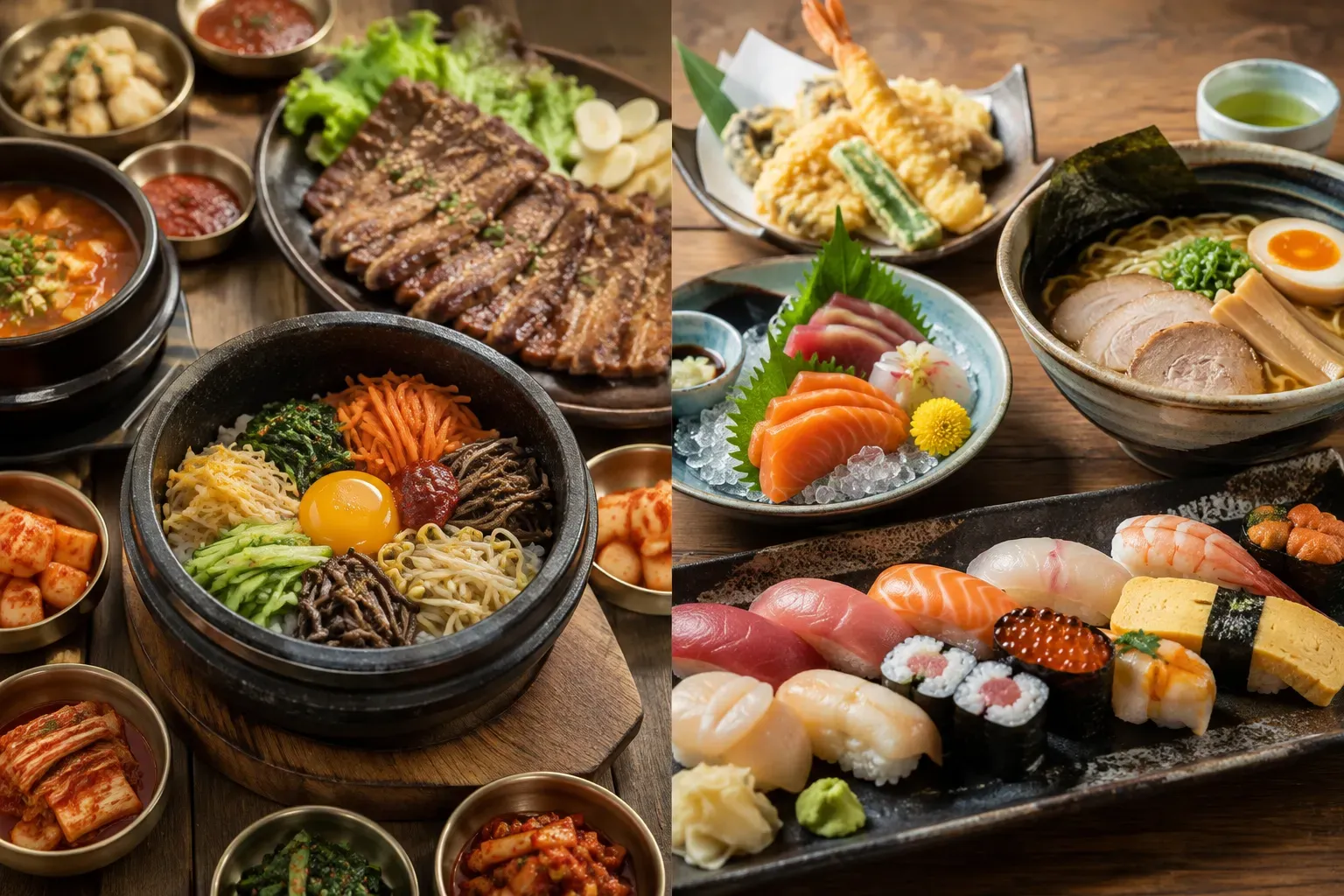
Food is where the two really stand apart, and honestly, you can't go wrong with either. When it comes to South Korea vs Japan, one cuisine is bold and made for sharing, while the other is all about precision and variety.
- South Korea: Think of sizzling Korean barbecue, bibimbap, chewy tteokbokki, crunchy fried chicken, and a table full of free banchan side dishes. The food is spicy, hearty, and perfect for sharing.
- Japan: Picture sushi, ramen, tempura, okonomiyaki, and melt-in-your-mouth wagyu. Japanese food is seasonal and refined, with options ranging from a simple ¥500 bowl to a quiet tasting counter.
- Pick this if you want: If you want bold spice and big shared plates, go for South Korea. If you prefer variety and finesse, choose Japan.
South Korea vs Japan: Cities and Tourist Places
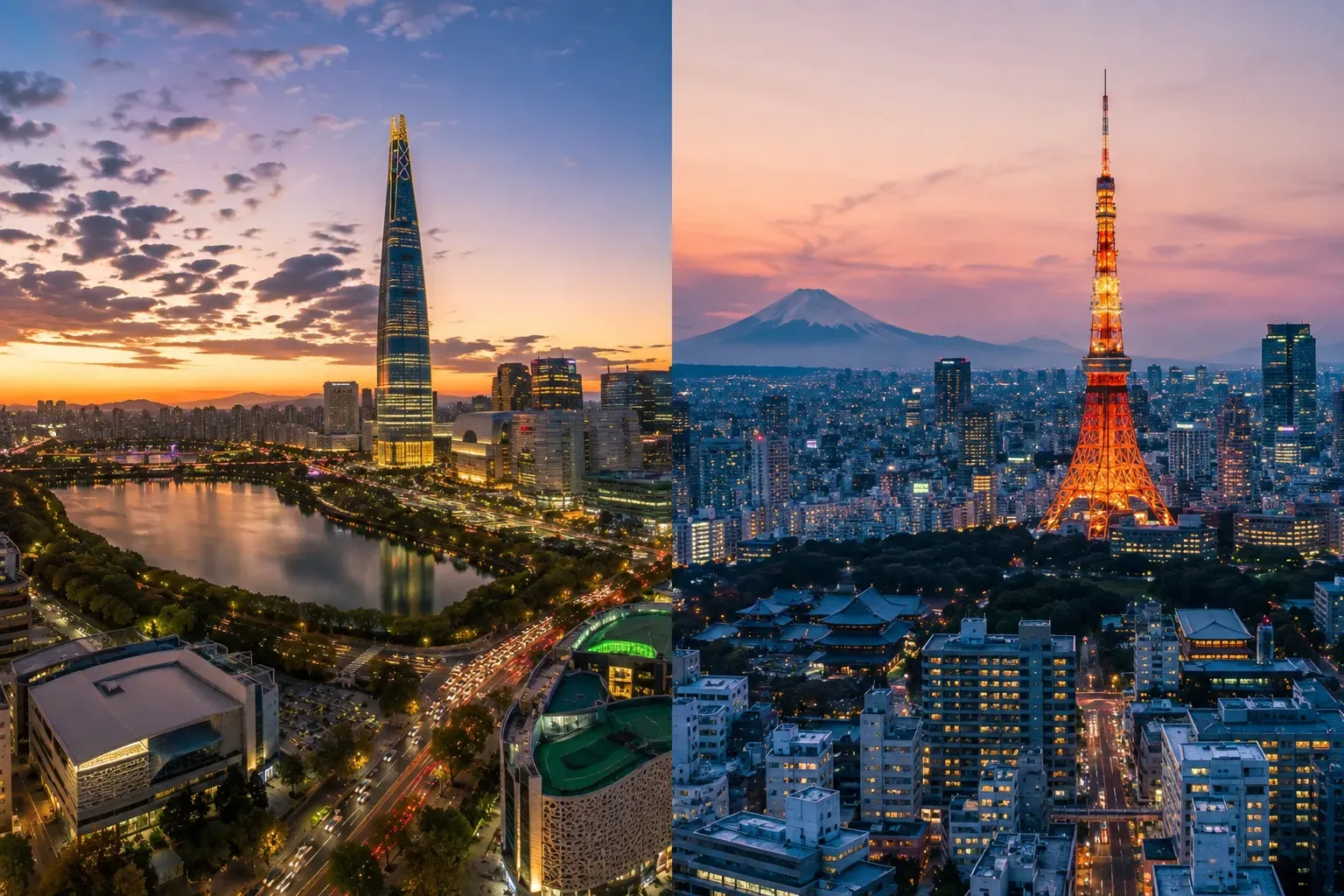
Both countries are great for city-hopping, thanks to their fast and reliable trains. The gap in the South Korea vs Japan debate here is mostly about variety versus compactness.
- South Korea: Start your holiday in Seoul to see Gyeongbokgung Palace, shop in Myeongdong, and walk through the hanok lanes of Bukchon. You can also visit Busan for its beaches and Jeju Island for volcanic scenery. These tourist places in South Korea are close to each other and easy for first-time visitors. Cities in South Korea like Gyeongju offer a look at South Korea’s old capital history.
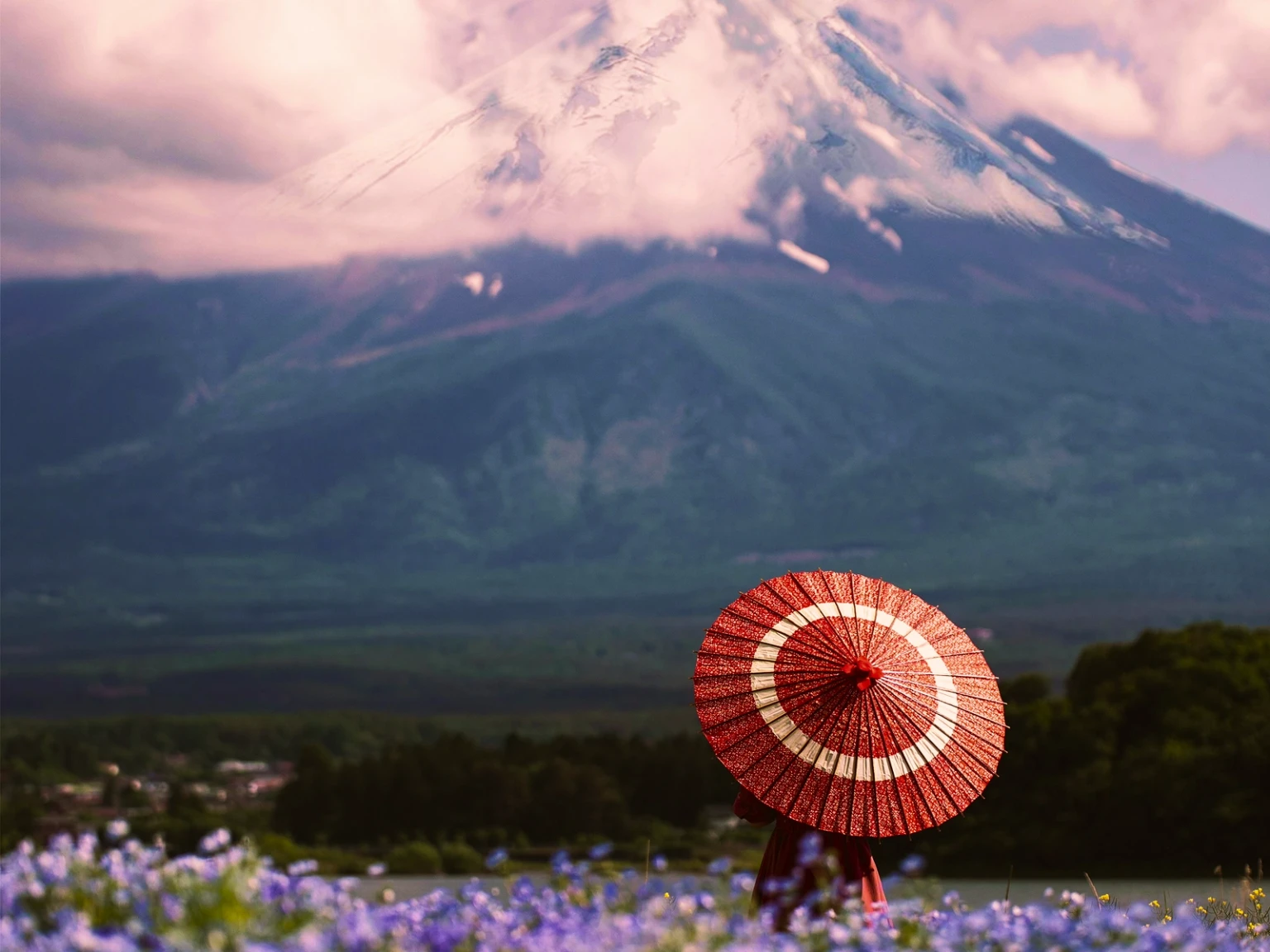
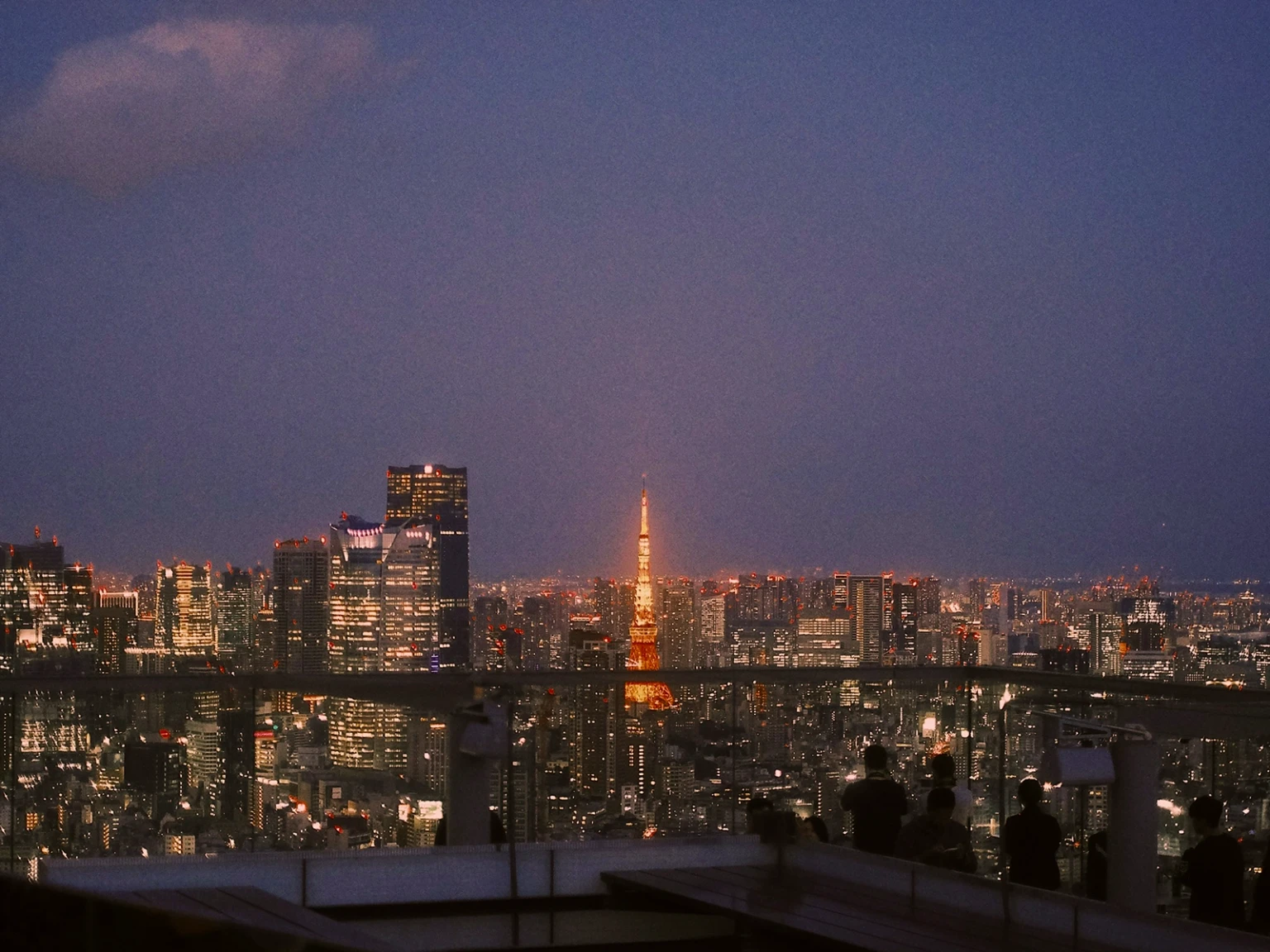
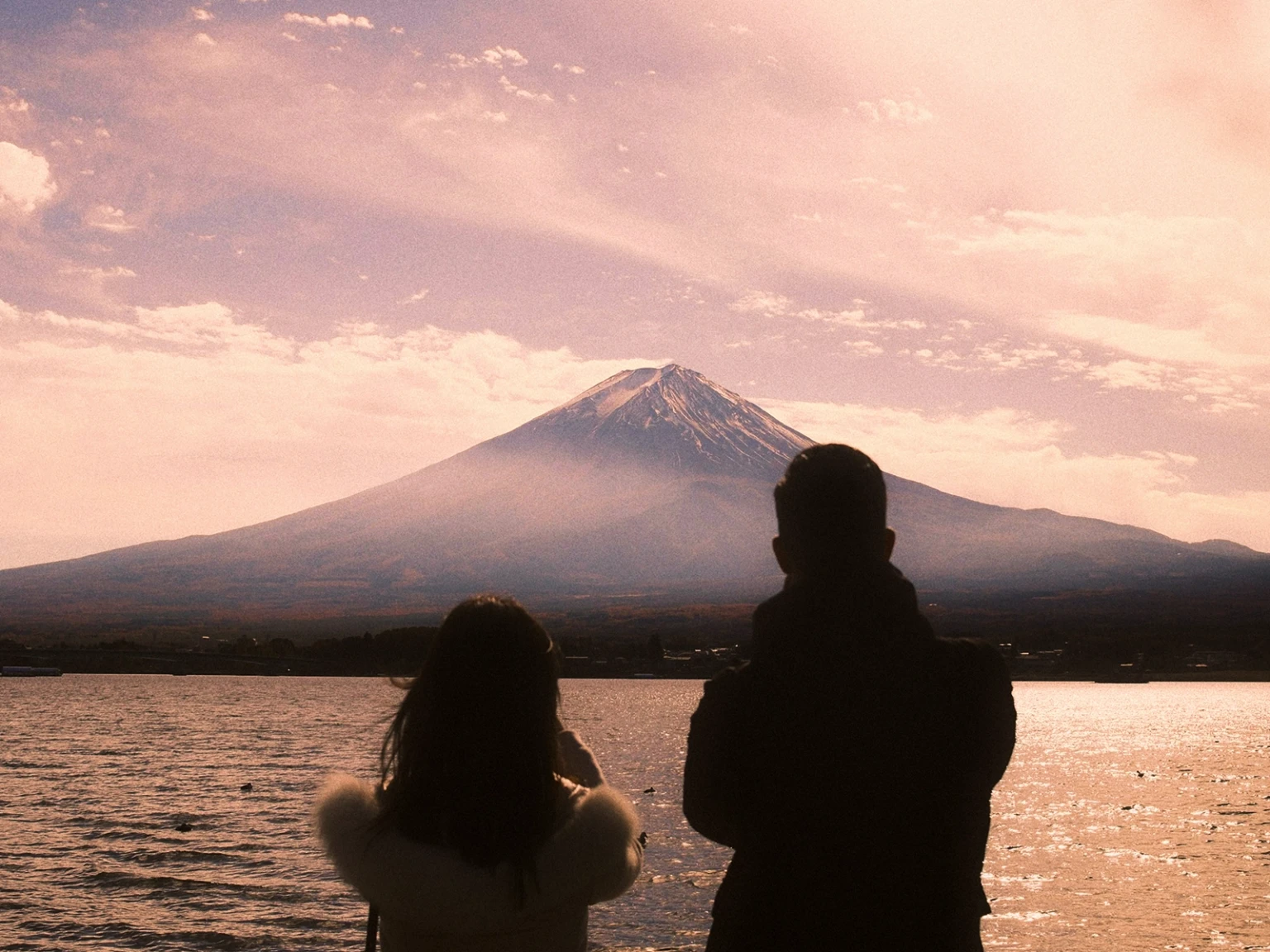
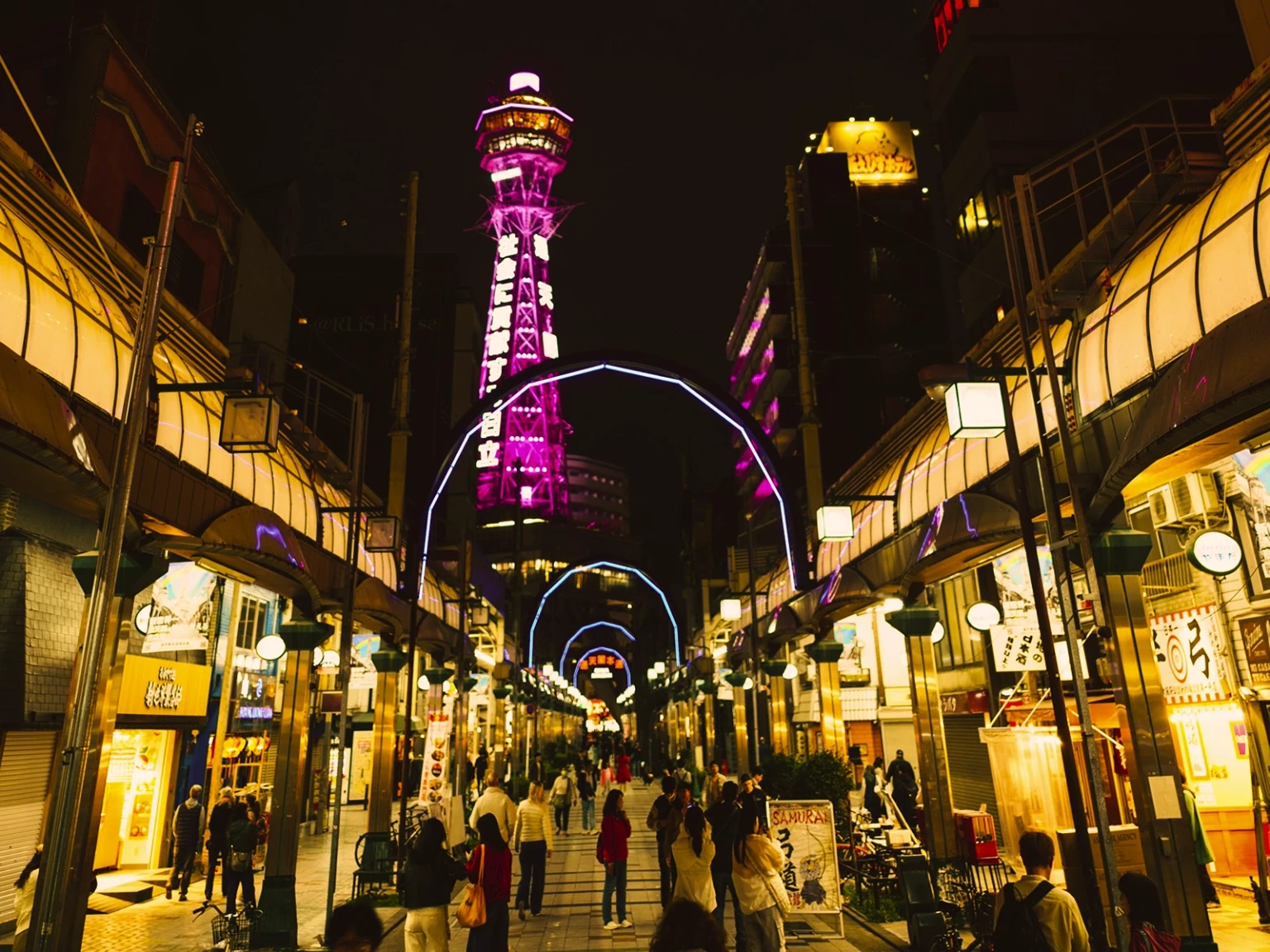
- Japan: Classic Japan tourist places are spread out, from Tokyo and Kyoto to Osaka, Nara, and Hiroshima. You can also visit Hakone for views of Mount Fuji and Sapporo in the north for snow.
- Pick this if you want: Choose South Korea if you want short, easy visits between cities. Pick Japan if you prefer more variety and don’t mind travelling longer distances.
South Korea vs Japan: Best Time to Visit and Weather
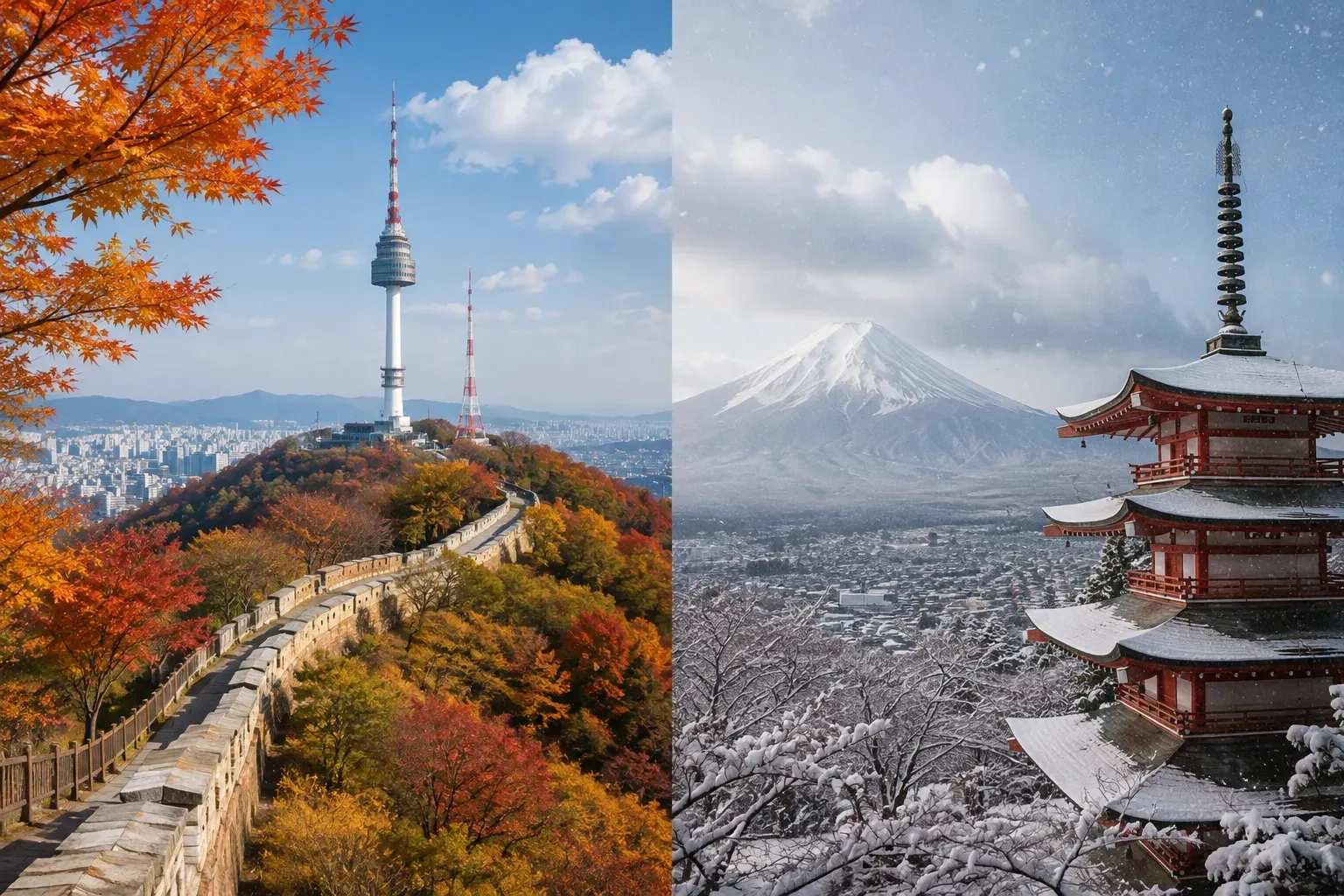
Here’s some good news: both countries have four distinct seasons, and the best times to visit are almost the same. Most people aim for spring or autumn.
- South Korea: South Korea’s weather goes from cold, dry winters to warm, humid summers. The best times to visit South Korea are spring, from April to June, and autumn, from September to November. Cherry blossoms usually appear in late March or early April, and the Jinhae festival is a highlight.
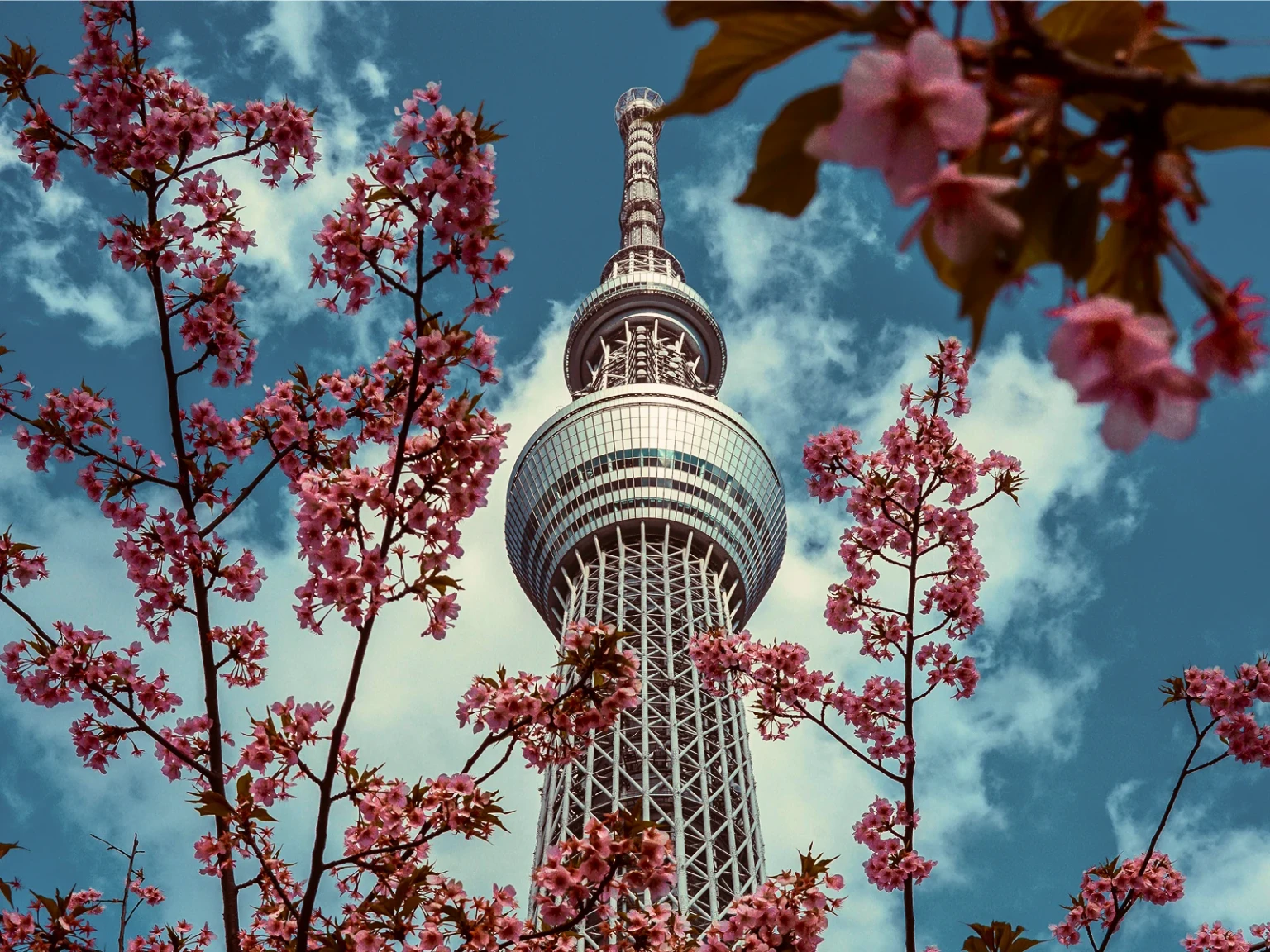
- Japan: Spring brings the famous cherry blossom in Japan, which blooms from late March to early April in the main cities and a bit later in Sapporo. In autumn, especially in November, the country turns red and gold. Summers are green and humid.
Season | South Korea | Japan |
Spring | Blossoms, mild, popular | Blossoms, mild, popular |
Summer | Hot, humid, some rain | Hot, humid, festival season |
Autumn | Clear skies, colour | Red maples, comfortable |
Winter | Cold, dry, quiet | Snow up north, ski season |
South Korea vs Japan: What a Holiday Costs
Let's be practical, since prices can change. On the ground, the South Korea vs Japan cost question is closer than most people assume, and both give you strong value for what you get.
- South Korea: Daily expenses are usually a bit lower. City transport is cheap if you use a T-money card, street food is affordable, and mid-range hotels are fairly priced.
- Japan: Long-distance trains can get expensive, and food options range from quick ramen to high-end meals. The weaker yen lately has made visitors' money go further.
- Good to know: These are just the costs once you arrive. Flights are separate, so it's best to budget for them on their own instead of including them with your travel expenses.
South Korea vs Japan: Visas and Getting There
It's a good idea to read this before you choose, since Indian passport holders will find that the paperwork for South Korea and Japan is about the same, and neither country offers visa on arrival.
- South Korea: Indian travellers need to get a short-term tourist visa (C-3-9) in advance through the Korea Visa Application Centre. Indian passports are not eligible for K-ETA. However, Jeju Island is an exception and is visa-free for up to 30 days if you fly there directly. The South Korea visa usually takes 5 to 10 working days to process, and you will arrive at Incheon (ICN) if you are going to Seoul.
- Japan: You need to get a Japan visa before you travel, as there is no visa on arrival. Indian travellers can now apply for a single-entry tourist eVisa or use the traditional visa. In Tokyo, the main airports are Narita (NRT) and Haneda (HND), while Kansai (KIX) is the main airport for Osaka.
- Good to know: Since rules can change, check the official Korean embassy or KVAC website and the Japan MOFA eVISA for the latest information. It's best to apply three to four weeks in advance.
Which One Feels More Like You?
By now, the South Korea vs Japan scale is probably tipping. Here is a quick way to decide.
- Choose South Korea if: You enjoy K-pop and K-dramas, want a lively, food-focused first holiday to Asia, and prefer cities that are close to each other.
- Choose Japan if: You are interested in temples, traditional crafts, and rituals, want more variety in destinations, and do not mind a slower, longer holiday.
- Do both if: You have at least ten days. The flight from Seoul to Tokyo takes just 2 to 2.5 hours, so visiting both is easier than you might think.
South Korea vs Japan: The Complete Score Card
We rated both across the things travellers actually ask about, from nature to cost. Treat it as a gut check rather than hard science, since a fair bit comes down to personal taste.
Category | South Korea | Japan | Quick note |
Nature and scenery | 4.5/5 | 5/5 | Japan spans Hokkaido snow to Okinawa beaches; Korea counters with Jeju, Seoraksan and easy mountain access. |
Food | 5/5 | 5/5 | Bold, spicy and shared in Korea; delicate, seasonal and varied in Japan. Both are outstanding. |
Safety | 5/5 | 5/5 | Both sit among the safest countries in the world, with low crime and reliable transport. |
Infrastructure and transport | 5/5 | 5/5 | Korea's KTX and Seoul metro versus Japan's Shinkansen. Punctual and spotless on both sides. |
Cost and value (land only) | 4.5/5 | 4/5 | Korea is often a touch gentler day to day; Japan's value has risen with a softer yen. |
Ease for first-timers | 4.5/5 | 4/5 | Strong English signage in Seoul and Busan; Japan is catching up quickly. |
Culture and heritage | 4.5/5 | 5/5 | Japan's temple and craft depth is huge; Korea shines with palaces and hanok villages. |
Entertainment and pop culture | 5/5 | 4.5/5 | Korea is the K-pop and K-drama capital; Japan owns anime, gaming and retro arcades. |
Shopping | 4.5/5 | 4.5/5 | Myeongdong and Dongdaemun versus Shibuya and Shinsaibashi. Both are a joy. |
Seasons and blossoms | 4.5/5 | 5/5 | Both are lovely in spring and autumn; Japan's sakura is the icon, Korea's Jinhae is a stunner. |
In short, it’s almost a tie. South Korea is better for cost, first-time visitors, and pop culture. Japan stands out for its natural scenery, rich heritage, and cherry blossoms. So, the real tie-breaker in South Korea vs Japan comes down to which of these things matter most to you.
Ready to Turn This Into a Real Holiday?
However the South Korea vs Japan decision lands for you, the next bit is the fun bit. Turning your pick into a proper plan. That is exactly where we come in.
At Holiday Tribe, we’re holiday advisors, not just travel agents. We create holidays that fit your dates, your pace, and your idea of fun. You can pick one of our ready-made holidays if you want everything planned out, or let our experts and AI travel planner design a holiday just for you. We plan for every kind of traveller, so just tell us who’s coming and how you like to travel, and we’ll handle the rest.