

Cape Town is at Africa’s southwestern tip, surrounded by the Atlantic Ocean, False Bay, and Table Mountain’s rocky slopes. The city blends coastal views, historic neighborhoods, gardens, lively markets, and Constantia’s vineyards, so each area feels unique. From Bo-Kaap’s colorful streets to Camps Bay’s sandy beach, there’s a lot to enjoy without rushing.
This guide covers the things to do in Cape Town, like Table Mountain, Robben Island, Kirstenbosch National Botanical Garden, and Groot Constantia. You’ll also find practical tips to help you plan your visit.
How Is Cape Town Organised for Visitors?
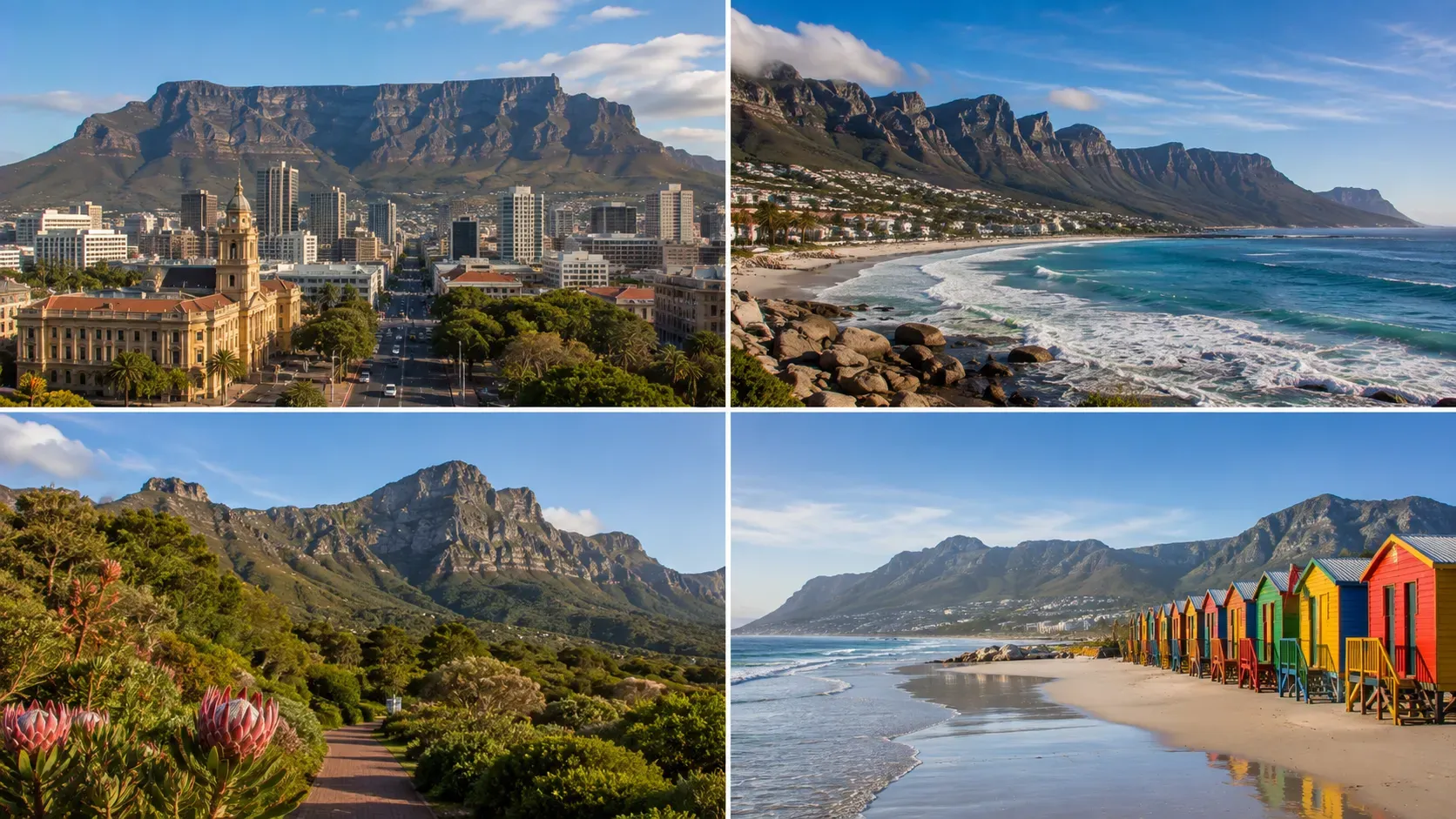
Cape Town has four main travel zones. Knowing which zone each place is in helps you plan your visits and avoid extra driving.
Zone | Key Areas | Signature Destinations | Travel Time from CBD |
City Bowl | Bo-Kaap, Long Street, City Centre | Green Market Square, Long Street, Bo-Kaap | 0 to 10 min on foot |
Atlantic Seaboard | Sea Point, Camps Bay, Clifton | Camps Bay Cape Town, Signal Hill Cape Town, Table Mountain Cape Town | 10 to 20 min by car |
Southern Suburbs | Constantia, Newlands, Tokai | Kirstenbosch National Botanical Garden, Groot Constantia | 15 to 25 min by car |
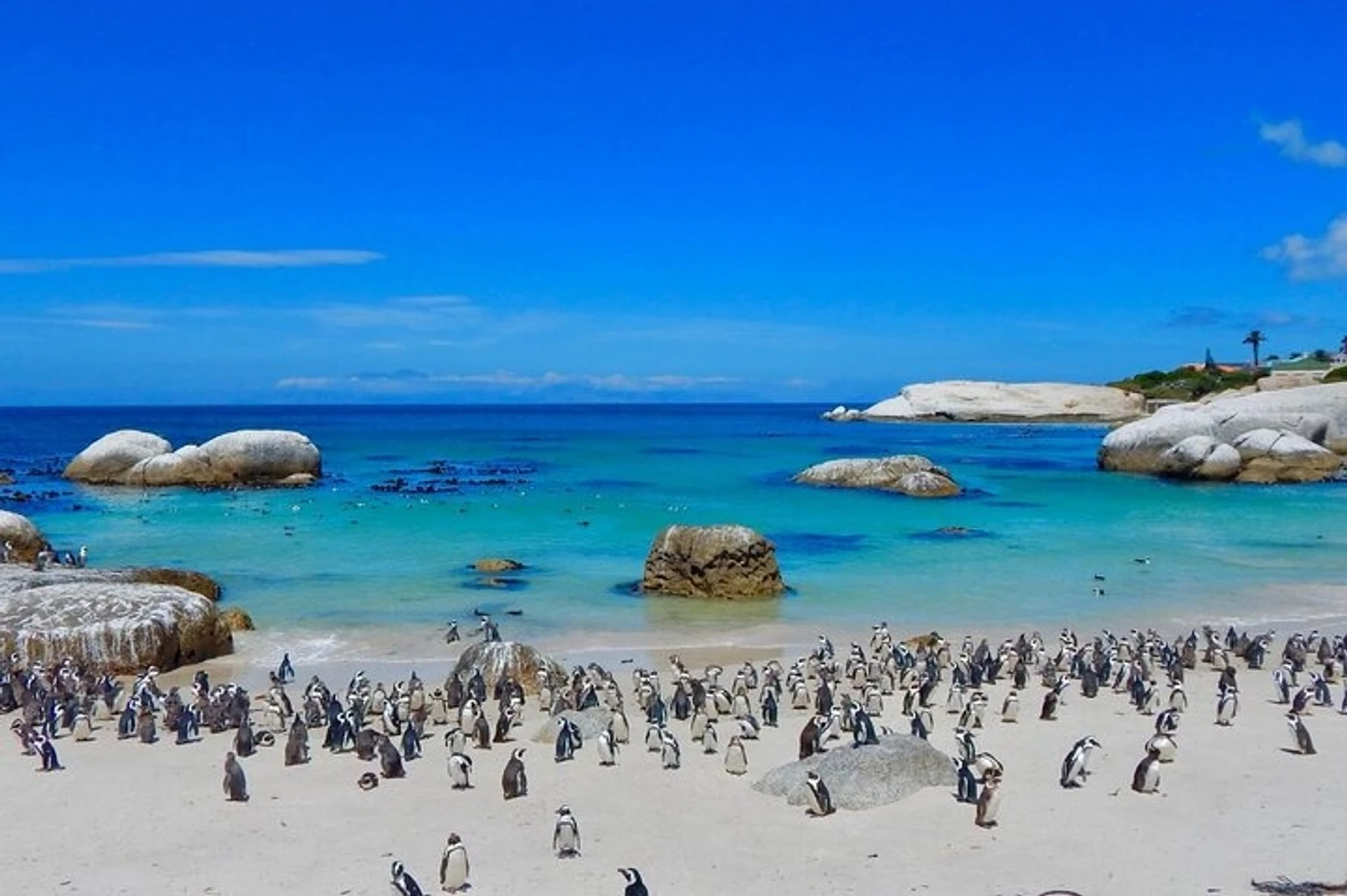
False Bay | Muizenberg, Simon's Town | Muizenberg Beach, Boulders Penguin Colony | 35 to 50 min by car or train |
This guide covers things to do in Cape Town across all four zones.
Which fun things to do in Cape Town should you try?
The fun things to do in Cape Town include mountain views, history, beaches, markets, gardens, wine estates, and city streets. Some are famous, while others are worth the extra time.
Here’s a quick overview list:
- Table Mountain Cape Town
- Robben Island
- Camps Bay Cape Town
- Green Market Square Cape Town
- Long Street Cape Town
- Signal Hill Cape Town
- Kirstenbosch National Botanical Garden
- Muizenberg Beach
- Groot Constantia
- Bo-Kaap and the V&A Waterfront
Table Mountain Cape Town: Views from Above
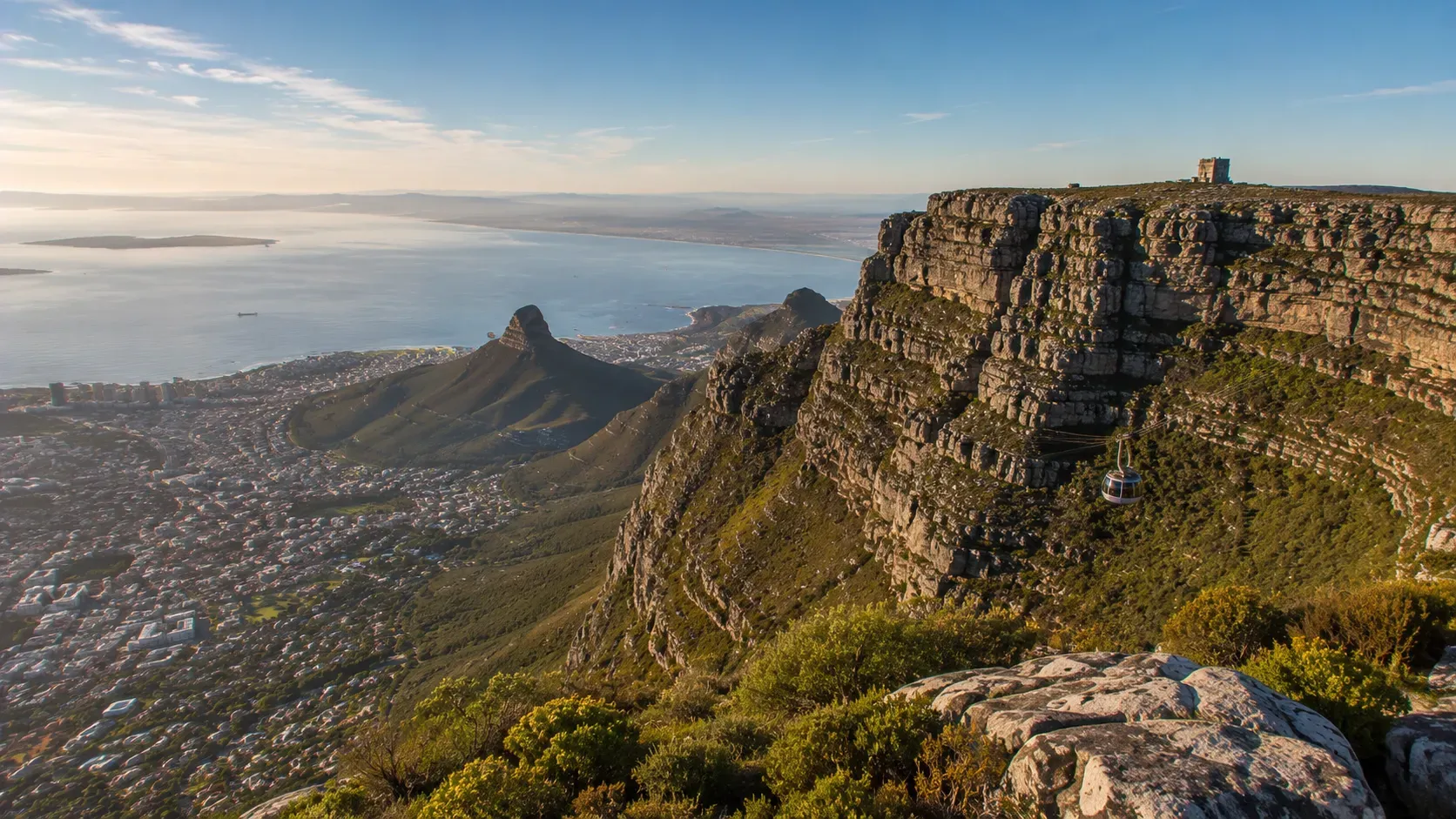
Table Mountain Cape Town is a flat-topped mountain at 1,086 metres, part of the Table Mountain National Park (UNESCO World Heritage Site).
- Cable car: The Aerial Cableway takes passengers from the lower station on Tafelberg Road to the summit in under five minutes; the floor rotates during the ascent, giving a 360-degree view as the car rises
- At the summit: You’ll find flat walking paths across the plateau. Walk to the edge for views of the City Bowl, V&A Waterfront, and Robben Island in Table Bay below.
- Hours (2026, high summer December to February): 8am to 8pm; last car up at 7pm; check live operational status at tablemountain.net before visiting; the mountain closes in high winds; a flat cloud known as the "Tablecloth" indicates closure conditions
- Access: MyCiTi Bus Route 110 from the City Bowl to Upper Kloof Nek stop; 15 minutes from the CBD
- Hiking: Platteklip Gorge trail (2 hours up, well-marked); Skeleton Gorge trail begins inside Kirstenbosch National Botanical Garden (3 to 4 hours)
Robben Island: A Place of History and Reflection
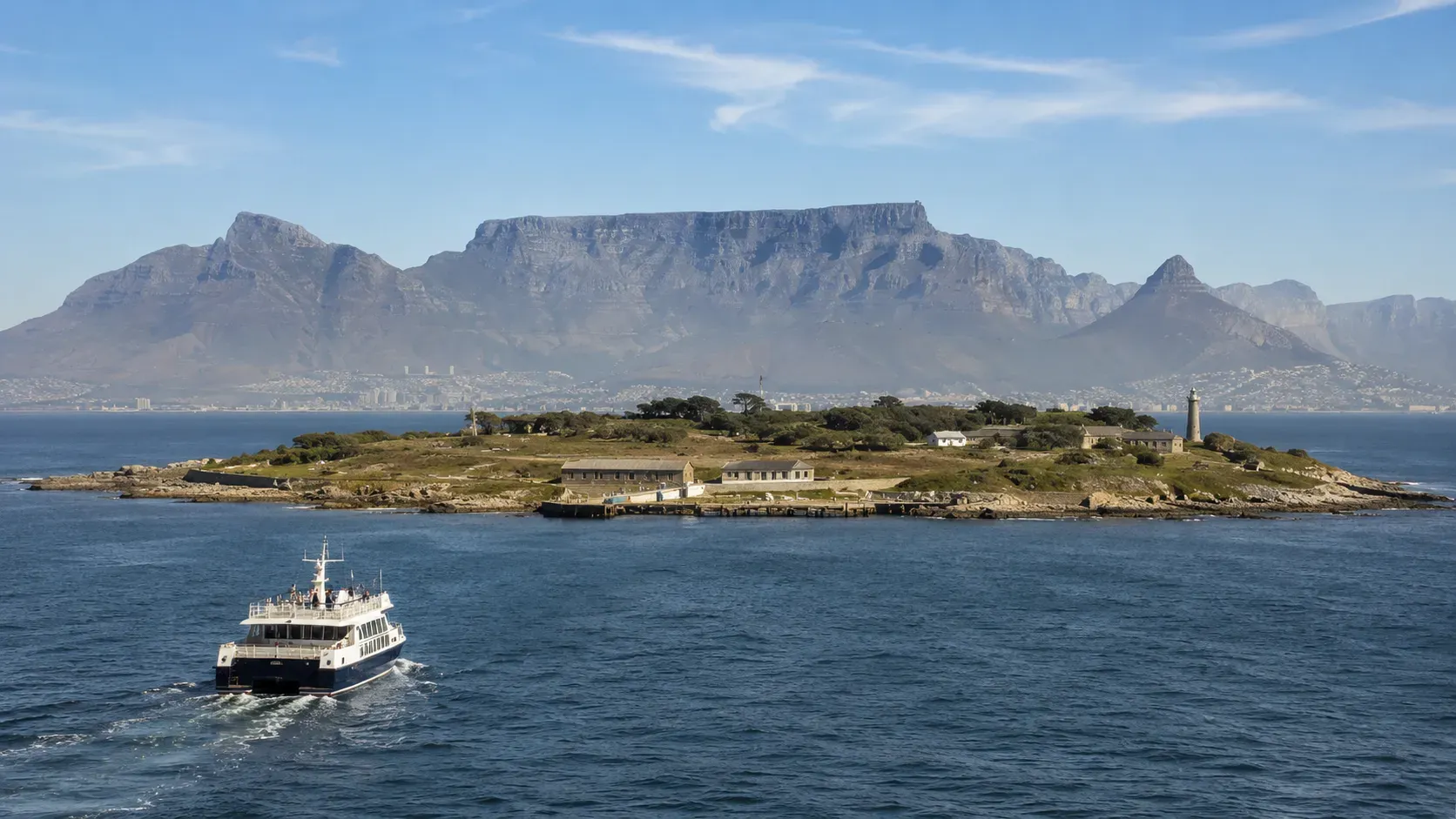
Robben Island is one of the most historically important things to do in Cape Town, a UNESCO World Heritage Site in Table Bay, approximately 11 km from the Cape Town harbour.
- Ferry: Departs from the V&A Waterfront Clock Tower daily at 09:00, 11:00, 13:00, and 15:00; additional slots in peak season (September to April); subject to sea and weather conditions
- Tour duration: Approximately 3.5 to 4 hours; includes return ferry crossing, guided bus tour of the island's historical sites, and a walking tour of the maximum-security prison led by a former political prisoner
- Highlight: The cell where Nelson Mandela spent 18 of his 27 years in captivity
- 2026 ticket prices: International visitors approximately R825; South African citizens R400; book in advance at robben-island.org.za; tours sell out 2 to 3 weeks ahead from September to April
- Practical note: Arrive at the Clock Tower at least 30 minutes before departure; the ferry does not wait
Camps Bay Cape Town: Beach, Sea and Mountain Views
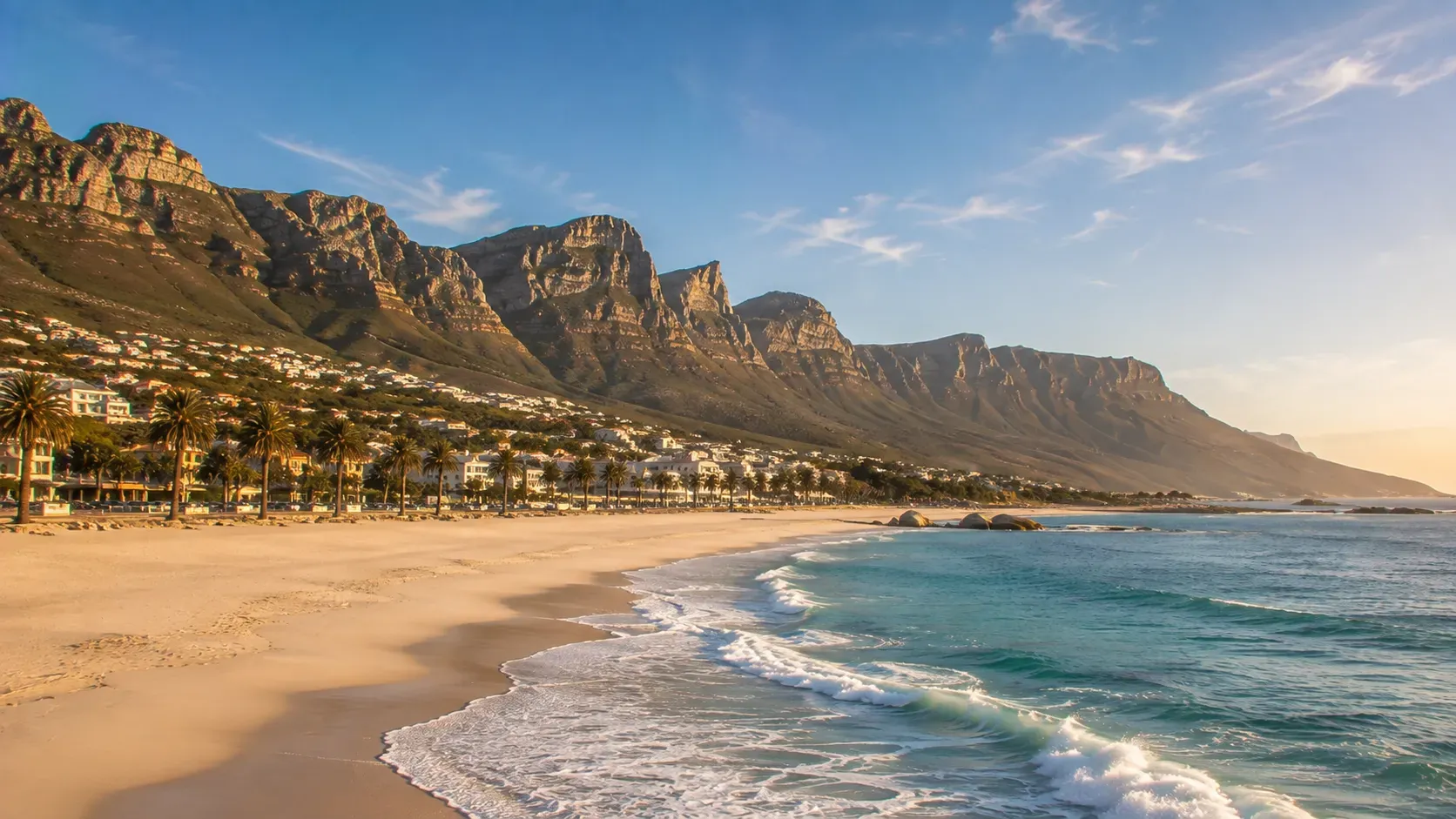
Camps Bay Cape Town is a beach suburb on the Atlantic Seaboard, 10 km from the City Bowl.
- Wide white sand beach backed by the Twelve Apostles mountain range; one of the most photographed stretches of coastline in Cape Town
- Victoria Road (the main strip) runs directly above the beach with a row of restaurants and bars facing the Atlantic
- Water temperature: Cold year-round; the Atlantic averages 13°C to 17°C; most people come to sunbathe rather than swim
- Best time: Late afternoon or early evening for great light. Weekday mornings are quieter during the busy December to February season. It’s one of the most relaxing things to do in Cape Town to spend an easy afternoon.
- Access: MyCiTi Bus Route 104 from the City Bowl; 20 minutes; free beach access; paid parking in the lots above the road
Green Market Square Cape Town: Crafts, Culture and Character
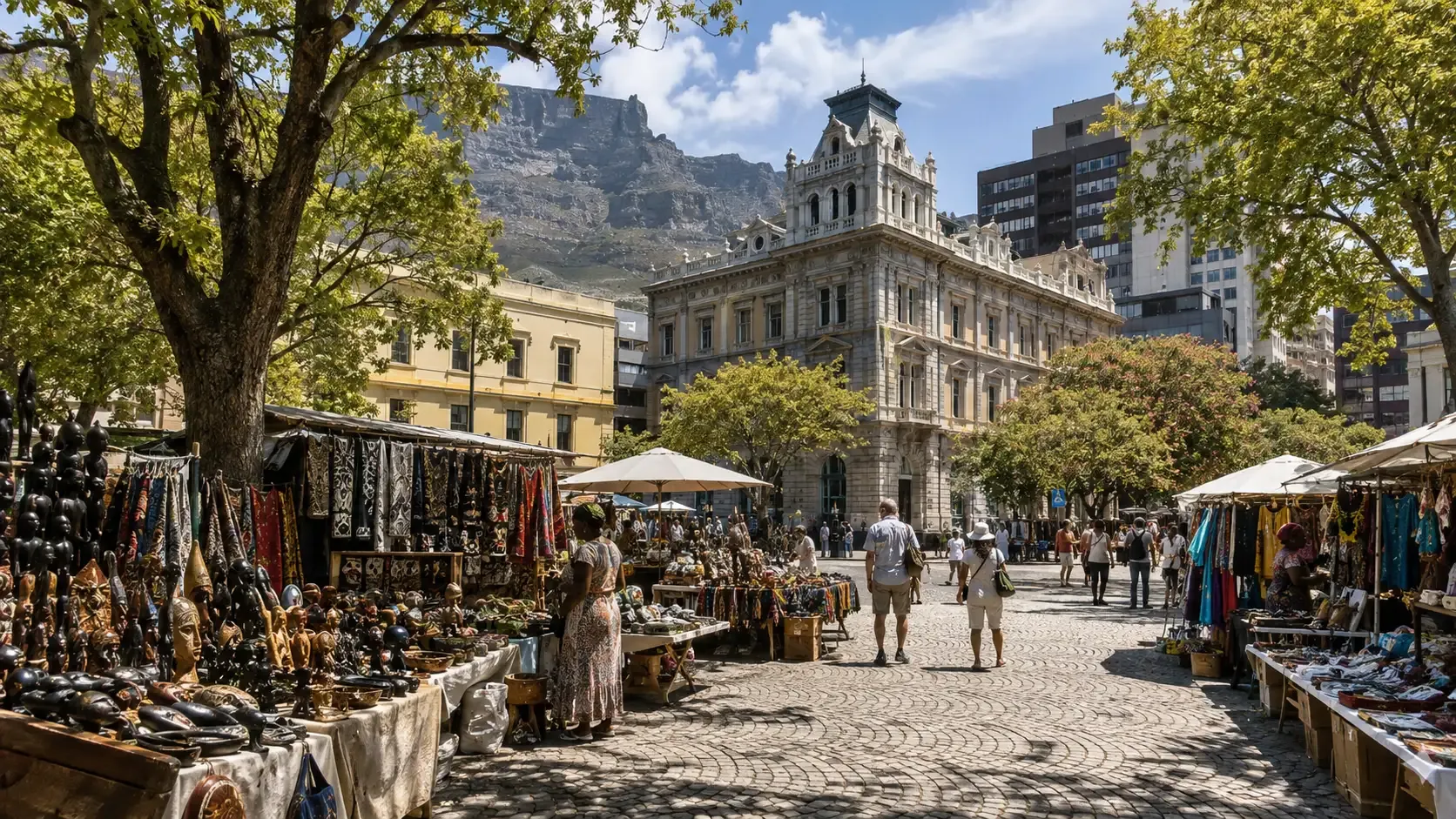
Green Market Square Cape Town is a cobblestone square in the City Bowl and one of Cape Town's oldest public spaces.
- Origins date to the 18th century; the square served as a produce market and later as a slave market; it is now a listed heritage space
- Today it operates as a daily craft and curio market; stalls sell handmade jewellery, African art, woodcraft, textiles, and souvenirs
- The surrounding buildings include the Old Town House (completed 1761, now housing the Michaelis Collection of Dutch and Flemish Old Masters) and several Art Deco structures from the 1930s
- Location: Between Shortmarket Street and Burg Street, City Bowl; walkable from the V&A Waterfront in approximately 20 minutes
- Hours: Open Monday to Saturday, Green Market Square is best visited in the morning before it gets hot. Entry is free, so it’s a great place to start your day exploring the City Bowl.
Long Street Cape Town: A Walk Through the City’s Heart
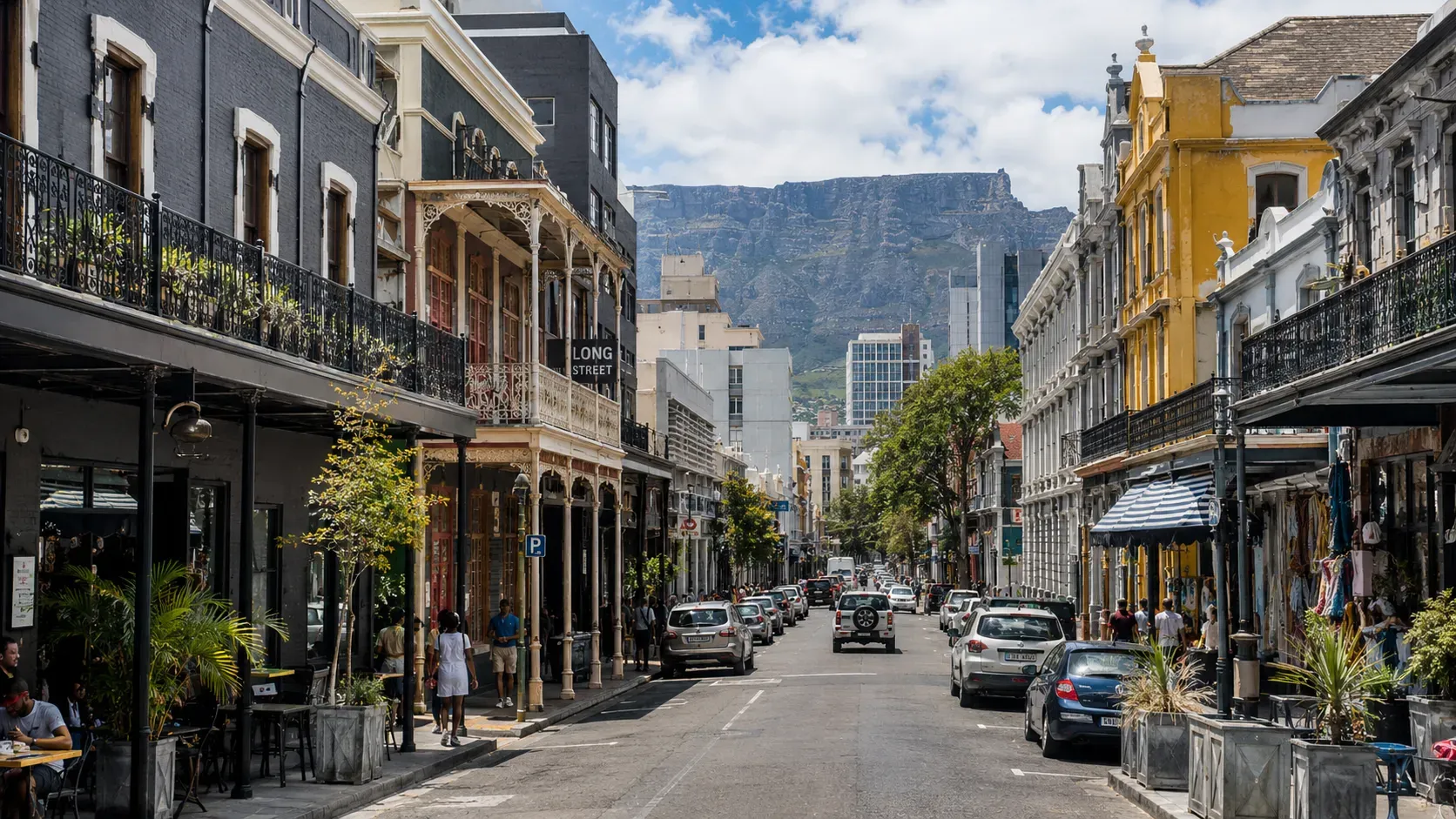
Long Street Cape Town is a central City Bowl street running through the historic city, known for its preserved Victorian-era buildings with cast-iron balconies.
- Along Long Street, you’ll find independent bookshops, vintage clothing stores, cafes, and restaurants. It’s Cape Town’s most character-filled main street.
- Turkish Baths building (1906): One of the most photographed facades on the street; the original Victorian bathhouse has been repurposed and still carries its original tiling
- Bo-Kaap connection: The top of Long Street Cape Town leads directly into Bo-Kaap, the Cape Malay quarter with brightly painted 18th-century houses; a 5-minute walk from Long Street
- Green Market Square is just a 3-minute walk from the middle of Long Street. Visiting both makes for an easy and enjoyable half-morning walk in Cape Town. It’s among the most accessible things to do in Cape Town on foot.
Signal Hill Cape Town: Sunset Views Over the City
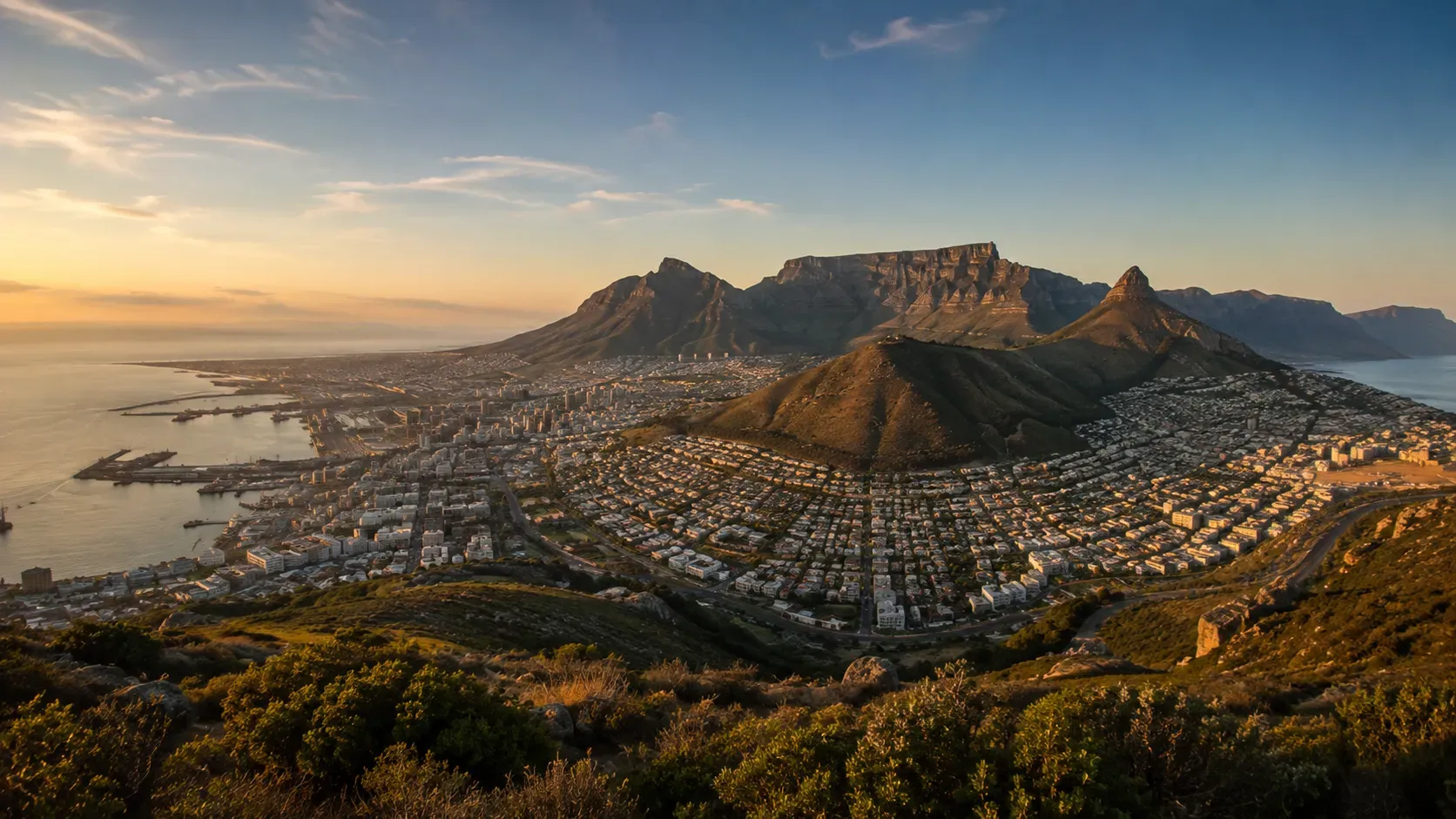
Signal Hill Cape Town is a 350-metre hill directly above the City Bowl and Bo-Kaap.
- Free access; accessible by car via Signal Hill Road; the summit has a paved viewing area and a large parking lot
- From the top, you get panoramic views of the City Bowl, Atlantic Seaboard, Camps Bay Cape Town, and Table Mountain Cape Town on a clear day.
- Noon Gun: A cannon at the crest has been fired every weekday at noon since 1806 to allow ships in the harbour to set their chronometers; this is one of the most specific and unusual things to do in Cape Town for those interested in maritime history
- Paragliding: Commercial tandem paraglider launch sites operate from the lower slopes adjacent to Lion's Head; check local operators for 2026 availability
- It’s best to visit about an hour before sunset. The viewing area remains open after dark.
Kirstenbosch National Botanical Garden: Nature at the Foot of Table Mountain
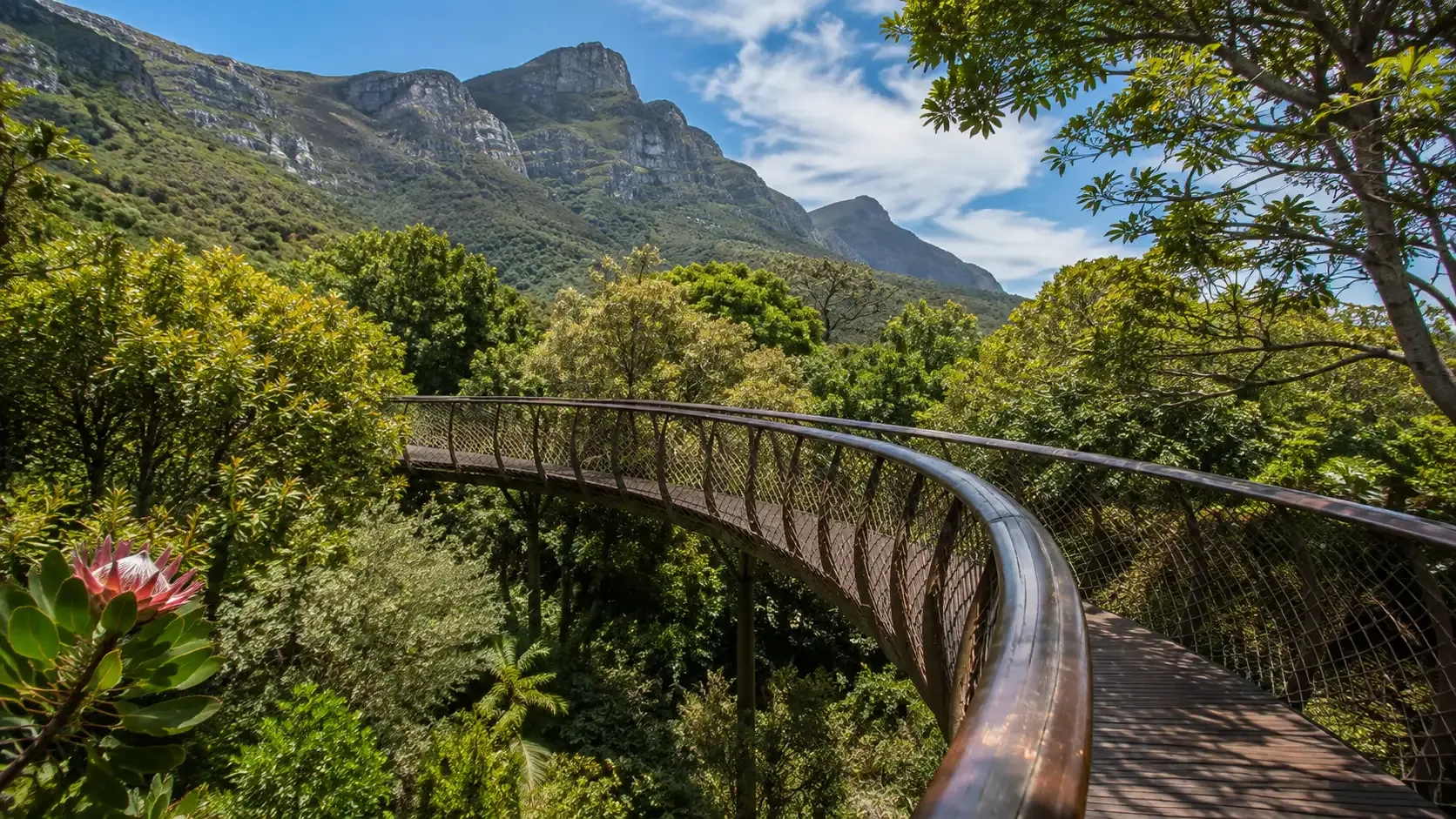
Kirstenbosch National Botanical Garden is one of the most rewarding outdoor things to do in Cape Town, located on the eastern slopes of Table Mountain.
- Size: 528 hectares; 7,000 plant species; part of the Cape Floristic Region, a UNESCO World Heritage Site
- Key features:
- Boomslang Canopy Walkway: A treetop bridge through indigenous forest at height; views across the garden and the mountain behind
- King Protea displays: South Africa's national flower; most visible from June to August
- The Dell: A fern garden and stream at the base of the garden; quieter and shadier than the main lawns
- Skeleton Gorge trailhead: The starting point for one of the most scenic routes up Table Mountain, Cape Town
- Entry fee (2026): Approximately R230 for foreign adults; R100 for South African citizens
- Access: By car (15 minutes from the City Bowl) or by MyCiTi bus to Newlands and then Uber
Muizenberg Beach: Colourful Huts and Easygoing Surf
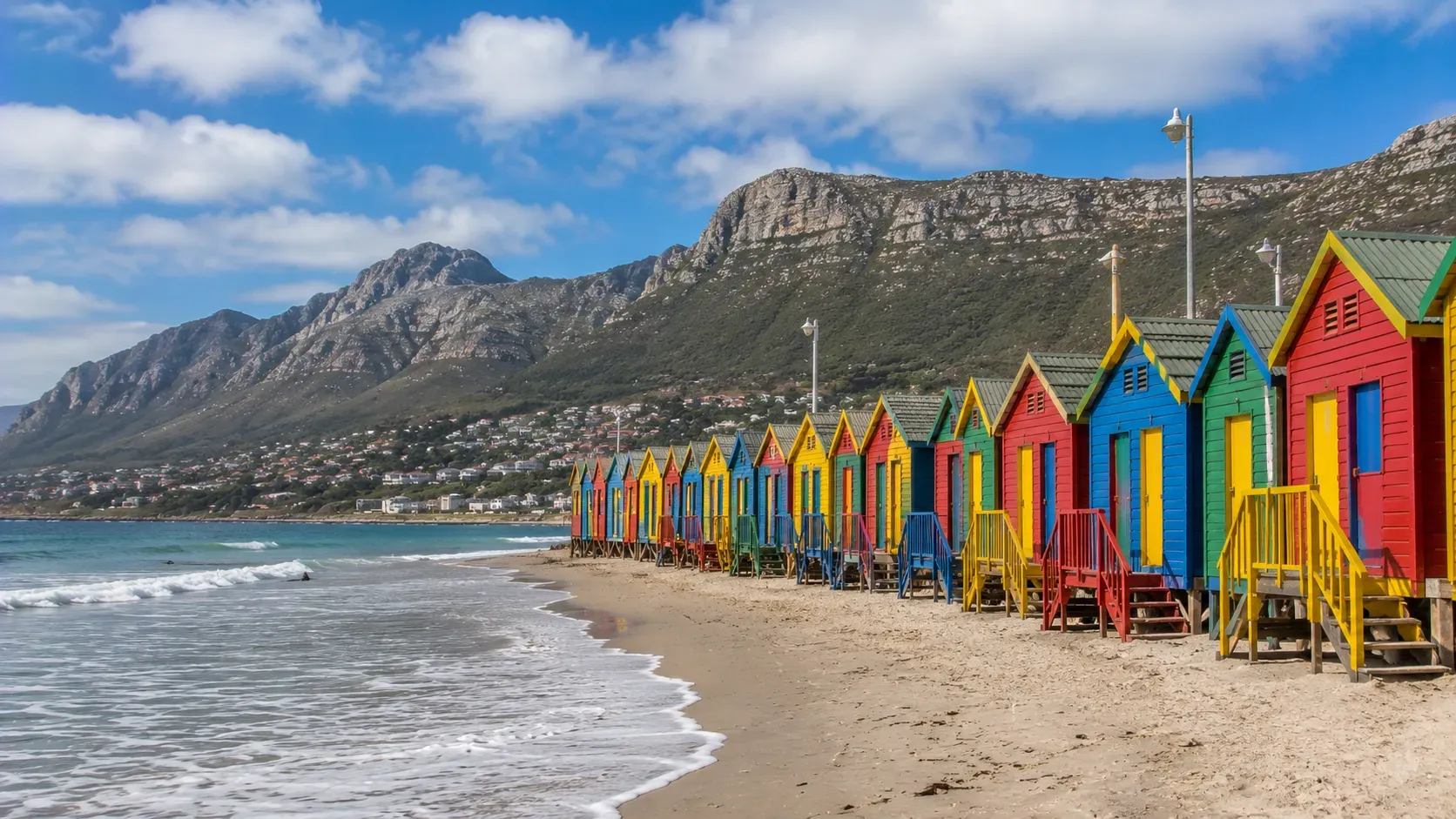
Muizenberg Beach is on the False Bay coast, approximately 30 km south-east of the City Bowl.
- Muizenberg Beach is famous for its brightly colored Victorian beach huts along the shore. Photos of these huts with the mountain in the background are some of the most iconic in Cape Town.
- Water temperature: False Bay averages 18°C to 21°C in summer; significantly warmer than the Atlantic Seaboard; suitable for swimming
- Surfing: One of the best beginner surf spots in the Western Cape; long, rolling waves; surf lessons and board hire available from beachfront operators
- Access: You can reach Muizenberg Beach by taking the Southern Line train from Cape Town Central Station to Muizenberg Station, which takes about 45 minutes. The beach is just a 2-minute walk from the station, making it one of the few things to do in Cape Town that requires no car.
- A half-day visit allows time for the beach and the antique and vintage shops along Main Road
Groot Constantia: Wine and Cape Dutch Heritage
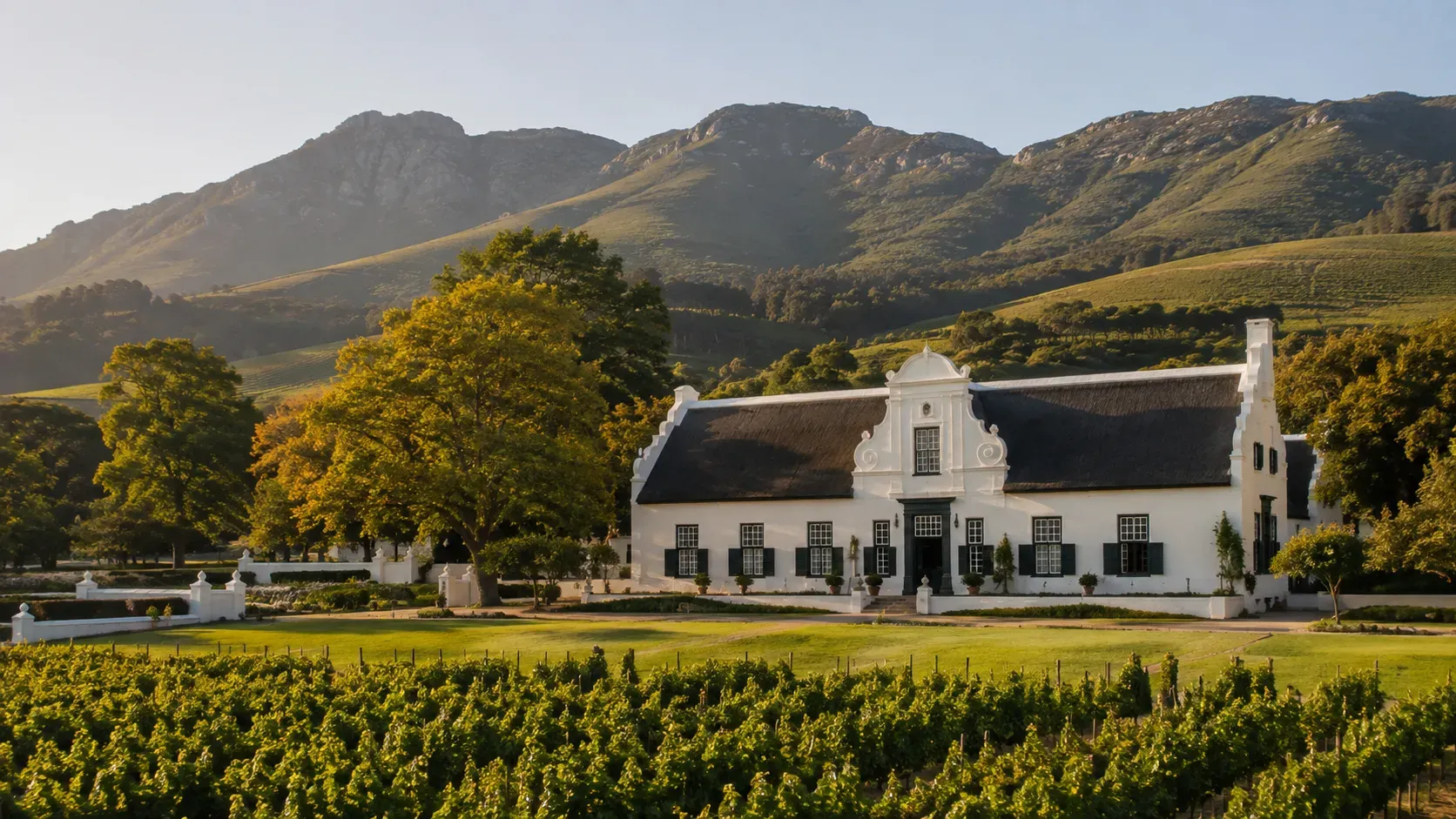
Groot Constantia is South Africa's oldest wine estate, founded in 1685 by Simon van der Stel, the first Governor of the Cape.
- Located in the Constantia Valley, 20 km south of the City Bowl, the main manor house is a well-preserved example of Cape Dutch architecture and is listed as a national monument
- What to do at Groot Constantia:
- Wine tasting at the estate's dedicated tasting room; Constantia is known for Sauvignon Blanc and Cabernet Sauvignon
- Guided cellar tour (check current schedule at grootconstantia.co.za for 2026 tour times)
- Iziko Groot Constantia Museum: included in the estate entry fee; covers the estate's history from 1685 to the present
- Best combined with: It’s best to visit Groot Constantia and Kirstenbosch National Botanical Garden on the same day. Both are in the Southern Suburbs and only about 10 km apart, making for an efficient full-day Southern Suburbs loop among all the fun things to do in Cape Town.
Bo-Kaap and the V&A Waterfront: Two Sides of Cape Town
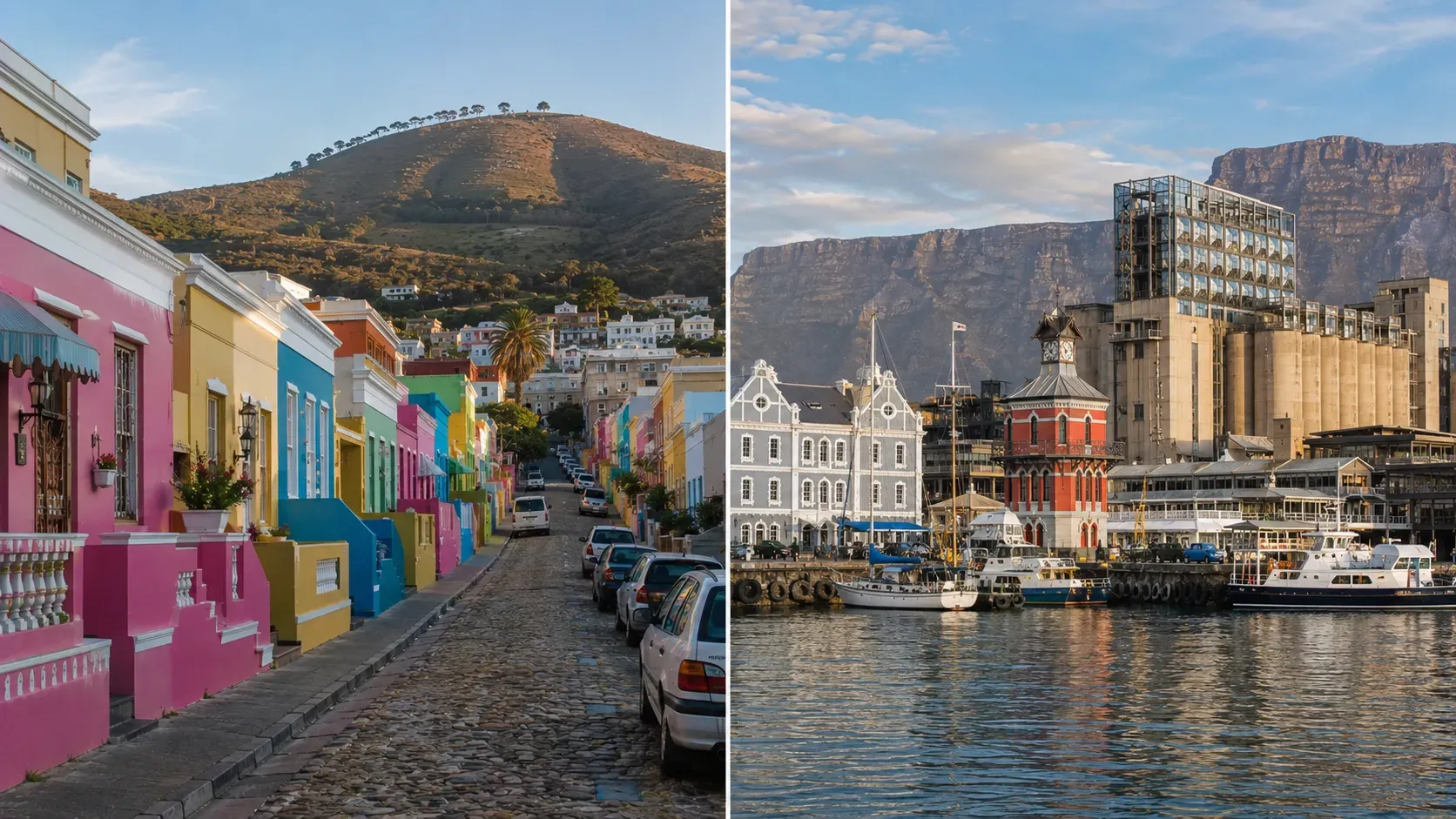
Bo-Kaap and the V&A Waterfront are two City Bowl spots that pair well for a day out.
- Bo-Kaap: Cape Malay quarter directly above Long Street, Cape Town; streets of 18th- and 19th-century houses painted in lime, yellow, and cobalt blue; 5 minutes on foot from the top of Long Street; the Bo-Kaap Museum on Wale Street covers the history of the Cape Malay community
- V&A Waterfront: Cape Town's working harbour complex at the base of Signal Hill Cape Town and below Table Mountain Cape Town; the Clock Tower (1882) is where Robben Island ferry tickets are collected, and departures take place
- Zeitz MOCAA (Museum of Contemporary Art Africa): Inside the V&A Waterfront; the largest museum of contemporary African art in the world; housed in a converted grain silo; entry fee applies
- Green Market Square Cape Town and the full City Bowl route connect naturally to both stops; the V&A Waterfront is a 20-minute walk from Green Market Square Cape Town along the harbour road
Things to do in Cape Town in this area work well as a single full-day City Bowl walk: start with Green Market Square and Long Street in the morning, visit Bo-Kaap before lunch, and head to the V&A Waterfront in the afternoon.
How Can You Plan Your Cape Town Visit?
If you know these details before your holiday, you’ll save time at each stop.
- Table Mountain Cape Town weather: Check status at 7:30am on the day; if closed, use the morning for Kirstenbosch National Botanical Garden or a City Bowl walk instead; Robben Island requires advance booking and cannot be used as a same-day alternative; the mountain is most reliably open in the early morning before afternoon winds develop. Planning your things to do in Cape Town around the mountain's weather is the most important single step
- Robben Island advance booking: Book at least 2 to 3 weeks ahead at robben-island.org.za from September to April; all four daily ferry slots have limited capacity and often sell out
- Southern Suburbs transport: For Groot Constantia and Kirstenbosch National Botanical Garden, hire a car or use Uber; the Constantia Valley is not served by the MyCiTi bus network efficiently
- Muizenberg Beach access: The Southern Line train is the most reliable way to reach the beach; trains run regularly from Cape Town Central Station; the journey takes approximately 45 minutes
- Camps Bay Cape Town timing: Arrive before 10am on weekdays to secure beach space in December to February; the road above the beach gets congested from midday through the afternoon in peak summer
Final Takeaway
This guide covers a wide variety of things to do in Cape Town. Table Mountain and Robben Island are must-sees and worth the time. Visiting Kirstenbosch National Botanical Garden and Groot Constantia together is a great way to explore the Southern Suburbs. Muizenberg Beach, Signal Hill, and Camps Bay offer coastal and mountain views. The City Bowl loop with Green Market Square, Long Street, and Bo-Kaap gives you a taste of Cape Town’s history.
It’s best to group fun things to do in Cape Town by area. If you plan for 5 to 7 days, you can see all ten main sights without feeling rushed.
If you’d like a custom Cape Town, South Africa, holiday with the best places to stay and a daily plan, Holiday Tribe’s advisors can help with every detail.