

There is a point about two-thirds of the way up Sigiriya Rock where the path narrows, the trees fall away below you, and the full scale of the place becomes clear. You are standing on a 200-metre volcanic column that a 5th-century king turned into a royal palace, carved with frescoes, surrounded by water gardens that still function 1,500 years later.
Sigiriya Lion Rock is not just a climb. It is one of the most complete examples of ancient urban planning in the world, and the most visited heritage site in Sri Lanka. Whether you are stopping for a day or spending a week in the Cultural Triangle, this guide tells you exactly what to expect and how to make the most of it.
What Is Sigiriya Rock and Why Does It Matter?
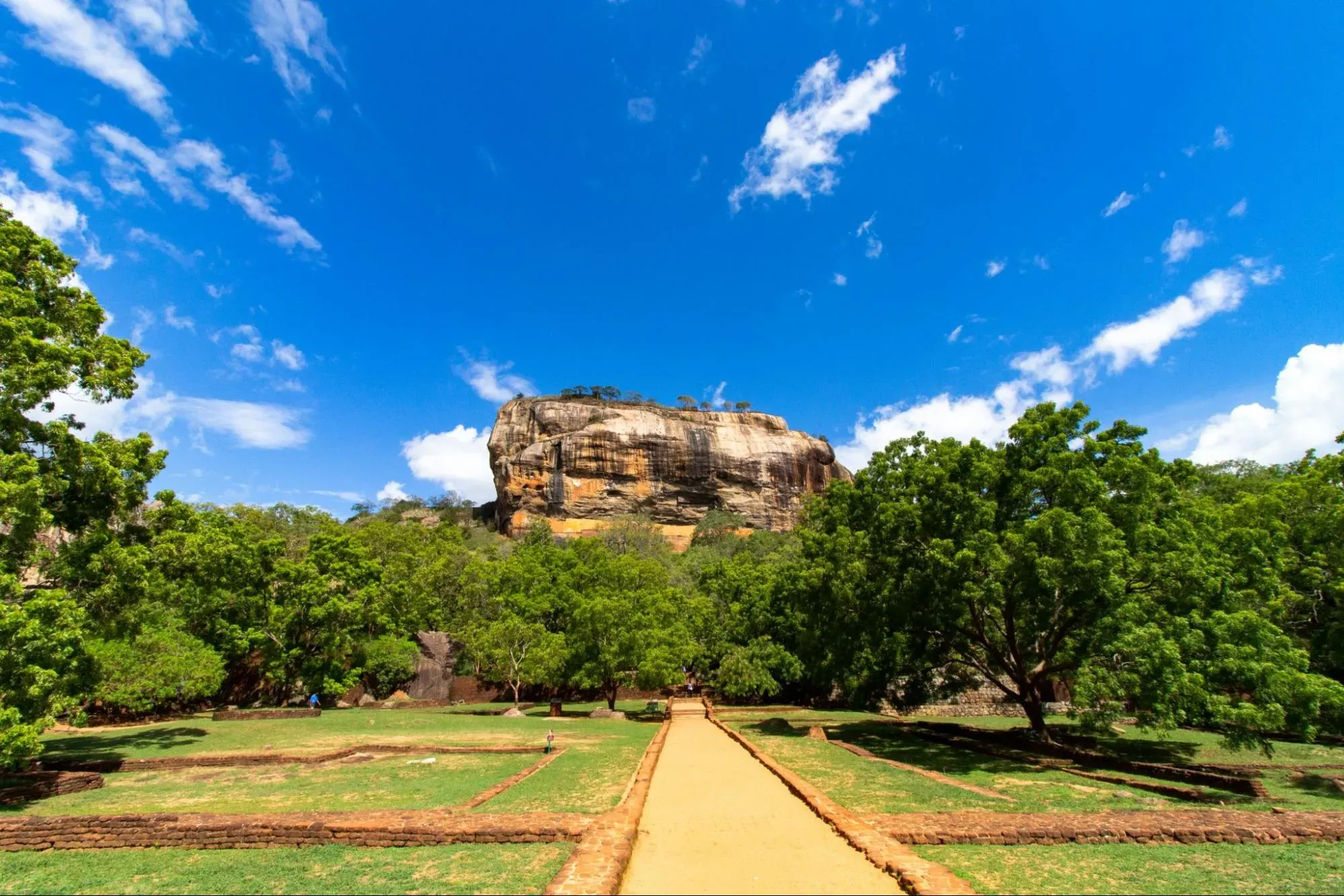 Sigiriya Lion Rock is an ancient rock fortress built by King Kashyapa I between 477 and 495 AD on a massive column of volcanic rock rising 200 metres above the surrounding plains in Sri Lanka's Matale District.
The story behind it is as alluring as the structure itself. Kashyapa, having seized the throne from his father, feared the return of his exiled brother Moggallana. He chose this near-impossible-to-climb rock as the location for his new capital, building a palace at the summit, formal water gardens at the base, and a giant lion gateway halfway up the rock face.
After Kashyapa's defeat in 495 AD, the site became a Buddhist monastery for several centuries before being reclaimed by forest. It was formally documented by British archaeologists in the 1800s and designated a UNESCO World Heritage Site in 1982.
Why it stands out:
- One of the best-preserved examples of ancient urban and landscape design in Asia
- Hydraulic water gardens at the base with fountains that still work through natural pressure
- Frescoes of celestial maidens considered among the finest ancient paintings in South Asia
- The Mirror Wall, a polished plaster surface covered in centuries of ancient graffiti
- Views of the surrounding jungle plains stretching in every direction from the summit
How Hard Is the Climb Up Sigiriya Lion Rock?
The climb up Sigiriya Rock involves approximately 1,200 steps and takes most visitors between 45 minutes and 1.5 hours to reach the top, depending on pace and fitness.
The path is well maintained with metal staircases and handrails for most of the ascent. The steepest section is the final stretch through the Lion Gate, which requires a vertical staircase built into the rock face.
What to expect at each stage:
Stage | What You Encounter | Physical Demand |
Base to Boulder Garden | Flat walkways, water gardens, cistern boulders | Easy |
Boulder Garden to Fresco Pocket | Winding paths, uphill gradient begins | Moderate |
Fresco Pocket to Lion Gate | Exposed metal staircase, vertiginous drop | Moderate to challenging |
Lion Gate to Summit | Final steep vertical staircase | Challenging |
Tribe Travel Tip: Be careful with the heat. The metal staircases get hot from mid-morning. Bring at least one litre of water for each person and wear shoes with good grip. Flip-flops are not safe on the steepest sections of the climb .
What Will You See on the Way Up Sigiriya Rock Fortress?
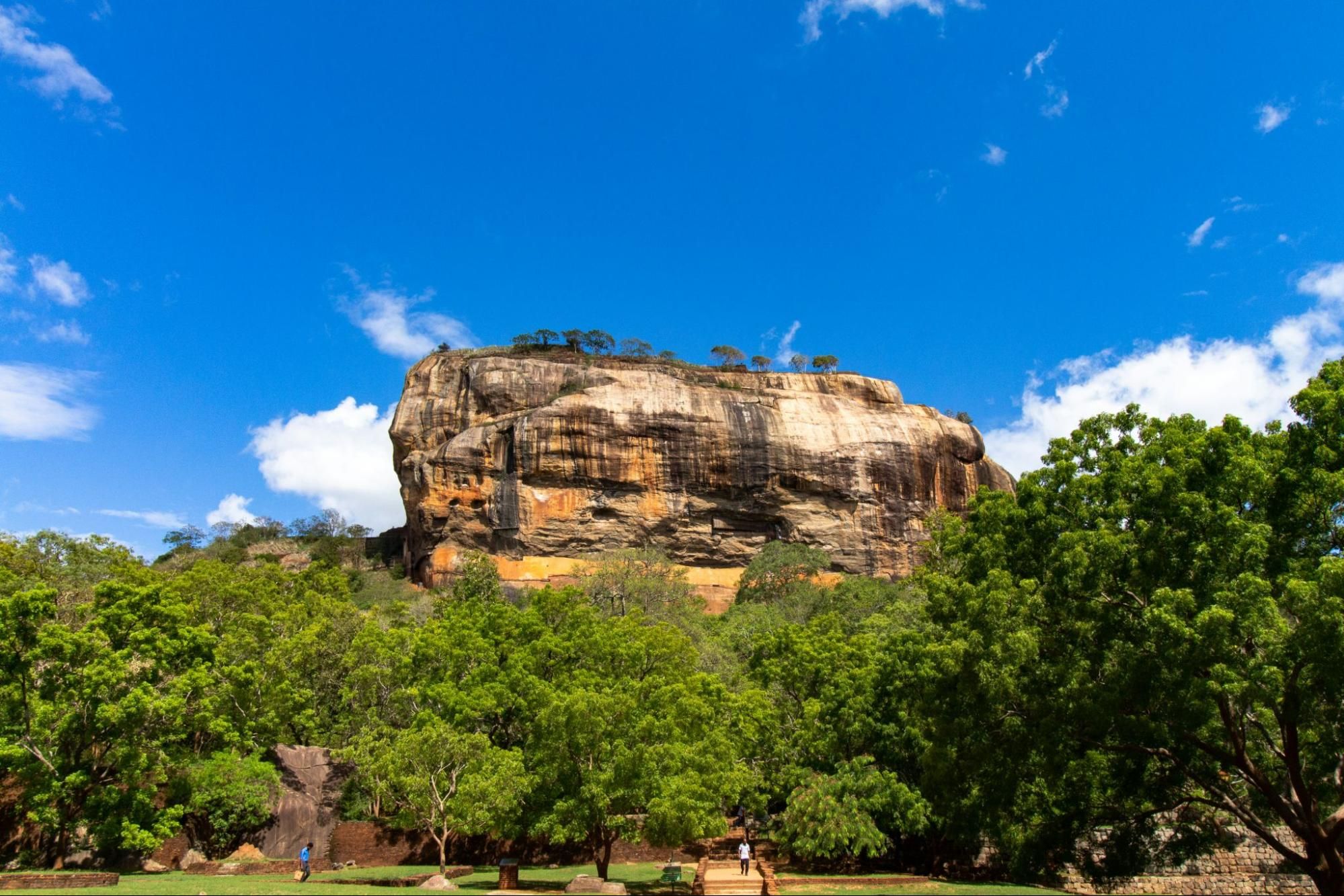 The Sigiriya Rock Fortress experience is not just the summit. The path to the top passes through five distinct areas, each with its own significance.
The Water Gardens
The most impressive ancient hydraulic system in South Asia. Symmetrical gardens with pools, fountains, and channels that still operate through natural underground water pressure.
The Boulder Garden
A series of natural granite boulders that were incorporated into the palace complex as meditation retreats and caves. Small but worth a slow walk through.
The Fresco Pocket
The Fresco Pocket is a sheltered gallery cut into the rock face, approximately halfway up the climb. It contains 21 to 22 surviving fresco paintings of celestial maidens, rendered in natural pigments.
The Mirror Wall
Just above the fresco gallery, a path runs alongside a polished lime plaster wall. This wall was once so reflective that Kashyapa could reportedly see his own reflection in it. Today, it is covered with graffiti left by visitors between the 7th and 10th centuries, making it one of the oldest collections of written Sinhala poetry.
The Lion Gate and Summit
Today, just two huge stone lion paws are left from the original gateway. The staircase leads between them on the way up. At the top, you can see the ruins of Kashyapa's palace, including foundation platforms, a throne carved from the rock, and a pool cut into the summit.
What Is the Sigiriya Rock Entrance Fee and How Do You Book Tickets?
The Sigiriya rock entrance fee varies by nationality. Indian and other SAARC country visitors receive a 50% discount on the standard foreign rate.
Visitor Category | Entrance Fee |
Non-SAARC adult (foreigners) | USD 35 |
SAARC adult (India, Pakistan, Bangladesh, Nepal, etc.) | USD 20 |
Foreign children (SAARC/ Non-SAARC) (6 to 12 years) | USD 20 |
Sri Lankan adults | LKR 120 |
Children under 6 and Infants | Free |
- Ticket prices are set in US dollars, but you will pay in Sri Lankan rupees based on the exchange rate at the gate that day.
- Your ticket also covers entry to the Sigiriya Museum located at the base.
- If you have an Indian passport, please show your original passport at the counter to get the SAARC discount.
- You can buy tickets online at eservices.ccf.gov.lk, the official site of the Sri Lanka Government Central Cultural Fund.
If you are planning a holiday to Sri Lanka and want to visit Sigiriya Rock Fortress, Holiday Tribe can organise your entire journey. We’ll take care of everything from the Cultural Triangle to the south coast, so you’ll know exactly what to expect each day.
When Is the Best Time to Visit Sigiriya Lion Rock?
Best Time of the Year to Visit Sigiriya Rock
Best time to visit: November to April
The weather is dry and reliable, the staircases are safe underfoot, and visibility from the summit is at its clearest. It is simply the most comfortable window to make the climb.
Best Time of the Day to Visit Sigiriya Rock
The best windows are before 9:00 AM and after 3:30 PM. Between 10:00 AM and 3:00 PM the metal staircases absorb intense heat, the site is at peak crowd density, and the climb becomes significantly more tiring.
Time | Pros | Cons |
5:30 to 9:00 AM | Cool, quiet, best light | Requires early start |
9:00 AM to 3:00 PM | Convenient | Hot, crowded, harder climb |
3:30 to 5:00 PM | Cooler, golden light for photos | Last entry at 5:00 PM; less time at top |
How Do You Get to Sigiriya Lion Rock from Colombo or Kandy?
Sigiriya is located in the heart of Sri Lanka's Cultural Triangle. Many travellers visit sigiriya along with the Dambulla Cave Temple, which is about 20 kilometres away, and also include either Polonnaruwa or Anuradhapura in their plans, often on the same or following day.
Departure Point | Distance | Approximate Travel Time |
Colombo | 170 km | 3.5 to 4.5 hours by road |
Kandy | 88 km | 2 to 2.5 hours by road |
Dambulla | 20 km | 30 minutes by road |
Polonnaruwa | 60 km | 1 to 1.5 hours by road |
Tribe Travel Tip: It’s a good idea to spend a night in Sigiriya village instead of making a day tour from Kandy. If you stay close by, you can visit right when it opens, enjoy the best light and cooler temperatures, and skip the long drive back when you’re tired.
Plan Your Sri Lanka Holiday with Holiday Tribe
Sigiriya Rock is the kind of place that works best when it is part of a well-planned Cultural Triangle itinerary rather than a rushed stop between cities. Combine it with Dambulla, Polonnaruwa, and Kandy and you have three to four days of some of the finest heritage travel in Asia.
At Holiday Tribe, we build Sri Lanka holidays that cover the Cultural Triangle properly: the right sequence, the right overnight stops, and a pace that lets you actually absorb what you are seeing. Talk to a Holiday Tribe advisor to start planning your Sri Lanka holiday.