

Cape Sounion is a rocky headland at the southeastern tip of the Attica peninsula. It takes about an hour to drive there from central Athens. At the top, on a cliff 60 metres above the sea, you’ll find the ruins of a temple. It was built for Poseidon, the Greek god of the sea.
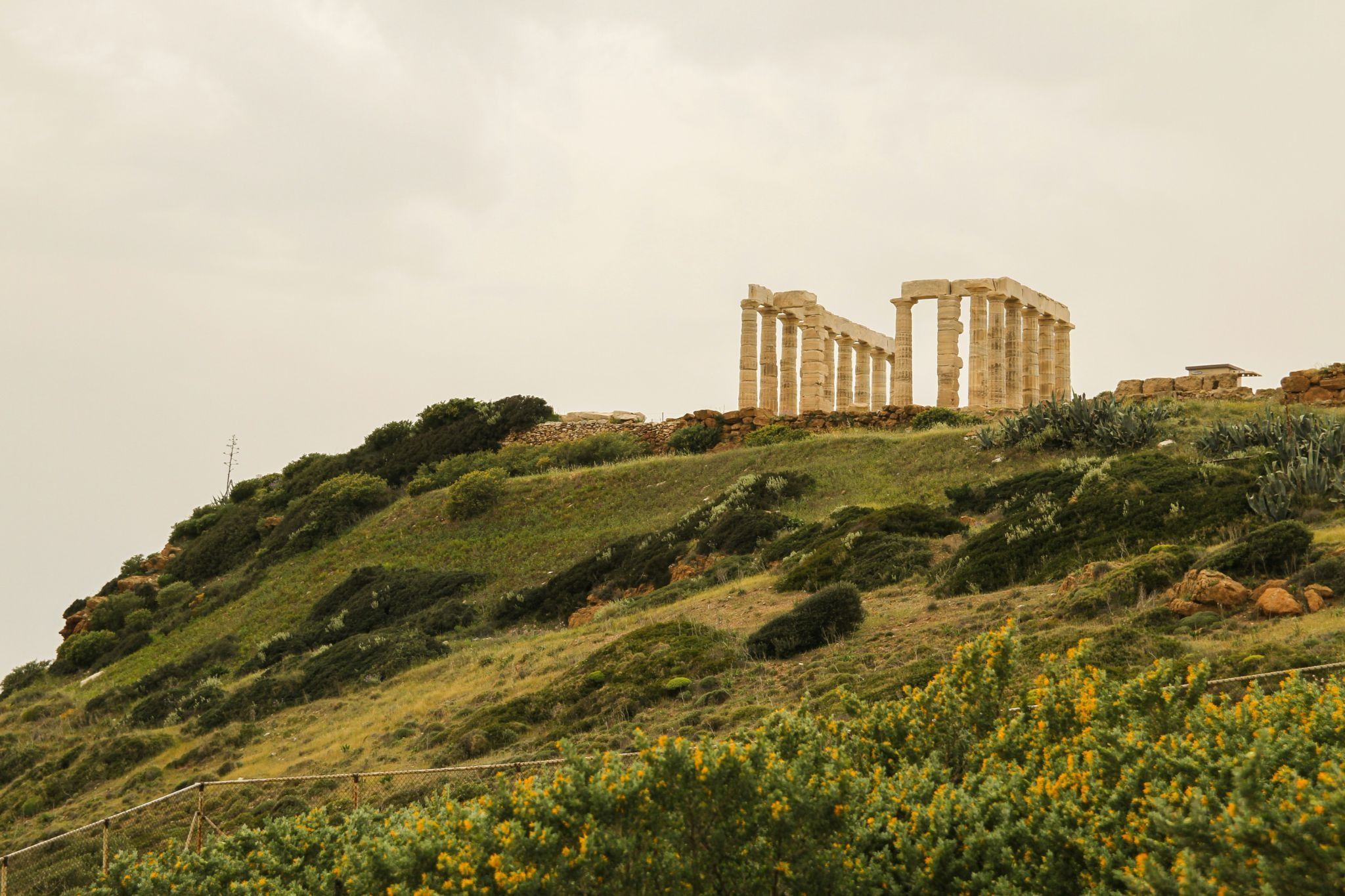
Fifteen of the original marble columns are still standing. The others have fallen or were taken away over the centuries. Even so, you can still see the shape of the building and understand why it was built in this spot. The temple faces the open Aegean on every side. Ships heading for Athens would have spotted it first. They saw it long before anything else on the coast.
This guide covers what makes the temple worth a visit. It lists seven things to see and do when you arrive. It explains how to travel from Athens and what the visit costs. It adds a few practical details to make your day easier.
Key Takeaways: Temple of Poseidon
Key Information | Takeaway |
Location | Cape Sounion, 70 km from Athens |
History | Ancient Greek temple built around 444 BC |
Highlights | Marble columns, sea views and sunsets |
Things to Do | See ruins, watch sunset, visit Sounio Beach |
Best Time | Late afternoon |
Ideal Duration | 1-2 hours |
Entry Fee | Check current ticket prices |
How to Reach | Car, bus or guided tour |
Day Trip | Around 4-5 hours with a guided tour |
Visitor Tip | Wear sturdy shoes and arrive before sunset |
What Is the Temple of Poseidon Famous For?
The temple was built around 444 BC, roughly the same period as the Parthenon in Athens, and dedicated to Poseidon. Sailors passing Cape Sounion would have seen the white marble columns against the sky and understood they were close to home. The Temple of Poseidon served as both a place of worship and a visible coastal landmark for ships entering or leaving the Saronic Gulf.
- Dedicated to Poseidon: Built to honour Poseidon, the Greek god of the sea, earthquakes and horses.
- A Landmark for Sailors: Its white marble columns helped sailors spot the route back to Athens.
- Maritime Importance: Cape Sounion overlooked key sea routes connecting Athens with Aegean trading partners.
- Surviving Doric Columns: Fifteen of the original 34 columns still stand, designed to withstand coastal winds.
- The Aegean Setting: The headland offers sea views in nearly every direction, with nearby islands visible on clear days.
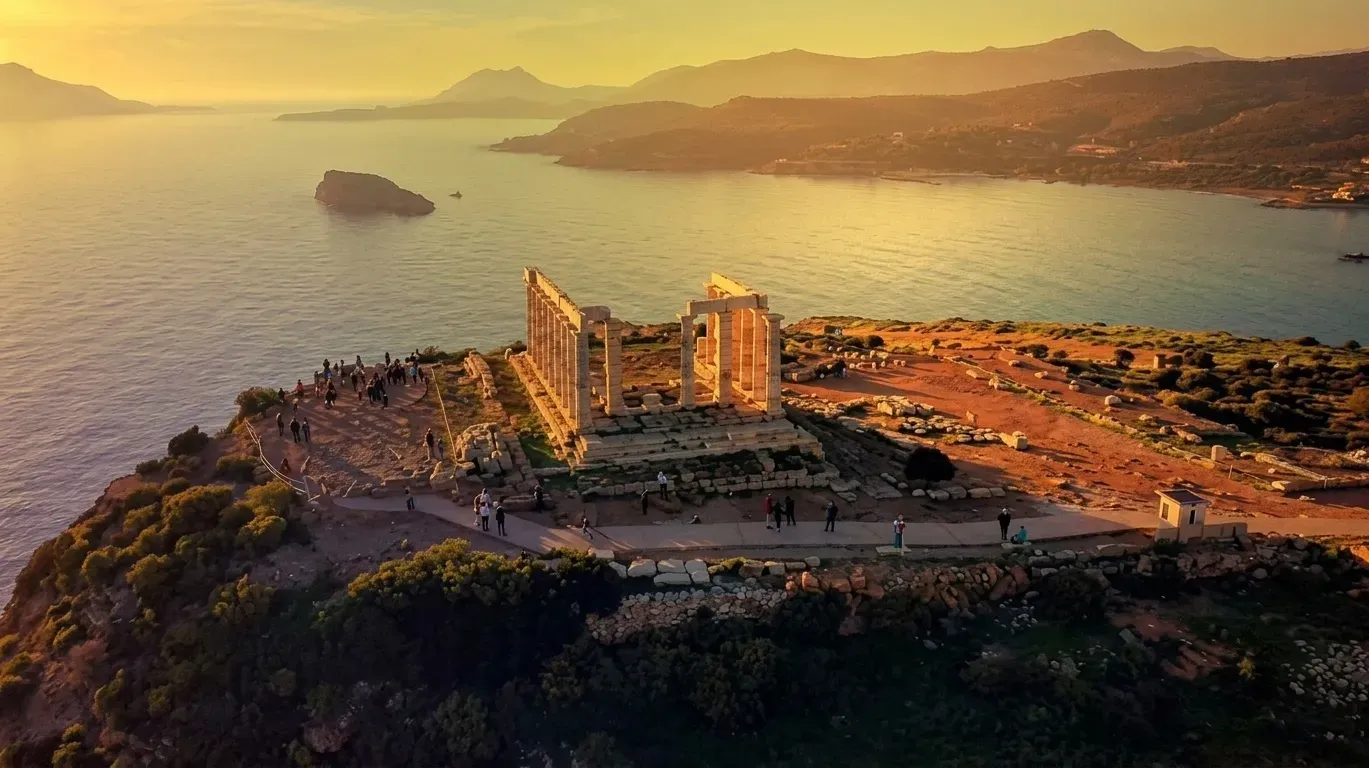
- Sunset Views: The temple of Poseidon during sunset draws visitors as the columns glow gold, orange and pink.
Also Read: Parthenon Greece: Tickets, Views and How to Visit
Things to Do at the Temple of Poseidon
The site is compact. Many of the visitors choose to spend one to two hours here. But the seven things below cover what is actually here, and knowing about them before you arrive means you notice more than just the columns.
1. See the Remaining Columns Up Close
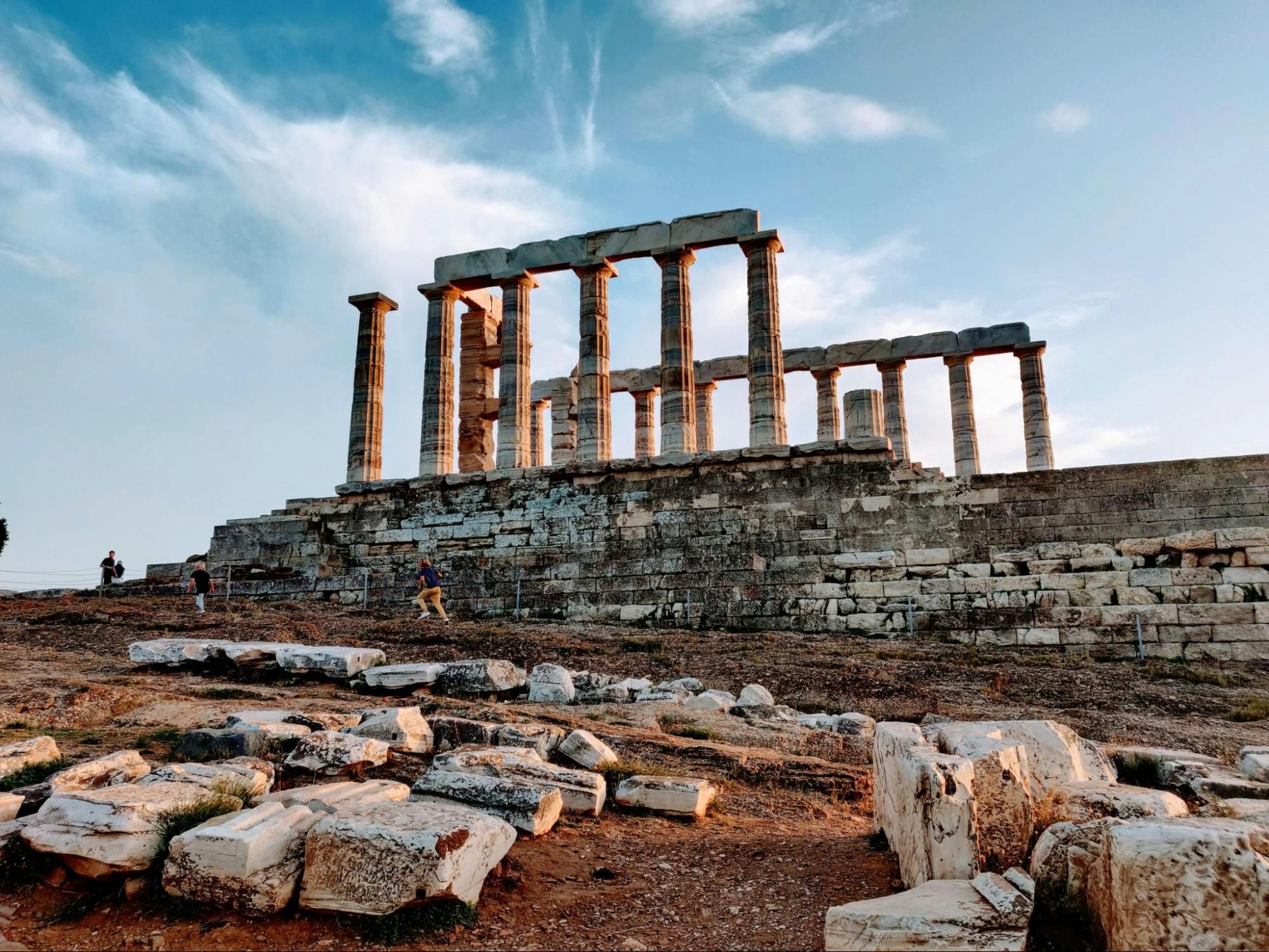 Fifteen Doric columns still stand on the temple platform. While you cannot go inside the temple itself, you can walk around the outside and view the columns from all sides. The marble comes from nearby Agrileza, and the columns are a bit thinner than usual Doric columns to withstand the steady coastal wind.
- What to Look For: The columns' proportions, the remaining architrave blocks connecting some of them, and the worn inscriptions carved into the stone by visitors over the centuries (including one attributed, probably wrongly, to Lord Byron)
- Time Needed: 20 to 30 minutes
2. Watch the Sunset from the Headland
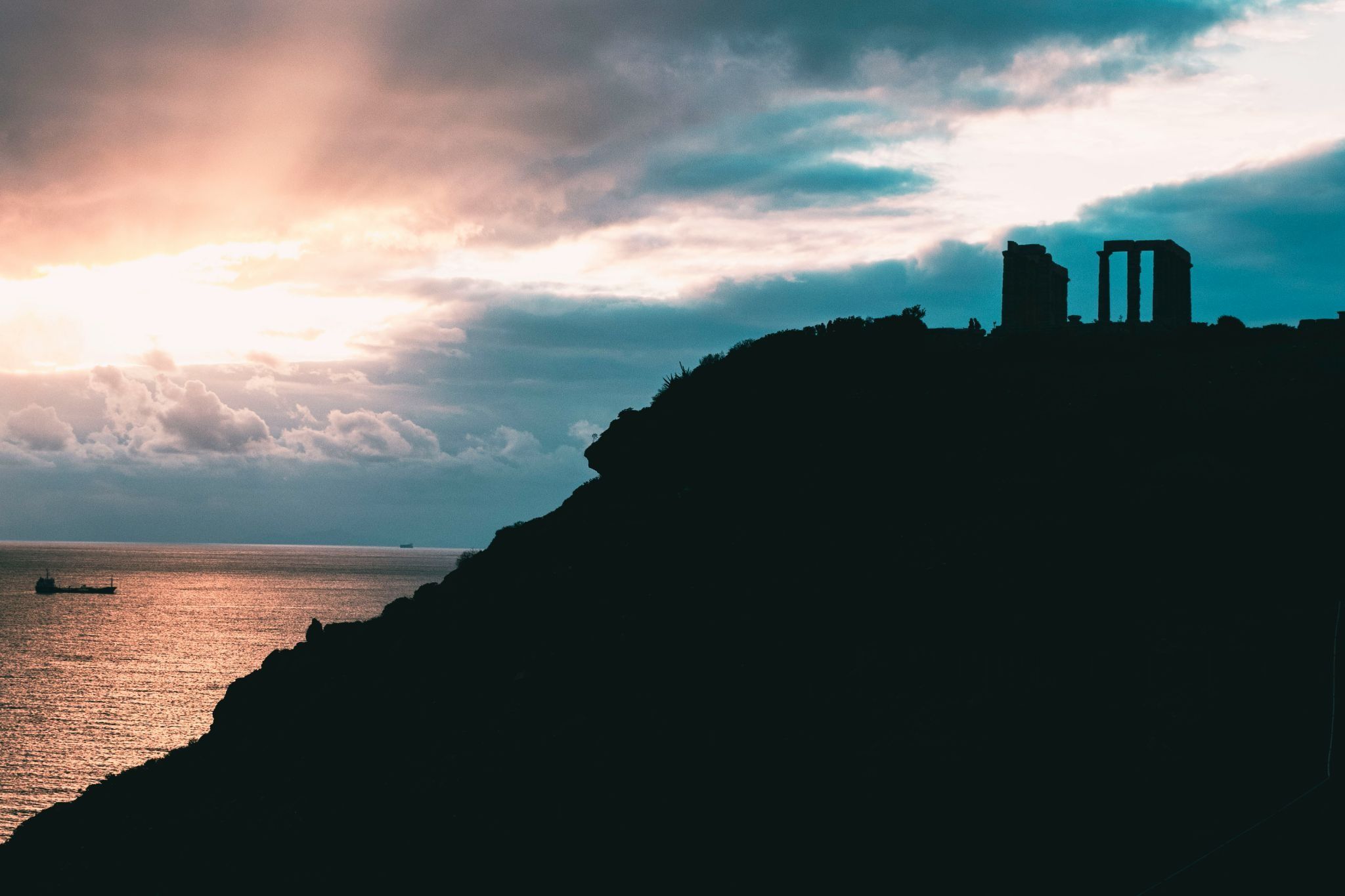 The site stays open until sunset, and the last hour is when most visitors arrive. The sun drops toward the Aegean directly ahead of the temple, and the light on the marble shifts through warm tones as it goes. The temple of Poseidon sunset experience is the main reason many people make the journey from Athens. Arrive at least an hour before sunset to see the temple in daylight first, then stay for the light change. The site gets busy during this window, particularly in summer.
- What to Look For: The changing light on the columns, the colour shift across the water, and the silhouette of the temple against the sky as the sun drops below the horizon
- Time Needed: 45 to 60 minutes (including arrival before sunset)
3. Walk Around the Archaeological Site
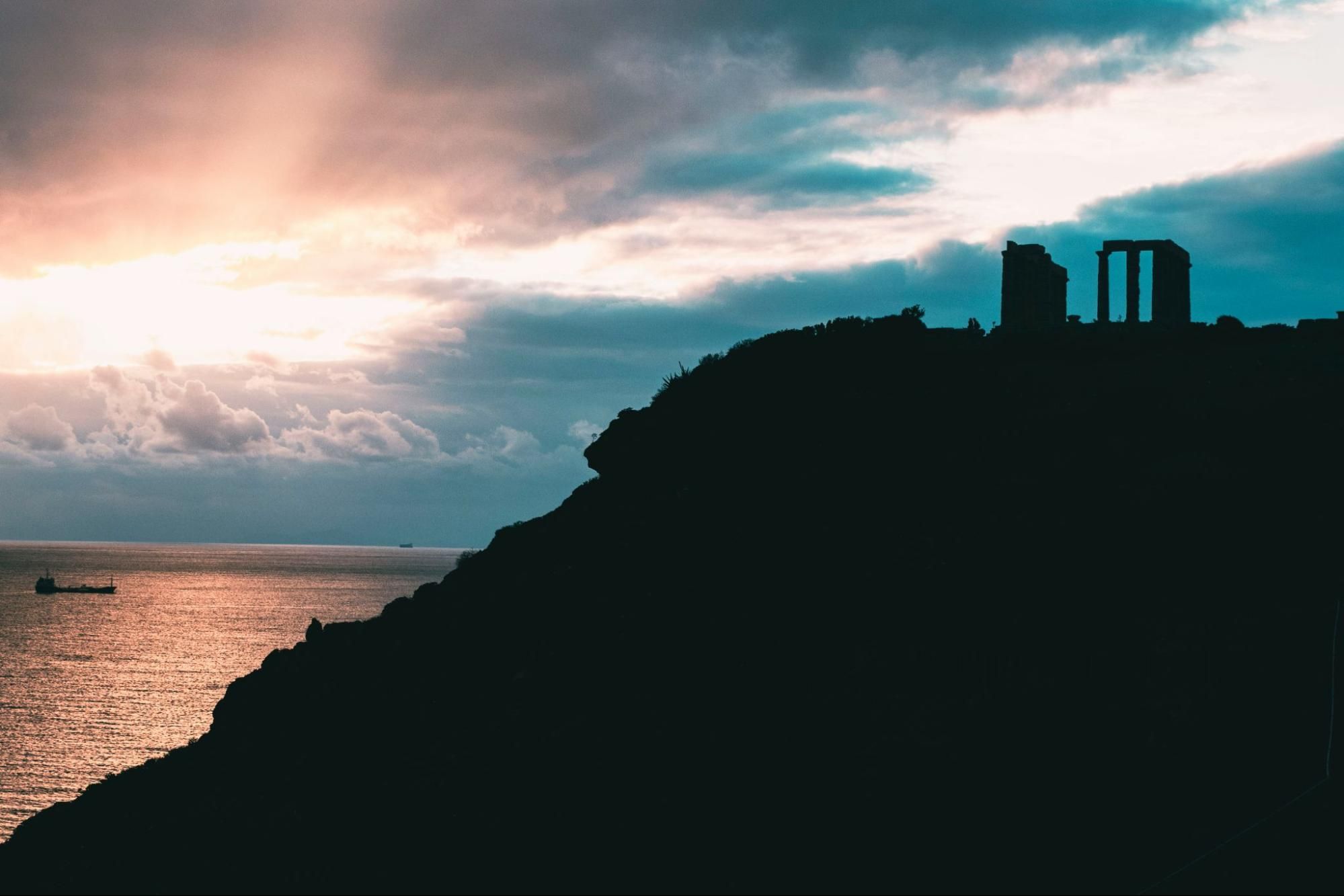 The temple is part of a larger archaeological site, which also includes the foundations of a smaller temple to Athena, old fortification walls, and traces of an ancient settlement. Many people go straight to the main temple and miss these other features. If you walk along the path around the edge, you’ll get great views of the water and nearby islands.
- What to Look For: The Athena temple foundations (south of the main temple), the ancient walls, and the views from the cliff-edge path
- Time Needed: 20 to 30 minutes
4. Learn the Legend of Aegeus and Theseus
 There is a famous legend associated with this spot related to King Aegeus. According to those legends, he stood on this very headland waiting for his son Theseus to return from Crete after fighting the Minotaur. This legend adds significance to the spot, because the sea is named after his son, the Aegean Sea.
- What to Look For: The cliff edge where the legend is set, and the sea that carries the name. Information boards at the site retell the story.
- Time Needed: 5 to 10 minutes (reading and viewing)
5. Look for Incuse Chaos
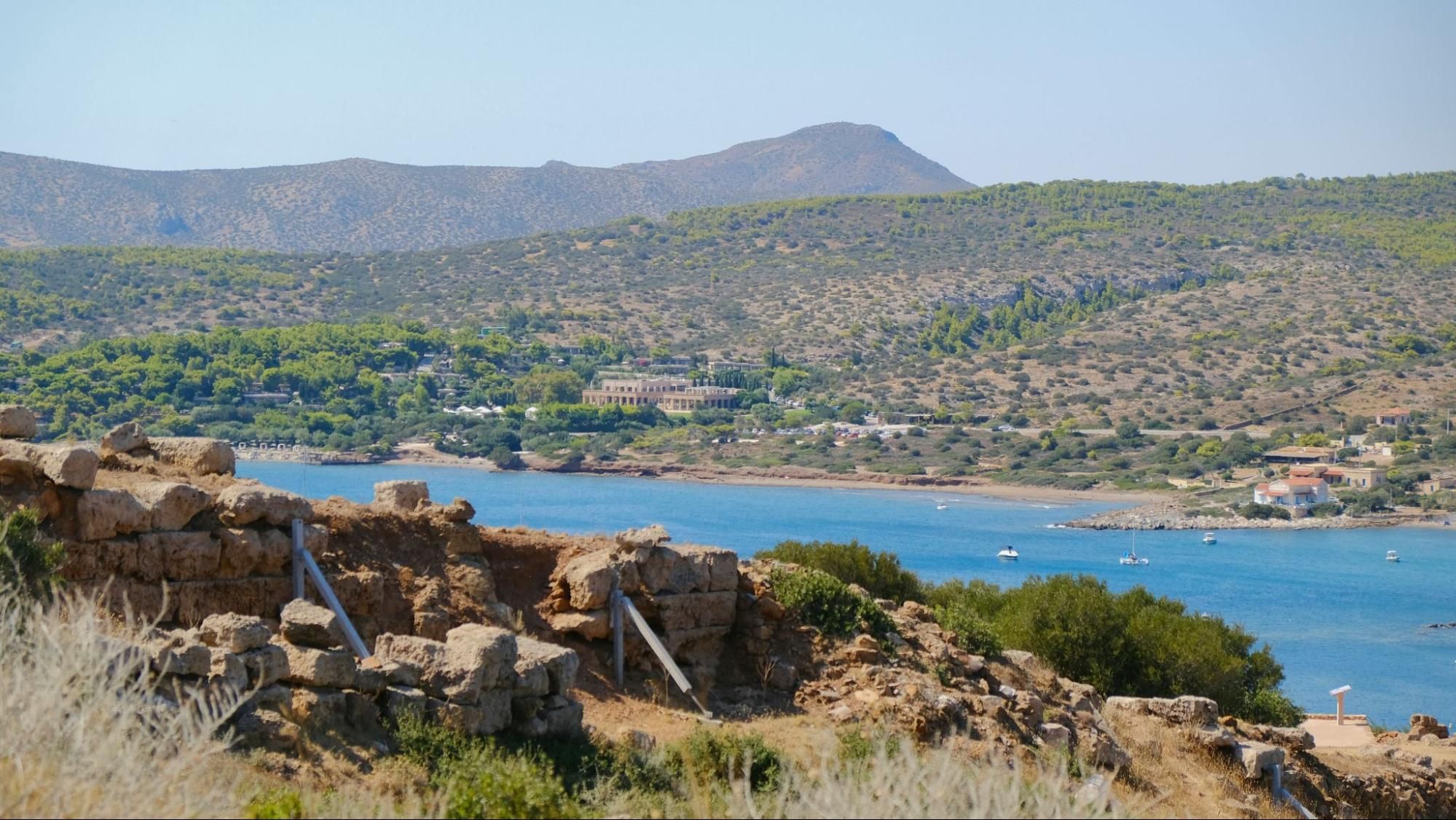
 Incuse Chaos is a large natural sinkhole near Lavrio, outside the temple grounds that look almost man-made but are natural weathering. It is easy to walk past without noticing. Look at the exposed rock surfaces near the temple perimeter.
- What to Look For: The patterned rock surface with small, irregular shapes. Ask at the entrance if you are unsure where to find it.
- Time Needed: 5 to 10 minutes
6. Visit Sounio Beach
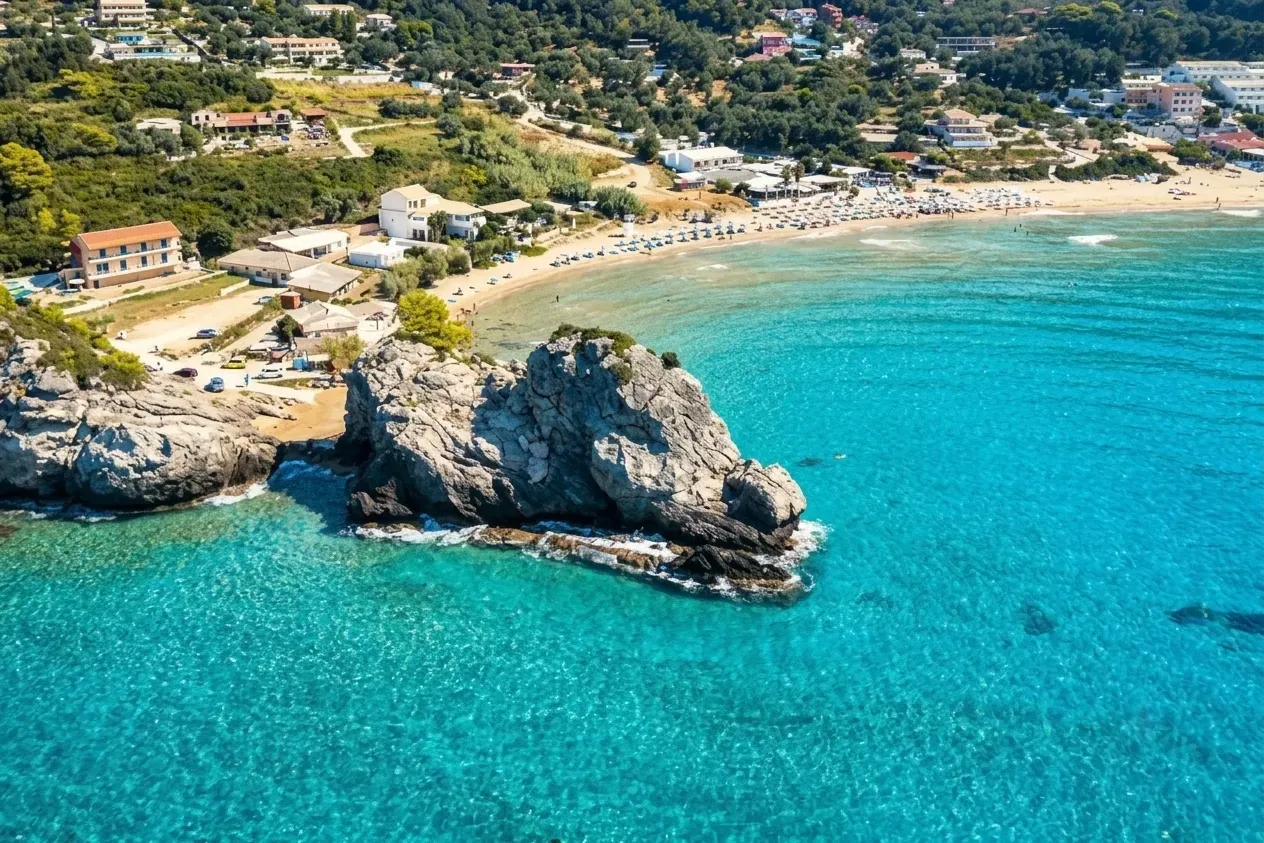
 You can use this beach as a stop before or after visiting the temple, because of its perfect location. You won’t find much of a crowd here, unless you choose to visit at peak summer weekends. You can reach it by walking from the road before the entrance to the archaeological site. Here, the water is clean, sublime, and is swimmable.
- What to Look For: The view up to the temple from the beach, which gives a different perspective of the headland from below
- Time Needed: 30 to 60 minutes
7. Drive the Coastal Road from Athens
 The road from Athens to Cape Sounion and the Temple of Poseidon follows the coast through Glyfada, Vouliagmeni and Lavrio. The drive itself, with the Saronic Gulf on one side, is part of the experience. The KTEL bus follows the same route, so non-drivers get the same coastal views.
- What to Look For: The coastline views as you approach from the north, particularly in the late afternoon light.
- Time Needed: 1 to 1.5 hours each way by car. 1.5 to 2 hours by bus
How to Choose Between Driving, Public Transport and a Tour
You can do a day trip to the Temple of Poseidon from Athens using any of these three options. The right one depends on how much flexibility you want and whether you prefer someone else to handle the logistics.
Option | Cost (approx.) | Journey Time | Flexibility | Best For |
Self-drive (rental car) | EUR 40 to 60 per day (car rental) plus fuel | 1 to 1.5 hours each way | High. Stop where you want, stay until sunset, leave when ready | Couples, families, anyone wanting to stop along the coast |
KTEL bus | EUR 15 return | 1.5 to 2 hours each way | Moderate. Fixed schedule, limited return buses in the evening | Solo travellers and those on a smaller spend |
Guided sunset tour | EUR 50 to 80 per person (entry usually separate) | 4 to 5 hours total | Low. Fixed schedule, group pace | First-time visitors wanting transport and commentary handled |
How much does it cost to visit the Temple of Poseidon?
Item | Cost (approx.) |
Entry (summer, April to October) | EUR 20 per adult. EUR 10 reduced |
Entry (winter, November to March) | EUR 20 per adult and EUR 10 reduced, year-round |
KTEL bus (return) | EUR 15 |
Guided sunset tour (from Athens) | EUR 50 to 80 per person (entry usually separate) |
Self-drive (car rental for the day) | EUR 40 to 60 plus fuel |
Parking at the site | Free |
Total (bus + winter entry) | Approximately EUR 35 per adult |
Total (bus + summer entry) | Approximately EUR 35 per adult |
Tickets: Tickets are available online through the official Hellenic Heritage website or at the site entrance, so just show up and purchase your ticket at the gate.
Free entry days: 6 March, 18 April, 18 May, 28 October, the last weekend of September, and the first and third Sundays of each month from November to March.
Things to Know Before Visiting the Temple of Poseidon
- Opening Hours: The site is open from 9:30 am until sunset, except on specified public holidays and closure dates. The last entry is 20 minutes before sunset, and closing times change throughout the year as sunset times vary.
- Best Time to Arrive: At least 1.5 hours before sunset if you want to see the temple in daylight and stay for the light change. The last hour is the busiest.
- Footwear: The ground is uneven and rocky, so it’s best to wear flat, sturdy shoes. Sandals and heels aren’t practical here.
- Wind: The headland is exposed and can be windy, even on warm days. A light jacket or extra layer is useful, particularly in the evening.
- Photography: Photographs are welcome. Do not touch, lean on or climb the ancient columns or stone structures.
Conclusion
The Temple of Poseidon is worth the visit for some appealing reasons. The spot speaks about Greek religion, seafaring, and coastal life more than any museum with its distinctive architecture. Thereby, doing a half-day trip from Athens would surely be amazing. Besides the architecture is one thing, you will get to take notice of the fifteen columns, the cliff, the open sea, and the sunset that turns the marble gold.
Holiday Tribe includes Cape Sounion and the Temple of Poseidon in Athens outing to structured Greece holiday packages that combine Athens with the islands, Meteora, or the mainland. Speak with a holiday advisor to fit the temple into a Greece itinerary that matches your schedule.