

Somewhere inside a modest chamber in Kandy, wrapped in seven nested golden caskets, sits a tooth believed to have belonged to the Buddha himself. You will not actually see it. Almost no one does.
Instead, visitors see and explore everything that is built around it: the immaculate architecture, the religious ceremonies, and the layers of history that have influenced Sri Lankan politics and faith.
This guide explains what to expect during your visit, from the tooth relic temple’s history to practical travel tips.
What Is the Temple of the Tooth Relic?
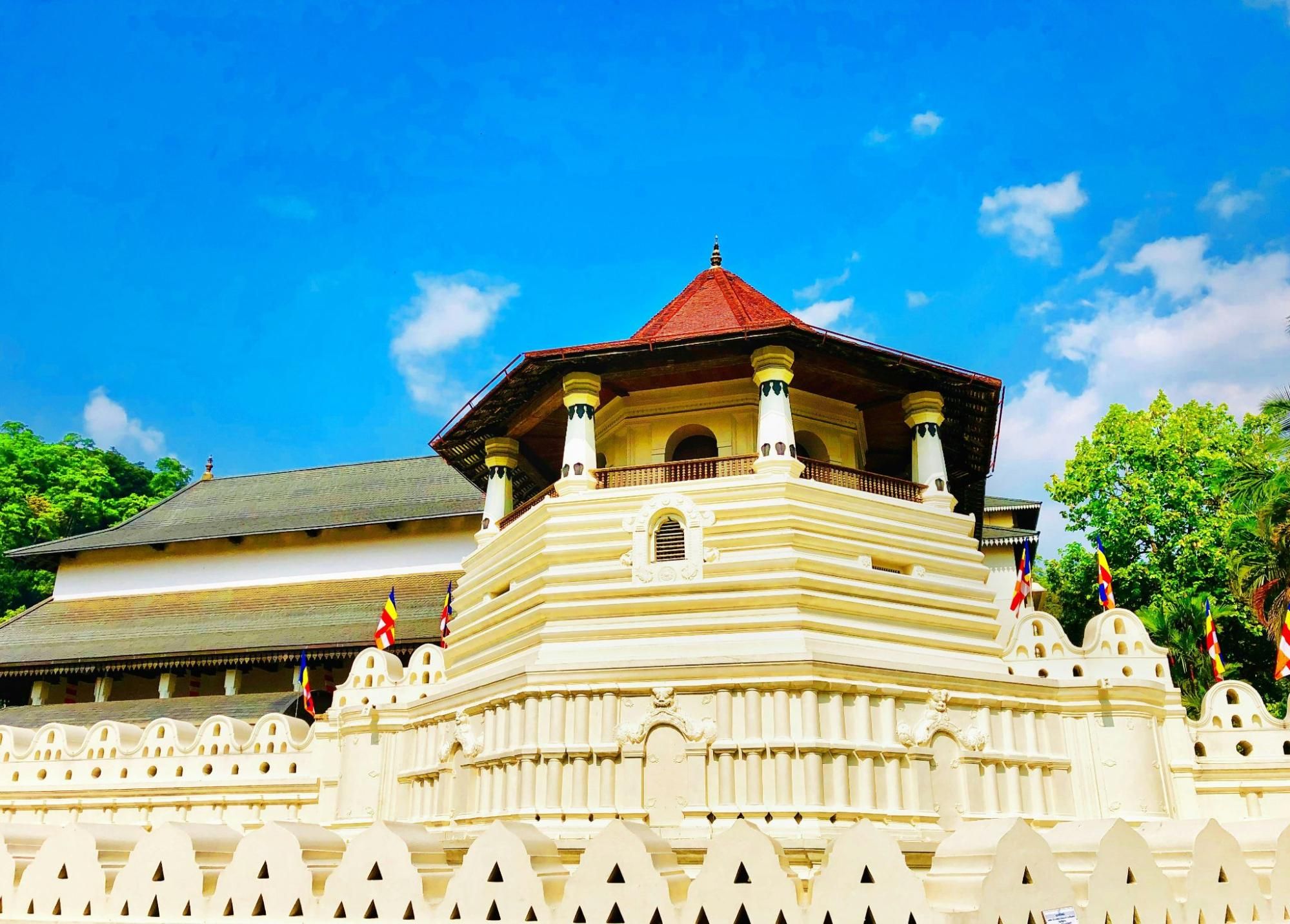 Officially called Sri Dalada Maligawa, the temple is inside what was once Kandy's royal palace complex. It keeps the left canine tooth relic of Gautama Buddha and is considered one of the two most sacred pilgrimage sites for Buddhists anywhere in the world. Besides this, there is a sacred tree, Sri Maha Bodhi, in Anuradhapura. This temple became a World Heritage Site in 1988 by UNESCO.
For centuries, the temple was more than a religious site. It also played an important political role.
- Possession of the relic was historically tied to the right to rule Sri Lanka
- Kings moved their capitals to keep it close
- The relic effectively legitimised political power on the island for over a thousand years
How Did the Tooth Relic End Up in Sri Lanka?
The story of the tooth relic begins in the 4th century AD and spans many centuries of Sri Lankan history before it reached its current home.
Period | What Happened |
4th century AD | Princess Hemamala and Prince Dantha brought the relic from Kalinga, India, to Sri Lanka |
Anuradhapura period | The relic became closely tied to royal authority |
Later centuries | It moved with Sri Lanka's shifting capitals: Polonnaruwa, Dambadeniya, Yapahuwa, Kurunegala, Gampola, Kotte |
1592 | The relic reached Kandy under King Vimaladharmasuriya I |
1700s | Kandyan kings, particularly Kirti Sri Rajasinha, expanded the temple complex |
Today | The relic remains housed at Sri Dalada Maligawa |
Every one of these moves reflects the same pattern: whichever king held the sacred tooth relic held the throne. The relic was not just protected; it was the reason capitals shifted in the first place.
What Will You See Inside the Complex?
The temple’s architecture is impressive on its own, and there is much more to see in the complex beyond the main shrine.
What You Will See | What to Expect |
Inner Shrine Room | The tooth relic, kept inside seven nested golden caskets |
Main Temple | Kandyan architecture, carved woodwork, ornate entrances |
Raja Exhibit | Preserved remains of the tusker who carried the relic casket for over 50 years |
Temple Surroundings | Kandy Lake and the old royal palace complex nearby |
Kandy National Museum | Sits right next door and pairs easily with the same visit |
A few things worth knowing before you go in:
- You will not see the actual tooth
- Photography may be restricted in certain inner areas
- The shrine can get crowded during puja times
- Allow around 1.5 to 2 hours for the full visit
What Happens During the Daily Puja?
Three ceremonies, called thewawa, are held at the Temple of the Tooth Relic every day. Each ceremony has its own unique atmosphere.
Puja | Approx. Time | What You Will Experience |
Morning Thewawa | Early morning | Traditional offerings and drumming |
Midday Thewawa | Around noon | A shorter ceremonial observance |
Evening Thewawa | Around 6:30 PM | A more energetic ceremony with lights, drums, and devotees |
If you can only attend one, the evening puja is the best choice. It is especially recommended for first-time visitors who want to see the temple at its liveliest.
When Is the Best Time to Visit?
The time you visit can make a bigger difference than you might expect.
When to Visit | Why Go | What to Expect |
Early morning | Cooler and quieter | Fewer crowds |
Evening | Catch the evening puja | More activity and ceremony |
July or August | Kandy Esala Perahera | A large procession with dancers, drummers, and elephants |
Outside festival period | Easier sightseeing | Noticeably less crowded than Perahera season |
The Esala Perahera is one of Asia’s most important Buddhist festivals and centers on the tooth relic. It completely transforms the experience of visiting Kandy, which can be a good or bad thing depending on what you are looking for.
Tribe Travel Tip: If seeing the puja is important to you, plan your visit to match the ceremony times instead of arriving during regular opening hours.
What Should You Know Before You Go?
It helps to know a few practical details before you arrive.
What to Know | Details |
Dress code | Shoulders and knees must be covered |
Footwear | Remove shoes before entering designated areas |
Photography | Follow posted restrictions in inner areas |
Entrance fee | Check sridaladamaligawa.lk for current foreign visitor rates |
Opening hours | Generally 5:30 AM to 8:00 PM |
Time needed | Around 1.5 to 2 hours |
Nearby attractions | Kandy Lake, Royal Palace complex, Kandy National Museum |
A few etiquette points that genuinely matter:
- Speak quietly in the shrine
- Avoid speaking loudly inside the shrine areas
- Avoid pointing your feet toward the shrine or any Buddha images when seated
- Follow queue order during puja times
- Respect signage restricting photography in inner sanctums
Final Verdict
The Buddha Tooth Relic Temple is perfect to include in your outing plans if you enjoy cultural history and a slow-paced visit to a religious site. This temple has many stories to tell, and an immersive experience to offer. Due to famous sites like this, spending a day or two in Kandy becomes incredibly easier, since you won’t lack attractions to sightsee.
At Holiday Tribe, we build Sri Lanka holidays that sequence these sites properly, so you are not rushing between temples or missing the ceremony times that make places like this worth visiting in the first place. Talk to a Holiday Tribe advisor to start planning your Sri Lanka holiday.